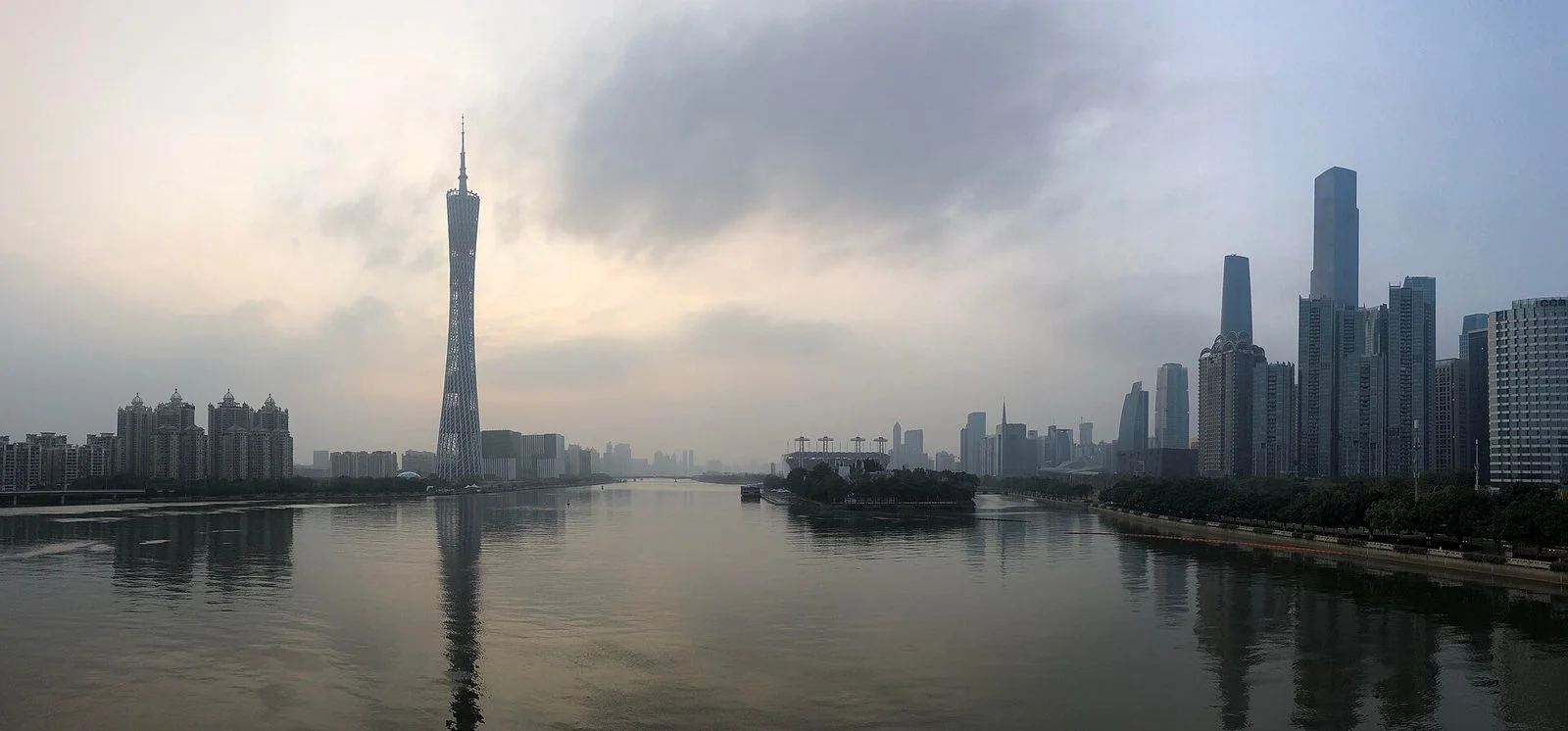
One street, layered over the old city center
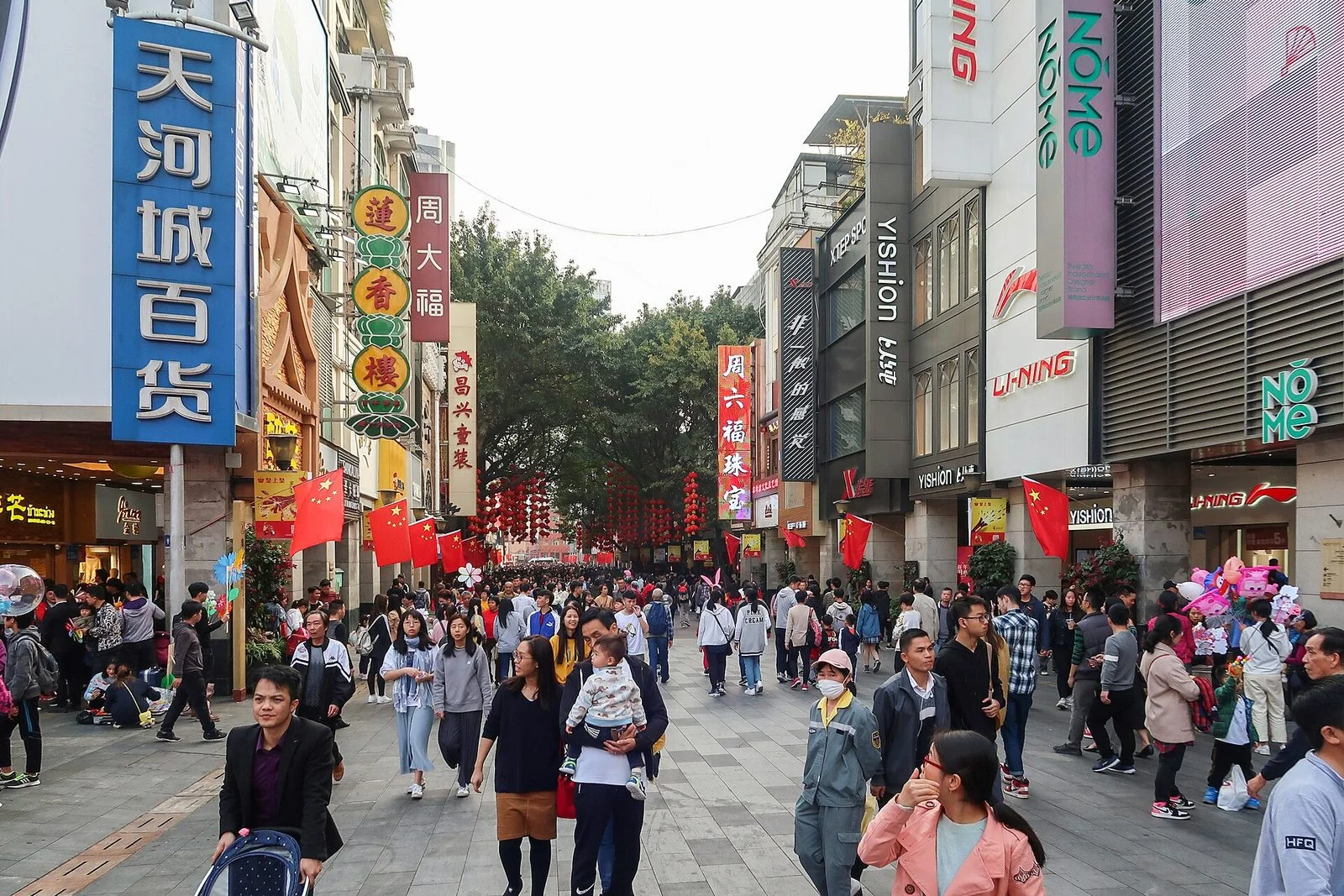
Beijing Road is in Yuexiu District. The pedestrian area is mainly the stretch of Beijing Road from in front of the Provincial Department of Finance to Danan Road, plus the northern section from Zhongshan Fifth Road to Guangwei Road, and it connects with Xihu Road, Yushan Road and Huifu Food Street. It is an open old-city street, not an enclosed mall corridor. It first became a weekend pedestrian street in 1997, switched to all-day pedestrian use in December 2001, and the northern section also became all-day pedestrian in 2014.
The management authority calls Beijing Road the city center that has stayed in place through more than 2,200 years of Guangzhou’s history, tracing it to Ren Xiao’s founding of the city in 214 BCE. That is a claim within the city’s historical narrative, but the position of Beijing Road relative to the Palace of the Nanyue King, the City God Temple and the traditional central axis does show that it has long been at the core of the old city. Entering today from Zhongshan Fifth Road, you first see arcades, department stores and chain shops; walking south, the historical layers gradually emerge.
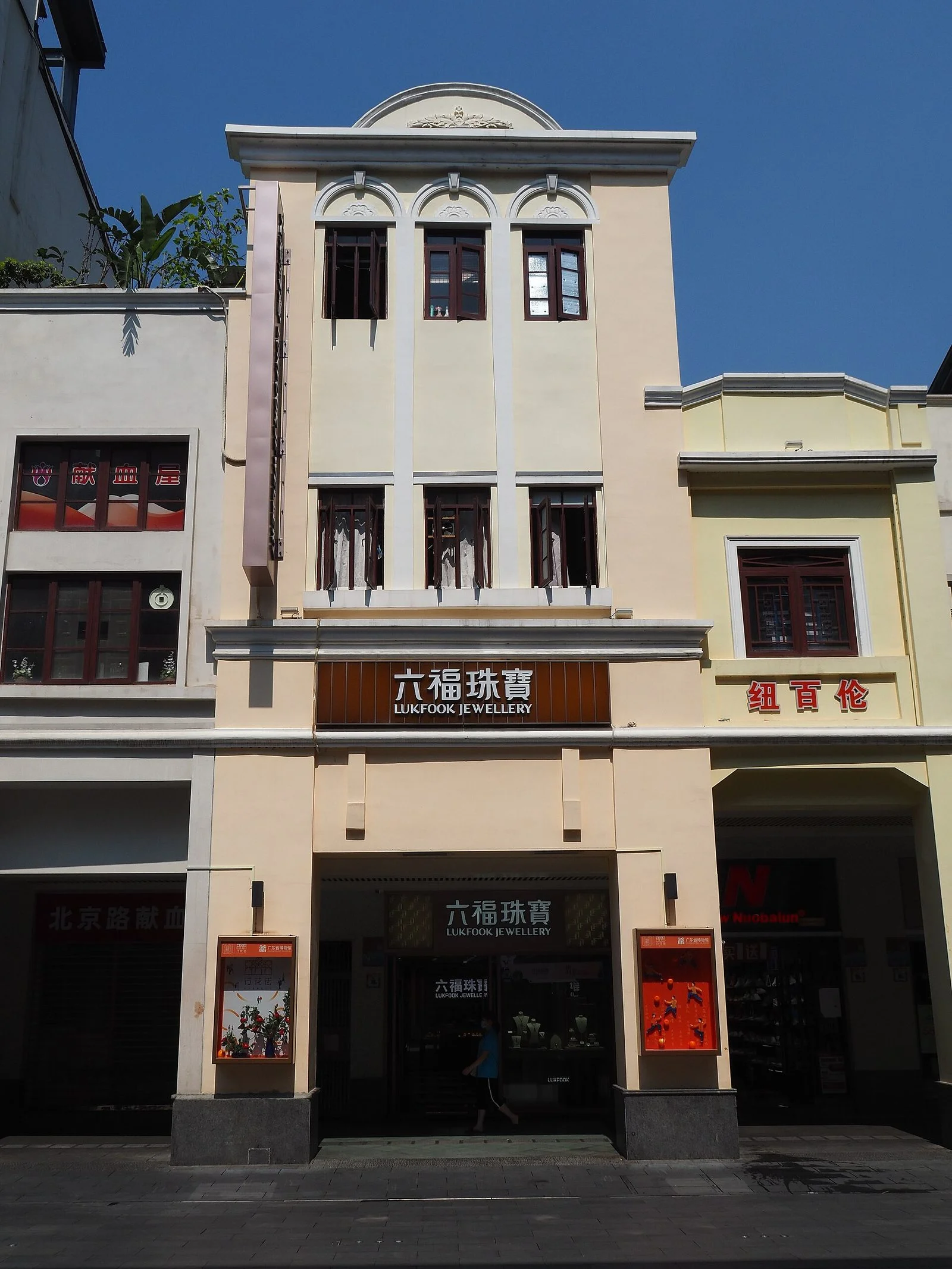
The arcade buildings on Beijing Road form a continuous area with Zhongshan Fourth Road, Zhongshan Fifth Road and Wenming Road, and in the early 20th century this was one of the largest arcade commercial districts in Guangzhou. The arcades project above the second floor and leave a covered walkway at street level, suited to Guangzhou’s rainy, humid climate. The facades include Gothic, Southeast Asian, Western and hybrid styles; this is not a uniformly styled imitation old street.
Eleven road surfaces under glass
In the summer of 2002, road works on the pedestrian street uncovered large quantities of sandstone slabs and city-wall bricks; the site covers 420 square meters. Archaeologists uncovered 11 layers of road surface from the Tang to the Republic of China, plus five layers of the Gongbei Tower foundation from the Northern Song to the Ming and Qing. In January 2003, the restored ancient road site opened; in December 2008, it was listed as a Guangzhou municipal cultural relic protection unit.
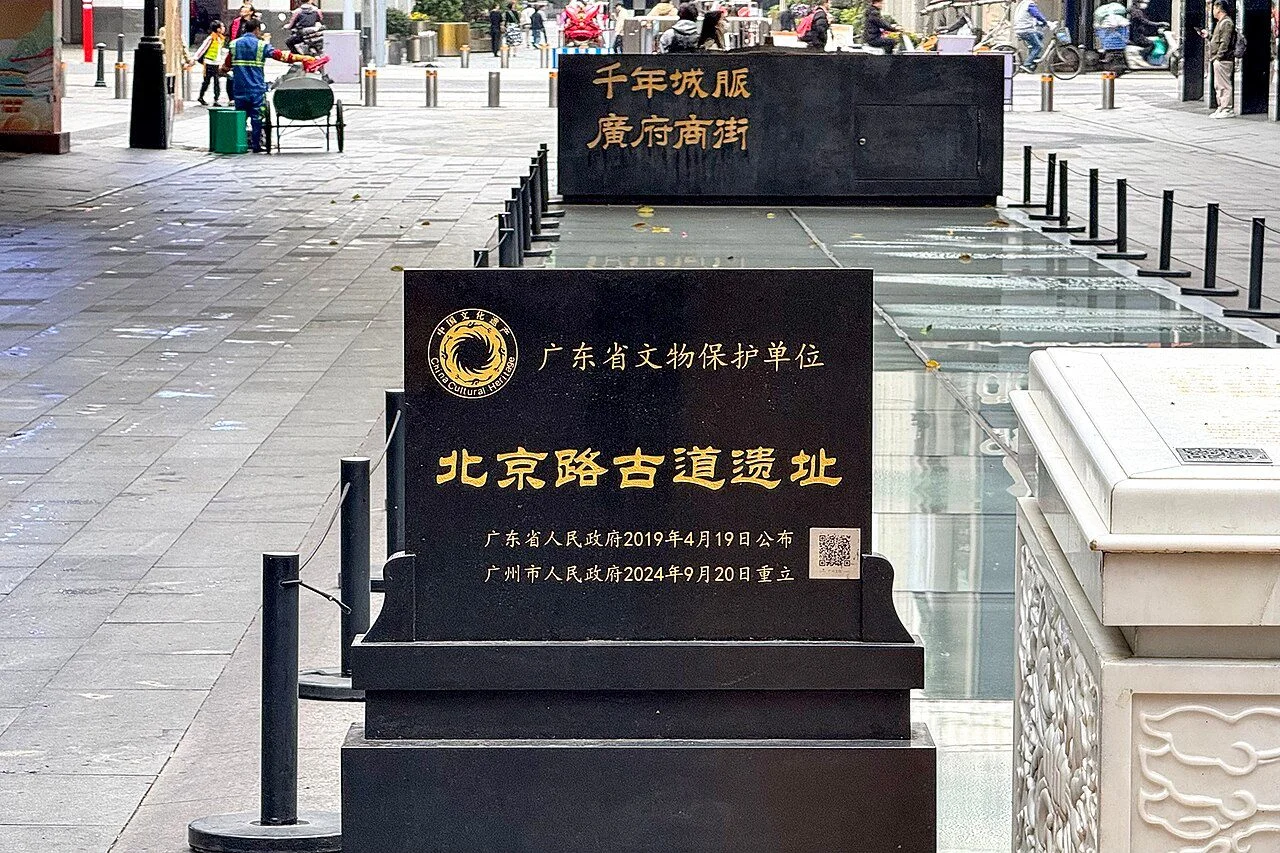
Official descriptions and the on-site stone tablet do not entirely agree: the management authority’s page records municipal protection in 2008, while the on-site tablet records that it was announced as a Guangdong provincial cultural relic protection unit in April 2019 and that the tablet was re-erected in September 2024. The levels and dates differ; the on-site tablet is newer, and the specific status should be checked against the latest published list.
The northern section of the site is about 44 meters long and 3.8 meters wide, more than 3 meters below the surface, and its 11 road layers belong to five periods: the Republic of China, Ming and Qing, Song and Yuan, Southern Han, and Tang. It now lies under glass in the pedestrian street pavement, and people walk over it; a stone tablet and information boards mark the layers. Crouch down or look from the side rather than straight into the reflection on the glass; the soil colors and the edges of the bricks and stones are easier to make out that way.
The ancient road site is not a separate museum and has no enclosed exhibition hall; it sits in the middle of the shopping street and you see it as you pass. The remains stay where the road originally was, and shops, pedestrians and the site share the same stretch of street; that is what makes Beijing Road most different from an ordinary commercial street.
Arcades, department stores and today’s shops
Beijing Road’s commercial form is not a single shopping mall. Street-level shops sit under the arcades, and the streets behind and beside them hold department stores, bookstores, jewelry shops, clothing stores and snack shops; Huifu Food Street concentrates restaurants on one side. In 1985, after Xihu Shopping Center was demolished, the 30-storey Guangzhou Department Store building went up, and many fashion brands moved in; earlier, the Xihu Road night market was known for novelty goods and Hong Kong fashion. These are historical facts recorded by the management authority, not a statement that the same shops are there today.
Judging from recent street views and the mix of shops, the pedestrian street is mainly mass-market clothing, shoes and bags, jewelry, department stores and restaurants, with some time-honored shops and bookstores. Specific brands, discounts and opening hours change, so do not treat any one shop as a fixed landmark. Shopping density is divided between the main street and side streets: the main street is crowded with large storefronts, while turning into Xihu Road, Yushan Road or Huifu East Road brings smaller shops with more food and daily goods.
Who it suits, and how to plan
Beijing Road suits first-time visitors to Guangzhou who want to see old-city history and an ordinary commercial street together. It does not suit people looking for quiet space or high-end boutiques; on weekends and holidays the main street is very crowded, and strollers or luggage are inconvenient.
Walking the main street and the ancient road site takes about 1–1.5 hours; add Xihu Road, Yushan Road and Huifu East Road and allow about 2 hours. In the evening, signs light up and the street looks different from daytime; arcades keep off some rain, but you will still get wet crossing roads and open squares.
The district itself is walkable all day and needs no reservation, with shops keeping their own hours; the ancient road site is in the pavement and can be seen at any time. The site is concentrated in the northern section, so entering from Zhongshan Fifth Road makes it easier to see first; for food, Huifu East Road has a denser choice. Whether a particular shop is open or has a queue depends on the day.
Useful official references
Check the relevant official service before making arrangements. These links are references, not a guarantee of current services.