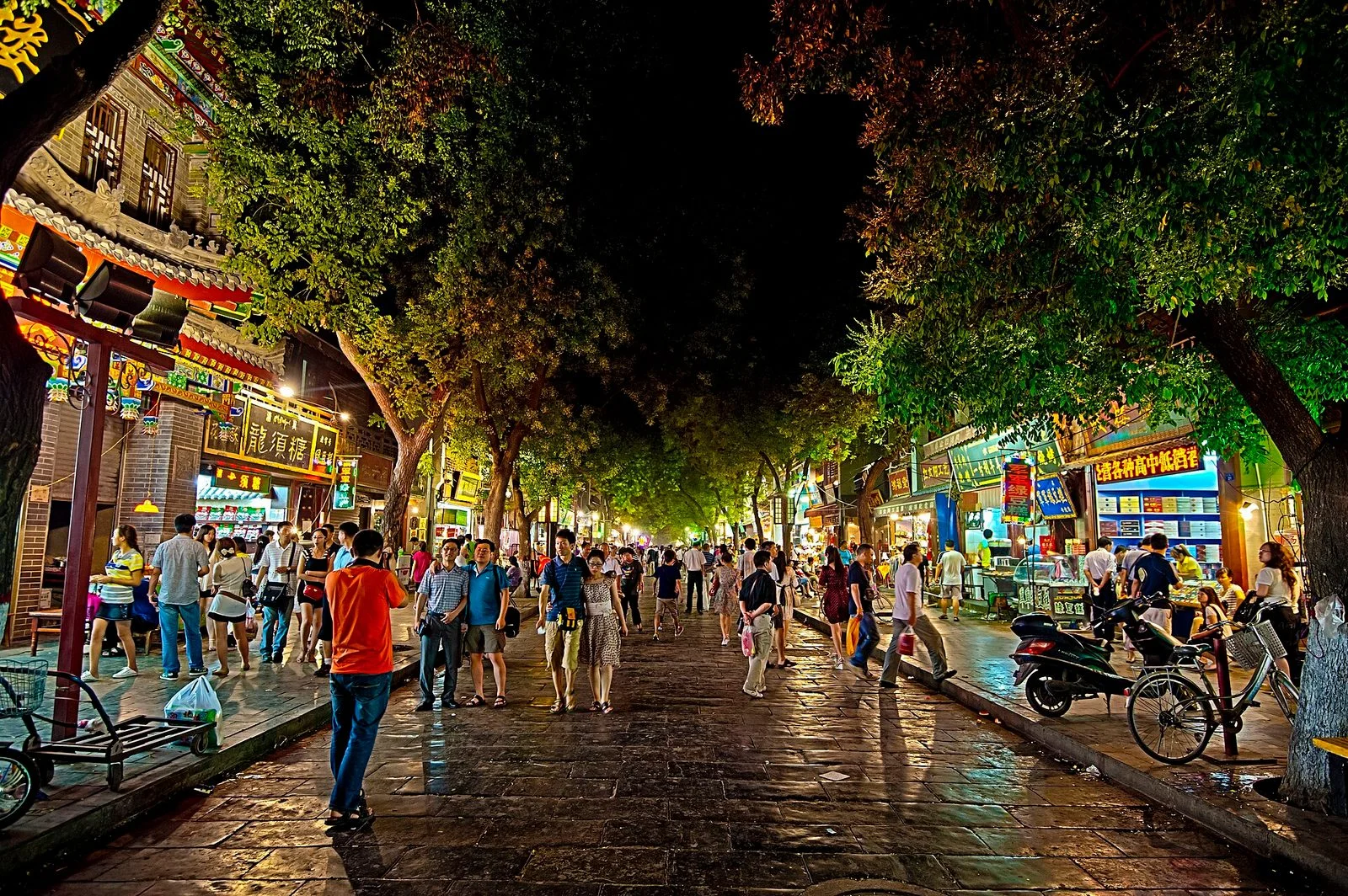
A main street of the Hui Quarter north of the Drum Tower
Beiyuanmen is in Lianhu District. Its south end meets the Drum Tower, and to the north it connects with the Xiyangshi and Dapiyuan area. According to the Xi'an Local Chronicles Office, the street was redeveloped between 1992 and 1993 into a faux-antique cultural tourism street covering four streets—Beiyuanmen, Xiyangshi, Huajue Lane, and Dapiyuan—with a total length of about 1,100 meters. What visitors call “Muslim Street” today is not an official street but a general name for this Hui neighborhood; Beiyuanmen, near the Drum Tower, is often treated as the starting point for entering the neighborhood. In 2022, the Beiyuanmen historical and cultural block was selected in the second batch of national-level night culture and tourism consumption clusters.
The Great Mosque in Huajue Lane stands northwest of the Drum Tower, reached by turning off Beiyuanmen. Local chronicles record that the mosque was first built in the first year of the Tianbao era of the Tang dynasty (742), and that its present layout was repaired through the Song, Yuan, Ming, and Qing dynasties. It was listed as a Major Historical and Cultural Site Protected at the National Level in 1988. This is not a newly built faux-antique attraction but a working mosque: do not enter the prayer area or photograph people while they are praying.
From jinggao and persimmon cakes to dried fruit and spices
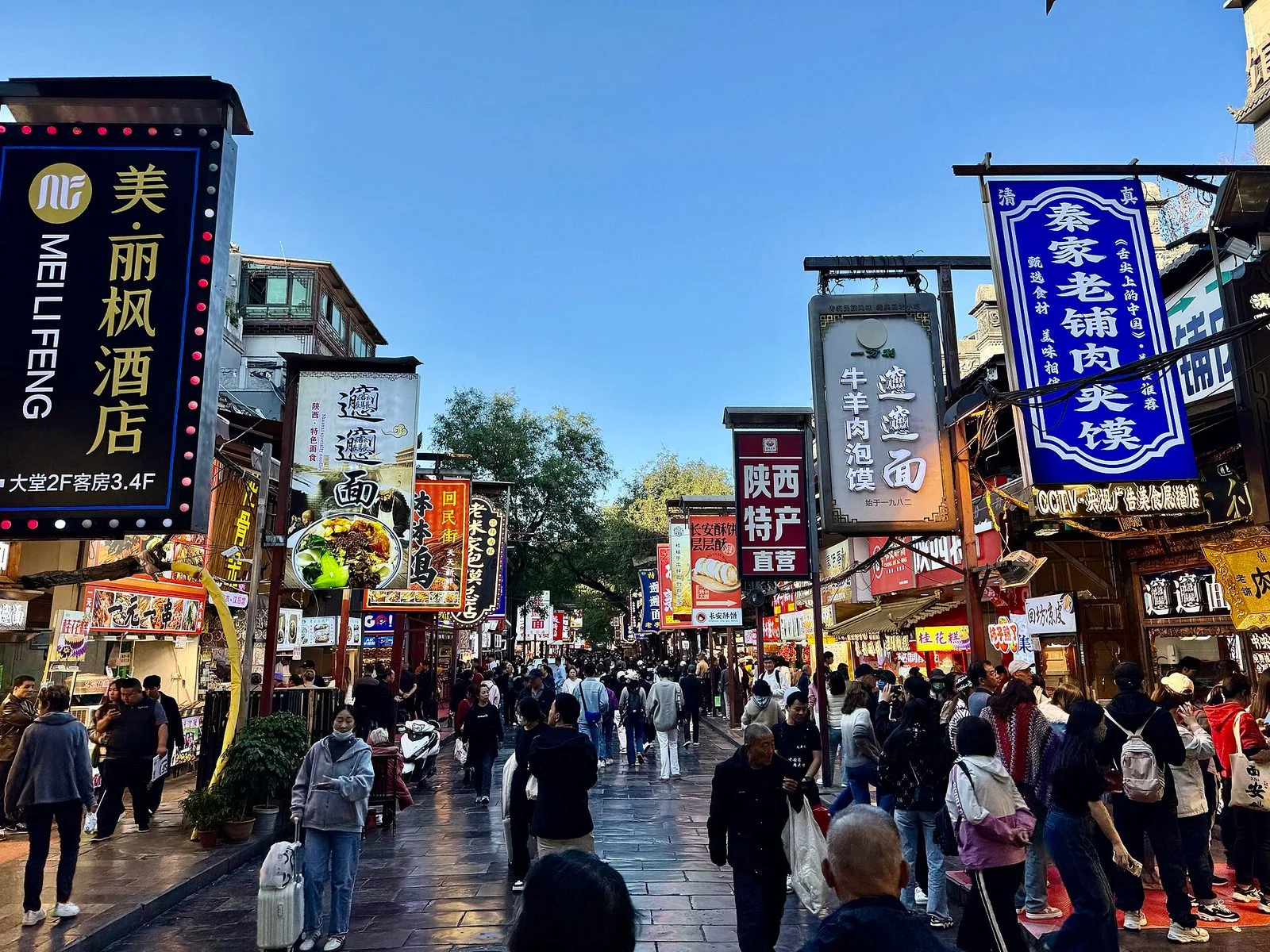
The density of stalls differs between the main street and the side lanes. Beiyuanmen's main street draws the most visitors, with halal restaurants one after another selling soup dumplings, cured beef and mutton, barbecue, sour-soup dumplings, beef and mutton paomo, and steamed meat with rice flour. Xiyangshi and Dapiyuan are closer to residents' daily life, and foot traffic is usually lighter than on the main street. During the 2026 National Day holiday, Xi'an Net reported that by midday the main and side streets were already “thronged with people,” and that Dapiyuan and Xiyangshi on the west side also had rows of shops.
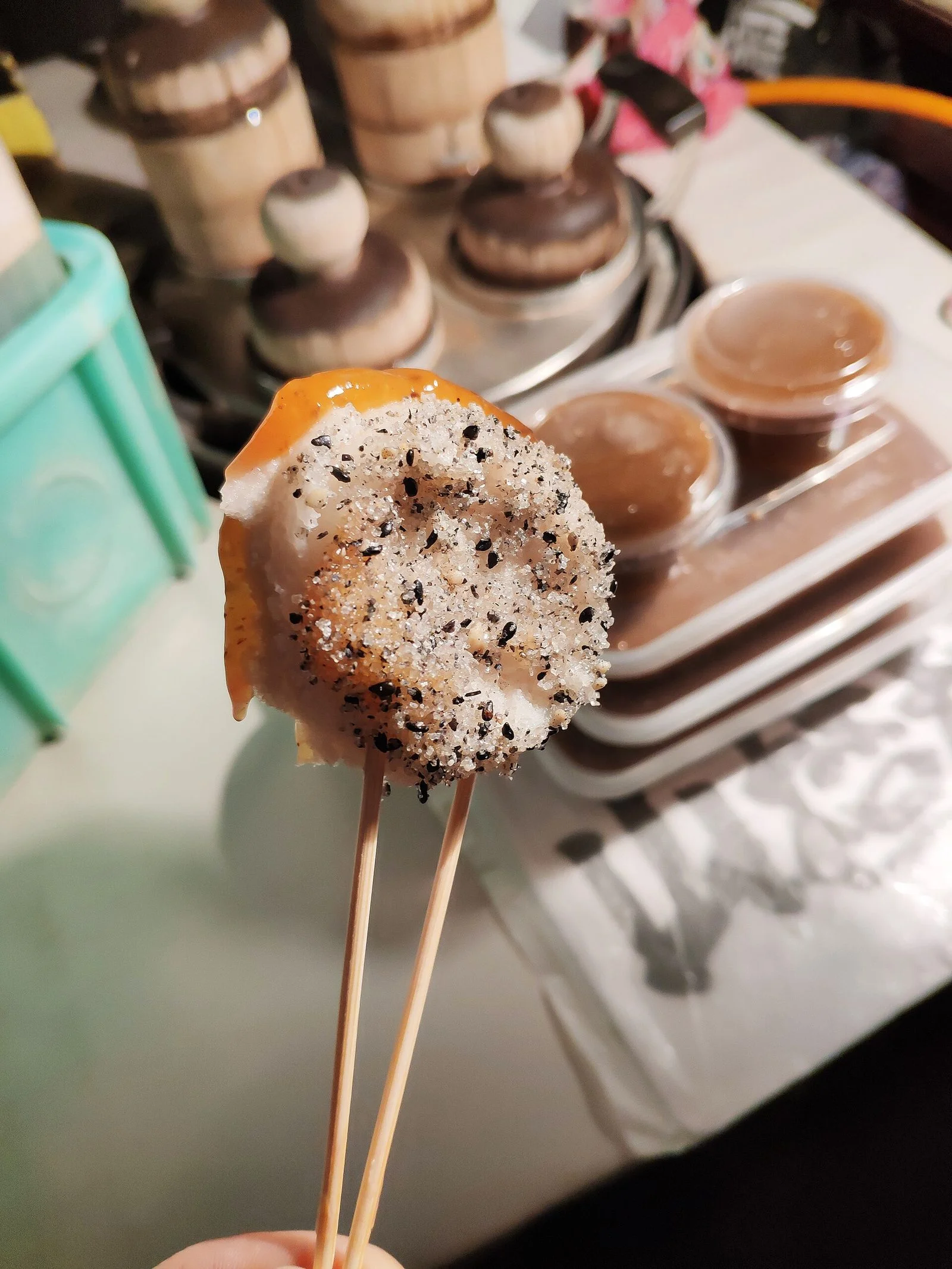
Among the sweets, one common item is eight-treasure rose jinggao: glutinous rice steamed in small round baskets, dipped in rose jam, sugar, and sesame, and eaten from a bamboo skewer. Persimmon cakes are made from persimmon and flour and are more common from autumn into early winter. Dried fruit stalls commonly sell walnuts, raisins, and red dates, while spice stalls have Sichuan pepper, cumin, and more; before buying, check the packaging, ingredients, and storage conditions. Jinggao should be eaten freshly steamed, and persimmon cakes change texture once cool.
Prices, hygiene, and bargaining: ask the terms first
The same snack can differ by a few yuan from shop to shop, and portions and prices on the main street and side lanes are not necessarily the same. Many shops post price lists, and there is limited room to bargain. For dried fruit, spices, and pastries sold by weight, ask whether the price is per jin or per kilogram and whether packaging is included before asking the vendor to weigh. At stalls without posted prices, ask the total before paying.
Hygiene varies from stall to stall. Freshly steamed, grilled, or fried items make freshness easier to judge; cold dishes and cut fruit left out for a long time, as well as pre-boxed pastries, call for caution in hot weather. Halal restaurants do not use pork, and you should not bring non-halal food inside. If you want to sit down and eat, choose a place with fast table turnover where you can see the kitchen or prep counter; that is more practical than judging by the sign alone.
When to go, and how not to disturb residents
Beiyuanmen is where Hui residents live, not just a commercial street. Before photographing shops or street scenes, check that you are not blocking the way; do not take close-up photos of residents, children, or people praying; keep quiet at the mosque entrance and alley mouths. Give rubbish, skewers, and packaging to the shop or put them in a bin; do not pile them at residents' doorsteps.
The neighborhood is walkable all day, but shops open at different times; restaurants generally run from morning into the night. The main street is busiest from evening into the night, and by midday on public holidays it is already crowded. To look around at an easier pace, a weekday morning or before dusk is better. Most stalls accept mobile payment, but small stands may not take foreign bank cards, so a little cash is safer. If you are looking for a particular old shop, confirm that it is still at the same address; shops change quickly, and shops named in older guides may no longer be open. The neighborhood and shop information in this article was verified 2026-11-11; conditions on the ground may differ.
Useful official references
Check the relevant official service before making arrangements. These links are references, not a guarantee of current services.
- Xi'an Local Chronicles Office: Distinctive Dining Street—Beiyuanmen Hui Quarter Cultural Street (verified 2026-11-11) ↗
- Xi'an Local Chronicles Office: The Great Mosque (verified 2026-11-11) ↗
- Shaanxi Provincial People's Government: Four Shaanxi Sites Selected as National-Level Night Culture and Tourism Consumption Clusters (verified 2026-11-11) ↗
- Xi'an Net: National Day Brings the Old City to Life as Visitors Seek Out Xi'an Flavors (verified 2026-11-11) ↗