Granite peaks and old pines
Mount Huangshan lies in southern Anhui. The Ministry of Culture and Tourism describes the area through its celebrated combination of pines, unusual rocks, cloud seas, hot springs and winter snow. The scenery is built around the relationship between granite forms and vegetation: pines take root on steep slopes and ledges, while exposed rock faces give the peaks their sharply defined profiles.
UNESCO describes Mount Huangshan as a landscape of massive granite boulders, ancient pine trees, natural stone pillars, waterfalls, caves, lakes and hot springs. The World Heritage property was inscribed in 1990 for both cultural and natural values. Its scenery also influenced Chinese landscape painting and literature, so the mountain is understood through both its geology and its long history as an artistic subject.
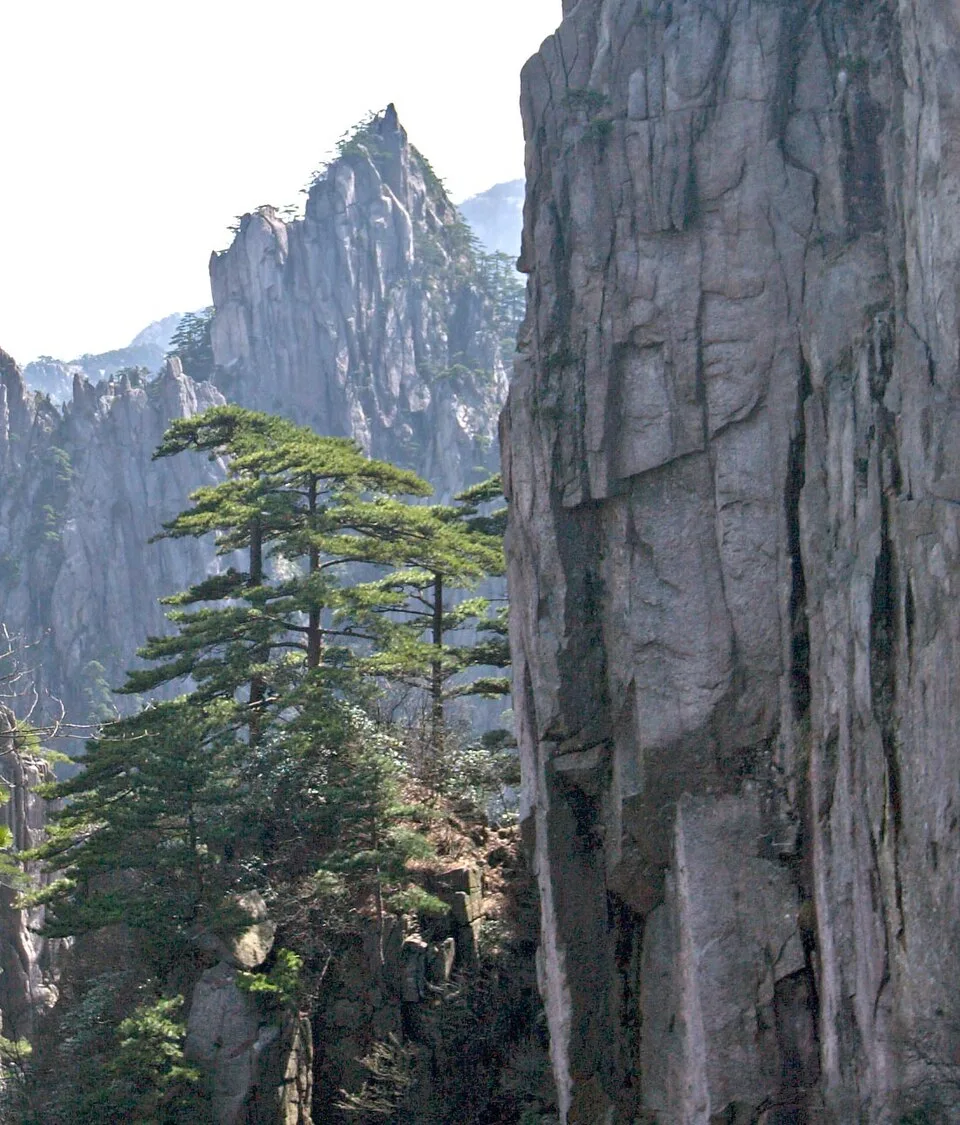
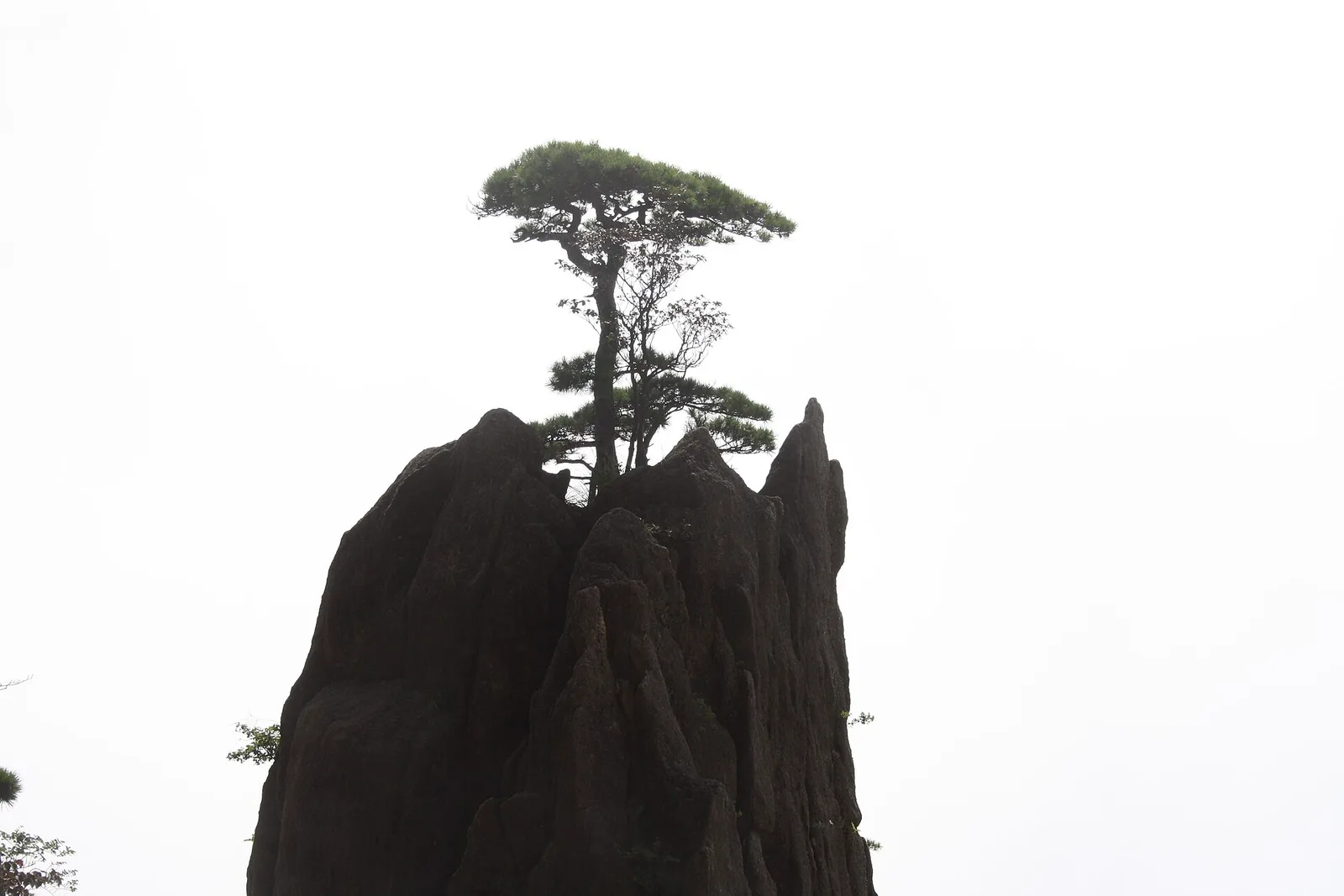
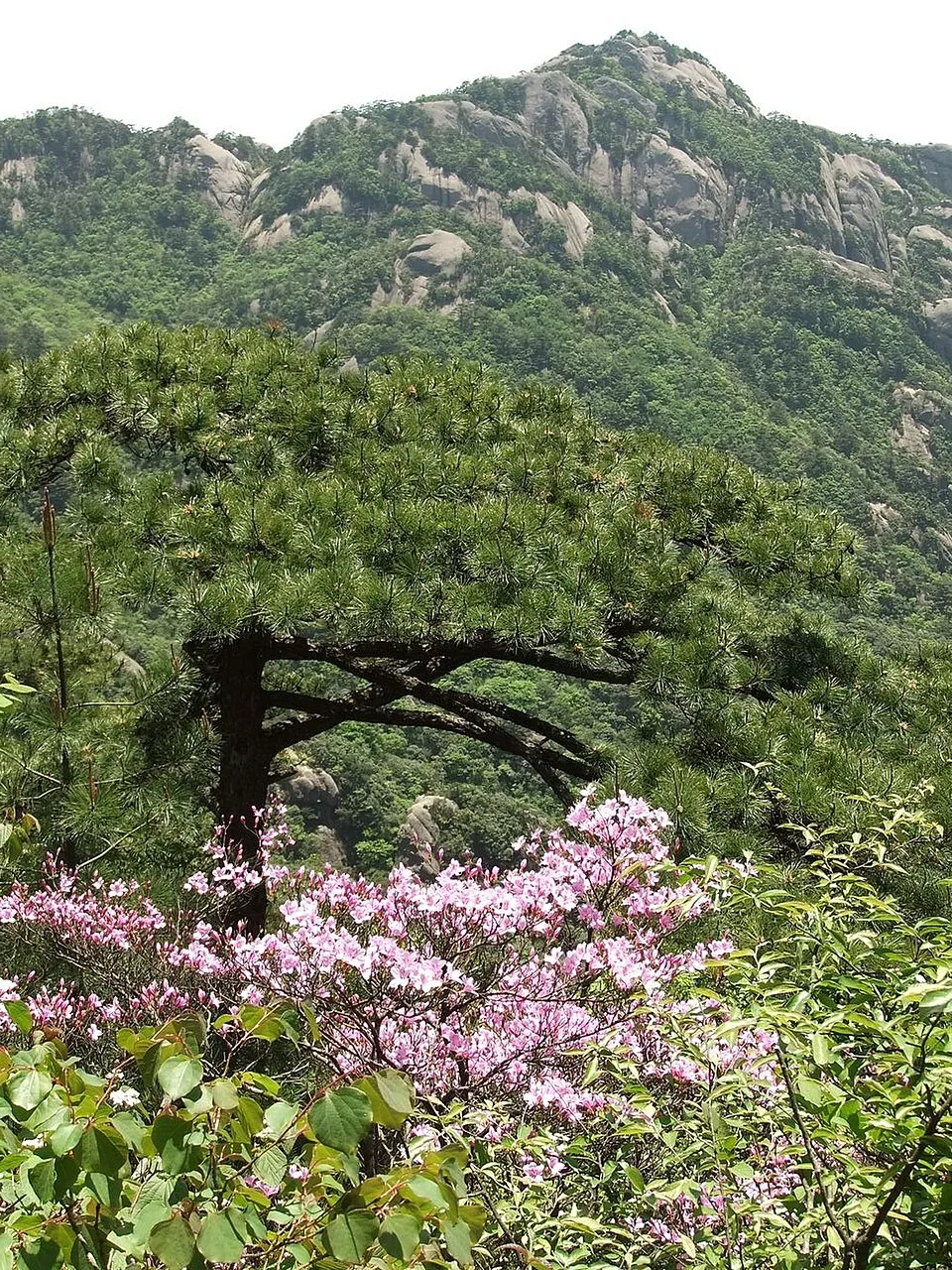
Peaks emerging through cloud
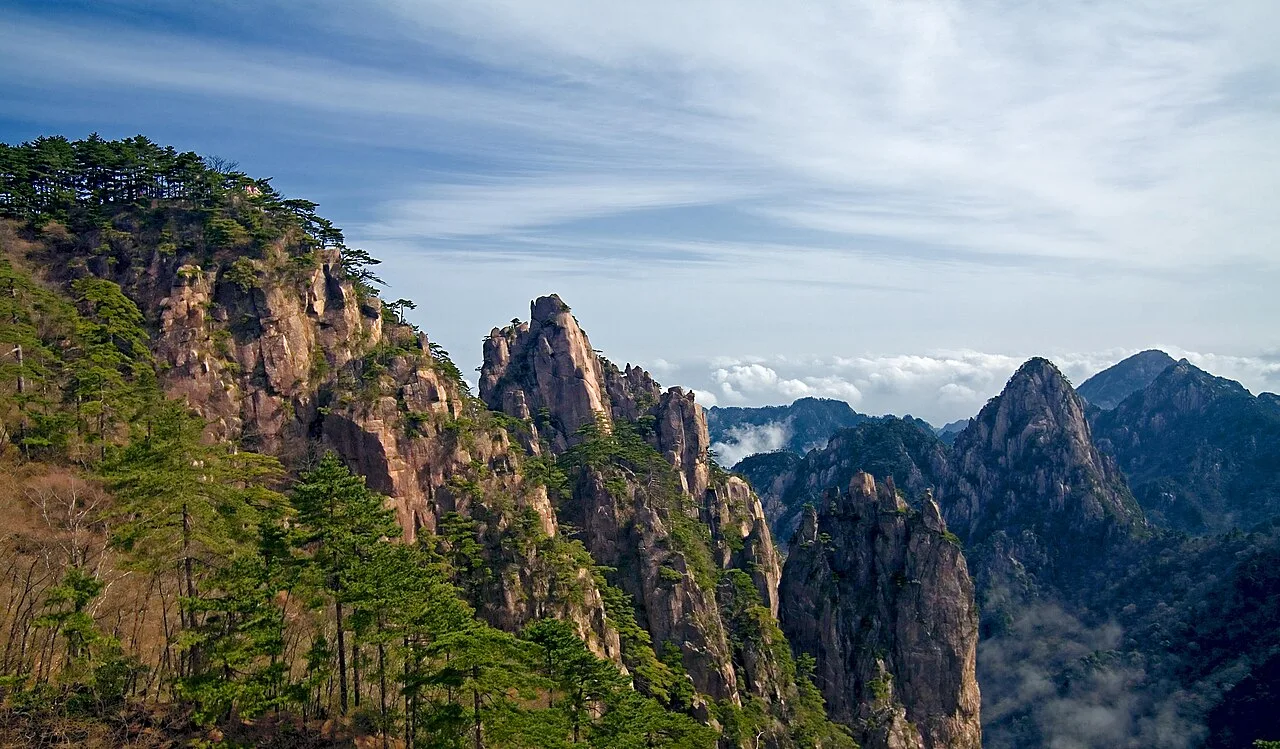
The Ministry of Culture and Tourism counts 88 peaks above 1,000 metres within the scenic area and identifies Lotus Peak, Bright Summit and Tiandu Peak as its three principal peaks. From a viewpoint, look across the ridgelines and notice how cloud and mist can hide or reveal parts of the granite formations. Cloud seas are a noted feature, but their appearance depends on weather and visibility and cannot be guaranteed on a particular visit.
The mountain is more than a single summit: its appeal comes from successive peaks, rock formations and pines seen from different elevations. A broad panorama helps show the scale of the ridges, while closer viewpoints reveal the shapes of individual rocks and trees. Conditions may change quickly in a mountain setting, so keep expectations flexible when visibility is limited.
Steep paths and visit planning
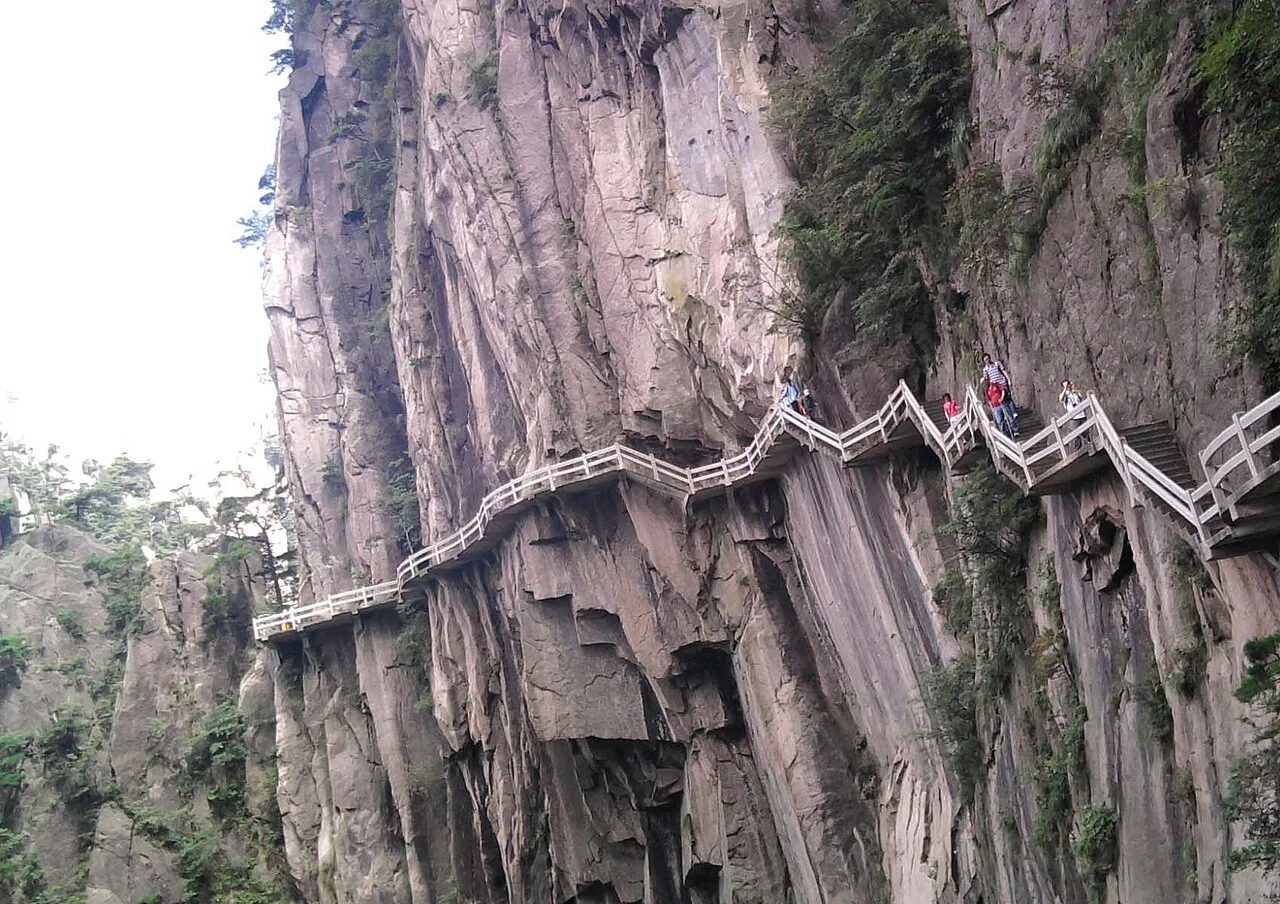
Some paths on Huangshan include stairways built along steep rock faces. The photograph here shows one such cliffside section; it illustrates the terrain but should not be treated as a current route or access notice. Visitors who are uncomfortable with sustained stair climbing may want to check the latest official information about open areas and available access options before setting out.
Wear secure footwear with good grip and allow for uneven, rising paths. Rain, mist or other weather conditions can affect both visibility and walking surfaces in a mountain area. Check the scenic area's current notices before travel for reservation requirements, peak or trail access and any temporary closures; these details can change and are not listed here as fixed operating rules.
Useful official references
Check the relevant official service before making arrangements. These links are references, not a guarantee of current services.