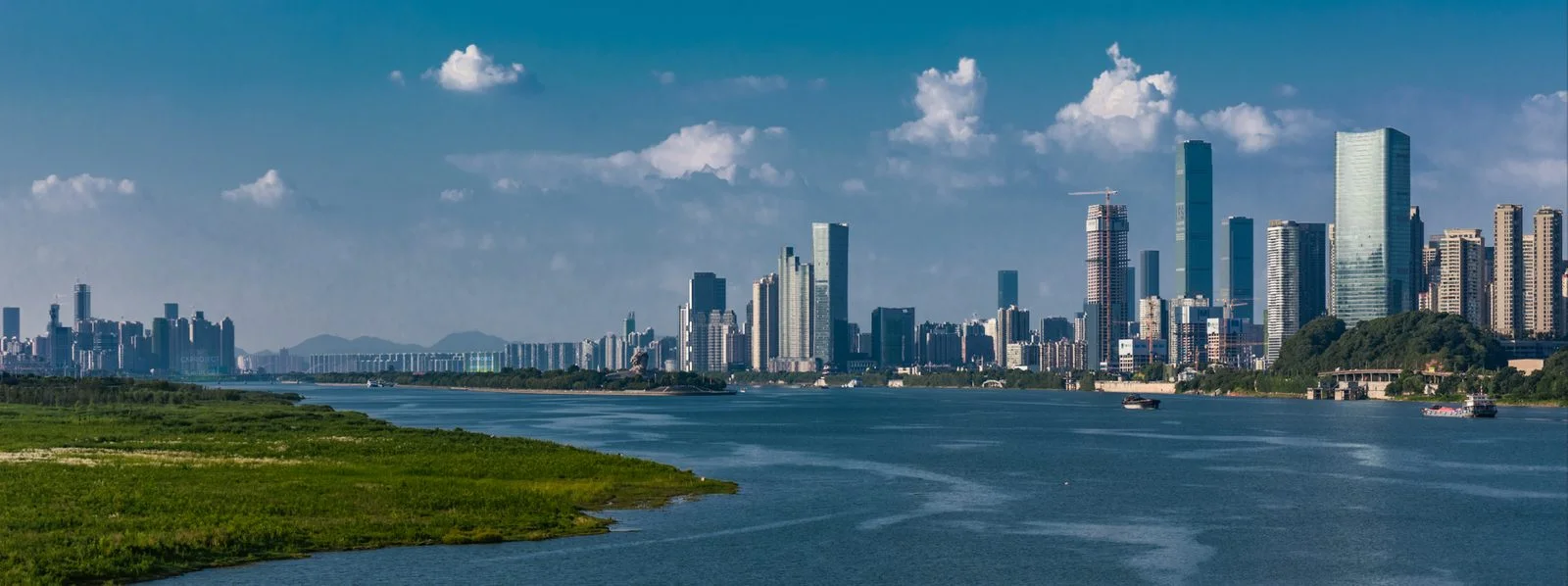
An 838-metre pedestrian street
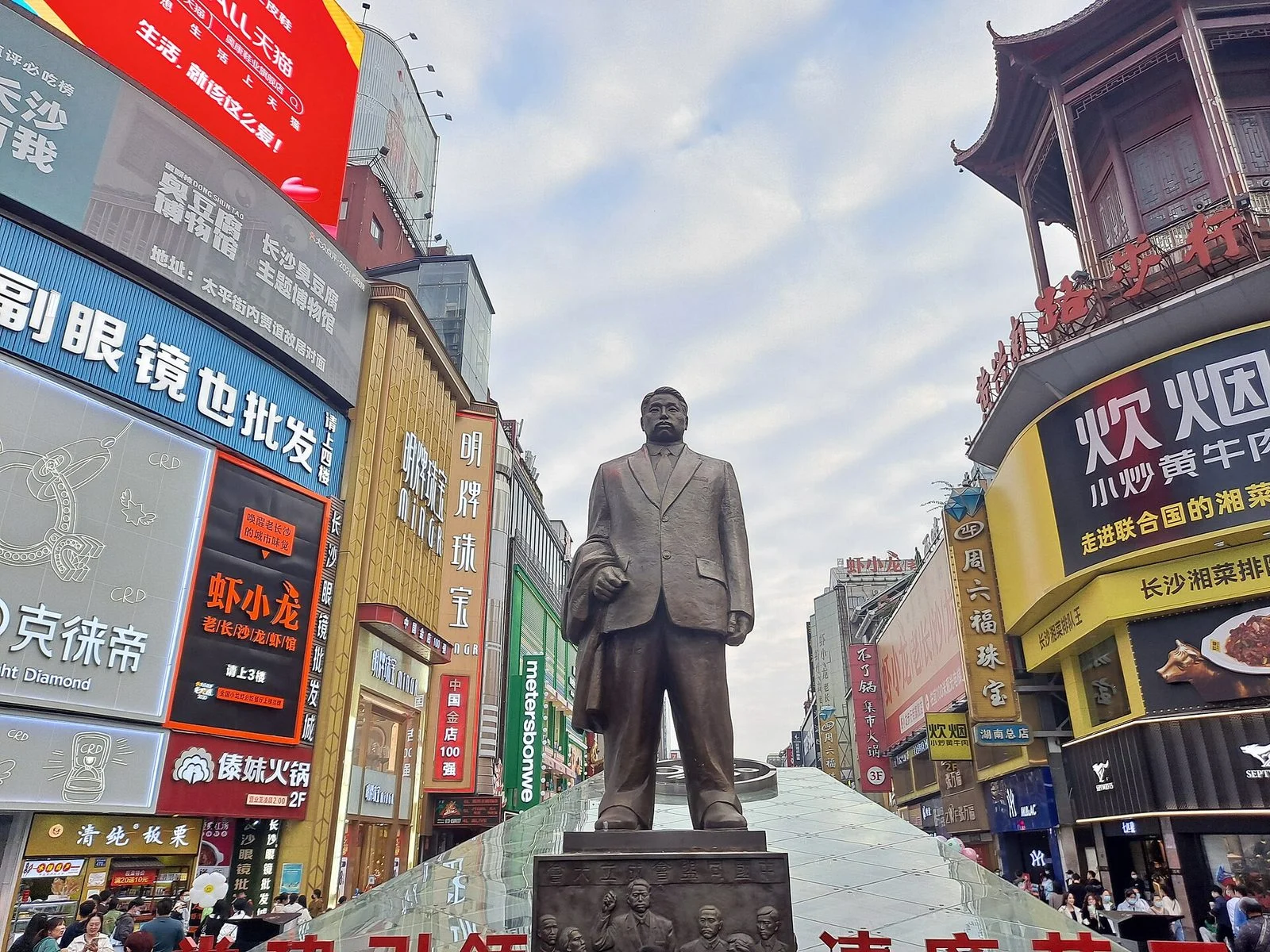
Huangxing Road Pedestrian Street sits at the heart of the Wuyi business district, running from Simenkou in the north to Nanmenkou in the south, 838 metres long and 23 to 26 metres wide. It opened officially in 2002 and was one of Hunan's earliest commercial pedestrian streets, with more than a thousand shopfronts at the time. The bronze statue of Huang Xing at the street entrance, on the Jiefang West Road side, is the northern landmark; locals often arrange to meet “under the Huang Xing statue”.
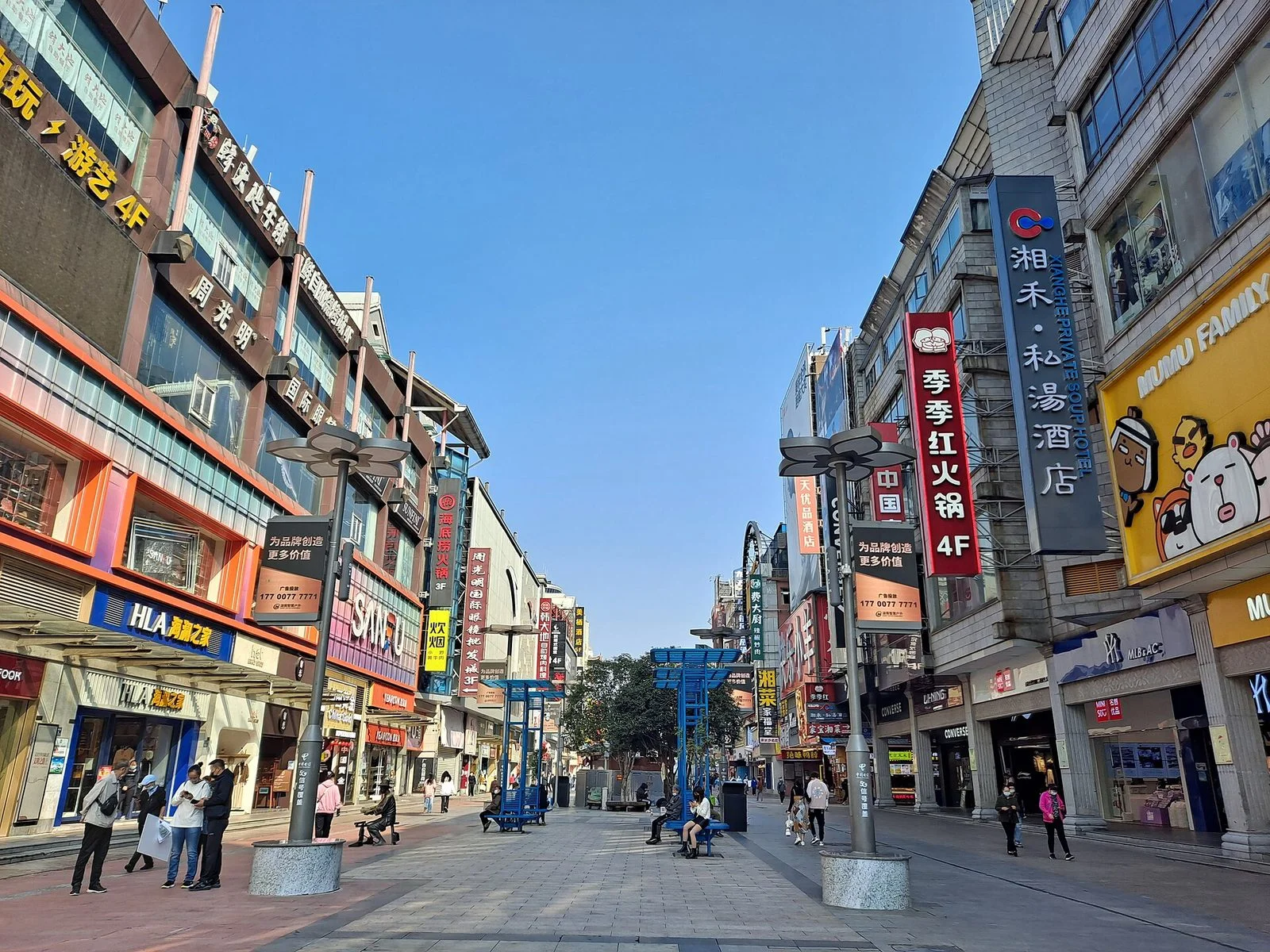
It is a general commercial street, not a single snack street. Clothes, accessories, restaurants and tea shops line the street and the malls on both sides, along with cinemas, escape rooms and other entertainment. The middle and southern sections hold most of the malls and the pedestrian core, while the northern end near Wuyi Square has more junctions and traffic. The street runs through the Wuyi business district, and the stretch from Zhongshanting to Nanmenkou concentrates the malls and the pedestrian zone. The surface is paved with stone slabs, with planting strips and seats on both sides where you can rest; the street is wide and the shops dense, so a single walk can cover shopping and eating.
From day into night
By day the street is relatively quiet and good for going into shops; after dusk, people leaving work join visitors and the crowds on Huangxing Road and Jiefang West Road swell noticeably. In 2020 the Huangxing Road South pedestrian commercial street was chosen for the second batch of the Ministry of Commerce's pedestrian-street upgrading pilot, and the area has kept adjusting its mix since. The street is open-air, and each shop keeps its own hours, so check the notice at the door before going in.
A route can follow “street shops — malls — surrounding lanes”: look at the street-level shops first, then cool off in the malls on either side, and finally turn into Pozi Street or Taiping Old Street to eat. Many of the malls are mixed-use, with restaurants and entertainment on the upper floors, so a shopping walk can continue upstairs; the whole loop stays east of the river, with no need to cross back and forth.
How it differs from Pozi Street and Taiping Old Street
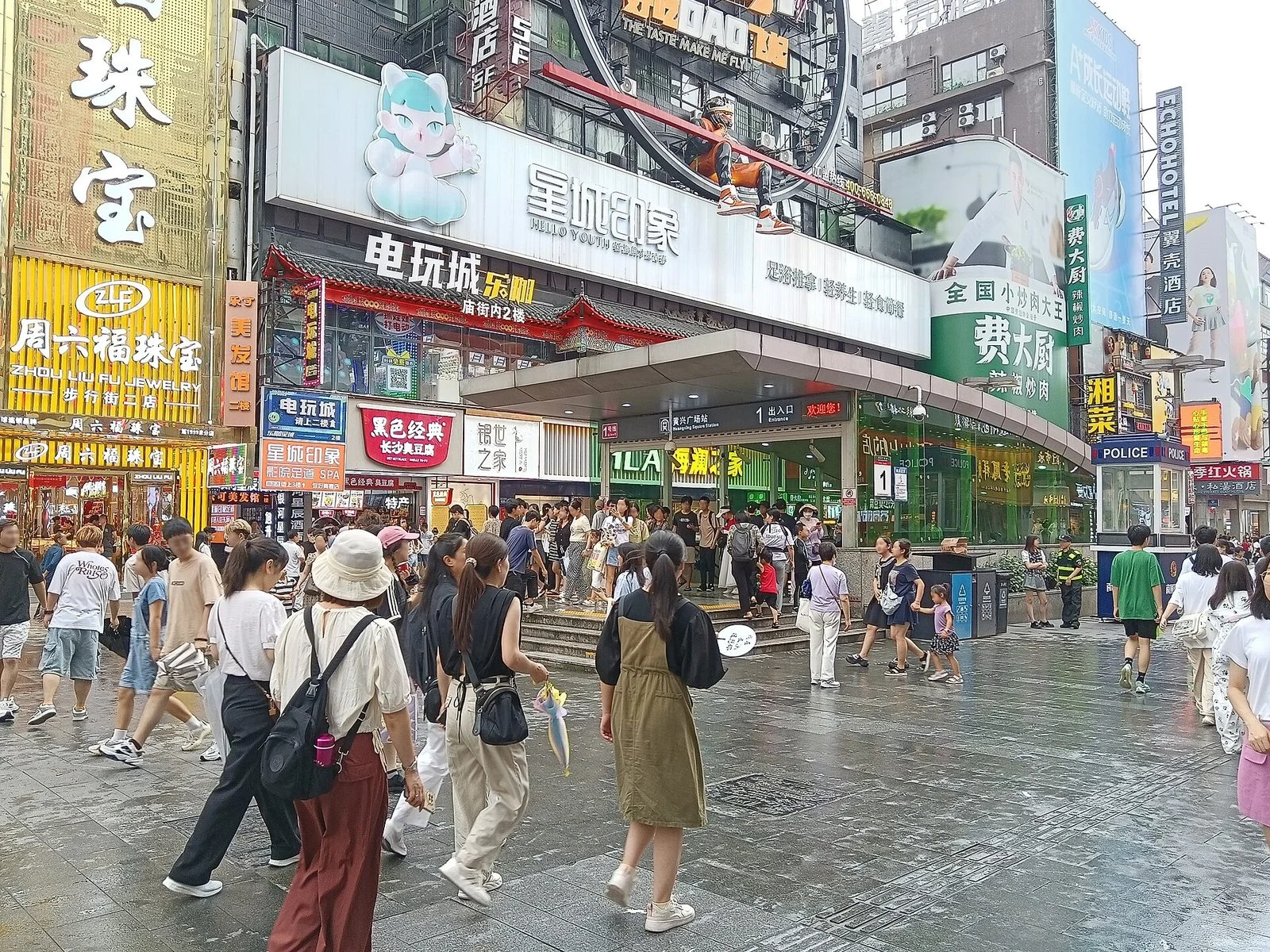
The three streets are close but serve different purposes. Huangxing Road takes its name from Huang Xing, a founding figure of the 1911 revolution, and the statue at the entrance commemorates him. Huangxing Road is mainly shopping and general commerce; Pozi Street is mainly food, with Huogongdian on it, running east-west between Huangxing Road South and the Xiang River; Taiping Old Street runs parallel to Huangxing Road, a few minutes west of the Jiefang West Road junction, with old buildings and grey-brick houses and shops leaning towards design, local products, tea and small bars.
If you have time for only one, choose Huangxing Road to shop and see the malls, Pozi Street for snacks, and Taiping Old Street for old buildings and gifts. The three can be joined into one walk, heading north from Nanmenkou all the way to Wuyi Square; but holidays are crowded, especially around the Huang Xing statue and the metro entrances, so agree on a specific exit when meeting and keep an eye on children in the crowd.
Useful official references
Check the relevant official service before making arrangements. These links are references, not a guarantee of current services.