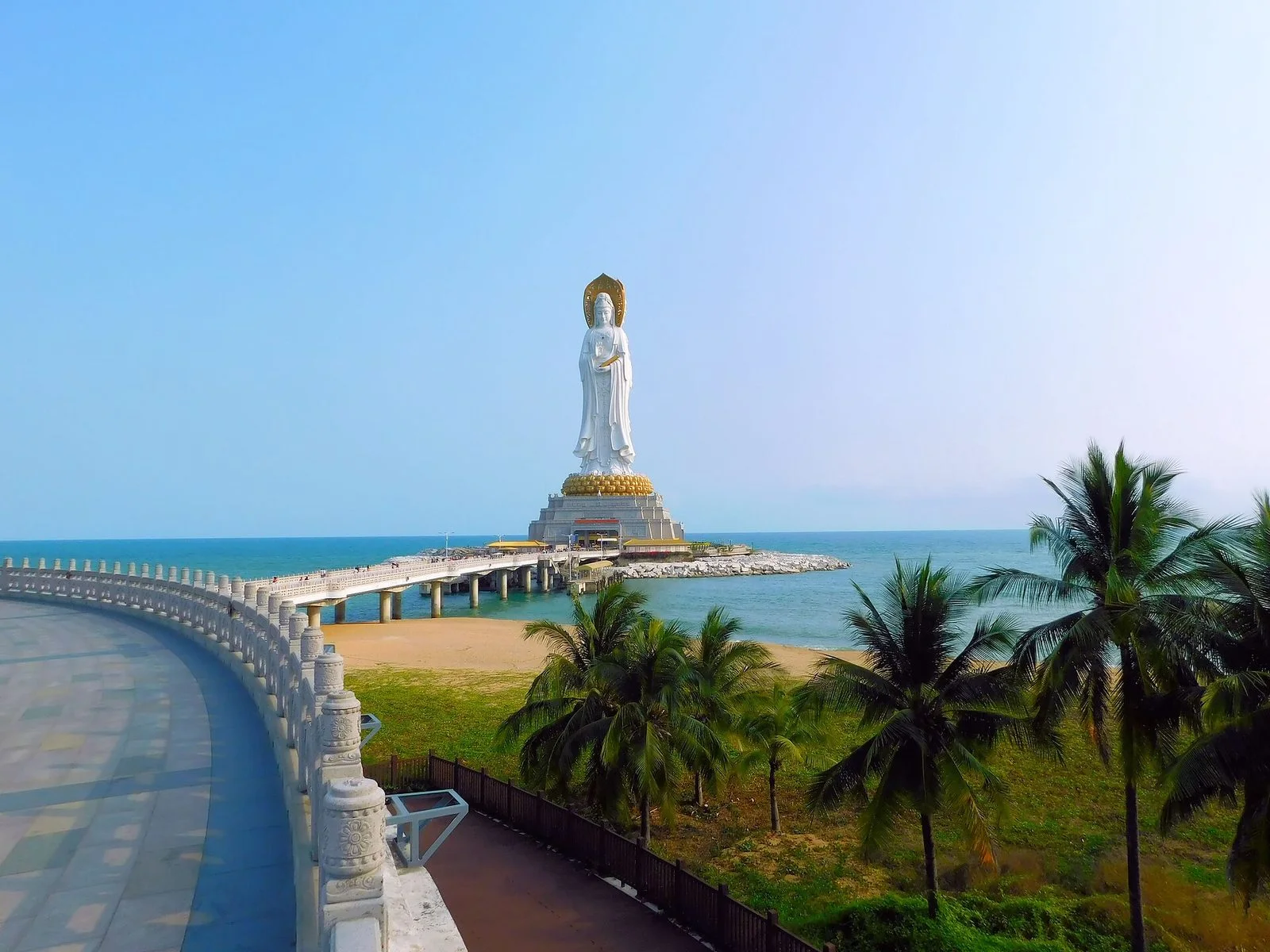
The 108-meter Guanyin statue in the sea
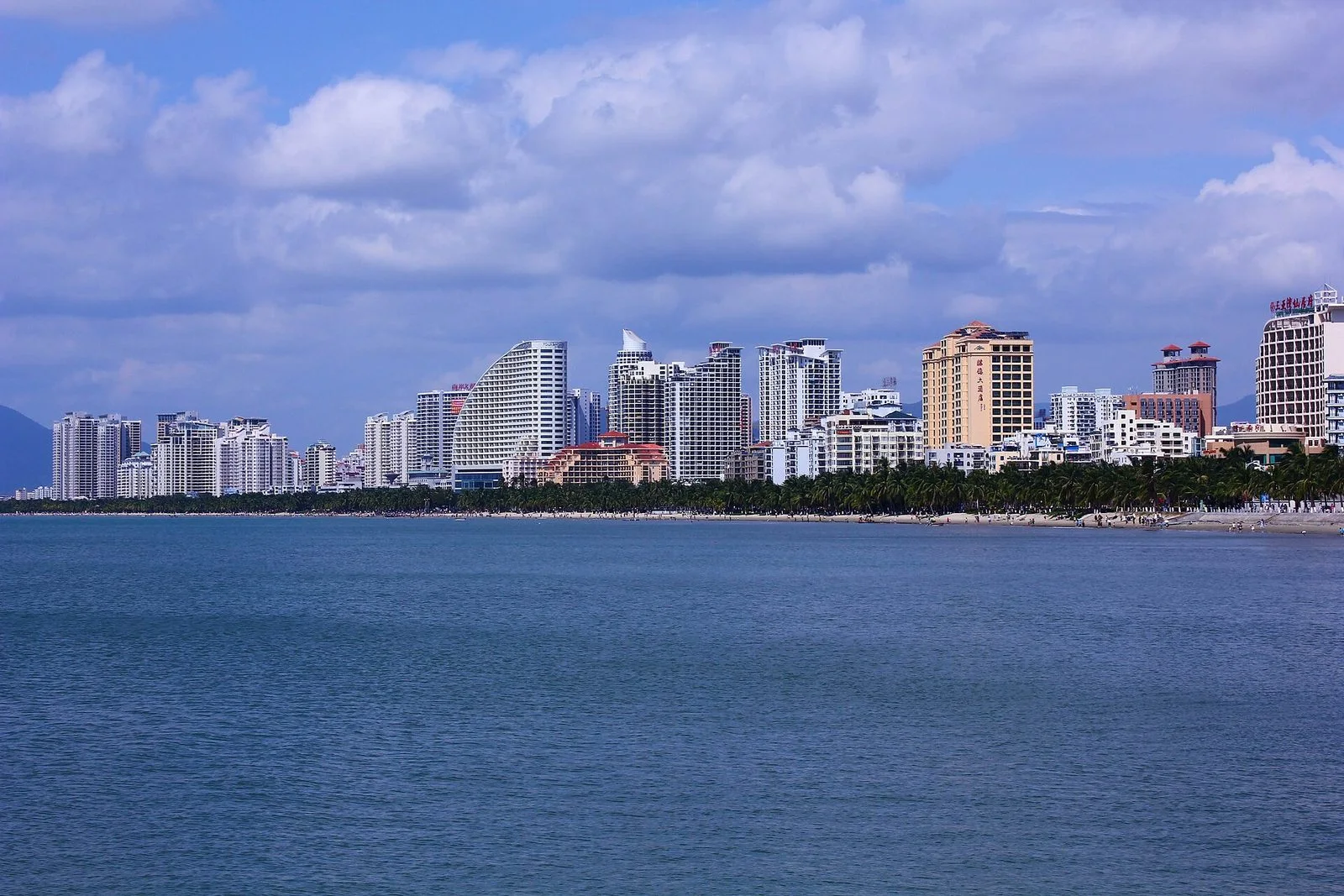
Nanshan Cultural Tourism Zone is in Yazhou District, about 40 kilometers from downtown Sanya. It opened in 1998 and is a national 5A-level tourist attraction. It comprises the Guanyin Cultural Park, Cihang Pudu Garden, Ruyi Jixiang Garden, Nanshan Temple, Longevity Valley, Xiaoyue Bay and the Nanshan International Intangible Cultural Heritage Center, among other areas. Hills, sea and gardens run together, so the first thing to decide after entering is which direction to take.
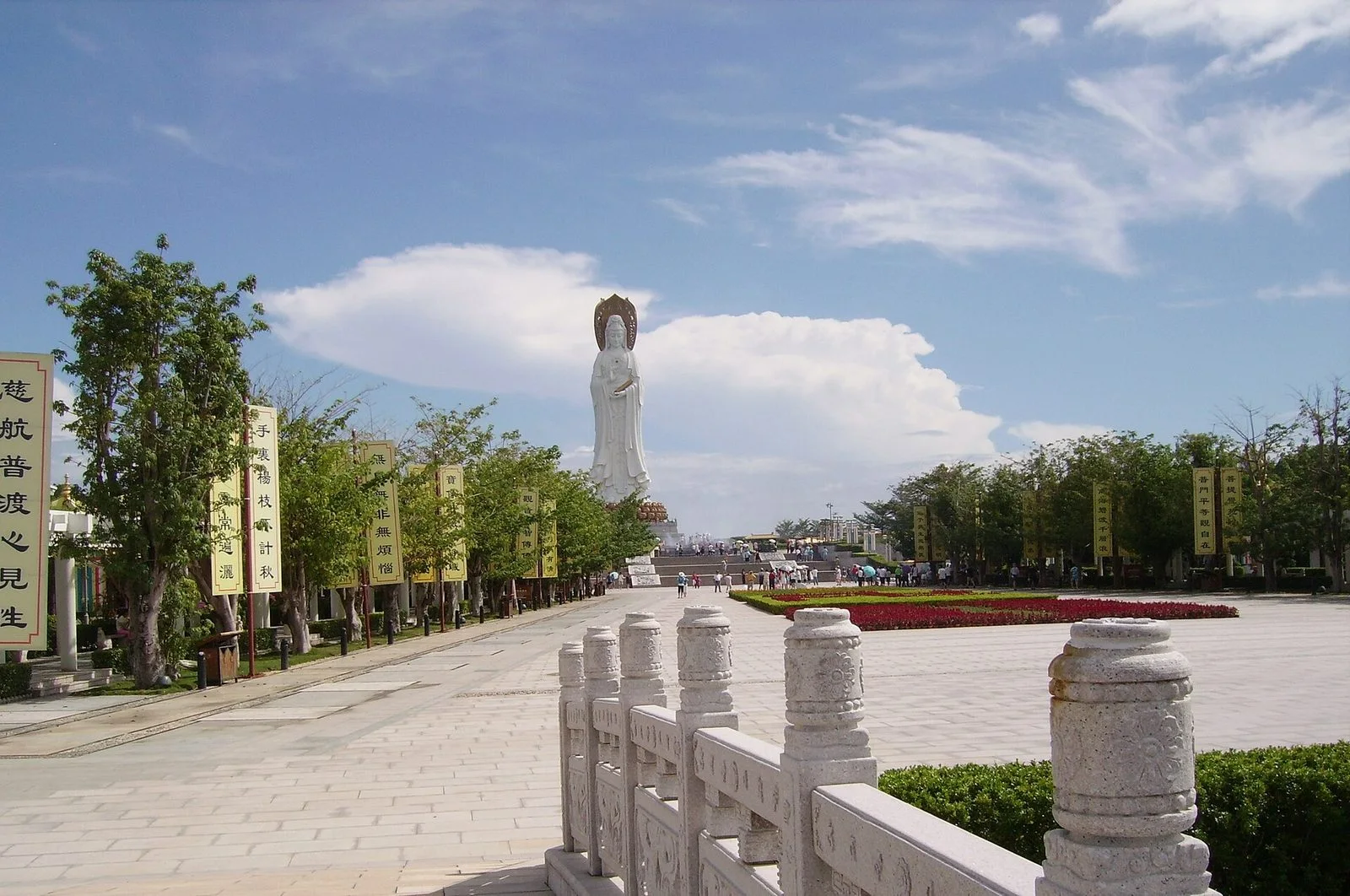
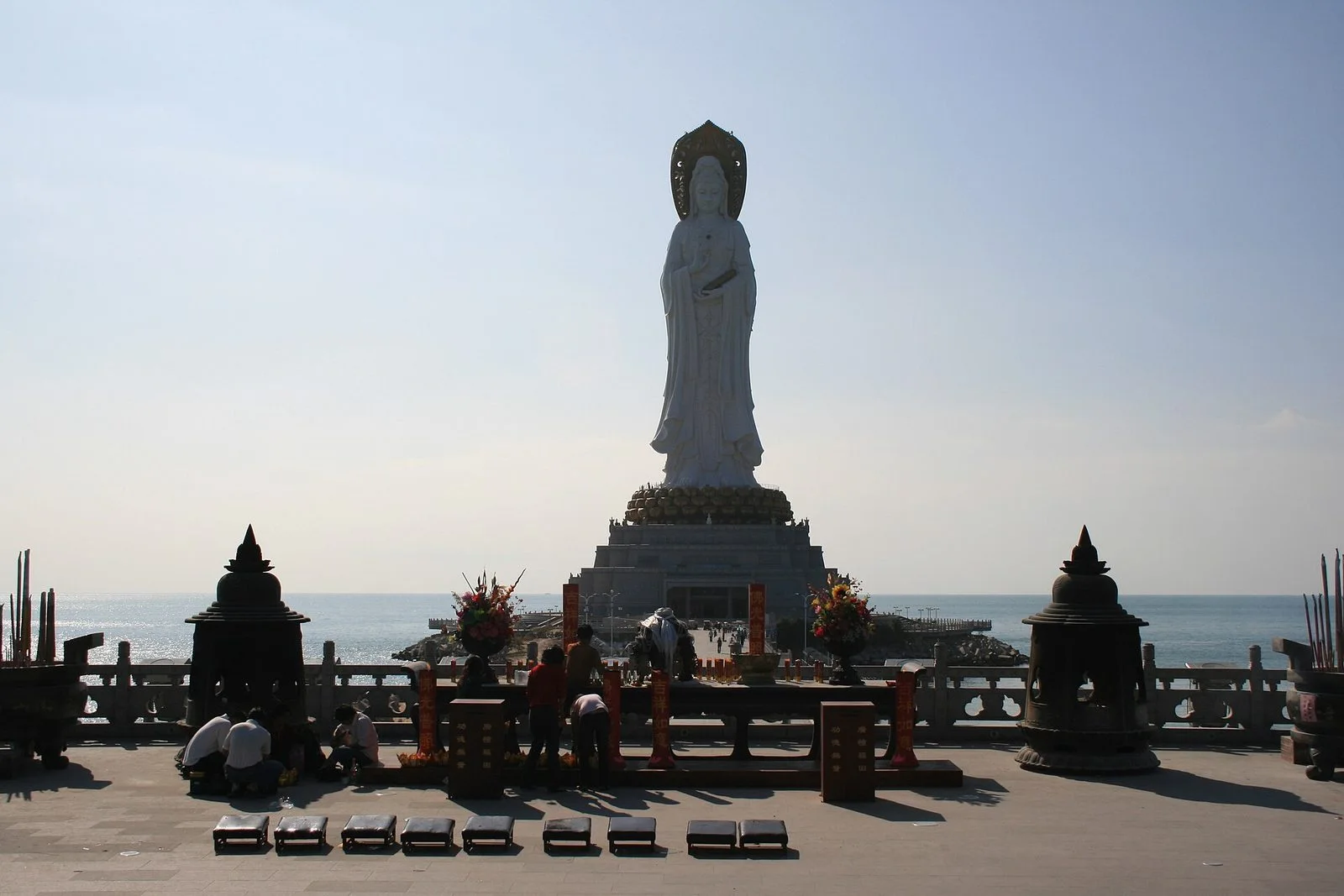
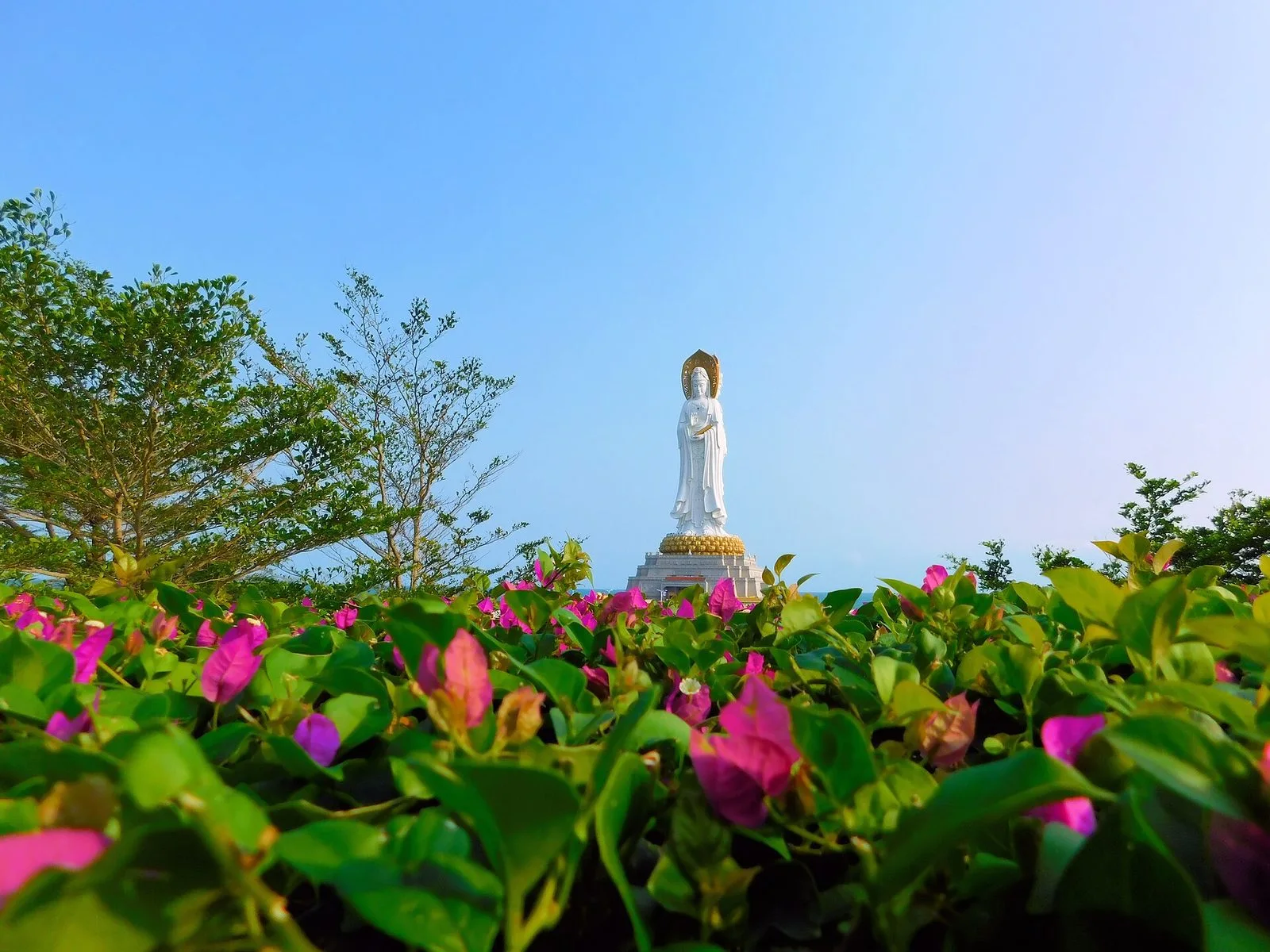
The most distinctive feature is the Guanyin statue in the sea: 108 meters tall, with three faces integrated into one body, its three faces holding a bead, a lotus and a sutra box respectively. Beneath it is a 108-petaled lotus base, and inside the diamond platform is the 15,000-square-meter Yuantong Hall. The statue stands in the sea and is linked to the shore by the 280-meter Puji Bridge; its eye-opening ceremony was held on April 24, 2005. On the bridge the sea breeze is stronger than on shore, so hold on to hats and cameras. From the square close up it is hard to fit the whole statue into one frame; step back to the walkway outside the square or a higher point on shore to get the statue and the lotus base together.
The Tang-style courtyards of Nanshan Temple
Nanshan Temple stands within the scenic area. Its foundation stone was laid in November 1995 and it was completed in April 1998; Zhao Puchu chose the site and inscribed the temple's name. The temple is built in the style of the High Tang and set against the hills with the sea in front; its Renwang Hall, Tusita Inner Court and Golden Hall rise in sequence along the central axis, with a total floor area of 5,500 square meters. Flanking the axis are a bell tower, a revolving sutra library, east and west side halls and covered climbing galleries, which you can visit after the main halls.
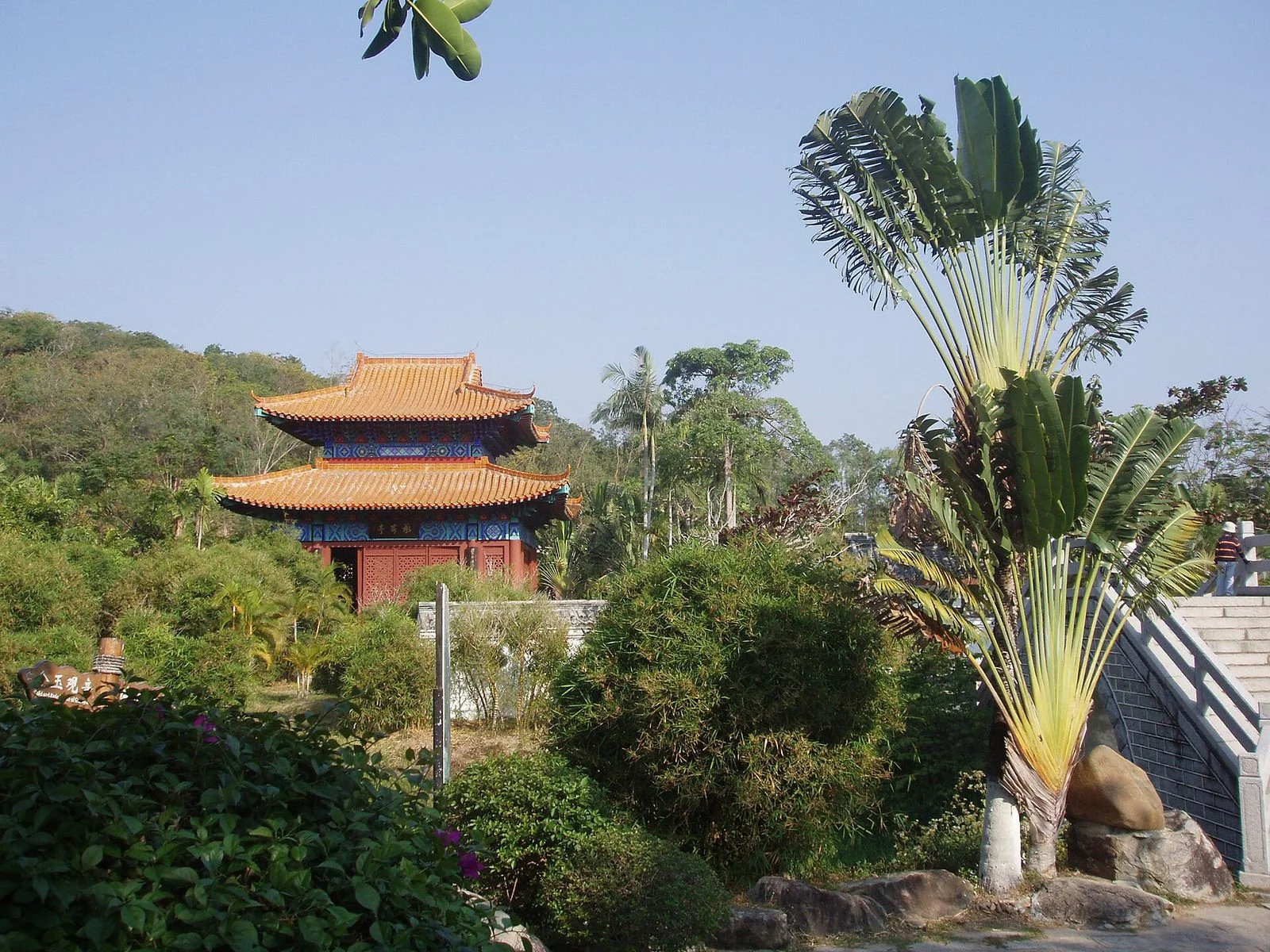
Walking in from the Renwang Hall, notice the proportions of the roof ridges, bracket sets and veranda columns; the weighty feel of Tang-style architecture comes largely from these. The Golden Hall houses the three Buddhas of the three worlds, with the sixteen arhats on either side. Light inside is dimmer than outside, so pause after entering and let your eyes adjust before looking at the details of the statues.
Gardens, vegetarian meals and pacing your visit
The scenic area faces the sea with hills behind, tropical plants grow thickly, and Longevity Valley, Xiaoyue Bay and the intangible heritage center lie in different directions. The vegetarian meal at Nanshan Yuanqi Tower is listed as a 'Famous Chinese Banquet'; if you want to try it, treat it as a proper lunch rather than a quick snack.
First-time visitors interested in Buddhist culture or architecture can spend most of their time at the Guanyin statue and Nanshan Temple. With older people or children, cut down on slopes and backtracking. Seeing just these two takes about three to four hours; adding Longevity Valley and the gardens makes half a day to a full day more comfortable. The sun is strong at midday, so carrying water and wearing a hat helps more than rushing. Nanshan is about 40 kilometers from downtown, and bus times depend on traffic, so allow more time than a map estimate.
Tickets, entry times and getting there
Prices checked on November 12, 2026: adults pay 129 yuan in peak season and 108 yuan in low season; visitors aged 60 to 69 and minors aged 6 to 18 pay half, 65 yuan in peak season and 54 yuan in low season. Peak season runs from October 1 to April 30, low season from May 1 to September 30. A ticket-only booking requires the buyer's own second-generation ID card; tickets cannot be exchanged and temporary ID cards are not accepted. Morning entry is 8:00–13:00 and afternoon entry 13:00–17:00. For foreign visitors using a passport, confirm the ticket and entry requirements on the booking page or with the ticket office on the day.
Opening hours are 8:00–17:00. The scenic area is about 40 kilometers from downtown Sanya; for bus, rail and driving routes, check the official 'Transport Guide' on the website. Routes and schedules change, so confirm again before setting out. The grounds are large, and fixing your return time in advance is more reliable than looking for transport inside the park at the last minute.
Useful official references
Check the relevant official service before making arrangements. These links are references, not a guarantee of current services.