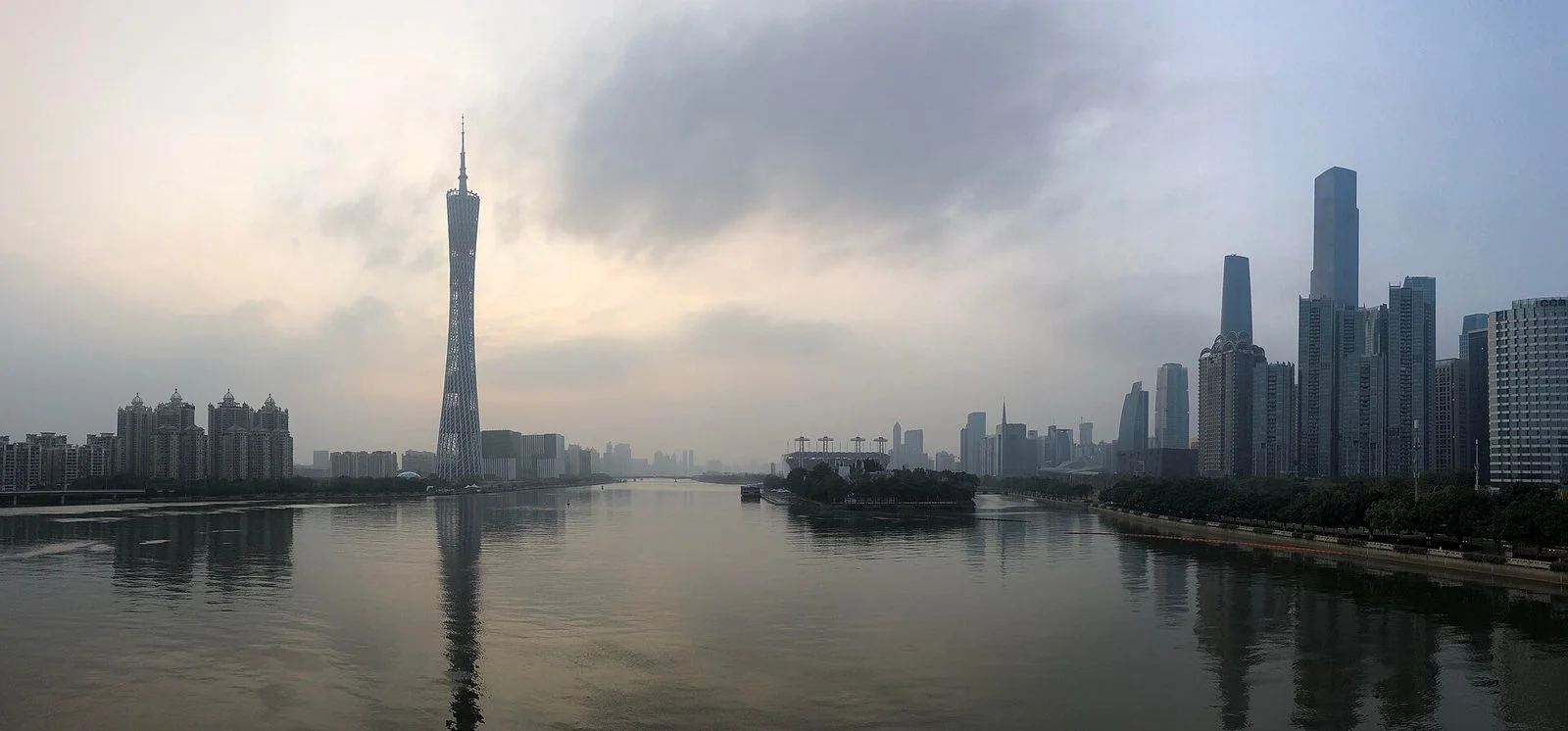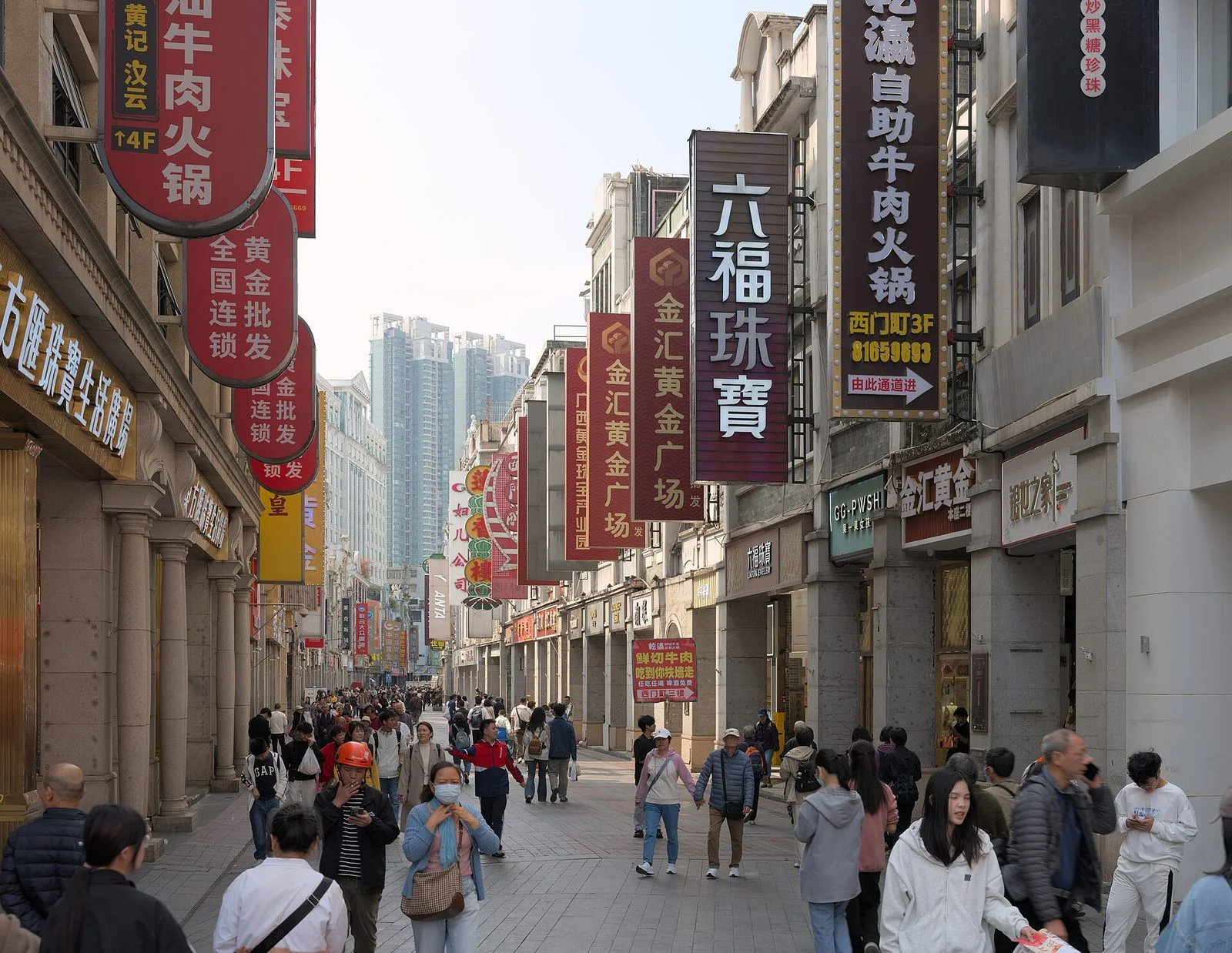
The long arcade street of Xiguan
Shangxiajiu is in Xiguan, Liwan District, formed by Shangjiu Road, Xiajiu Road and Dishipu Road, and about 1,237 meters long. It is not just a single street but a commercial belt joined from several old roads; entering from the Renmin Middle Road side, the arcade colonnade runs on, with homes above and shops below, and the corridor connects shops and pedestrians.
These buildings are not a set built for tourists. Guangzhou is hot, humid and rainy, so the ground floor of an arcade is set back as a covered walkway and the upper floors project outward; walking under the arcade keeps off some sun and showers. In the 1920s and 1930s, arcades were built around Shangxiajiu, narrow streets were widened into roads about 17 meters across, and department stores, restaurants and gold and silver shops moved in; that is how Xiguan’s commercial center took shape.
The 2019 Guangzhou Arcade Street Conservation and Utilization Plan brought 60 roads, including Beijing Road, into the arcade street scope, with traditional arcade streets totaling 26.5 kilometers and involving 3,886 buildings; the Xiguan arcade ring includes Shangjiu Road, Xiajiu Road, Dishipu Road, Enning Road, Longjin Road and Renmin Middle Road. This shows that Shangxiajiu is not a single building but a whole stretch of old-city fabric that needs area-wide protection.
What is sold under the arcades
A 2021 report on the Guangzhou municipal government website gave these figures: 373 shops and more than 5,000 merchants in the street, bringing together department stores, restaurants and time-honored brands; at that time the mix leaned toward affordable clothing, shoes, food, accommodation and department stores, and the footfall was mainly students, migrant workers and tourists. That description is tied to a point in time and does not mean every shop is unchanged today, but it shows how the street differs from a high-end mall.
Shangxiajiu today is still mainly mass-market: clothing, shoes and hats, gold and jewelry, snacks, herbal tea and sweet soups, and household goods mixed on the same street. Time-honored names were once concentrated here—Lianxiang Lou, Tao Tao Ju, Guangzhou Restaurant, Nanxin Shuangpinai and Huangshanghuang are often mentioned—but whether a particular branch is open or still serves sit-down food depends on the day; do not treat an old name as a guarantee.
The rhythm of shopping differs from a mall. There is no shared atrium or floor directory; shops sit side by side, signs project outward, and prices range from a few dozen yuan to over a thousand. For cheap clothes, walk slowly along the main street and side streets; to sit down and eat, the old shops under the arcades and street snack stalls are more concentrated. Bargaining and returns vary greatly from shop to shop, so ask before buying.
Arcades are neither scenery nor a museum
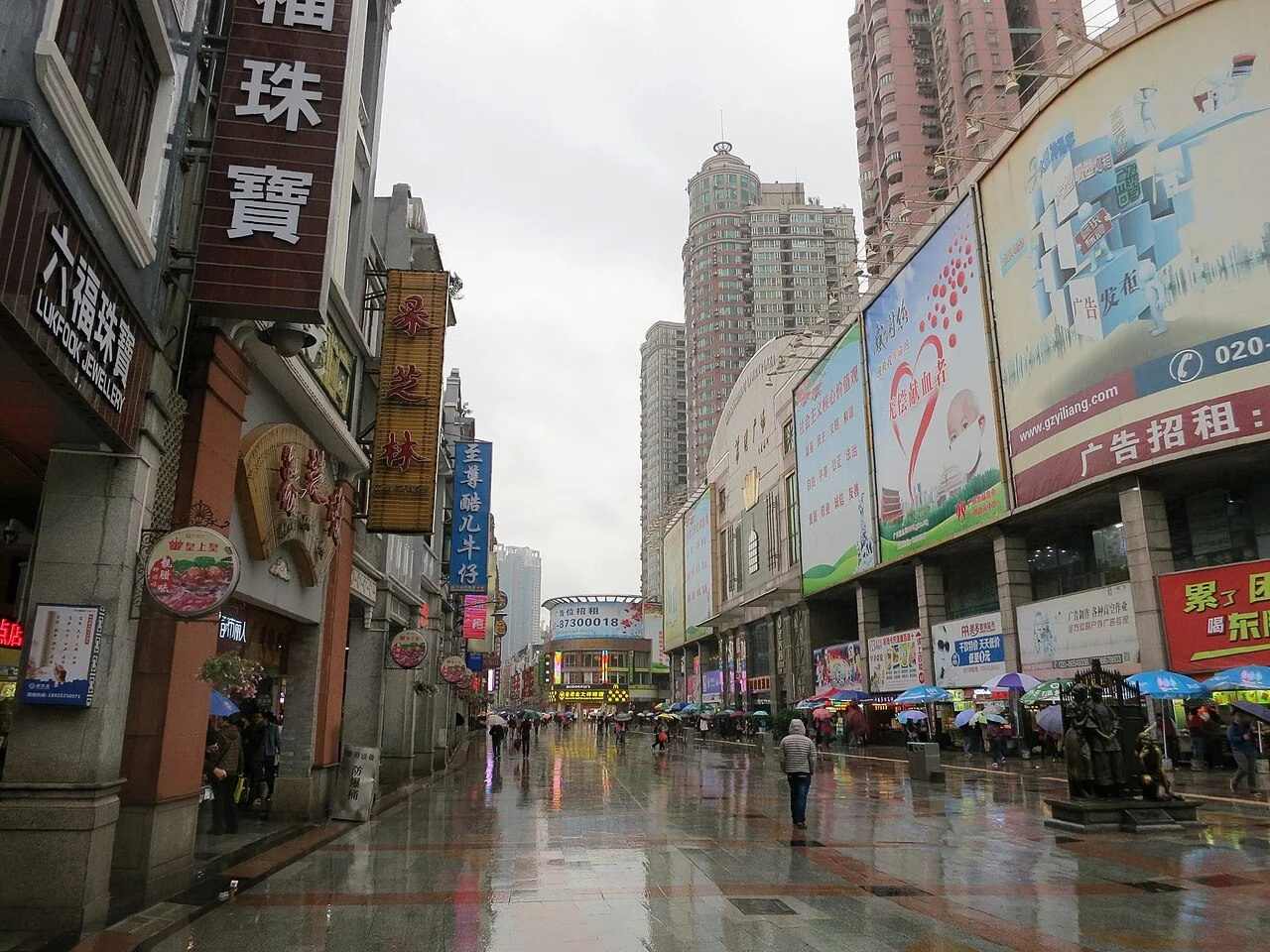
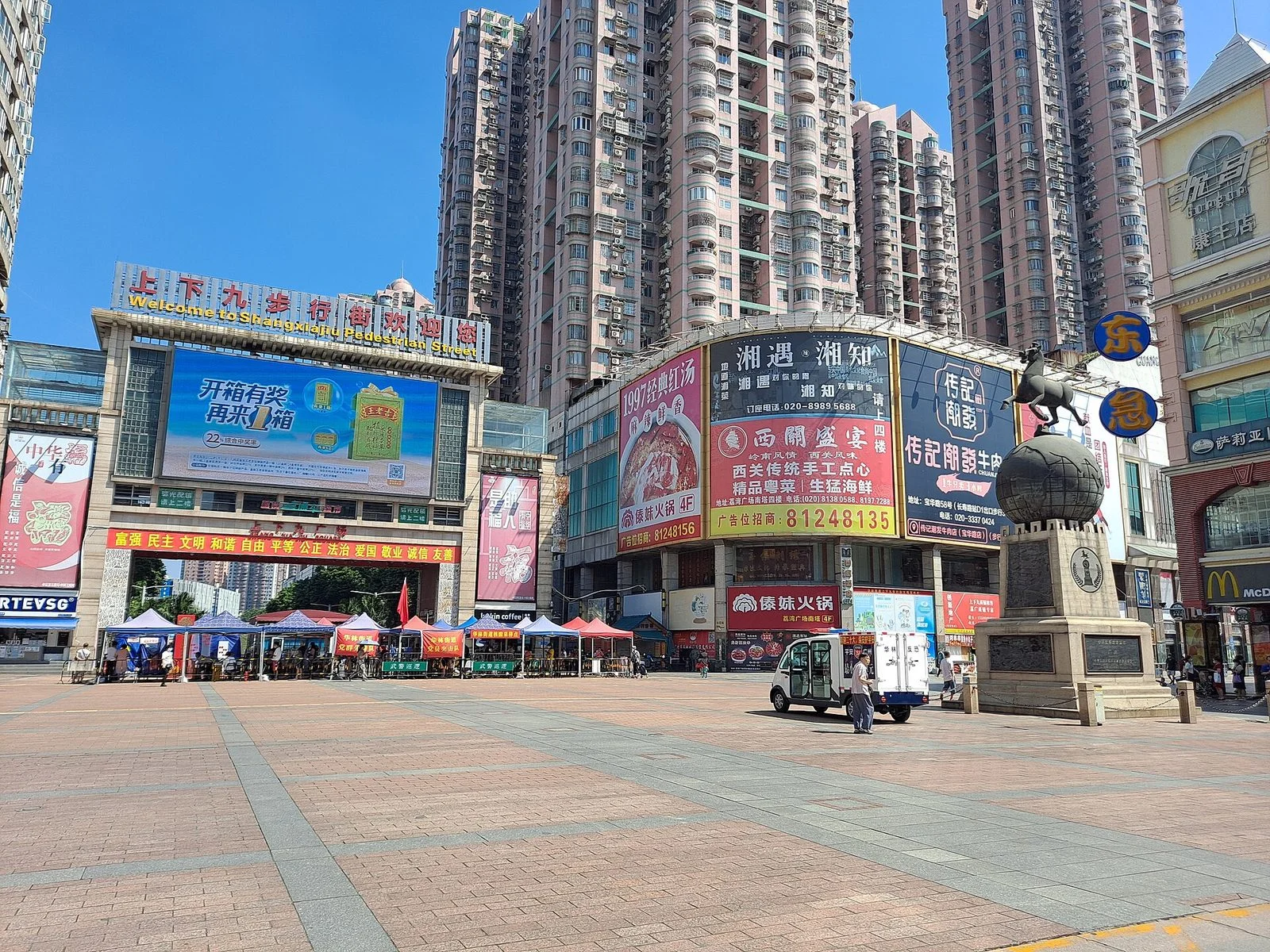
Shangxiajiu’s arcades include Baroque-style Roman columns and curling motifs, as well as Chinese fair-faced brickwork and Manchu windows; facades from different periods sit together, and this is not a uniformly renovated imitation street. In 2021, a public tender was issued for the Shangxiajiu Pedestrian Street quality improvement project, covering facade repair, road reconstruction, plaza and archway improvements, lighting, street furniture and smart signage, with a provisional total investment of about 153 million yuan and a construction period of 235 days. That was tender information at the time; it does not mean the work has been completed to that scope.
Protecting arcades and doing business raise concrete problems: ground-floor shops want to change storefronts, install signs and add lighting; upstairs residents need to fix leaks and replace windows; visitors want easy walking and good photos, while businesses want exposure. The plan proposes “protect whatever should be protected” and “progressive renewal”; for each building, the limits of alteration depend on heritage and historic-building protection requirements. What visitors see is the relationship between facade, colonnade, window heads and signs; what they do not see is the approvals and repairs behind them.
Architecturally, the most notable thing about Shangxiajiu is the continuity of the colonnade. The columns hold up the arcades and also draw the boundaries of the shops; window heads, parapets and gable finishes differ from building to building, and only together do they make a street. Looked at one building at a time, it can seem like an ordinary old block; walking a stretch of the street shows the relationship between the arcades, the street width and the depth of the shops.
Who it suits, and when to go
Shangxiajiu suits people who want to spend half a day looking at Xiguan arcades, eating snacks and buying inexpensive clothes; it does not suit people seeking quiet, high-end brands or an all-in-one air-conditioned environment. It and Taikoo Hui are two completely different shopping experiences: one is an open old street, the other an enclosed mall.
The main street is walkable all day and shops keep their own hours; to avoid crowds, choose a weekday morning; holidays and weekends are usually the most crowded. Arcades keep off rain, but the paving is slippery when wet, so shoes with good grip are safer. Walking the main street takes about 1 hour; with eating and side streets, allow 2–3 hours.
If you are only interested in architecture, focus on the continuity of the colonnade, the second-floor windows and parapets, and the relationship between signs and columns; if you only want to eat, old shops along Dishipu Road and the side streets are more relaxed than stopping in the middle of the main street. Specific shops and opening hours change, so check on site rather than following an old guide to one particular shop.
Useful official references
Check the relevant official service before making arrangements. These links are references, not a guarantee of current services.