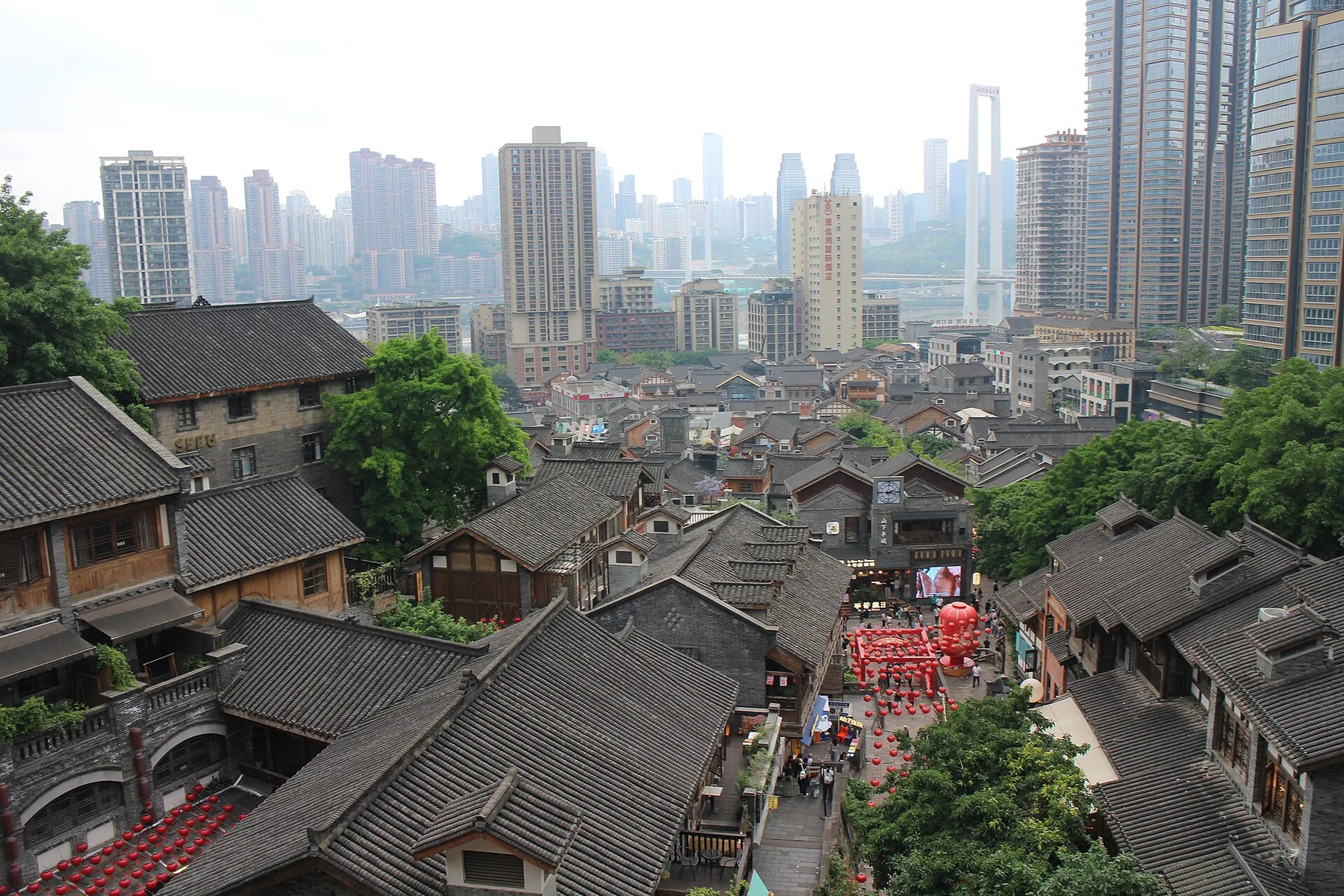
Streets running along a hillside
Shibati is in Chongqing's Yuzhong District and was once an important passage between the upper and lower parts of the city. The main stepped street follows the hillside, with side lanes branching off to form a pattern of seven streets and six lanes. Unlike a commercial pedestrian street on flat ground, the streets here have a pronounced vertical relationship: from higher ground you can look down over roofs and lanes, while walking through the area brings steps, corners and building entrances at different levels.
Today's district retains the main stepped route and lane pattern, while commercial uses continue to adapt to this hillside setting. For visitors, the appeal lies in the shops and in the changing views as you walk. Notice how the main street joins the smaller lanes, how buildings follow the slope, and how rooftops seen from higher up relate to the street beside you. These details explain Chongqing's hillside neighborhoods better than taking a photo only at one entrance.
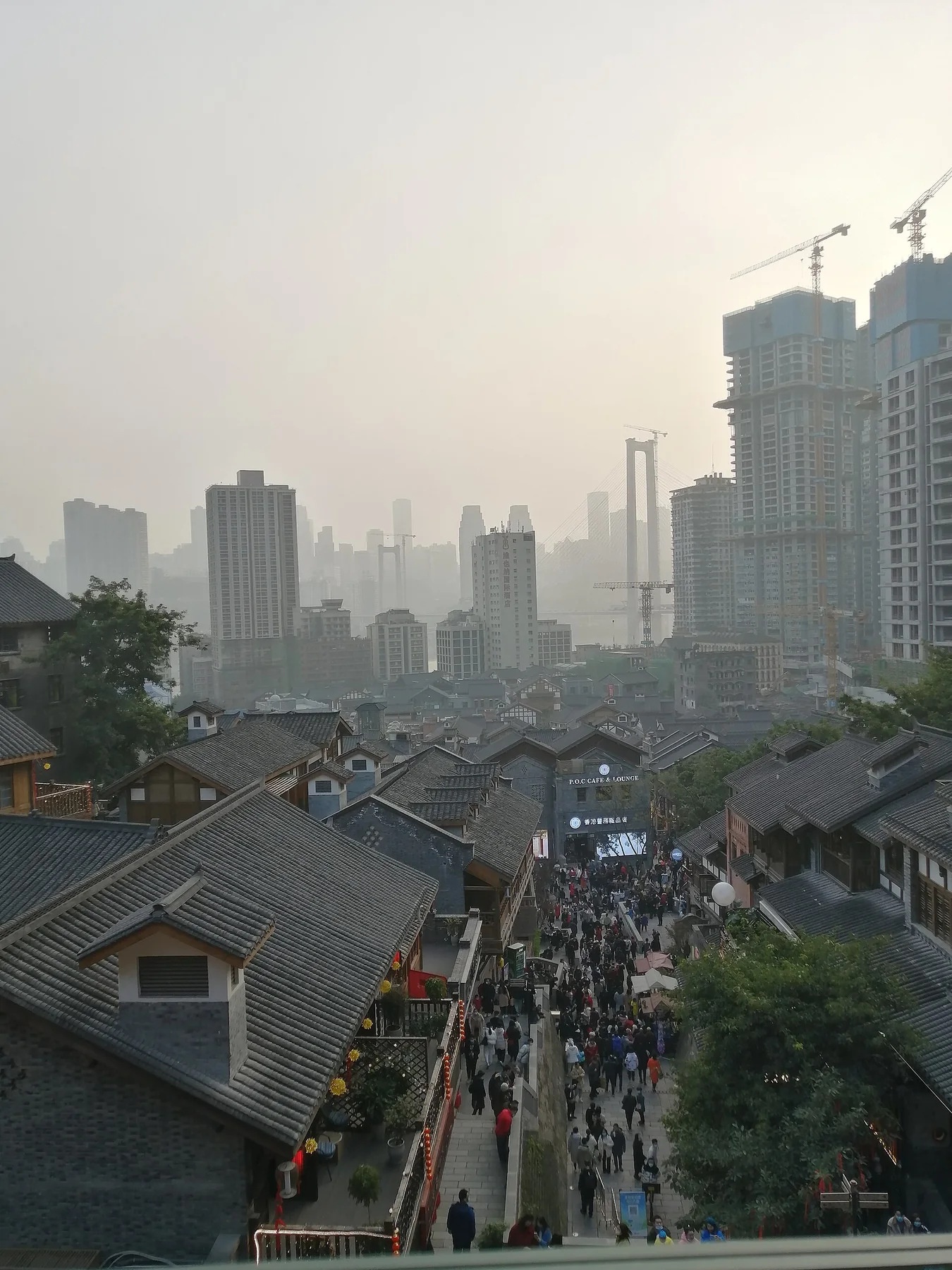
Historic images and today's renewal
The old stone-stairway photo on this page was taken in 2015, before the renewal of Shibati. Comparing it with today's streets shows how the steps remain as the circulation framework while buildings and their uses have changed. The current district includes both conservation and reconstruction based on measured records. Understanding this process helps distinguish a retained street pattern from buildings that have remained entirely unchanged.
Work on the project began in 2017, and phases A, B and C of the first stage opened on September 30, 2021. The renewal focused on streets and lanes, old trees, vegetation and historic traces, while cliff inscriptions were protected in place. The aim was to carry the original terrain and historical clues into a new setting for public use. As you look around, notice the rock face, trees and street names as well as the shopfronts.
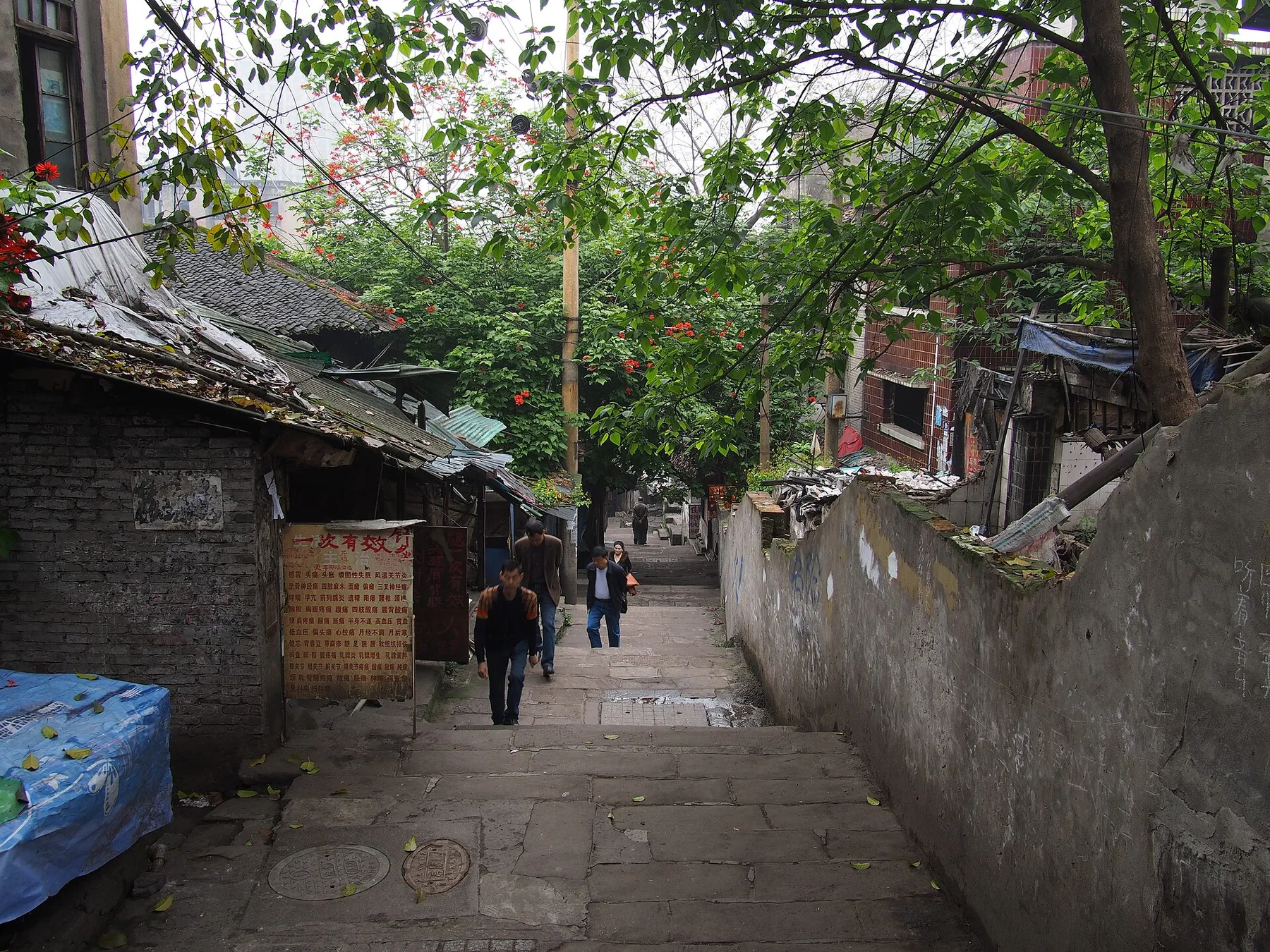
Creative goods, crafts and hillside leisure
Shibati's commercial mix includes creative goods, intangible cultural heritage, food and leisure, bringing traditional culture and contemporary lifestyles into the same district. What to explore depends on your interests: look for shops that demonstrate or display local crafts, compare the design, materials and portability of souvenirs, or make shopping a brief stop during a walk through the area. Businesses and events change, so a fixed shop list is not necessary for deciding whether to visit.
The district suits visitors who want to walk and look around a hillside neighborhood; the steps are part of the visit. Compared with Jiefangbei, where shoppers can compare brands and products in one place, Shibati is more about the streetscape, creative businesses and leisure. The many steps can affect visitors with luggage, strollers or limited mobility, so choose a route that fits your walking ability.
Useful official references
Check the relevant official service before making arrangements. These links are references, not a guarantee of current services.