City introduction
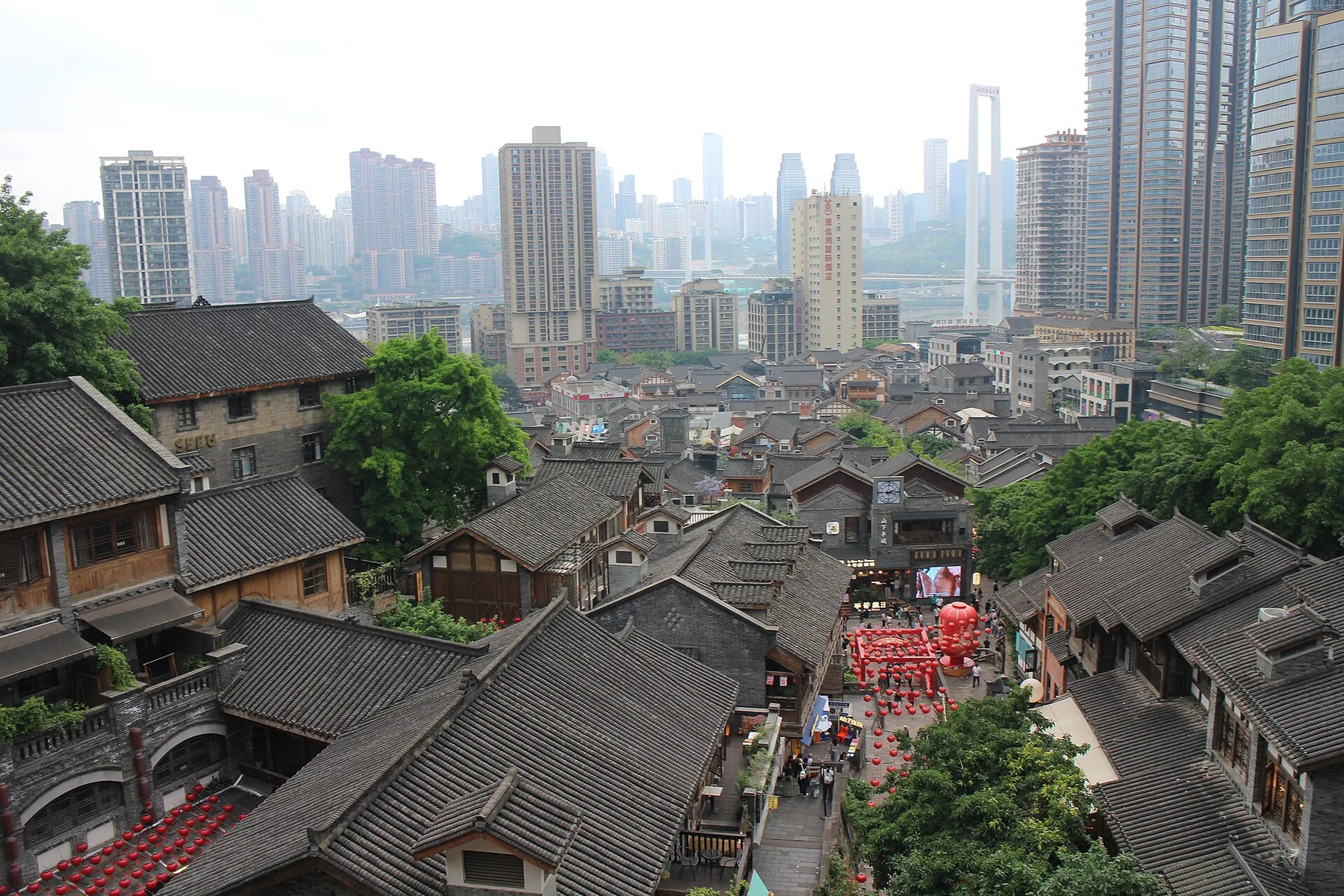
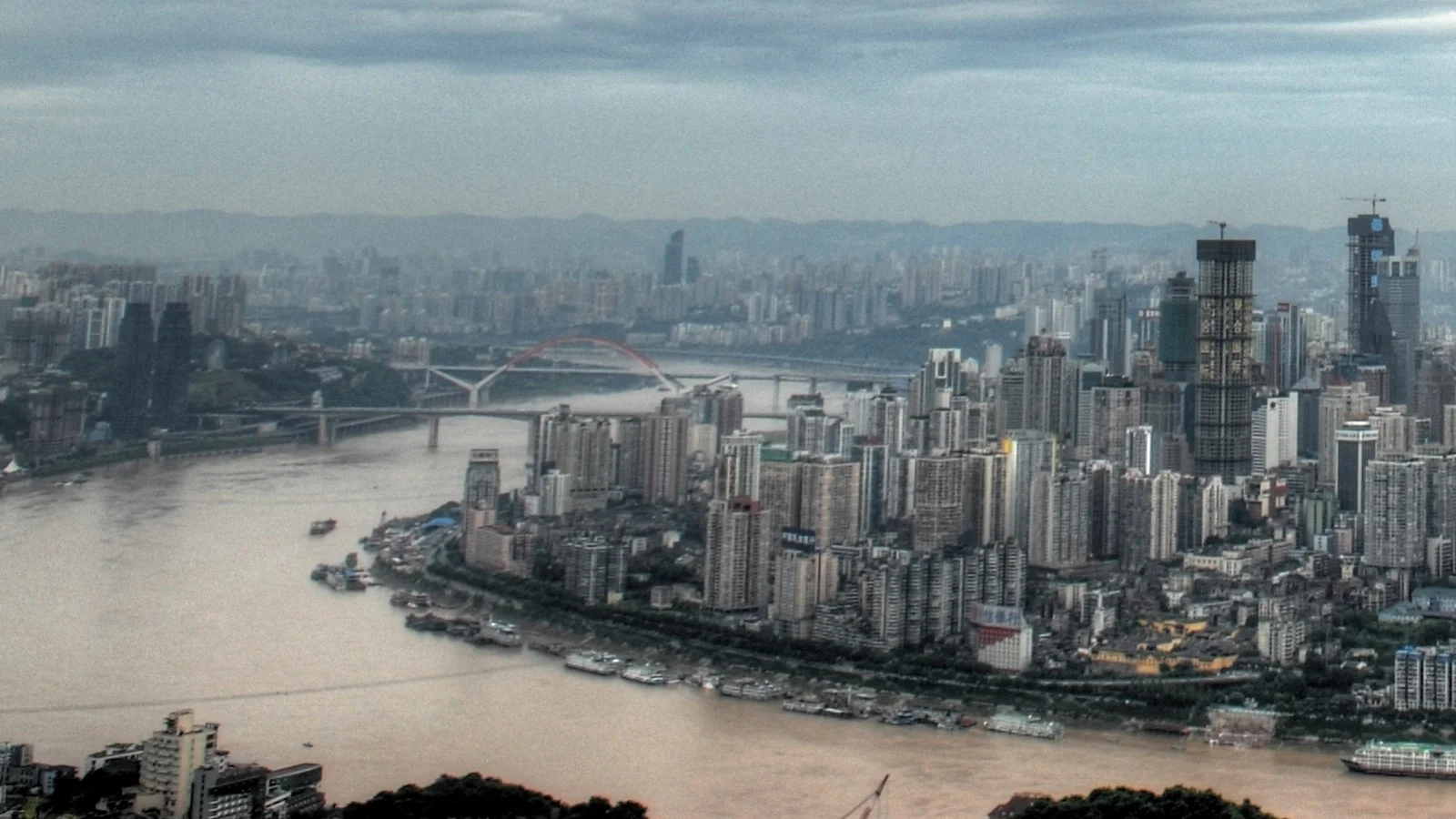
Rivers and hills shape central Chongqing. The Yangtze and Jialing meet at Chaotianmen, at the eastern end of the Yuzhong Peninsula, where riverbanks, bridges and buildings climbing the slopes form a distinctive cityscape. High streets and the waterfront below offer different views: daylight reveals how buildings fit the terrain, while lights at night pick out the layers of riverside buildings.
Chongqing is also a municipality covering many urban districts and counties. The shopping streets of the Yuzhong Peninsula, Ciqikou in Shapingba and the carvings in Dazu are not part of one continuous city-center neighborhood. Understanding Chongqing means looking both at the dense urban life around the rivers' confluence and at the geography of its different districts.
Buildings climbing the slopes between two rivers
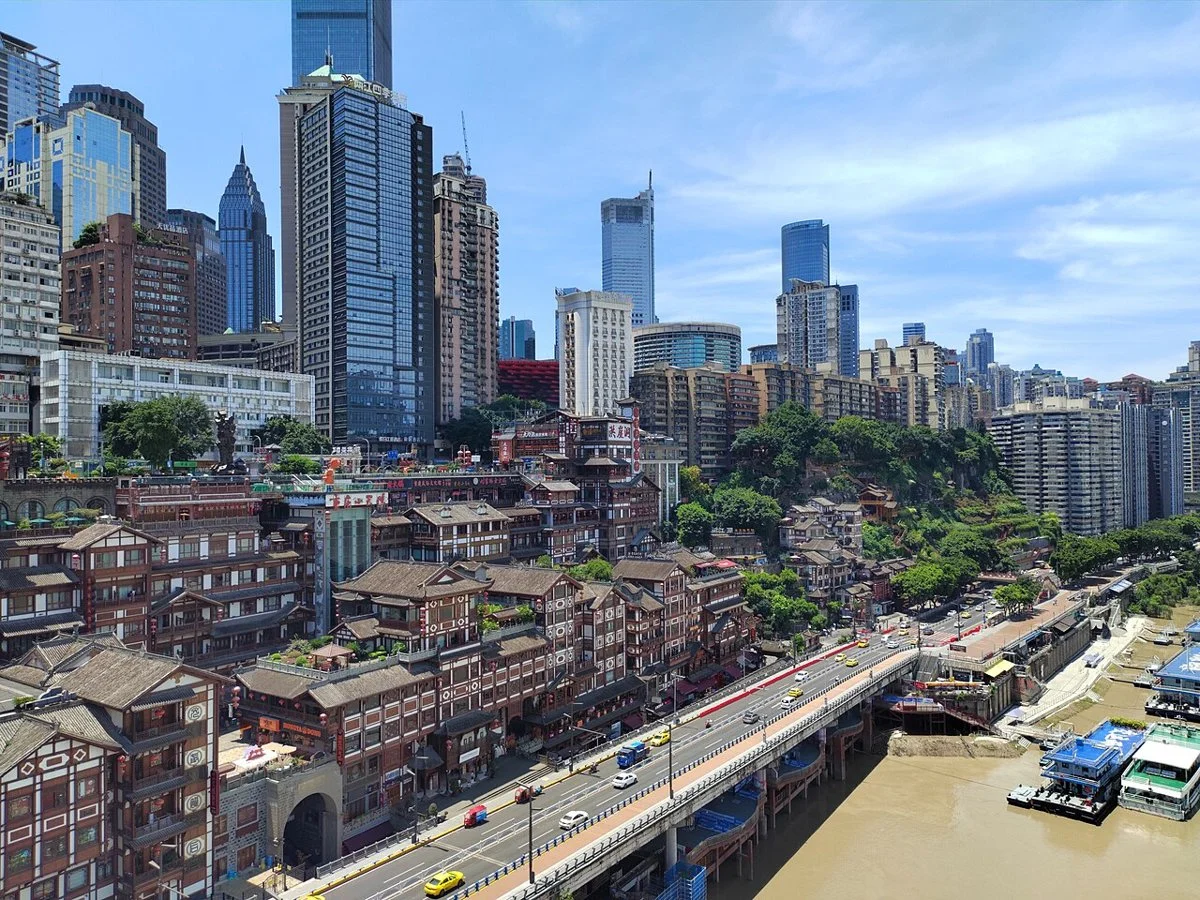
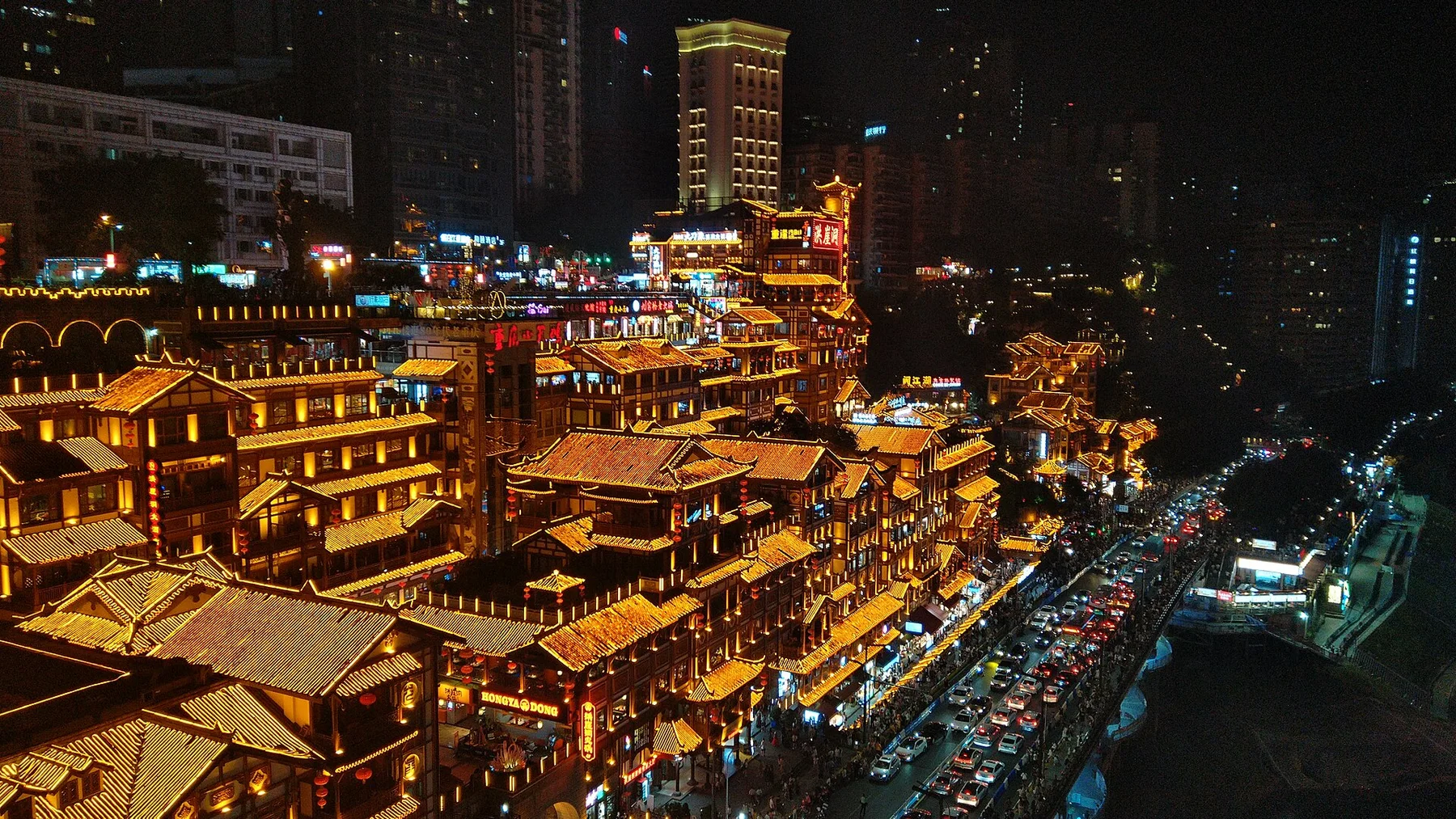
The Yangtze and Jialing surround the Yuzhong Peninsula, where roads, lanes and buildings overlap on the slopes. Hongya Cave makes these changes in elevation easy to see. From across the river, rows of roofs spread along the cliff; up close, floors, platforms and stairs connect to streets at different heights. Distant and close views of the same buildings reveal different relationships between the structures and their surroundings.
Today's Hongya Cave complex opened in 2006, combining buildings modeled on traditional stilt houses with old-style shopping spaces, restaurants, leisure venues and craft shops. It shows how a modern visitor attraction uses a riverside slope. Mistaking its illuminated façades for an intact ancient complex would obscure the more interesting relationship between these buildings and the city.
Shopping districts and old streets offer different experiences
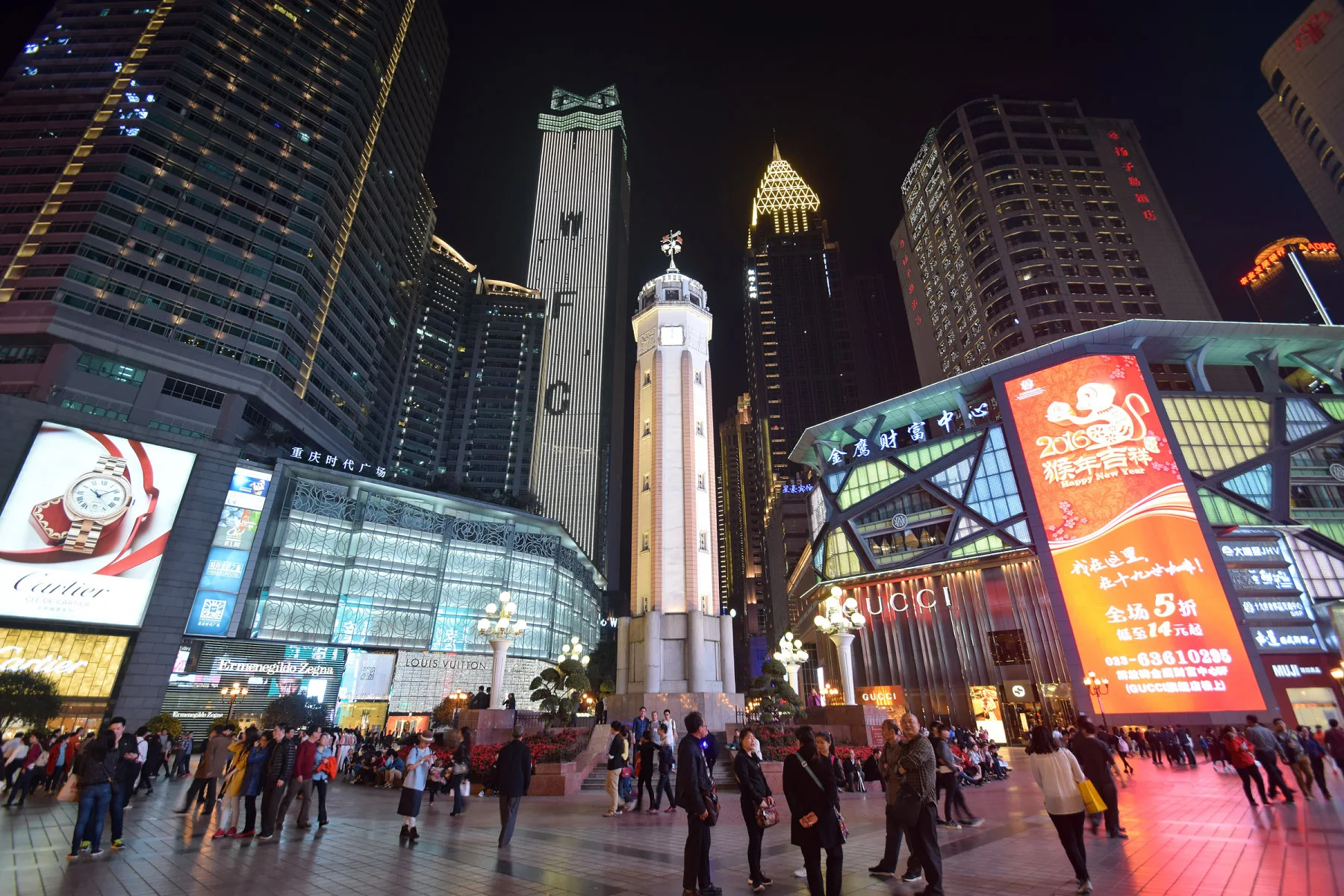
The Jiefangbei area brings together much of contemporary Chongqing's commercial life. Shopping centers, brand stores and public pedestrian spaces surround the People's Liberation Monument, while streets such as Bayi Road add snacks and local dining. Mall shopping, street food and evening crowds overlap here, offering a different experience from viewing the skyline from the riverbank.
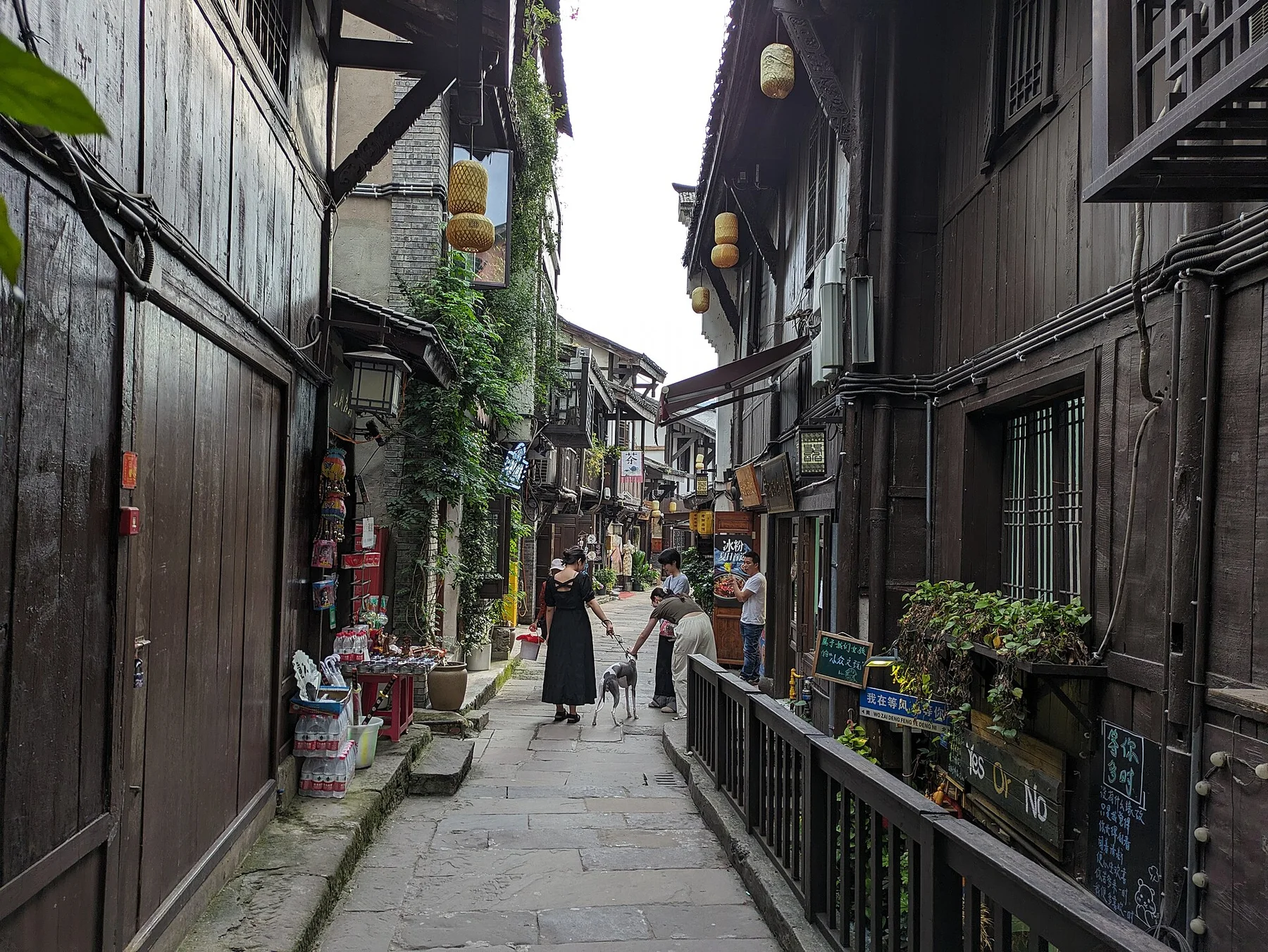
In Shapingba, Ciqikou's old streets spread along a hillside beside the Jialing River, with stone steps, timber shopfronts and winding lanes branching from the main street. Visitors can compare local foods and handmade goods, as well as explore cultural, performance and leisure spaces introduced along the back streets. Shibati in Yuzhong is known for steps and lanes linking streets at different heights; it is now a conserved and renewed traditional-style district with dining and performances. The three areas respectively suit brand shopping, cultural activities in old streets, and exploring hillside lanes. Businesses change, and an old-street appearance does not mean every building or business remains as it was in the past.
Understanding city history through the Three Gorges and the Ba and Yu region
The main building of the Chongqing China Three Gorges Museum stands on Renmin Road in Yuzhong, beside the People's Square and the People's Great Hall. The Three Gorges are only one part of its story. Permanent exhibitions listed by the museum also include Ancient Ba and Yu, Chongqing: The Road to a City, and The War Years, adding local history, urban development and the War of Resistance against Japanese Aggression to the view of the city at the rivers' meeting point.
Visitors interested in history can follow a theme through the objects and exhibition narratives rather than treating every gallery as compulsory. The Three Gorges displays cover life and change in the gorge region, while the Ba and Yu and city-history exhibitions help explain Chongqing itself. Displays change; old photographs show only the exhibitions as they appeared when photographed.
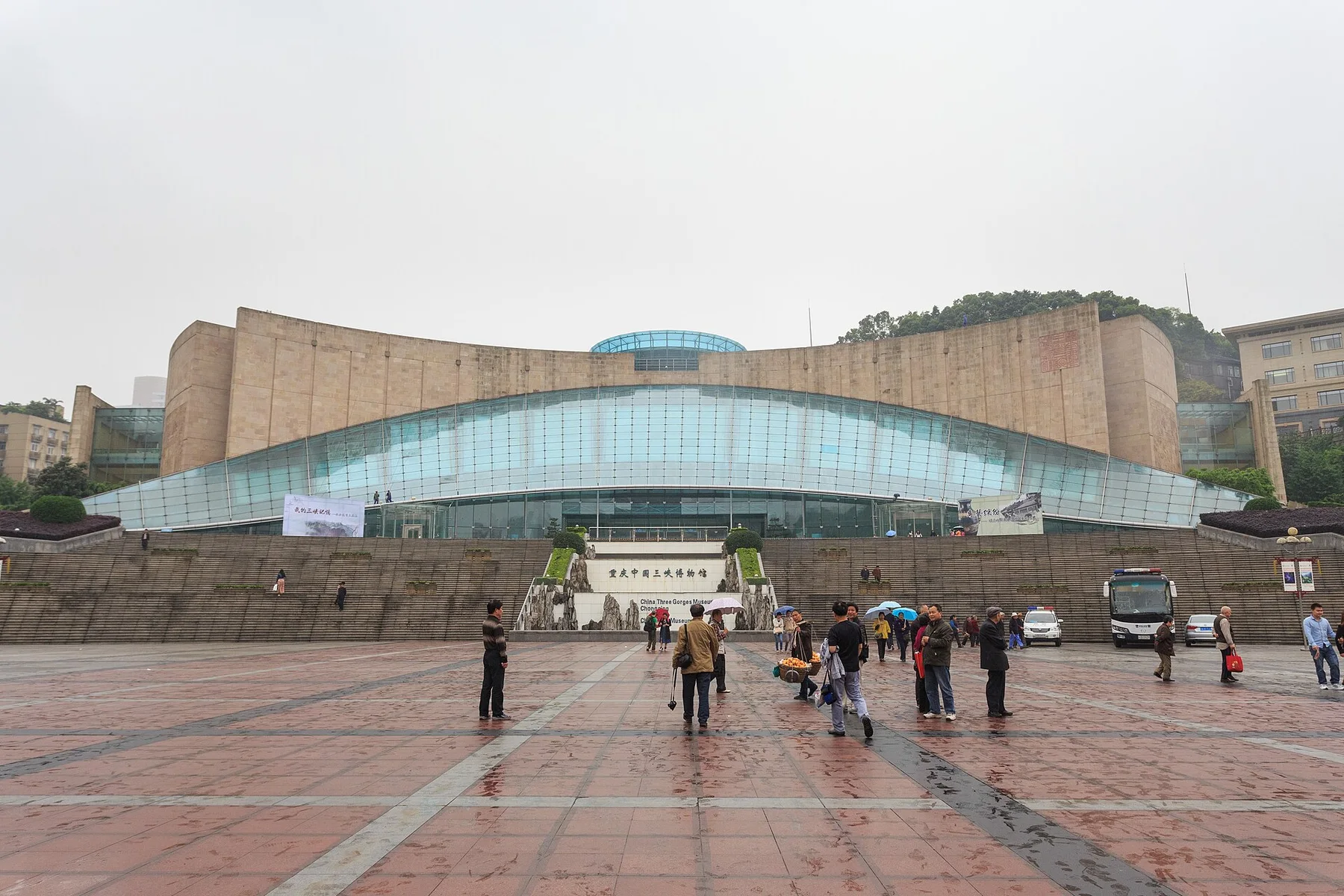
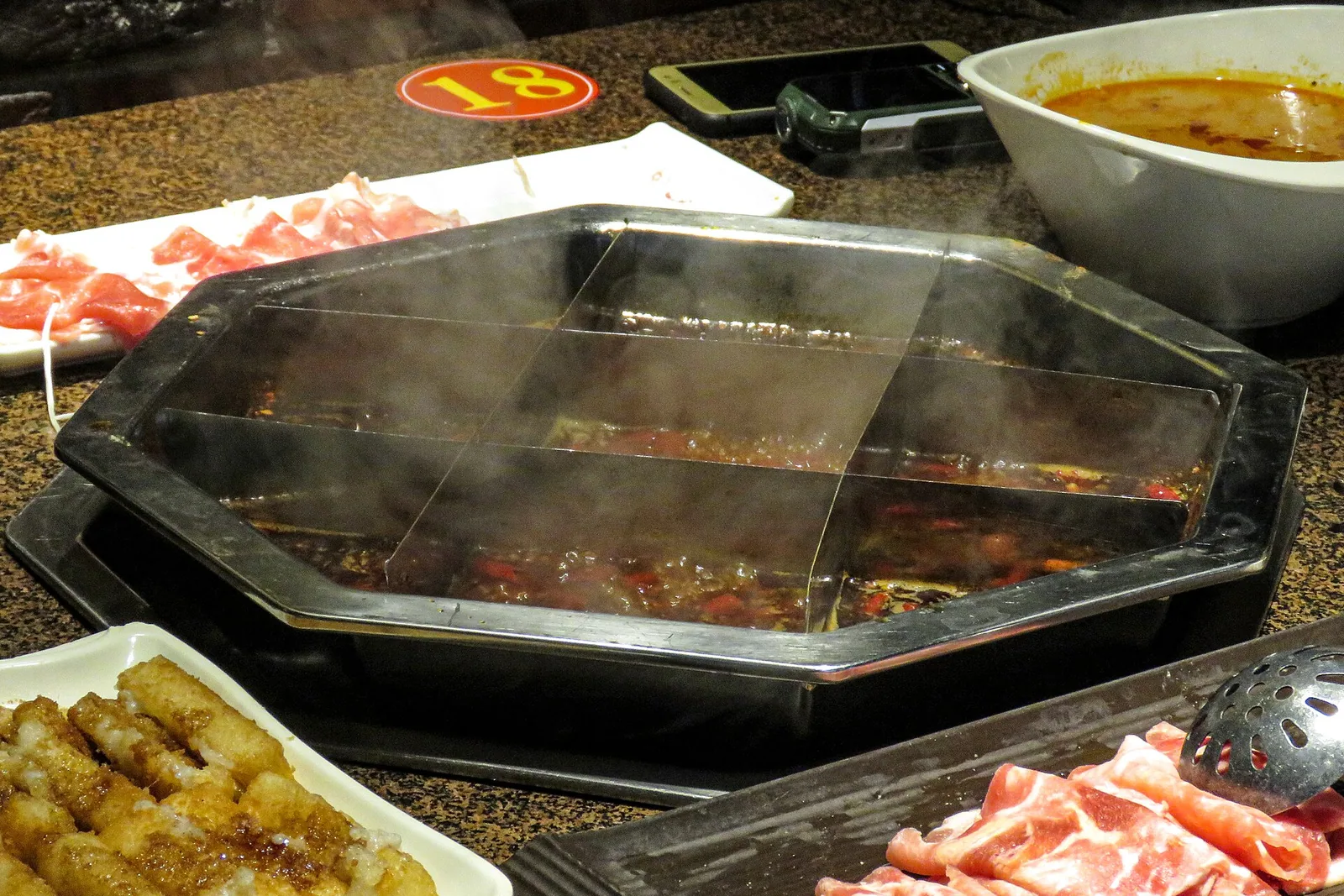
Hotpot is a meal made together at the table
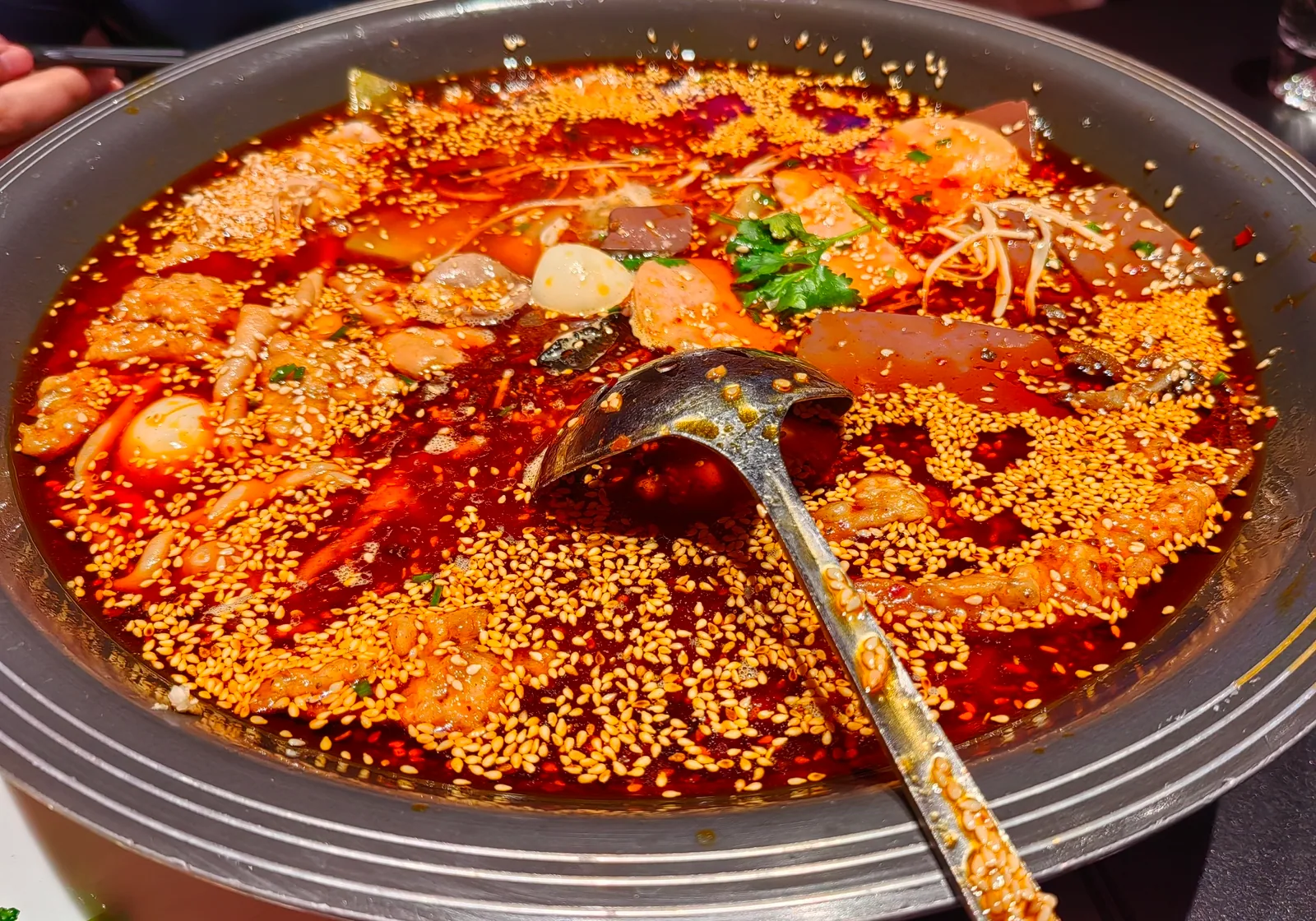
A common Chongqing hotpot base is a red broth made with beef tallow, chilies, Sichuan pepper and spices, combining heat, a numbing sensation and rich aromas. Tripe, duck intestines, sliced meat, tofu and vegetables offer different textures as diners cook and eat around the simmering pot. Choosing ingredients is part of the meal. Nine-grid pots, divided pots and other designs depend on the restaurant; there is no fixed combination used everywhere.
Hotpot suits sharing, but the diners' different dietary needs matter. Restaurants interpret “mild” differently, and less chili does not necessarily mean no Sichuan pepper. Beef tallow, offal, and peanuts or sesame in dipping sauces raise separate dietary questions. Asking about the broth and ingredients is more useful than deciding only whether everyone can eat spicy food.
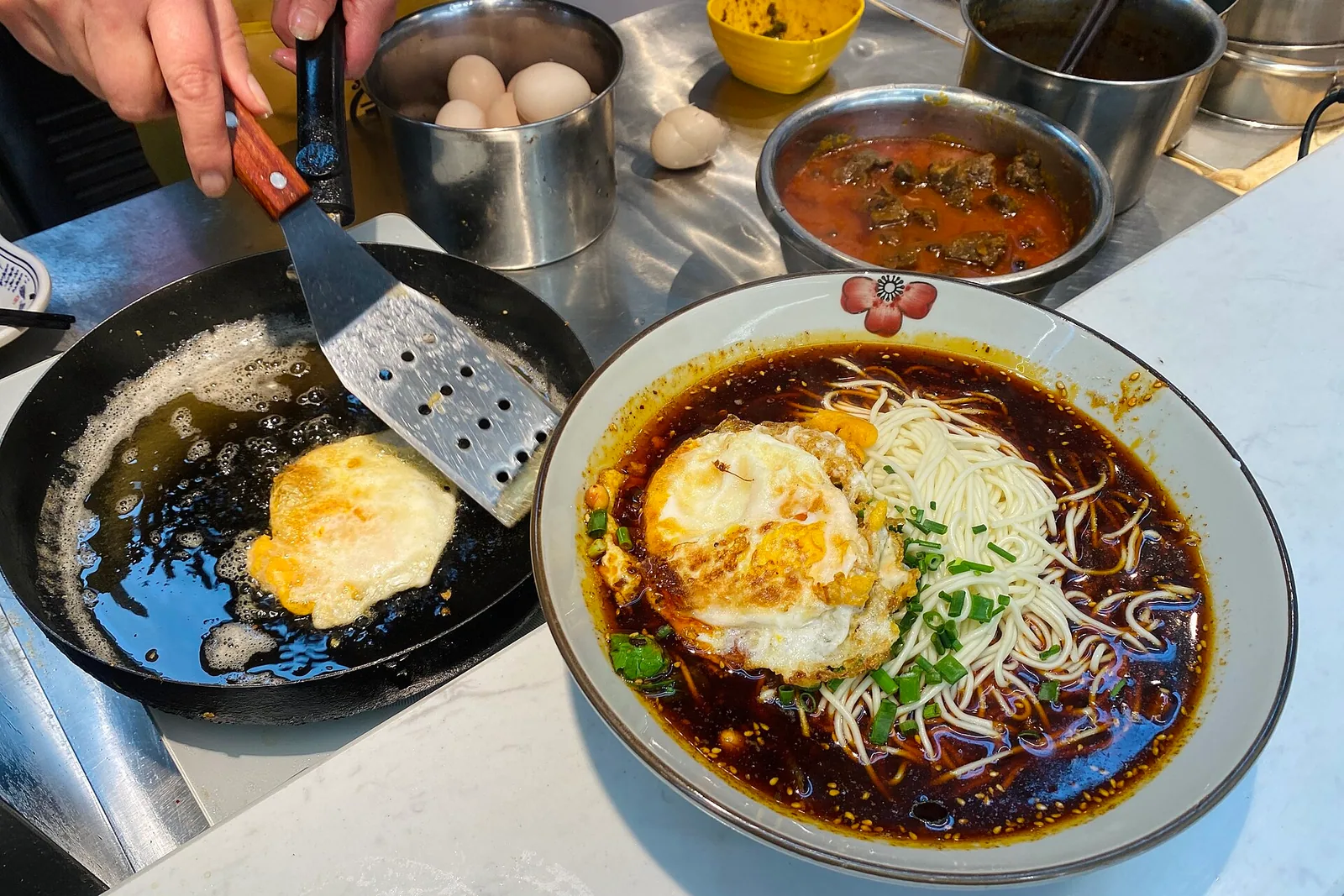
A bowl of xiaomian and a shared dish of local cooking
Xiaomian offers another everyday way of eating: a bowl of hot noodles, often for breakfast, whose flavor comes mainly from seasonings in the bottom of the bowl. Wheat noodles are mixed with chili oil, Sichuan pepper, soy sauce, ginger, garlic and preserved mustard greens so the aromas and spicy, numbing flavors coat them. Peas, minced-meat sauce or other toppings add different textures and make the bowl more filling. “Plain noodles” describes a common basic version, but does not guarantee that a shop uses neither lard nor meat stock.
Maoxuewang is a Chongqing dish commonly shared by several diners. Familiar red-broth versions cook blood curd, offal, meat and vegetables together, contrasting tender blood curd with springier tripe and duck intestines. Local food writing connects it with pork-offal soup at Ciqikou's docks and describes changes from milder older preparations to modern spicy versions. Accounts disagree about its inventor and date of origin, and restaurants decide today's ingredients. Its ingredients and preparation offer a more useful introduction to the dish.
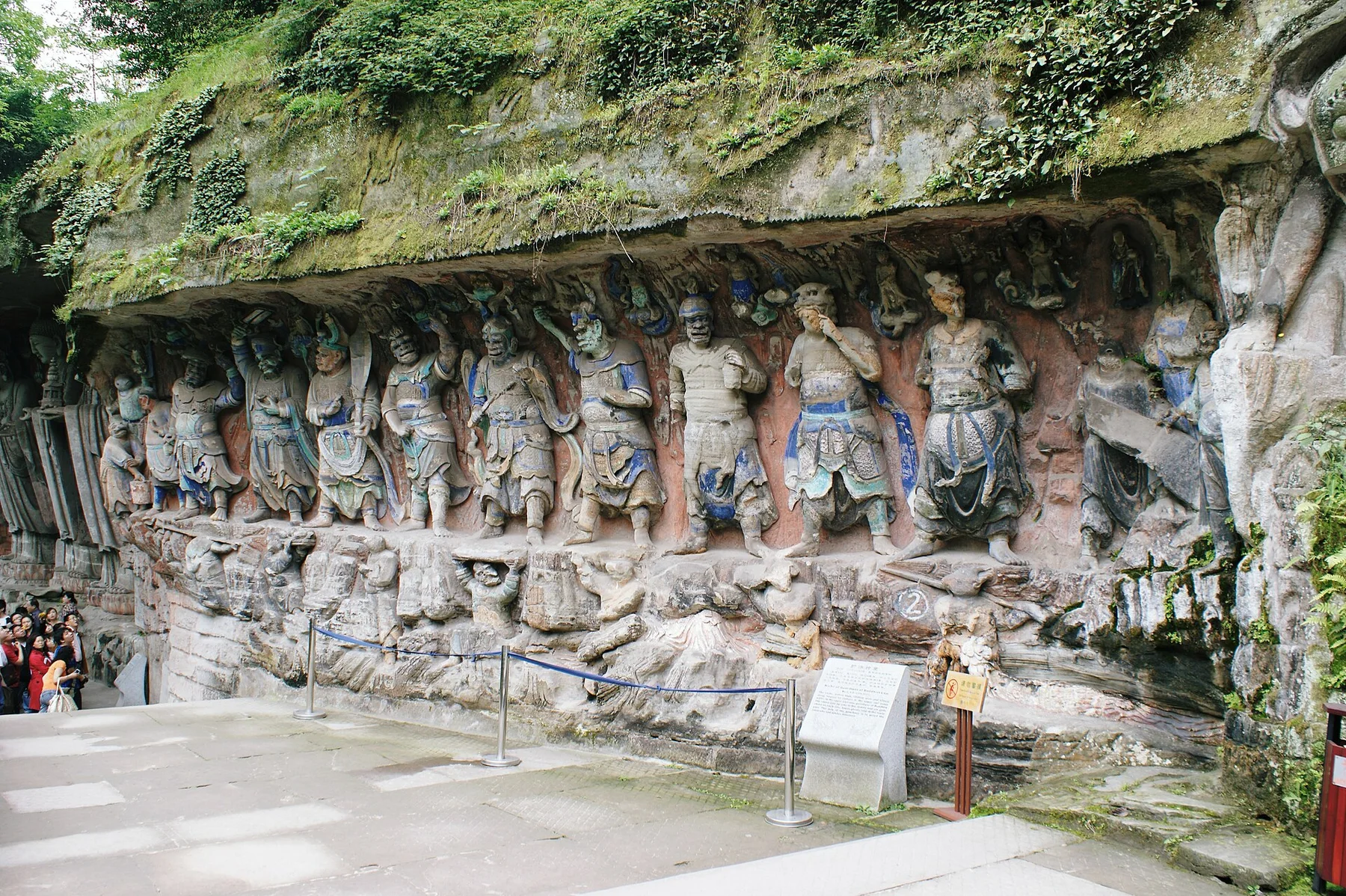
The Dazu Rock Carvings beyond the urban center
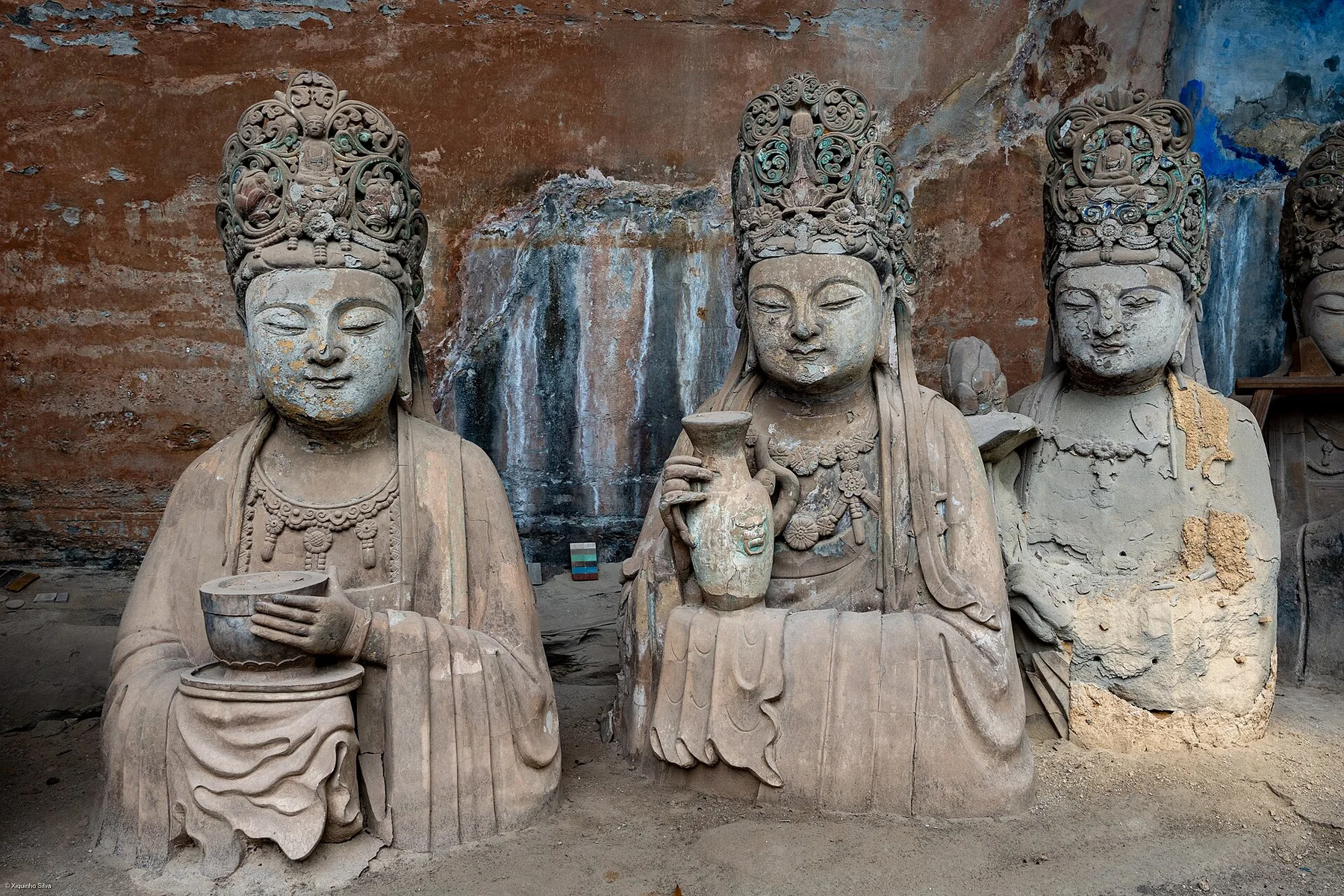
The Dazu Rock Carvings in Dazu District comprise carvings and sculptures at several cliff sites. UNESCO dates them broadly to the 9th–13th centuries, with both religious and secular subjects and an interplay of Buddhist, Taoist and Confucian traditions. At places such as Baodingshan, there is much to examine, from large groups of figures to clothing, objects and individual poses.
This is a separate destination from the high-rises and shopping streets of the Yuzhong Peninsula. Baodingshan, Beishan and the other carving sites are themselves spread out; entering one park does not give you a continuous walk past every carving. For visitors interested in sculpture, religious art or local history, Dazu offers historical material preserved on cliffs rather than in a city museum.
Elevation, summer heat and the location of services
Slopes, long stairways and streets at different levels are part of Chongqing's scenery and affect walking in practice. Places that look close on a map may be separated by a substantial change in elevation. Visitors with limited mobility, luggage or little experience of hills should consider access in the particular neighborhood. Intense heat can occur in midsummer, making outdoor climbs and long exposure to the sun more tiring. Forecasts close to your visit are more useful than temperature records from previous years.
Medical services are also spread across different hospital campuses. As of November 10, 2026, the hospital's public information describes English-language care and appointment-based services at the International Medical Department on the Jinshan campus of the First Affiliated Hospital of Chongqing Medical University. This does not mean every hospital, specialty or time slot offers English-speaking staff. Visitors who need ongoing care should confirm the campus and language arrangements in advance. For a critical emergency, use the 120 ambulance dispatch service rather than treating an ordinary outpatient appointment as an emergency service.