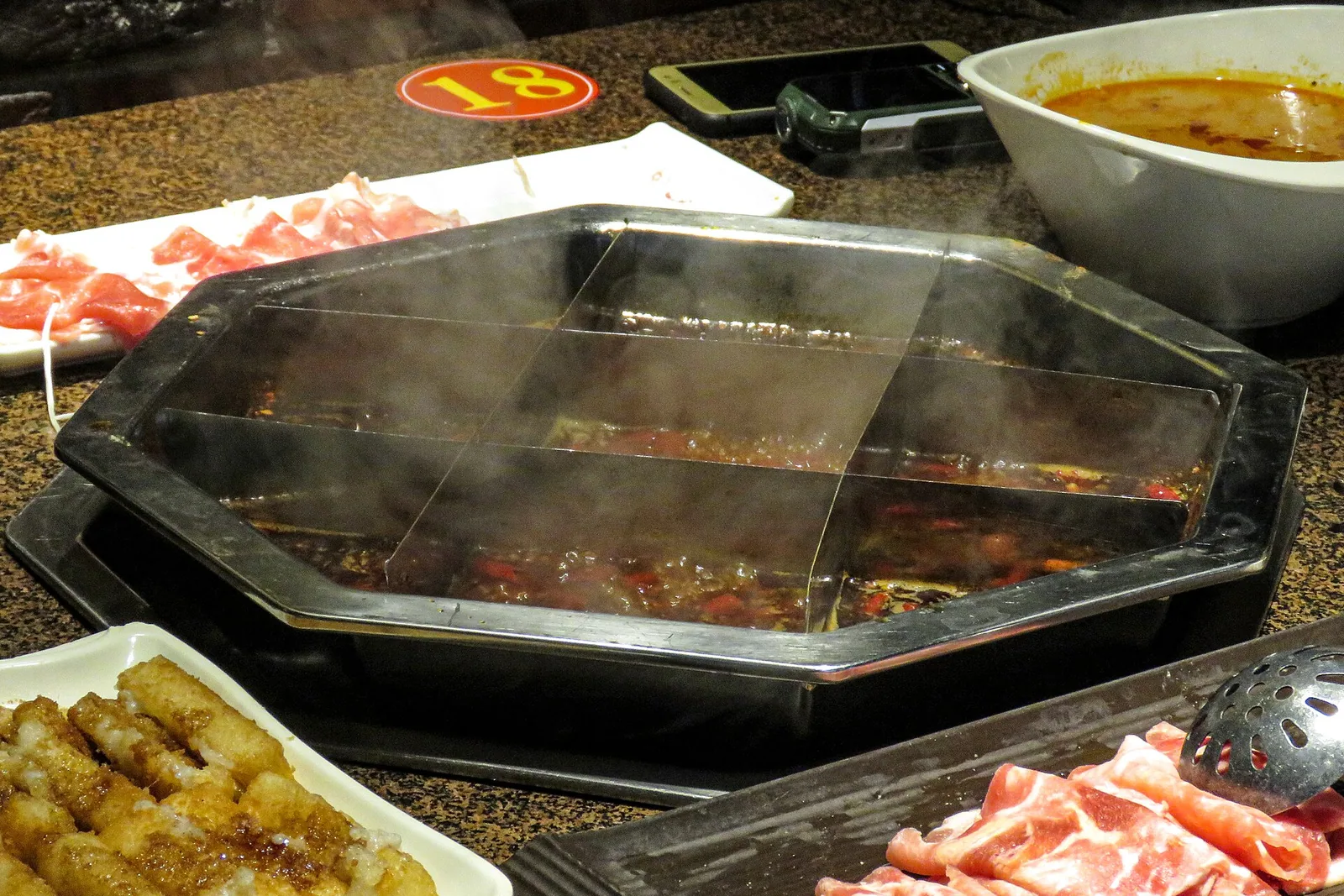
Red broth and different pot designs
A common Chongqing hotpot broth uses beef tallow to carry the flavors of chilies, Sichuan pepper and spices, combining heat, a numbing sensation and rich aromas. Recipes differ between restaurants, and both the cooking fat and the level of heat can vary. If you do not eat beef or pork fat, ask about the broth ingredients before ordering. Accounts of how hotpot first developed around the docks are not entirely consistent, so no single origin story should be presented as definitive.
Nine-grid pots and divided pots are both possible designs, not required ordering rules. Restaurants decide which pot styles, menus and portion sizes to offer.
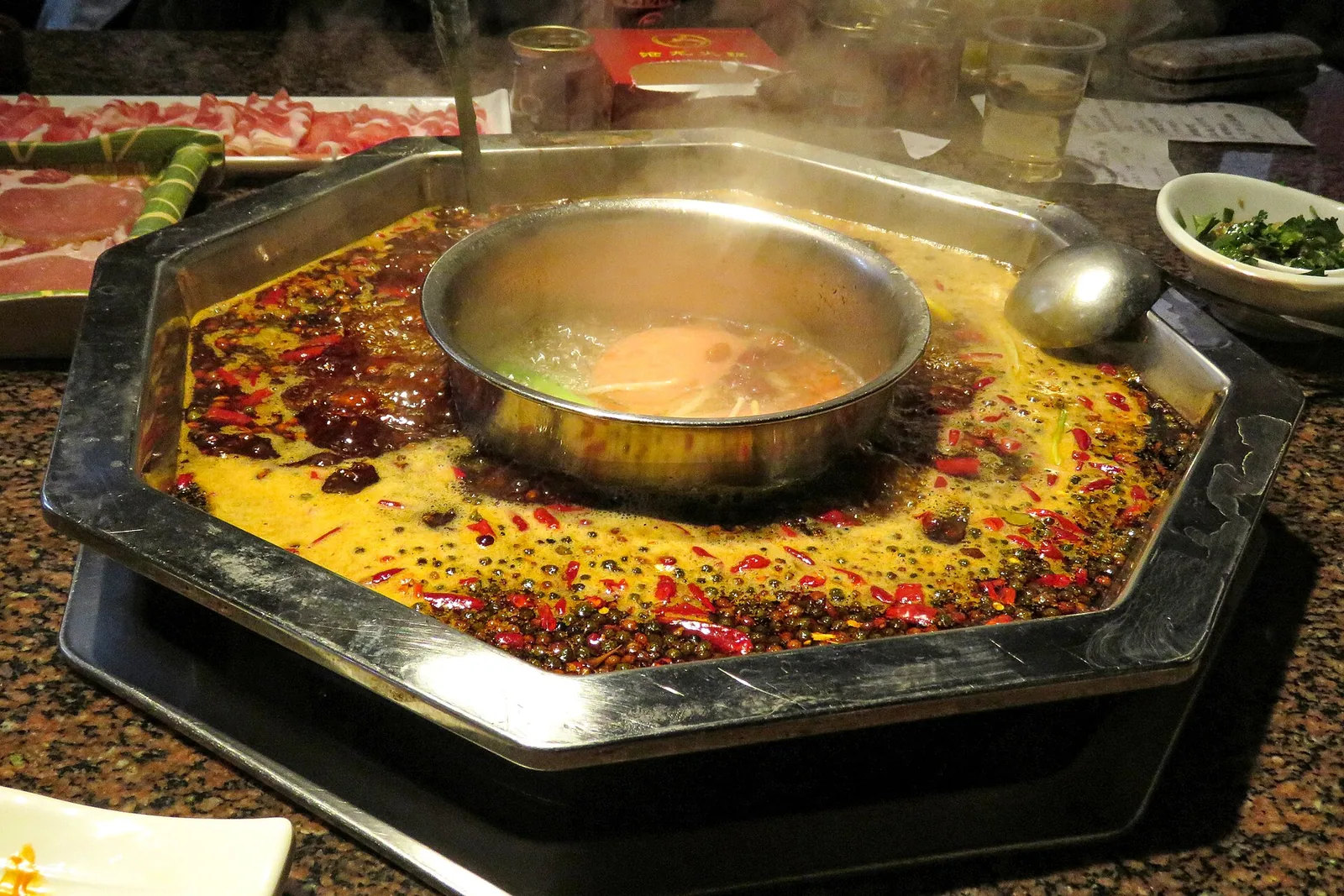
Chilies and Sichuan pepper moving in the red broth create different sensations: chilies bring heat, while Sichuan pepper produces a numbing feeling. Beef tallow helps the spice aromas cling to the ingredients. A divided pot with clear broth in the center and red broth around it offers two soup bases, while a nine-grid pot separates the cooking surface into small sections. The photos show what these designs look like; check the restaurant's actual menu when choosing.
Ordering with ingredients and dietary needs in mind
Tripe, duck intestines, beef aorta, beef and blood curd are common hotpot menu items; tofu, potatoes, mushrooms and leafy vegetables offer different textures. Ingredients cook in the simmering broth, and vegetables and tofu absorb its flavor. Choose portions according to the number of diners and their appetites rather than aiming for a fixed combination.
For a first try, say how spicy you would like the food and ask whether the restaurant offers a divided pot or a separate clear-broth pot. Restaurants may interpret “mild” differently. Broth, dipping sauces or shared utensils may involve peanuts, sesame, seafood, soy or animal fats. If you have allergies or dietary restrictions, ask about each item.
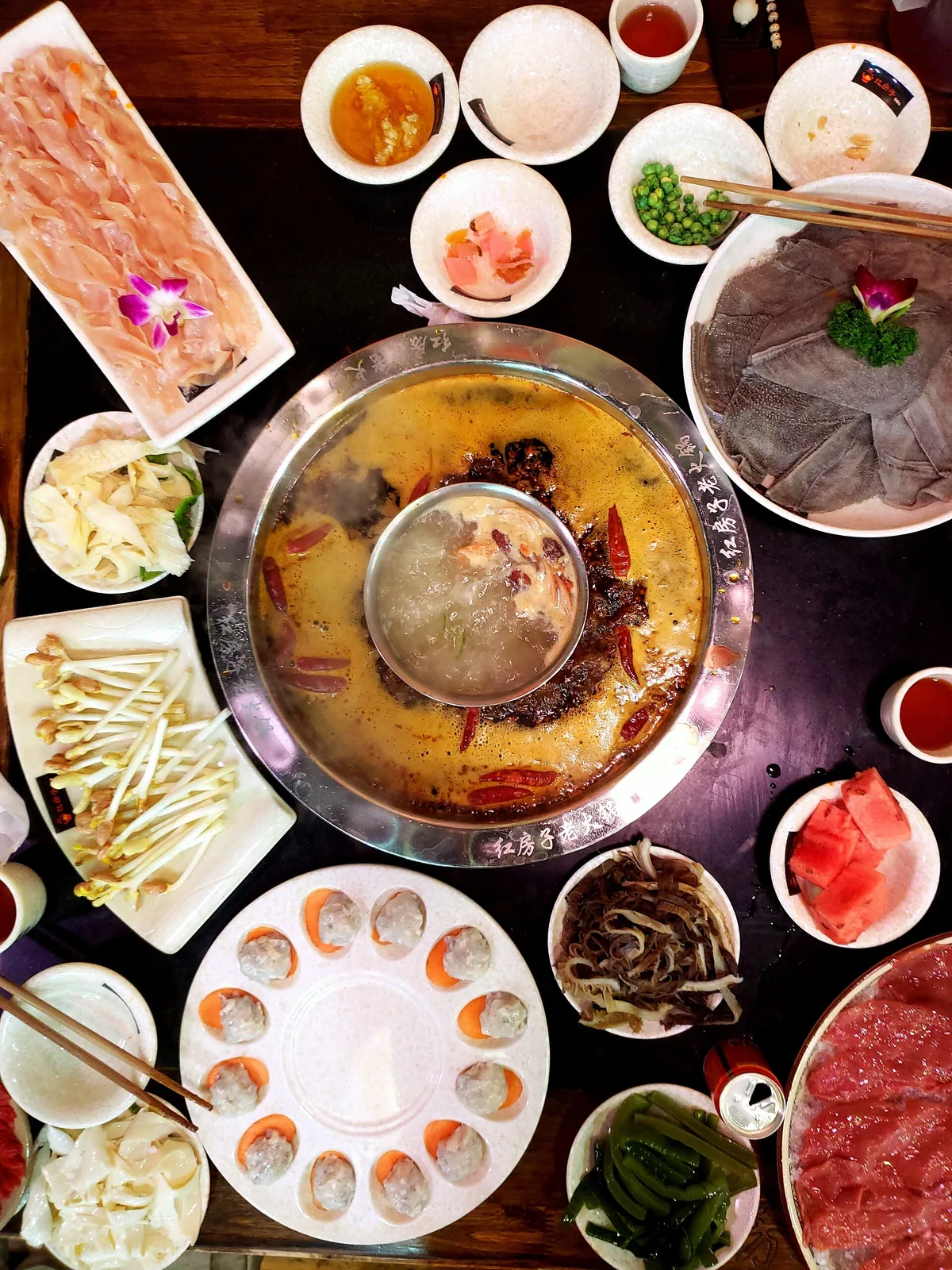
The shared cooking is part of the meal
Hotpot differs from a large dish that arrives fully cooked: ingredients are served in portions, and diners cook, pick them up and dip them as the meal goes on. One pot can offer the crunch of tripe, the tenderness of blood curd and softer vegetables, so there is no need to choose dishes only by the amount of meat. Thin slices of tripe and duck intestines cook differently from thicker cuts of meat and root vegetables. If this is your first time, ask staff how to cook each ingredient rather than relying on a universal number of seconds.
Sesame oil and minced garlic are common dipping-sauce ingredients, and the sauce helps shape the flavor alongside the broth; offerings vary by restaurant. Chongqing hotpot venues range from compact street restaurants to places known for their views or group dining. If you want a meal that gives a group time to talk, compare seating and menus first. For a simple meal, choose a restaurant according to group size, portion and budget rather than making a special trip for décor or name recognition.
Useful official references
Check the relevant official service before making arrangements. These links are references, not a guarantee of current services.