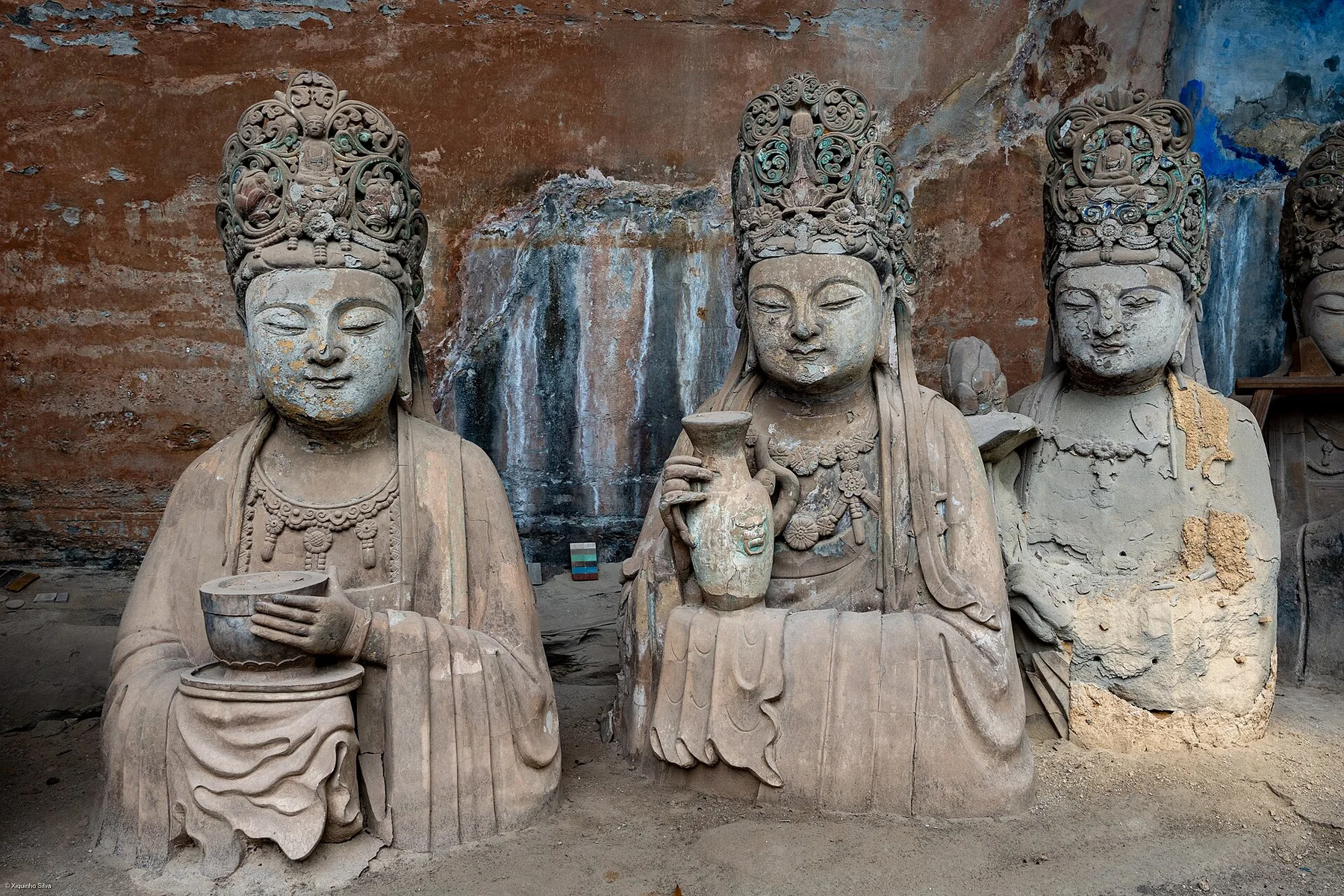
A World Heritage site across several cliffs
The Dazu Rock Carvings are in Chongqing's Dazu District. The World Heritage site includes five groups of cliff carvings, mainly dating from the 9th to the 13th centuries. Cliffs, niches and sculptures at different locations together form this heritage site, so it is useful to distinguish its areas before visiting. Baodingshan and Beishan each have their own character. The name does not refer to a single temple or a continuous sequence of neighboring sights within one park.
The range of subjects is one of the carvings' distinctive features. Buddhist, Taoist and Confucian traditions appear in different sculptures, with clues to secular life alongside religious imagery. After looking at the large groups, move closer where viewing is permitted and notice clothing, hand gestures, expressions and objects within the scenes. The social relationships and details of life represented in stone often become clearer in these smaller features.
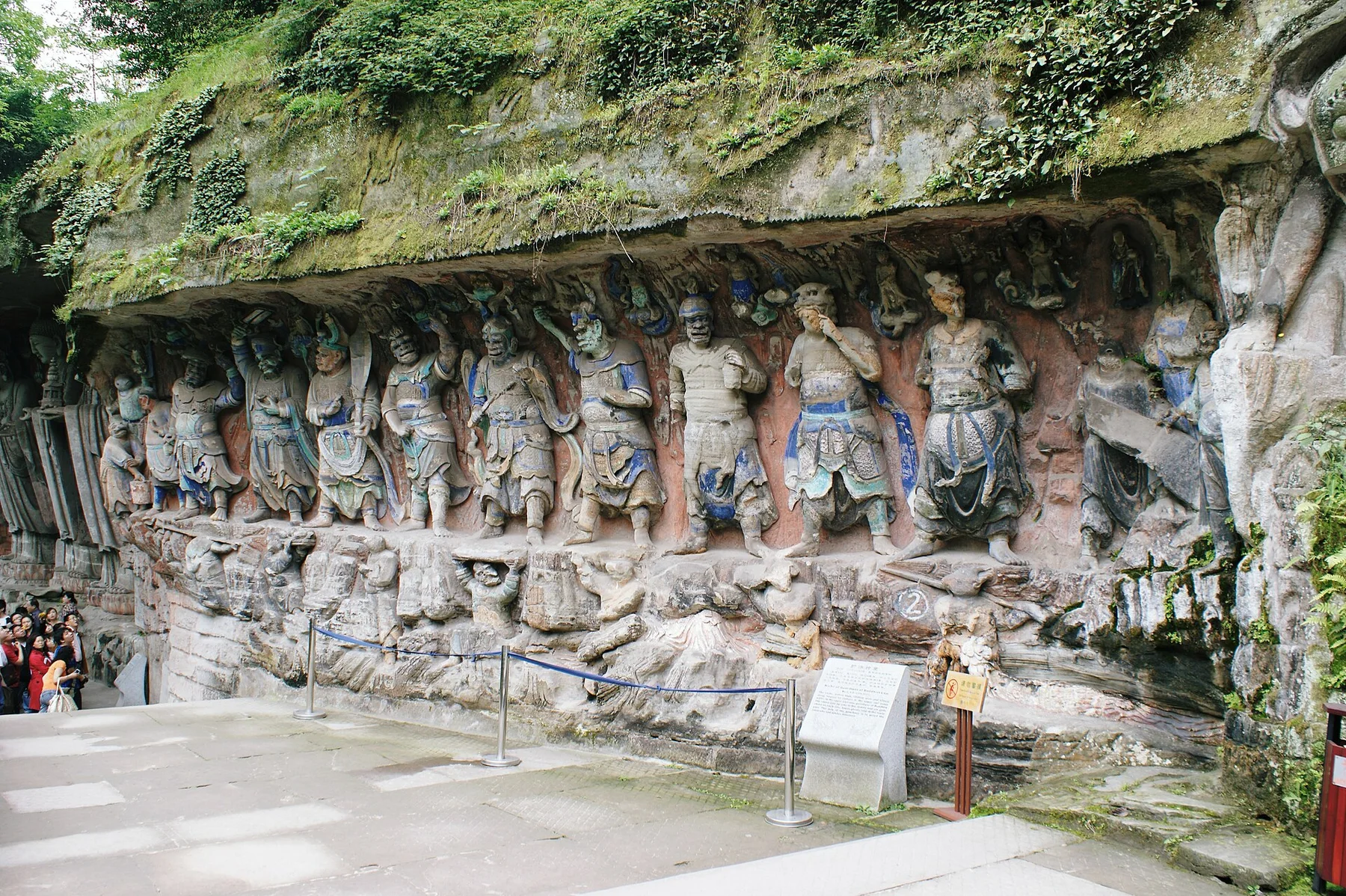
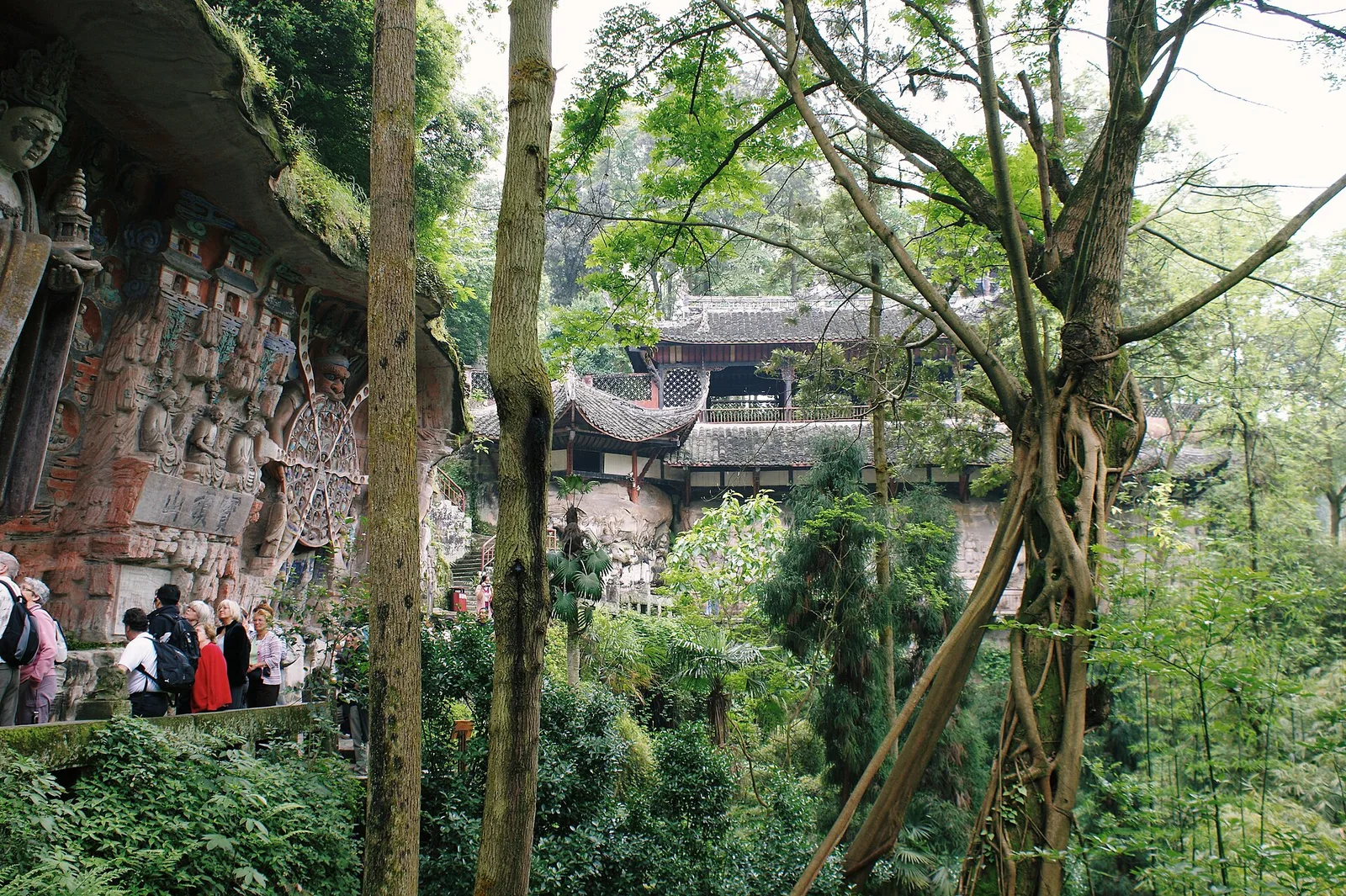
Sculptural groups and temples at Baodingshan
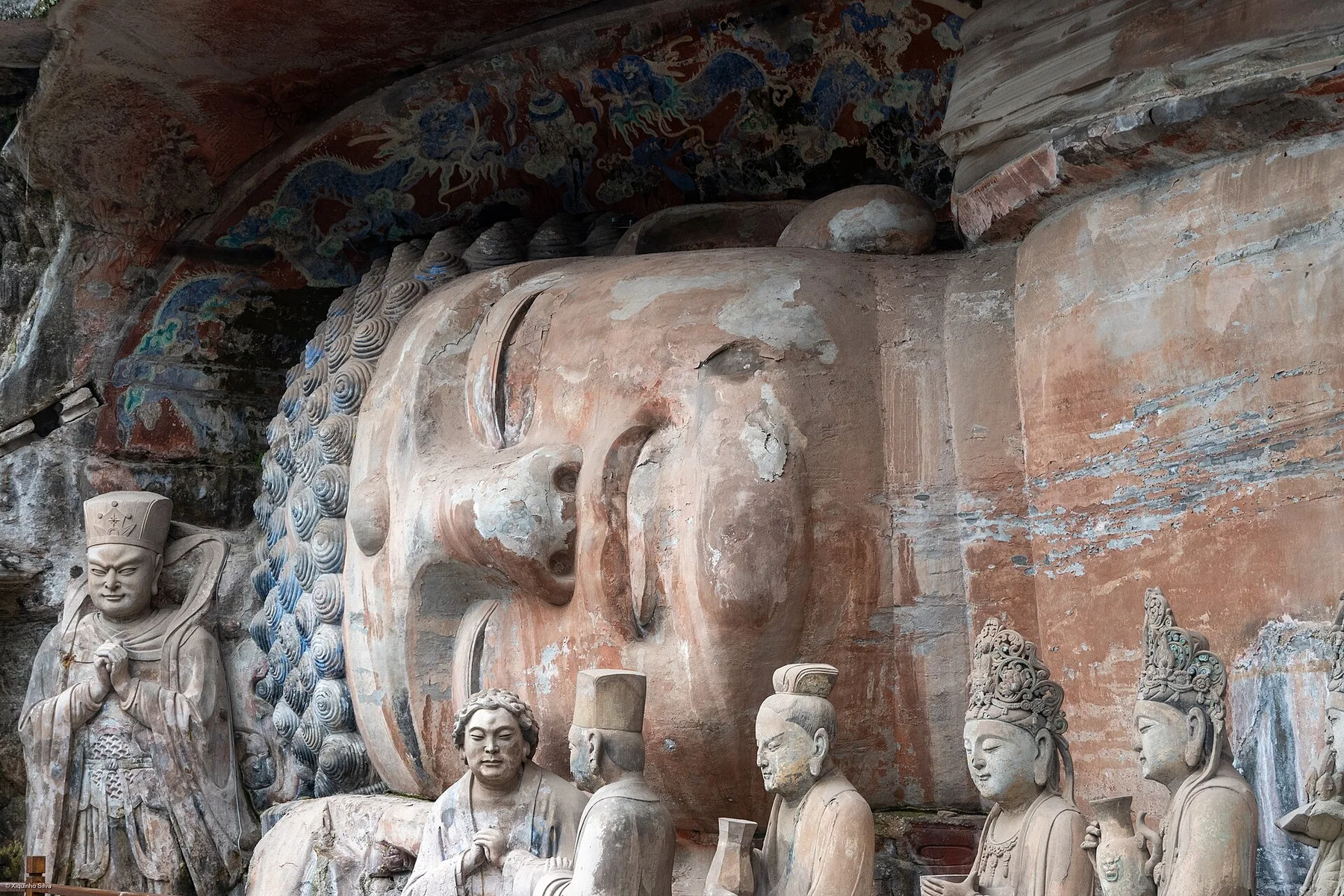
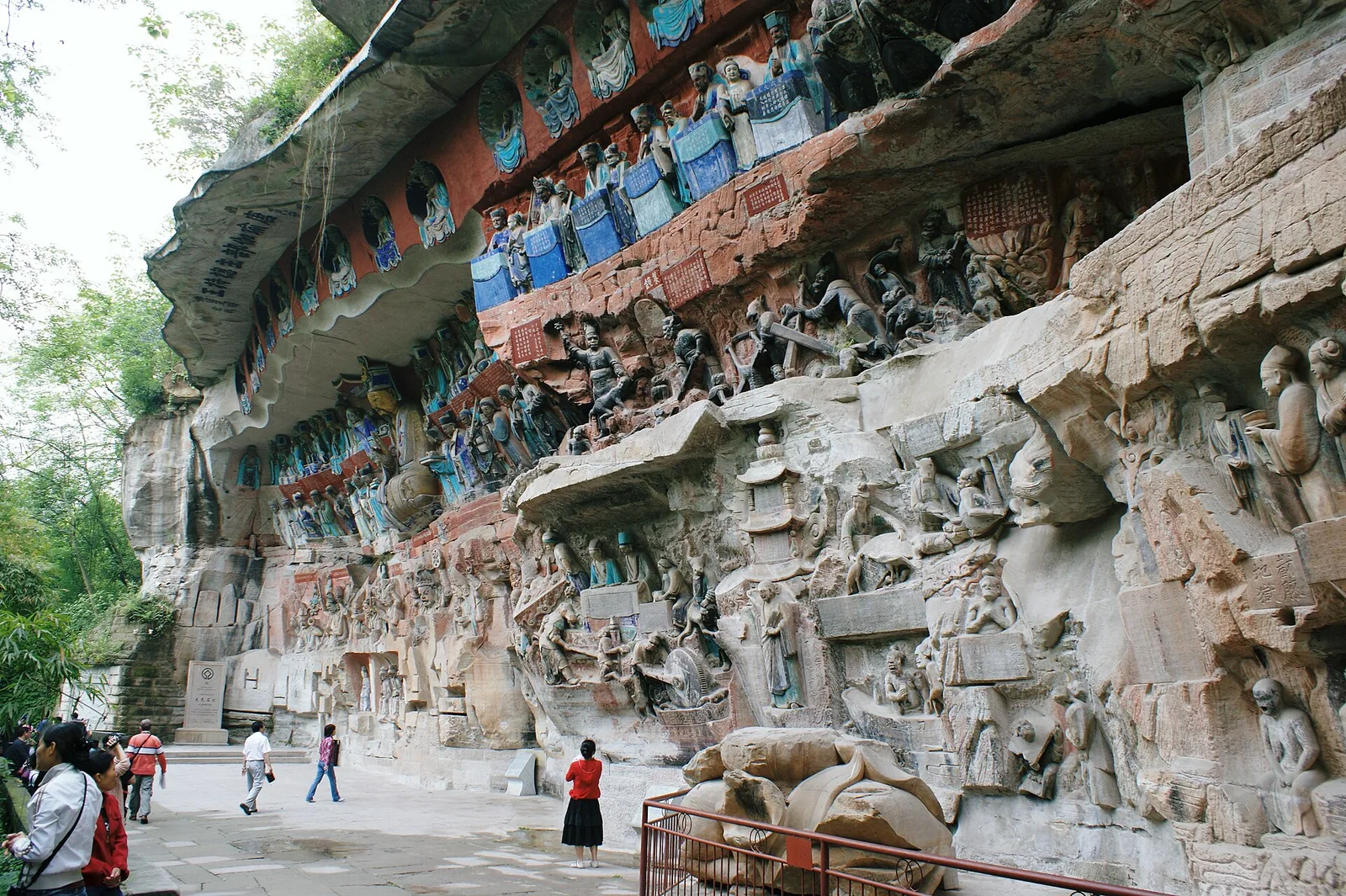
Baodingshan lies northeast of Dazu's urban center, and its carvings were mainly created during the Southern Song dynasty. The Three Sages of Huayan, the Thousand-Armed Guanyin and the scene of Shakyamuni entering nirvana demonstrate different scales and arrangements. In the nirvana scene, the reclining main figure contrasts with the smaller figures around it. Along continuous groups on the cliff, compare how the figures use the rock face and how poses and layers express a subject.
Baodingshan also includes Shengshou Temple and the Dazu Rock Carvings Museum. The temple is associated with Zhao Zhifeng, who led the creation of the Baodingshan carvings; its surviving buildings were rebuilt during the Qing dynasty, with courtyards following the slope. Viewing the outdoor carvings alongside the temple shows a place with both cliff sculpture and continuing religious use. Xiaofowan and Dafowan share some subjects but differ in size and layout, offering more to explore for visitors interested in the organization of the sculptures.
Choosing a focus among the carving sites
The Beishan carvings run along a cliff and date from the late Tang through the Song dynasty. Compared with Baodingshan's large, concentrated scenes, they offer another way to examine individual niches and changes in detail. At Shizhuanshan, another part of the World Heritage site, Buddhist, Taoist and Confucian imagery appears together, showing the coexistence of different traditions. The areas tell different stories; consider whether large narratives, sculptural details or connections between religious cultures interest you most.
This is a destination for visitors willing to pause over images and explanatory signs. The carvings are closely tied to their hillside setting, and walking involves outdoor paths and stone steps. The areas are spread out, so confirm tickets and access for the particular location. Keep your distance and do not touch or climb the sculptures, helping preserve their finely worked surfaces for future visitors.
Useful official references
Check the relevant official service before making arrangements. These links are references, not a guarantee of current services.