A calligraphy and painting street inside Yongning Gate
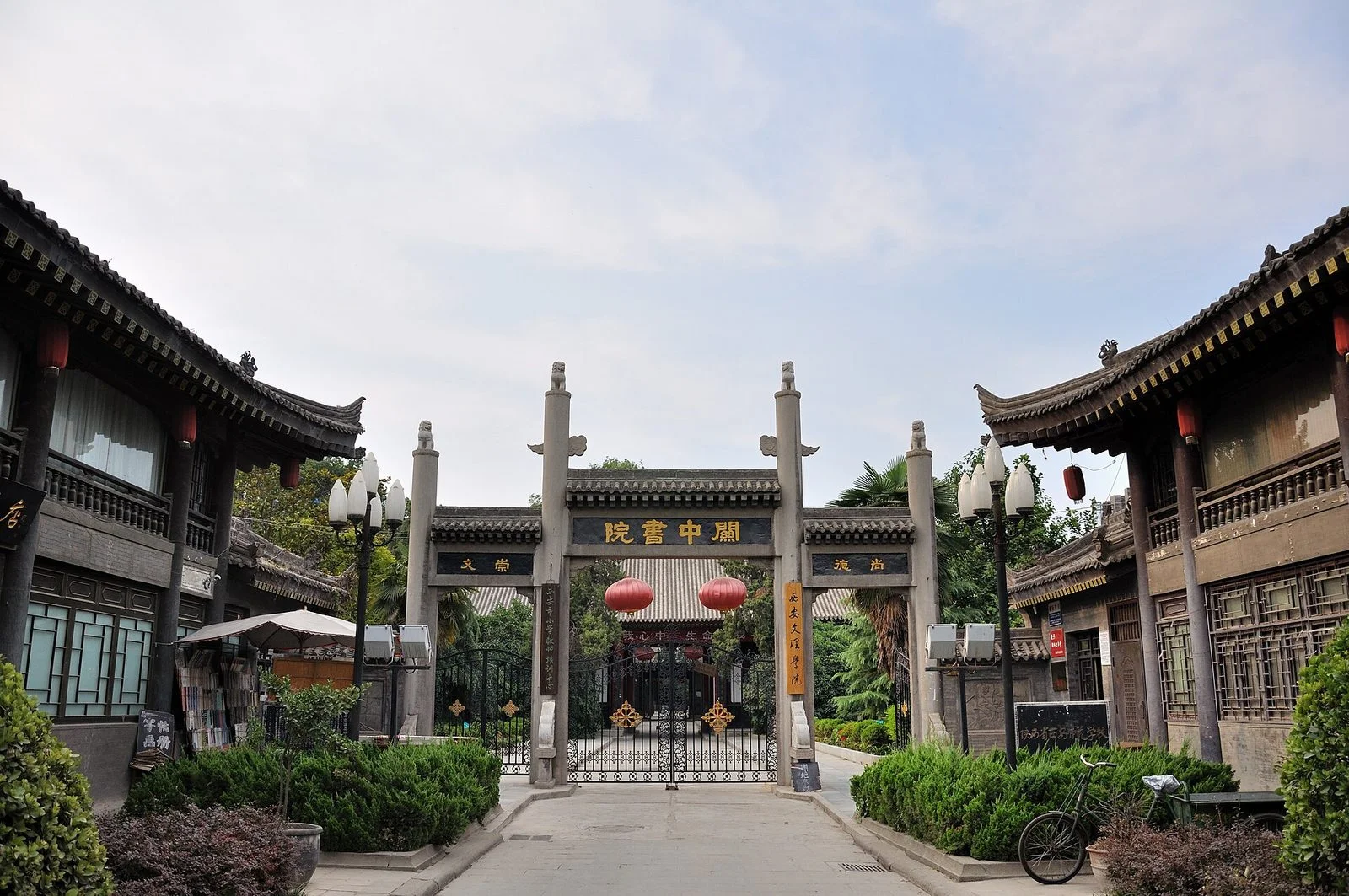
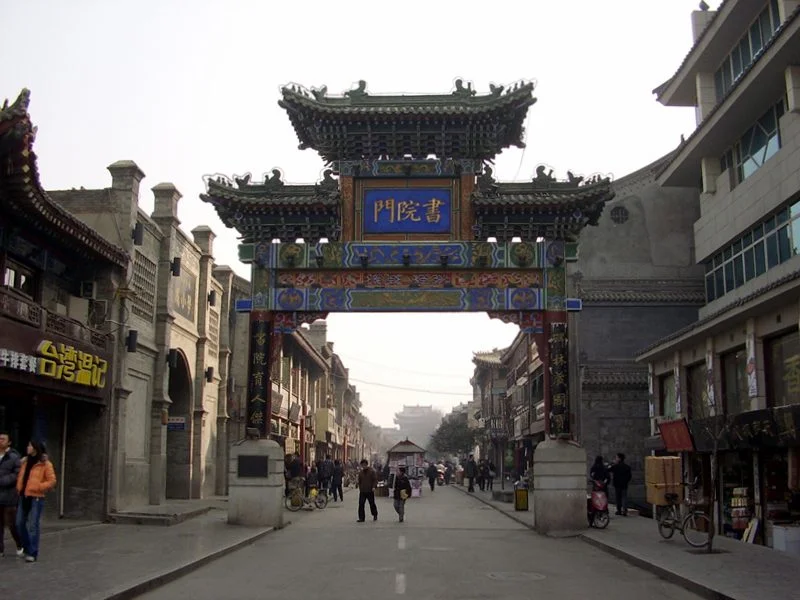
Shuyuanmen is in Beilin District, east of Yongning Gate inside Xi'an's city wall. The street is narrow, lined with faux-antique facades and small shops. Its east end meets Sanxue Street, where the Beilin Museum is at No. 15 Sanxue Street; the museum holds steles from successive dynasties, and the rubbings sold on the street are closely connected to it. The stone archway marked “Guanzhong Academy” is the street's obvious landmark—it is the academy's front gate.
Guanzhong Academy is at No. 63 Shuyuanmen. Founded in 1609, it is one of Shaanxi's better-preserved ancient academies and is now a campus of Xi'an University. It is free but opens by timed reservation: 200 people each from 9:00 to 11:00 a.m. and from 14:30 to 17:30, booked through the “Xi'an Guanzhong Academy” mini-program. Visitors cannot enter the teaching or residential areas. If you only want to browse the shops, looking at the archway and gate from the street is enough; do not treat the academy as a sight you can wander into.
Brushes, ink, paper, inkstones, and calligraphy rubbings
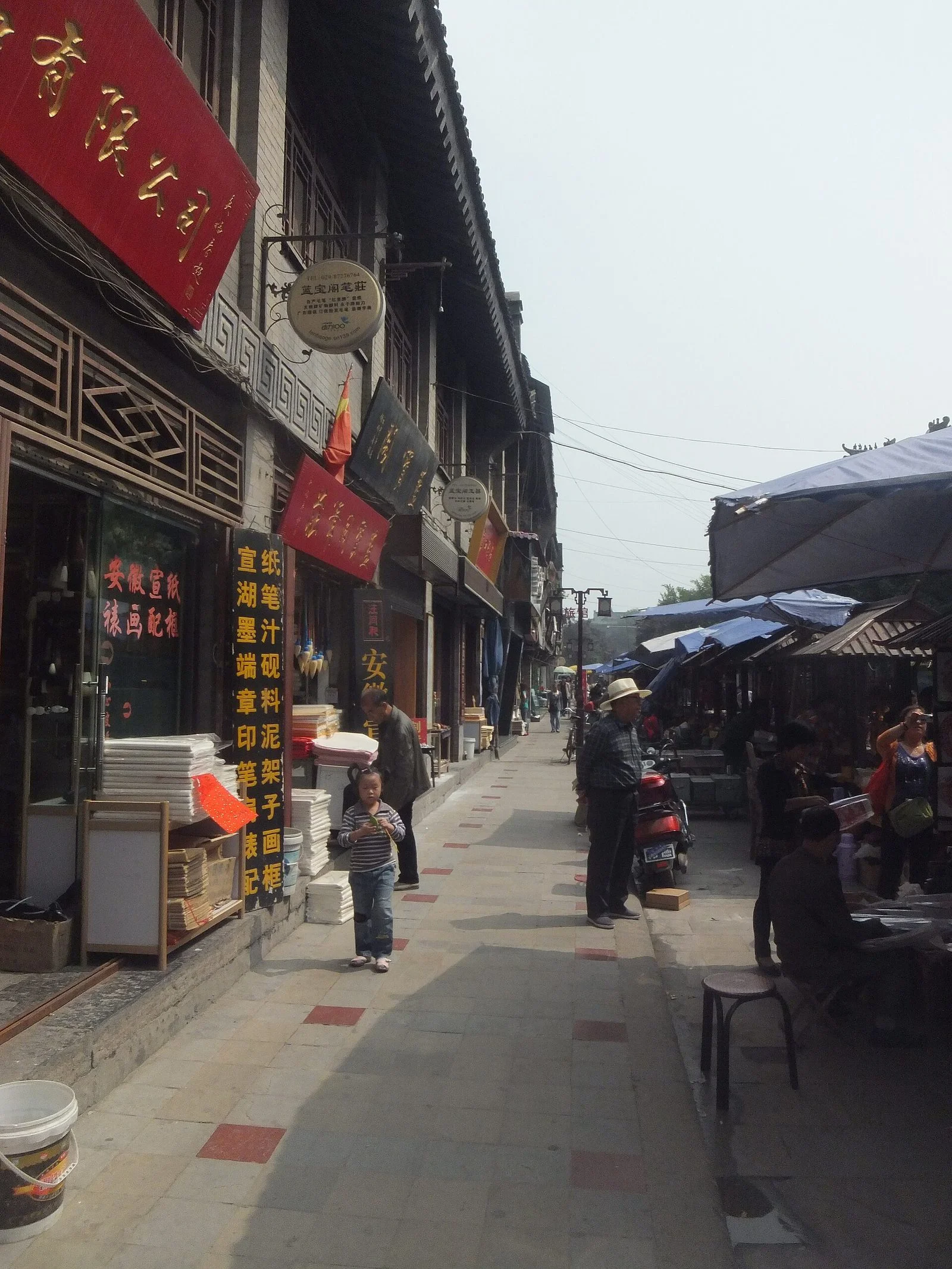
In January 2026, Shaanxi Daily reported that the Shuyuanmen historical and cultural block, next to the Beilin Museum, has more than a hundred shops selling stele rubbings, calligraphy and paintings by noted artists, seal catalogues, and the four treasures of the study. On the street you can see stacks of xuan paper, hanging brushes, inkstones, seal stones, mounting materials, and picture frames. Some shops take custom calligraphy and painting orders and you may see artists at work; others offer pet portraits, mounting, and related services.
For stationery, start with the purpose. For a child practicing characters, an ordinary mixed-hair brush, mao bian paper, and bottled ink are enough. If you plan to write for years, compare the springiness of the brush hair, whether the handle sits well in your hand, and whether the xuan paper is raw or processed and how heavy it is. Inkstones and seal stones vary widely in price; material, size, and carving all affect it, so do not accept a high price just because someone says “old pit” or “handmade.” Rubbings and paintings are better bought for their subject than judged by how old they look.
Prints, handmade work, and prices: how to tell
Quality on the street varies enormously: there are brushes costing a few yuan for students and calligraphy or seals priced in the thousands. When buying calligraphy or painting, ask directly whether it is handwritten, a printed reproduction, or a high-quality copy, and whether the seller can provide the artist's name, the date of creation, and photographs of the work. Printed pieces have even ink tones and brushstrokes without changes in pressure; in handwritten work, differences are easier to see where the stroke starts, ends, and breaks into dry-brush passages. That is not an absolute test, so it is best to have the shop owner explain on the spot.
For a carved seal, confirm the stone, size, script style, and carving quality first; ask whether it is hand-carved or machine-carved, how long it will take, and whether a seal box is included. For rubbings, ask whether they are taken from the original stone, a recut stone, or a print, and whether the stele name and rubbing date are noted. Bargaining is more common in small shops and the low season, but add mounting, packaging, engraving, and shipping to the total before deciding. For expensive items, ask for a receipt stating the artist, material, and price.
Shop by day, and avoid holiday middays
Shuyuanmen is mainly a daytime shopping street. Calligraphy and stationery shops open at different times, so call or check online before making a trip for a particular shop. In March 2026, the Beilin District government confirmed in a reply that during the Spring Festival holiday the area around Shuyuanmen and the Beilin Museum was crowded, the street narrow, and some street vendors were blocking the road. Try to avoid midday during holidays, or approach from Sanxue Street and the Beilin Museum side.
The street is pedestrianized, but electric scooters, delivery vehicles, and residents still come through, so do not stand in the middle of the road to take photos. Stone paving is slippery in the rain—wear shoes with grip. There is little shade in summer, so bring water. Most shops accept mobile payment; before buying expensive calligraphy or painting, confirm how to pay by transfer or card and how the receipt will be issued. The Beilin Museum requires a separate real-name reservation and ticket, and its hours differ from the street's shops; if you plan to visit both Guanzhong Academy and the Beilin Museum, check the reservation times first. As of 2026-11-11, the Beilin Museum is open 9:00–18:30, with ticket sales ending at 17:00 (announcement from March 2026); check official channels on the day for the latest.
Useful official references
Check the relevant official service before making arrangements. These links are references, not a guarantee of current services.
- Shaanxi Daily: Calligraphy and Painting Shops in the Shuyuanmen Historical and Cultural Block (Sina reprint, verified 2026-11-11) ↗
- Guanzhong Academy, Xi'an University: Academy Introduction (verified 2026-11-11) ↗
- Guanzhong Academy, Xi'an University: Visiting Reservations (verified 2026-11-11) ↗
- Beilin District People's Government: Reply on Street Vendors Blocking the Shuyuanmen Pedestrian Street (verified 2026-11-11) ↗
- Xi'an Beilin Museum Announcement (republished by the Beilin District Media Center): Opening Hours and Ticketing (verified 2026-11-11) ↗