Fishbone lanes and old buildings
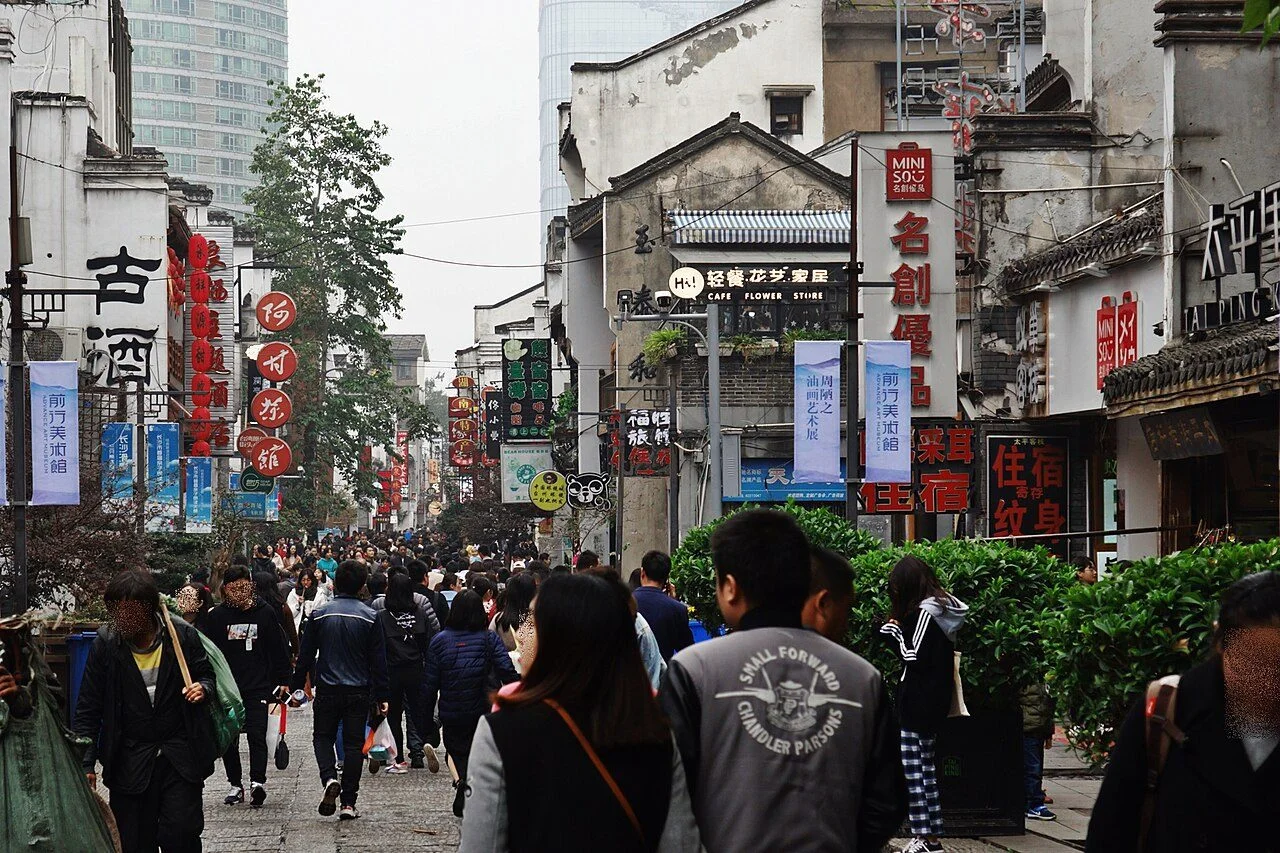
Taiping Old Street is in Tianxin District in Changsha's old city, running from Wuyi Avenue in the north to Jiefang Road in the south. The main street is about 375 metres long and 7 metres wide, and the block covers about 5.33 hectares. Taiping Street is the spine, with Xipailou, Majia Lane, Fujia Lane, Jinxian Street and Taifu Lane branching off to both sides in a “one street, ten lanes” fishbone pattern; the historic quarter lines these lanes.
Most buildings along the street are in late Qing and early Republican style: grey brick, pitched roofs, white ridge tiles, fire walls and wooden doors and windows; older mansions keep stone gateways, grey-brick walls and courtyard houses with light wells. Close to the Xiang River, Taiping Street was a commercial street when water transport flourished; after the Wenxi fire of 1938 the block was rebuilt on the ruins. In 2004 Changsha made it the first old street to receive protected restoration, and it reopened in November 2007 with “old” added to its name.
More than a snack street
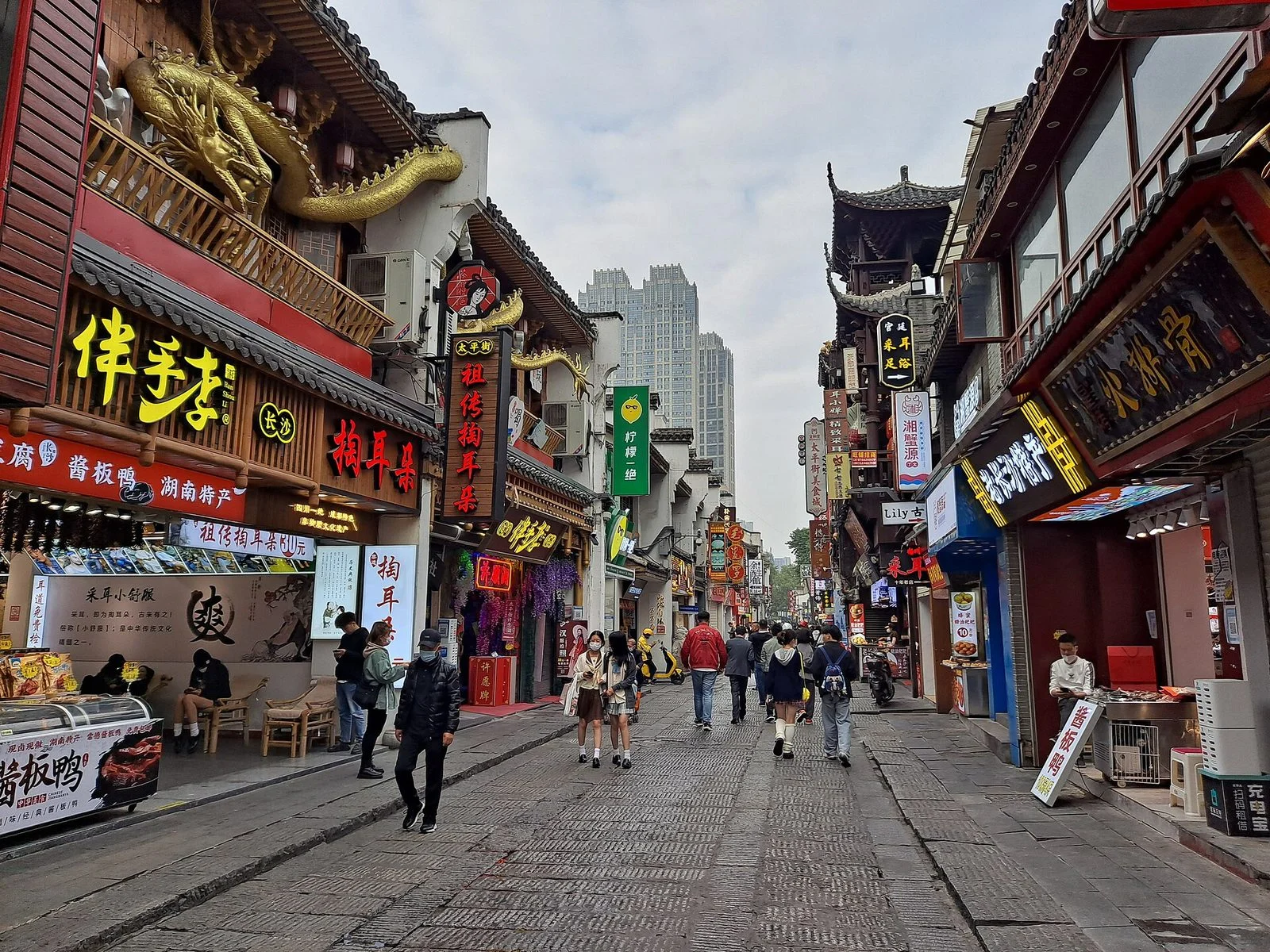
Taiping Old Street is often treated as a snack street, but the shops are more mixed: old names, intangible-heritage displays, handicrafts, Hunan products, tea, coffee and small bars. It was already a commercial street in the Ming and Qing, lined with warehouses, trading houses and shops; today old names such as Qian Yisheng grain store, Lisheng salt house and Yichunyuan teahouse have been brought back into use after restoration, and some old buildings have become shops where the original timber structure is still visible. The shop converted from the Qian Yisheng grain store keeps the old granary layout; there are also heritage display halls and artists' studios.
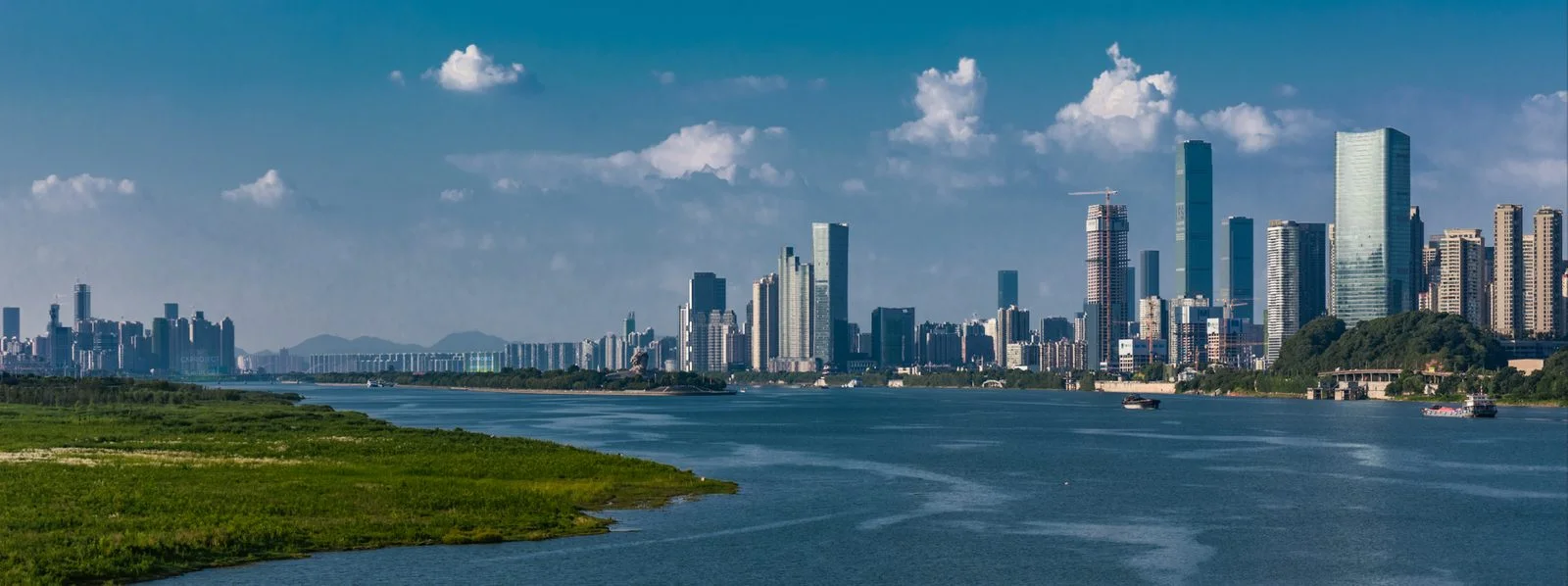
In 2021 Taiping Old Street was named among the first national-level tourism and leisure districts. Shops change quickly, with old names mixed with trendier ones, so what you see may differ each visit. The street is narrow and busy, its stone paving polished by footsteps, and people still live in the lanes on both sides, so do not block doorways when taking photos; to escape the crowd, turn into Majia Lane or Fujia Lane. Ask about price and shelf life before buying local products.
The Jia Yi Residence and pacing a visit
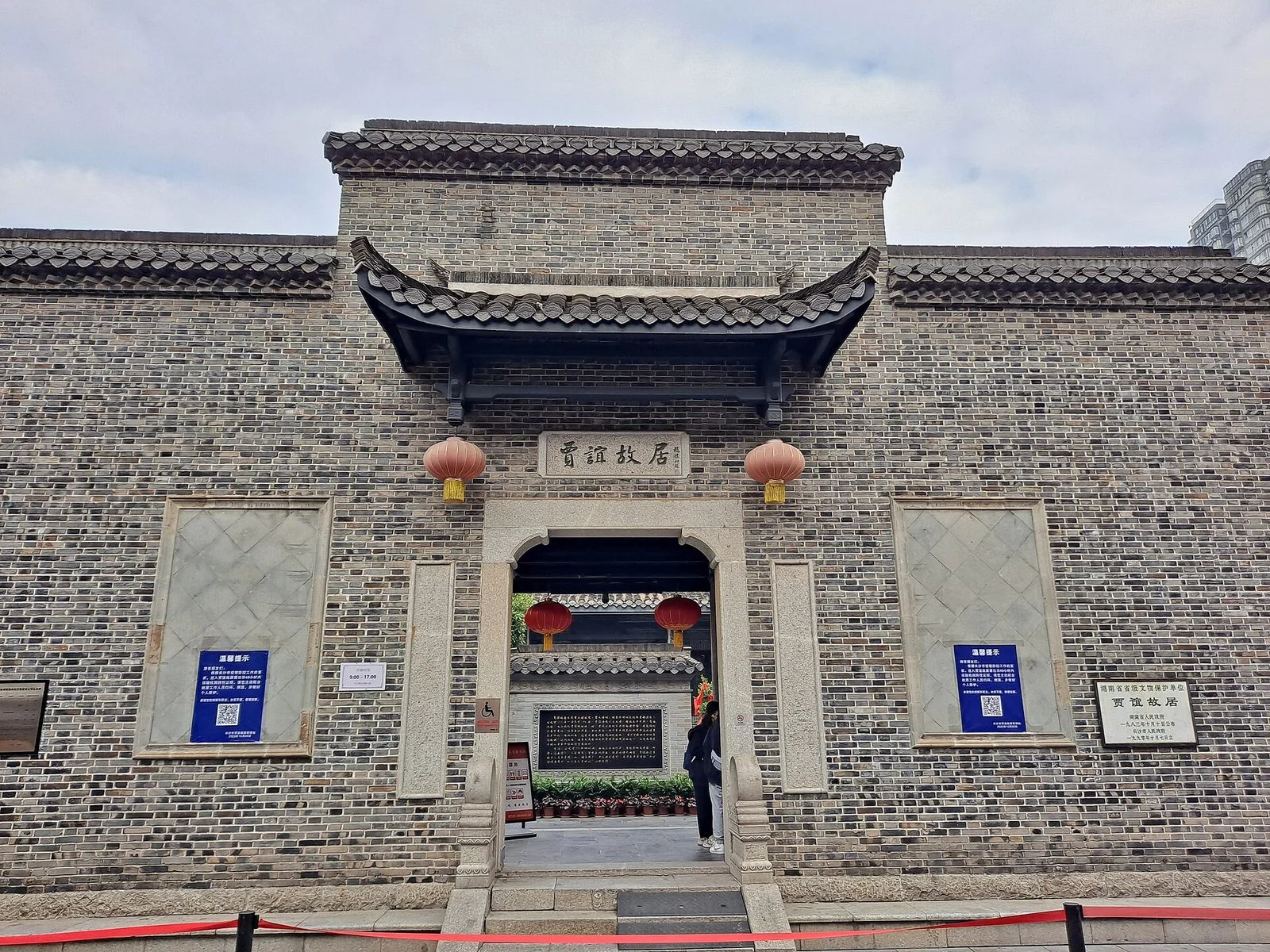
At the southern end of the block is the Jia Yi Residence, a Hunan provincial cultural relic. Jia Yi was a Western Han political writer and man of letters who served as tutor to the King of Changsha; his best-known works include “The Faults of Qin” and “Lament for Qu Yuan”. The residence has been rebuilt several times, and its present layout has been gradually restored from historical records. Inside are the Jia Taifu Shrine, Taifu Hall, Xunqiu Thatched Hall, a stele corridor and the Changhuai Well; the area is small, and half an hour is enough. The “Jia Yi Residence” plaque and grey-brick wall are a common photo spot.
Taiping Old Street is an open block with no ticket and is accessible at all hours, though shops open and close at different times; the Jia Yi Residence opens separately, with hours posted at the gate that may change on holidays, so check before you go. The main street takes about half an hour, and one to two hours is more comfortable if you go into shops and the residence. The Xiang River is not far away, so you can walk down to the waterfront after your visit.
Useful official references
Check the relevant official service before making arrangements. These links are references, not a guarantee of current services.
- Xinhua: Cultural China — Changsha's Taiping Street (26 January 2025) (information checked 2026-11-12) ↗
- CNR: finding the history behind the bustle on Taiping Old Street (4 May 2023) ↗
- Hunan Provincial Government: Jia Yi Residence (Jia Taifu Shrine, Taifu Hall, Xunqiu Thatched Hall and Changhuai Well) ↗