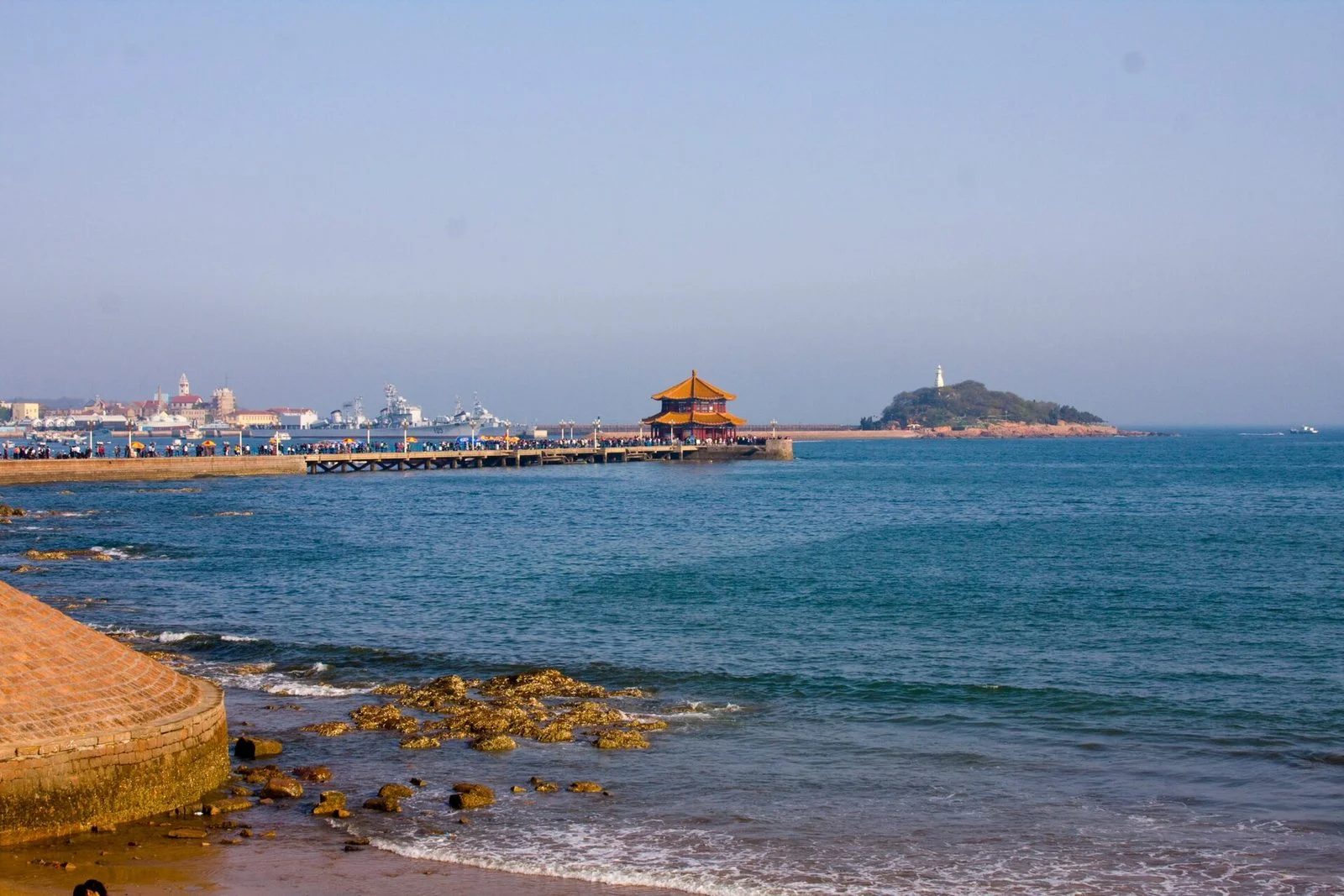
Ten pass roads, and why the name Badaguan remains
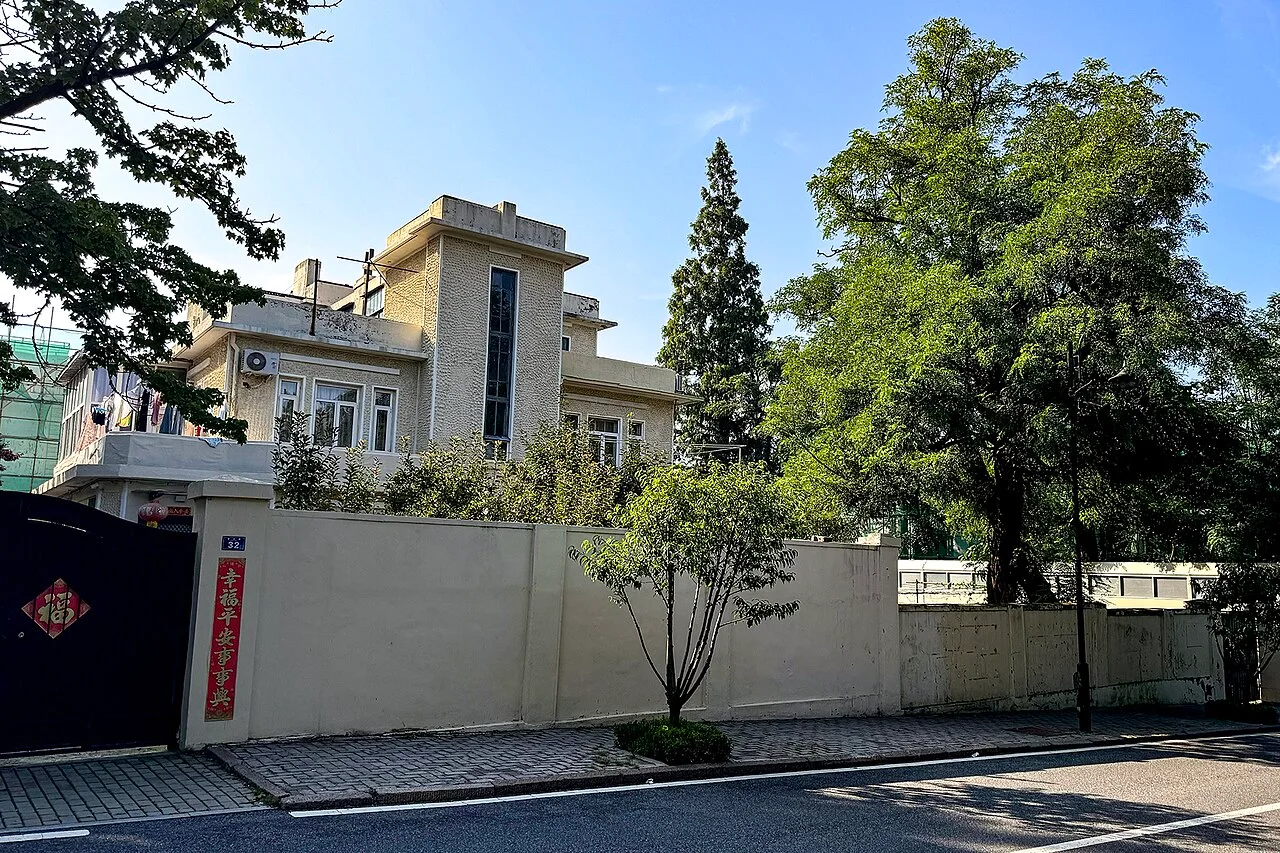
Badaguan lies on the southern slope of Taiping Hill, between Huiquan Cape and Taiping Cape, covering about 666,000 square meters. Its street pattern took shape in the 1930s, with more than 300 buildings spread among grid-plan roads. In 2001, the Badaguan modern and contemporary architectural complex was listed as a Major Historical and Cultural Site Protected at the National Level. The name comes from the first eight roads, named after ancient Chinese mountain passes; the network later grew to ten. Today you can count Shaoguan Road, Jiayuguan Road, Hangu Pass Road, Zhengyang Pass Road, Linhuai Pass Road, Ningwu Pass Road, Zijing Pass Road, Juyong Pass Road, Wusheng Pass Road, and Shanhai Pass Road, but the name Badaguan has never changed.
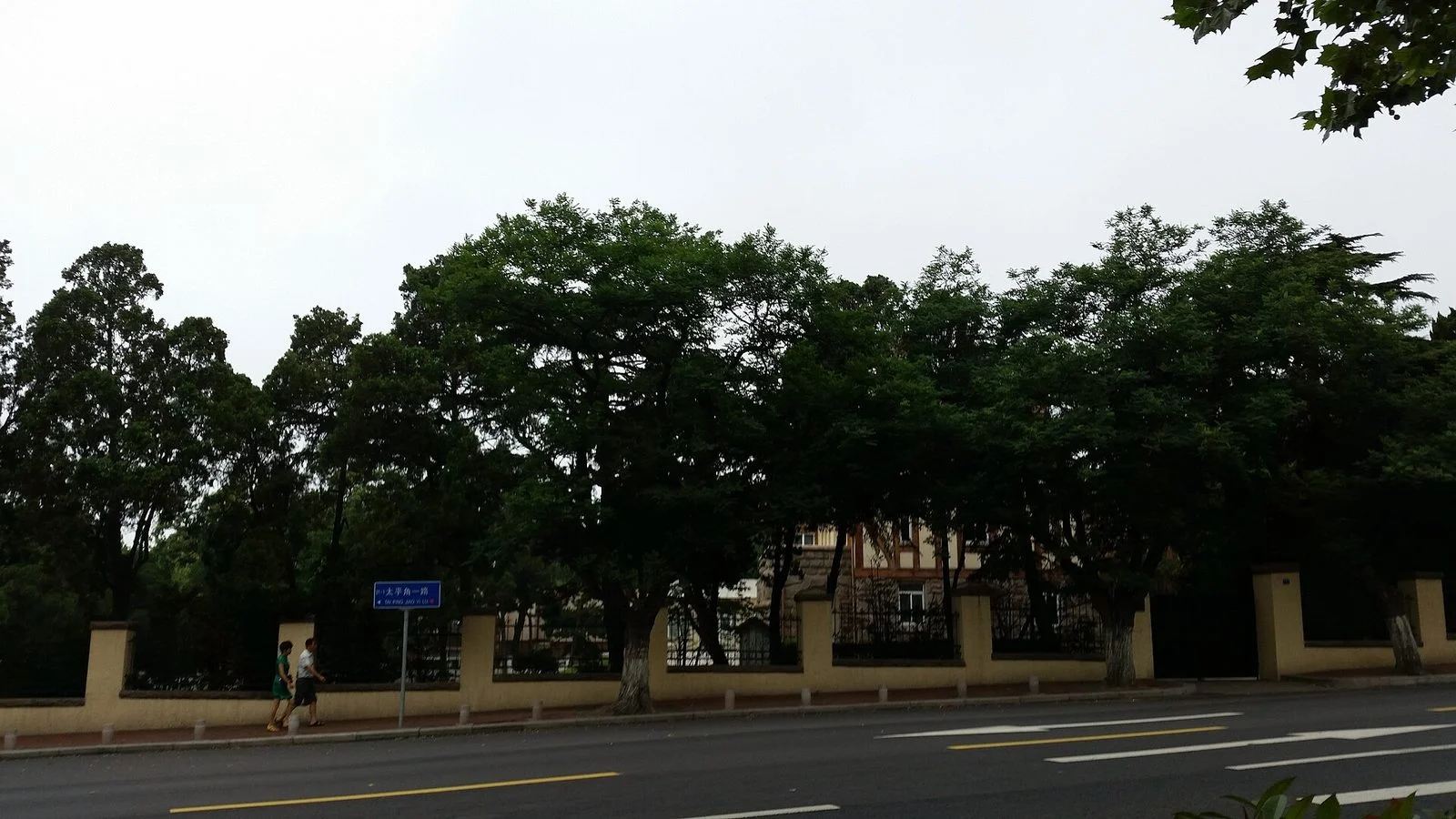
The attraction here is not a single building but the scale of the streets: narrow carriageways, narrow sidewalks, low courtyard walls, and street trees that cover most of the sky. The flowering peaches on Shaoguan Road bloom from March to April, the crape myrtles on Zhengyang Pass Road form a band of color from July to September, the cedars on Zijing Pass Road stay green all year, and the ginkgos on Juyong Pass Road turn yellow in late autumn. Houses recede behind the trees, showing only red tiles, chimneys, balconies, and sections of stone wall. Walking is a better way to experience Badaguan than ticking off a particular doorway.
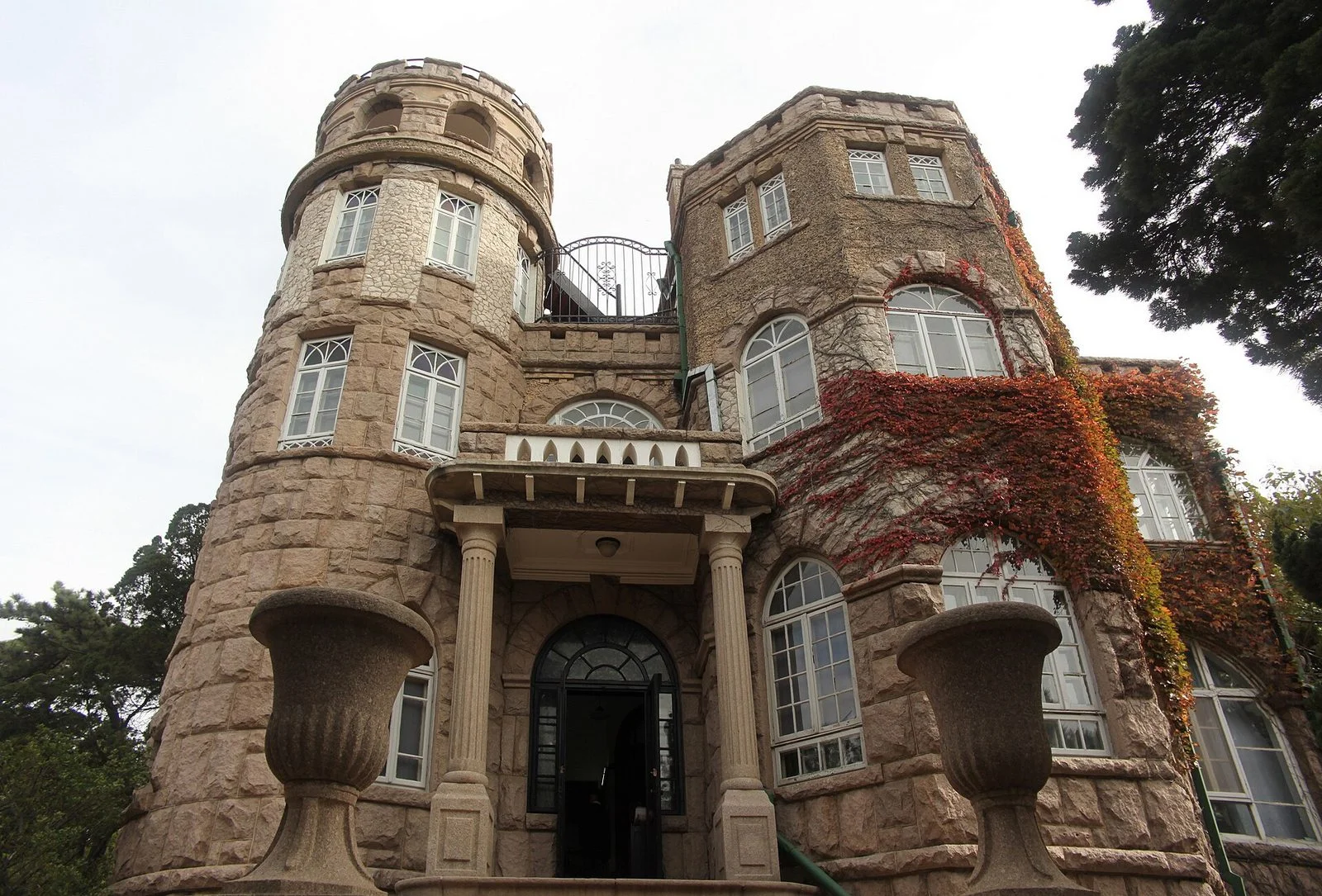
Huashilou (Huashi Tower): A stone castle on the headland
Huashilou stands at 18 Huanghai Road, on the headland at the southern end of Badaguan that extends toward the Second Bathing Beach. In 1930, the Russian émigré Laibichi, who had made his fortune in newspapers in Shanghai, commissioned the Chinese designer Liu Yaochen and architect Wang Yunfei to build this villa; it was completed in October 1931. The main structure has five levels: a basement level for the steward and servants, three above-ground floors for reception rooms, the master bedroom and study, and a café, and a viewing terrace on the roof.
The exterior walls are entirely clad in granite. There is a round tower at the corner, a Byzantine-style porch at the entrance, Gothic pointed arches for the windows, and Baroque ornament on the roof and terraces. On the facade you can see the revolving terrace and windows facing the sea. In 1938 it became the residence of the British consul-general in Qingdao, and after 1949 it was used for a time as a hotel; Chen Yi stayed here in 1954. Entry today is usually ticketed separately, and the price and opening status are subject to the notice at the gate.
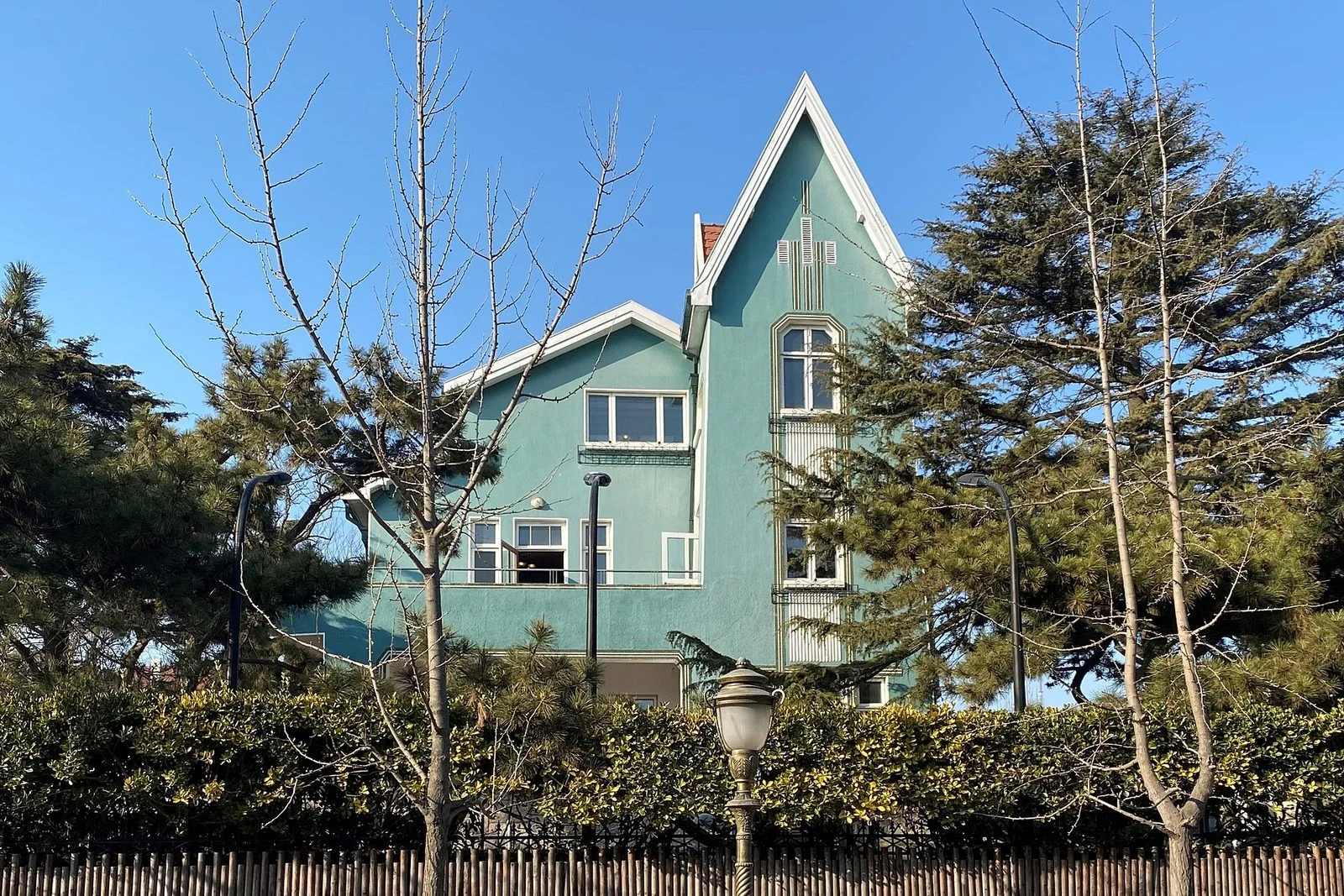
Gongzhulou (Princess House) and the other ticketed villas
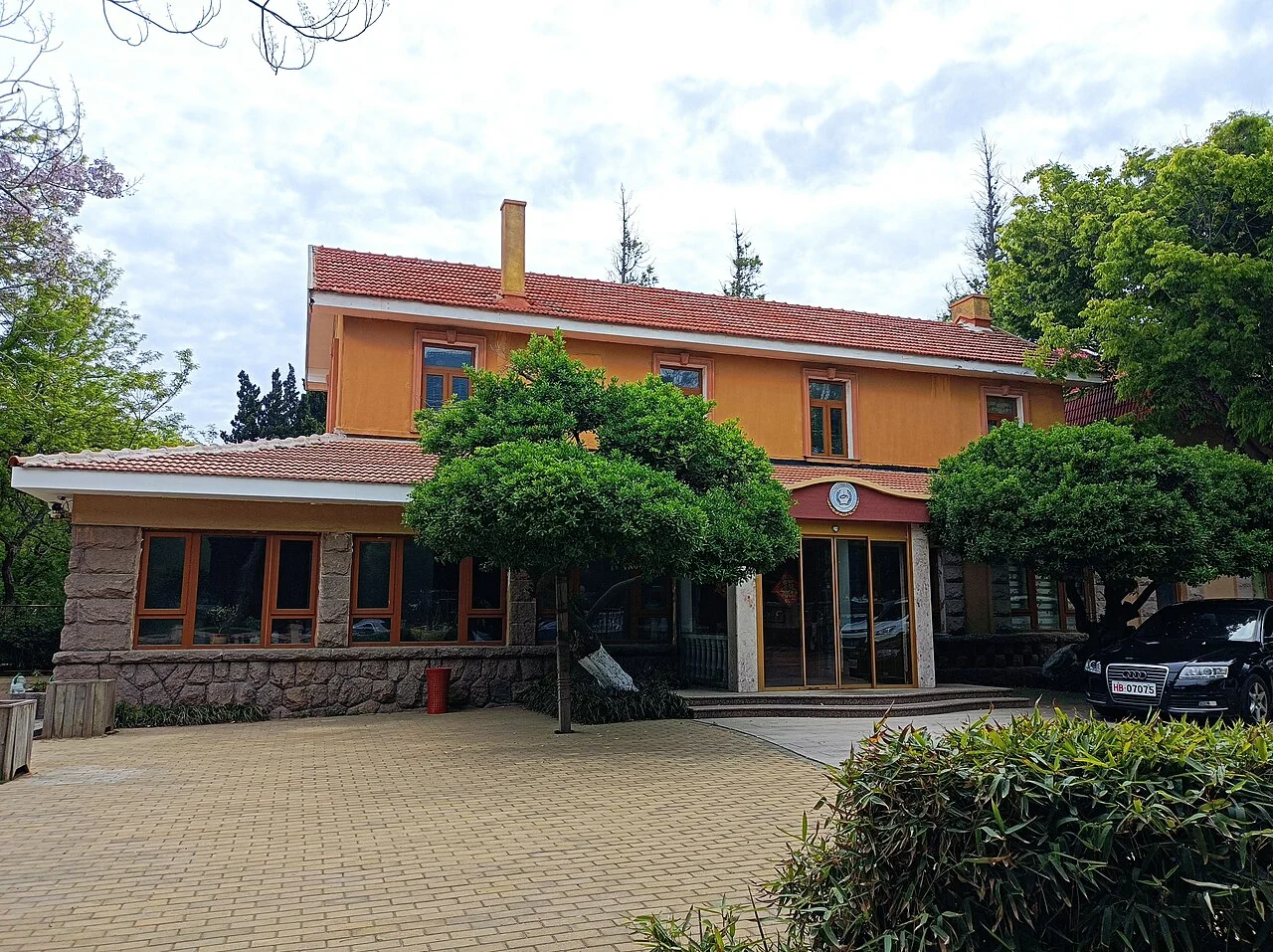
Gongzhulou stands at 10 Juyong Pass Road. Built in the mid-1930s, it has about 722 square meters of floor area. It has three above-ground floors and one basement, a foundation of squared granite blocks, dark green brick facing, a steep roofline, and white and green mosaic tile around the windows; there is a square terrace on the south side and an open balcony on the second floor. The name comes from a legend that a Danish princess came here to escape the summer heat, but no such princess appears in the archives. What can be confirmed is that a Danish prince and his party visited Qingdao in 1930 and traveled several times along the Badaguan coast.
Gongzhulou opened to the public in 2015. Between 2013 and 2014, its roof, exterior walls, stained glass, and hardware were restored; after further repairs in early 2022, it reopened. Most courtyards in Badaguan are closed to the public and can only be seen over the walls; a few buildings such as Huashilou and Gongzhulou usually have separate entrances and tickets, which is a different arrangement from the free-access neighborhood. If you want to go inside, first check whether the door is open, and do not treat the district as a single ticketed scenic area.
Walk to Taiping Cape, where the neighborhood meets the sea
Badaguan extends east to Taiping Cape, and Taiping Cape First, Second, and Third Roads carry the neighborhood toward the coast. The streets here are quieter, the courtyard walls longer, and the sound of waves comes through the shade. On the Taiping Cape Park side, reefs, pines, and the red tiles of villas overlap, unlike the atmosphere in the core area, where every road has people taking photos.
Coming down from Huashilou, you reach the Second Bathing Beach, whose sand backs onto the headland and pine woods. Linking the district, Huashilou, Gongzhulou, and the Taiping Cape coast on foot takes about half a day at a slow pace; if you only see the streets and the two houses, 2–3 hours is enough. The streets are public roads, with no unified entrance and no reservation; individual buildings such as Huashilou and Gongzhulou are managed separately, and entry conditions are subject to on-site information.
Useful official references
Check the relevant official service before making arrangements. These links are references, not a guarantee of current services.
- Qingdao Government Portal: Badaguan Scenic Area (checked on 11 November 2026) ↗
- Qingdao Daily / Guanhai News: Huashilou and Gongzhulou (checked on 11 November 2026) ↗
- Qingdao News Network: Gongzhulou in Badaguan reopens (checked on 11 November 2026) ↗
- Qingdao News Network: The ten pass roads and street trees of Badaguan (checked on 11 November 2026) ↗