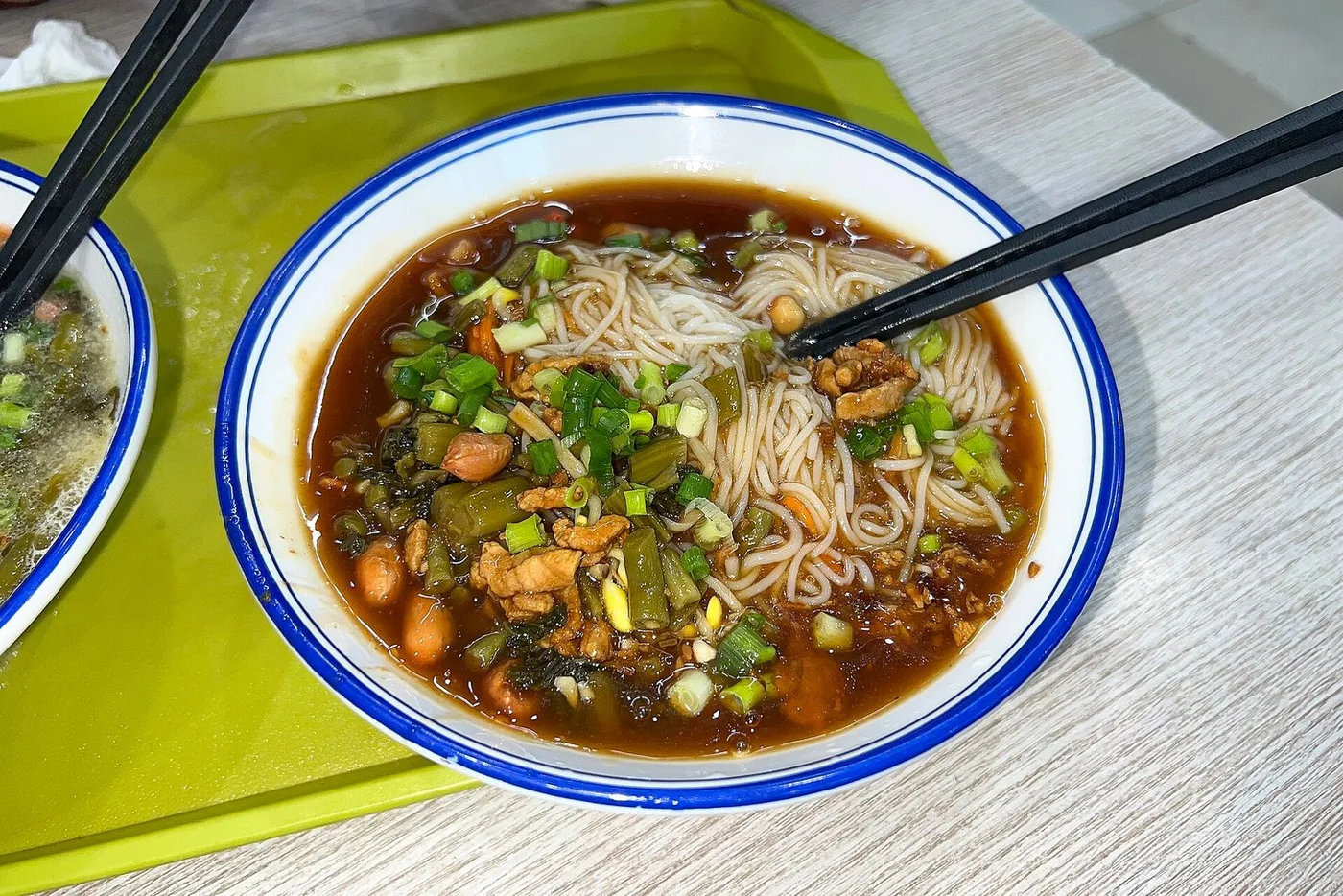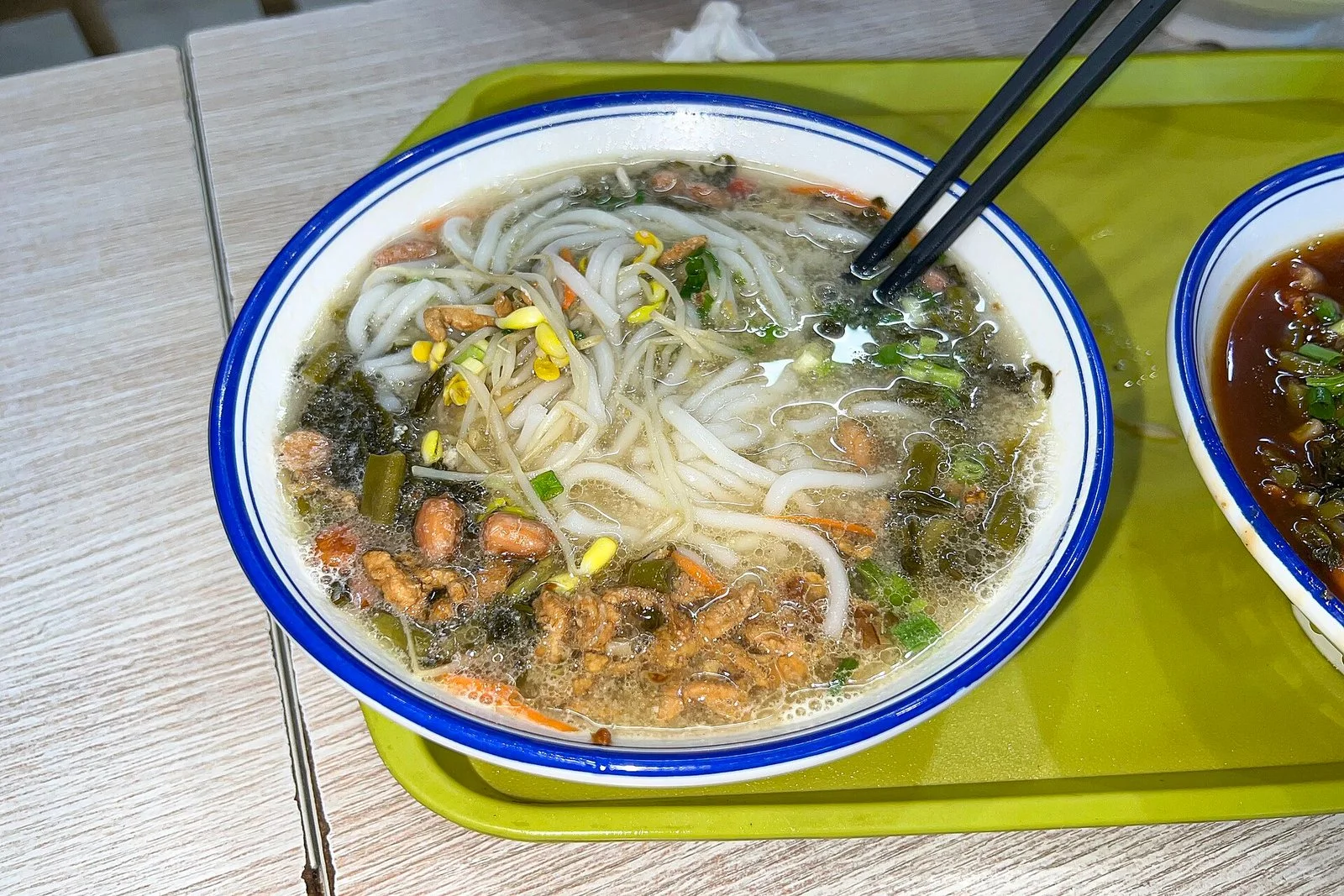
Noodles from Wenchang, also served in Sanya
Baoluo noodles take their name from Baoluo town in Wenchang, and local accounts say they were already a well-known food there in the Ming dynasty. They are round noodles made from rice. They did not originate in Sanya: they are a kind of rice noodle sold at breakfast shops in many parts of Hainan. Some Hainanfen shops in Sanya also list them, and the photos in this article were taken at restaurants in Sanya. It is more accurate to treat them as part of the Hainan rice-noodle family than as a snack unique to Sanya.
The traditional method pays attention to both the noodles and the broth. Rice is ground into a batter and made into noodles that should be white, fine and smooth. The broth was once simmered from beef bones; later it took on the Cantonese practice of using a superior stock, simmered from several ingredients for a deeper savory flavor. The toppings fall into two groups: the dry-tossed version uses beef jerky, peanuts, sesame, pickled vegetables, bamboo shoots and bean sprouts, while the soup version adds lean pork, pork liver, pork intestine and pork kidney. The two lists are not identical, so it is worth asking what is available that day; shops make different choices, and a bowl may not contain every item.
Soup or dry-tossed: the texture changes
In the soup version, the noodles are blanched in hot broth. They feel slippery at first, then turn chewy as you bite into them. The broth is clear, sweet and savory with a touch of sourness, and it does not taste heavy when you finish it. The pork offal in the toppings adds meaty depth to the broth, while pickled vegetables and bamboo shoots sharpen the flavor. Peanuts may appear in both the soup and dry versions; there are only a few, but they add a layer of crunch to the soft noodles. If you prefer lighter flavors, taste a spoonful or two of the broth before deciding whether to add chili or pepper.
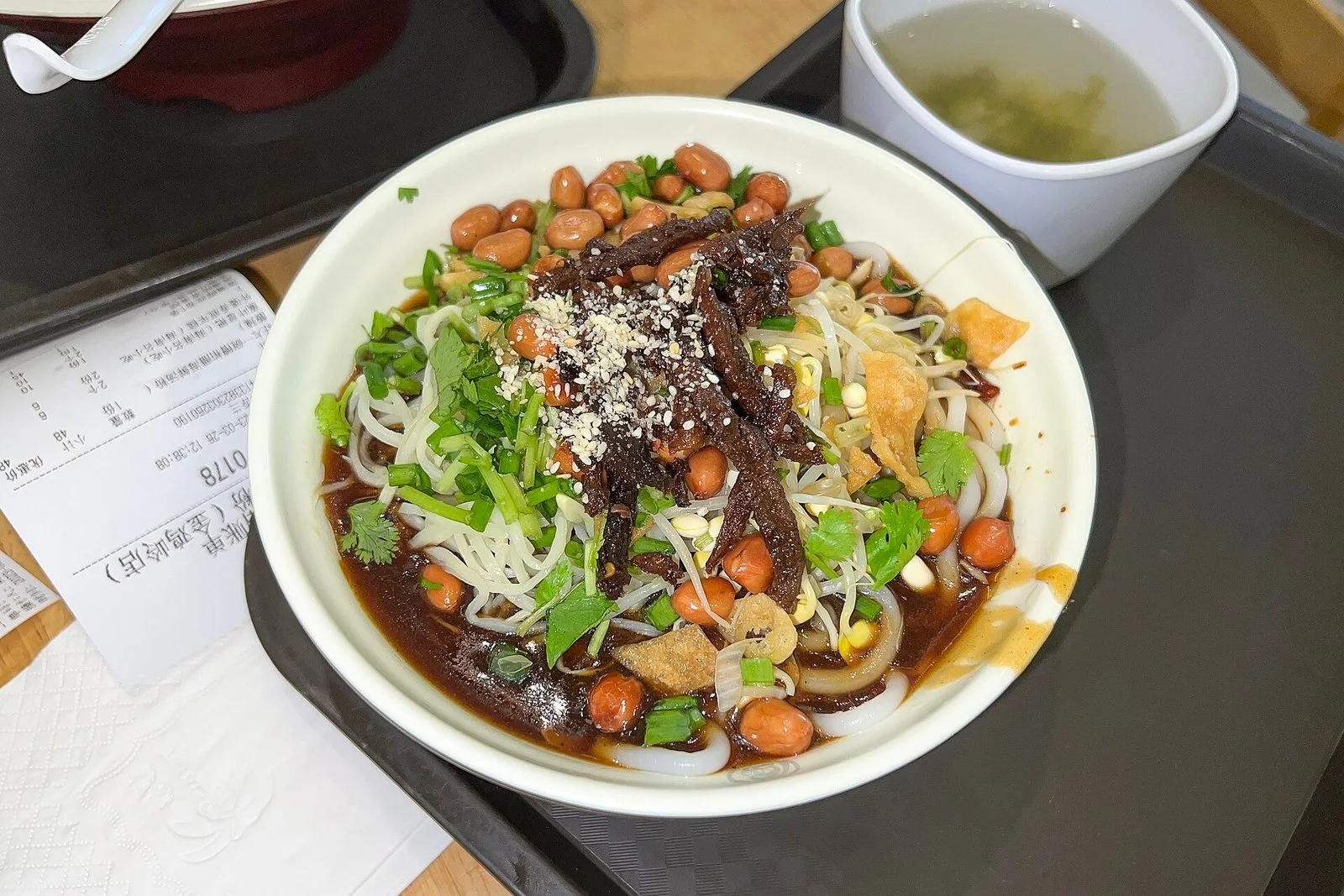
The dry-tossed version (some shops also label it yan) drains the noodles and uses sesame oil, peanut oil and sauce to coat them, so the flavors are more concentrated. The salty savor of the beef jerky, the nuttiness of sesame and the tart crunch of pickled vegetables come through more clearly. The beef Baoluofen in the photo also has cilantro, fried tofu skin and bean sprouts, with a clear soup on the side. That is one shop's version; not every bowl of Baoluofen looks like this.
Ordering, allergens and what to eat with it
At the shop you can simply say “one bowl of Baoluo noodles, with soup” or “dry-tossed.” If you do not eat pork offal, say “no pork offal”; if you do not eat cilantro, say “no cilantro”; for heat, say “less spicy” or “no chili.” On March 26, 2023, a Hainanfen shop in Sanya listed beef Baoluofen at 18 yuan, which gives a rough idea of the price level. Menus and portions change, so check at the shop.
The toppings may include peanuts, sesame, beef or pork offal, as well as bean sprouts; the broth is usually simmered from beef bones. Anyone with an allergy to nuts, sesame or a particular meat should check each item. The dry-tossed sauce may contain soy sauce (soybean, wheat), so ask if you need a gluten-free diet. People eat it at breakfast and at midday; a glass of coconut water or a serving of qingbuliang makes a fairly balanced pairing in flavor.
Useful official references
Check the relevant official service before making arrangements. These links are references, not a guarantee of current services.