Noodles and their toppings
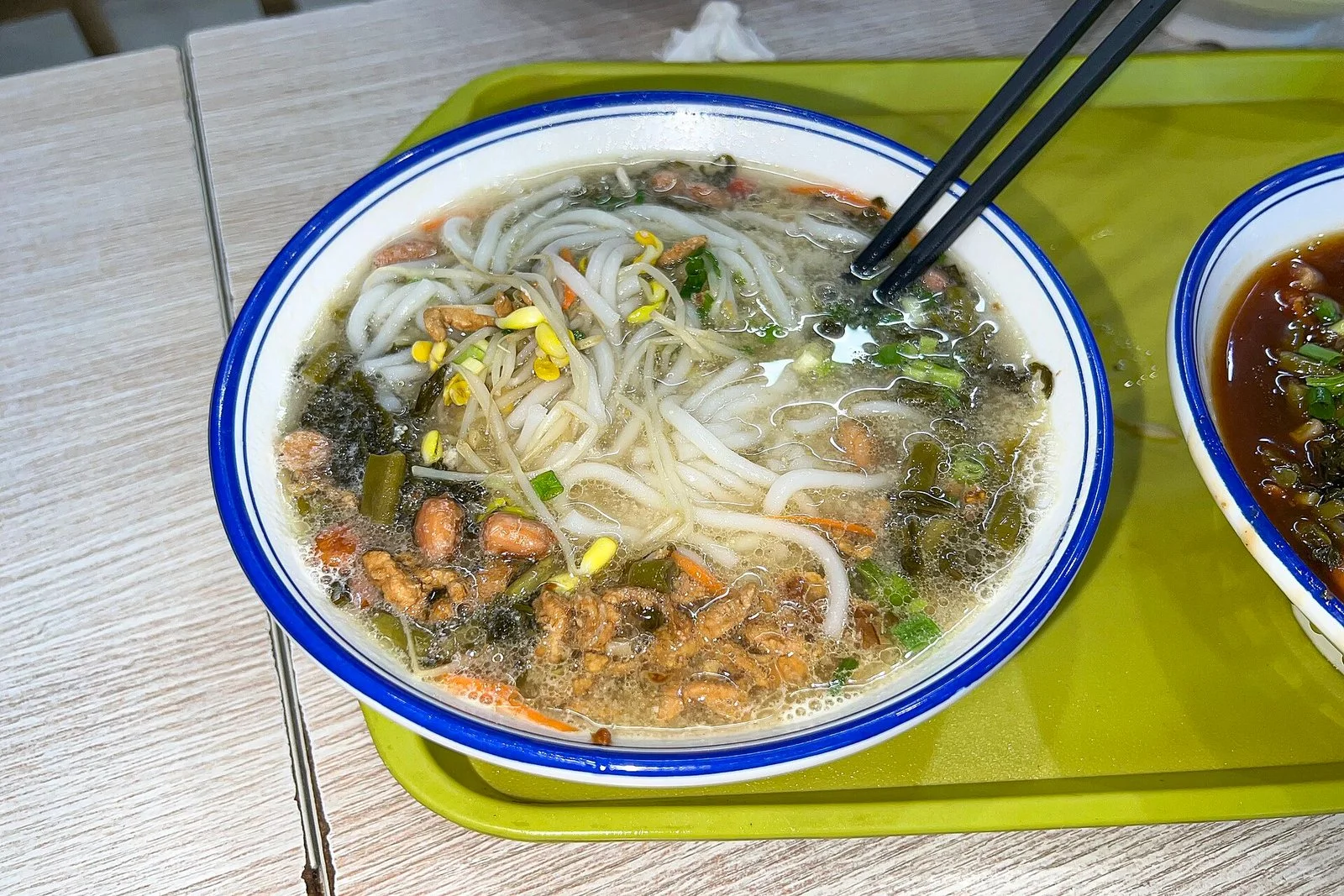
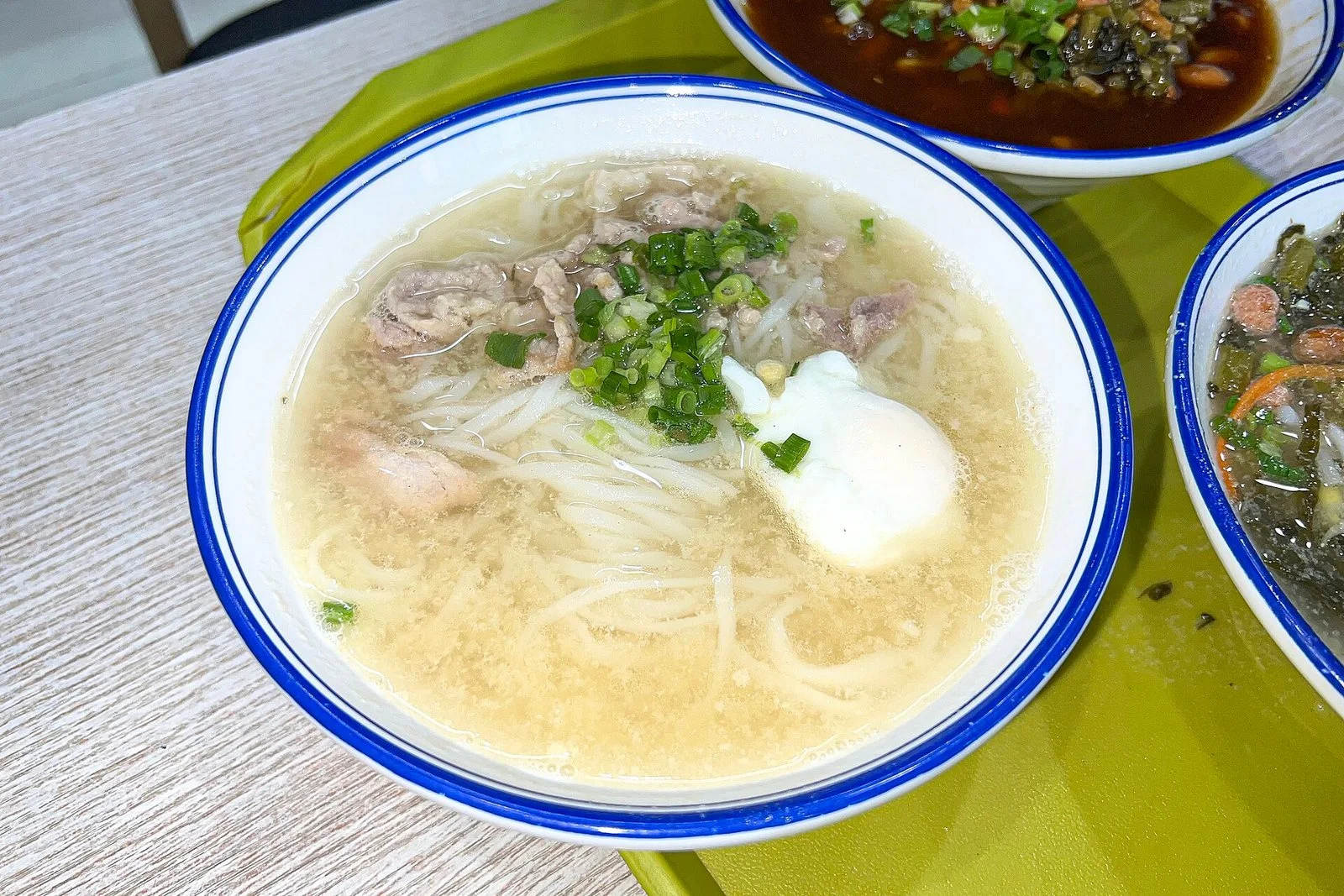
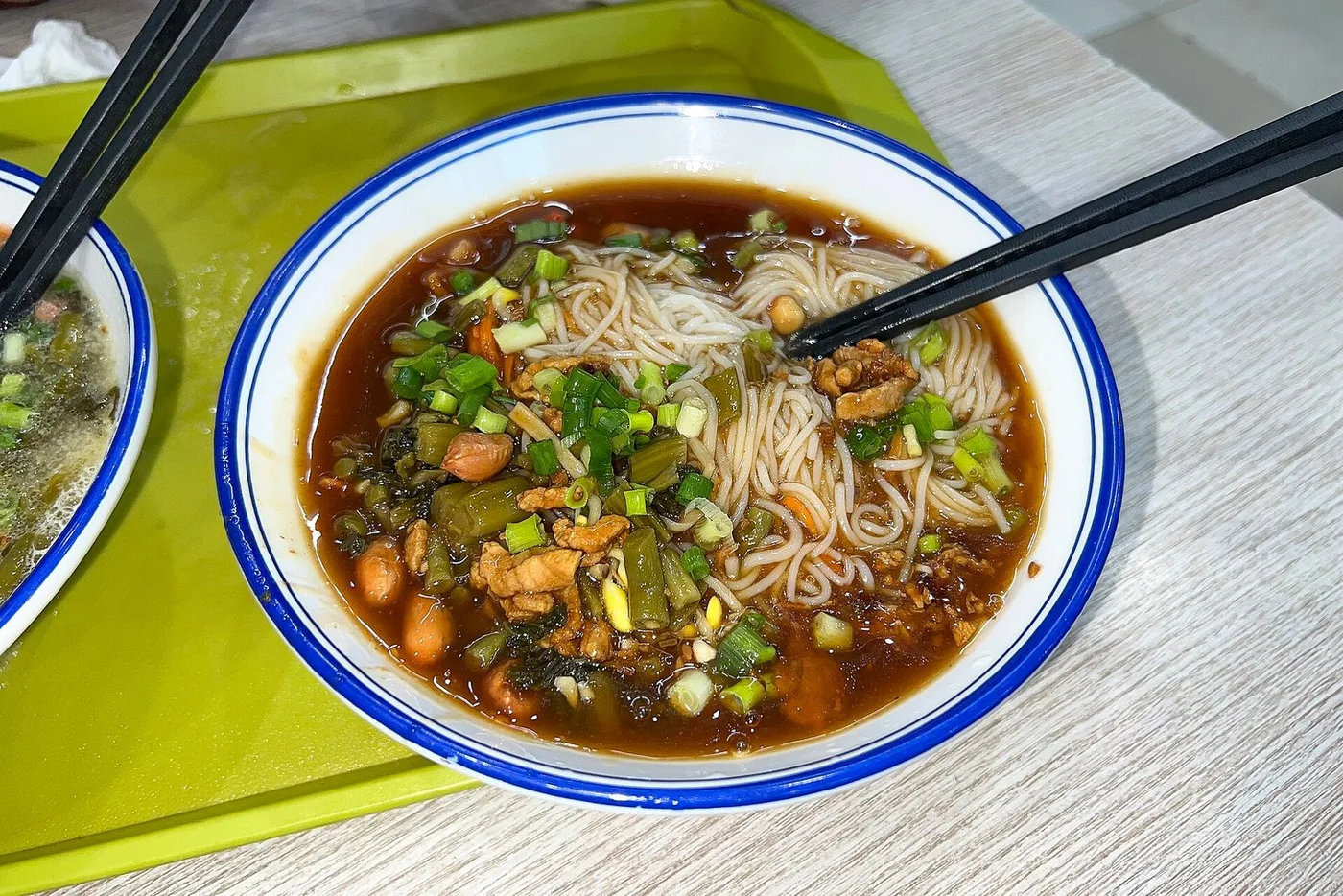
Hainan rice noodles use thin rice noodles as their base, with the emphasis on combining them with sauce and toppings. For yanfen, a common version in Haikou, the noodles go into a bowl with bean sprouts, pickled greens, peanuts, sesame, dried beef, chopped scallions, coriander and other ingredients before sauce is poured over them. Here, “yan” can be understood as mixing to eat; it does not mean the noodles are marinated for a long time. Nor is “Hainan rice noodles” on a menu a general name for all rice noodle dishes on the island.
Several textures combine in the bowl: the thin noodles are soft and coated in sauce; peanuts add texture, pickled greens add sourness, and meat and scallions contribute savory flavors. Shops use different combinations even under the same dish name. Looking at the ingredient trays and finished bowls is more helpful than imagining the taste from the name alone. Mix up the sauce from the bottom so that noodles and toppings combine before your first bite; this makes the dish's character easier to understand.
Breakfast in Haikou's old streets
Shuixiangkou is in Haikou's historic qilou district, where Hainan rice noodles form part of the breakfast scene alongside spicy soup with rice and laoba tea. Various noodle shops can also be found around Bo'ai North Road, Xinhua South Road and Yixing Street. The dish suits visitors wanting a substantial bowl to start the day while observing neighborhood life. Unlike a sweet food such as qingbuliang, it serves as a savory meal.
Different parts of Hainan have their own representative dishes, including Baoluo noodles, Lingshui sour noodles and Hou'an noodles. These names may all appear in Haikou, but being sold in the same city does not make them the same food. When ordering for the first time, show the staff the characters “海南粉,” then confirm whether it is mixed or in soup and which meats it contains. To compare preparations, look at the specific dish name and ingredients rather than asking only for “noodles from Hainan.”
Check ingredients before adding seasoning
Peanuts, sesame and meat are common ingredients. A rice noodle base does not mean the whole bowl is vegetarian or free from common allergens. Peanuts may already be sprinkled on top, and meat ingredients may be in the sauce. If you have dietary restrictions, show the staff what you cannot eat before preparation and ask them to check both sauce and toppings. Picking peanuts or beef off the surface does not mean those ingredients have been avoided.
If you want heat, taste it before adding chili, then ask which chili condiments are available and add a little. For visitors from elsewhere, understanding the sauce and toppings before deciding how much sourness or heat to add makes differences between shops easier to compare than pouring all the condiments in at once. Shop hours, ingredients and portions change. This page does not treat one shop's serving times, prices or set combinations as a standard for every Hainan noodle shop.
Useful official references
Check the relevant official service before making arrangements. These links are references, not a guarantee of current services.