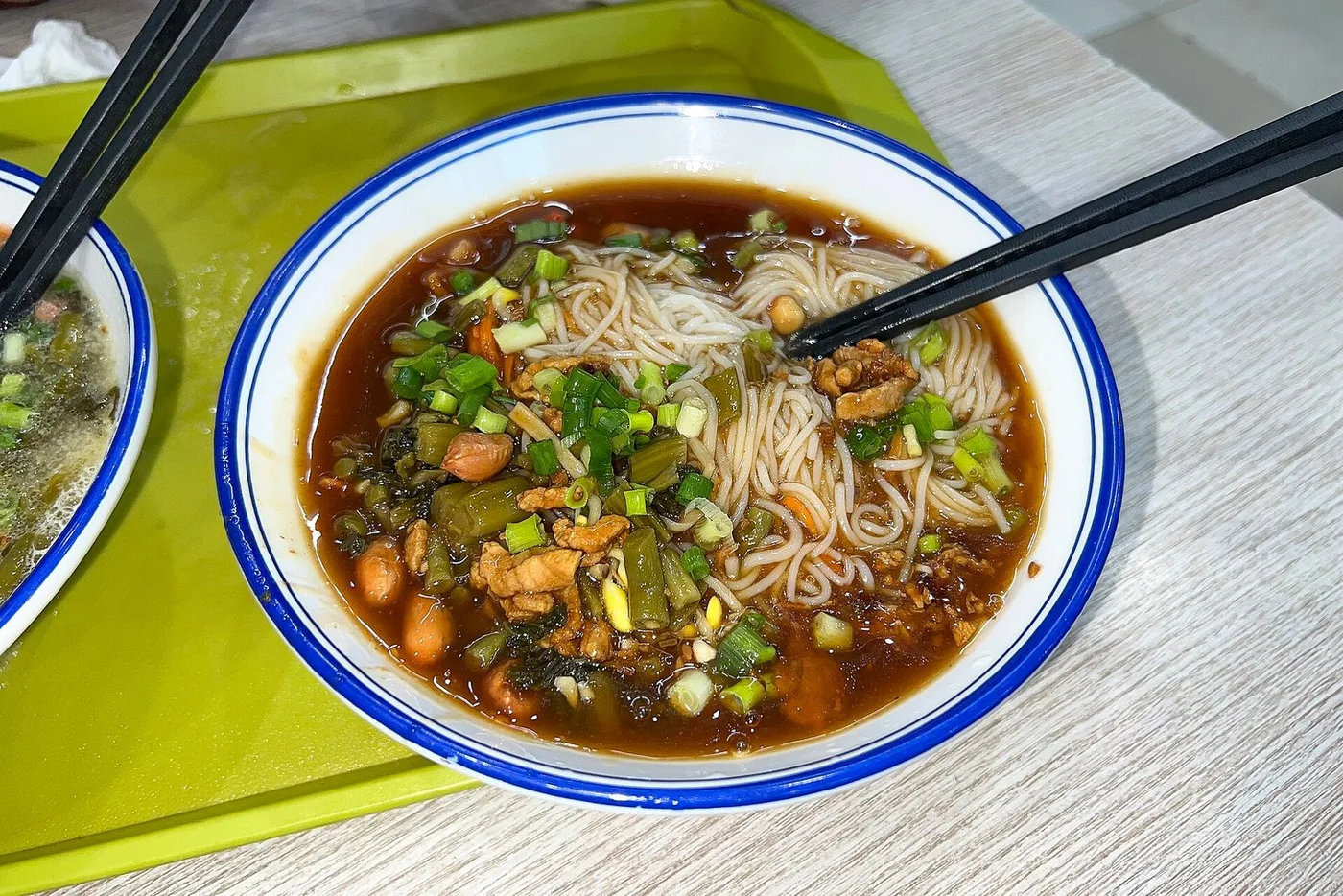
Wanning's noodle soup, eaten at breakfast across Hainan
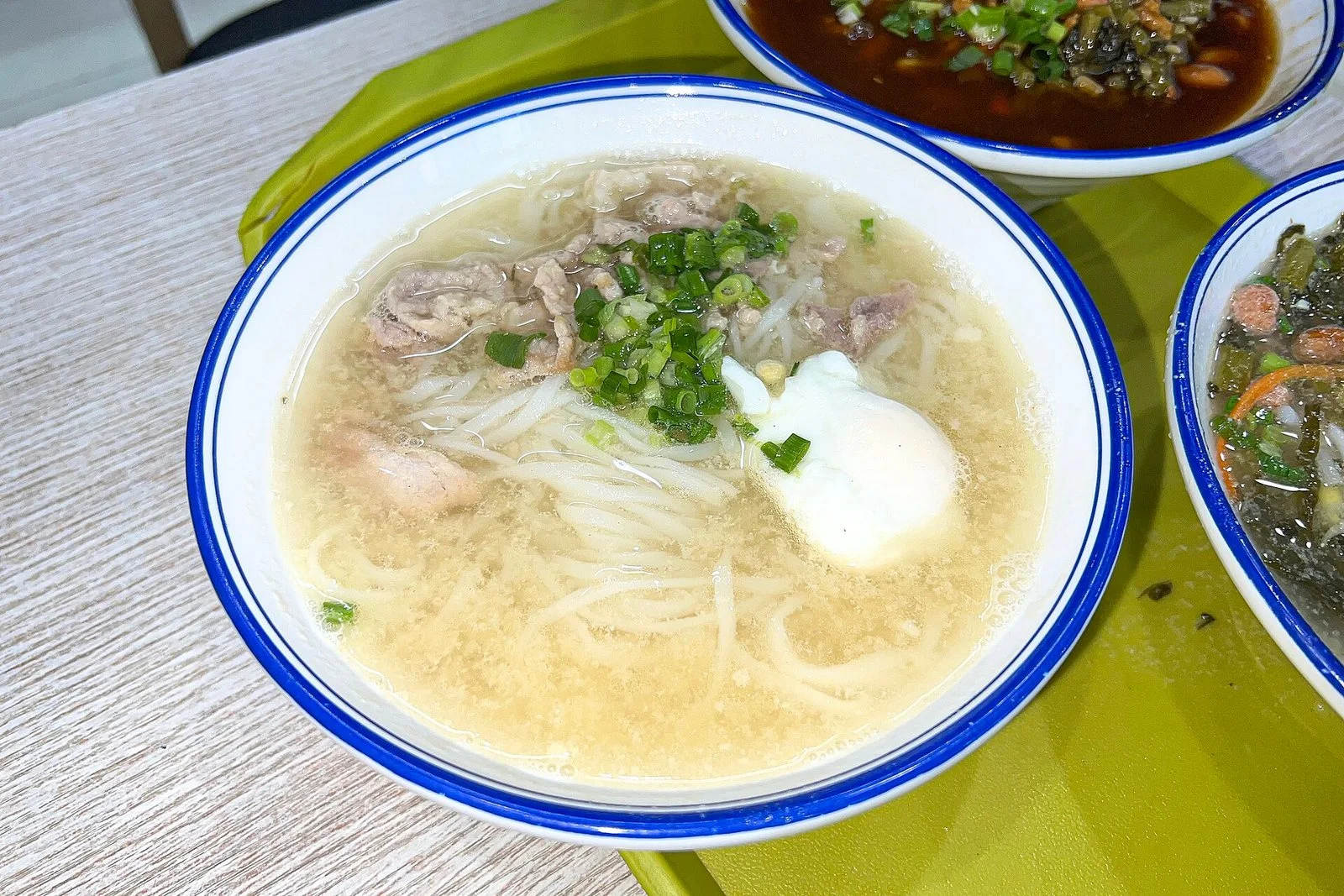
Hou'an noodles take their name from Hou'an town in Wanning and are also often called Hou'an noodle soup. The dish is a representative noodle soup of Hou'an town and has a large following among Hainan's rice-noodle dishes, but it is not unique to Sanya; after spreading from Wanning, it is sold at noodle shops across Hainan, including Hainanfen shops in Sanya. The photo was taken at a restaurant in Sanya; the bowl holds broth, thin noodles, sliced lean pork, pork intestine and a fried egg, a common look for Hou'an noodles.
The noodles are made from local long-grain rice: the rice is soaked, ground into a batter on a stone mill, spread on steaming trays to form thin sheets, then cut into strips. The broth is simmered for several hours from pork head bones, pork femur bones and similar parts; some shops also add pork small intestine, large intestine and offal along with a small amount of dried shrimp, which gives it a cloudy color and a strong meaty flavor. Common toppings are lean pork, pork intestine, pork tripe, dried shrimp and scallions, and some shops go further with a whole egg cooked in the broth.
Rich broth, thin noodles and pepper
The broth in Hou'an noodles is not a clear soup. Fat and collagen from the pork bones and offal give it body, dried shrimp add a layer of sea flavor, and white pepper is the defining note: the first taste is savory, then the pepper's heat spreads up from the throat, especially noticeable in cool weather. Depending on the ratio of bones to offal and the simmering time, the broth can look whiter or clearer, but it always tastes mainly of pork. The noodles are thin and slippery, soak up flavor quickly in the broth, and should be eaten soon after they arrive; left too long, they soften and break.
The toppings create the contrast in texture: lean pork slices are tender, pork intestine and tripe are chewy, and the fried egg softens the broth's salty savor. Youtiao are often ordered separately and commonly dipped in the broth. Seasonings are usually white pepper and yellow lantern chili, the first for aroma and the second for heat. Hou'an noodles do not usually depend on heavy sauces; the flavor comes mainly from the broth and pepper. The bowl in the photo has no chili added, so you can decide whether to add it and how much.
Ordering, allergens and things to note
The clearest order is “one bowl of Hou'an noodle soup”; for an egg, say “add an egg,” and for youtiao, say “add youtiao.” If you do not eat pork offal, say “no pork offal,” but the broth itself is usually simmered from pork bones, so do not assume it is vegetarian. If you are worried about heat, say “no chili”; for pepper, you can say “less pepper.” Prices are as posted in the shop.
The main allergens come from the pork-bone and offal broth, dried shrimp, egg and youtiao: crustaceans, egg and gluten may all be present. Hou'an noodles are built around pork and offal, so they are not a suitable option for halal or vegetarian diets. The broth is rich and the pepper is strong; if you are eating on an empty stomach in the morning, taste a little first. If you want it milder, ask the shop to use less pepper and chili.
Useful official references
Check the relevant official service before making arrangements. These links are references, not a guarantee of current services.