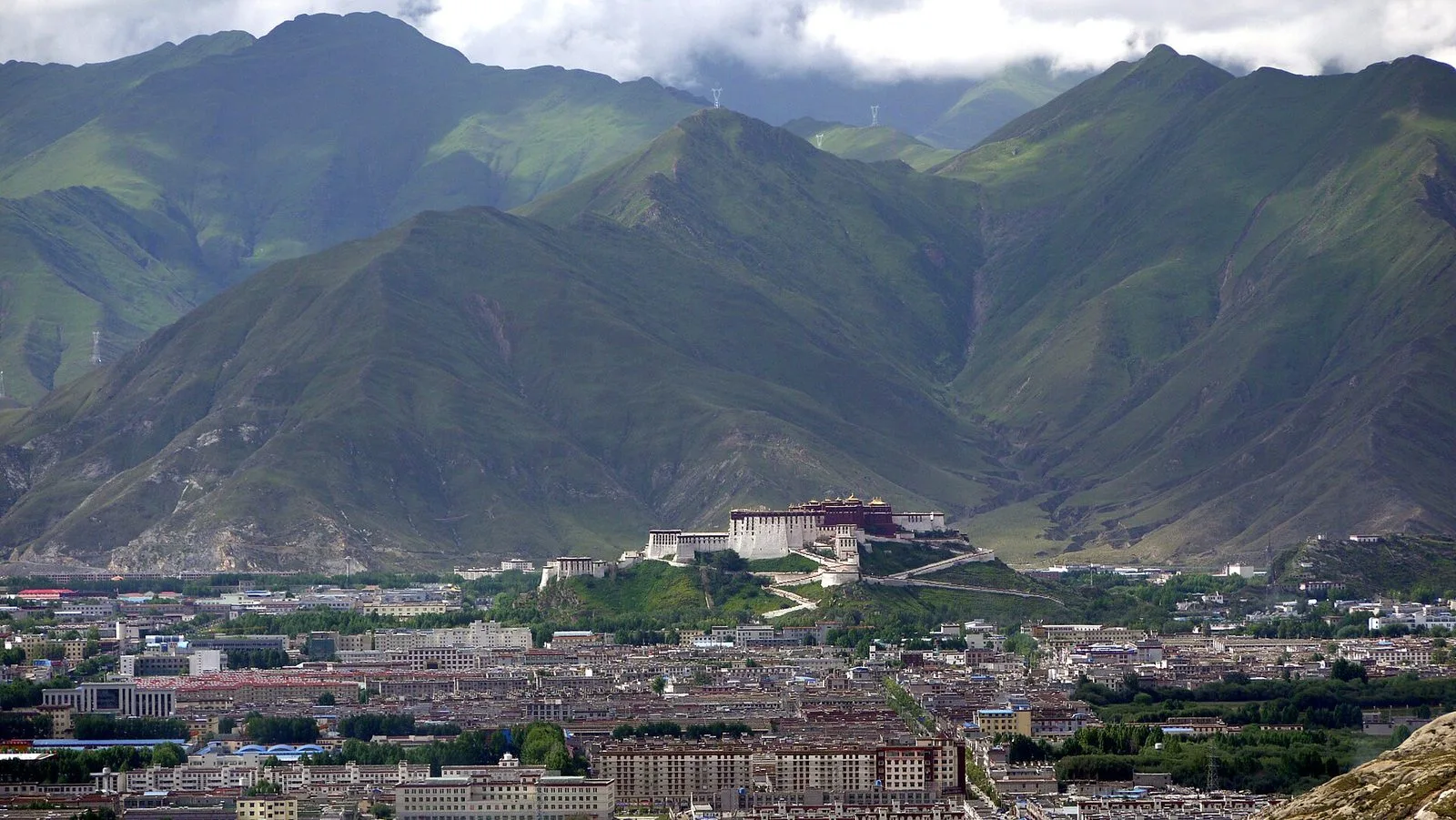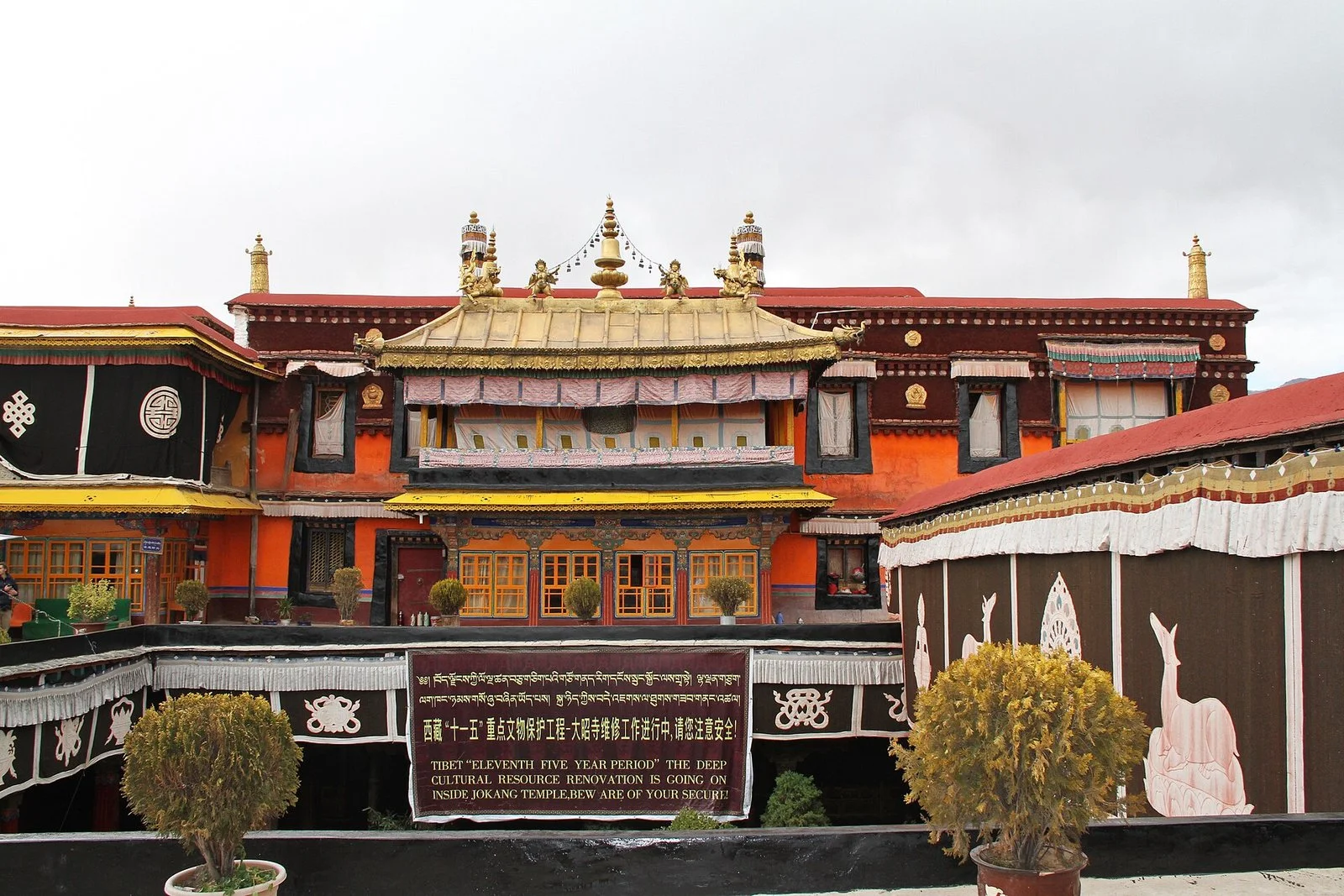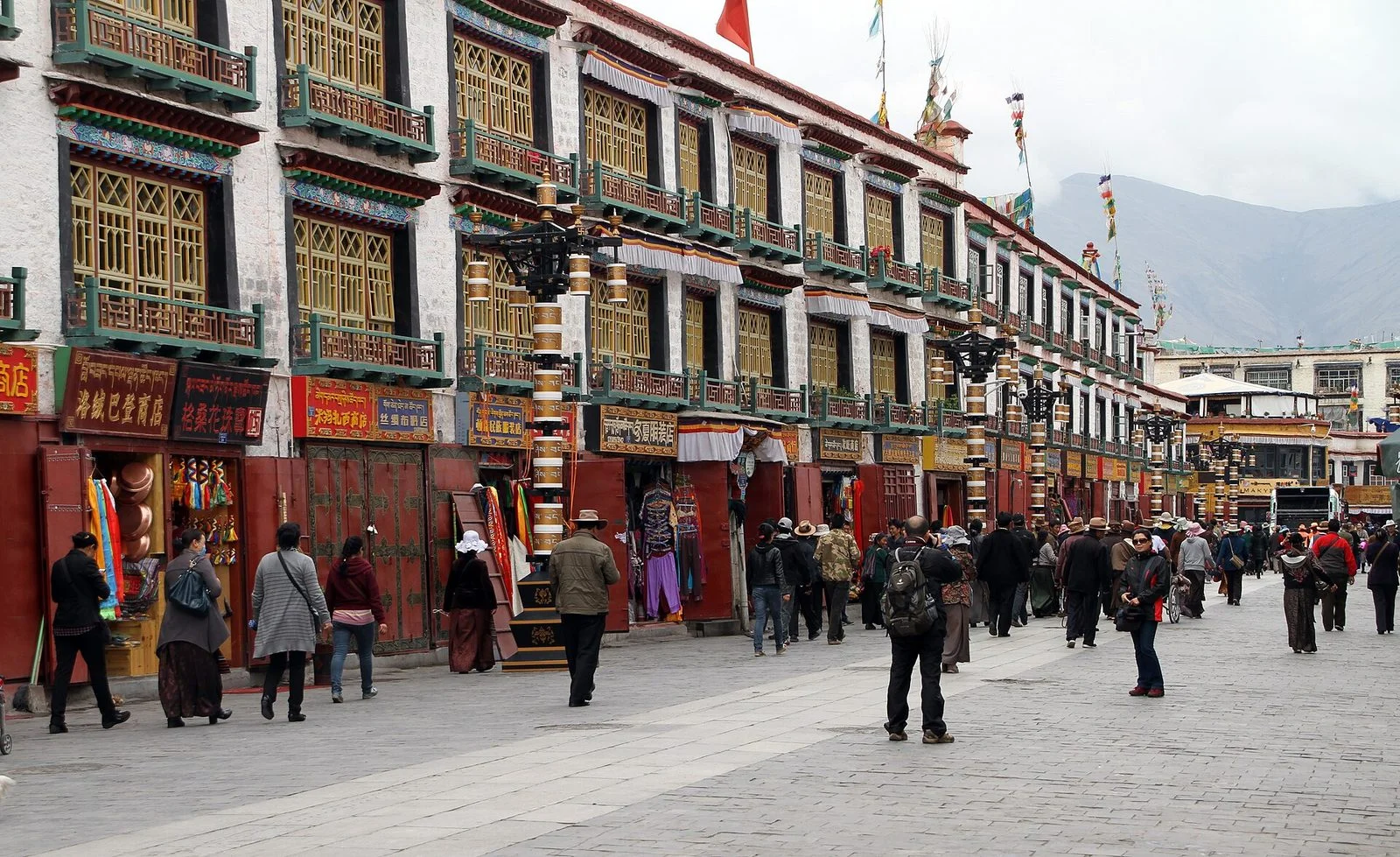
The kora route around the Jokhang Temple
Barkhor Street is in the center of Lhasa's old town, a circular street formed around the Jokhang Temple and made up of east, west, south and north sections, with a circumference of more than one kilometer. In Tibetan, barkhor means 'middle circle,' the kora route around the Jokhang. Since the 7th century people have walked this route, and homes, workshops and shops gradually appeared around it, so the district grew together with Lhasa's old town.
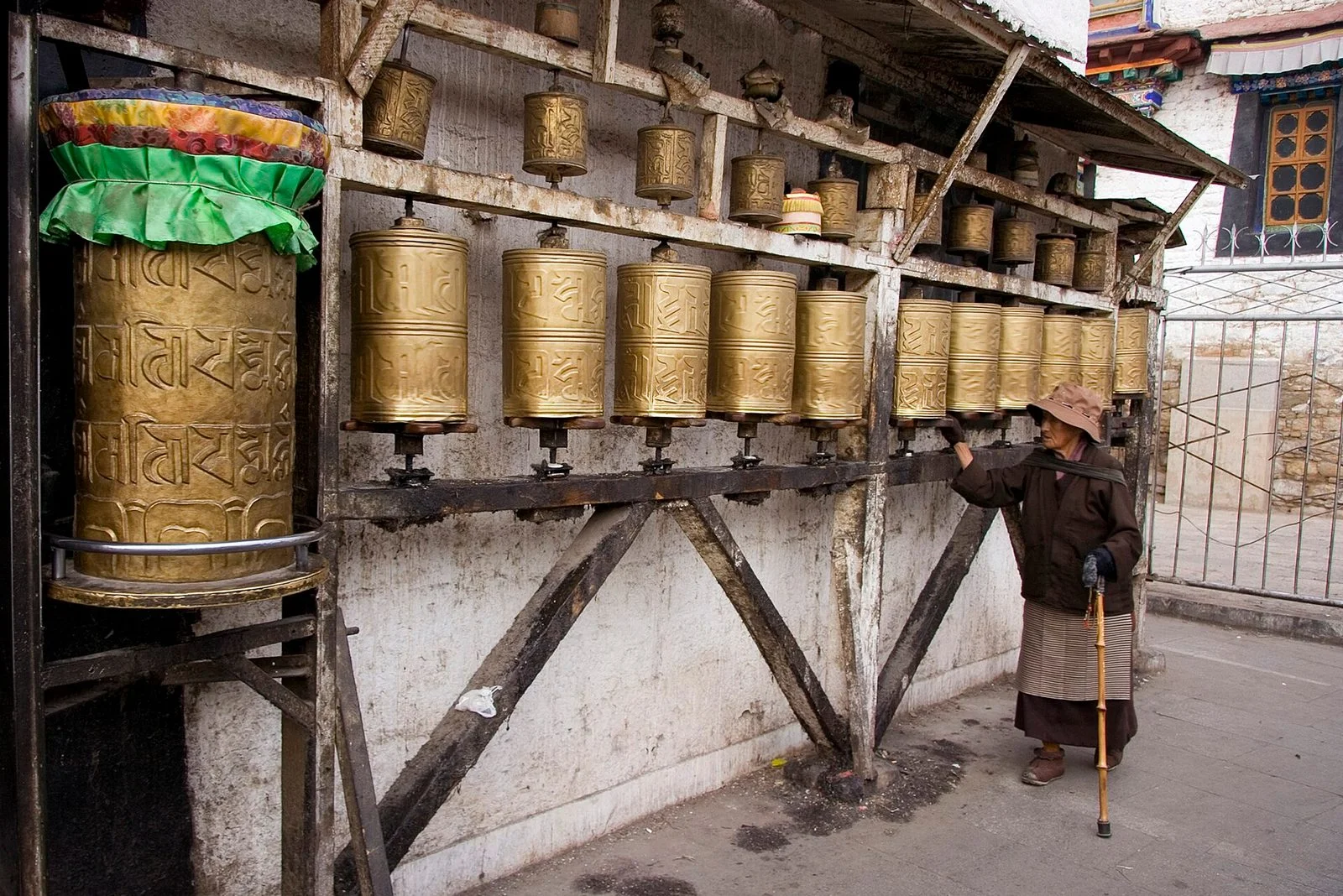
The direction is clockwise. Believers walk around the temple with their right shoulder toward it, and the prayer wheels in their hands and along the temple's outer wall turn the same way; the crowds are largest in the early morning and around Tibetan New Year, when the inner side of the street is often filled with a queue. Visitors can follow along, but should not walk against the flow, cut across the line, or stop in the middle of the route to take photos.
The Barkhor old town has 35 lanes and 56 historic courtyard compounds, and its residents are mainly Tibetan, with Han, Hui, Monba and other ethnic groups as well. Shops face the street, while the lanes contain homes, sweet tea houses and small temples; Barkhor is not a closed pedestrian shopping street but a living old-town neighborhood still in use.
What is sold along the kora route
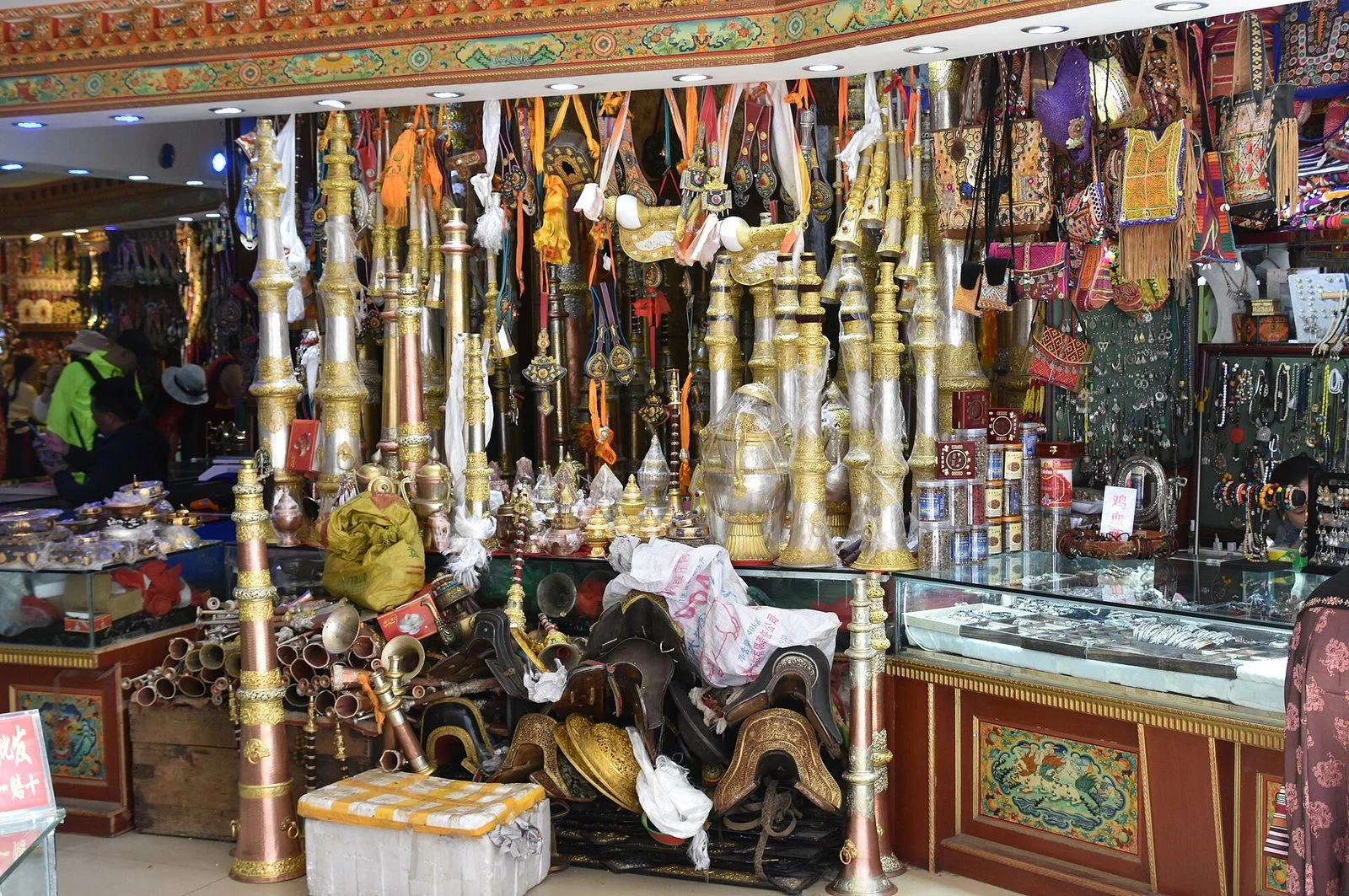
Barkhor Street today has more than 4,000 businesses, offering thangkas, Tibetan carpets, pulu wool cloth, aprons, Tibetan hats, wooden bowls, cushion covers, prayer beads, prayer wheels and Nepalese handicrafts. There are also tourist souvenirs made in inland China, Indian prayer beads, Nepalese Buddha images, trendy shops, cafes and Tibetan costume photo shoots. Goods from Nepal and India sit on the same street as local pulu and Tibetan carpets, a legacy of Barkhor's long trade with Nepal and India; not everything is locally made, so check workmanship, materials and origin before buying.
Religious items and ordinary souvenirs should be viewed differently. Thangkas, Buddha images, prayer beads and prayer wheels have specific uses for believers and are not curios; if you are unfamiliar with them, do not handle them casually, and do not bargain over religious items as if they were ordinary goods or pose with them for photos. If you do intend to buy, ask first about materials, painting method and provenance, and respect the shop's explanations.
Small shops and stalls quote prices in different ways, so ask about the price and whether returns are possible before deciding. For textiles such as Tibetan carpets and pulu, look at density and dyeing; for thangkas, look at the painting and pigments. Similar goods vary widely along the same street, so comparing several shops is safer than looking at just one.
How to walk it and what to watch for
The district is open all day and has no entrance fee; the Jokhang Temple is a separate religious site, and visits follow the temple's on-site rules, so the district is not a free passage into the temple. One circuit takes about 20 to 30 minutes, and allowing 1.5 to 2 hours lets you go into shops and explore the lanes.
Mornings are good for watching kora, while afternoons and early evenings are better for shops. Around Tibetan New Year and in high tourist season it is crowded, and strollers or luggage are inconvenient; Barkhor is at about 3,650 meters, so walking fast easily leaves you short of breath, and walking with stops suits the altitude better.
Leave the inner circle to those walking kora and browse the shops on the outer side; gesture before photographing people and do not photograph worshippers' faces straight on; do not touch Buddha images, scriptures or offerings; do not talk loudly or livestream at the temple gate. Take your packaging with you after shopping and do not leave litter on the kora route.
Useful official references
Check the relevant official service before making arrangements. These links are references, not a guarantee of current services.