Jokhang, the temple at the center of Barkhor
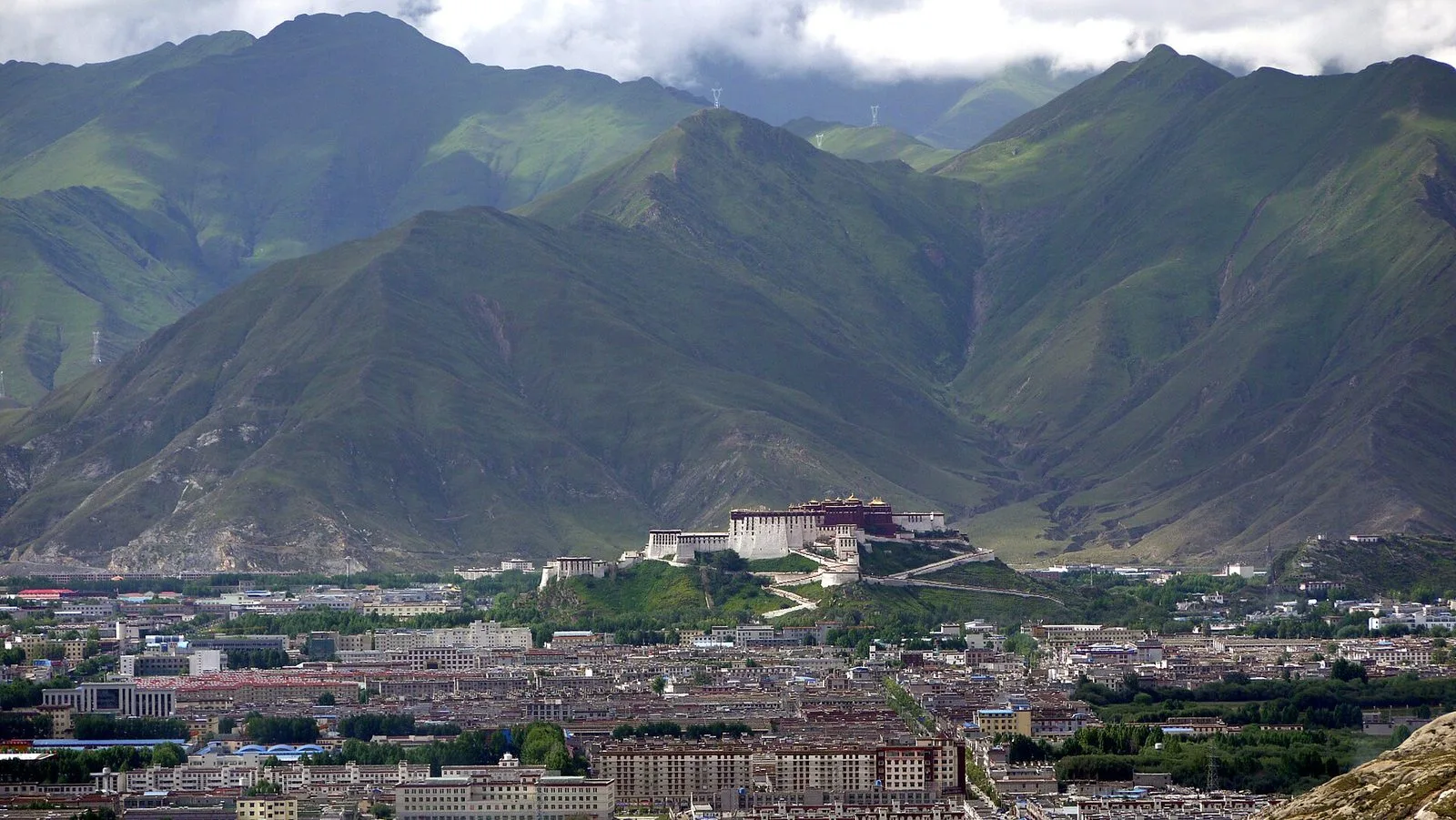
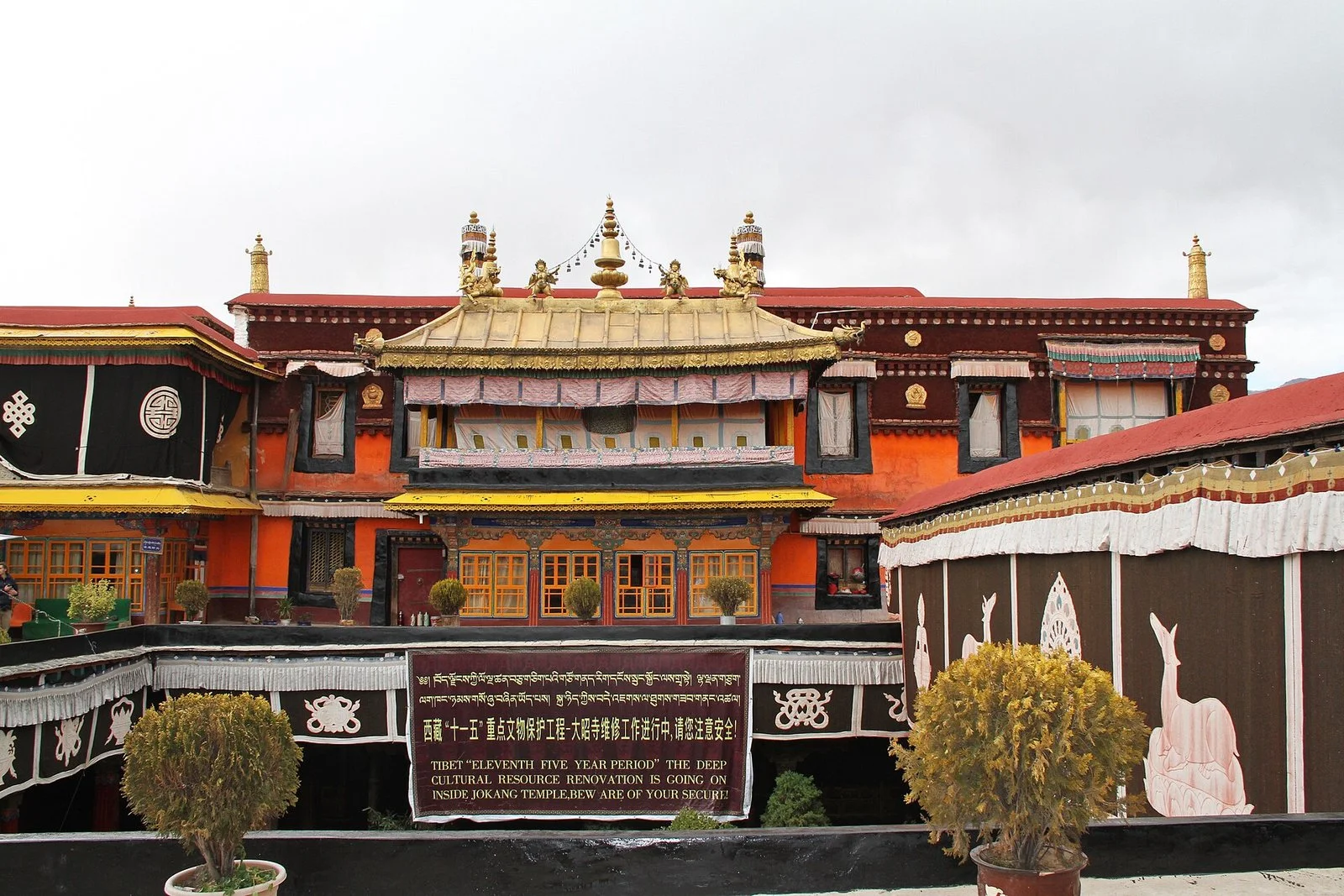
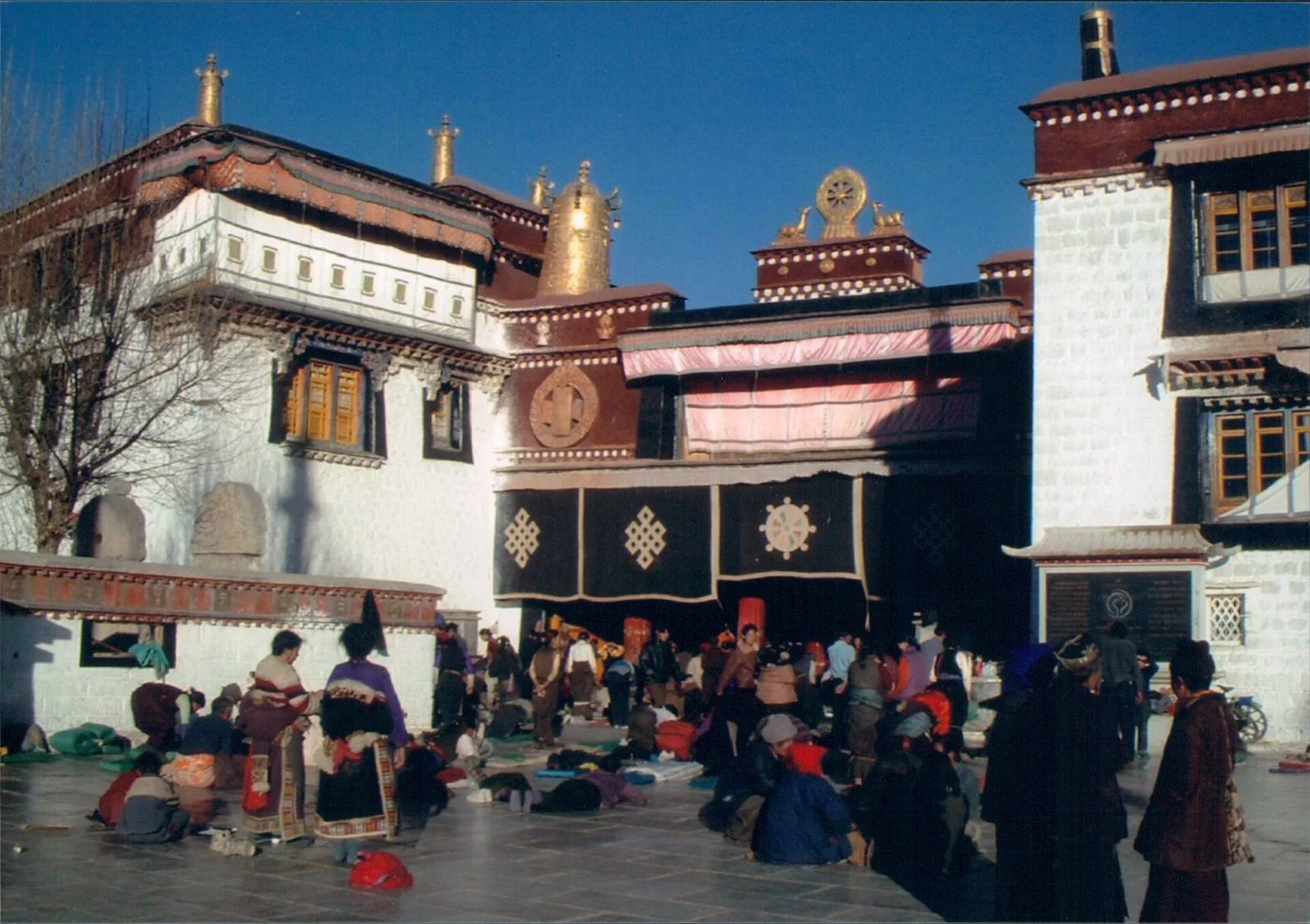
The Jokhang Temple is at the center of Barkhor Street in Lhasa's old town. In Tibetan it is called Tsuklakhang or Jokhang, meaning a hall dedicated to Shakyamuni. Founded in the mid-7th century, it is more than 1,300 years old and was inscribed on the World Heritage List in 2000 as an extension of the Potala Palace site. The present temple covers about 2.5 hectares and consists of an entrance porch, courtyards, the main hall, and monks' quarters and storehouses around them; it is built of wood and stone, shows Chinese, Indian and Nepalese influences, and the main hall preserves more than 3,000 Buddha statues and a large number of murals.
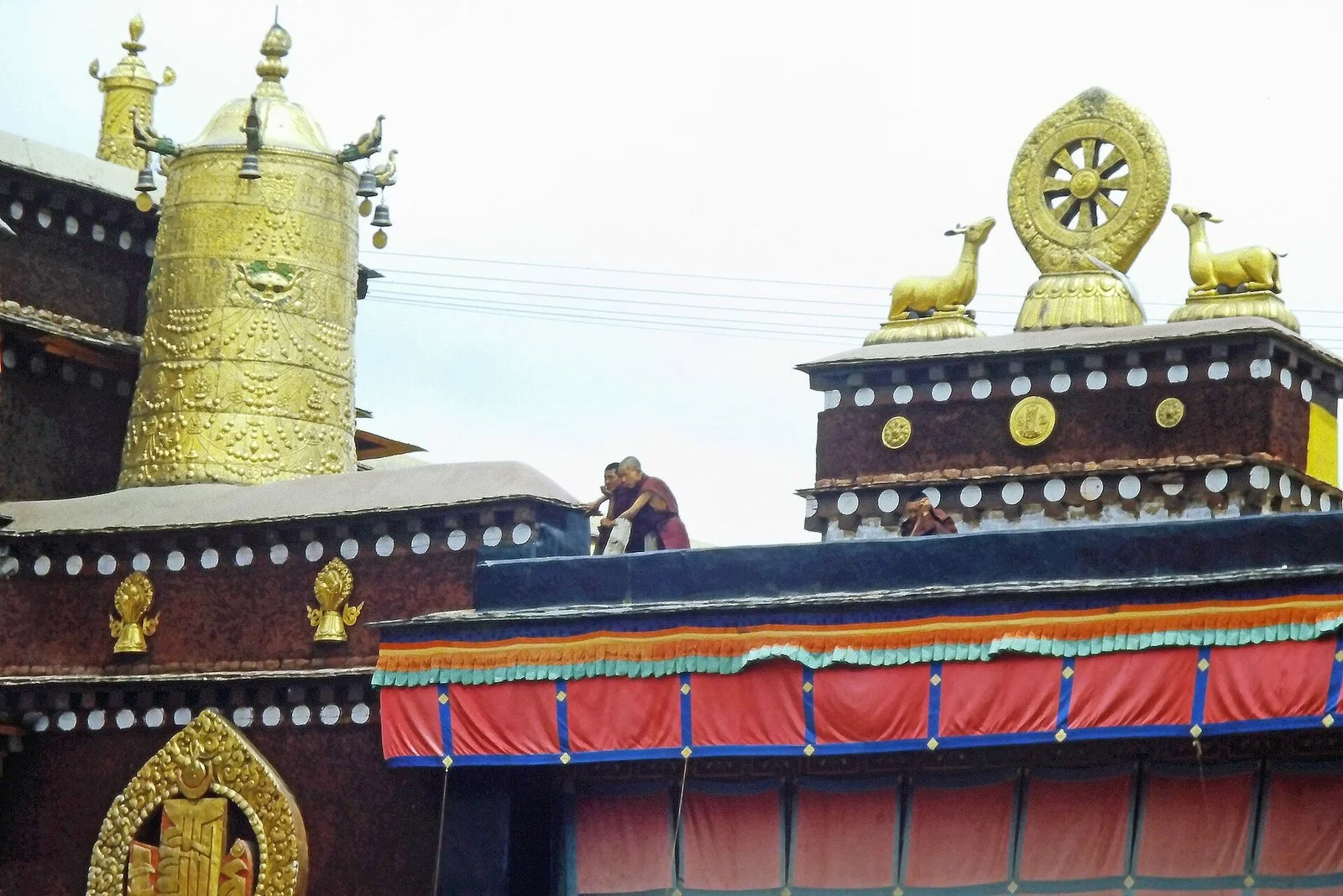
The most venerated image in the hall is the life-size Shakyamuni at age twelve. Tradition says it was brought to Tibet from Chang'an by Princess Wencheng, first installed at Ramoche Temple and later moved to the Jokhang; for Tibetan Buddhists it is more than a cultural relic, and it is the reason the temple is called Jokhang. In front of the main hall and at the temple gate, people are always prostrating, adding butter to lamps and offering khatas. The outer walls are white, and the gilded roofs on top stand out above the low houses of Barkhor.
Nangkor, Barkhor and Lingkor: three kora routes
Three kora routes circle the Jokhang Temple. The innermost is Nangkor (also written Langkor), inside the temple, circling the Shakyamuni hall; the middle one is Barkhor, along the temple's outer wall; the outermost is Lingkor, circling Lhasa's old town. In Tibetan, kor means a circumambulation route, and all three are walked clockwise. Nangkor is the shortest, taking only a few minutes for one circuit; Lingkor goes around the old town and takes two to three hours to complete.
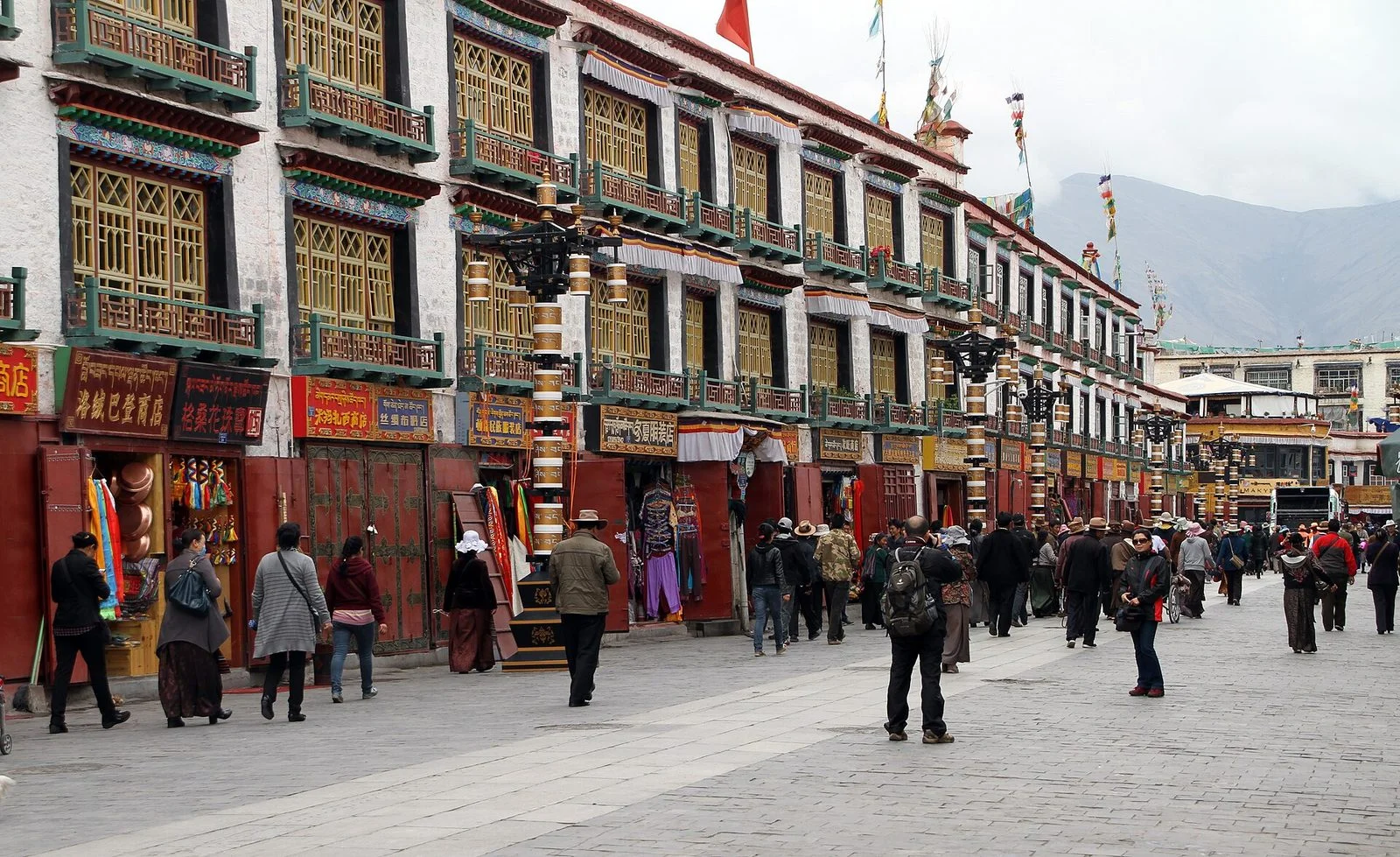
Barkhor Street was not a commercial street planned first and filled with shops afterward. Worshippers walked around the Jokhang, a stable route emerged, and only then did stalls, shops and homes appear along it. Today the street has people walking kora as well as shops selling thangkas, Tibetan clothing, ritual objects and daily goods; the flow of pilgrims and the routes of visitors overlap. The paving stones are polished by footsteps, and prayer wheels and shop signs crowd the same street. When walking Barkhor, follow the flow of people, do not walk against it, and do not stop directly in front of people doing full-length prostrations to take photos.
Gilded roofs, murals and visiting conditions
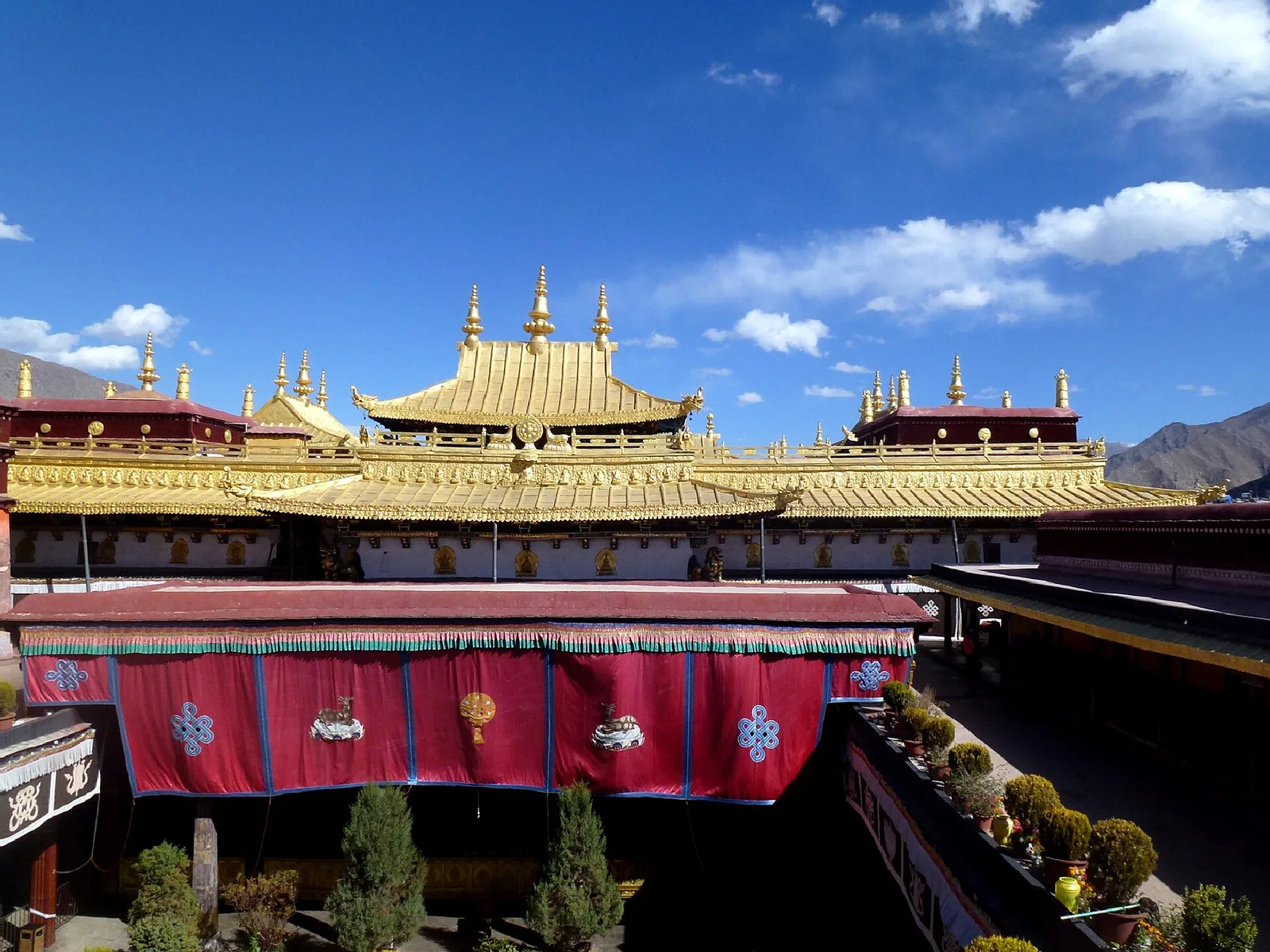
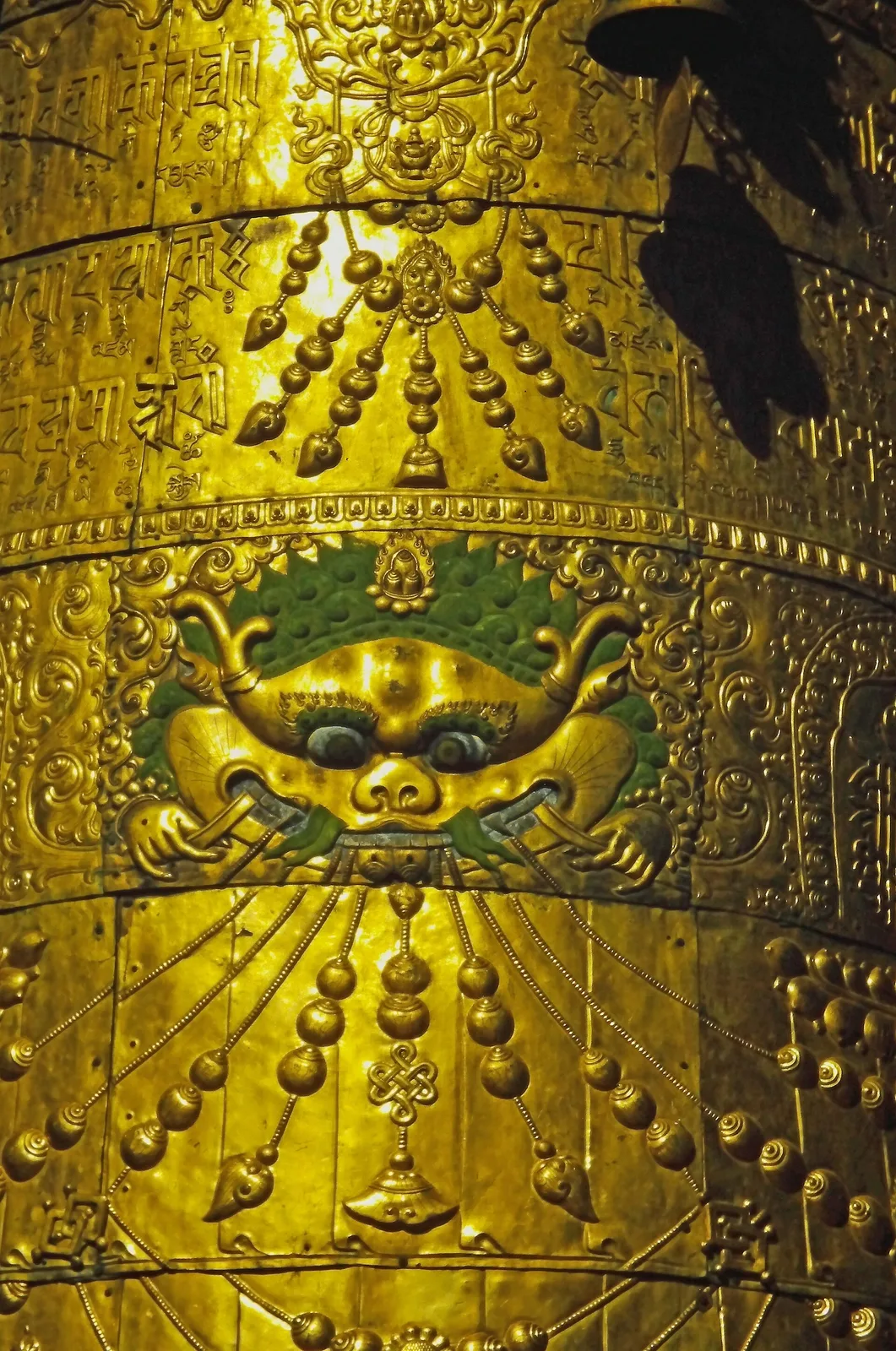
The Jokhang Temple was founded in the 7th century, and the present buildings are the result of long expansion; when the Fifth Dalai Lama enlarged it in the 17th century, gilded copper sheets were fixed to the original wood-and-stone roof, and the gilded roofs have been the temple's signature ever since. The porch, courtyard and main hall are arranged along a longitudinal axis: entering from the street, you pass the porch and an open courtyard before going into the hall, where light grows dimmer the deeper you go; murals, wood carvings and statues are layered densely, and the side halls and galleries around the main hall are also worth seeing. If you leave after seeing only the gilded roofs, you will miss the densest part of the temple.
Since September 15, 2021, Jokhang Temple tickets have required an online real-name reservation. Visitors can use an ID card, passport or other valid document to reserve one day ahead through the 'Jokhang Temple Official Reservation Mini-program.' After a successful reservation, go to the ticket checkpoint at the designated time slot, and bring the original document if you booked with a passport. Quotas are tight in high season, so book as soon as your dates are fixed. The passages inside are narrow, so do not stay too long in the halls; about 1.5 to 2.5 hours makes for a comfortable visit. Tickets and opening hours change, so confirm on the official mini-program before you go; photography inside is subject to on-site signs and the guidance of monks. As a monastery site, the Jokhang does not take part in the winter free-ticket scheme for A-level attractions; its ticket is separate, subject to the temple's notices. Reservation policy and winter scheme status were checked on November 15, 2026.
Useful official references
Check the relevant official service before making arrangements. These links are references, not a guarantee of current services.