Noodles, fried sauce and vegetable toppings
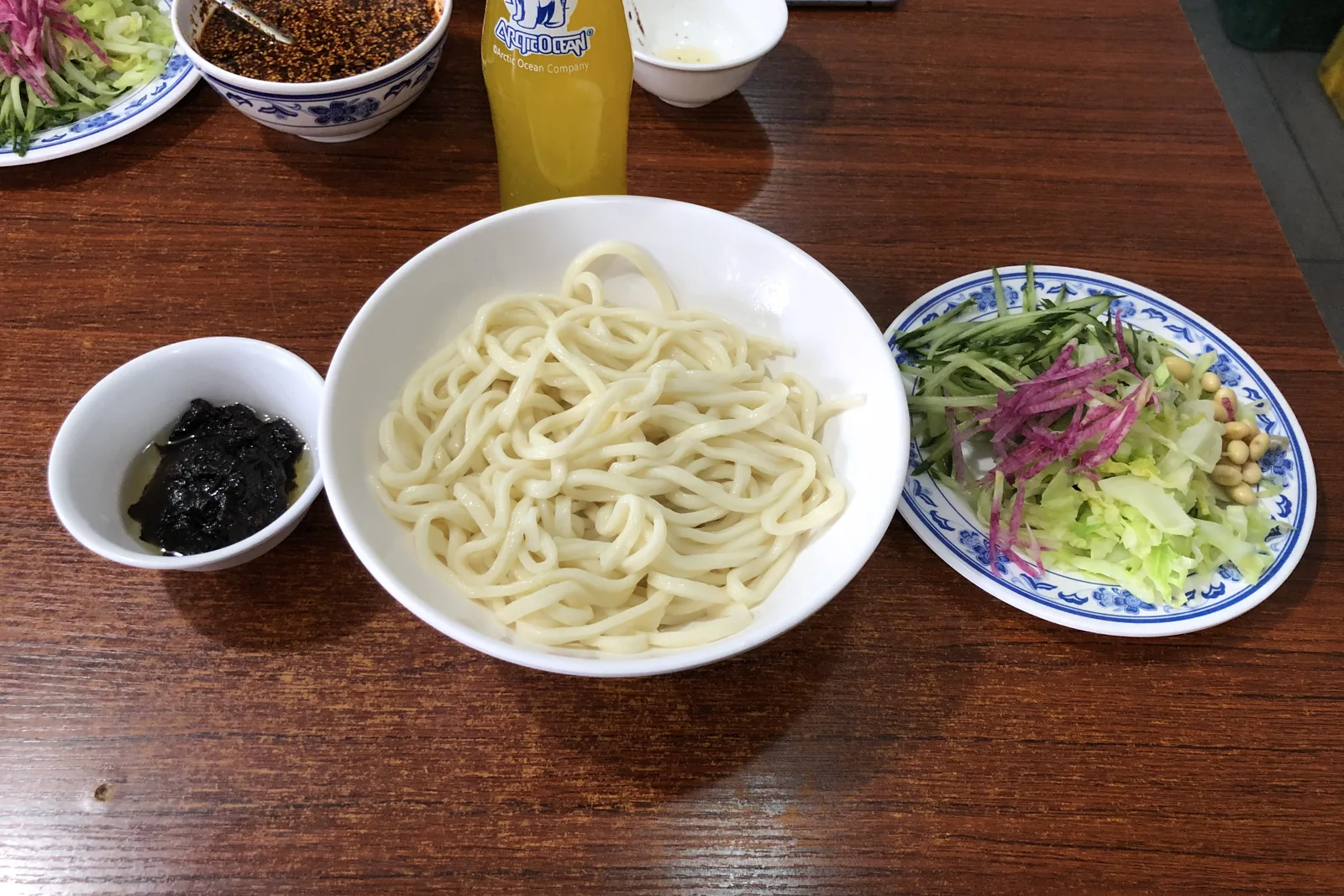
A bowl of Beijing zhajiangmian has three main parts: cooked wheat noodles, a fried sauce and toppings known as caima. The noodles are springy, the sauce thick and savory, and vegetables such as shredded cucumber, radish and bean sprouts add moisture and crunch. It is usually a mixed noodle dish. The noodles, sauce and vegetables may arrive in separate bowls, or the vegetables may already be on the noodles with the sauce in a small dish alongside.
Compared with a whole roast duck shared by several people, zhajiangmian is easier to order as one bowl per person for a noodle-based main meal. Eating it also has a different focus: roast duck combines skin and meat with pancakes, while zhajiangmian calls for mixing sauce through the noodles and eating the vegetable toppings along with them. If the menu offers small and large bowls or additional toppings, choose according to your appetite. You need not order many side dishes to make a complete meal.
Why the sauce is fried and what the vegetables add
The common diced-meat sauce uses pork with both lean meat and fat, together with yellow soybean paste. The diced meat is stir-fried before the loosened paste is added and cooked further. Meat, fat and fermented paste gradually combine into a dark, thick sauce, rather than a broth to drink. Some recipes add sweet bean sauce. Proportions vary, so color alone does not reveal the ingredients, nor is one combination the only Beijing version.
The vegetable toppings are not just decoration. Cucumber, radish, beans and other ingredients contrast with the meat sauce in texture. The vegetables used, and whether they are shredded or diced, vary by restaurant and season. If several small dishes arrive, they may not all be condiments: ask which contain toppings and which contain fried sauce. The combination in the photograph shows one meal, not the types or number of toppings every restaurant supplies.
How to mix your first bowl
If the sauce comes separately, add a little first. Use chopsticks to lift the noodles from the bottom, turn them through the sauce and taste. The sauce is concentrated, and pouring it all in at once makes the saltiness harder to adjust. Once the noodles are coated and the toppings mixed through, add more to taste. Try small amounts of garlic, vinegar or other table condiments if you wish; there is no need to add everything to imitate a particular eating style.
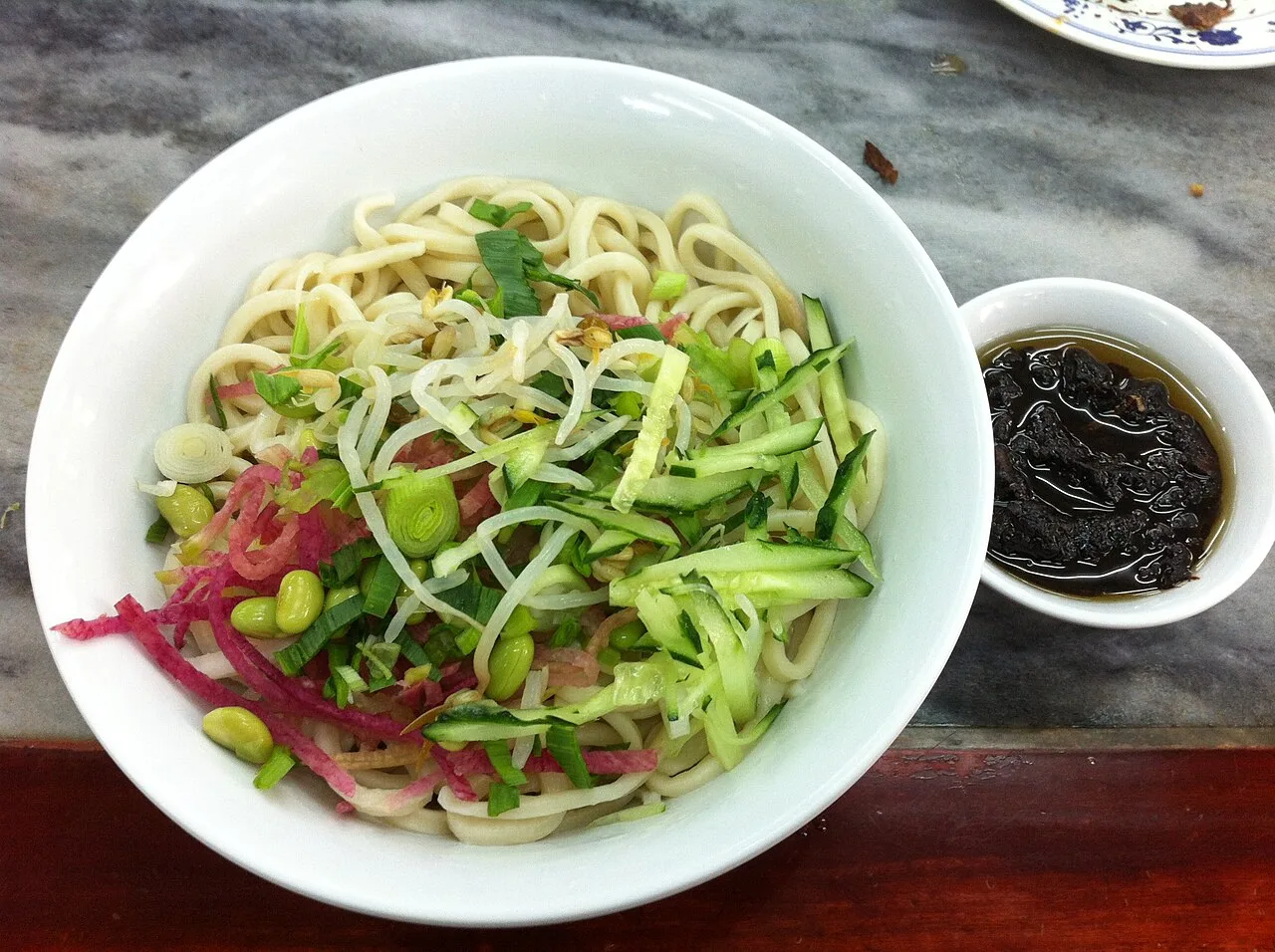
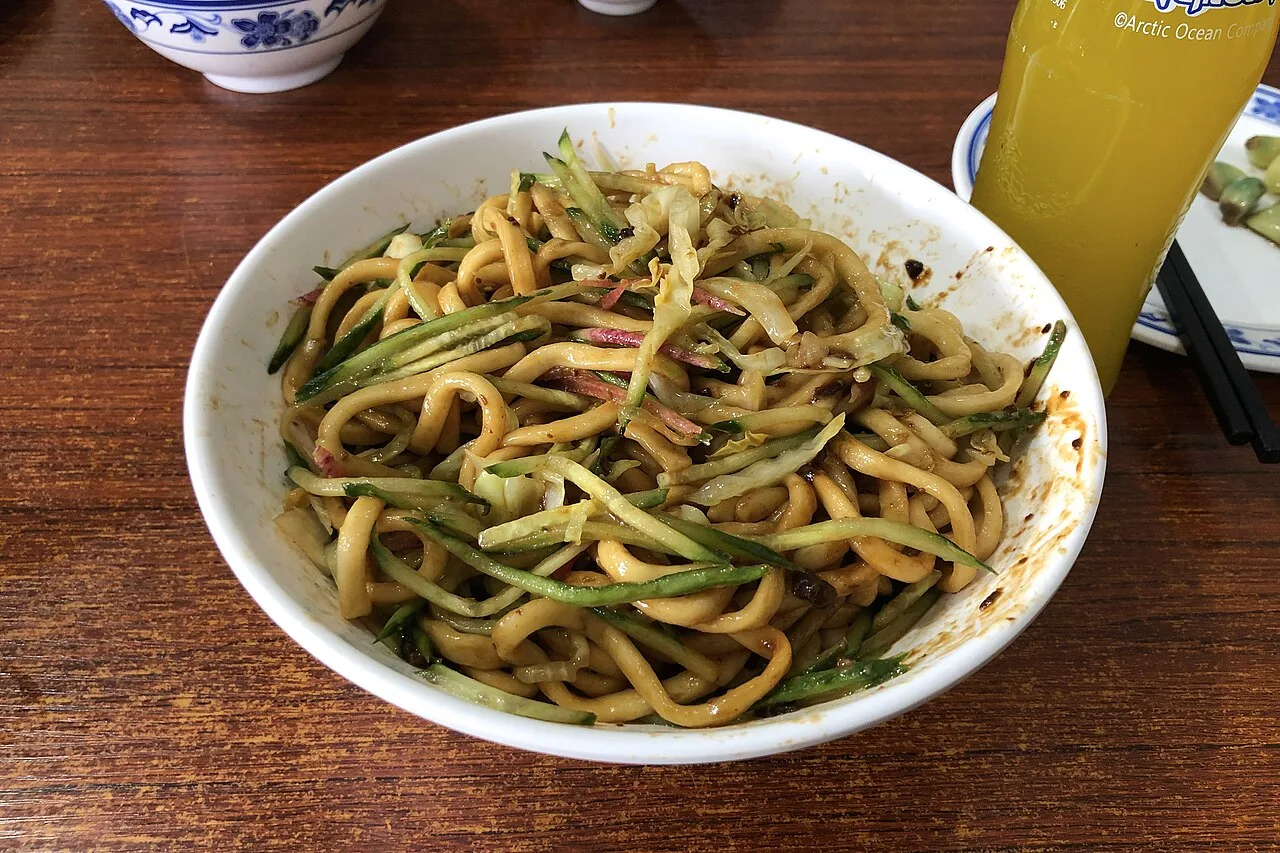
When the bowl arrives, distinguish the sauce from the toppings, then loosen the noodles at the bottom so everything mixes evenly. The photographs show the same serving before and after mixing. Separate dishes make the ingredients easy to see; after mixing, sauce coats the noodles and vegetables are distributed among them.
Ask about meat and allergens when ordering
The common diced-meat sauce contains pork, yellow soybean paste contains soy, and the noodles usually contain wheat. If you want a vegetarian meal or need to avoid an ingredient, ask specifically about the sauce, noodles and toppings before ordering. Simply requesting no meat may not change a meat sauce that has already been cooked. Green vegetables in a photograph do not establish that the whole bowl is vegetarian.
If you have a soy, wheat or other food allergy, show staff the specific ingredient name in Chinese and ask whether they can provide an alternative with clear ingredients. Whether sauce can be served separately or toppings changed depends on the restaurant's answer for that order.
Useful official references
Check the relevant official service before making arrangements. These links are references, not a guarantee of current services.