City introduction
The Forbidden City's successive courtyards, the Temple of Heaven's blue-tiled circular halls and open-air altar, and the hutong lanes around Shichahai reveal Beijing's court ceremonies, ritual practices and old-city life. In the northwest, the Summer Palace places buildings among hills and water. These buildings and neighborhoods, each with a different purpose, together give Beijing its distinctive character.
Beyond the imperial buildings, the factories at 798 preserve traces of industrial development while exhibitions and studios give them new cultural uses. Wangfujing's department stores, the old shops of Qianmen and Dashilan, and Panjiayuan's stalls offer different shopping environments. Roast duck, zhajiangmian and tanghulu bring another side of the city to the table.
The old city, Central Axis and imperial palace
Beijing is China's capital, in the northern part of the North China Plain. Mountains rise to its west and north, while the urban area spreads across the plain. To understand its geography, start with the old city and then look at the areas beyond it. The Forbidden City and Central Axis show the planning of the imperial capital; nearby lakes, hutong lanes and commercial streets bring public activities and residential life together. The Summer Palace in the northwest and 798 in the northeast each have their own history.
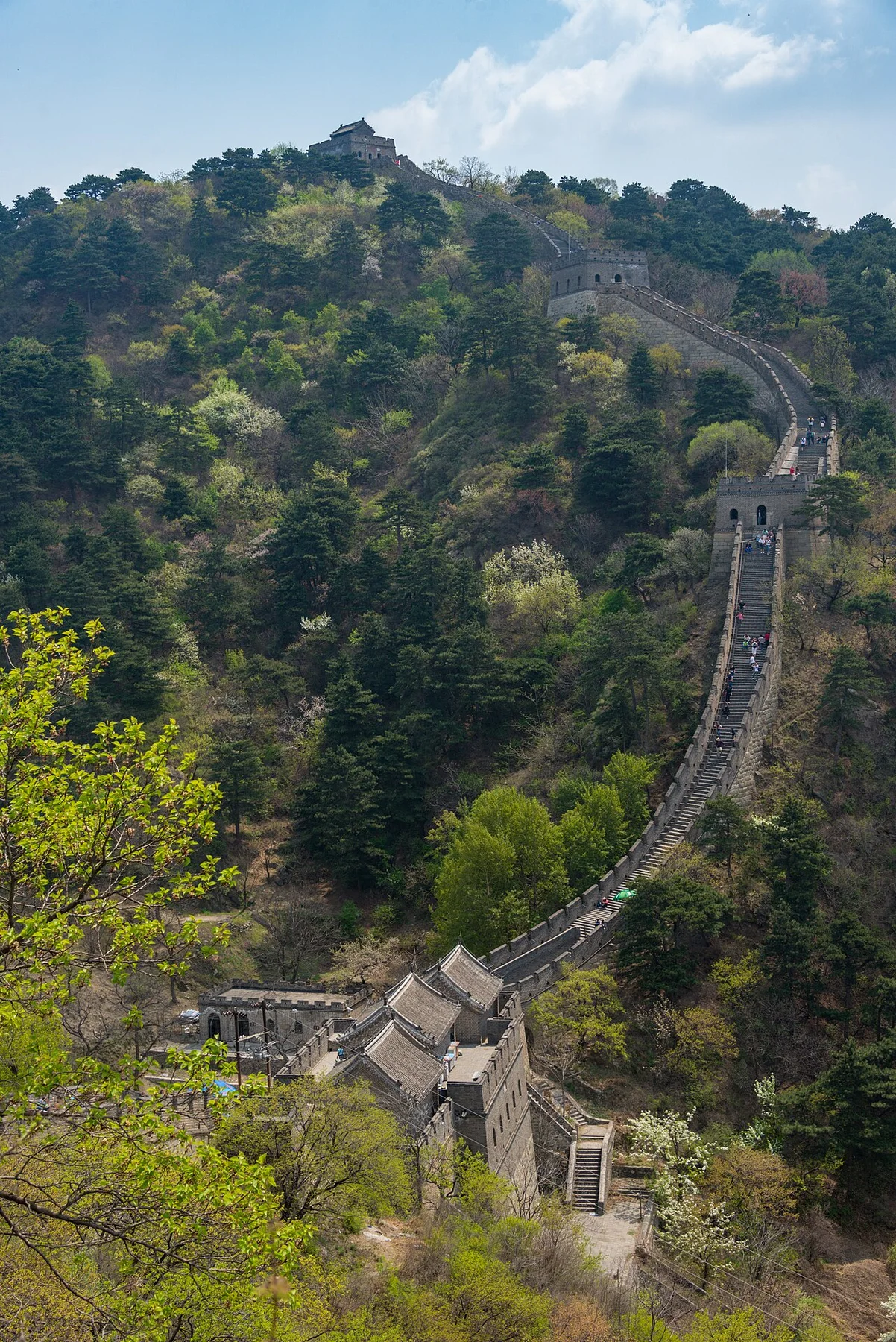
Beijing's Central Axis runs north–south through the old city. Inscribed on the World Heritage List in 2024, it comprises 15 components, including palaces, imperial gardens, ceremonial buildings, facilities for managing the city and remains of roads. Its layout originated in the Yuan dynasty and continued to develop under the Ming and Qing. The relationships between palace gates, courtyards, roads and open public spaces are as much a part of this heritage as the individual buildings.
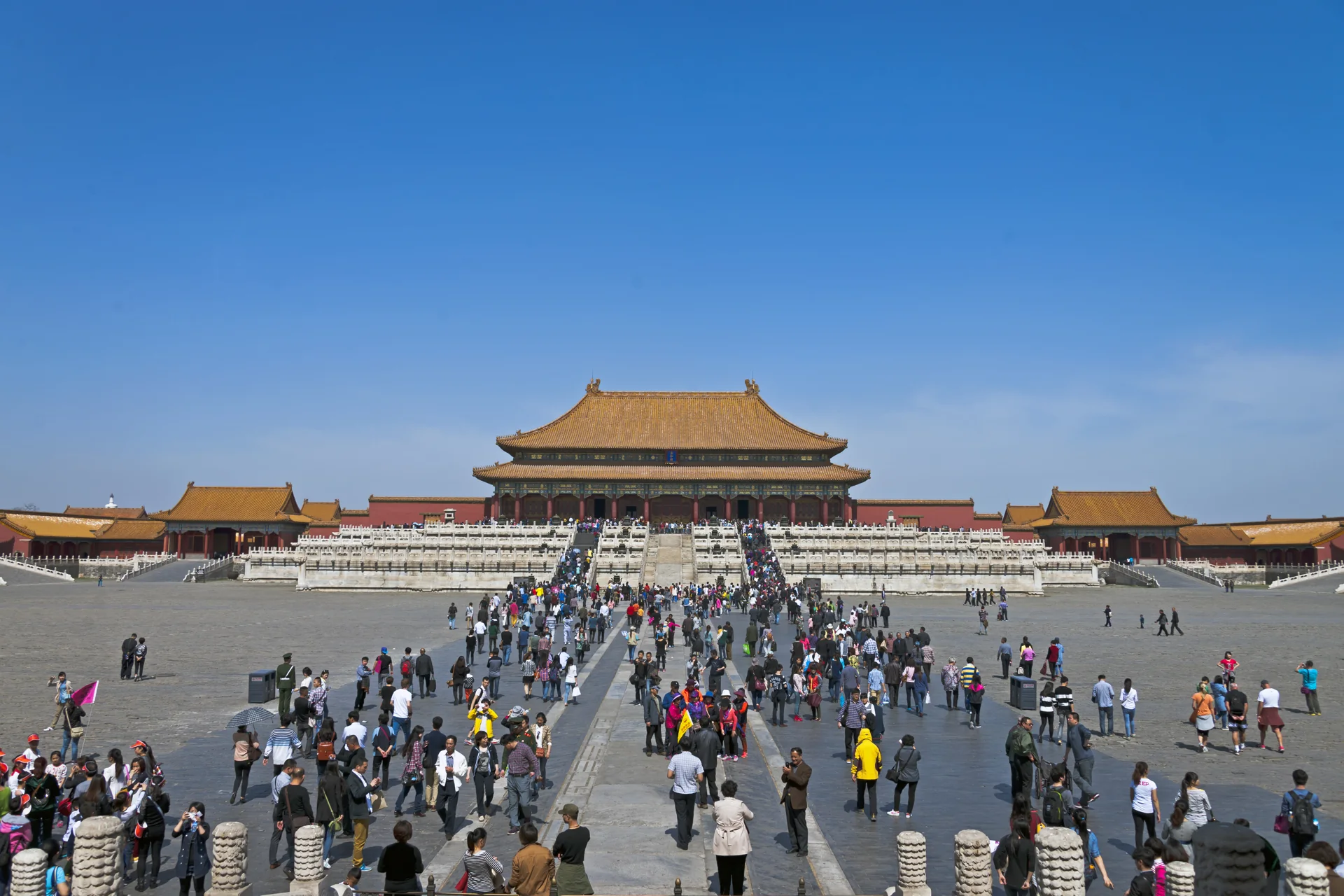
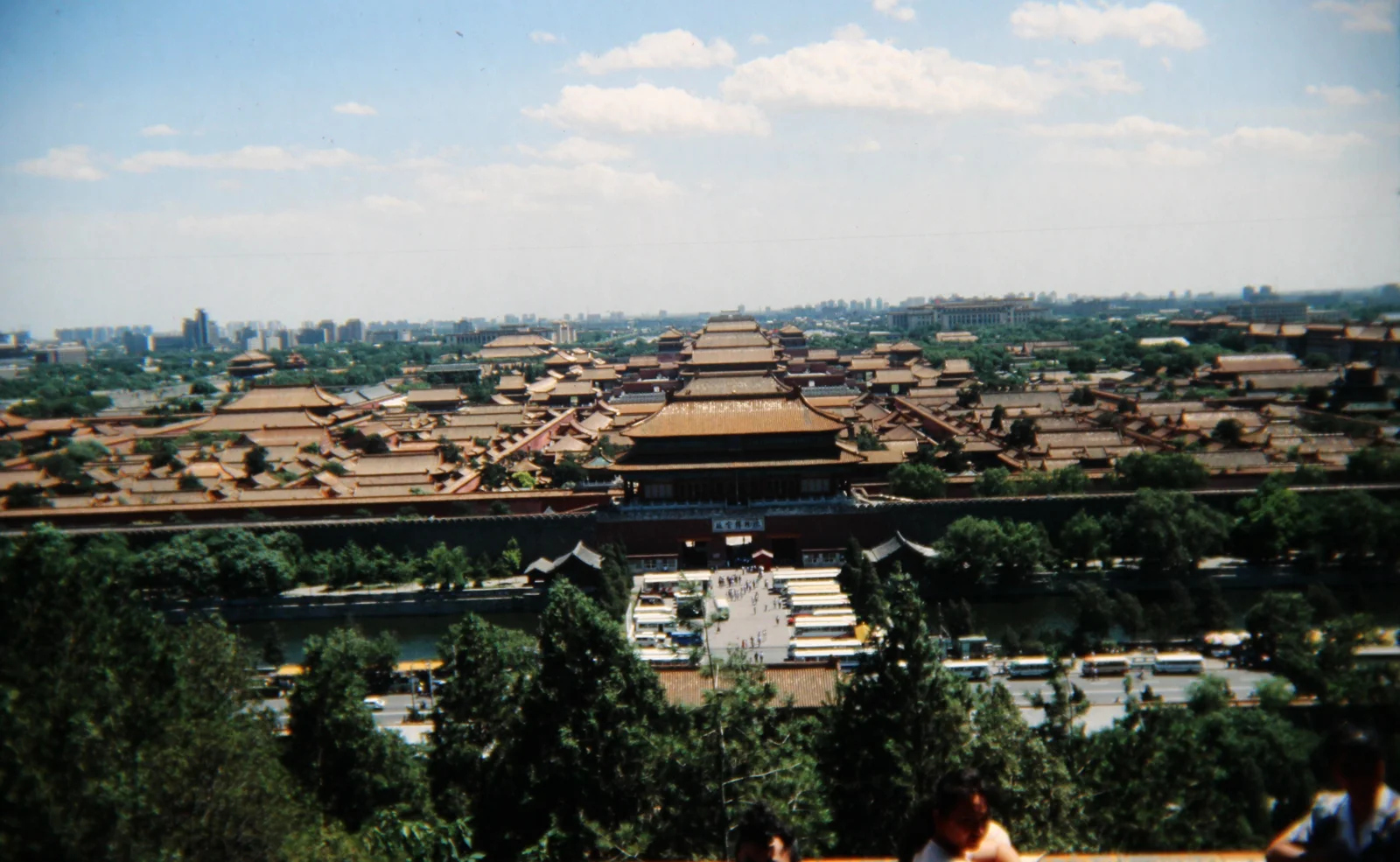
The Forbidden City occupies a central position in this layout, its linked courtyards and rows of roofs establishing a clear north–south direction. The spacious ceremonial courtyards of the Outer Court differ from the Inner Court and Imperial Garden. Beyond the great halls, look for roof figures, large firefighting water vats and garden rocks. Jingshan, north of the palace, overlooks its roofs; farther north, the Drum and Bell Towers once kept time for the city. Seen together, these buildings make the different places of court life, ceremony and public life easier to understand.
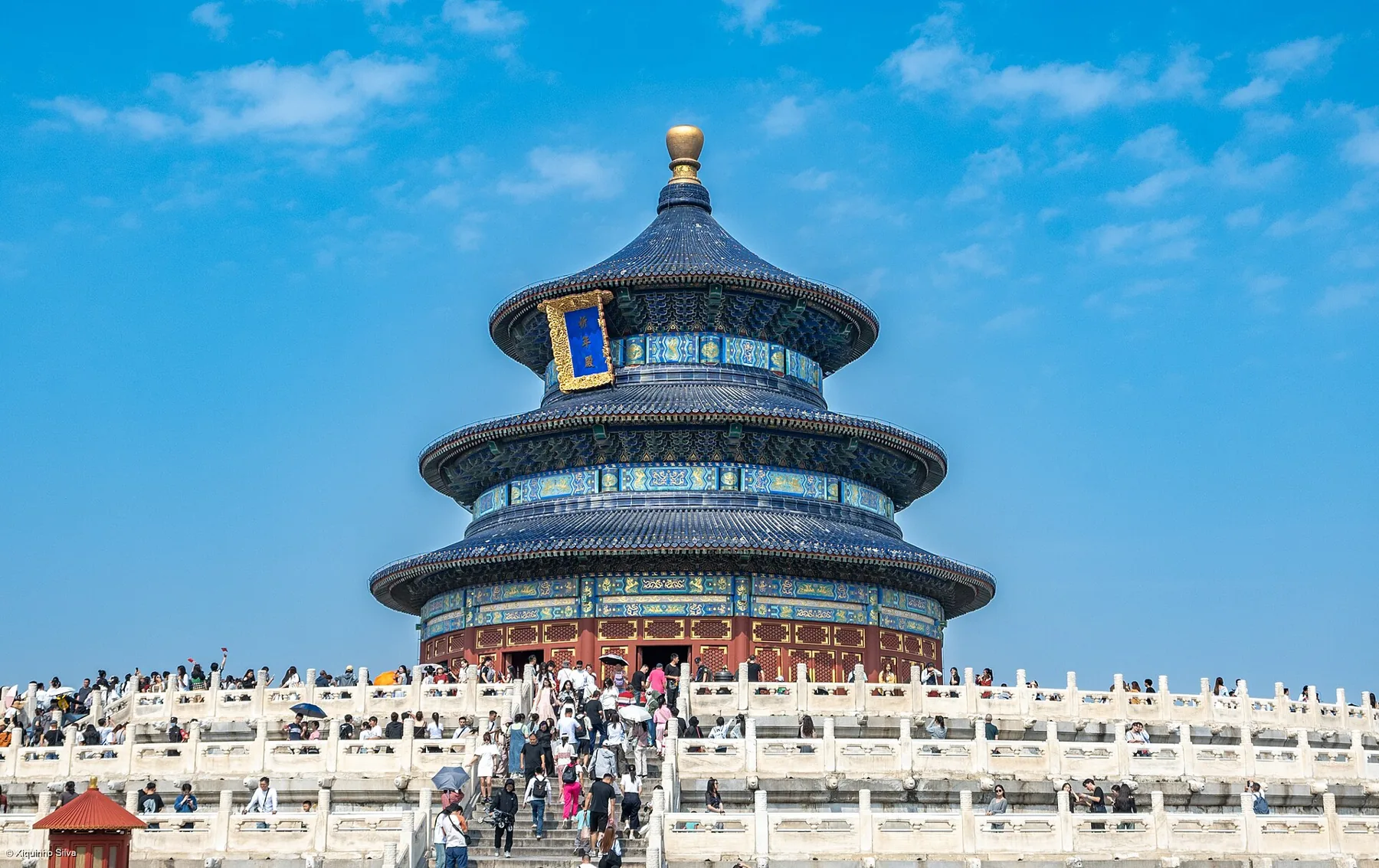
Circular halls, a stone altar and old trees at the Temple of Heaven
The Temple of Heaven, in the southern old city, reveals another kind of imperial activity. Ming and Qing emperors performed sacrifices to Heaven and prayed for harvests here. In the north, the Hall of Prayer for Good Harvests has three tiers of blue-tiled circular eaves above stone terraces. In the south, the Circular Mound Altar is a round stone platform open to the sky. The Imperial Vault of Heaven, Echo Wall and Danbi Bridge lie between them, linking architectural forms to ritual purposes.
This gives the Temple of Heaven a different focus from the Forbidden City. The palace courtyards distinguish spaces for power and daily life; the temple uses circles, tiers and open space to express ritual order. Old trees and paths surround the main buildings, offering shaded walks after the exposed altars and courtyards. The relationships between blue tiles, white balustrades, red walls and trees explain the setting better than the image of a single circular hall.
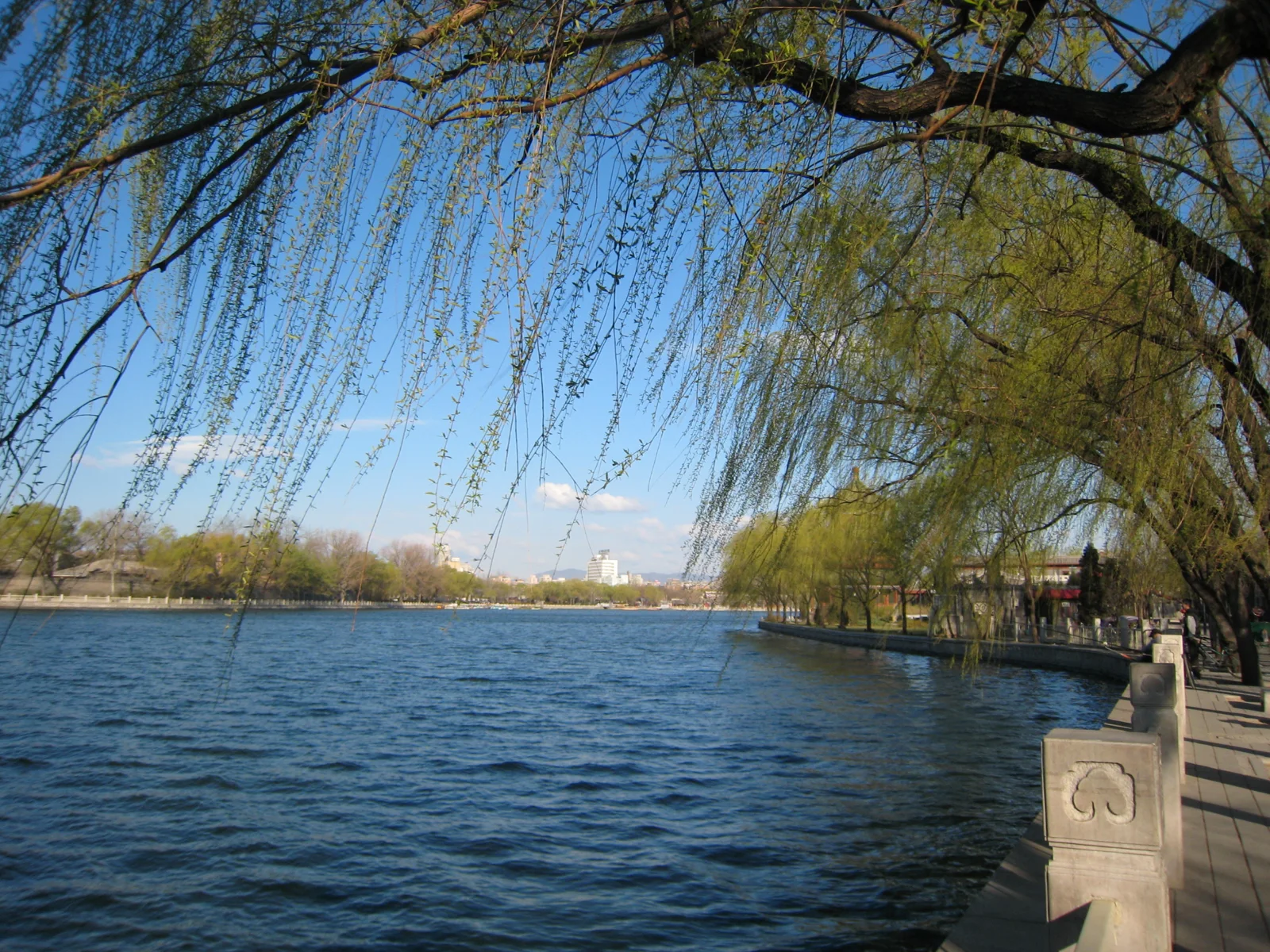
Old-city life around Shichahai and the hutong lanes
Shichahai, northwest of the Forbidden City, includes Qianhai, Houhai and Xihai lakes and the surrounding historic neighborhoods. Open water and lakeside roads meet a dense network of hutong lanes. You can look across the lakes, then observe gateways, gray brick walls and low buildings in the nearby streets. Compared with the vast palace courtyards, these spaces are closer to the everyday surroundings of pedestrians and residents.
Hutong are lanes; courtyards are spaces inside the buildings along them. Gateways, walls, corners and street directions visible from public roads already reveal how the old city is organized. Residents' daily lives also distinguish this area from the Forbidden City, which opens as a museum. Keep your distance from residential gates without signs inviting entry, rather than treating every courtyard as an attraction. Lakeside walks and exploring the lanes offer different interests; entering private homes is not necessary to understand the area.
Landscaped hills and lakes in the northwest
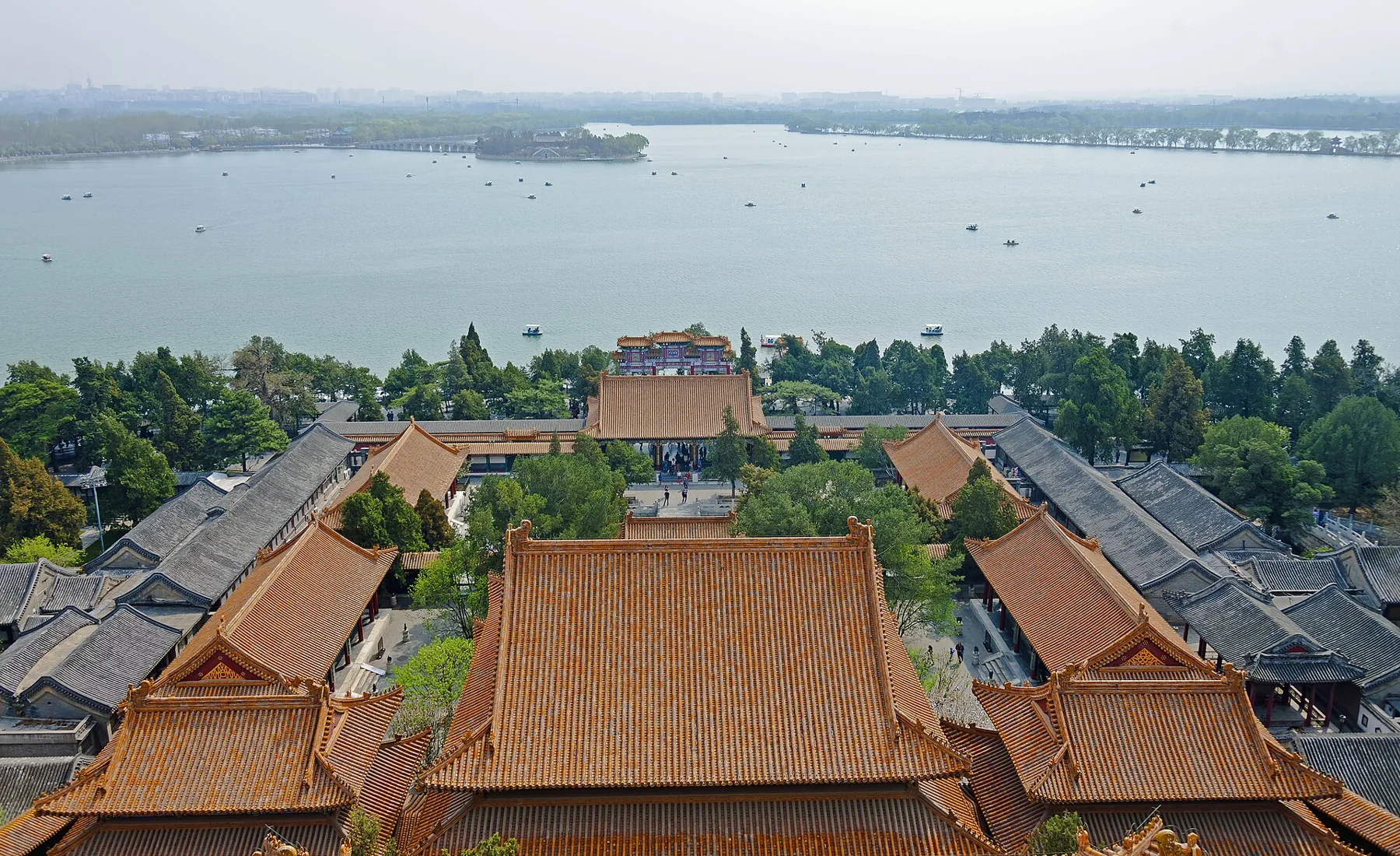
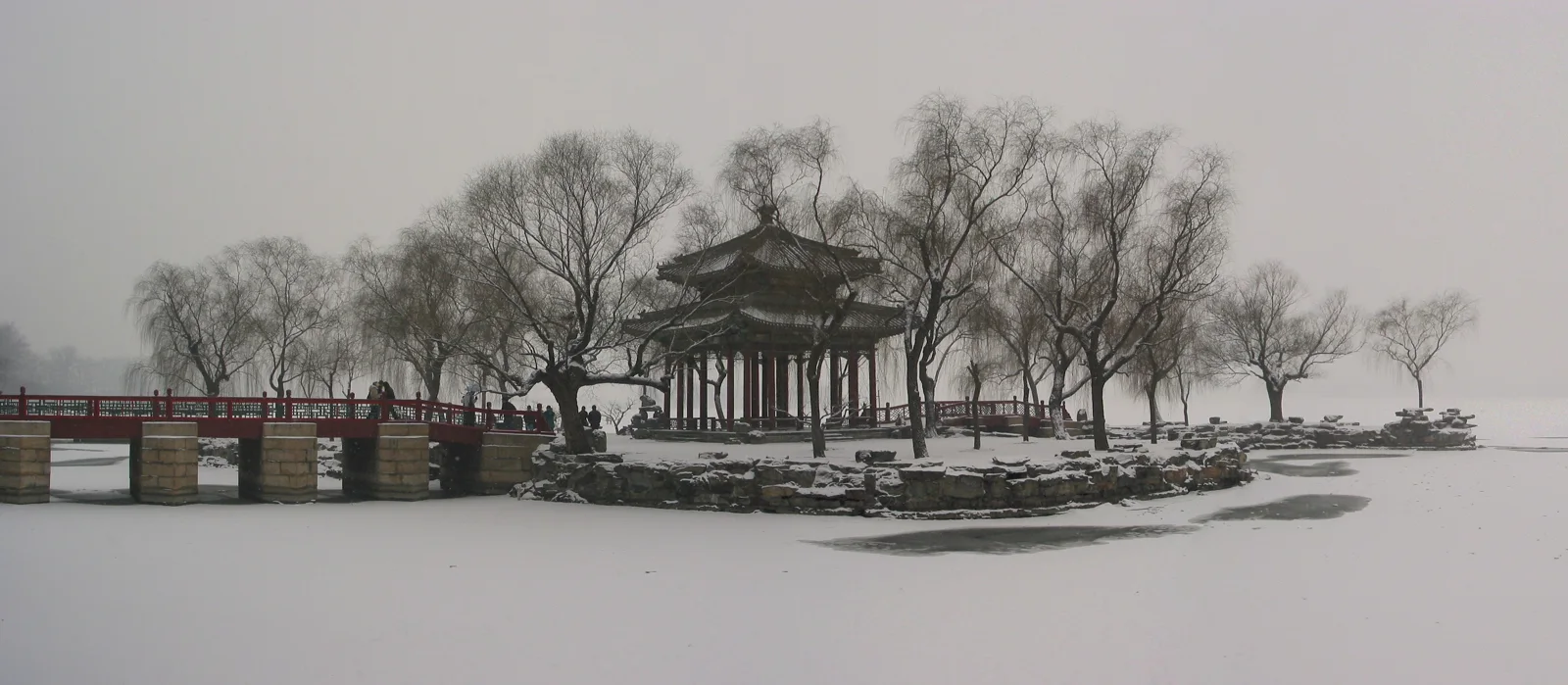
The Summer Palace in northwest Beijing is centered on Longevity Hill and Kunming Lake. The imperial living quarters, Long Corridor, buildings at the foot of the hill and islands each occupy different positions, while the Seventeen-Arch Bridge connects the eastern embankment to South Lake Island. Unlike the Forbidden City's courtyards arranged along an axis, these buildings are best understood in relation to the shoreline, slopes and changing views. From the shore you can see the bridge; beneath the corridor roof you can study painted decoration; from higher ground you can see rooftops and the lake together.
For garden enthusiasts, the lake glimpsed between the Long Corridor's columns and the relationship between bridge arches and water offer more to observe than a list of building names. Beijing has short springs and autumns, hot and rainy summers, and cold, dry winters. Seasonal changes alter the garden's colors and water: foliage, snow and frozen lake surfaces give the same pavilions and bridges different appearances. In winter, use the open park paths to view the shores, bridges and pavilions; do not walk onto the ice on your own.
An art district in former factories
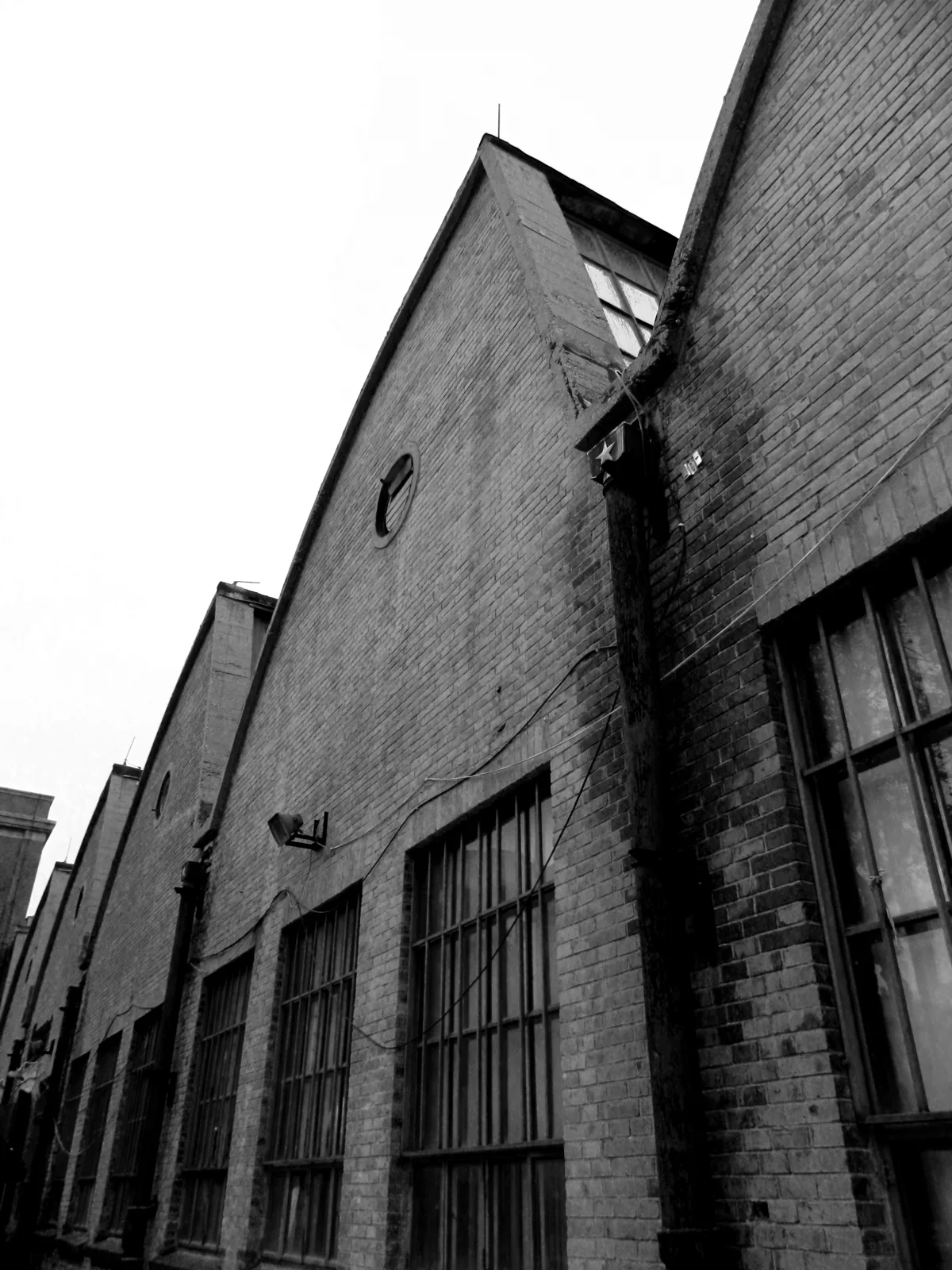
In the northeast, 798 has changed from electronics factories into an arts district. Gray brick walls, tall windows and large factory halls retain their industrial architectural features. Spaces once used for production now house art institutions, exhibitions and studios. The buildings themselves reward attention and give contemporary art a setting quite different from historical collections in a palace.
The area suits readers interested in industrial architecture, contemporary art or urban renewal. Factory exteriors and street spaces provide a relatively stable setting, while exhibitions change; photographs or reports of one event should not be taken as evidence of a permanent display. Alongside the old city, 798 shows a Beijing that includes the remains of industrial development and new cultural uses as well as imperial buildings and traditional lanes.
Shopping streets, old shops and a secondhand market
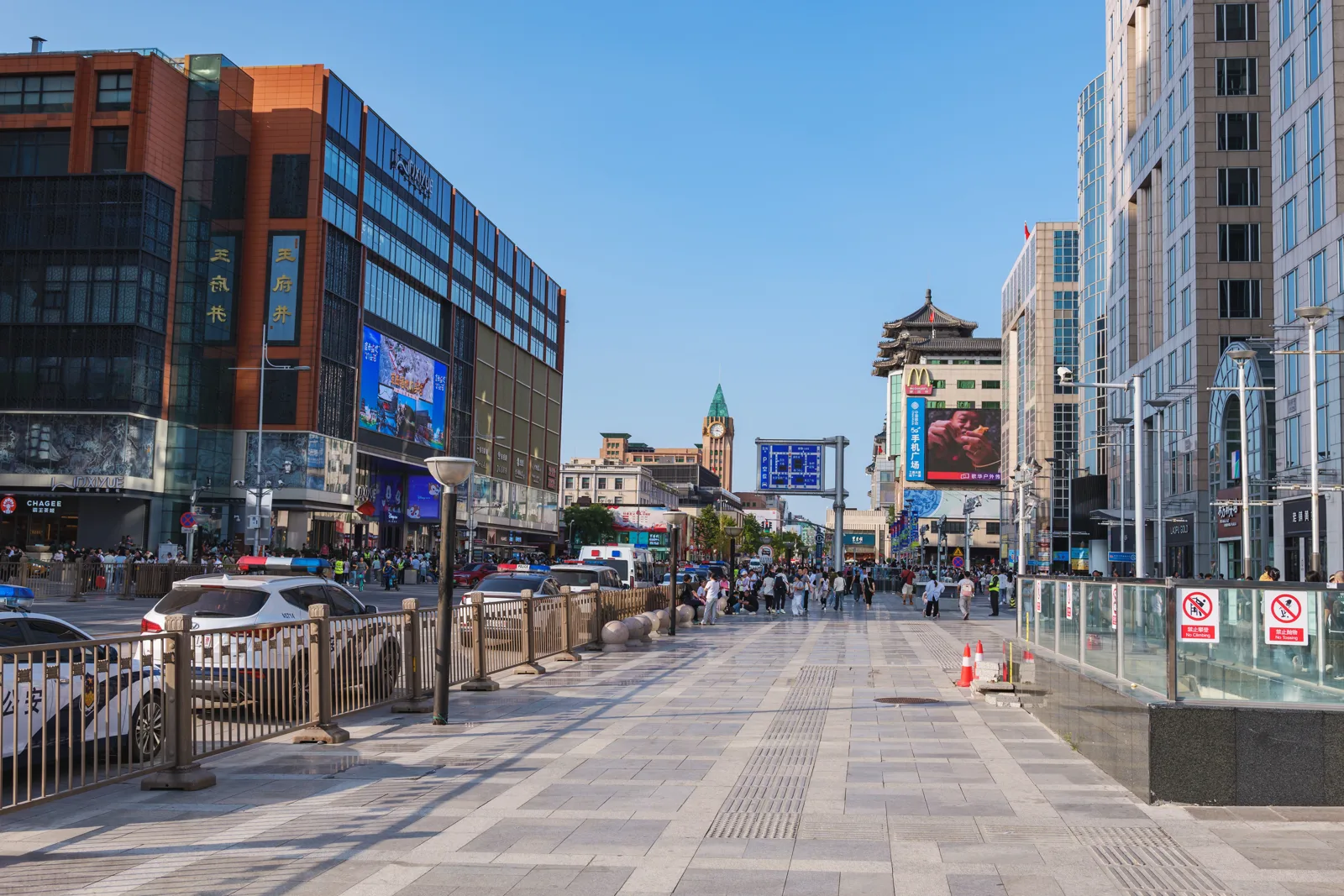
Beijing's shopping areas also help explain the city. Wangfujing brings department stores, craft shops, bookshops and restaurants together around a commercial street. Department stores and malls make it easy to compare brands; Gongmei Mansion focuses more on materials, craftsmanship and gifts; bookshops offer another reason to stop. The gray walls, arched windows and three towers of the East Church stand near the malls, bringing religious architecture and commercial storefronts into the same streetscape.
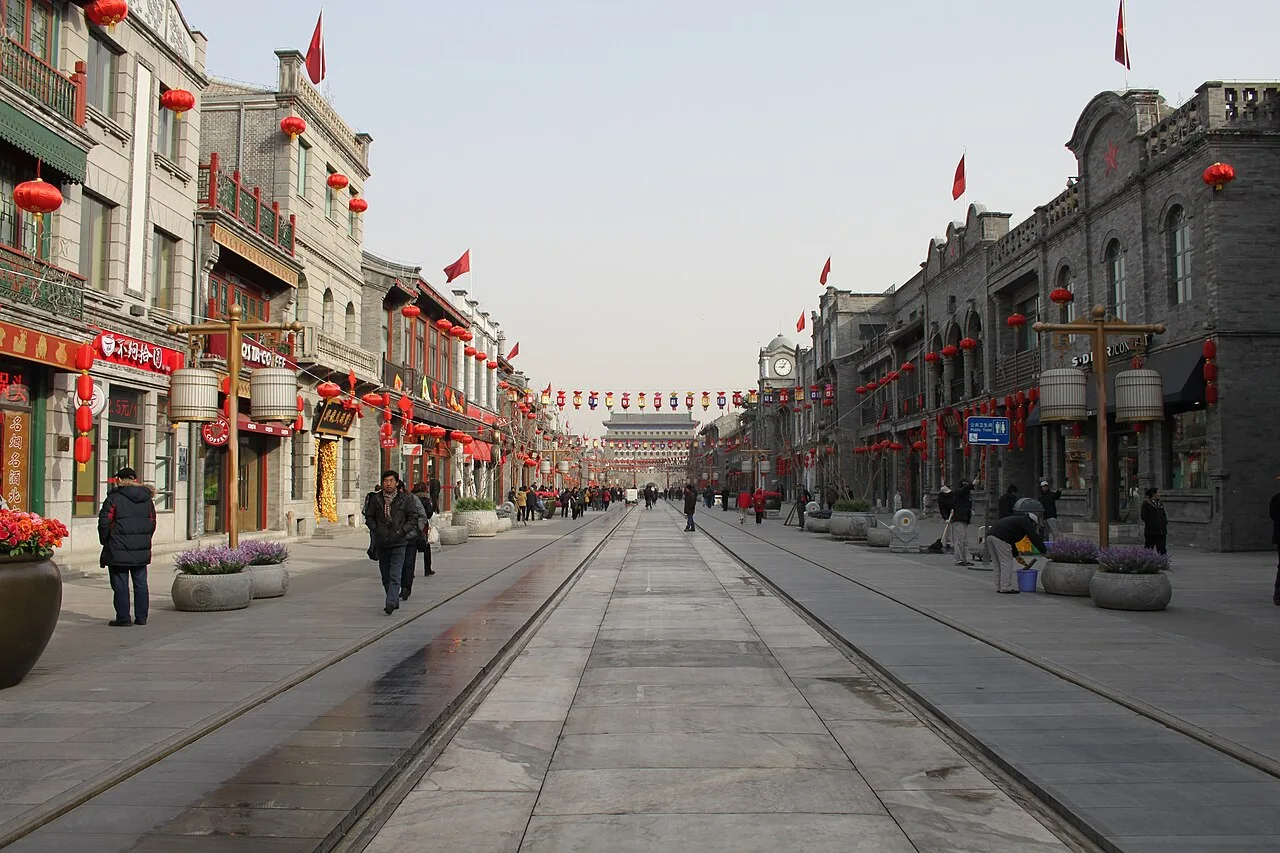
Farther south, Qianmen and Dashilan show a closer relationship between commercial streets and long-established shops. Qianmen Street, south of Tiananmen Square, is broad with long views; Dashilan to its west has more closely packed shops, with signs and windows near passing pedestrians. Commerce here developed alongside theaters, teahouses and bookshops. Ruifuxiang, which opened in Dashilan in 1893, brings cloth, silk fabrics and clothing into a specific shop interior. Its facade, window frames and courtyard also show how a street-facing shop extends inward.
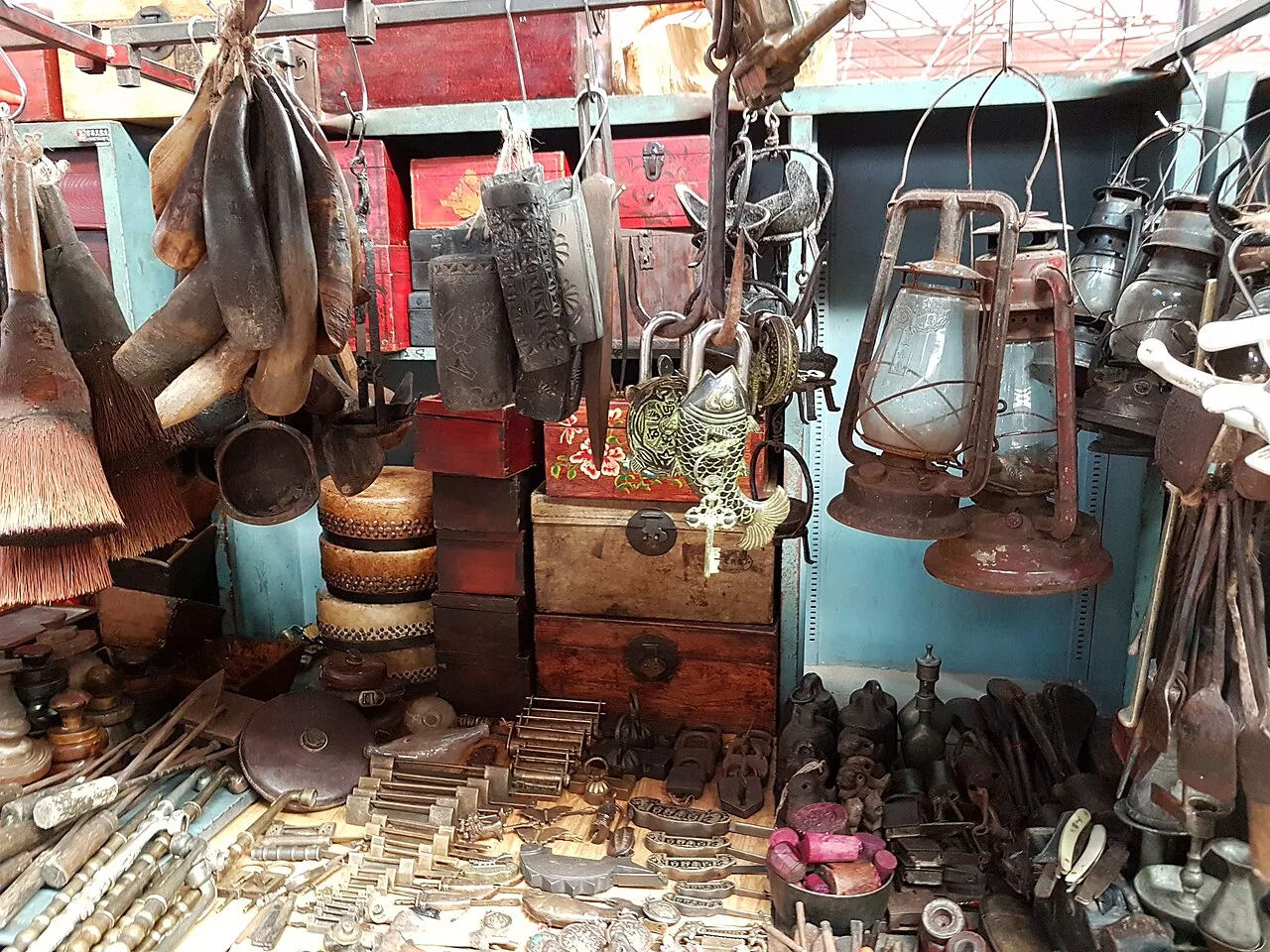
Panjiayuan in the southeast offers a different way of looking. Old books and periodicals, writing brushes, ceramics, strings of beads and crafts sit alongside one another in shops, covered areas and ground stalls. The interest lies in comparing objects stall by stall: bindings, brush tips, surfaces and workmanship. Wangfujing's department stores, the old shops in the south and Panjiayuan's stalls suit different shopping interests. When choosing something to take home, its material, use and transport requirements matter more than guessing its age from its appearance.
Roast duck to share, a bowl of noodles and sweet snacks
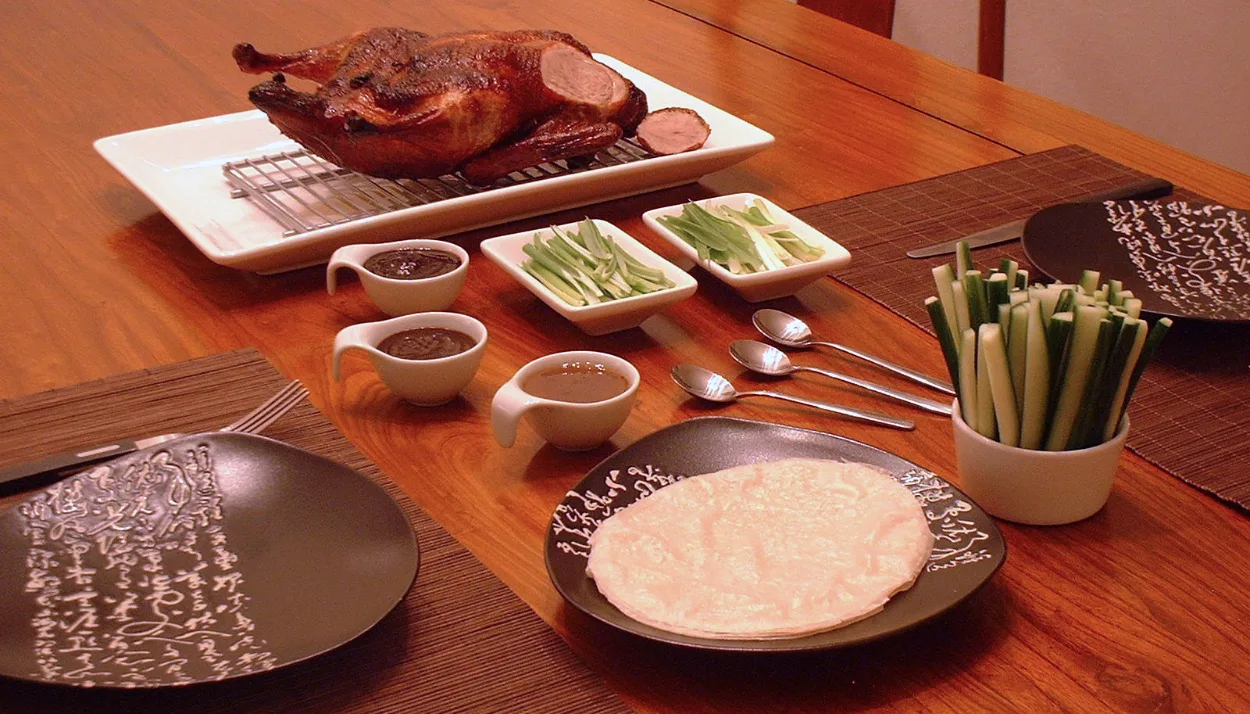
Peking duck is usually served as sliced skin and meat with thin pancakes, shredded scallions, cucumber and sauce, making it a meal to share. Hanging-oven and closed-oven roasting are different traditional methods. The texture of the skin and meat, and assembling your own pancakes, are part of the meal. This is a different dining occasion from ordering an individual bowl of Beijing zhajiangmian.
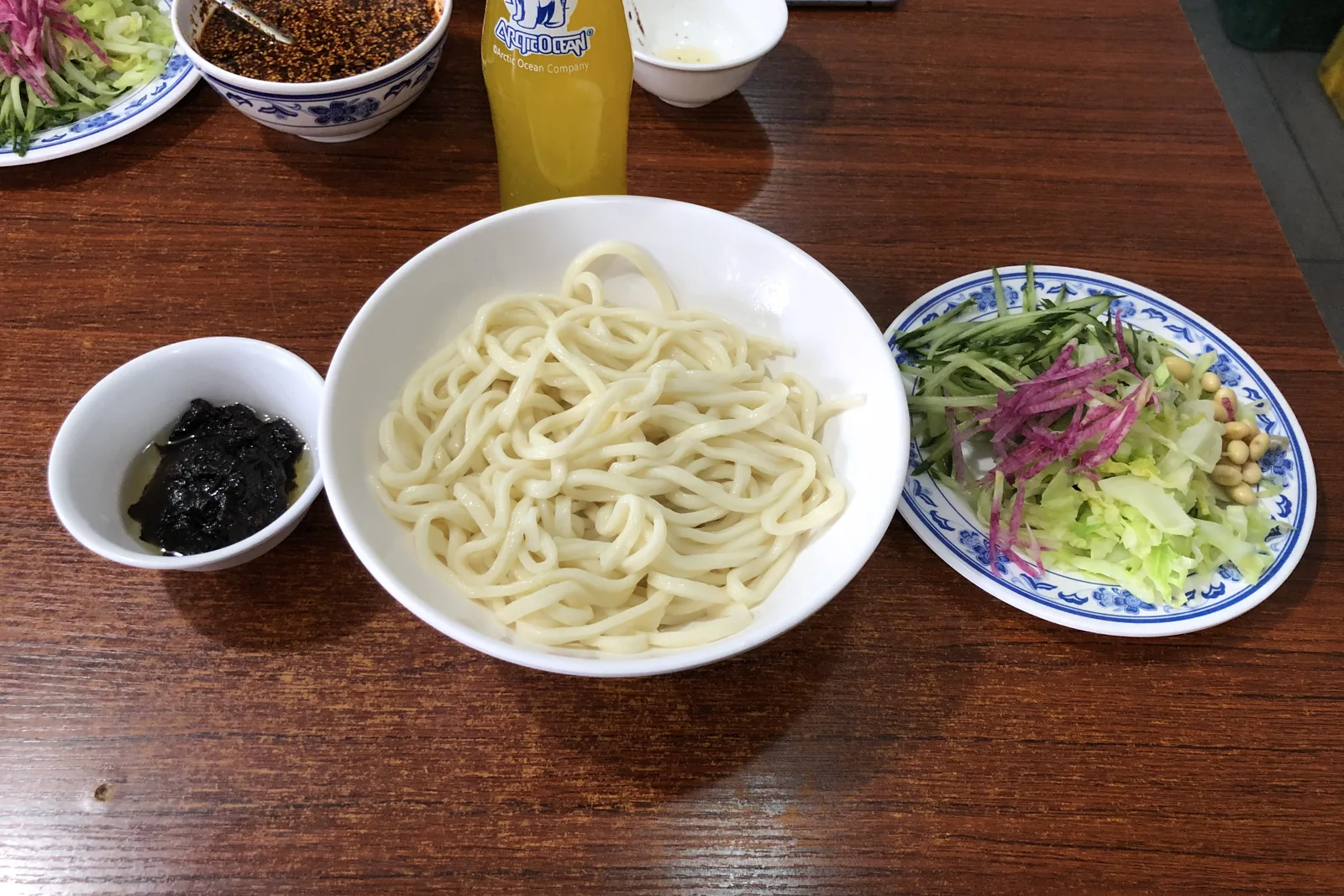
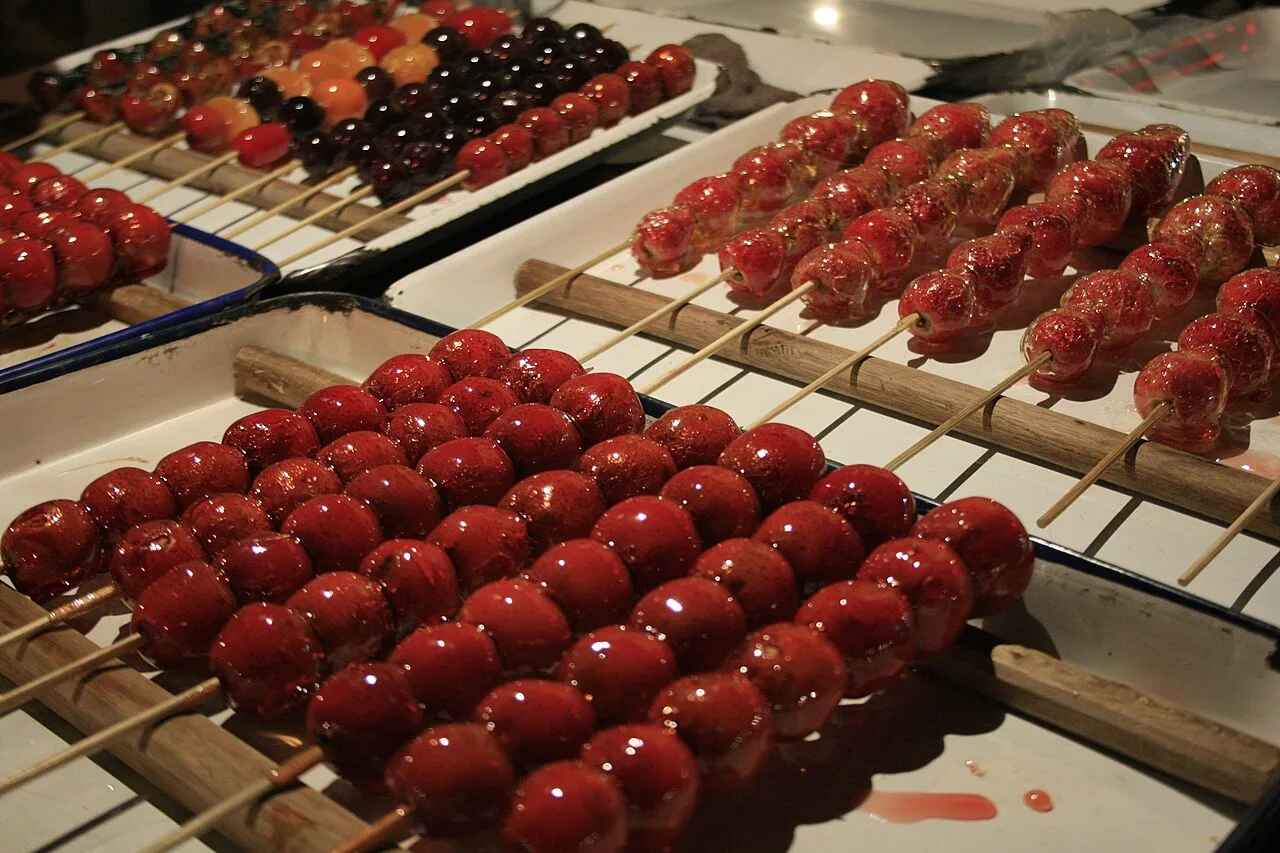
Zhajiangmian combines wheat noodles, thick fried sauce and crisp vegetable toppings. The common diced-meat sauce contains pork, while yellow soybean paste contains soy. Cucumber, radish and other toppings add moisture and texture. Tanghulu is a smaller sweet snack: the traditional hawthorn version wraps tart fruit in a thin, crisp sugar shell, with other fruits and filled versions also available. Douzhi, a sour fermented mung-bean drink served with fried dough rings and pickles, offers another traditional snack experience.
The differences between these foods come from their ingredients, preparation and ways of eating, as well as their fame. Roast duck is a shared main meal; zhajiangmian centers on mixing sauce and vegetables into noodles; tanghulu alternates crisp sugar with sweet and sour fruit. Wheat, soy, nuts or sesame may appear in different recipes, so check each food if you have dietary restrictions. Start exploring Beijing's food with the flavors and dining occasions that appeal to you.