Understanding the Temple of Heaven through its ritual buildings
The Temple of Heaven in the southern part of Beijing's old city was where Ming and Qing emperors sacrificed to Heaven and prayed for good harvests. The original Temple of Heaven and Earth was completed in 1420, the same year as the Forbidden City. Later, the rites for Heaven and Earth were separated and the Circular Mound Altar was added in the south. The complex continued to change throughout the Ming and Qing dynasties. Its interest lies in how ritual and architecture worked together: ceremonies required different halls, altars and passageways, surrounded by trees and walls.
The main buildings run north–south. The open-air Circular Mound Altar lies in the south, with the Imperial Vault of Heaven and Echo Wall to its north; the raised Danbi Bridge then leads toward the Hall of Prayer for Good Harvests in the north. Other spaces, including the Hall of Abstinence, lie to the west. Understanding this layout distinguishes the circular hall with three tiers of eaves, the roofless altar and the hall for sacred tablets. They are not three temples with the same function.
Use the north-south axis as a guide to the layout: from the Circular Mound Altar, head north across Danbi Bridge to the Imperial Vault of Heaven, then continue to the Hall of Prayer for Good Harvests. In sequence, these show an open-air altar, a hall that housed spirit tablets, and the main building for ceremonies praying for good harvests. Walking is required between the sites, so plan the order around their opening periods. This reveals more of the layers in the ritual complex than stopping only at the Hall of Prayer for Good Harvests.
The Hall of Prayer for Good Harvests: blue tiles, circular roofs and terraces
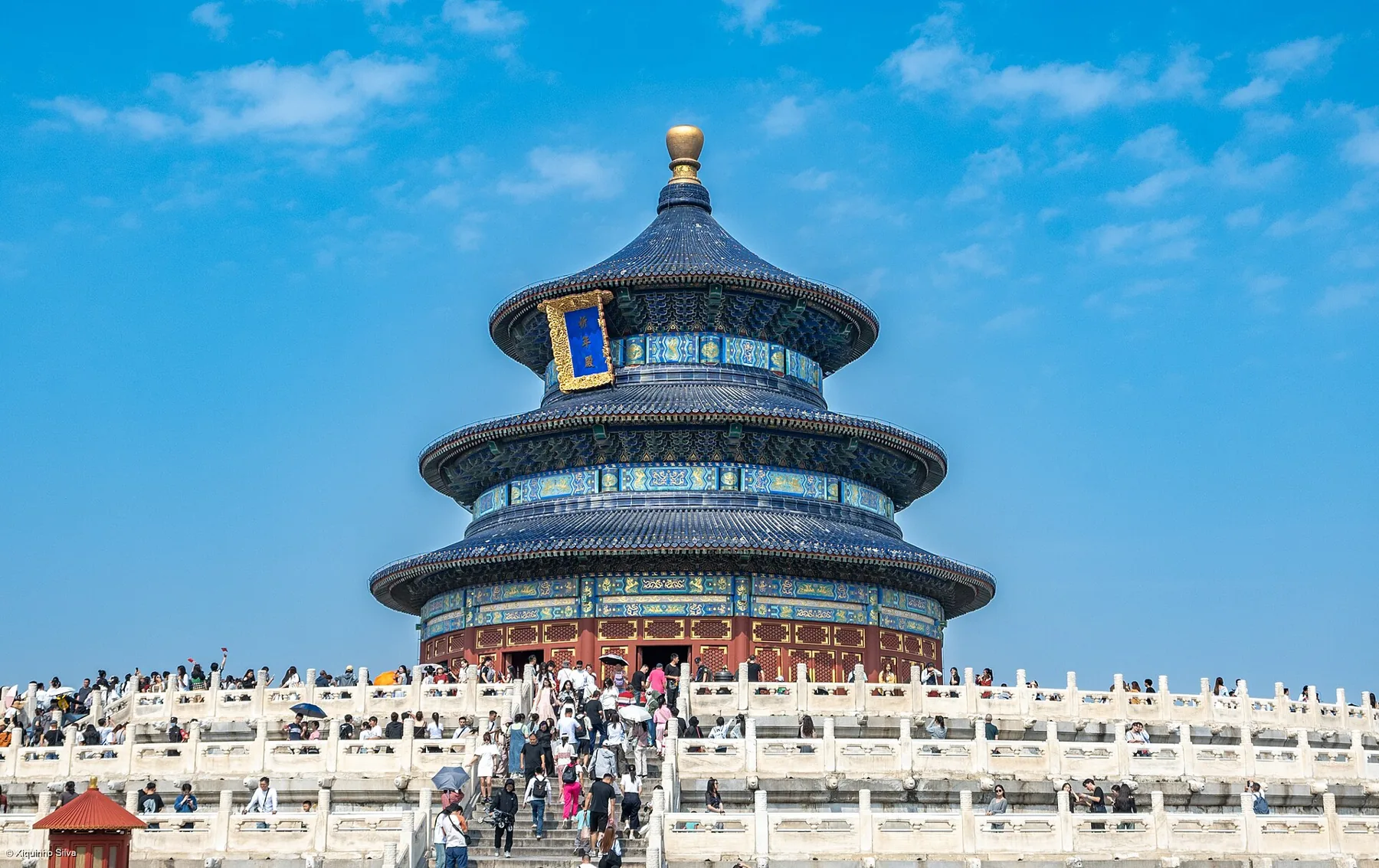
The Hall of Prayer for Good Harvests is the most recognizable building in the complex. Three tiers of circular eaves rise to a golden finial above layered stone terraces. Its form changed over time: in 1751, the roof tiles were made uniformly blue, and it received its present name for the harvest prayers held in the first lunar month. Look at the circular roofs and layers of painted decoration as a whole from the courtyard, then examine details from places where stopping is allowed.
When taking photographs, include part of the terrace and courtyard to show the hall's height above the ground. Closer up, notice the eaves, spaces between columns and painted decoration, rather than only seeking an empty frontal view. Whether you may approach or look inside depends on the day's open passages and conservation rules. Seeing the exterior does not mean every space is freely accessible.
What to see at the Circular Mound and Imperial Vault
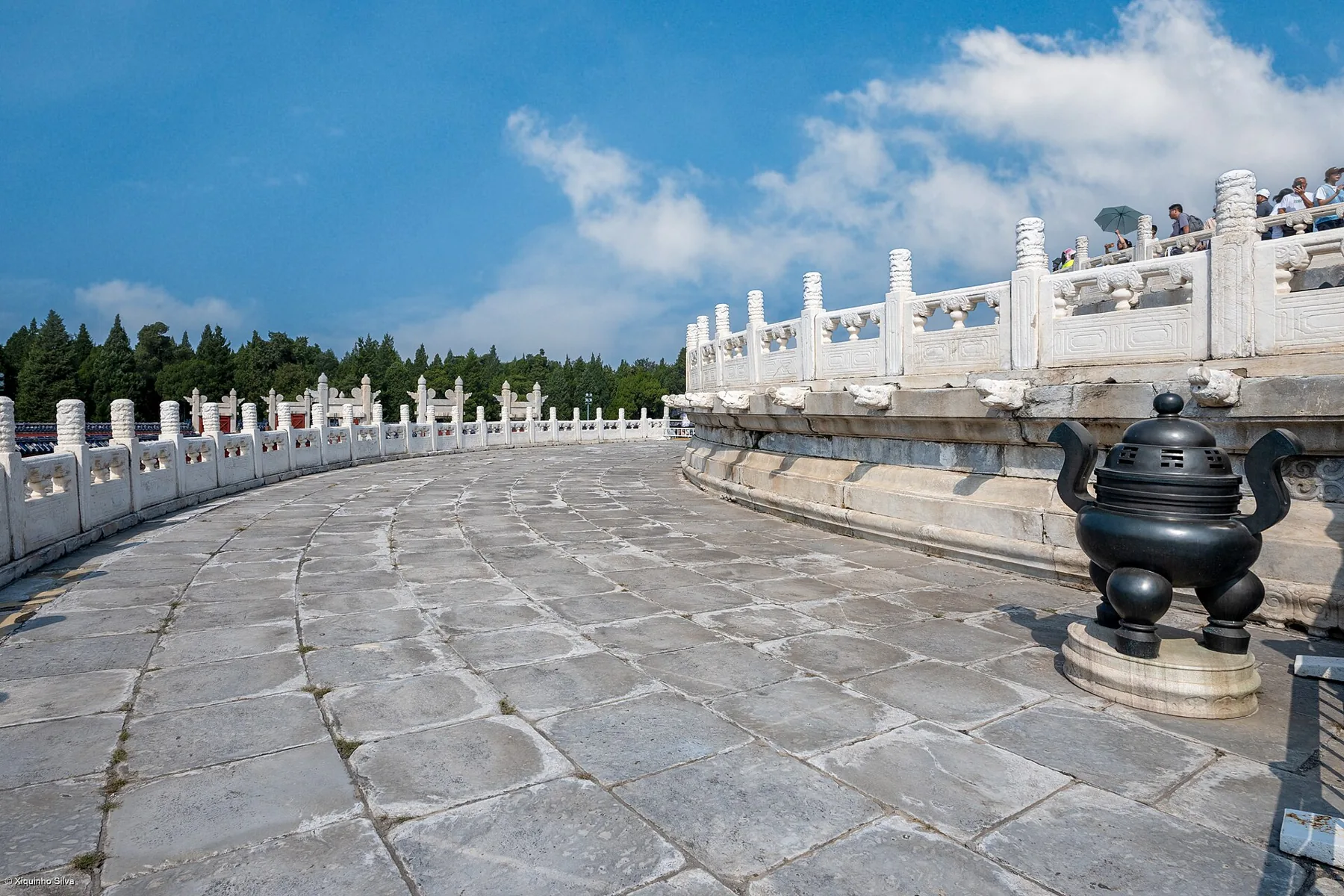
The Circular Mound Altar was begun in 1530 and enlarged in 1749. It was the setting for the winter solstice sacrifice to Heaven. Circular stone platforms, steps and successive balustrades shape the space; numerical arrangements in the paving, railings and dimensions relate to traditional ritual order. Unlike the roofed Hall of Prayer for Good Harvests, it opens to the sky. Looking at how the stone surfaces and railings enclose the space reveals more of its form than taking a photograph only at its center.
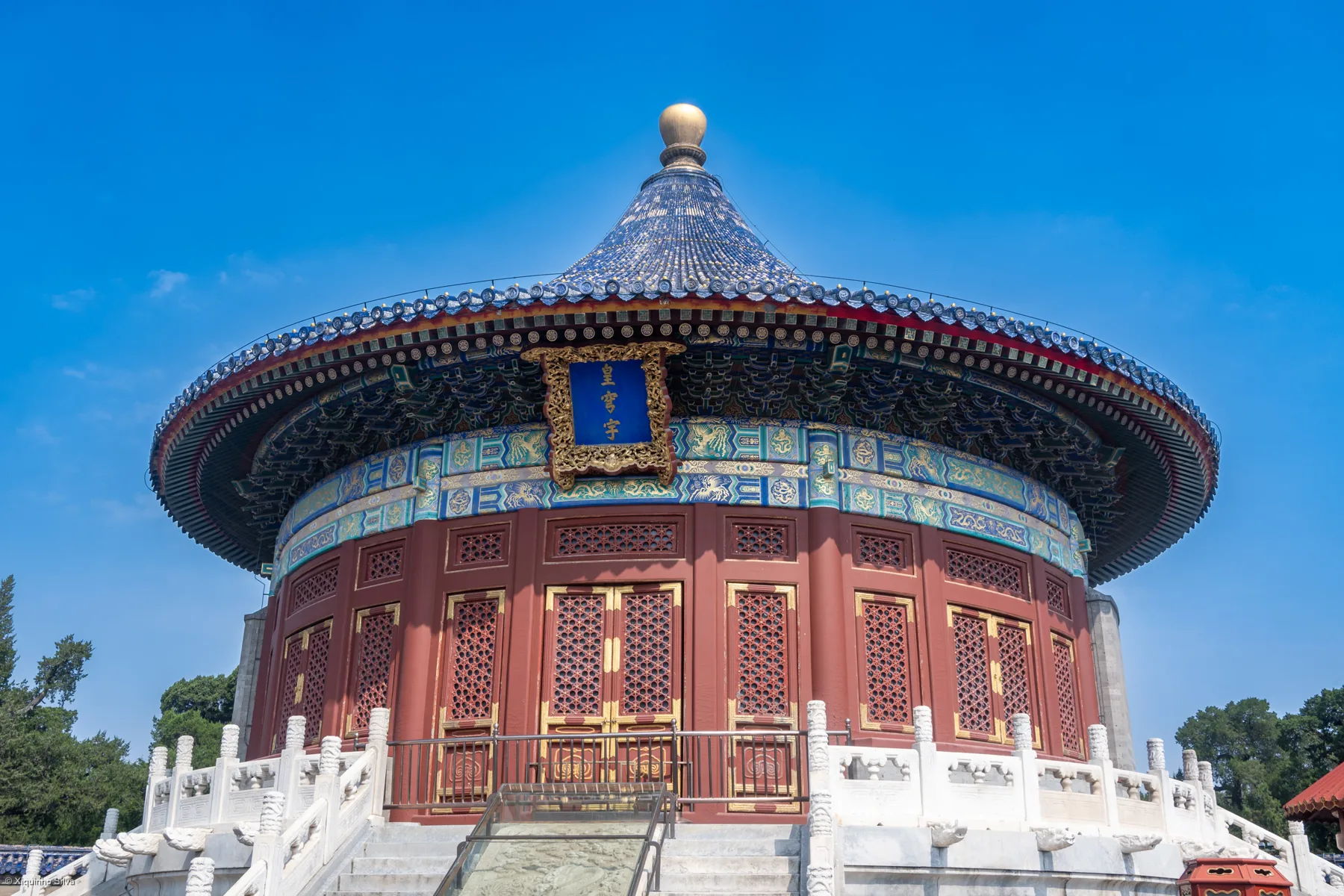
The Imperial Vault of Heaven stands north of the Circular Mound and housed sacred tablets used in the rites. The round wall enclosing its courtyard is known as the Echo Wall because it carries sound; its smooth surface and circular shape help reflect and transmit sound. Crowds may make the effect difficult to hear. Hearing an echo need not determine whether the visit was worthwhile, and you should not strike the wall to test it.
At the Circular Mound Altar, look at how the round platform, concentric stone balustrades, and central point relate to one another. The platform expands outward from the center, while the steps, railings, and paving emphasize its axis and tiers. If the area is crowded, view the overall shape from the perimeter instead of pushing toward the center for a photo. This is an exposed stone space; bring sun protection in strong midday sun and watch your footing on the steps.
Old trees, park paths and time for a visit
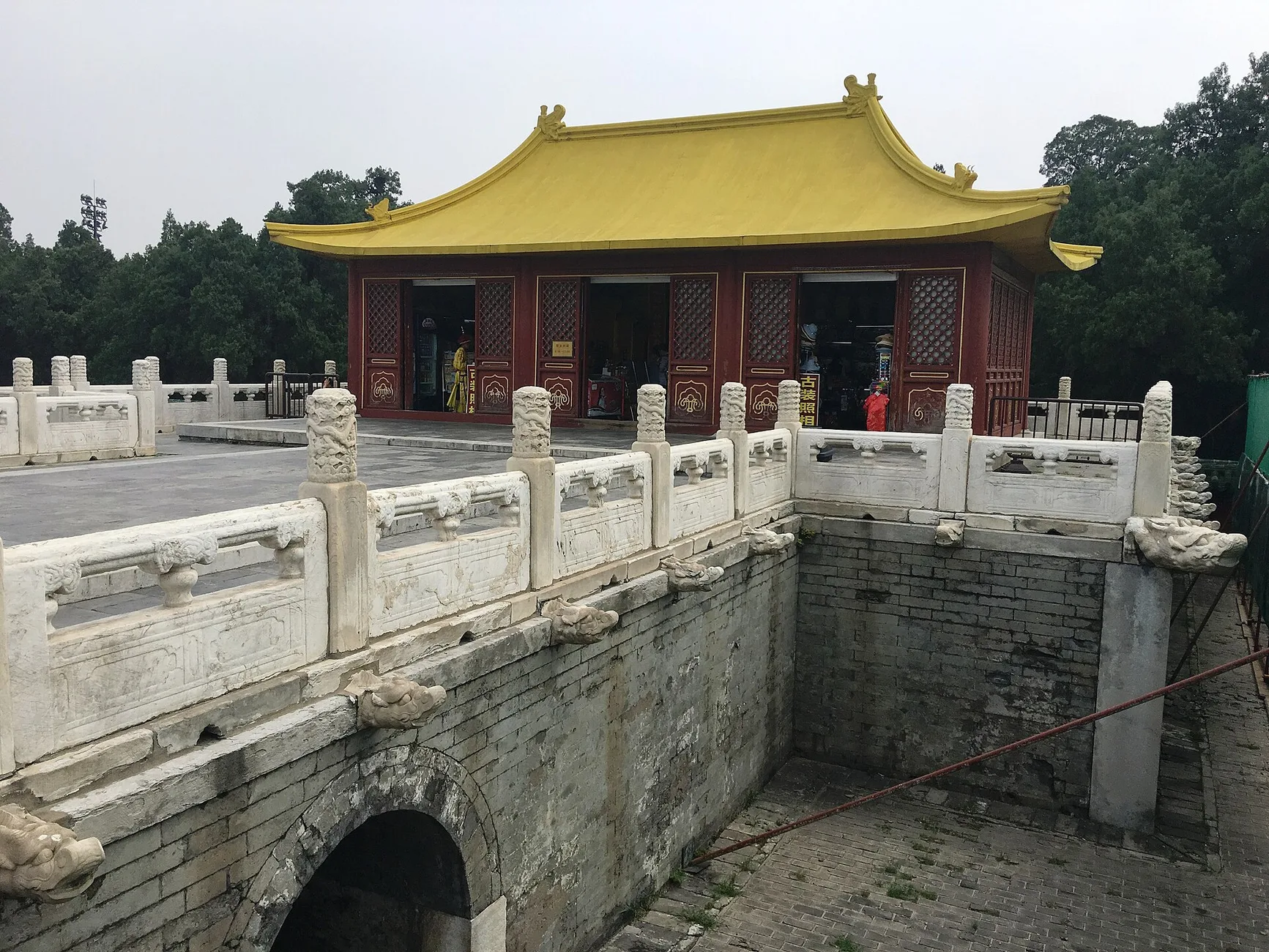
Beyond the historic buildings, extensive trees and paths offer shaded walking after the open courtyards. If architecture and ritual history are your main interests, focus on the Hall of Prayer for Good Harvests, Imperial Vault of Heaven and Circular Mound. For a walk, the park itself also offers interest. Allow about 2–3 hours for the main historic buildings, walking and breaks. This is an editorial estimate; guided explanations, exhibitions or queues can extend your visit.
There is walking between the terraces, Danbi Bridge and park gates, and the outdoor stone paving offers little shelter from the sun. Bring water and sun protection in summer, keep warm in winter and watch the ground after rain or snow. The old trees are part of the heritage setting. Do not break branches, cross barriers for photographs or block narrow paths.
Park hours differ from the historic sights' hours
The official website, checked on November 10, 2026, lists park hours of 6:00–22:00 from April 1 to October 31 and 6:30–22:00 from November 1 to March 31, with last park admission at 21:00 in both seasons. Sights including the Hall of Prayer for Good Harvests, Echo Wall and Circular Mound have much shorter hours: 8:00–18:00 in the peak season, with last admission at 17:30, and 8:00–17:00 in the low season, with last admission at 16:30. They close on Mondays but open during statutory holidays. Evening access to the park does not mean you can still visit these historic buildings.
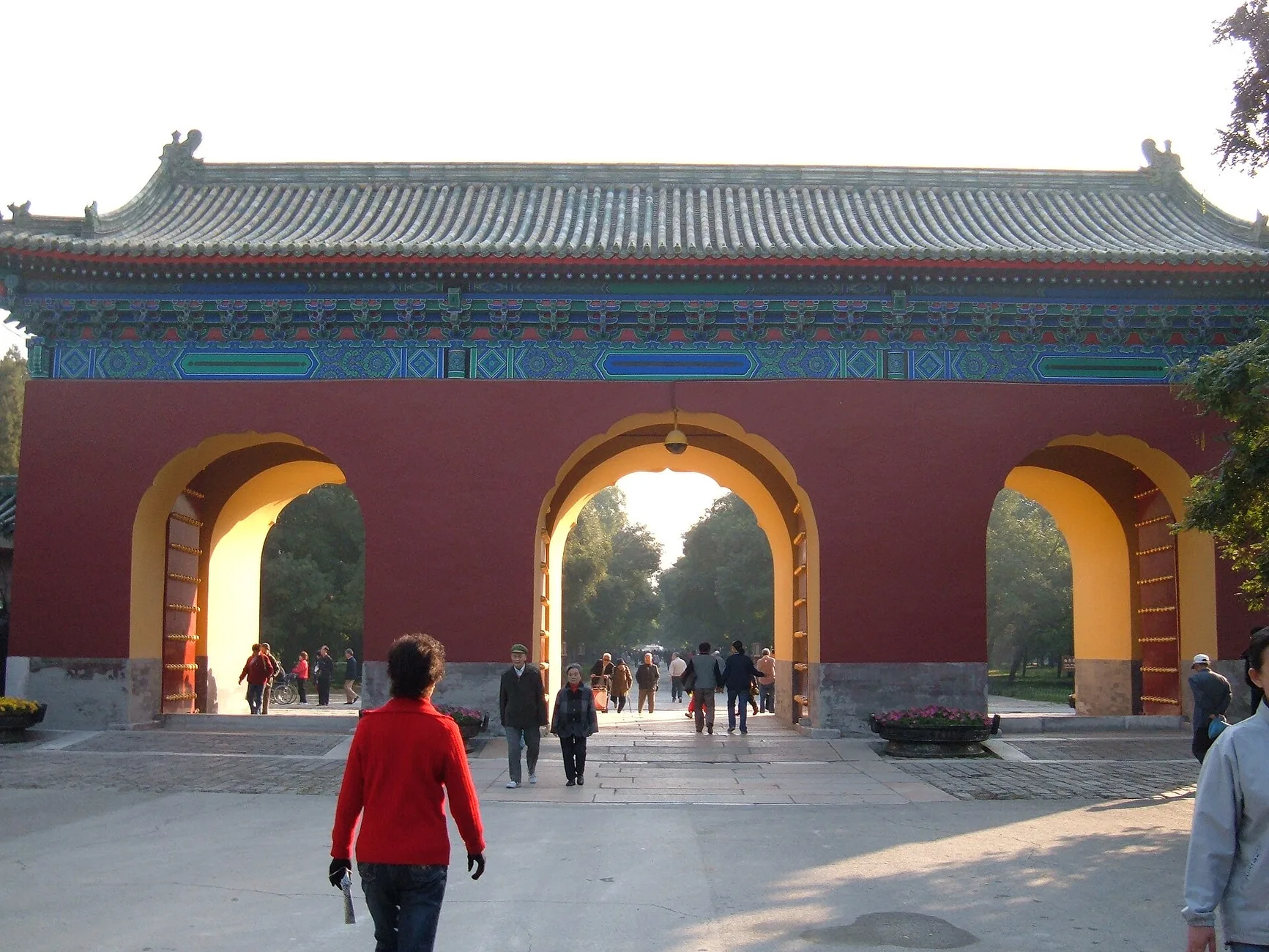
Distinguish ordinary park admission from the combined ticket that includes the main sights, and check that the areas you want are covered. The Beijing government's English guide says foreign visitors can buy tickets with a passport through the official WeChat account 天坛公园官方购票平台. Available dates and identity-document options are those shown on the official booking page. The park's transport guide lists Subway Line 5 for the East Gate and Line 8 for the West Gate. Choose your gate and sights before arriving to avoid finding that the main sights have already stopped admitting visitors.
Useful official references
Check the relevant official service before making arrangements. These links are references, not a guarantee of current services.
- Temple of Heaven official website: Visitor services and opening hours ↗
- Temple of Heaven official website: Hall of Prayer for Good Harvests ↗
- Temple of Heaven official website: Circular Mound Altar ↗
- Temple of Heaven official website: Echo Wall ↗
- UNESCO: Temple of Heaven layout and ritual history ↗
- Beijing Municipal Government: Temple of Heaven tickets and transport for foreign visitors ↗