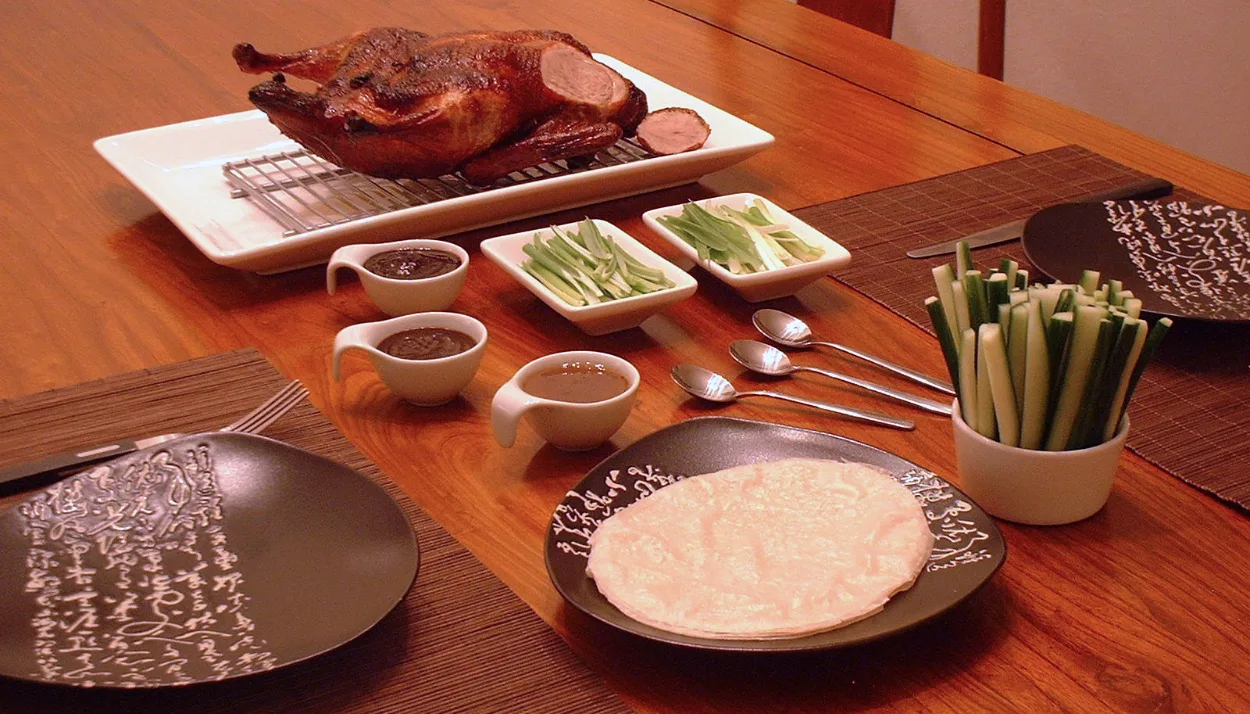
A whole duck and its accompaniments
When Peking duck reaches the table, the meat, thin pancakes and small dishes of accompaniments form a single dish. The roasted duck has reddish-brown skin; the contrast between its crisp, fragrant skin and tender meat is central to the dish. Shredded scallions add pungency, cucumber adds crunch, and sweet wheat sauce brings the meat, vegetables and pancake together. Try a small slice of duck first, then make a pancake wrap to distinguish these different flavors and textures.
This way of eating works well for a group. Each person can choose how much sauce and which accompaniments to use, without mixing the whole platter of duck at once. Slices sometimes include the skin, while other presentations serve skin and meat separately; a different arrangement does not necessarily mean a different dish. For a first taste, understanding how the parts on the table fit together is more useful than pursuing one prescribed way to eat them.
Hanging ovens and closed ovens
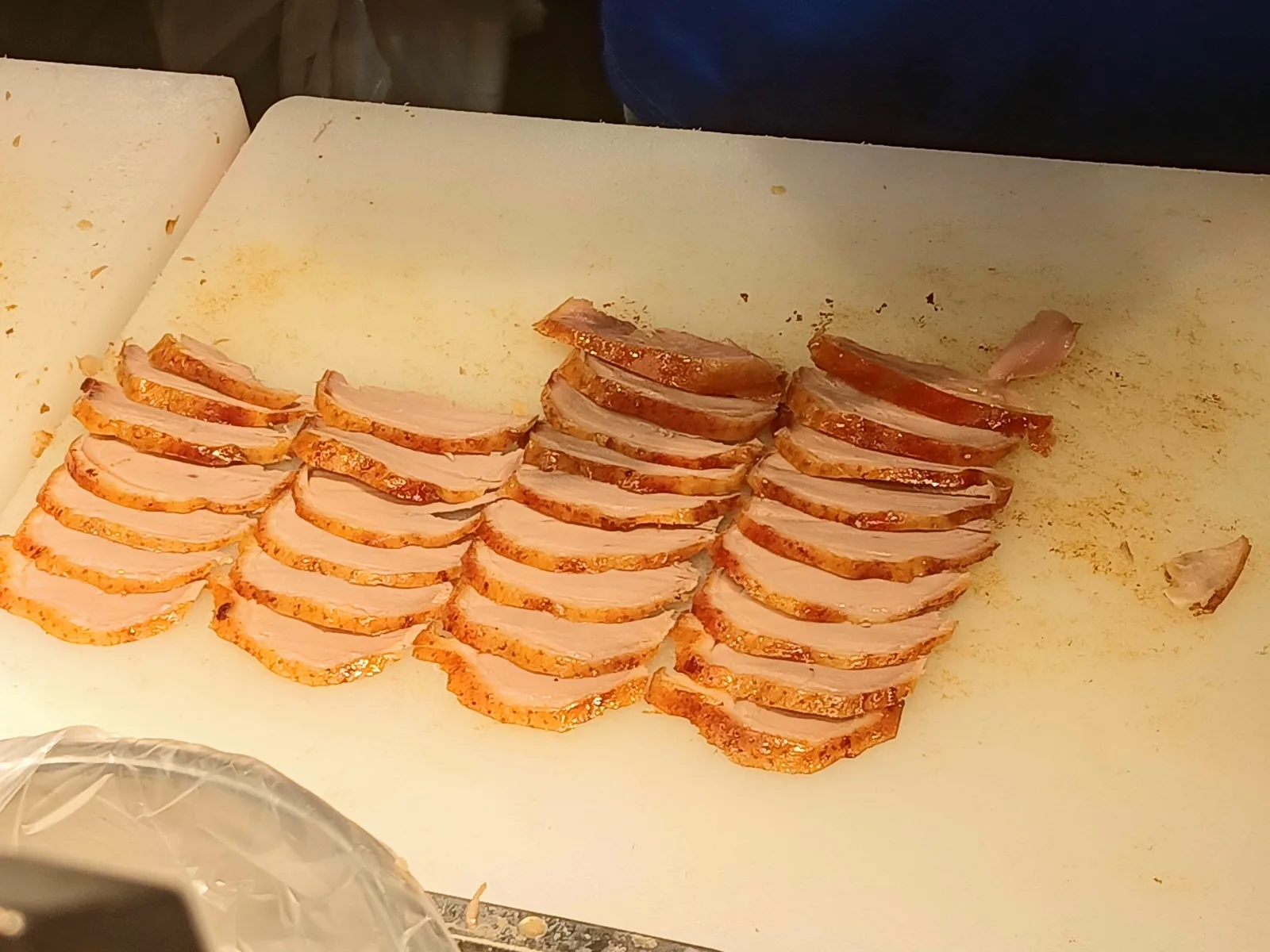
Traditional preparation begins with selecting, cleaning and preparing the whole duck, followed by drying the skin, applying a maltose glaze and roasting. Drying and treating the surface help produce the skin's color and texture. The duck is then carved; how the skin, fat and meat are combined in each slice affects its texture in the mouth. Peking duck is prepared and roasted whole, rather than made by cutting ordinary duck meat into small pieces and roasting them.
Hanging-oven and closed-oven roasting are two representative traditions. Quanjude's hanging-oven technique uses fruitwood as fuel, suspending the prepared ducks in a purpose-built oven to roast over an open fire. In Bianyifang's closed-oven technique, the duck is not exposed to an open flame during roasting. Both techniques were included in the second national list of representative intangible cultural heritage projects in 2008. They explain differences in preparation, rather than establishing that one restaurant will necessarily suit your taste better.
Making a duck pancake wrap
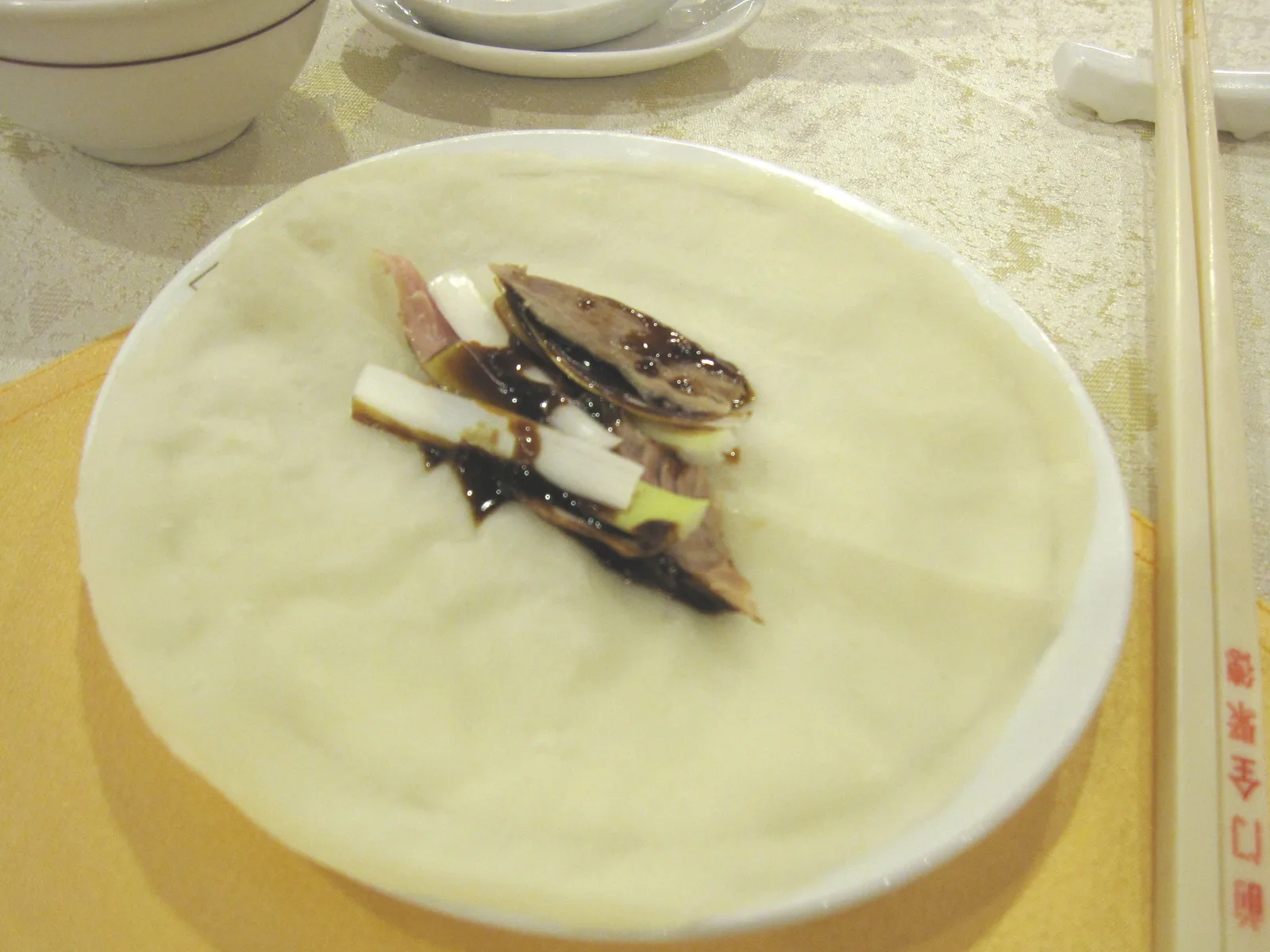
Lay a thin pancake on your plate, add a little sweet wheat sauce, then a few slices of duck with shredded scallions or cucumber strips. Fold the bottom up and bring in the sides so you can pick it up. Start with a small amount of filling to avoid overfilling the wrap. Use less sauce if you prefer the duck's own flavor, or choose cucumber alone if you dislike the sharpness of raw scallions.
Tianmianjiang, the dark, thick sauce served with duck, tastes both salty and sweet. English menus may call it sweet bean sauce, but it is usually made primarily from fermented wheat flour, so the name does not tell you whether it contains beans. The pancakes are also usually made with wheat flour. If you have a wheat or bean allergy, tell the restaurant your specific allergen and ask about the pancakes, sauces and contact during preparation. The word 'duck' alone does not establish that the whole dish is suitable for you.
Checking what your order includes
When ordering, first ask about the size of the duck portion and whether pancakes and accompaniments are included in the quoted price, then decide how many vegetables or other dishes to add. A smaller group can ask whether half a duck is available; do not assume all restaurants offer the same portions. Set menus and individual orders may include different items, so calculate your budget for the whole meal.
The duck carcass is what remains after carving. A restaurant may ask whether you want it made into soup or prepared another way. If you want duck-bone soup, ask when ordering whether it is available and costs extra. Since roast duck already provides fat and a strongly flavored sauce, mild vegetable dishes are an easy way to balance the meal. This is an ordering suggestion; there is no need to order every duck dish for a full duck banquet.
Useful official references
Check the relevant official service before making arrangements. These links are references, not a guarantee of current services.