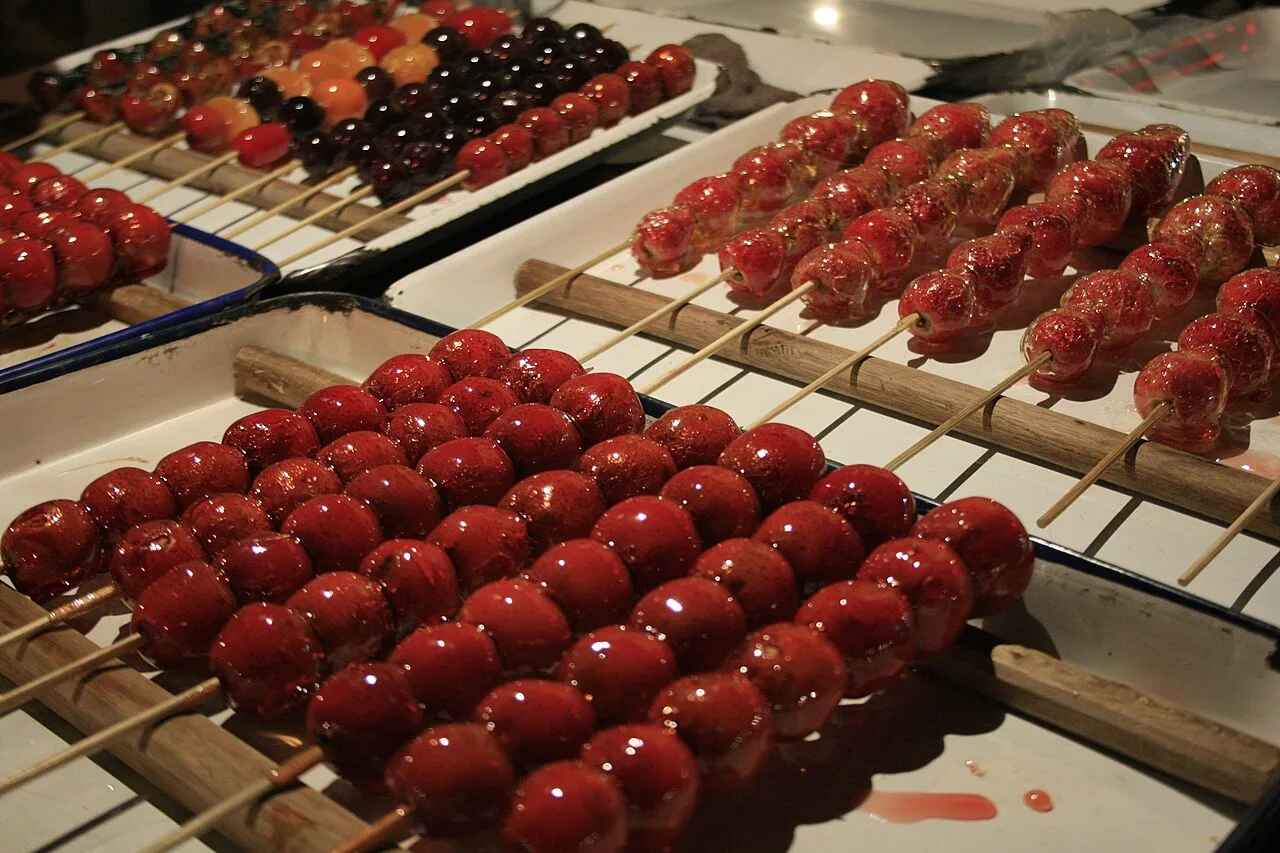
Sweet sugar and tart hawthorn
Tanghulu consists of fruit threaded onto bamboo skewers and coated with sugar that hardens as it cools. Hawthorn, also called hongguo or red fruit, is the traditional and common choice. The coating first provides sweetness and crunch; the fruit's tartness becomes clearer as you bite into it. This sequence of sweet and sour differs from eating either candy or fresh fruit alone.
In Beijing, tanghulu is closely associated with winter, temple fairs and street snacks, but it is neither exclusive to Beijing nor available only at Chinese New Year. For visitors, a skewer is better suited to a small sweet tasting than a replacement for a meal. On your first try, choose fruit with a level of tartness you can enjoy; the longest skewer with the most ingredients is not necessary for a photograph.
How the thin sugar shell forms
The fruit is prepared and skewered, then quickly rolled through cooked syrup. As it cools, the syrup forms a clear, hard shell. Its thickness and how far the sugar is cooked affect the bite. A thick coating can overwhelm the fruit's flavor; a thinner shell lets you reach the flesh more quickly. Bingtang, or rock sugar, in the name does not mean the fruit must be frozen, nor does it identify every stall's syrup recipe.
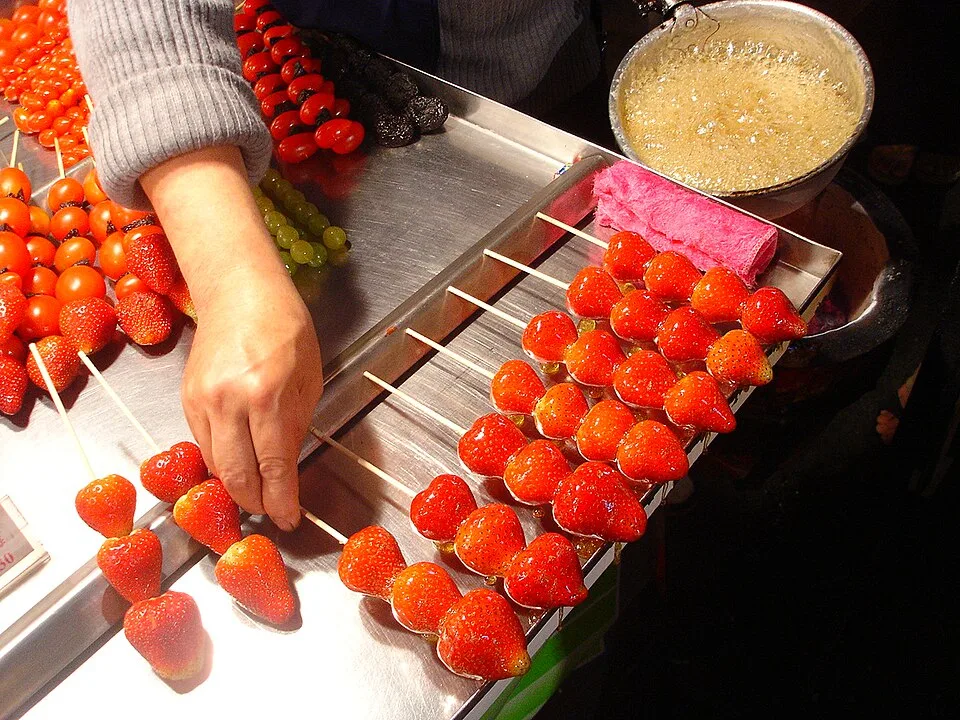
The strawberry skewers, syrup pan and cooling surface in the photograph show the setting after coating. Freshly coated skewers need to cool. Once bought, they are best eaten promptly, as warmth and moisture gradually make the sugar sticky and can change the texture during storage.
Choosing hawthorn, filled or mixed-fruit versions
Traditional hawthorn suits those who want a distinctly tart flavor. There are also versions with the seeds removed and fillings such as bean paste, nuts or other ingredients, giving the flesh, filling and sugar different textures in one bite. Some skewers use whole fruit. Ask whether the seeds have been removed rather than assuming every sugar-coated fruit can be bitten straight through.
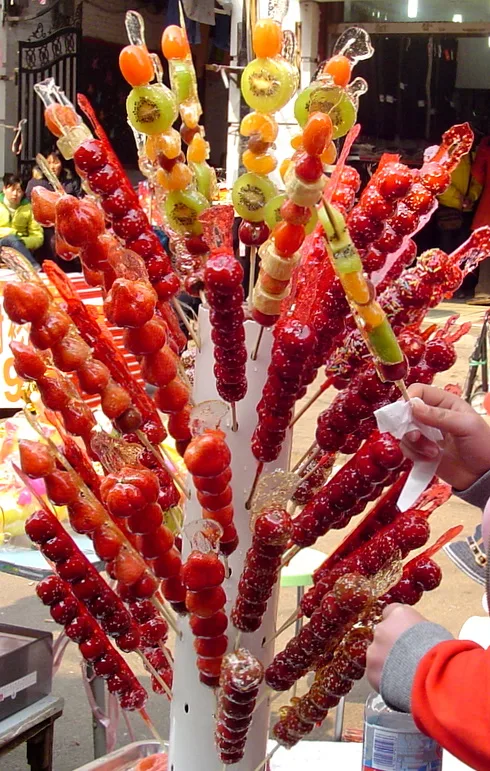
Strawberry, grape, kiwi and other versions emphasize each fruit's aroma, juice and firmness. A mixed skewer offers several fruits but may not have hawthorn's tartness. To compare traditional and newer versions, look at the fruit itself as well as the shine of the coating.
Watch the skewer and check fillings
Hold the bamboo skewer steadily and bite slowly into fruit that is easy to reach, watching for the pointed tip and any remaining seeds. Do not run while eating. The combination of a hard sugar shell and a skewer also calls for supervision of children. Before buying, observe how the skewers are covered and stored, ask about the fruit, filling and sprinkled toppings, and choose a version whose ingredients you can identify.
Fillings and toppings may contain beans, nuts, sesame or other ingredients. Check each one if you have relevant allergies or strict dietary restrictions; the appearance of a plain fruit skewer cannot guarantee the absence of cross-contact during preparation. The coating is added sugar. If you prefer less sweetness or need to limit sugar, share a small amount or choose uncoated fruit rather than treating tanghulu as a fruit product with health benefits.
Useful official references
Check the relevant official service before making arrangements. These links are references, not a guarantee of current services.