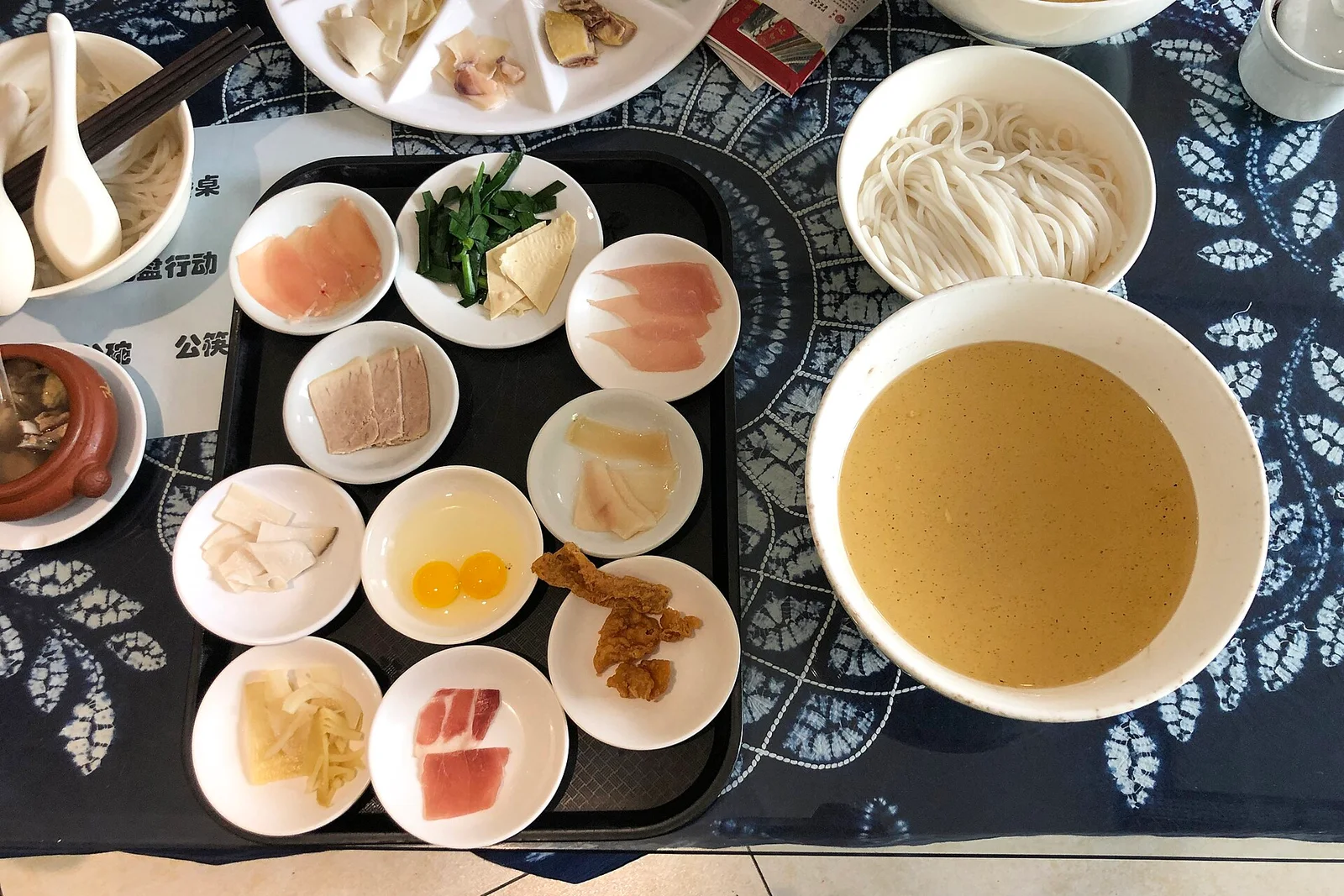
Hot broth and separate ingredients
Crossing-the-bridge rice noodles often arrive as a large bowl of stock, with noodles and several small dishes of meat and vegetables alongside. The noodles are made from rice and have a smooth texture; the stock and accompaniments shape the flavour of the meal. This presentation differs from small-pot rice noodles cooked together with minced meat, chives and other ingredients, so check the name when ordering. Kunming serves many kinds of Yunnan rice noodles. The crossing-the-bridge version draws on southern Yunnan's food traditions and is usually associated with Mengzi.
The traditional method uses very hot broth to cook thinly sliced ingredients before the noodles are added. A layer of oil on the surface affects heat loss, so a lack of obvious steam does not mean the broth has cooled. On a first try, ask staff to explain the order for adding ingredients or help handle the raw items. Do not begin by drinking the broth and only then work out what to do. Meat, eggs and vegetables vary between sets; the combination in a photograph does not mean every restaurant serves the same ingredients.
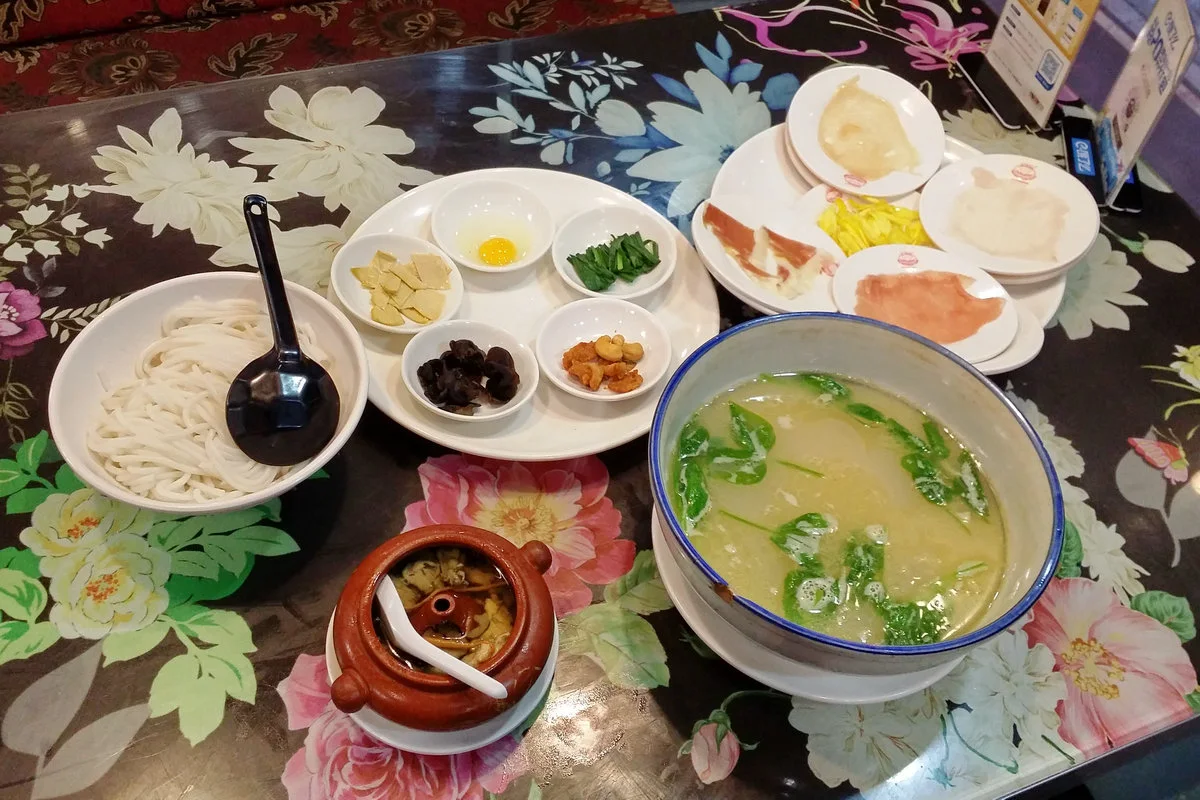
Choose by broth and ingredients
When choosing a set, first ask what the stock is made from, then compare the meat, mushrooms and vegetables. Chicken, pork bones or ham may be used in the stock; some restaurants offer versions centred on mushroom broth, local chicken or ham. More small dishes do not necessarily make a set more suitable for you. For a meal for one, the noodle portion and whether extra noodles are available may be more useful details than the number of dishes.
To try the basic flavour, start with less chilli, vinegar and other condiments, then adjust after the ingredients have been handled and the broth is cool enough to taste. The noodles themselves are mild, while the richness of the stock, meat and accompaniments gradually comes together. If you do not eat pork, chicken or seafood, removing the slices alone does not change the broth. Show your dietary restrictions to staff before ordering and ask them to confirm.
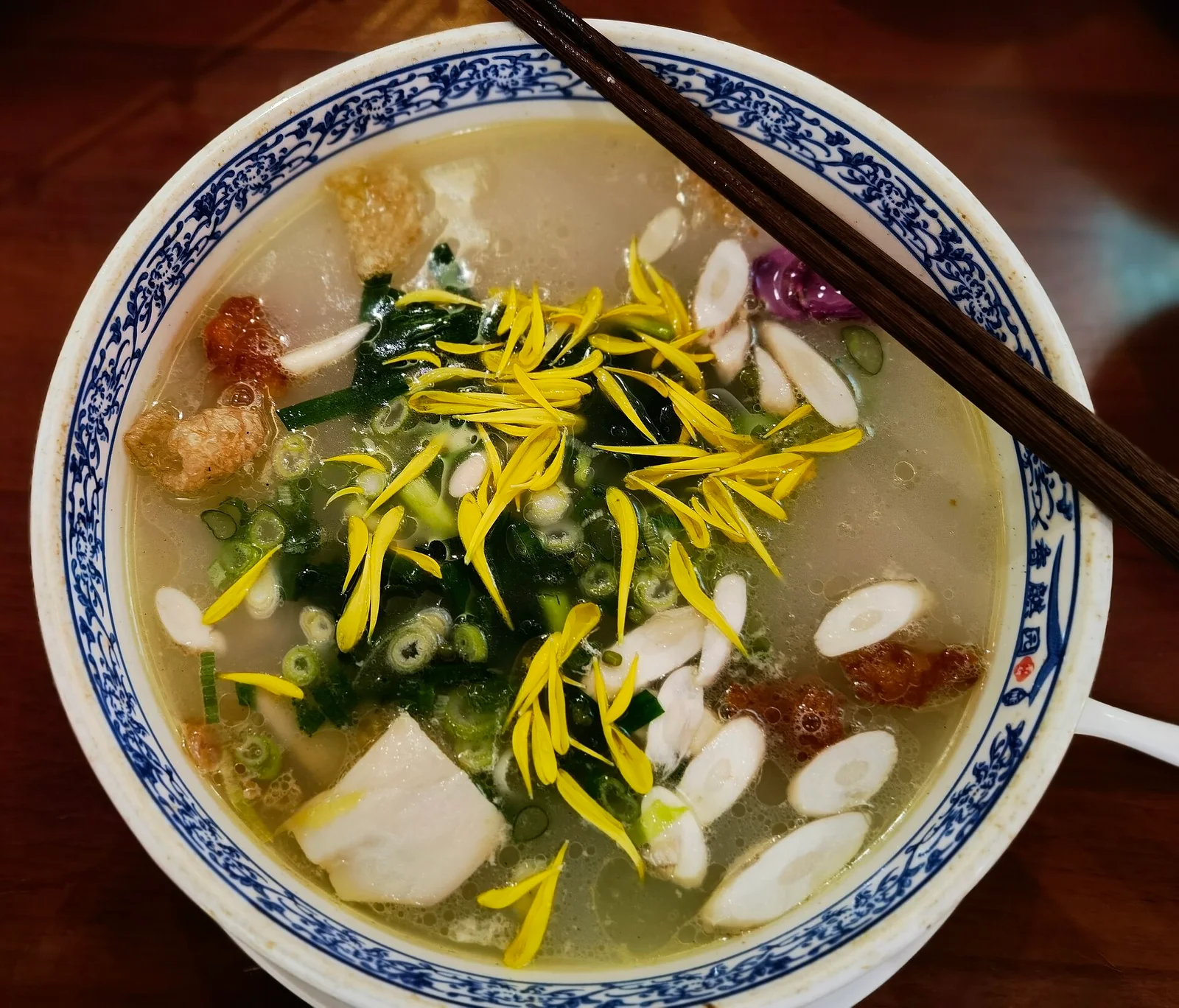
Plan for a sit-down meal
Crossing-the-bridge noodles are better suited to sitting down and taking your time, especially when you first need to understand the small dishes. They usually form a meal set. Ask whether broth, accompaniments and noodles are all included, rather than assuming that a large display outside is the smallest portion. The time needed depends on service and how busy the restaurant is; old menus and photographs online do not establish today's prices.
Check allergies and dietary restrictions ingredient by ingredient. Eggs, soy products, sesame, peanuts and seasonings containing wheat are all worth asking about. A rice-based staple does not make the whole bowl suitable for a gluten-free diet. Adults should help children with hot broth and raw ingredients. If you prefer not to cook ingredients at the table, ask whether the kitchen can cook them for you so the separate-dish presentation does not become a burden.
Useful official references
Check the relevant official service before making arrangements. These links are references, not a guarantee of current services.