City introduction
Kunming's sights occupy several different settings: the old city has a lake park and streets with continuing commercial life; Dianchi Lake lies to the south, and Dounan to the southeast is known for its flower trade. Rice noodles and Yunnan dishes introduce the province's food, while the museum and Stone Forest open up older history and natural landforms.
A plateau lake city through the seasons
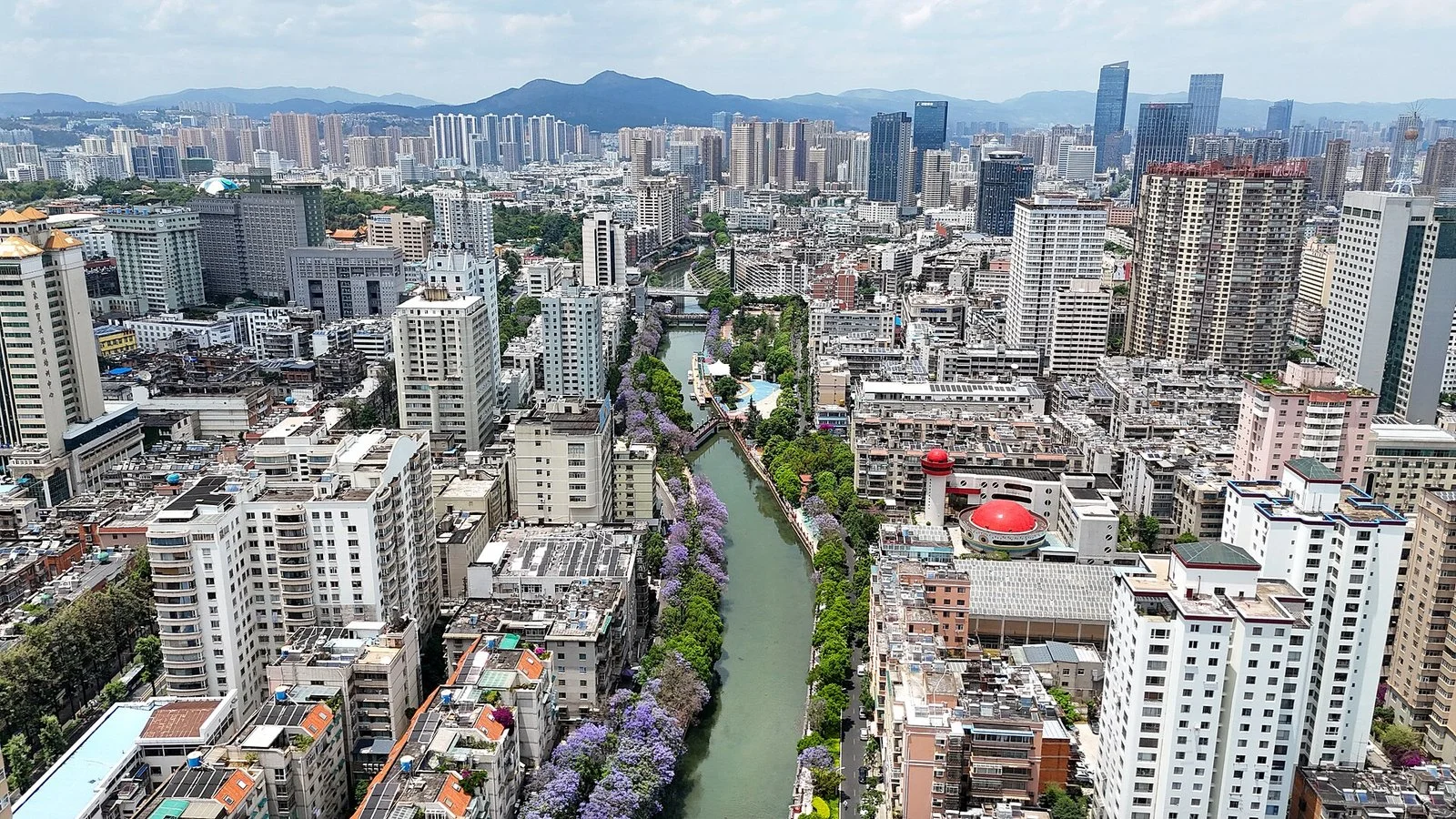
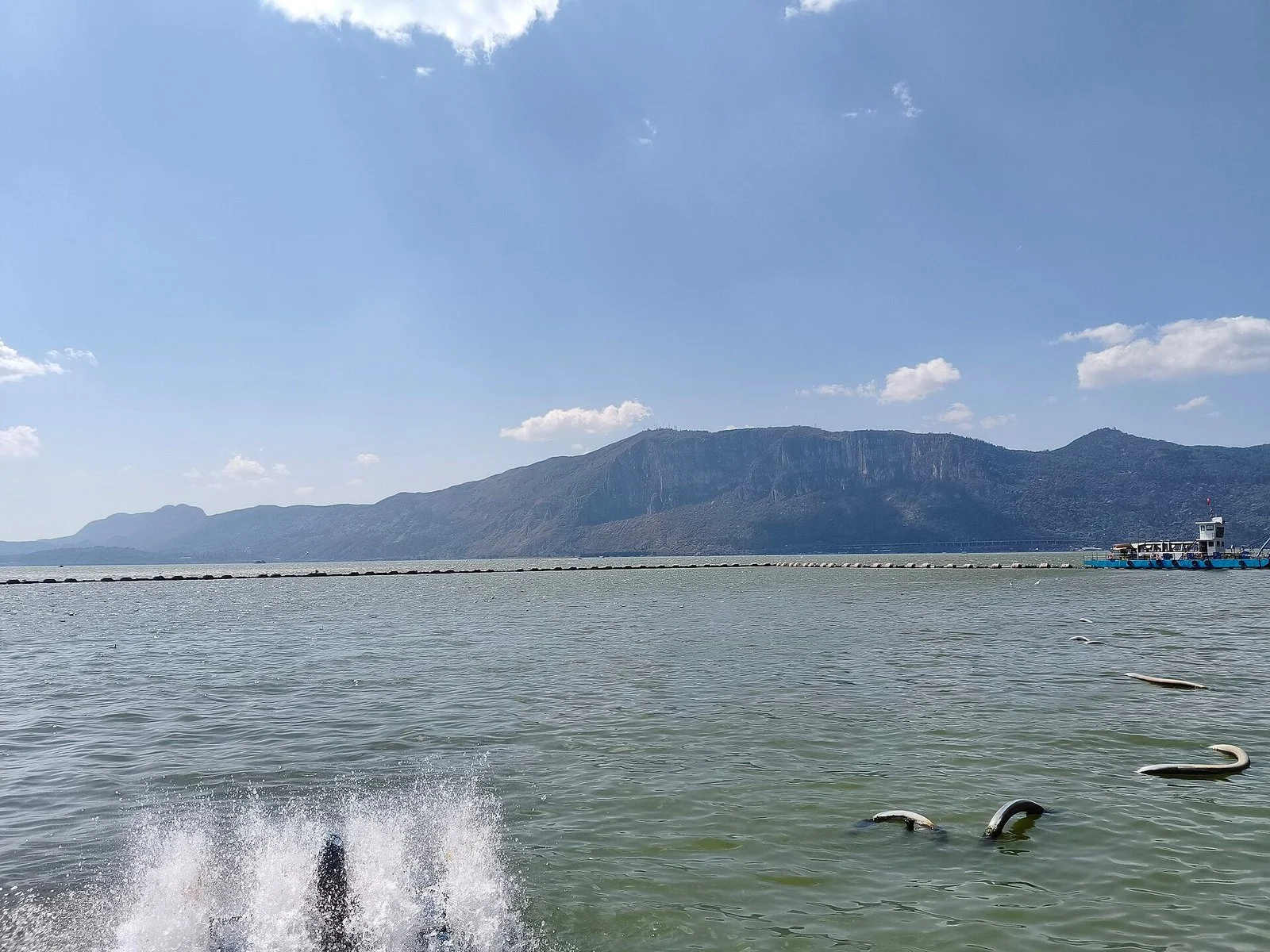
Kunming is the capital of Yunnan Province, in the central part of the Yunnan-Guizhou Plateau. The city adjoins Dianchi Lake, with the Western Hills rising from its western shore. The Panlong River runs through the urban area, linking dense neighbourhoods with waterside spaces. The old city, Dianchi's shores, Chenggong and more distant counties all belong to Kunming, but their landscapes and distances differ greatly. A lakeside walk in the centre, mountain views beside Dianchi and exploring rock formations at the Stone Forest involve different places.
Kunming's nickname, "Spring City", mainly reflects its relatively mild plateau climate. It still has distinct seasonal changes. China Weather's climate information broadly describes May to October as the rainy season and November to April as the dry season, with a larger day-to-night temperature difference in spring. Lakeshores, green spaces and flowers add colour, while weather and season alter the appearance of water and mountains and the experience of being outdoors. "Spring City" does not mean identical temperatures and skies every day.
Green Lake and life in the old city's streets
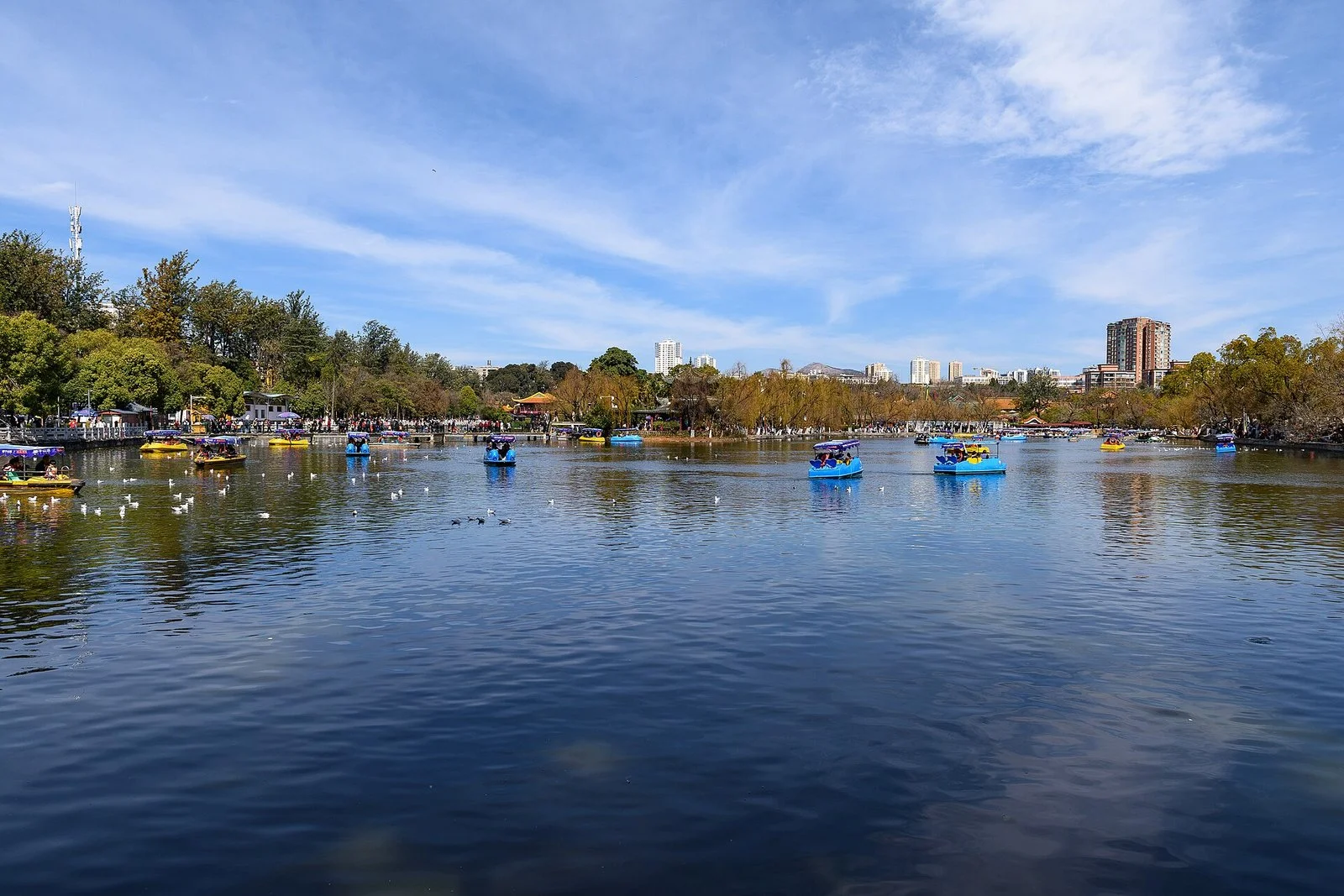
Green Lake is an urban park in the old city, made up of water, causeways, bridges and pavilions. It differs from Dianchi: the shores are closer together, causeways and islands divide the water, and streets lie just outside. The former Yunnan Military Academy and the area around Yunnan University combine park life with buildings from the city's modern history. Visitors interested in street scenes and everyday life can get to know Kunming here as well as through its larger outlying attractions.
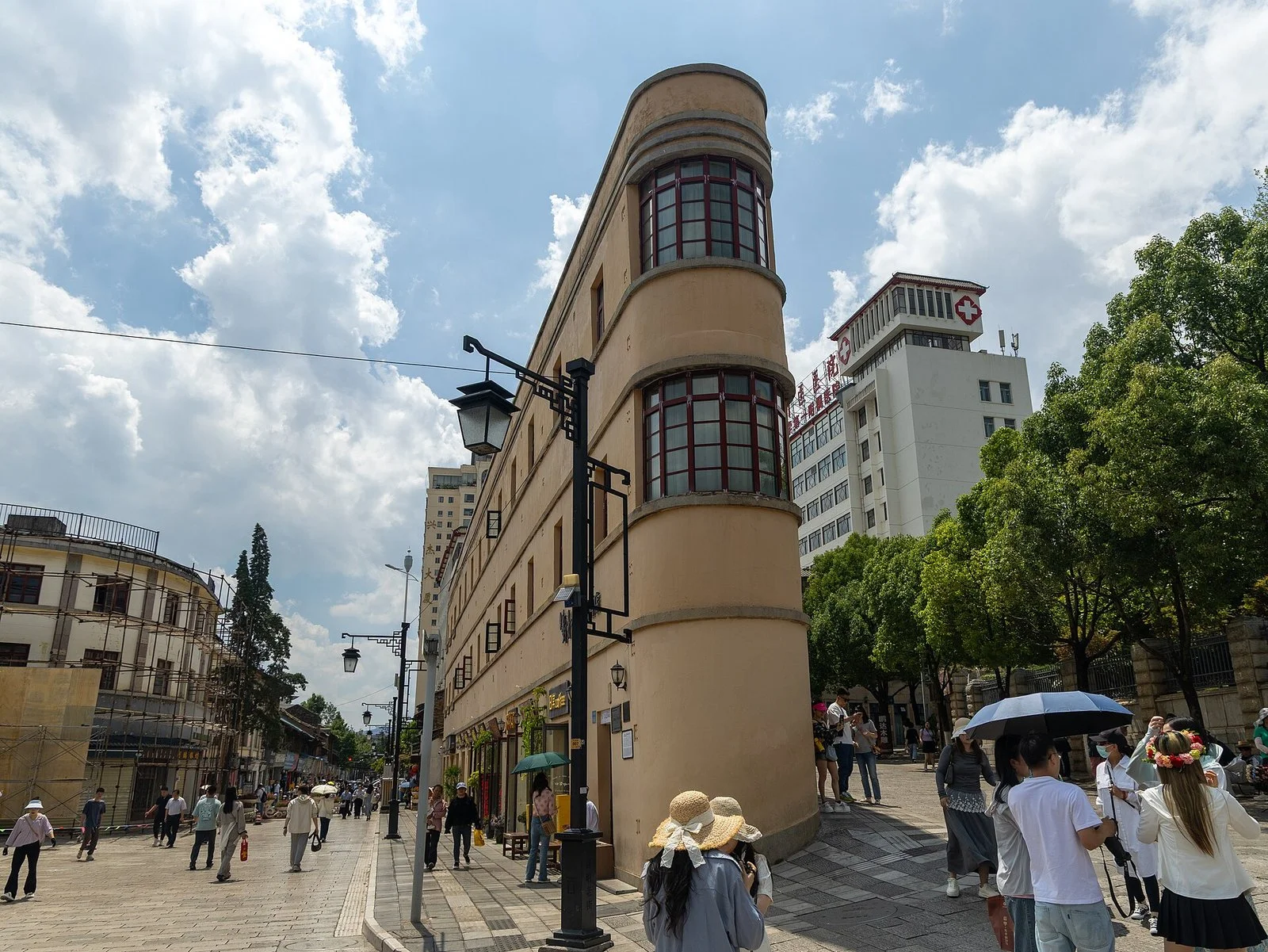
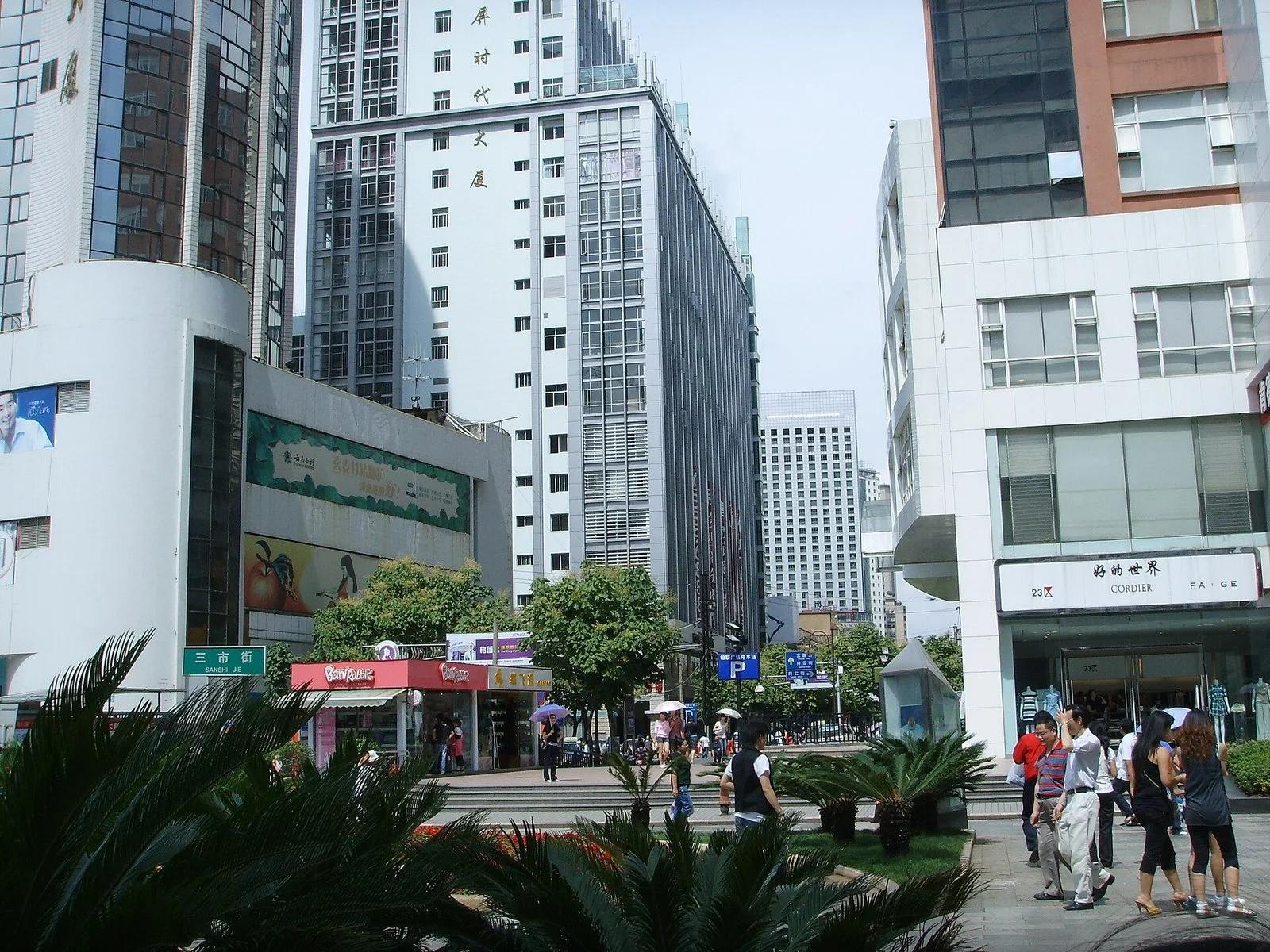
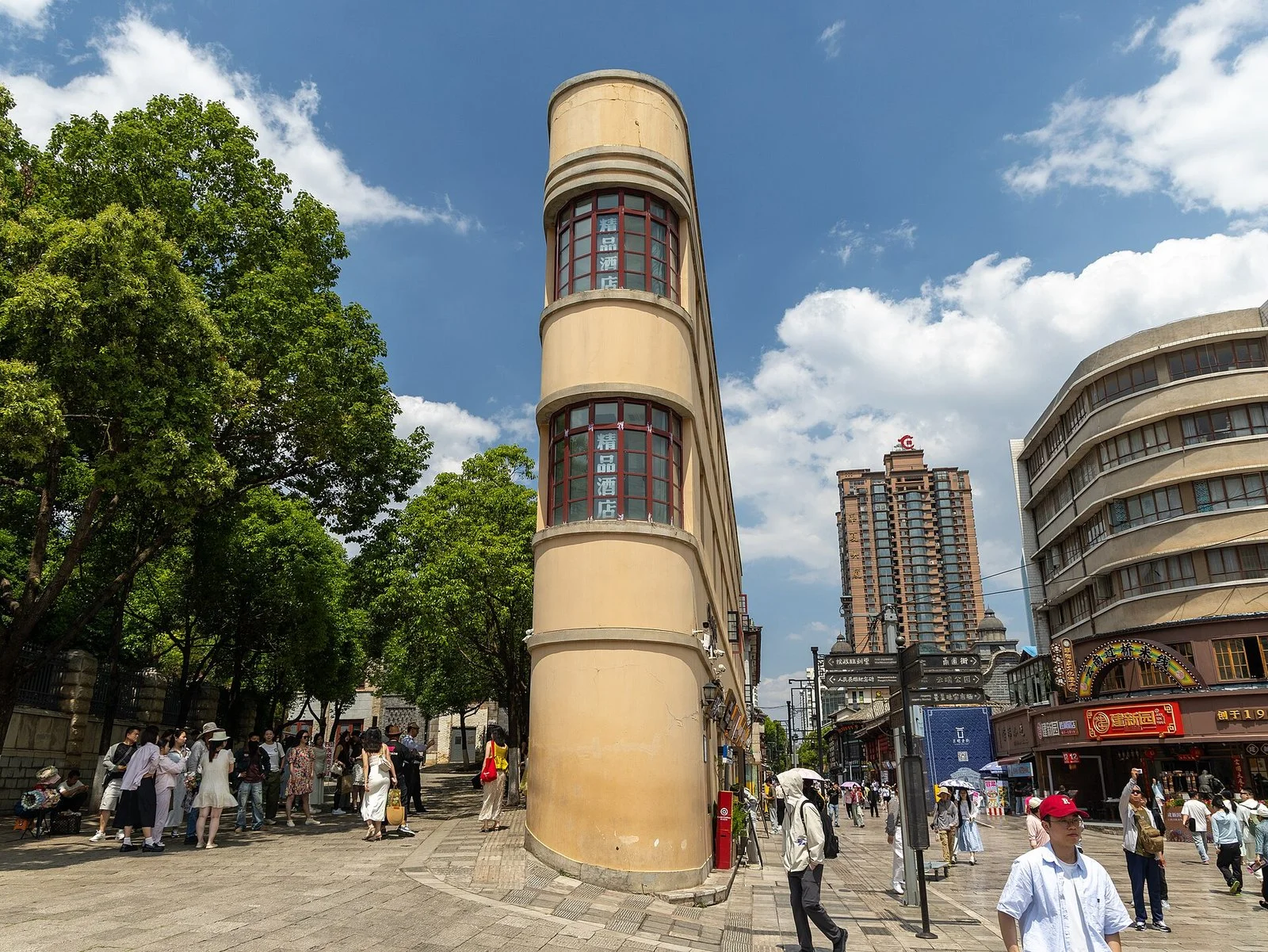
Kunming Old Street brings historic buildings together with today's teahouses, bookshops, restaurants and design shops. Duiyue Building stands where two streets meet, its narrow end and curved facade making it distinctive. Looking down either side reveals the old streets' continuing commercial life. The nearby pedestrian area of Nanping Street offers more modern retail and dining. The two areas are close but serve different interests: Old Street rewards attention to buildings and small businesses, while Nanping focuses more on everyday shopping and larger retail concentrations.
Flower trading and shopping in the city
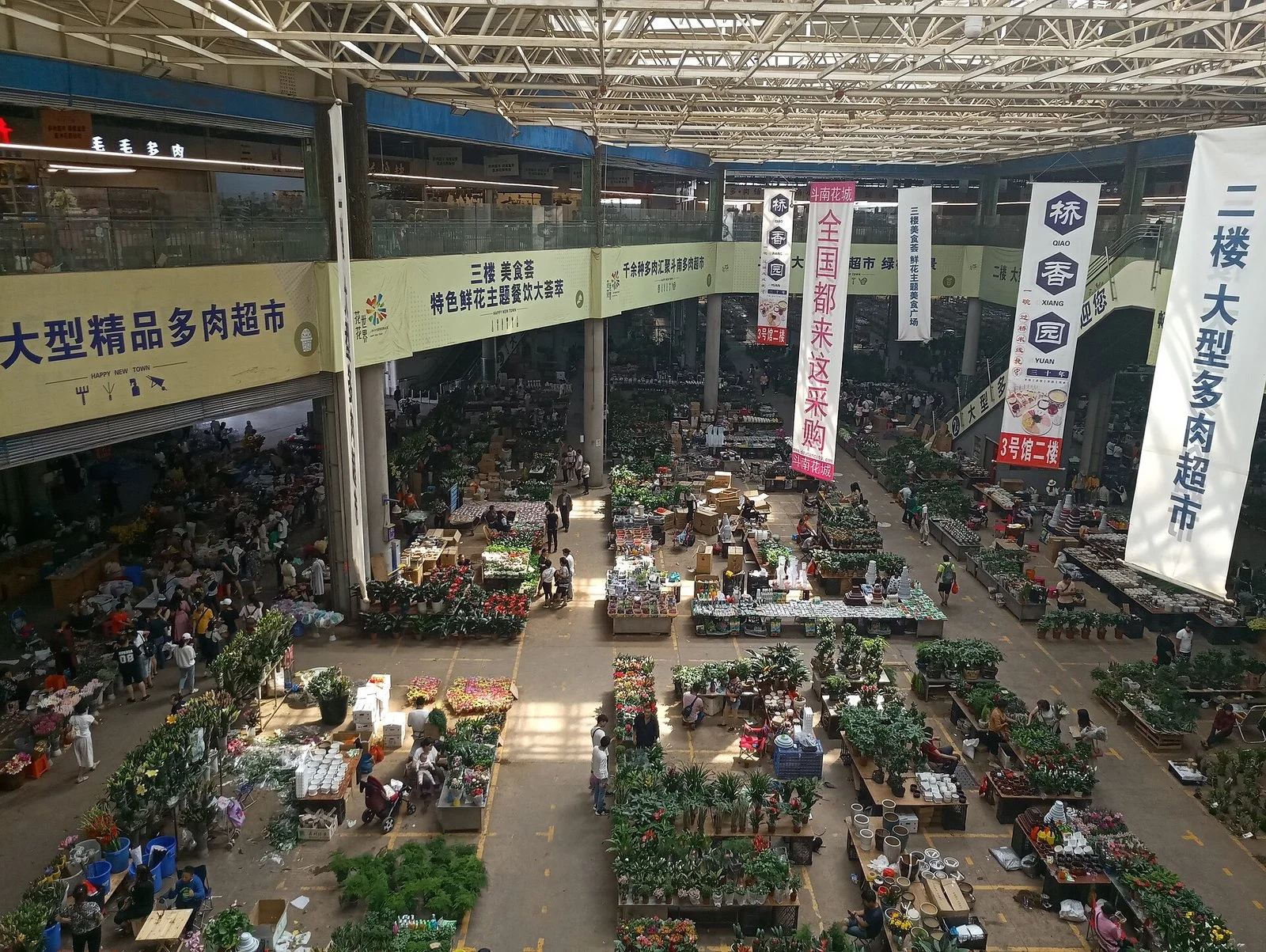
Dounan is in Chenggong and is most clearly associated with the cut-flower trade. Bundled stems, wrapping and loading let visitors see flowers being traded as a commodity. It differs both from Old Street's architecture and small cafes and from Nanping's focus on branded retail. For visitors interested in flowers, varieties and trading scenes, Dounan offers an urban experience closer to a specialist market.
Looking at flowers and buying them involve different choices. A small quantity can be enjoyed locally, while tea, pastries and other packaged products each have their own storage and carrying requirements. There is no single answer to what makes a Kunming gift. Tea and design shops in Old Street, Nanping's retailers and Dounan's flower trade show different shopping settings in the provincial capital. The right choice depends on whether you want to see a market, browse the streets or find a particular product.
Rice noodles, steam-pot chicken and rose pastries
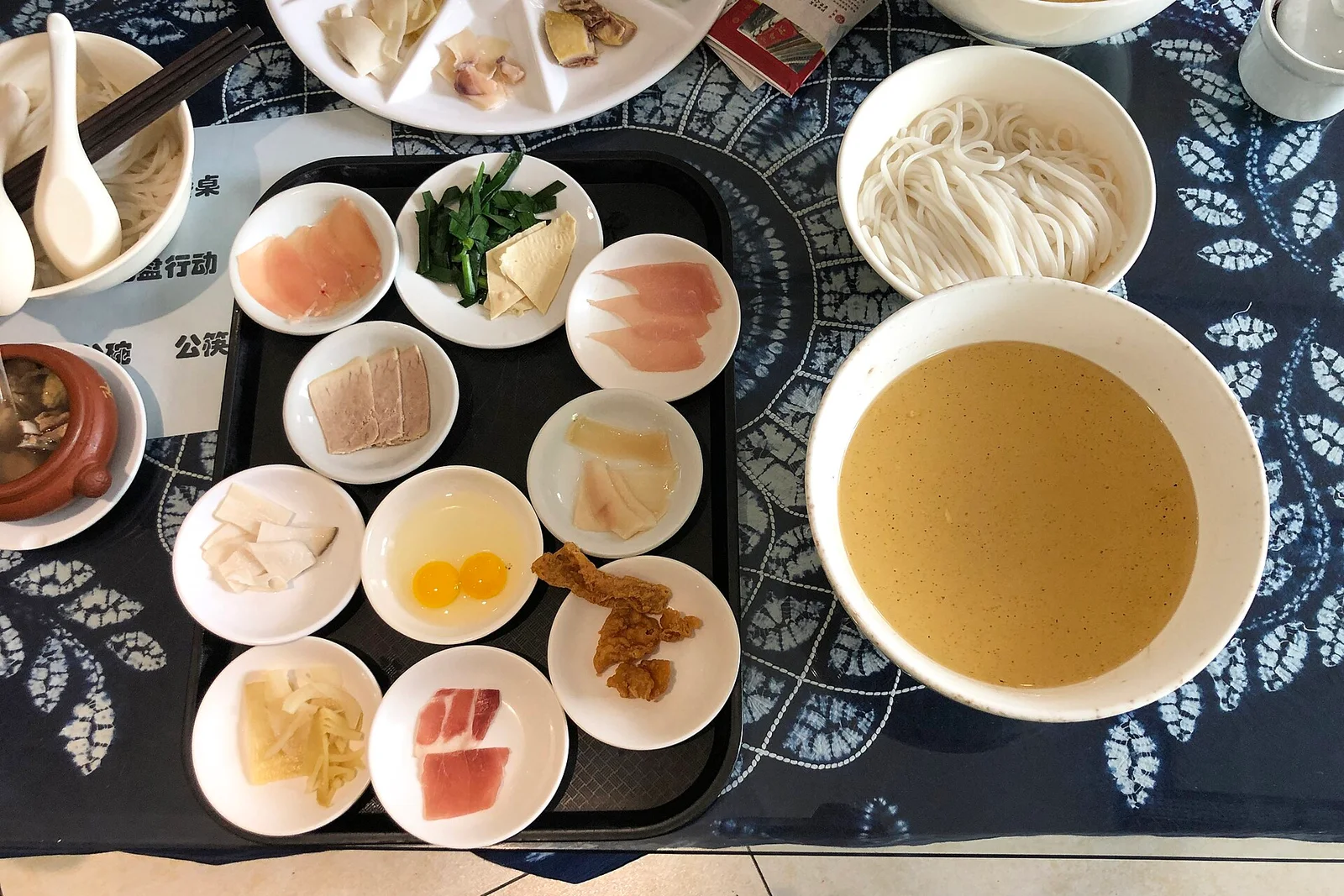
Rice noodles offer a starting point for understanding Kunming's food. Crossing-the-bridge noodles usually arrive with stock, noodles and ingredients separately, combining sliced meat, vegetables and other items with hot broth. They originated in southern Yunnan and are widely served in Kunming; they should not be described as unique to the city or invented here. Broth, accompaniments, noodle thickness and eating method reveal more than the name alone. Meat stock and meat ingredients also mean the dish cannot be assumed to suit vegetarians.
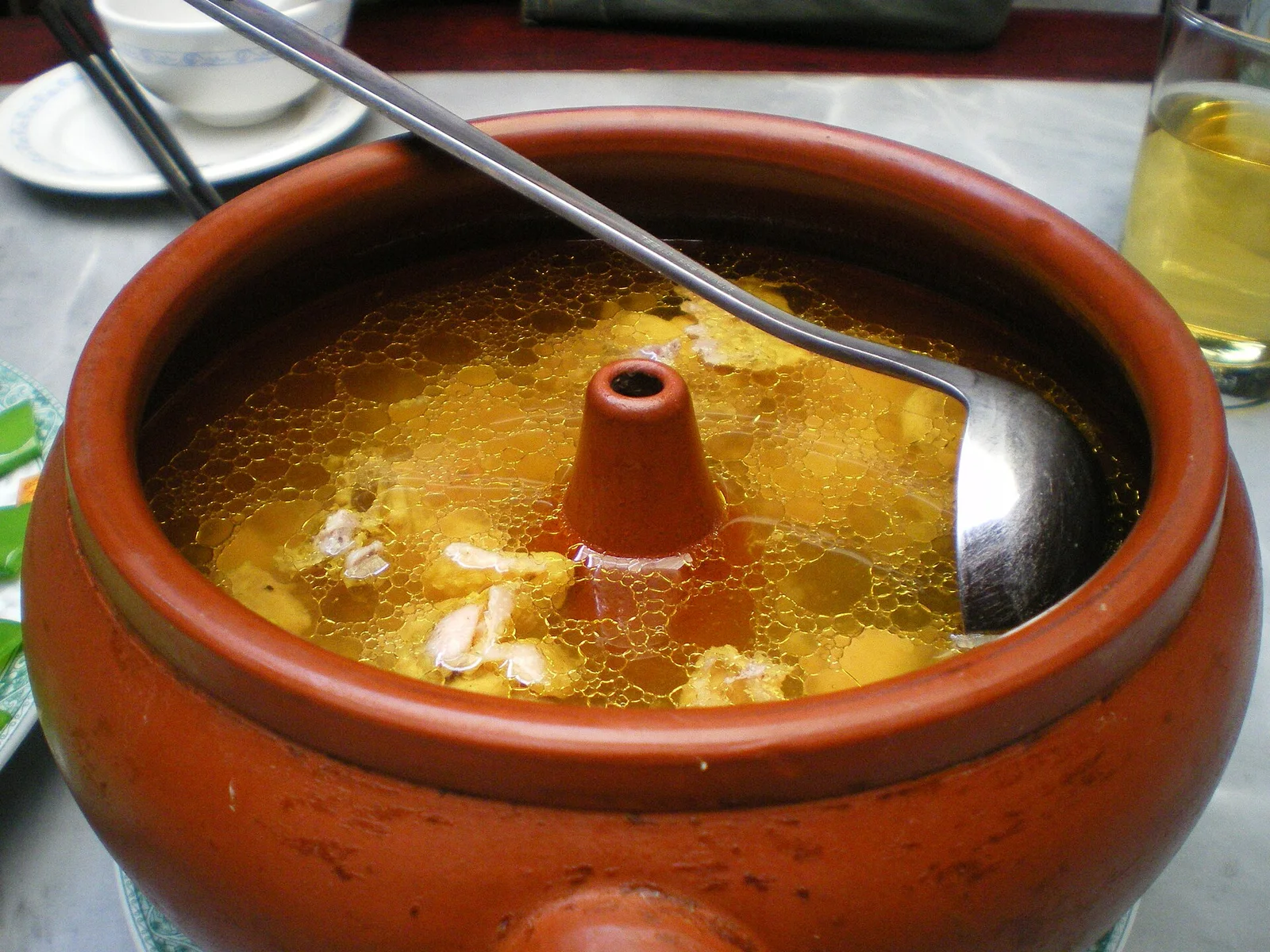
Steam-pot chicken shows another Yunnan cooking method. A central chimney in a ceramic pot brings in steam, which condenses into broth as the chicken slowly cooks. Jianshui purple-pottery vessels are closely connected with the dish, which is also common at Yunnan meals in Kunming. Compared with a bowl of noodles that can be eaten alone, steam-pot chicken lends itself more to sharing with other dishes, with an emphasis on the chicken and broth.
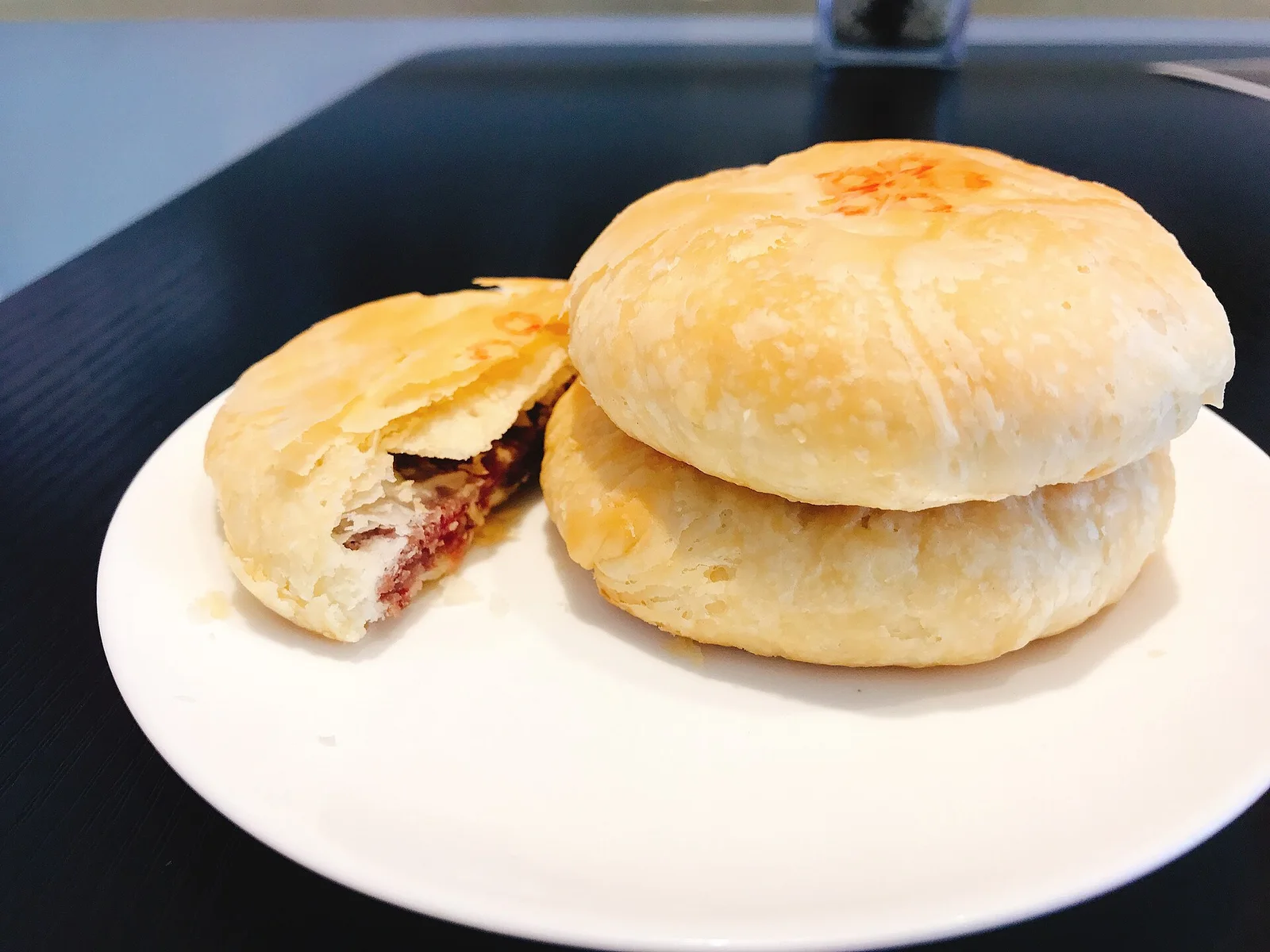
Flower cakes enclose rose filling in flaky pastry. The whole cake shows its layered or crumbly exterior, while a cut reveals petals in the filling. Freshly baked and packaged versions differ in texture and storage needs. Flowers appear as ornamental products at Dounan and as edible rose filling in pastries, but this does not make ornamental flowers from the market suitable for eating. These three foods introduce a rice-based staple, steam cooking and baking with flower filling, helping first-time visitors understand different aspects of Kunming's food.
From ancient Dian bronzes to the Stone Forest
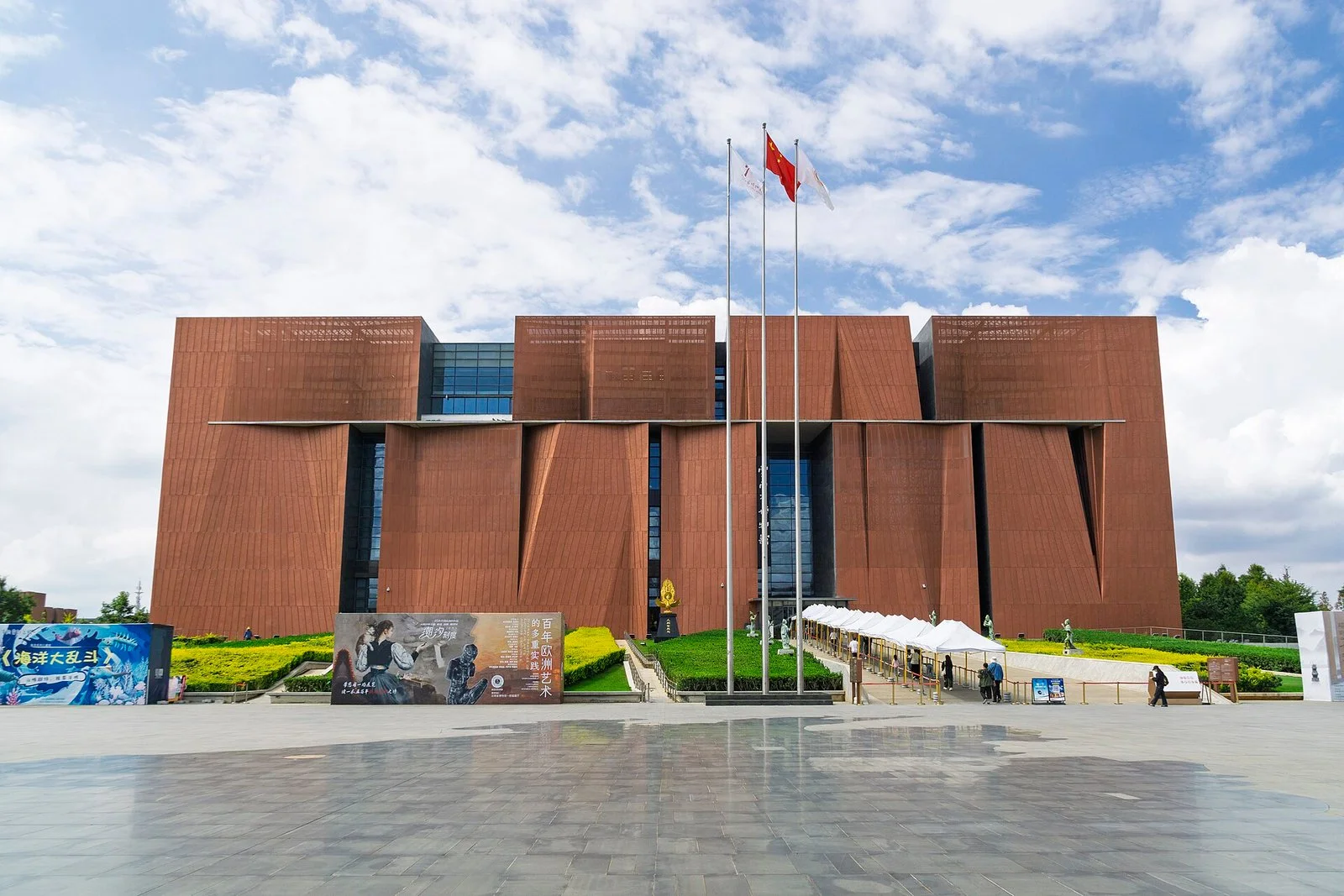
The Yunnan Provincial Museum in Guandu extends the view from Kunming to the wider province. Ancient Dian bronzes offer clues to societies around Dianchi Lake, while Buddhist objects such as the Garuda from the Dali Kingdom tell another part of the story. For a first-time visitor to Yunnan, the museum brings different regions and periods into a context that allows comparison, showing that the city in front of you is only one part of the province.
The Stone Forest is in Shilin Yi Autonomous County in the eastern part of Kunming's administrative area, some distance from the old city's parks and streets. Geological processes over a long period have shaped its limestone into groups of pillars, peaks and narrow gaps, forming part of the South China Karst World Heritage property. Here, attention turns to rock shapes, changes in the ground and different viewpoints. The provincial museum's objects, Green Lake's urban leisure and the Stone Forest's natural landforms offer distinct experiences and need not be approached with the same expectations.