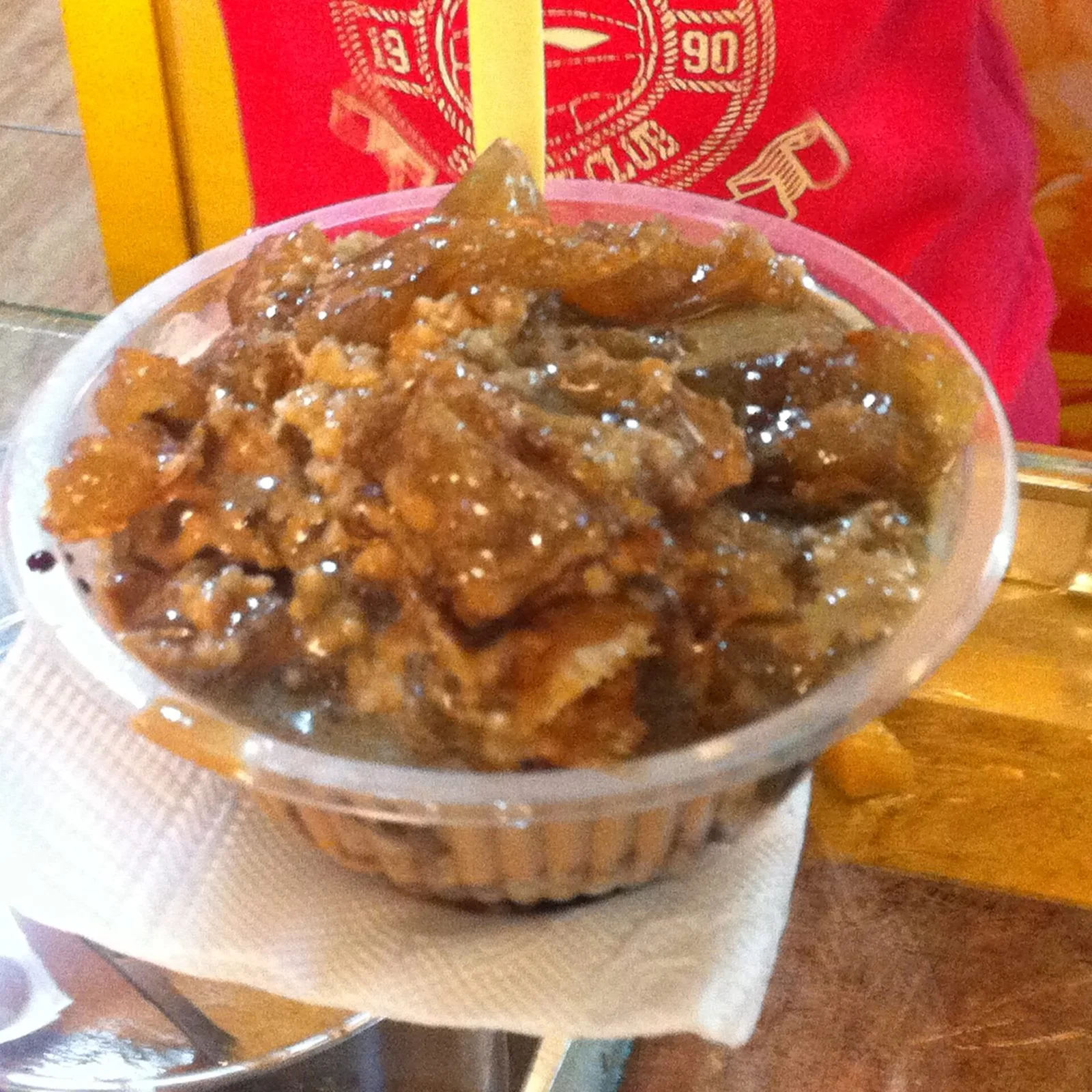
From sweet potato starch to a crisp crust
Dalian menzi is made mainly from sweet potato starch. Starch and water are heated into a gel, cooled into a block, then chopped or divided with a spatula and pan-fried. Although its Chinese name includes a character associated with covered cooking, the key process visitors see at snack stalls is frying: the starch pieces heat slowly against the pan, forming a golden crust while staying soft inside. They have neither the long, chewy bite of noodles nor the crumbly texture of fried potatoes; the appeal is the soft, sticky gel and its browned surface.
Both Dalian and Yantai have menzi, while foods with the same name elsewhere in northern China can differ in recipe and form. Asking specifically for Dalian menzi or fried menzi is clearer than using the name alone. Different stories circulate about how it first reached Dalian. For a first taste, recognizing the sweet potato starch, flat pan and garlic-sesame sauce is more useful than treating an origin story as settled fact.
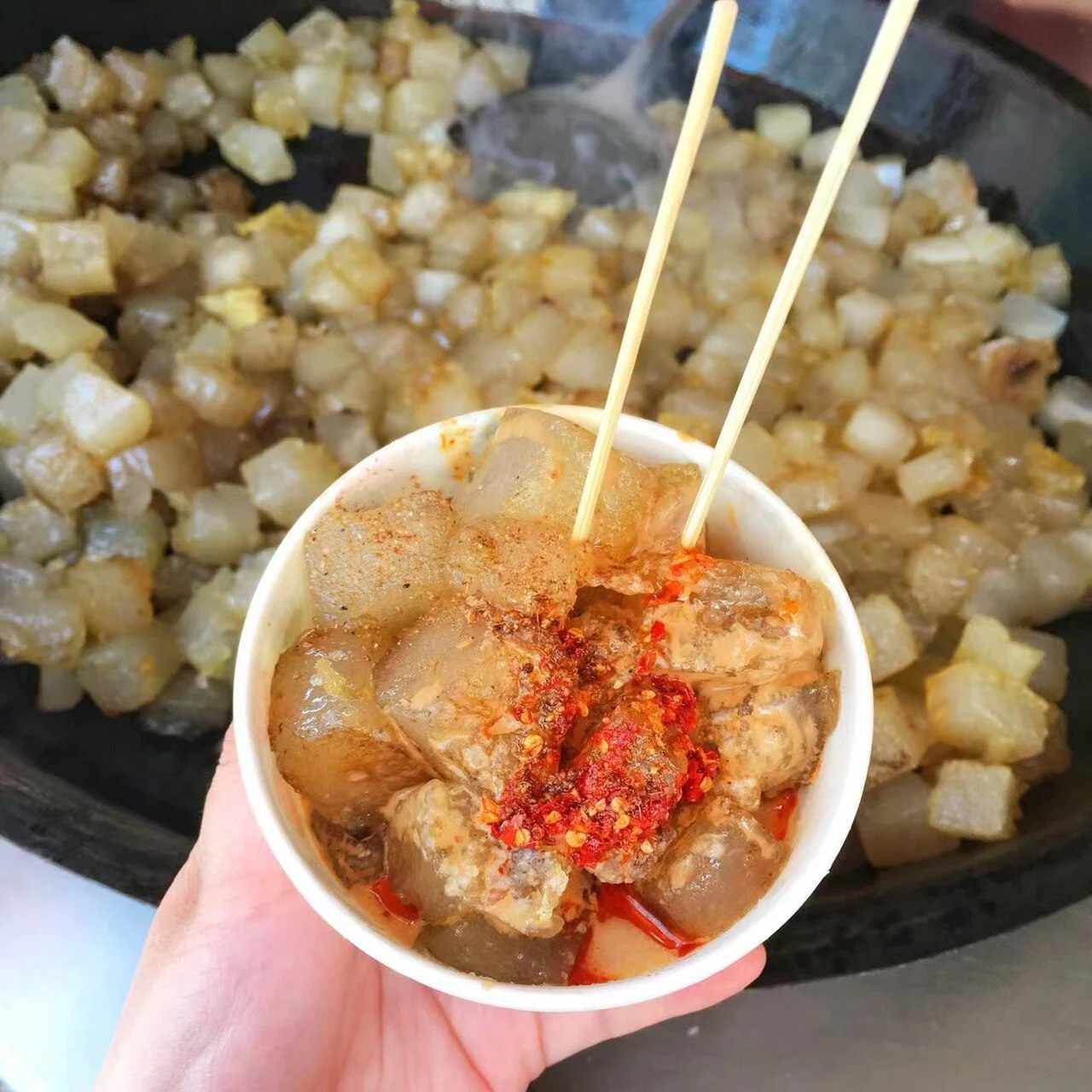
Sesame paste, garlic sauce and crisp edges
Fried menzi is usually served in a small bowl with thinned sesame paste and garlic sauce. The sesame paste coats the starch pieces and the garlic adds a pungent flavor. Some versions also use fish sauce or a seasoning commonly called shrimp oil, while some stalls substitute soy sauce. The starch itself is mild, so seasoning largely determines the intensity. If you cannot eat raw garlic or want less sauce or chili, explain before the toppings are added.
Try a piece with a crisp edge first, then mix in the sauce at the bottom of the bowl. Freshly cooked pieces remain hot inside, so test the temperature before eating them with the sauce. The crust softens as it sits in the dressing. To compare the crisp and soft textures, eat a few pieces while hot and then mix the rest more slowly. It works as a snack while shopping; there is no need to order a whole table of dishes to try it.
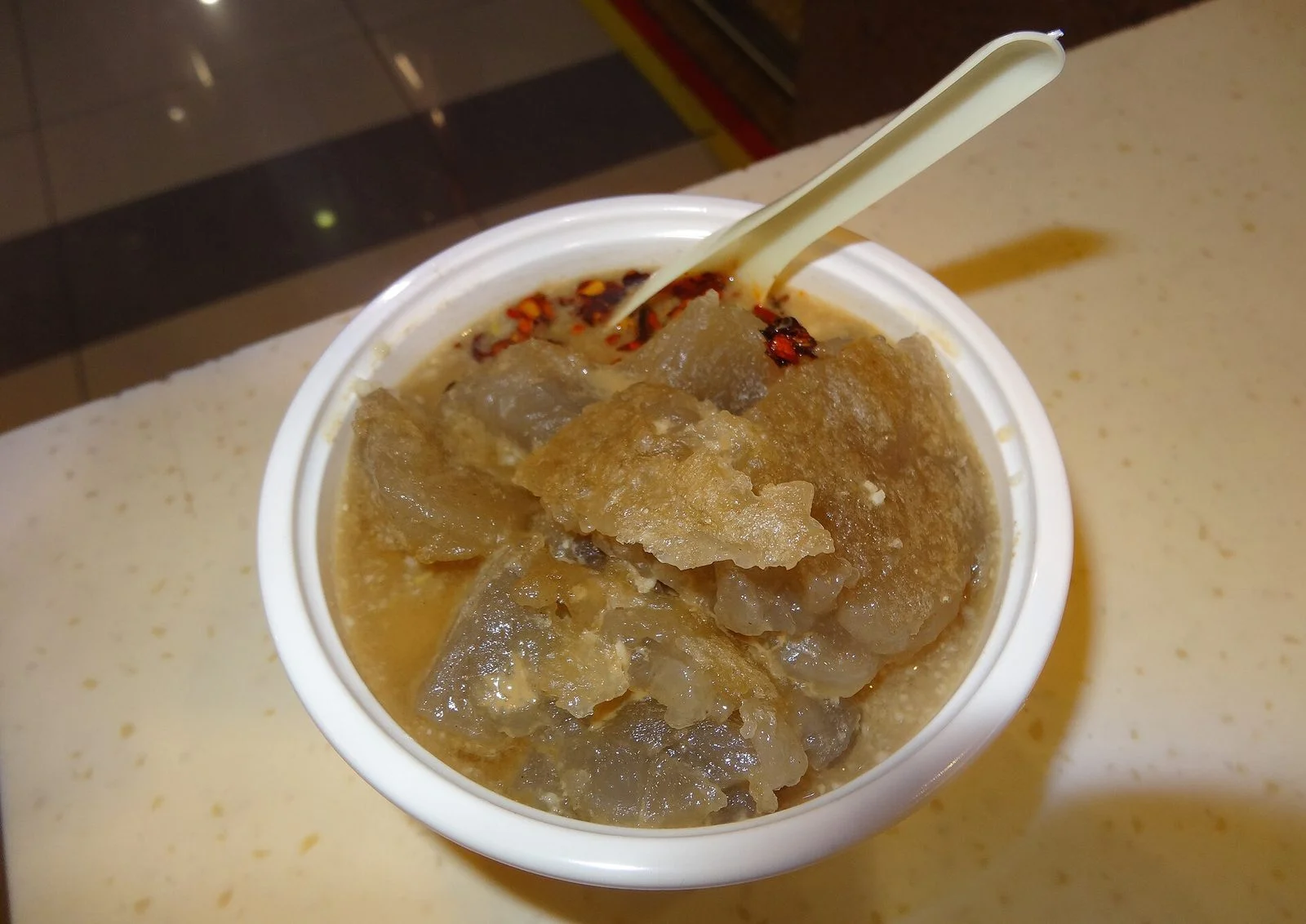
Plain menzi and seafood menzi
Plain menzi centers on the starch and seasonings; sanxian menzi adds seafood, making a more substantial dish. Serving sizes, ingredients and ways of eating may differ. If you see sanxian, ask what it contains rather than assuming it always means three fixed kinds of seafood. Start with the plain version to understand the basic texture, or consider the seafood variation when sharing with a larger group that also wants seafood.
Sweet potato starch does not make the whole bowl automatically vegetarian or free of allergens. Sesame paste contains sesame; fish sauce and shrimp oil may contain fish or shrimp, and seafood versions involve other marine ingredients. Strict vegetarians and anyone allergic to fish, crustaceans or sesame should ask about both dressings and additions. Confirm portion sizes, prices and availability when buying.
Useful official references
Check the relevant official service before making arrangements. These links are references, not a guarantee of current services.