Where the square meets the bay
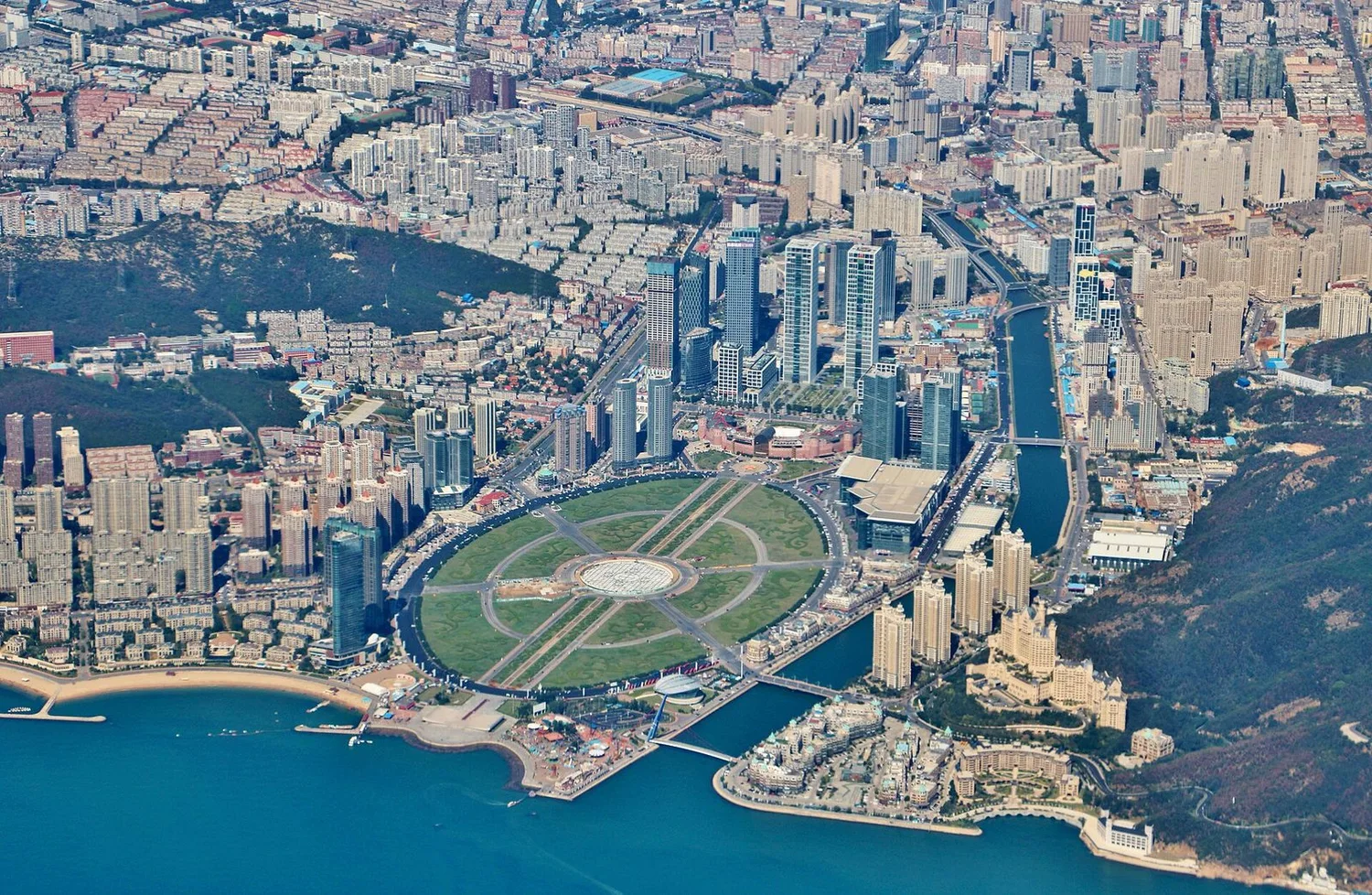
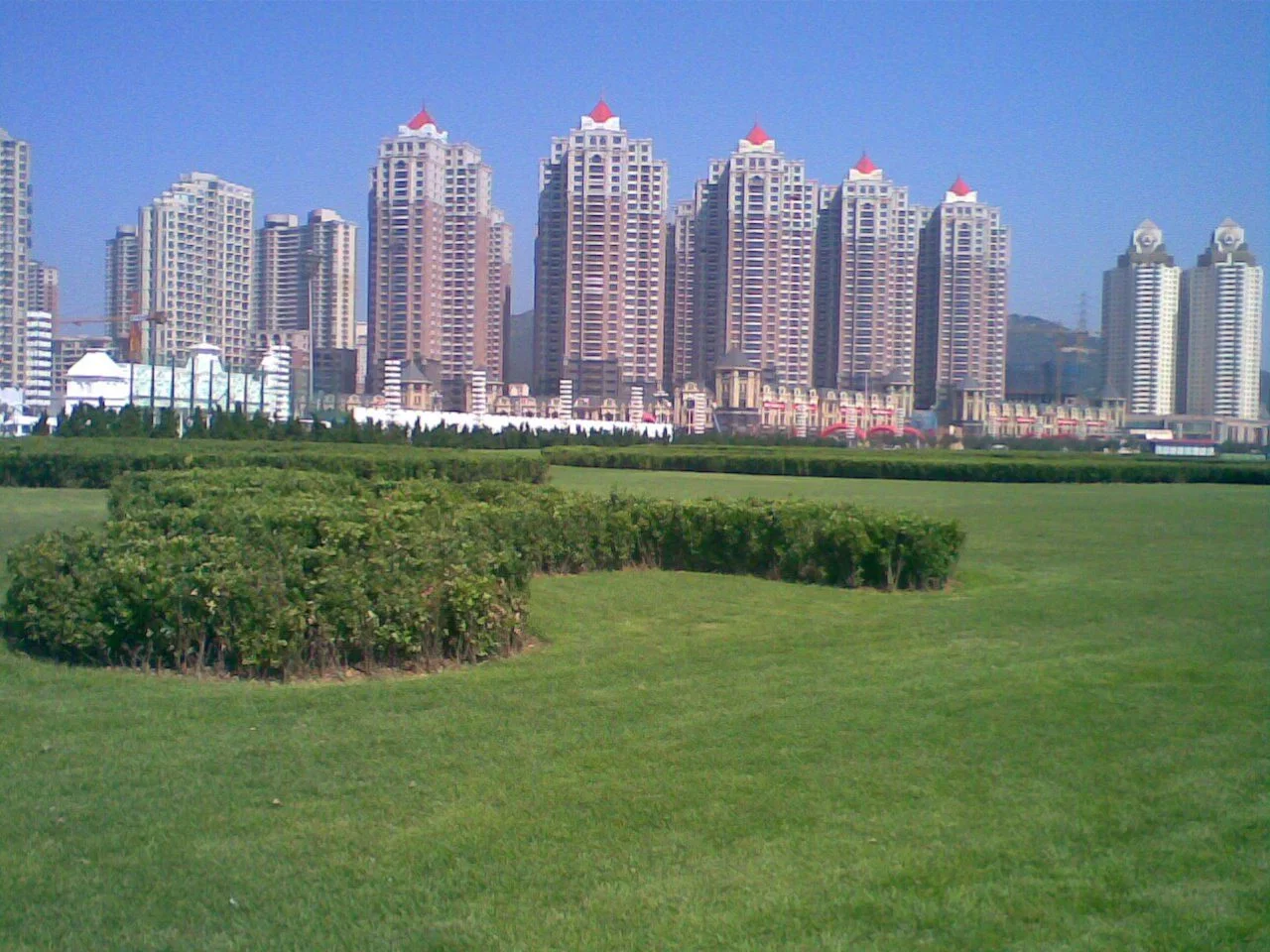
Xinghai Square lies in southern Shahekou District, with Xinghai Bay to its south. Its appeal is the connection between the square and the coast: open lawns, circular roads and city buildings gradually give way to the sculpture and walking spaces beside the sea, shifting the view from city streets to the bay. It suits visitors who want a leisurely walk and a look at the skyline without heading out of the urban area.
The square was completed in 1997, while the centenary city sculpture at its southern end was created in 1999 to mark 100 years since Dalian's founding as a city. They commemorate different dates and themes. Both the city and the square have continued to change: the central Nine-Dragon ornamental column visible in older online photographs was removed in 2016 and should not be treated as a landmark to look for today.
The square is spacious. Aerial photographs show its circular layout and north-south axis clearly, but exploring at ground level requires walking. If seeing the sea is your main aim, there is no need to follow every road to photograph the entire square. Focus on the southern waterfront, then decide whether to continue along either side according to your energy.
The centenary sculpture and the sea
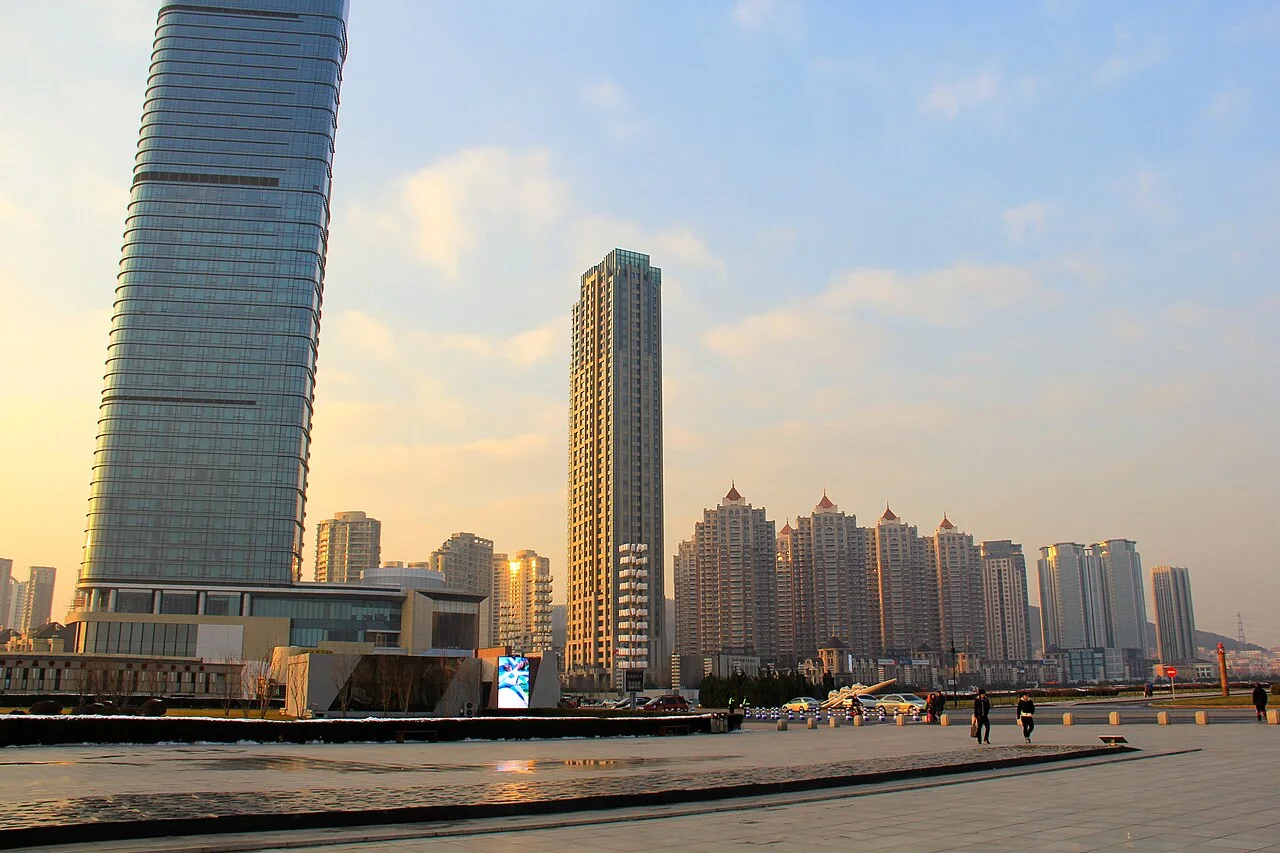
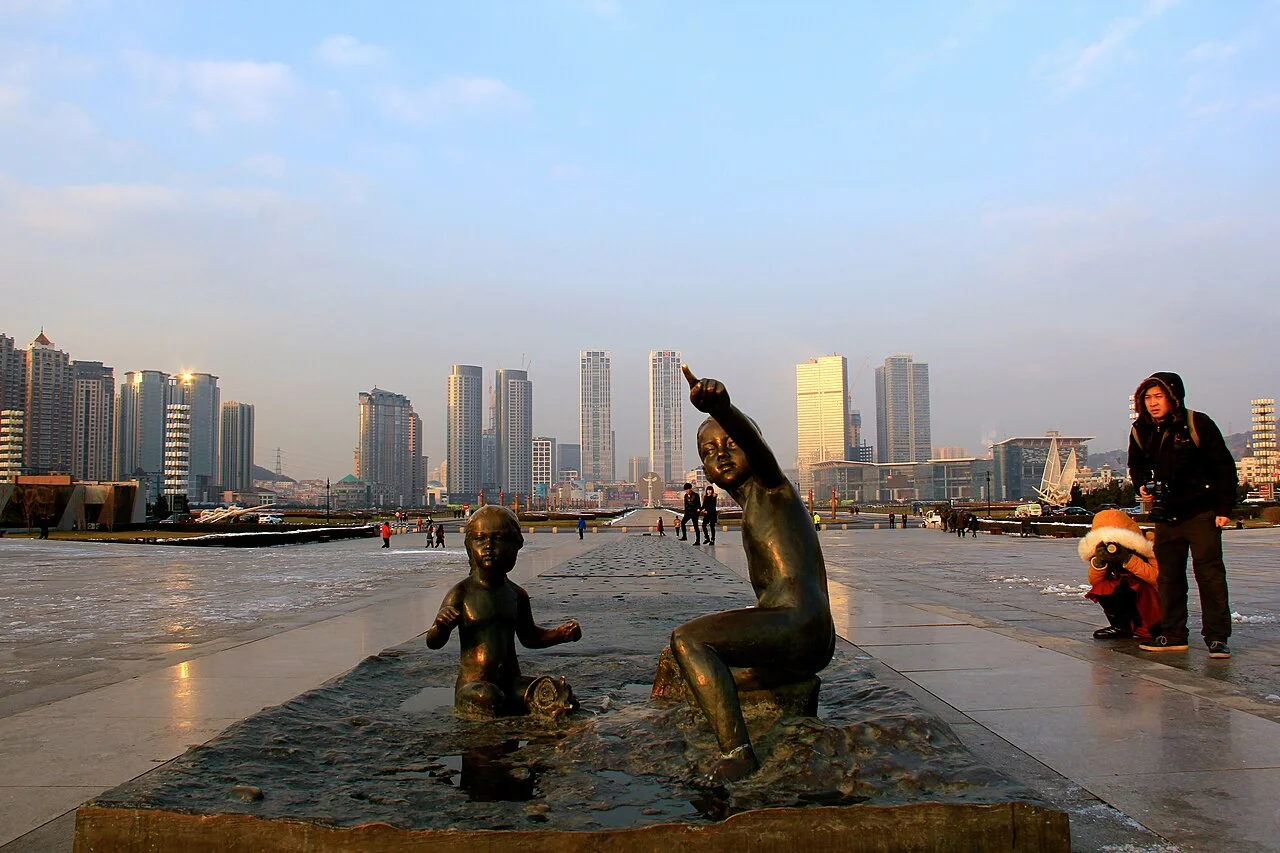
The main form of the centenary city sculpture resembles a book spread open beside the coast. Its curved platform and footprint reliefs together create a commemorative space. The footprints were taken from real people, bringing city history into something visitors can examine close up. Compared with the distant towers, the low, wide sculpture is worth viewing from the side before looking back at how it relates to the shoreline.
From the waterfront, Xinghai Bay Bridge comes into view. In daylight, you can distinguish the bridge, coast and buildings around the bay; after dark, lighting emphasizes the bridge's lines, while details of the sea and distant hills become less visible. Choose daylight to understand the geography or stay after dark to photograph the lights; each offers a different experience.
The waterfront walking area is not a bathing beach where you can enter the water anywhere. Stay within railings and normal pedestrian areas, and do not climb over barriers to get closer to rough water. Children need supervision near the coast, and anyone photographing the bridge should first check the edge underfoot and passing pedestrians.

Planning your time here
For walking, looking at the sculpture and enjoying the sea view, allow around one to two hours as a suggestion, with longer for photographs, rests or more extensive walking. The square is large, so groups with different walking abilities may find it easier to agree on a meeting point before splitting up.
There is little shelter in the open areas. Use sun protection for long walks on clear days, and bring wind-resistant clothing for the waterfront in cooler seasons or after dark. Surfaces, steps and coastal edges may become slippery after rain, so comfortable walking shoes are useful. If fountains, festivals or a particular lighting show are your main reason to visit, check that day's arrangements before deciding how long to stay.
Xinghai Park and Xinghai Square are different places despite their similar names, so check the full Chinese name when selecting a map destination. The focus here is the square and bay, making it a choice for open spaces, distant architecture and night views. For a closer look at rock layers and coastal erosion, compare Jinshitan's geopark.
Useful official references
Check the relevant official service before making arrangements. These links are references, not a guarantee of current services.