Shaving gives the noodles their shape
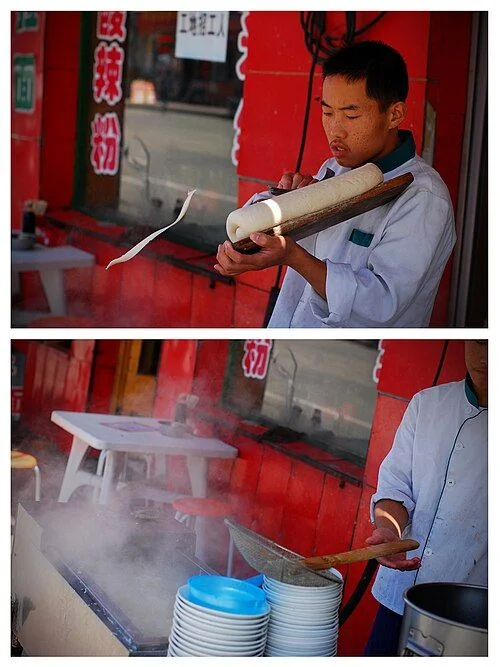
Datong knife-cut noodles are shaved from kneaded dough with a special knife directly into boiling water. Unlike noodles cut into evenly narrow strips, each piece is usually thicker in the middle and thinner at the edges, with a roughly willow-leaf outline. The edges hold broth readily while the center retains a chewy bite. This explains their character better than expecting every noodle to have the same length and shape.
Datong Evening News distinguishes two cutting methods using a traditional flat blade and a hooked blade. If preparation is visible in a restaurant, watch the continuous movement between dough, knife and pot, then look at the changing thickness of the pieces in your bowl. Fresh cutting and boiling are worth watching, but an old restaurant photograph records preparation at that time and does not establish a business's current operating status.
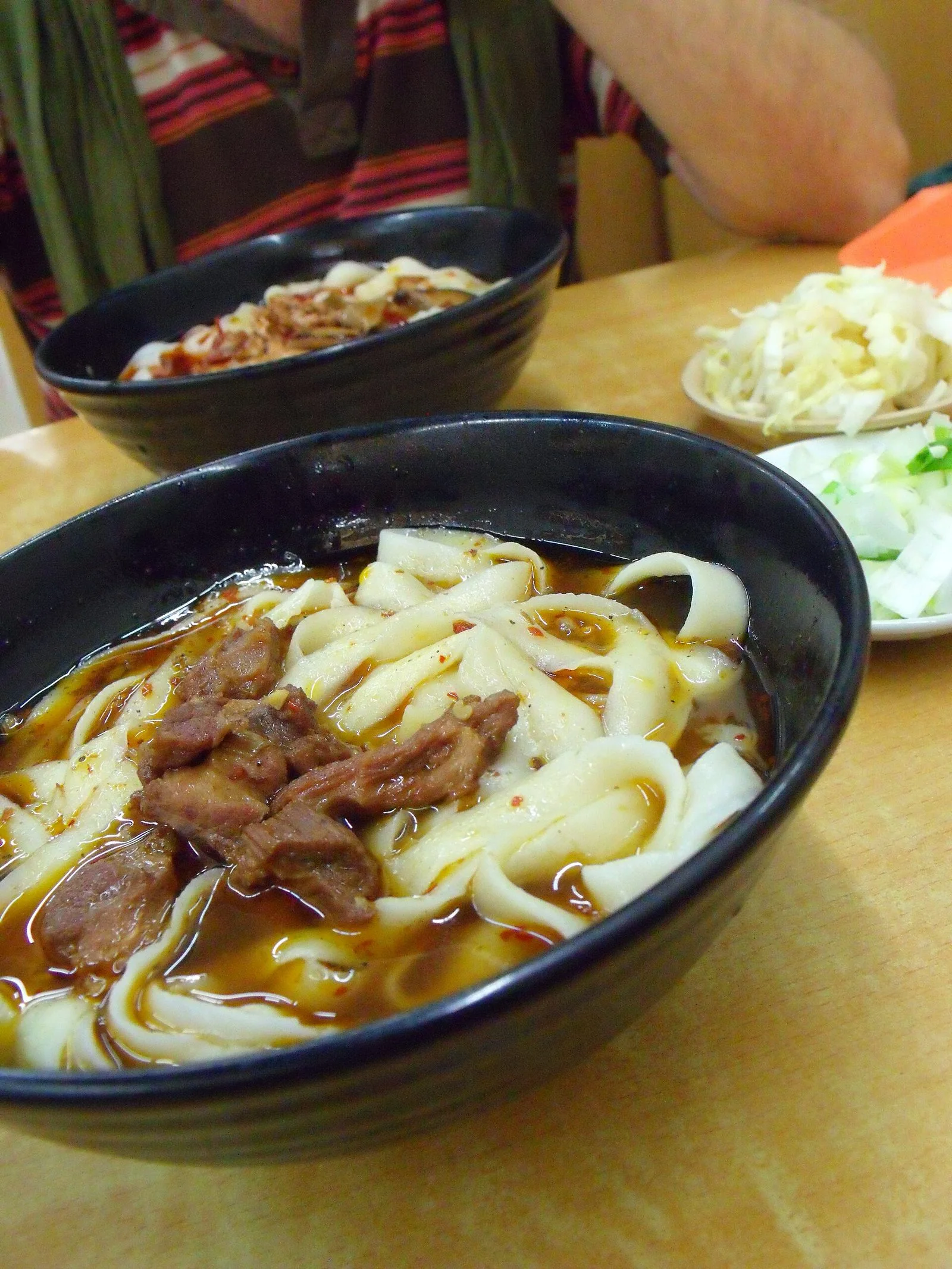
Pork topping and side dishes
A characteristic local accompaniment is pork saozi, a topping of pork cooked with spices such as Sichuan pepper and star anise and spooned over the noodles. Saozi refers to the topping, not the noodles. Changing the topping changes the savory flavor and consistency of the sauce, even when the noodle shape stays the same. To understand a common Datong way of eating them, start by recognizing the pork topping and then choose from the restaurant's menu, without treating one restaurant's flavor as representative of the whole city.
Braised eggs, dried tofu, meatballs and pickles often accompany the noodles or are ordered as side dishes. They make a fuller meal and affect portion size. On a first order, check whether noodle portions, toppings and extras are priced separately and begin with a few additions. An accompaniment shown in a photograph is not necessarily included by every restaurant.
Seasoning to suit your taste
Vinegar, chili and cilantro can be added to taste. If you are unfamiliar with the acidity of Shanxi vinegar, try the broth first and add a little at a time so it does not overwhelm the meat broth and noodles. If you avoid chili or dislike cilantro, explaining this when ordering is easier than removing them afterward. Seasonings and chili oils vary between restaurants.
Knife-cut noodles are mainly made from wheat flour and are unsuitable for people who need to avoid wheat. Pork is a common topping, and noodles without visible meat pieces should not be assumed vegetarian. Ask separately about the broth, braising liquids for eggs and tofu, and chili oil. Travelers requiring halal or strictly vegetarian food should verify the specific restaurant and cooking conditions rather than judging by the noodle name alone.
An everyday staple meal
Compared with banquet dishes intended for sharing, knife-cut noodles suit someone wanting a meal in one hot bowl; added dishes can adjust how filling it is. Paying attention to thickness, broth and topping offers more useful guidance than choosing solely by restaurant name or rankings. This page introduces the food, does not rank restaurants and does not use old sources to quote current average meal prices.
If you also want to try youmian kaolaolao, think of them as two different flour-based dishes: knife-cut noodles are boiled wheat pieces, while kaolaolao are small rolls made from naked oat flour and steamed. The differences extend beyond shape to ingredients, eating method and sauces. Start by deciding whether you want hot noodle soup or a steamer of a whole-grain staple with dipping sauce.
Useful official references
Check the relevant official service before making arrangements. These links are references, not a guarantee of current services.