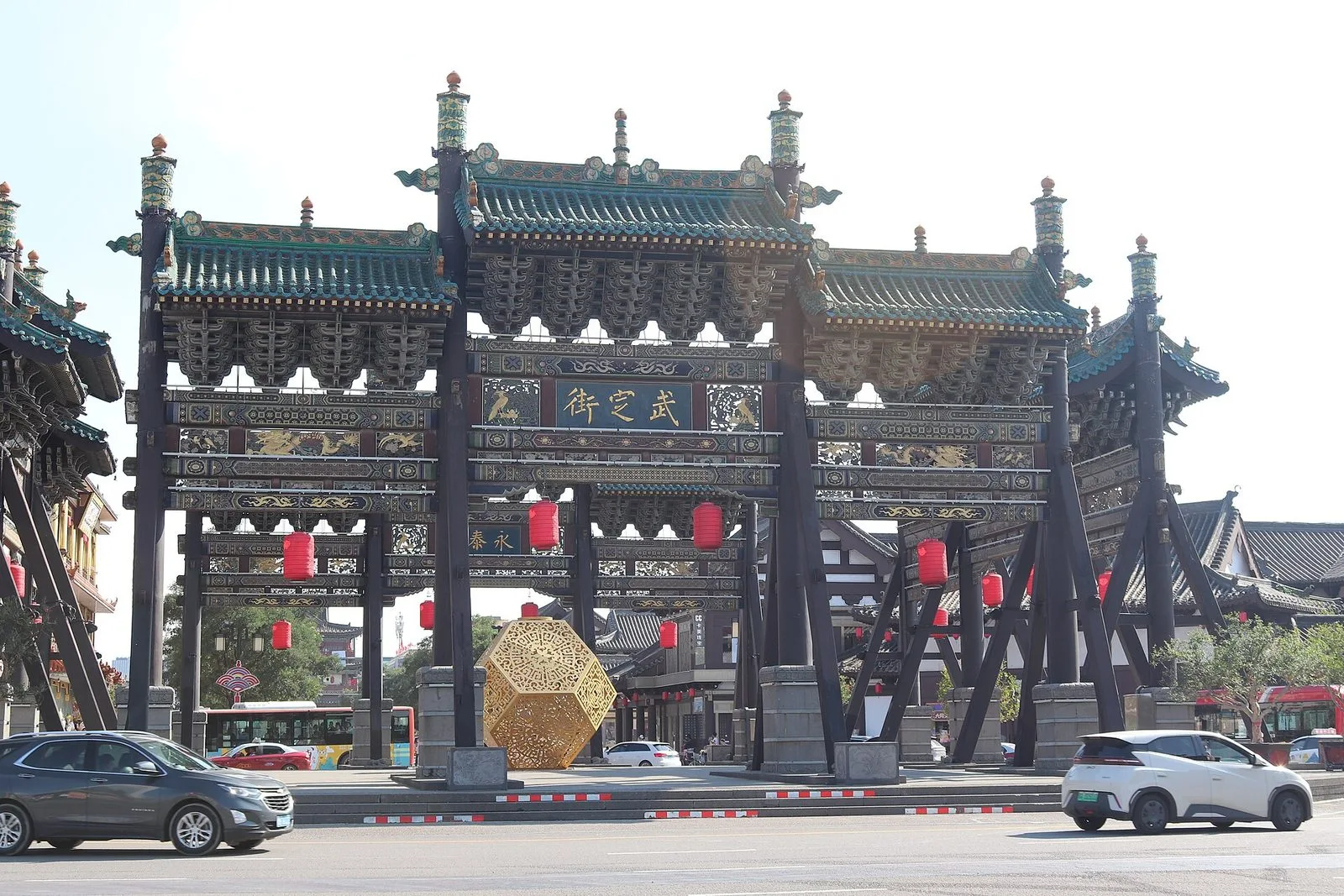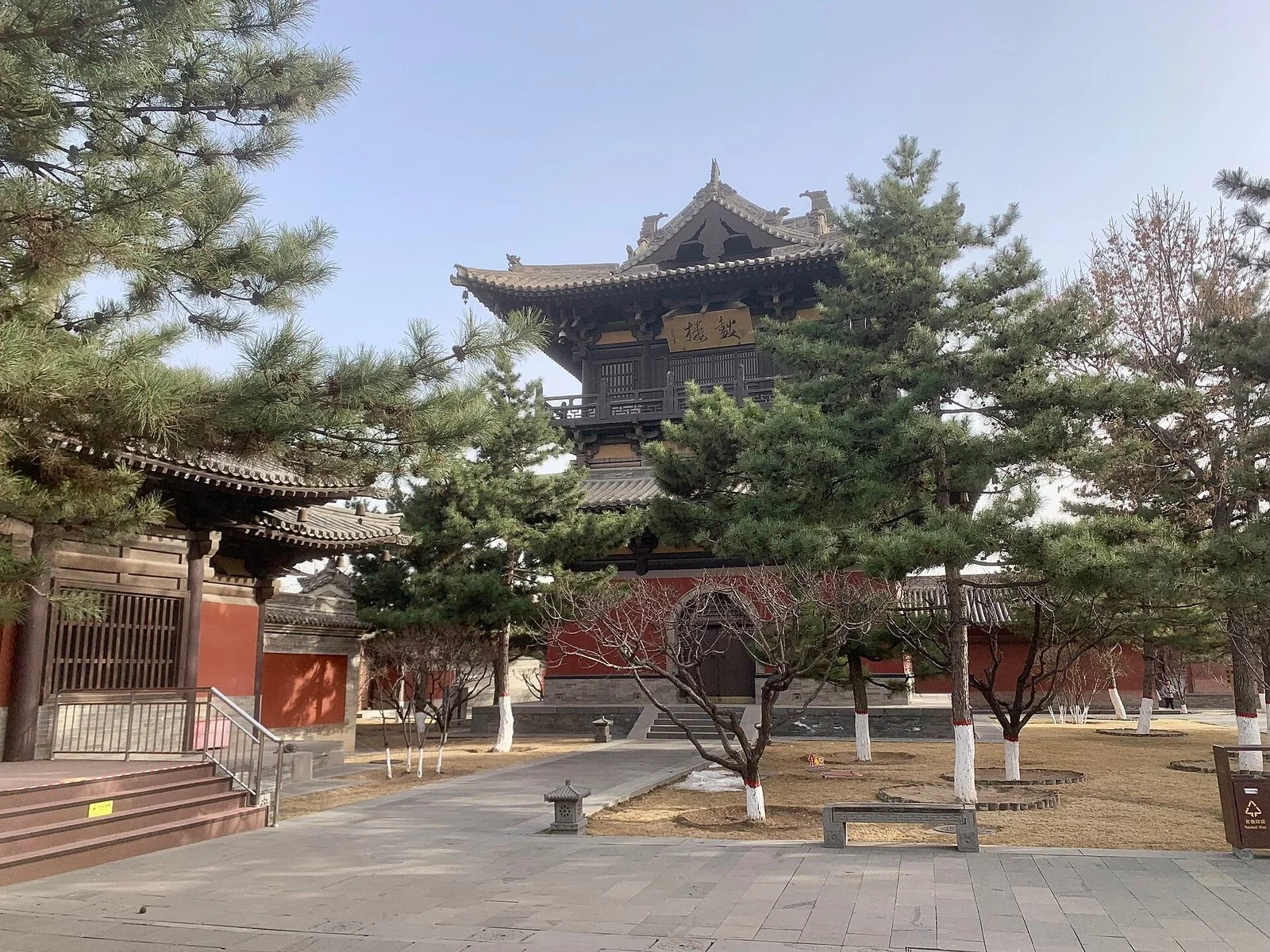
A Liao and Jin temple on the old city's western side
Huayan Temple stands in the southwestern part of Datong's old city, south of Qingyuan Street. Its name comes from the Avatamsaka Sutra. The main buildings face east, an orientation associated with Khitan cultural practices. On a first visit, look at their orientation and the two main axes in the northern and southern parts of the complex before focusing on individual halls. Assuming the front-to-back layout of a typical south-facing temple can obscure what is distinctive here.
The site has experienced warfare, rebuilding and recent refurbishment, and today's complex includes buildings from different periods. Its particular importance lies in the surviving Liao and Jin halls, sculptures and woodwork. The entire scenic area should not be described as an intact original Liao complex. Identifying the dates of different buildings provides a useful starting point.
Mahavira Hall: space before sculpture
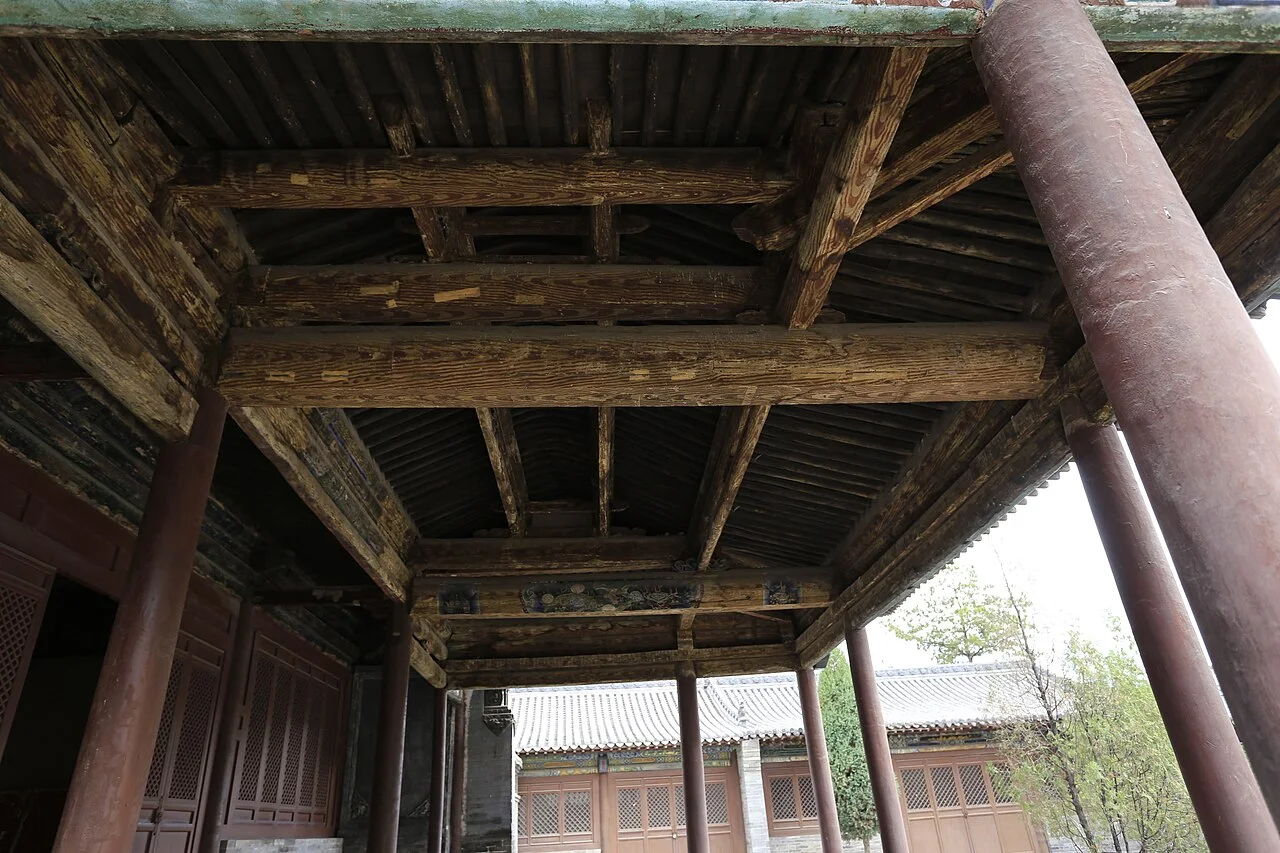
The Mahavira Hall stands in the northwestern part of the temple; the surviving hall was rebuilt during the Jin dynasty. Nine bays wide and five bays deep, it stands on a high platform with a terrace in front. Observe the proportions of the roof, eaves and hall from the platform before entering to study the beams and columns. This explains the building more clearly than simply calling it grand.
Relocating and reducing the number of columns opened up the central interior. From permitted viewing areas, notice how sightlines pass through the columns toward the Buddhist statues. Statues, murals and timber framing together shape what you see. The National Ethnic Affairs Commission's introduction notes later additions to the murals, which mainly show Qing-period style. The architecture, sculpture and murals therefore cannot simply be assigned to the same date.
Bojia Scripture Hall: woodwork and facial expressions
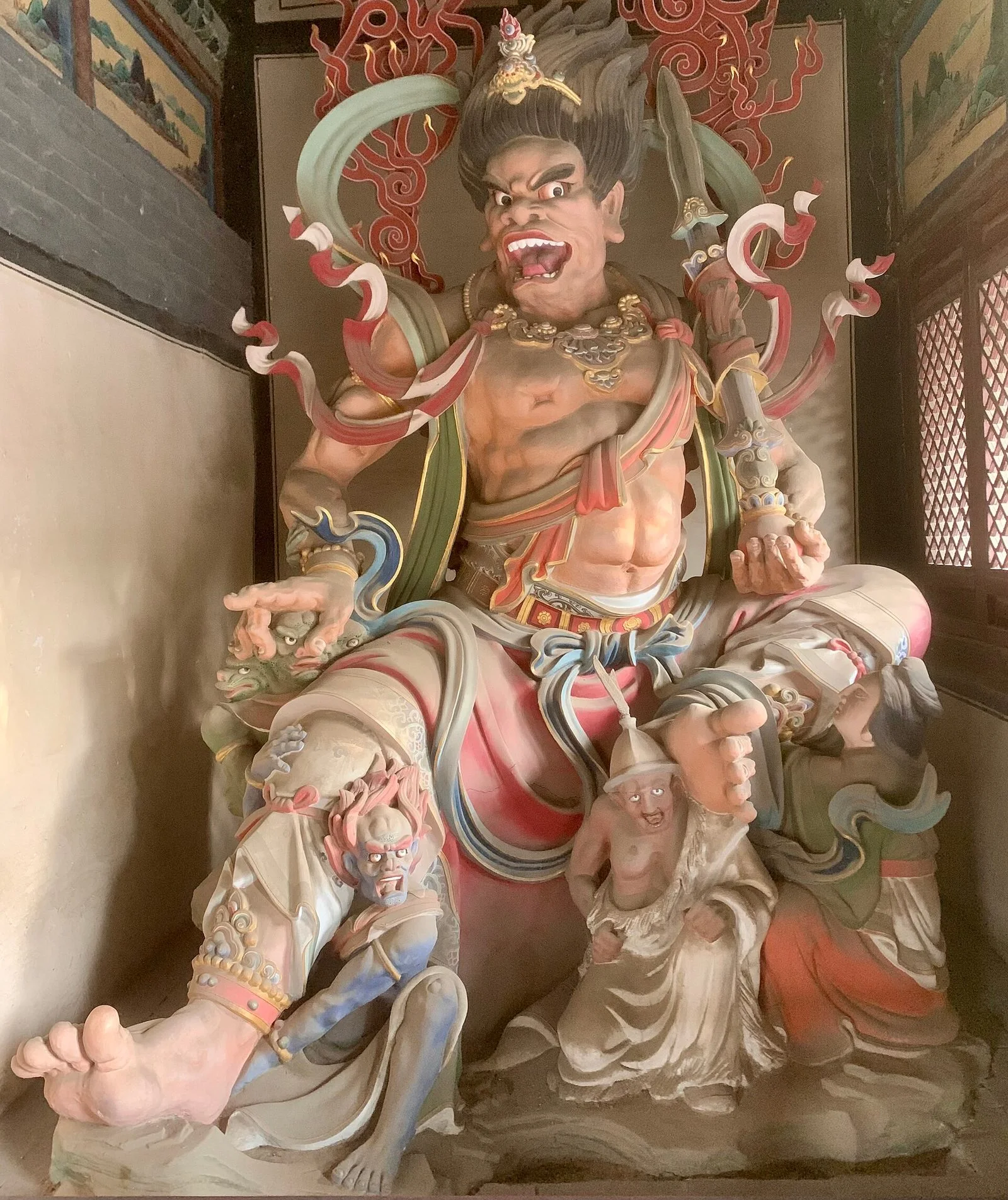
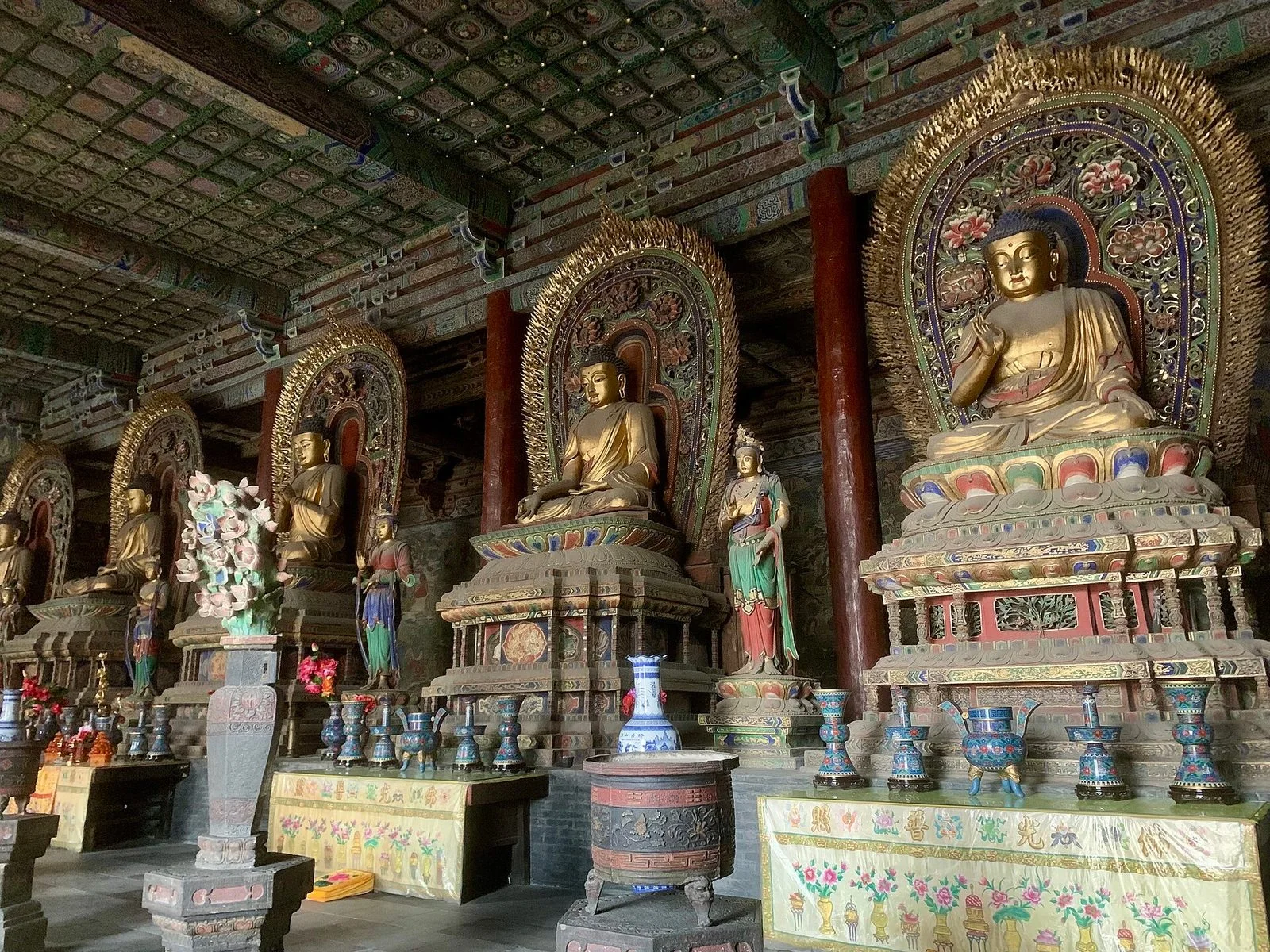
Built in 1038, the Bojia Scripture Hall is an important Liao building. It rewards closer attention than the Mahavira Hall: examine the arrangement of figures, their clothing and expressions, then the wooden wall cabinets for scriptures and the miniature heavenly palaces. The cabinets and building are not isolated exhibits; together they show how the space for storing scriptures was organized and decorated.
The bodhisattva with joined palms and a smile showing its teeth is a frequently discussed member of this Liao sculptural group. Notice the slight exposure of the teeth and the hand position. Do not overlook the other figures while searching for a promotional epithet. Differences in pose, ornaments and folds of clothing help visitors new to Buddhist sculpture appreciate the range within the group.
Deciding what to focus on
If architecture is your main interest, spend time comparing the two halls' scale, platforms, bracket sets and interior columns. If you prefer sculpture, allow more time for the Bojia Scripture Hall, subject to access conditions at the site. Courtyards and towers offer broader views but do not replace a close look at the historic halls. Appearance alone cannot establish a building's date.
Light inside historic buildings is limited. Follow the site's photography and lighting rules when viewing statues and murals: do not use flash to obtain clearer details or cross conservation barriers. Building access, ticketing and tower access depend on the day's announcements. Huayan Temple offers timber architecture and modeled sculpture, while Yungang offers cliff carvings. These differences deserve more attention during a Datong visit than simply treating both as temples.
Useful official references
Check the relevant official service before making arrangements. These links are references, not a guarantee of current services.