The poet's home in Chengdu
Du Fu was a poet of the Tang dynasty. In the winter of 759, fleeing the An Lushan Rebellion with his family, he came to Chengdu; the following spring he built a cottage beside Huanhua Creek. The museum says he lived here for three years and nine months and wrote more than 240 surviving poems. This background makes the cottage different from an ordinary classical garden: the visit centers on a poet displaced by war who found a period of stability in Chengdu, and on how later generations preserved and interpreted his work.
The garden visitors see is not an intact survival of Du Fu's house. In the late Tang, Wei Zhuang found the site and rebuilt a thatched cottage; later generations repeatedly repaired and expanded it. Today's memorial buildings and gardens are the result of a long tradition of commemoration. Distinguishing the historic site, later shrines and reconstructed cottage helps avoid mistaking every old-looking building for an original Tang-era structure, and explains why the grounds extend far beyond one small hut.
What the thatched cottage suggests about daily life
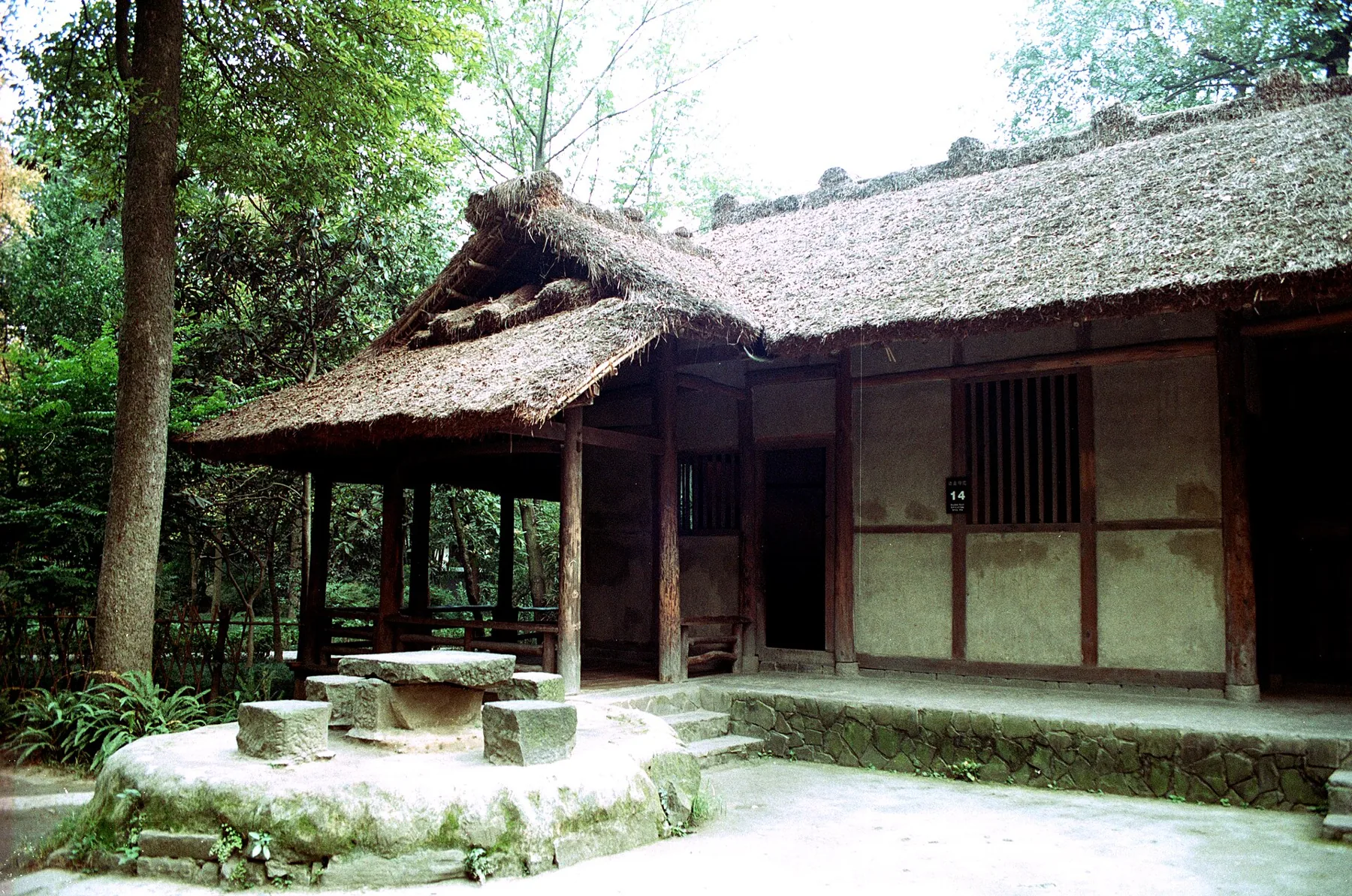
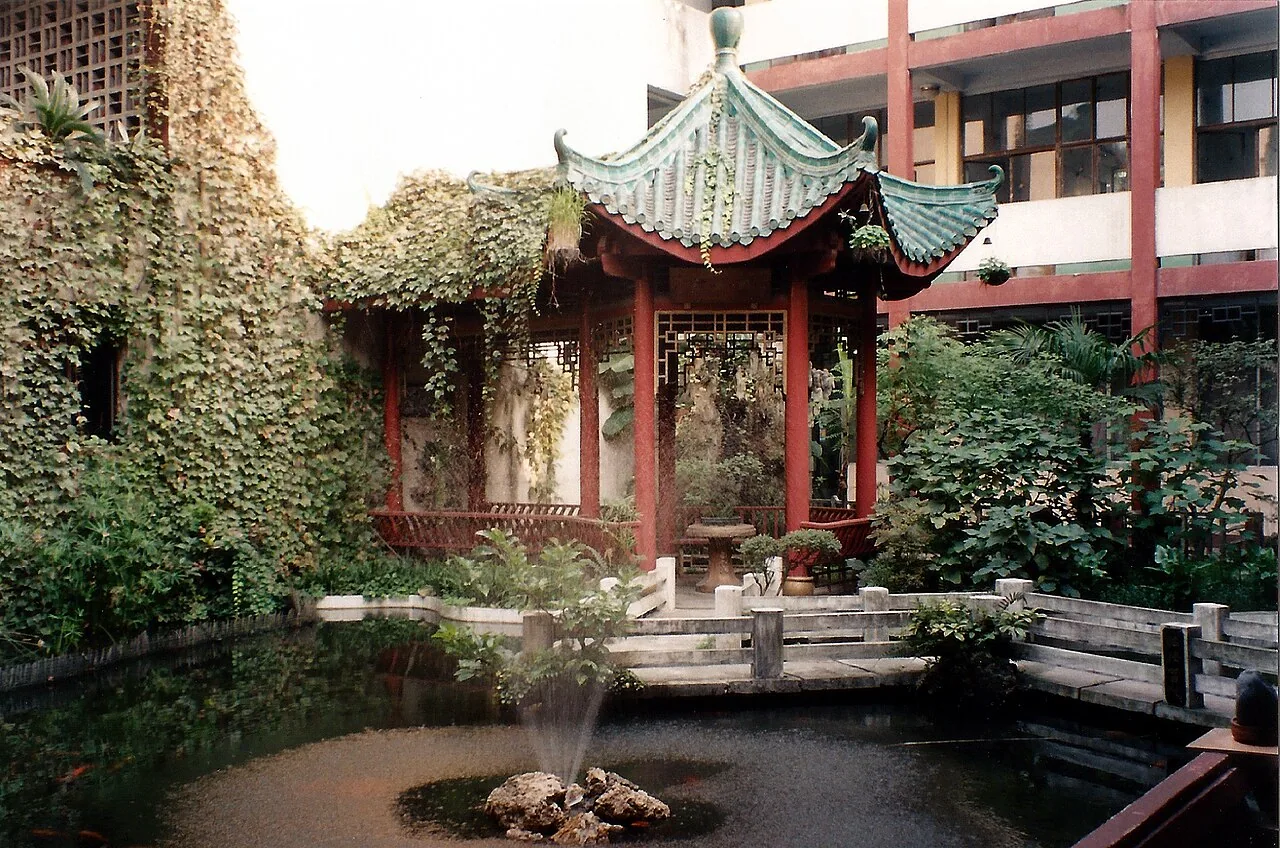
The cottage area uses a thatched roof, timber structure and surrounding plants to evoke the poet's former home. Begin with the relationship between house and courtyard: the sheltered space under the eaves, the direction of the doors and windows, and the spacing of the plants are more tangible than the label “former home of the poet-sage.” The image was taken in 2006 and shows a later reconstruction. It helps explain the building form but does not document today's entrance or interior displays.
Visitors unfamiliar with Du Fu's poetry can start with accessible themes such as home and nature, then read the explanations of poems on site. The life described in the poems and today's memorial garden are not exactly the same; the garden provides a setting for encountering the work. Taking time to notice the roof material, timber posts and greenery in the courtyard is also a way to explore without memorizing poems.
From memorial halls into the garden
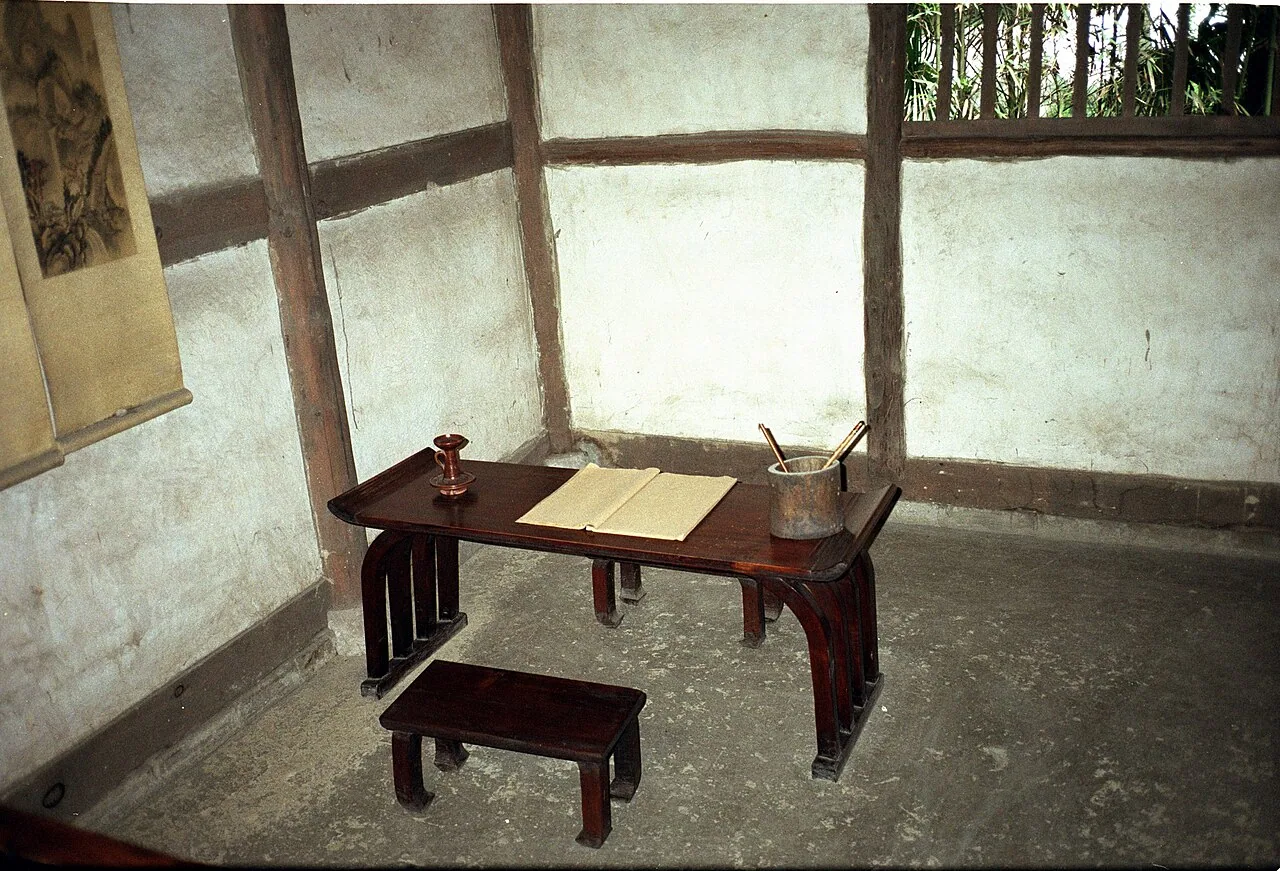
Buildings such as the Grand Hall, Hall of Poetic History, Firewood Gate and Gongbu Shrine connect Du Fu's life with his literary reputation and later commemoration. “Gongbu” refers to an official post he once held; “Poetic History” invites visitors to consider how his poems relate to the events of his time. The Firewood Gate stands on the central axis and takes its name from a Du Fu poem. Many stone inscriptions on either side are poems left by Qing dynasty writers or officials who came to pay tribute. Reading one plaque or inscription shows how people in different eras understood Du Fu.
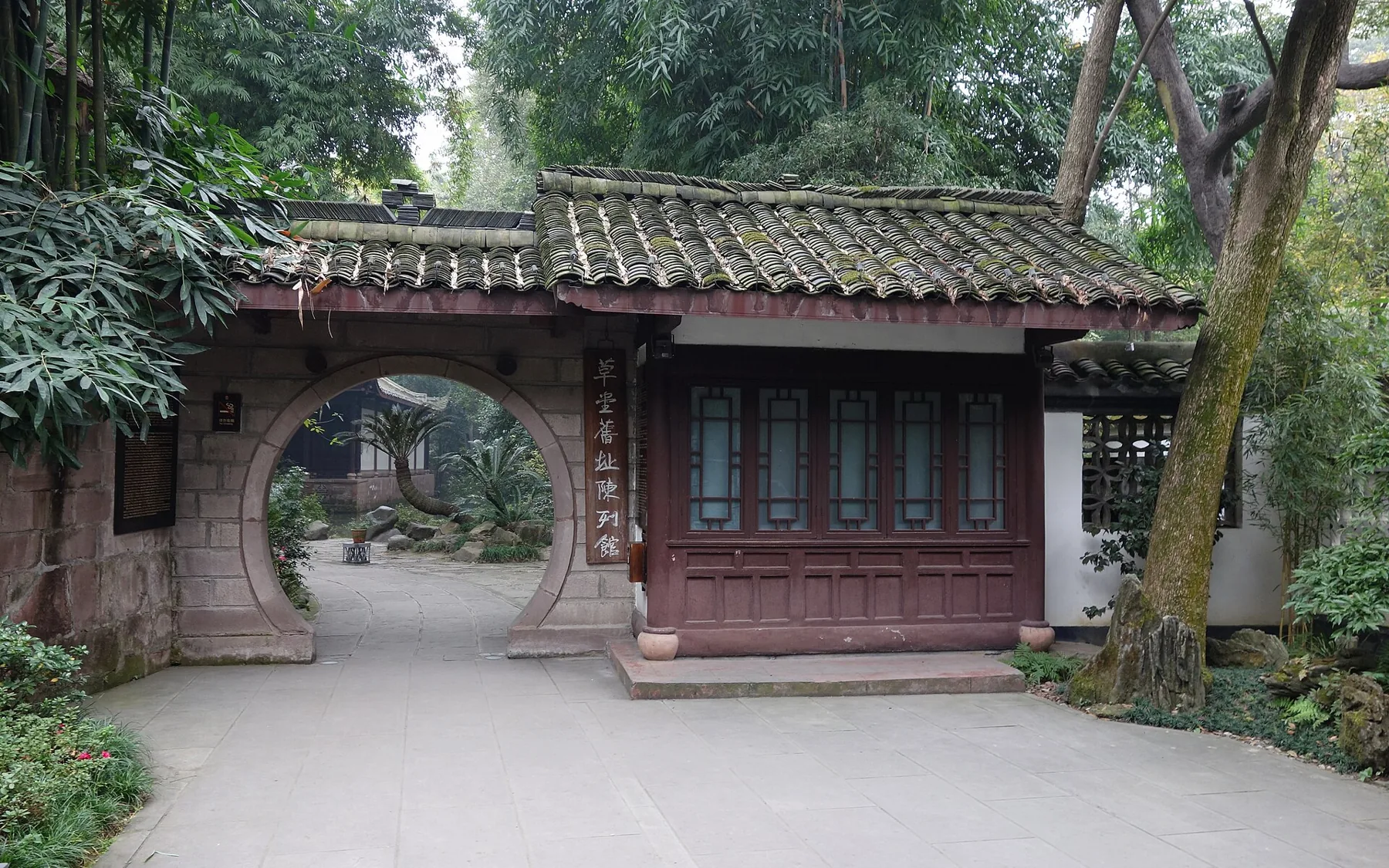
Bamboo, trees, covered walkways, walls and moon gates shift the visit from the halls into smaller courtyards. Looking back through a moon gate frames the spaces in front and behind; compared with the cottage exterior, this view makes clearer that the site is also a carefully laid-out western Sichuan garden. Watch for changes in level along the stone paths, and do not step backward toward stairs after rain while taking photos.
Visit duration and identification documents
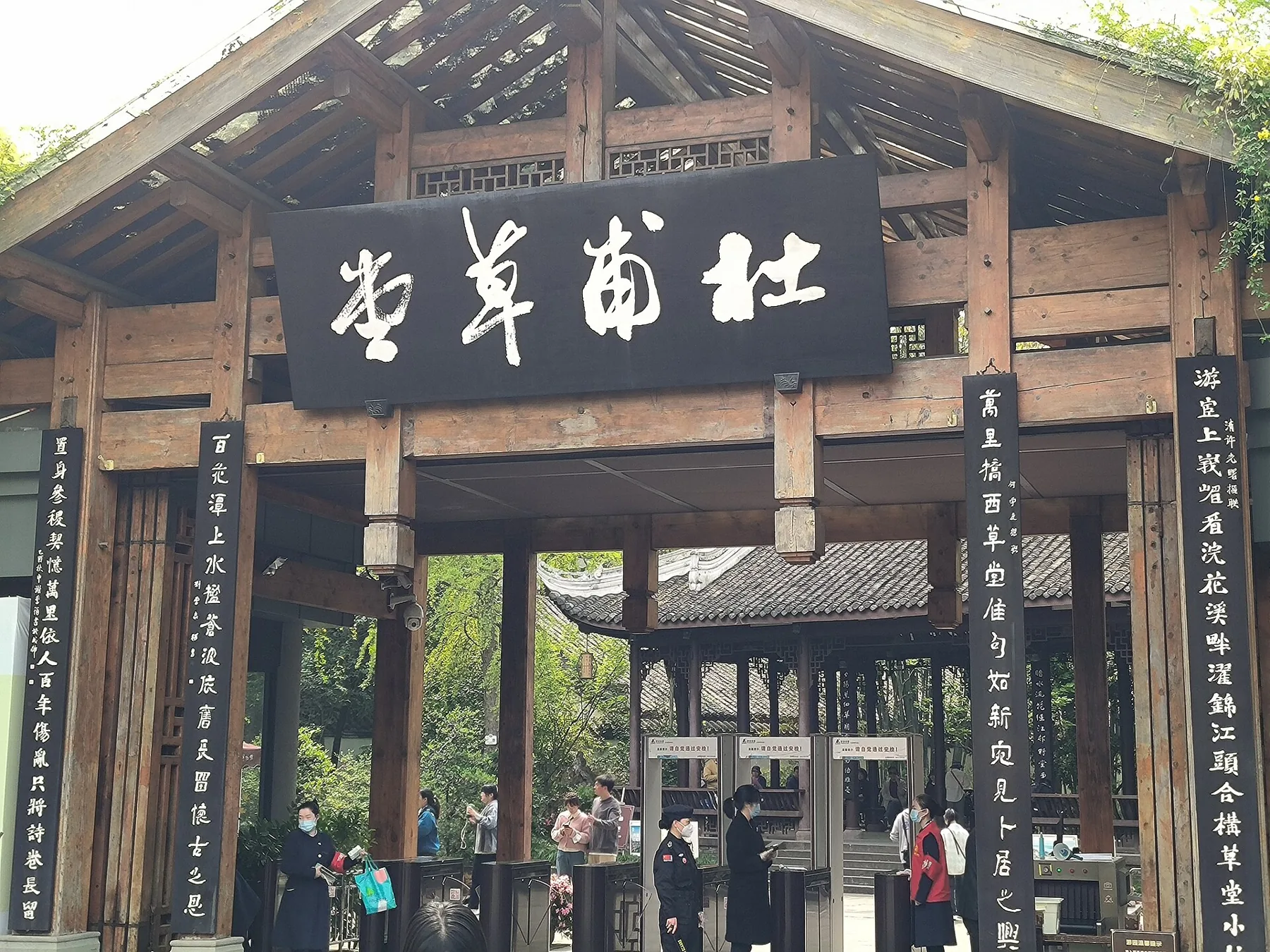
The museum is at 37 Qinghua Road, Qingyang District. As of November 10, 2026, its website lists regular hours of 9:00–18:00, with ticket sales ending at 17:00. Extended hours during the Spring Festival, Labor Day, summer and National Day periods depend on specific notices. Allow around two to three hours for the main memorial buildings, cottage and a walk through part of the garden; this is an editorial estimate. Leave more time if you want to examine the poetry inscriptions and exhibitions closely.
The official booking page says visitors can make a real-name reservation up to 14 days ahead through the Du Fu Thatched Cottage Museum WeChat service account. Its instructions mainly describe entry by scanning a Chinese ID card and exchanging for a paper credential at the window. If you hold a foreign passport, call ticketing at 028-87345202 first, explain your document type and confirm the applicable way to buy a ticket and enter. Do not treat the free group-booking process for schools as a policy for individual visitors, or select a discount ticket before confirming eligibility.
Useful official references
Check the relevant official service before making arrangements. These links are references, not a guarantee of current services.