How rice batter becomes guobian
Guobianhu is also called dingbianhu, and menus sometimes shorten the name to guobian. Thin sheets made from rice batter are cooked in soup. With broth simmering in the wok, batter is poured down the hot inner wall above the liquid. It sets into a thin layer, then is scraped into the soup once the edges begin to curl. Guobian means 'wok edge', describing where the rice sheets form and why the finished pieces vary in size.
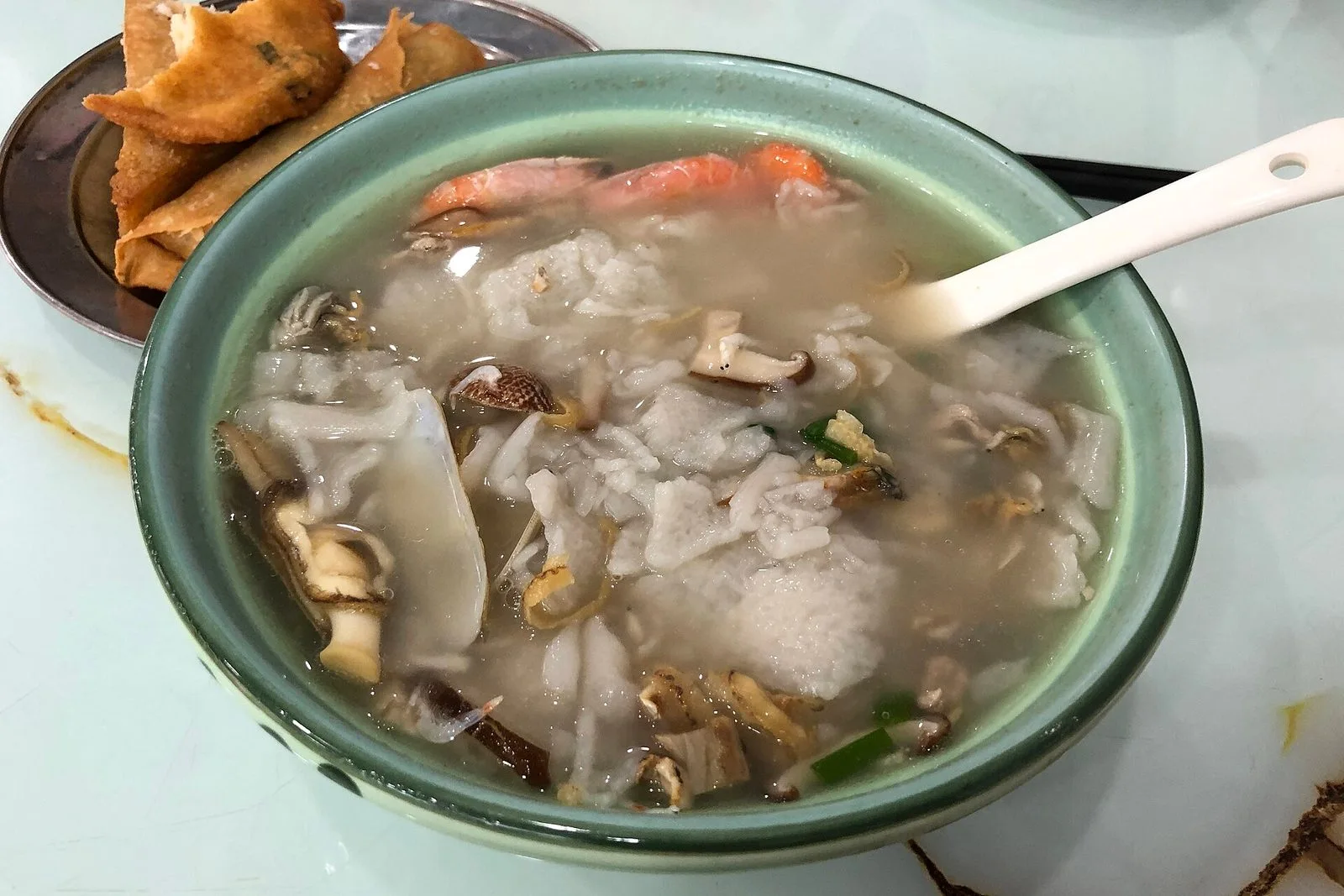
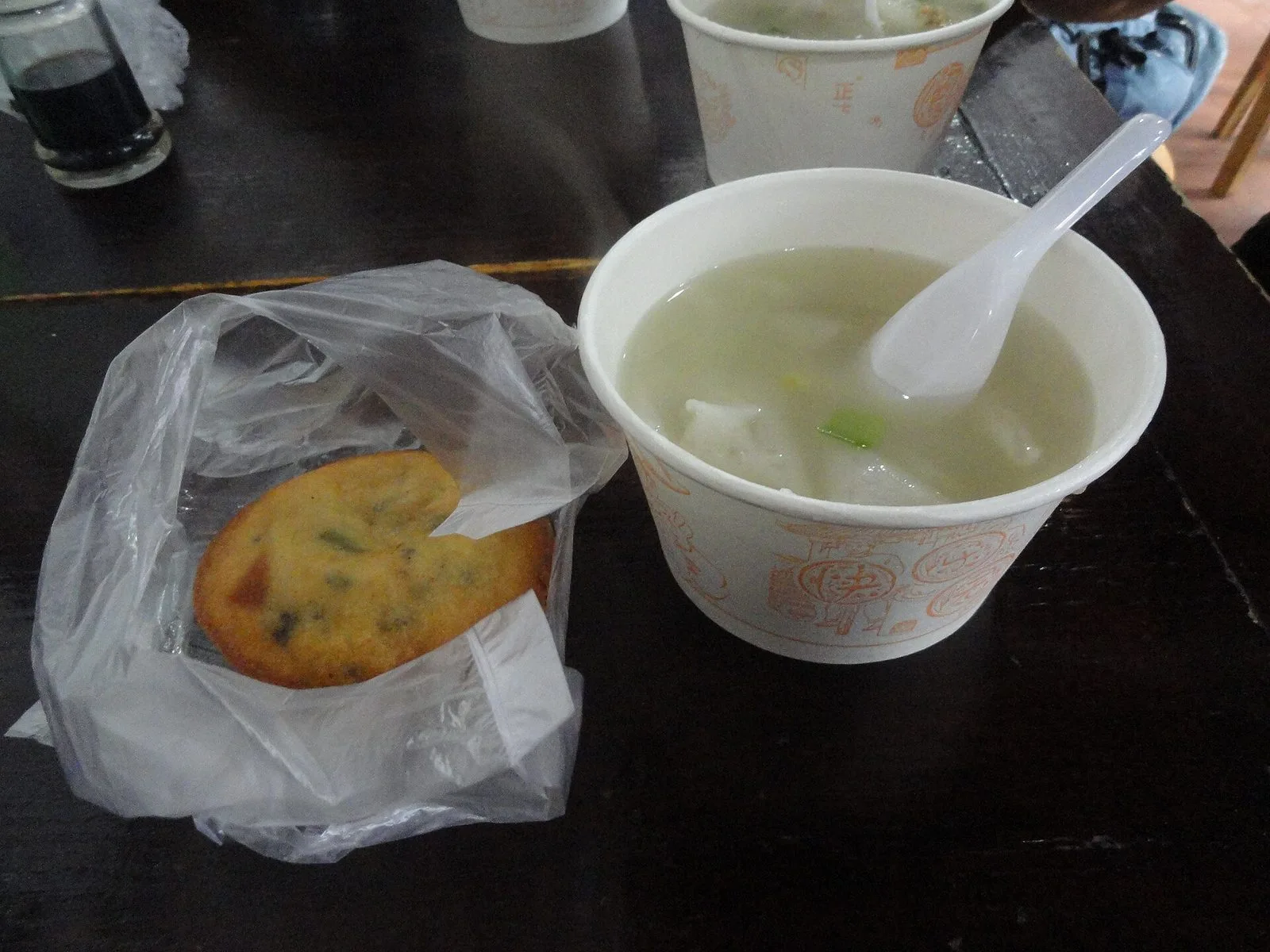
The key to a bowl of guobian is the relationship between the rice sheets and the soup. The sheets are soft with a little resilience and carry the broth. Traditional descriptions emphasize a clear soup rather than a pot of paste. When the bowl arrives, lift a few pieces with a spoon to look at their thickness and edges, then try them with the soup. Their texture continues changing as they soak, so it is better to eat gradually while warm rather than waiting for the whole bowl to cool.
Different broths and ingredients
Guobian soup can include dried shrimp, mushrooms, scallions, garlic and daylily buds. Other versions use chicken stock, dried fish, dried cuttlefish or dried razor clams for flavor. A breakfast stall's bowl may be simple, while a version with more seafood is more substantial. Both center on rice sheets and broth; the amount of seafood alone is not a measure of authenticity. Decide whether you want a light snack or a fuller soup with more ingredients.
Guobian is often paired with fried snacks. You can alternate it with youtiao dough sticks, oyster cakes or triangular cakes to contrast the soft sheets with crisp fried food. The Sanfang Qixiang photograph shows a fried snack beside a bowl, one simple combination. What is sold and the portion sizes depend on the shop that day. If you also want fish balls or rouyan afterward, begin with a bowl of guobian and then decide whether to add a side.
Breakfast choices and dietary requirements
Guobian is a traditional Fuzhou breakfast food, and is also associated with the zuoxia custom at Lixia, the solar term marking the start of summer. Local material published by the Fuzhou Municipal Government quotes older records of cooking dingbianhu and steaming bowl cakes for ancestor offerings at this time. Visitors can encounter it more easily at an everyday breakfast: start with a plain version to learn the texture, then try one with more seafood, without changing travel plans around a seasonal custom.
The rice-based appearance can draw attention only to the sheets, but the broth often contains fish, shrimp, shellfish or meat; it is not automatically vegetarian. If you have allergies to fish, crustaceans or shellfish, or avoid meat, ask separately about the broth, added ingredients and seasonings. Rice batter alone also does not establish that every recipe is gluten-free, as home and shop preparations can differ. Naming the specific ingredients you cannot eat is clearer than simply asking for 'no seafood'.
Useful official references
Check the relevant official service before making arrangements. These links are references, not a guarantee of current services.