City introduction
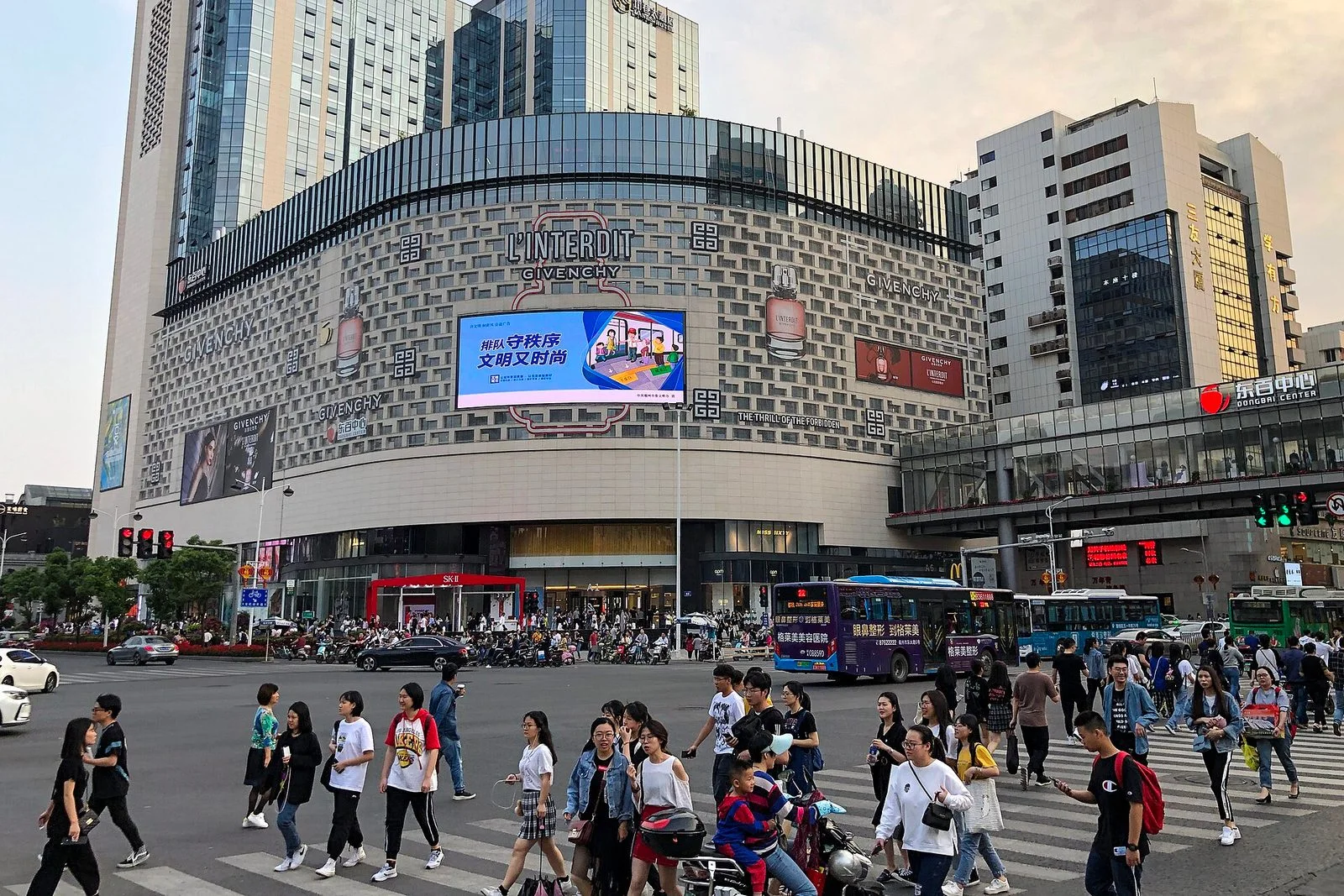
Fuzhou lies in eastern Fujian, with the Min River running through its urban area. To begin understanding the city, consider Gulou's lanes, lakeside gardens and old-town hills alongside Taijiang's commercial districts and the hillside buildings of Cangshan across the river. Gray-tiled courtyards, waterside streets and filled snacks reveal different sides of Fuzhou, connected by geography and by the continuing history of trade and daily life.
Hills, river and old town
Fuzhou is Fujian's capital, and extends well beyond the few old streets familiar to visitors. The Min River and surrounding mountains form its geographical setting, while three small hills remain recognizable within the city: Pingshan, Wushan and Yushan. The description 'three hills, two pagodas and one river' refers to these hills, the Black and White Pagodas, and the Min River. They are spread among city streets, rather than grouped together in a single park.
Sanfang Qixiang, West Lake and the old-town hills in Gulou show different layers of the city from Shangxiahang near the river in Taijiang. Cross the Min River to the south, and the hillsides and historic buildings of Yantai Hill in Cangshan change the streetscape again. Understanding where these areas lie is more useful than simply remembering Fuzhou as an 'ancient city': it has level lanes as well as sloping streets and broad stretches of water.
Sanfang Qixiang: from the main street into courtyards
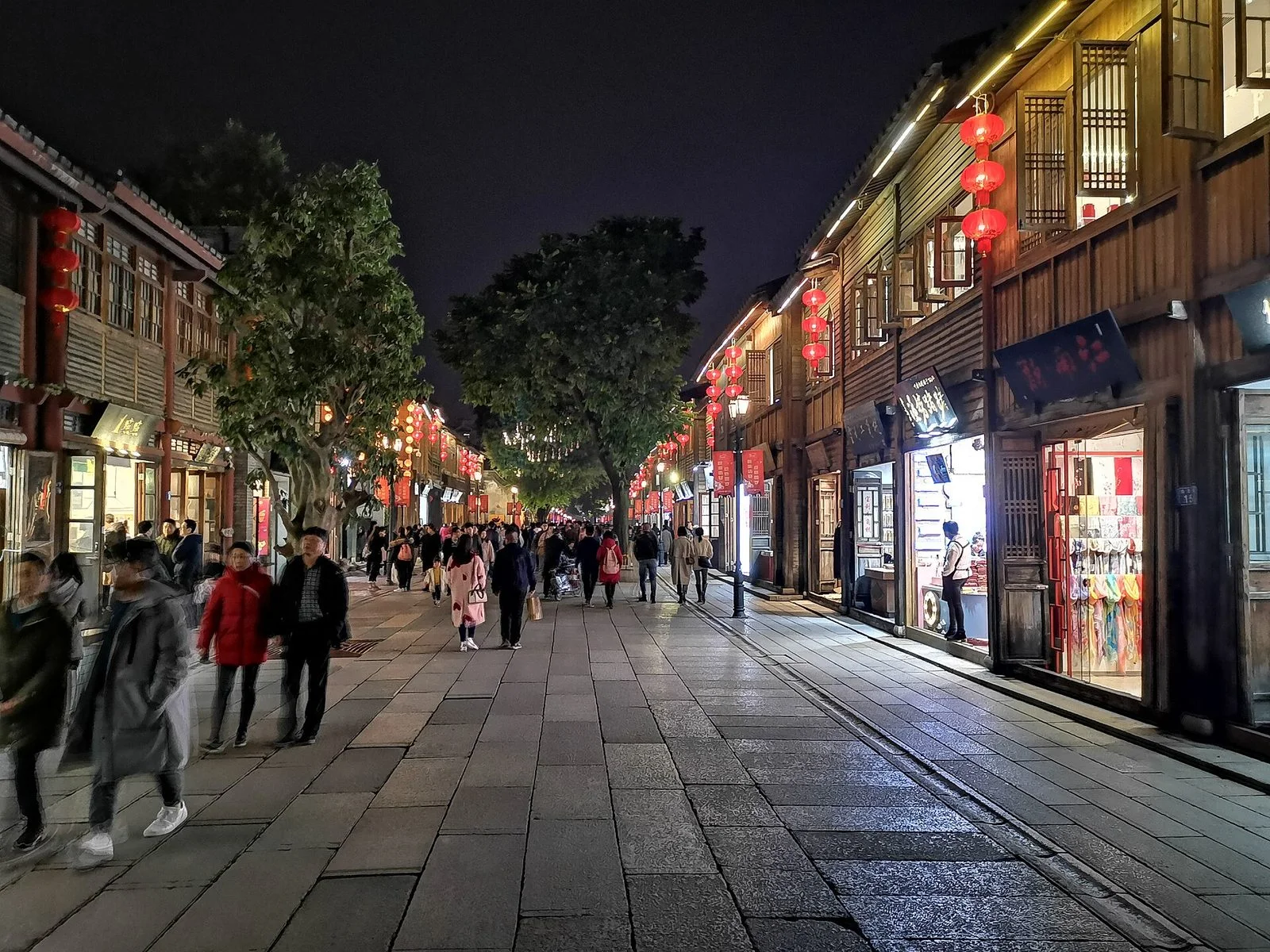
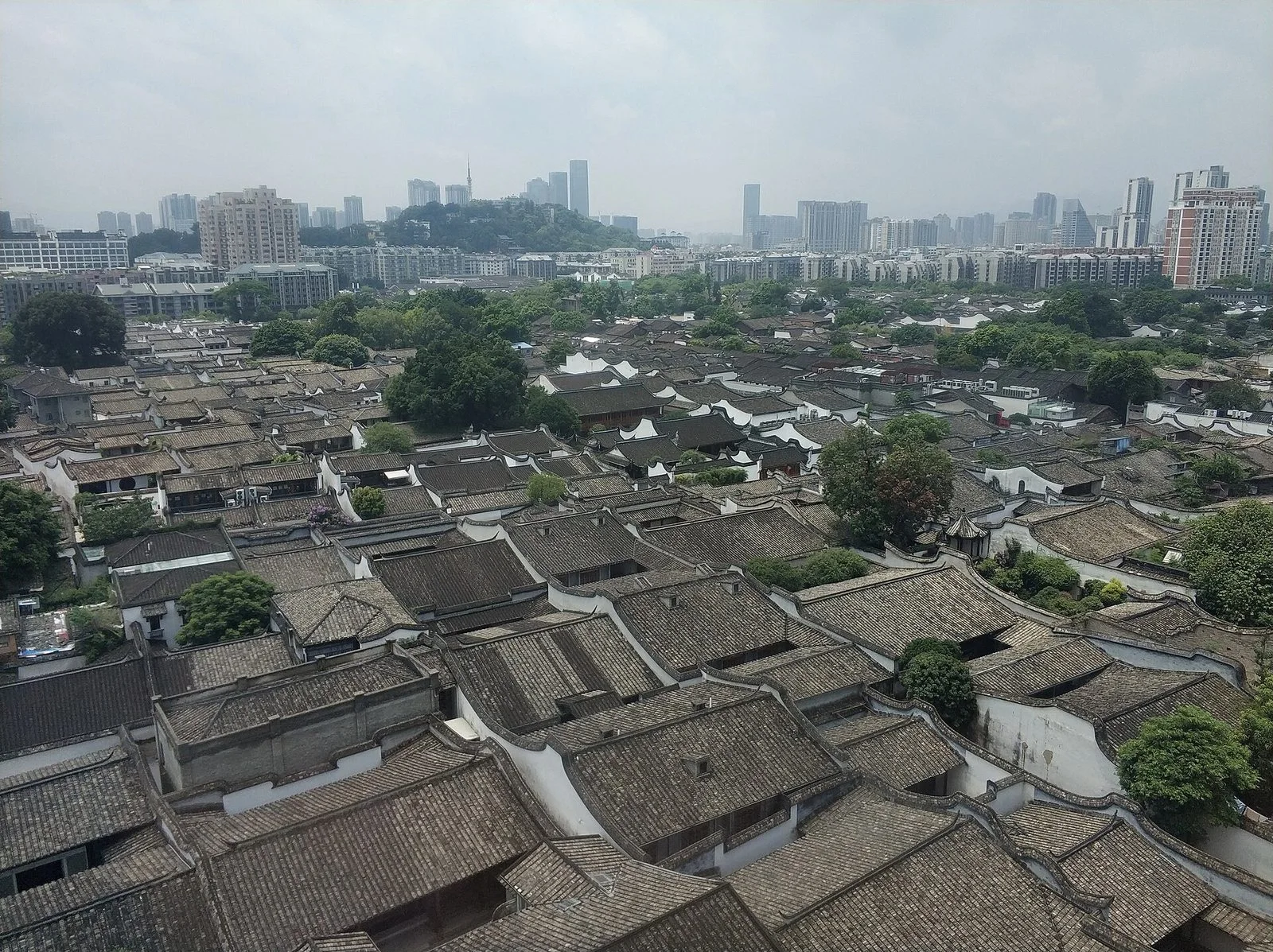
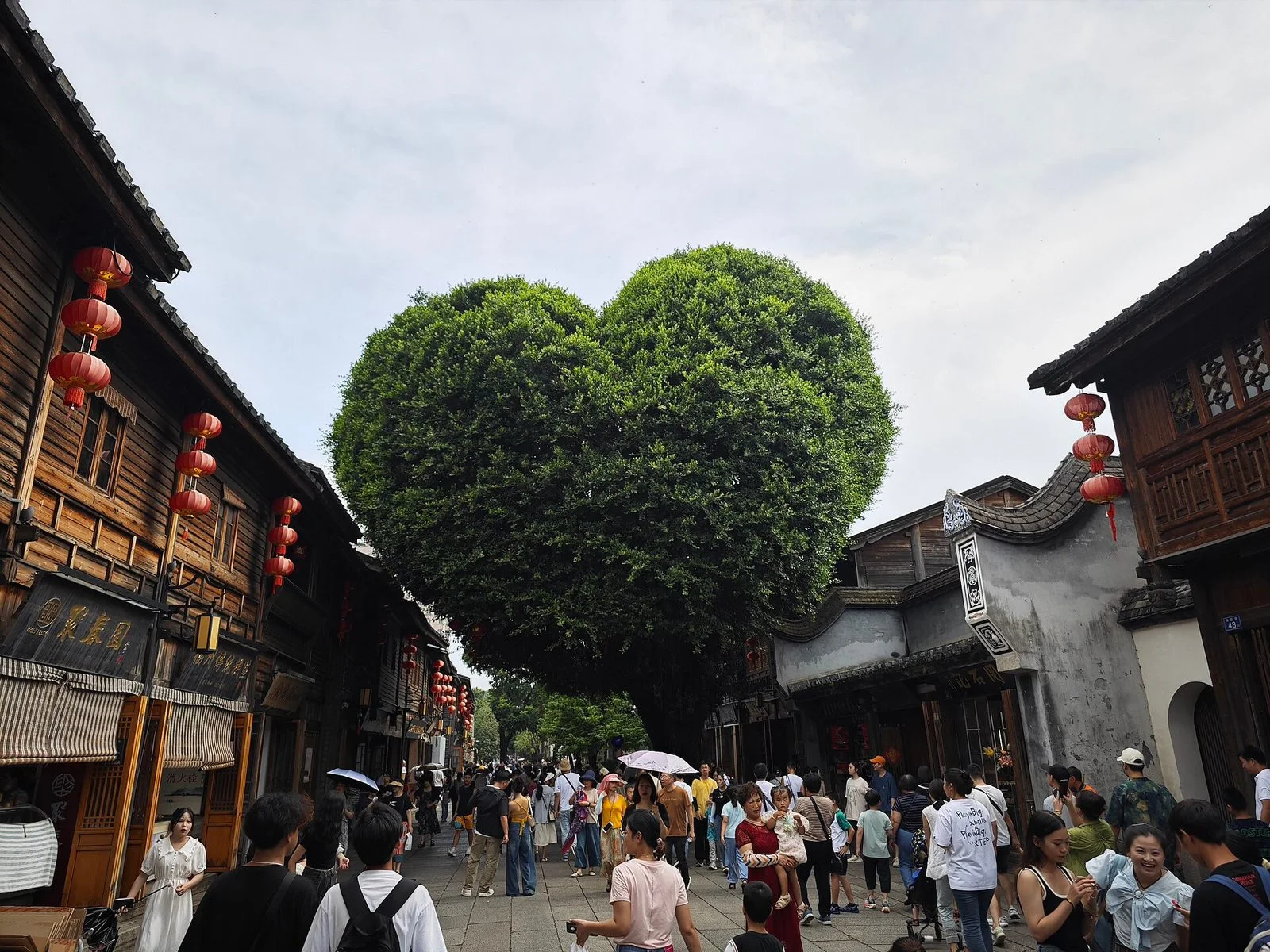
Sanfang Qixiang is organized around Nanhou Street, with lanes branching off on either side. The main street has snacks, established local businesses and modern shops. Turn into the side lanes and the focus shifts to white walls, gray tiles, saddle-shaped gables and courtyards extending one behind another. The busy main street and enclosed courtyards offer different experiences; a single tree or street photograph gives only a partial view of the district.
The connections between Fuzhou and figures such as Lin Zexu and Yan Fu also make these lanes a way to explore modern Chinese history and local society. Entrance halls, light wells and wooden partition screens bring the architectural background into view. Individual former residences and exhibition spaces have their own subjects; the whole district should not be treated as one attraction covered by a single ticket. If architecture interests you, comparing walls, frontages and courtyards across several side lanes can be more rewarding than staying on the main street.
Trading districts on the Min River and Yantai Hill
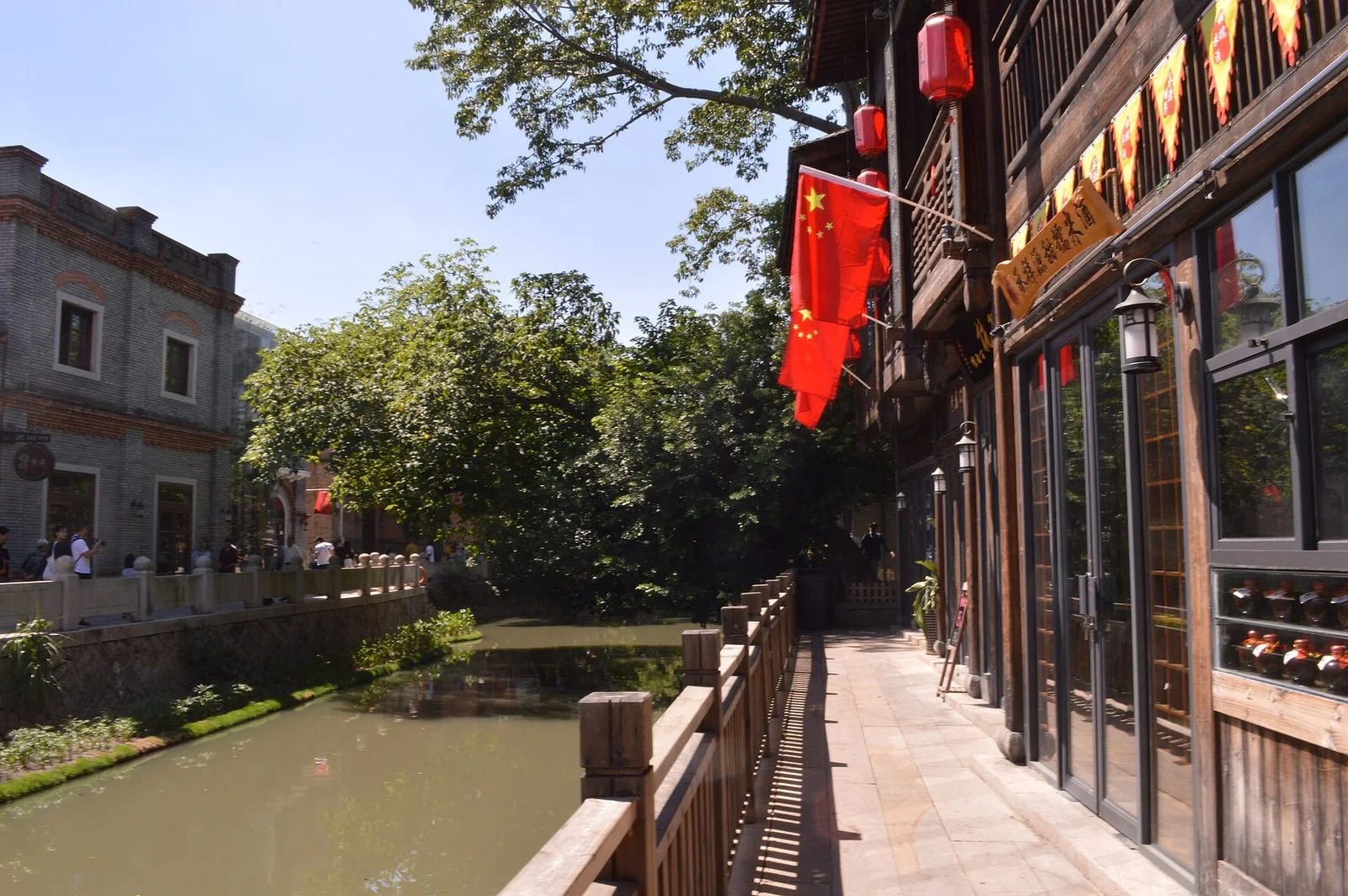
Shangxiahang in Taijiang preserves traces of a trading district, with waterside lanes, former guild halls and commercial buildings interspersed throughout. Today it also has dining, tea spaces and cultural shopping, allowing visitors to combine looking at buildings with browsing shops. When choosing gifts, compare the actual products, materials and production information rather than relying on a shop's traditional-looking frontage. The district's visual appeal and each shop's product quality are separate matters.
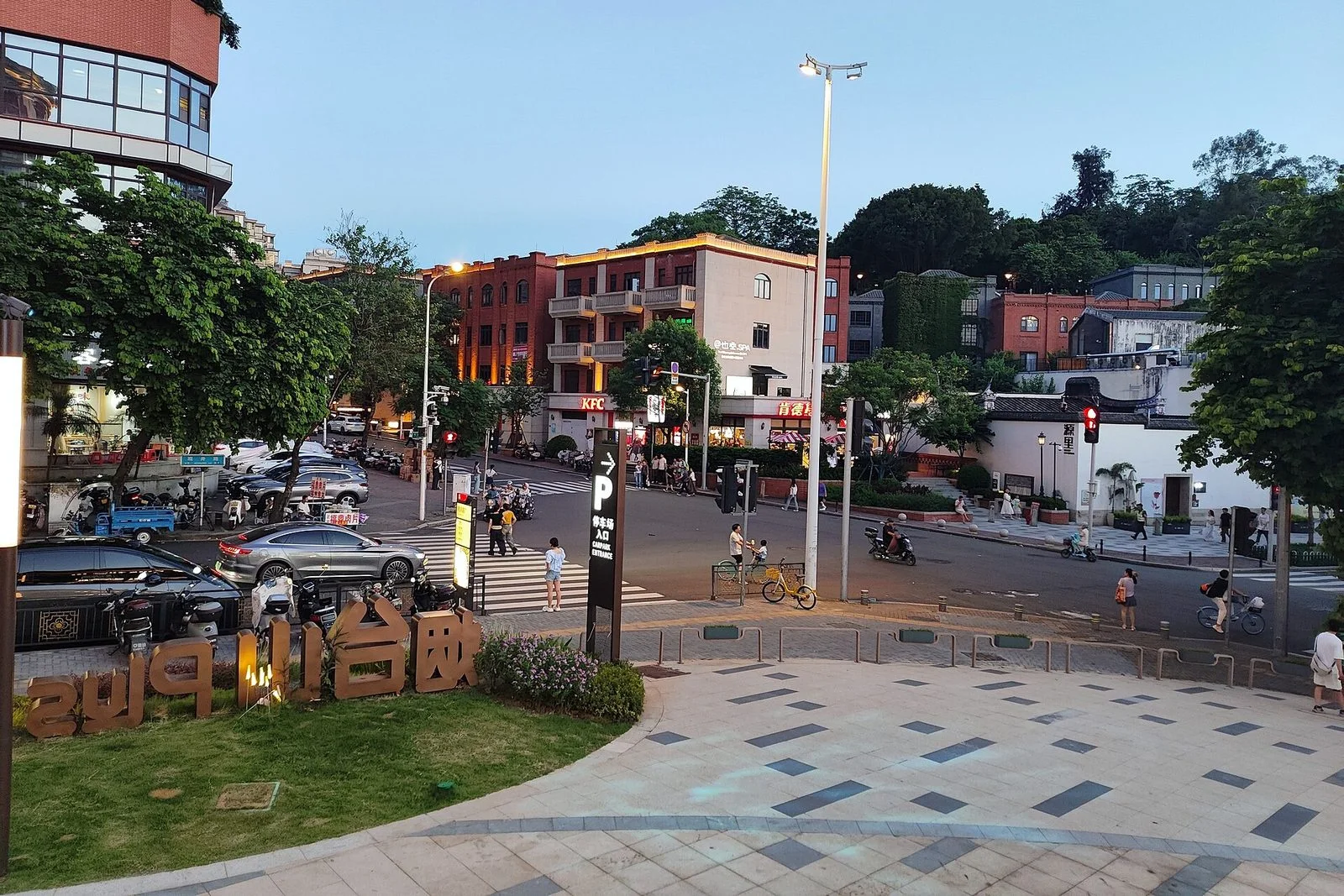
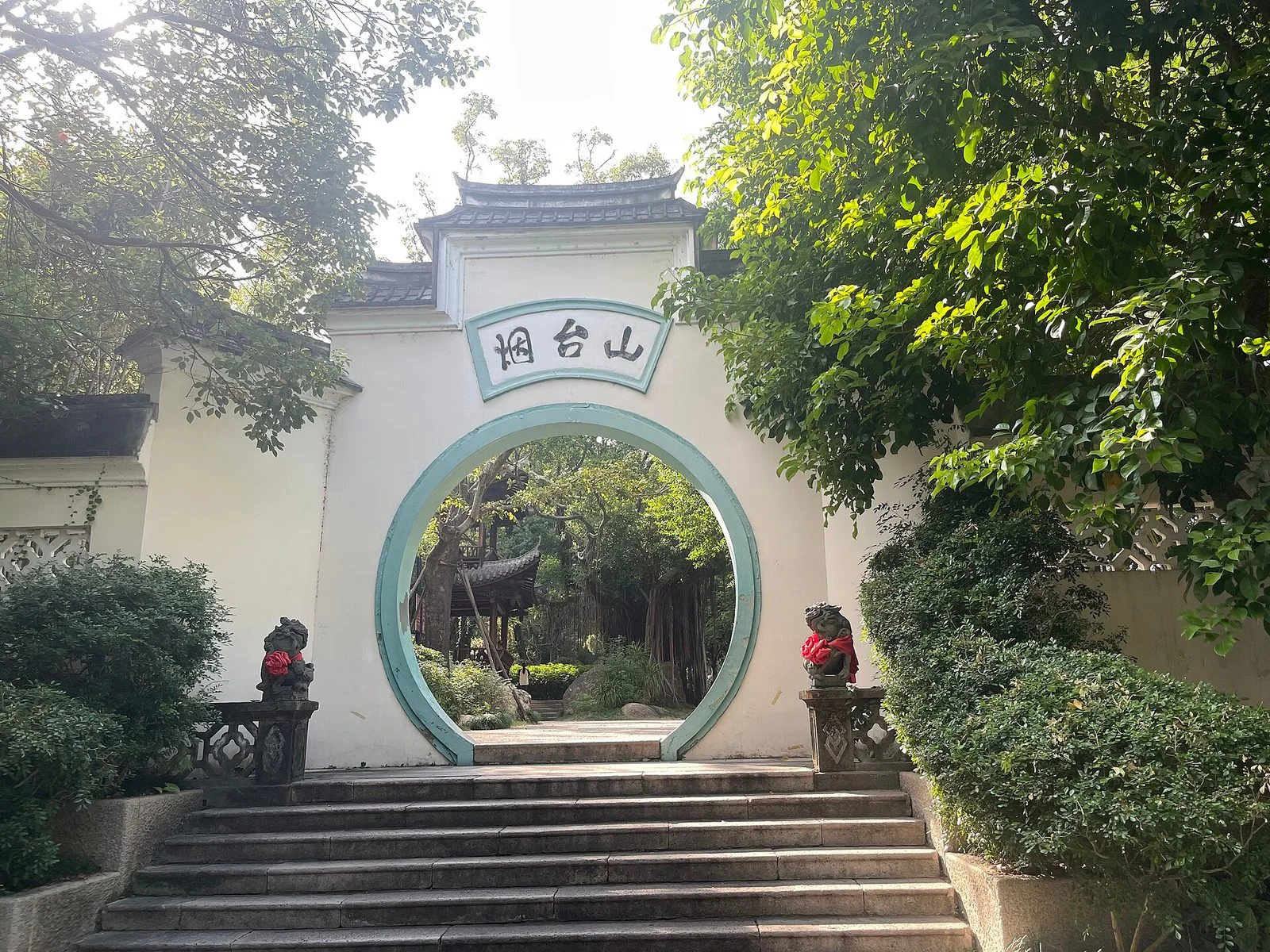
Across the river, Yantai Hill occupies sloping ground in Cangshan. Its buildings and streets reflect trade and contact with other countries in the modern era, making it distinctly different from Sanfang Qixiang. Varied architectural styles appear among stone walls, gardens, trees and slopes, with contemporary commercial spaces at the foot of the hill. It suits visitors willing to walk uphill and look at the neighborhood as a whole. Historic buildings shown in photographs are not necessarily open inside; walking the streets and entering individual premises are separate activities.
West Lake and garden life in the city
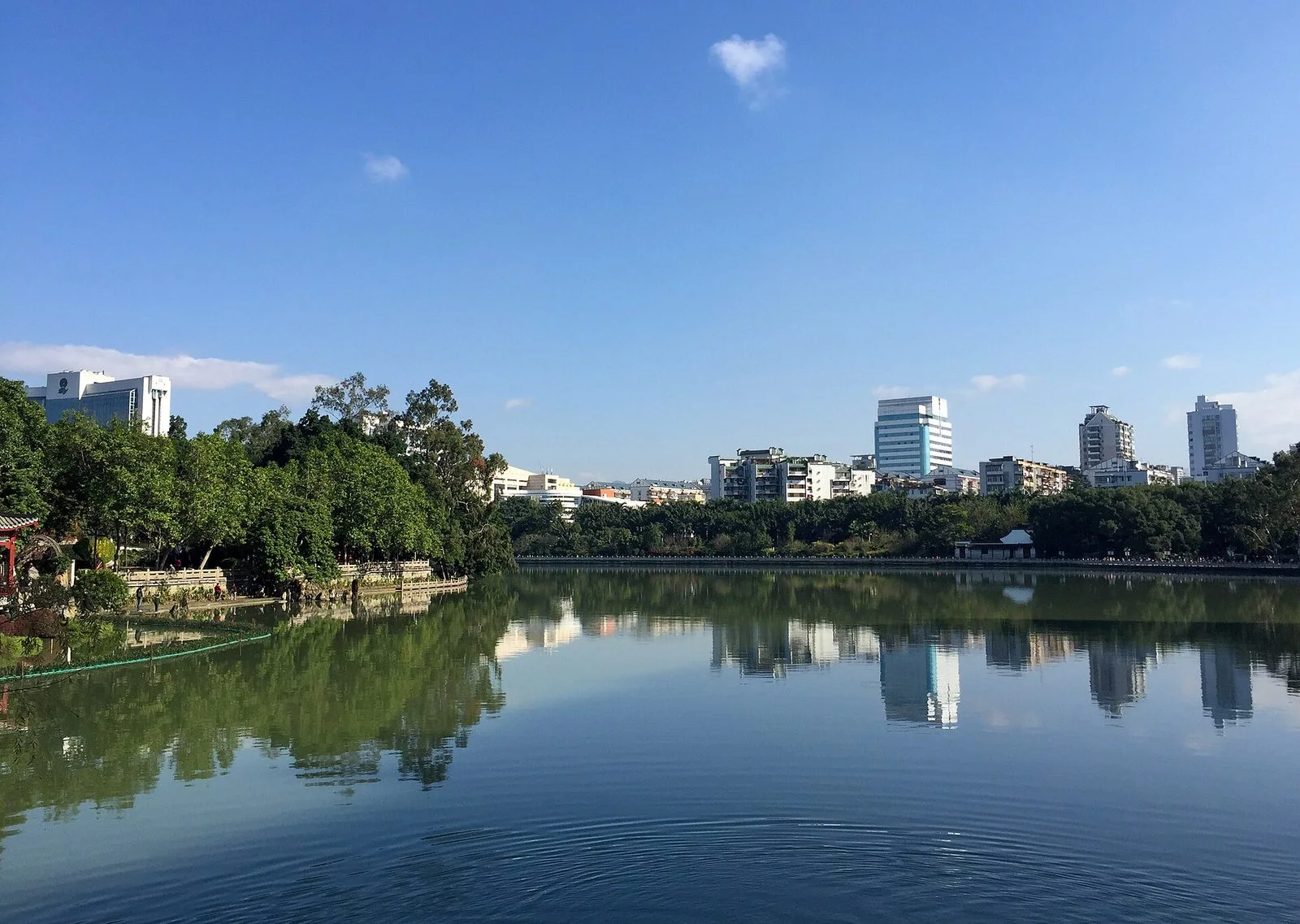
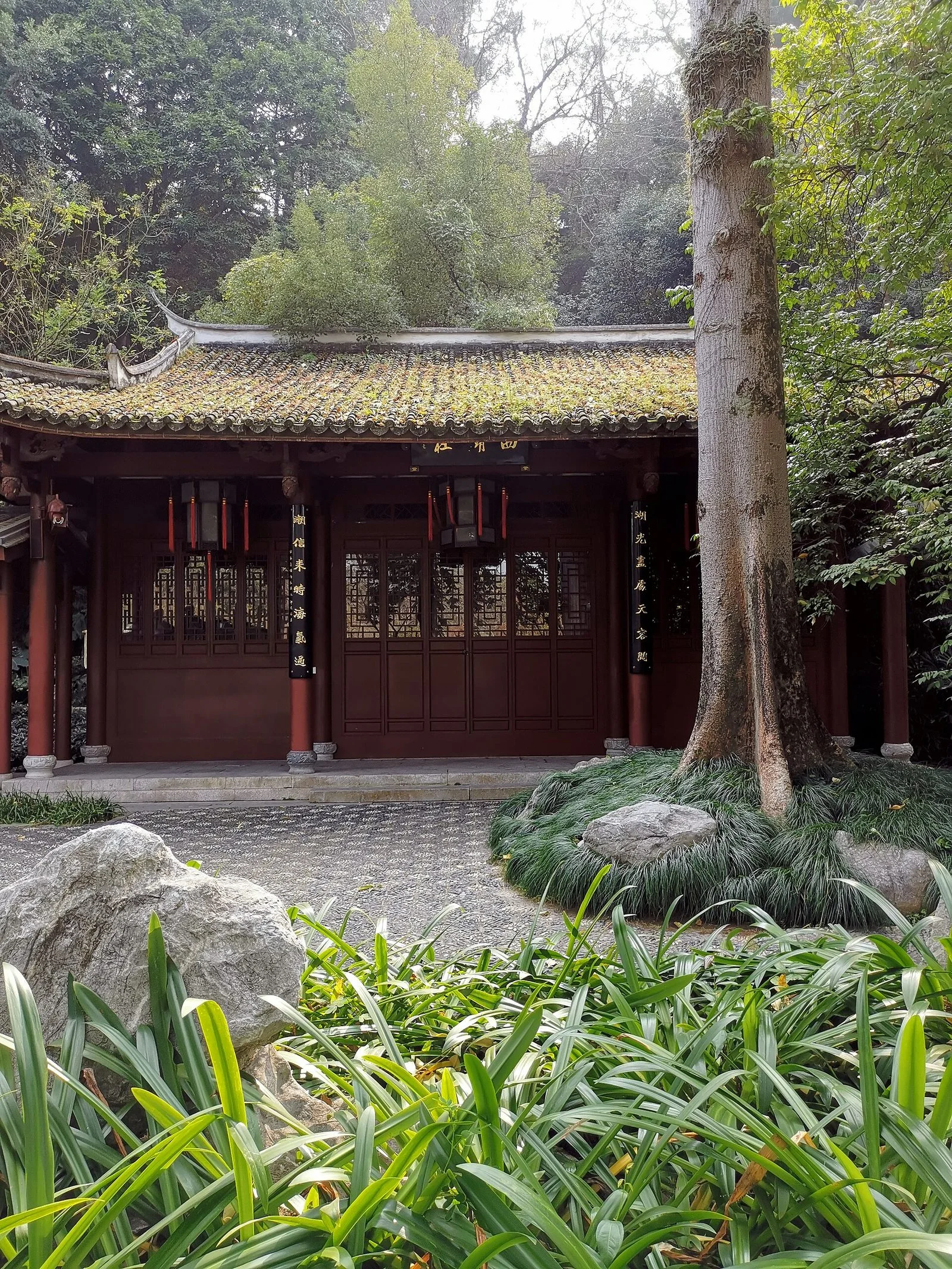
Fuzhou's West Lake lies northwest of the old town and offers another way to understand the city. Water, embankments, pavilions and spaces such as Kaihua Islet shift the view from dense roofs and shopfronts to the lake, trees and garden buildings. West Lake also connects with Zuohai; the park is more than a single lakeside photo spot.
Alongside historic sites, the park serves everyday purposes such as walking and relaxation. Open views from the lakeshore contrast with enclosed courtyards, while the distant city buildings remain a reminder that this is an urban setting. Compared with the lanes, where identifying the background of each building takes attention, West Lake suits visitors who want to look at gardens and lakeside life. The waterside can still be hot in warm weather, and paving and bridges need care after rain.
Fish balls, rouyan, guobian and a cup of jasmine tea
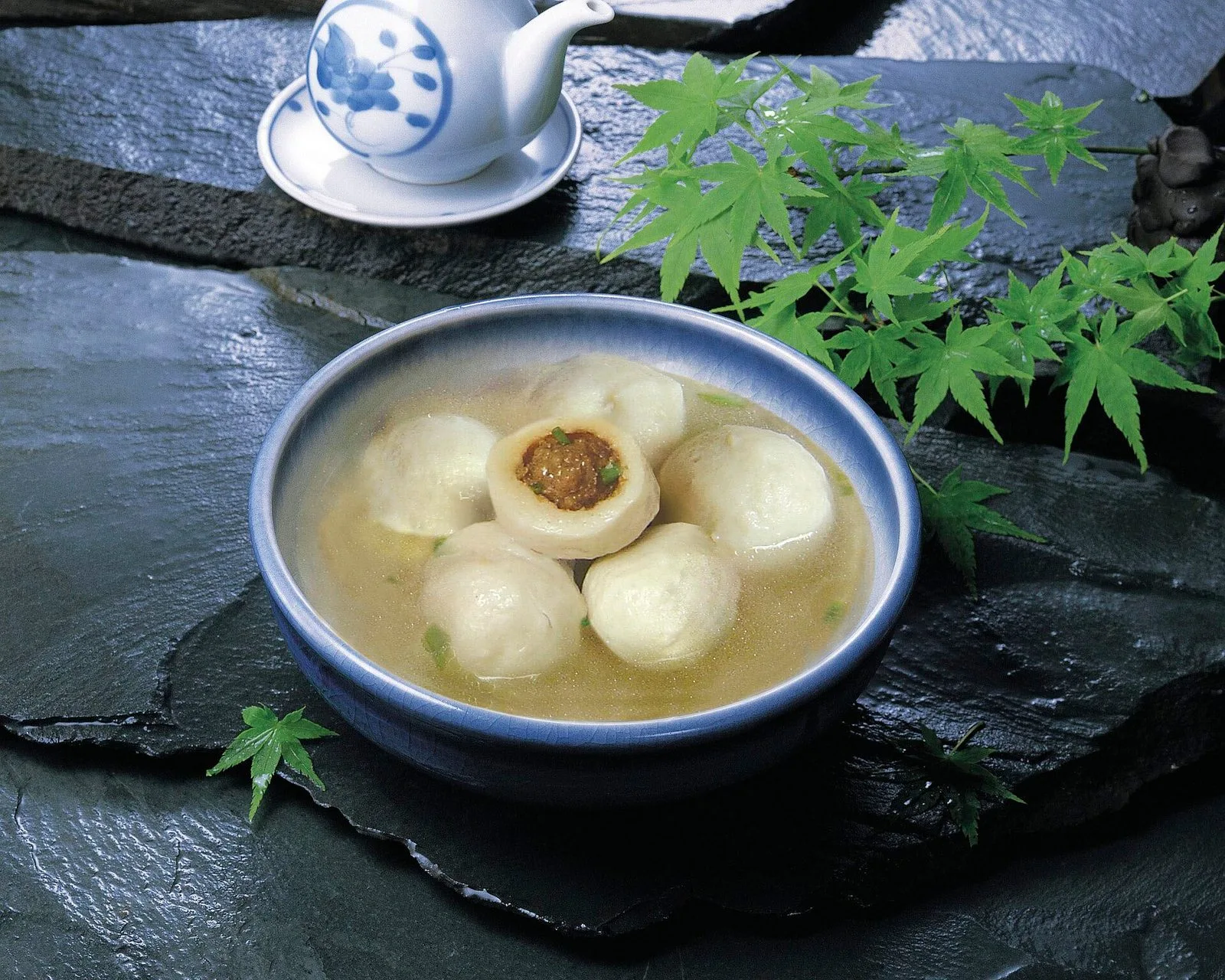
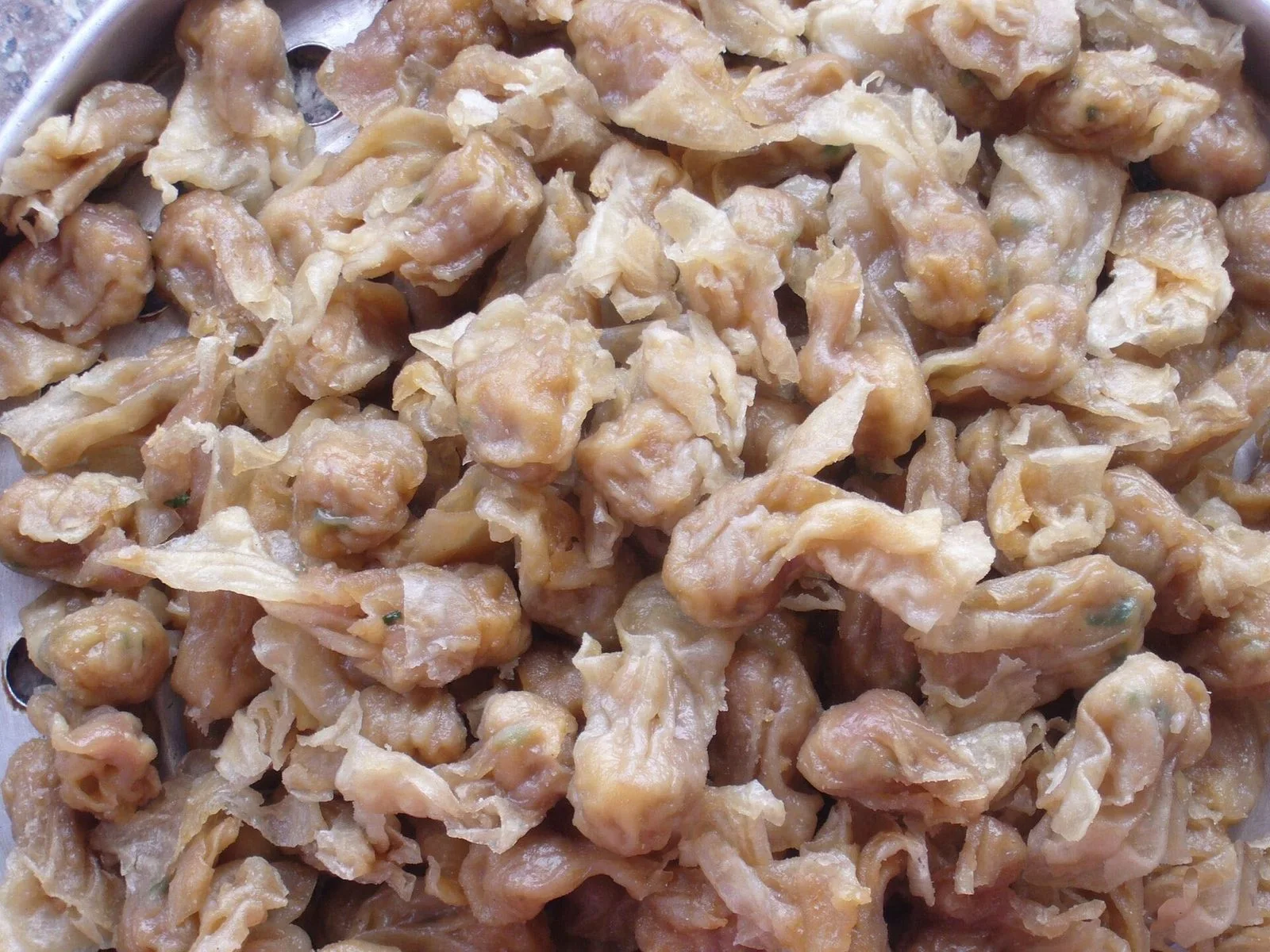
The differences between Fuzhou's snacks often lie in how they are made and how they feel to eat. Fish balls have a fish-based outer layer, often wrapped around a meat filling that is revealed when bitten open. Rouyan's distinctive feature is a thin wrapper made from pounded meat and starch. It resembles a small wonton but should not be understood as having an ordinary flour wrapper. Both are often served in soup, so pay attention to the broth and other ingredients too; fish or a thin wrapper alone does not reveal the full recipe.
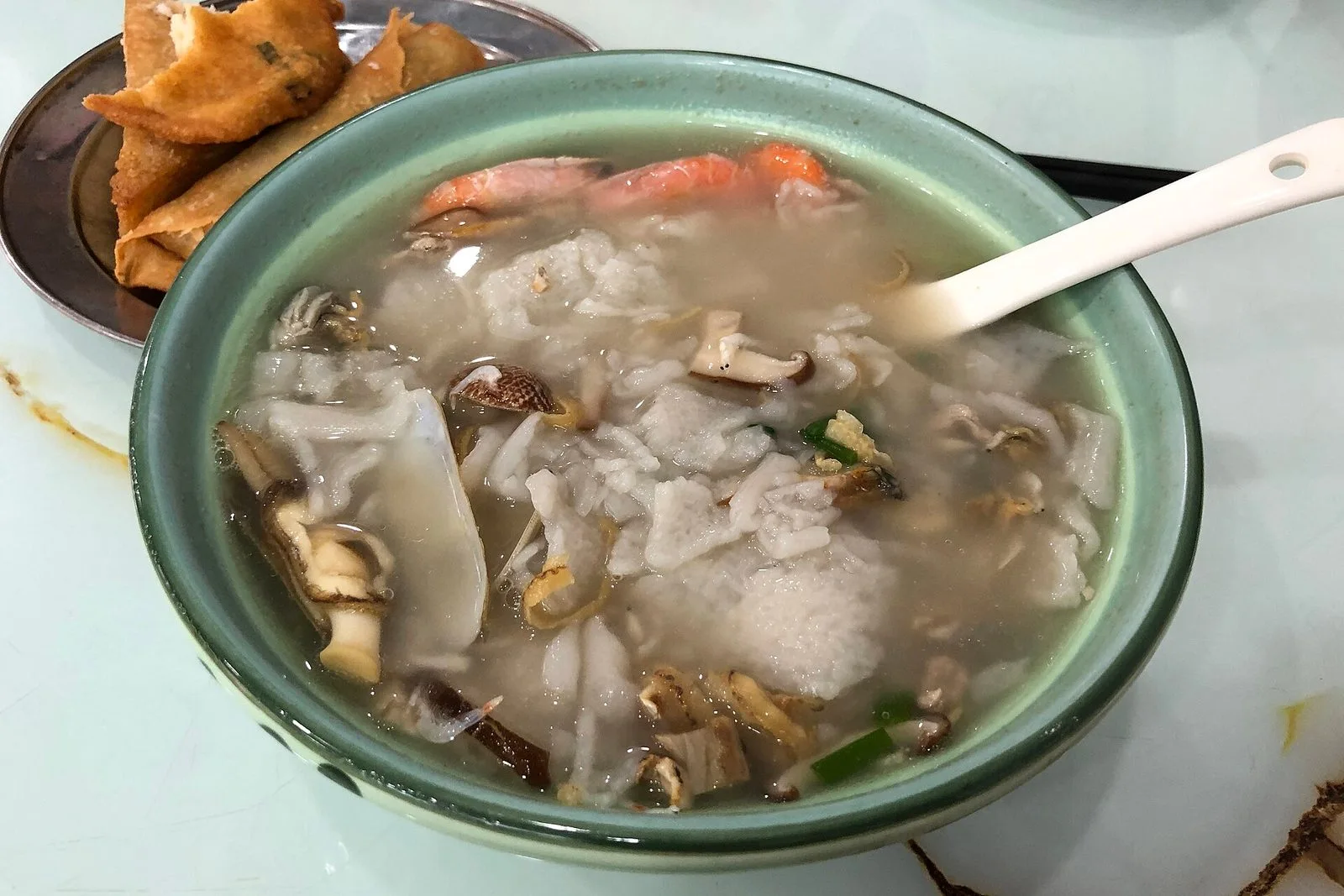
Guobian, also called dingbianhu, is made by pouring rice batter along the hot inner wall of a wok to form thin sheets, then scraping them into soup. Its texture differs from the springiness of fish balls and the thin, resilient rouyan wrapper. Small portions are a useful way to try each, without fitting every snack into one meal. Anyone avoiding fish, pork, shrimp, shellfish, wheat or other ingredients should ask about the actual recipe; similar-looking soups can have different broths.
Jasmine tea is another Fuzhou specialty connected with daily life and trading history. Tea leaves absorb the flowers' aroma through scenting; the combination of tea and floral fragrance matters, rather than having petals floating in the cup. When exploring the old town or shopping streets, drinking tea and comparing leaves can offer a slower break. If buying some to take home, taste it first where possible, and distinguish the tea itself from the packaging and gift box.