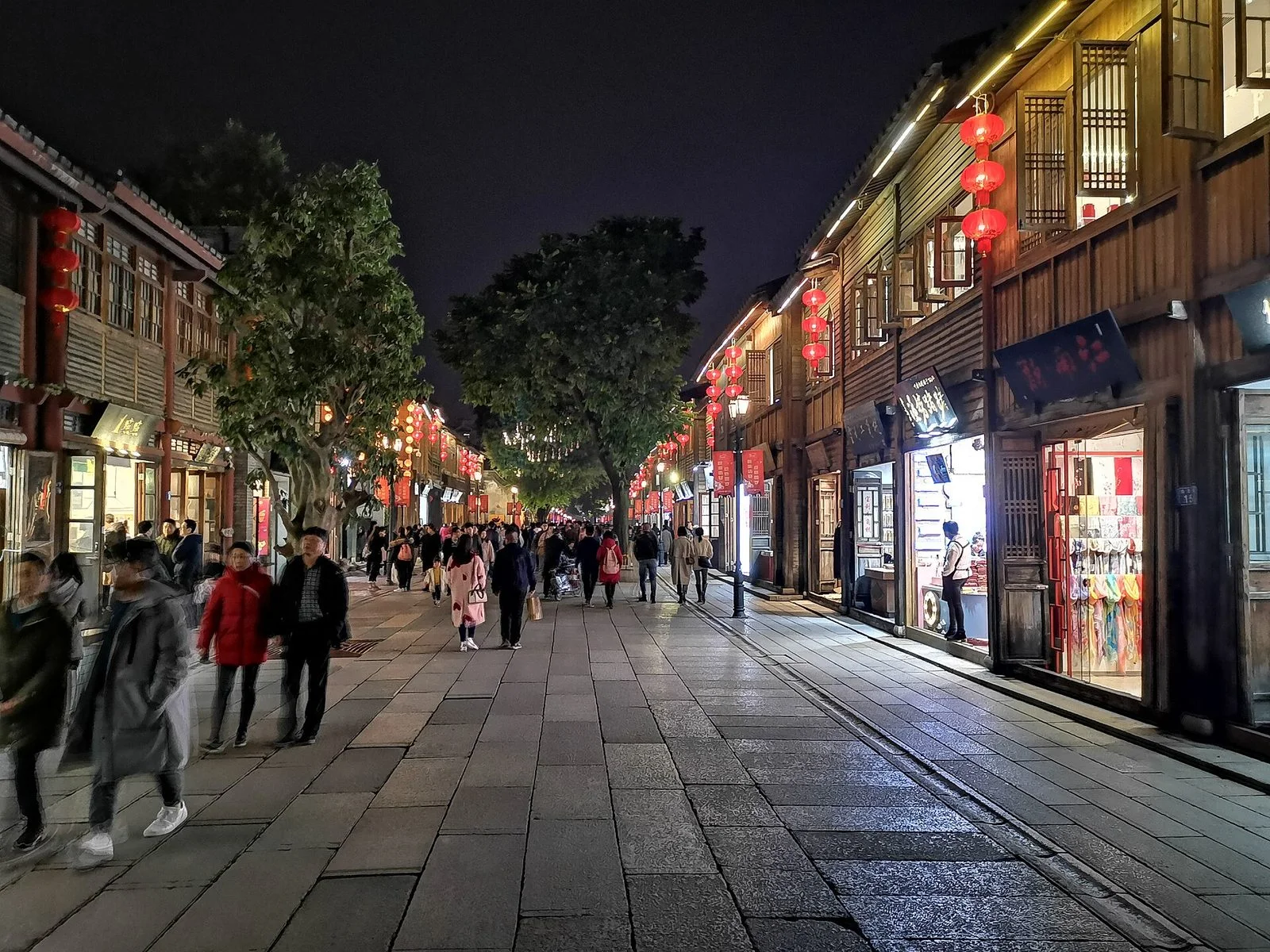
Nanhou Street and the lanes on either side
Sanfang Qixiang, in Fuzhou's Gulou District, is the collective name for traditional lanes and residences on either side of Nanhou Street. The three fang are Yijin, Wenru and Guanglu; the seven xiang are Yangqiao, Langguan, Ta, Huang, Anmin, Gong and Jibi. Nanhou Street provides the district's axis. Turning off into the lanes makes the relationship between the main street and residential buildings clearer.
The layout of the lanes has a long history, while most surviving buildings reflect residential architecture from the Ming and Qing dynasties onward. The district is not a single structure built in one year: individual residences have undergone repairs and changes of use. Read the dates, former residents and present purposes on building signs separately. Street shops, protected buildings and exhibitions in former homes together form the neighborhood today.
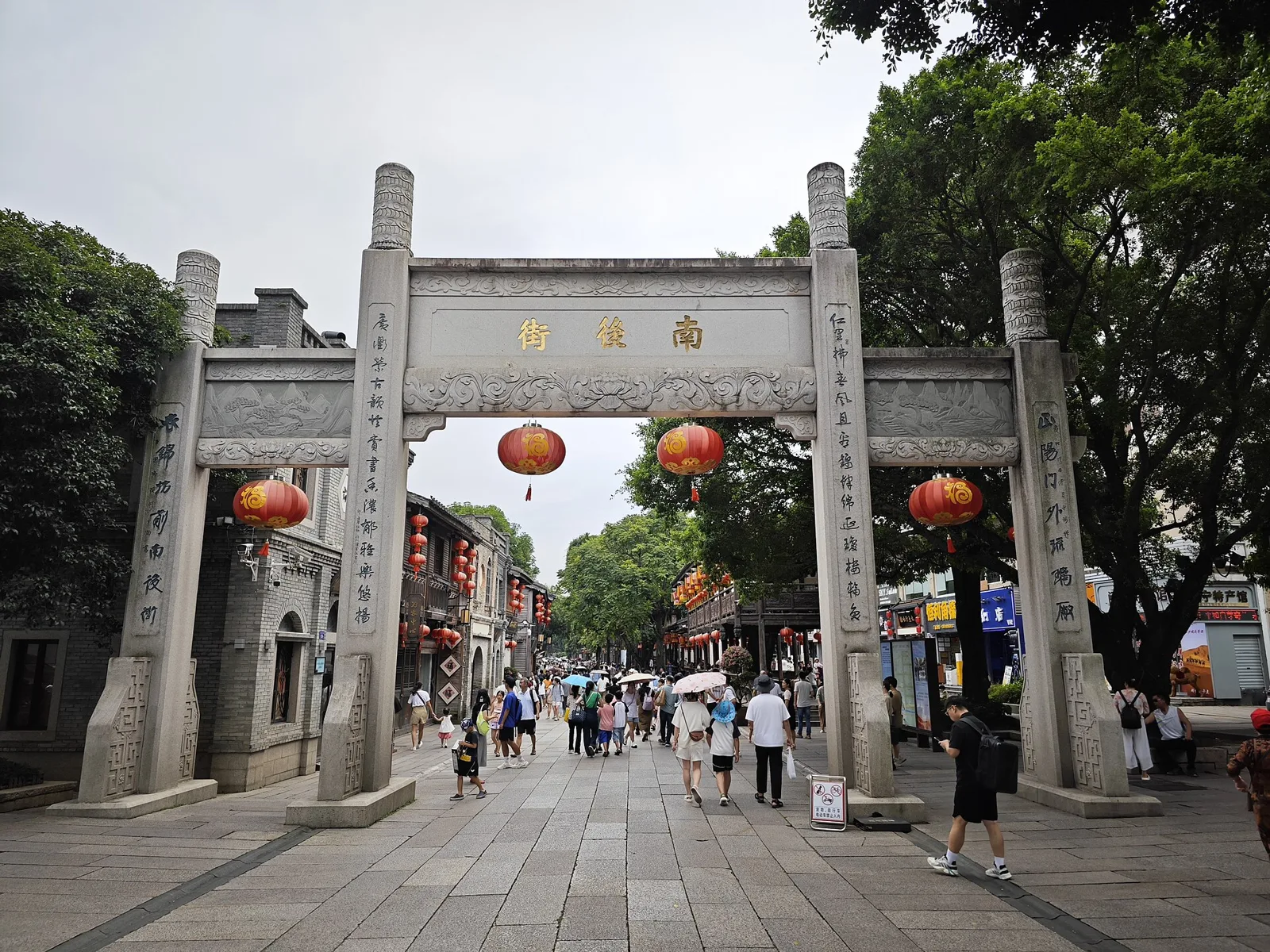
Roofs, courtyard walls and entrances
From above, the dense gray-tiled roofs, white courtyard walls and roof ridges clearly define the boundaries between residences. Back in the lanes, gable outlines, doorframes, wooden components and courtyard entrances explain traditional domestic space more effectively than a single photograph of a gateway on the main street. The overall roof view in the photograph also helps place the winding lanes within the wider district.
The waterside theater in Yijin Fang, Ermei Book House, Xiaohuang Tower and residences associated with figures such as Lin Juemin and Yan Fu offer different ways to explore buildings and people. Heritage lists confirm their historic status, but do not mean every room is open today. Looking closely at one or two courtyards that interest you is more manageable than trying to enter every residence.
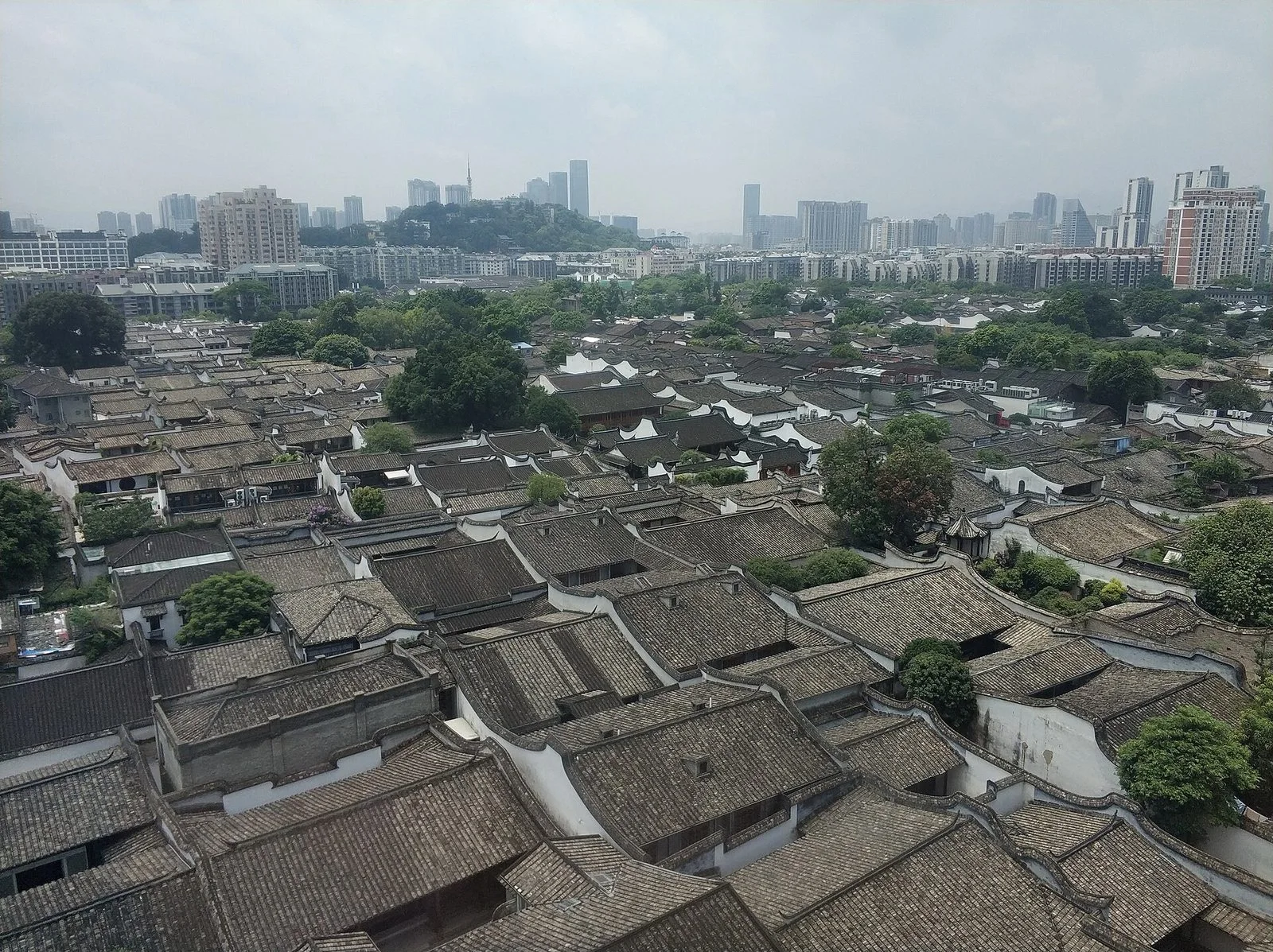
People and everyday uses of the district
Former homes connect Fuzhou with cultural, intellectual and social changes in modern China. Start with an account of one resident's life and home, then consider how it relates to the entrance hall, courtyards and living spaces. Remembering only a list of famous names can obscure the fact that these buildings were once homes for individual families. Exhibition text and on-site explanations offer more background than exterior photographs alone.
Dining, cultural products and drinks on Nanhou Street reveal how the district is used today. The heart-shaped tree is a frequent photo spot, but is only one feature of the main street. If architecture and history are your priority, allow time for side lanes and courtyards that are actually open. For a rest or a snack, choose from the shops and menus available that day; not every purchase needs to be treated as a historical experience.
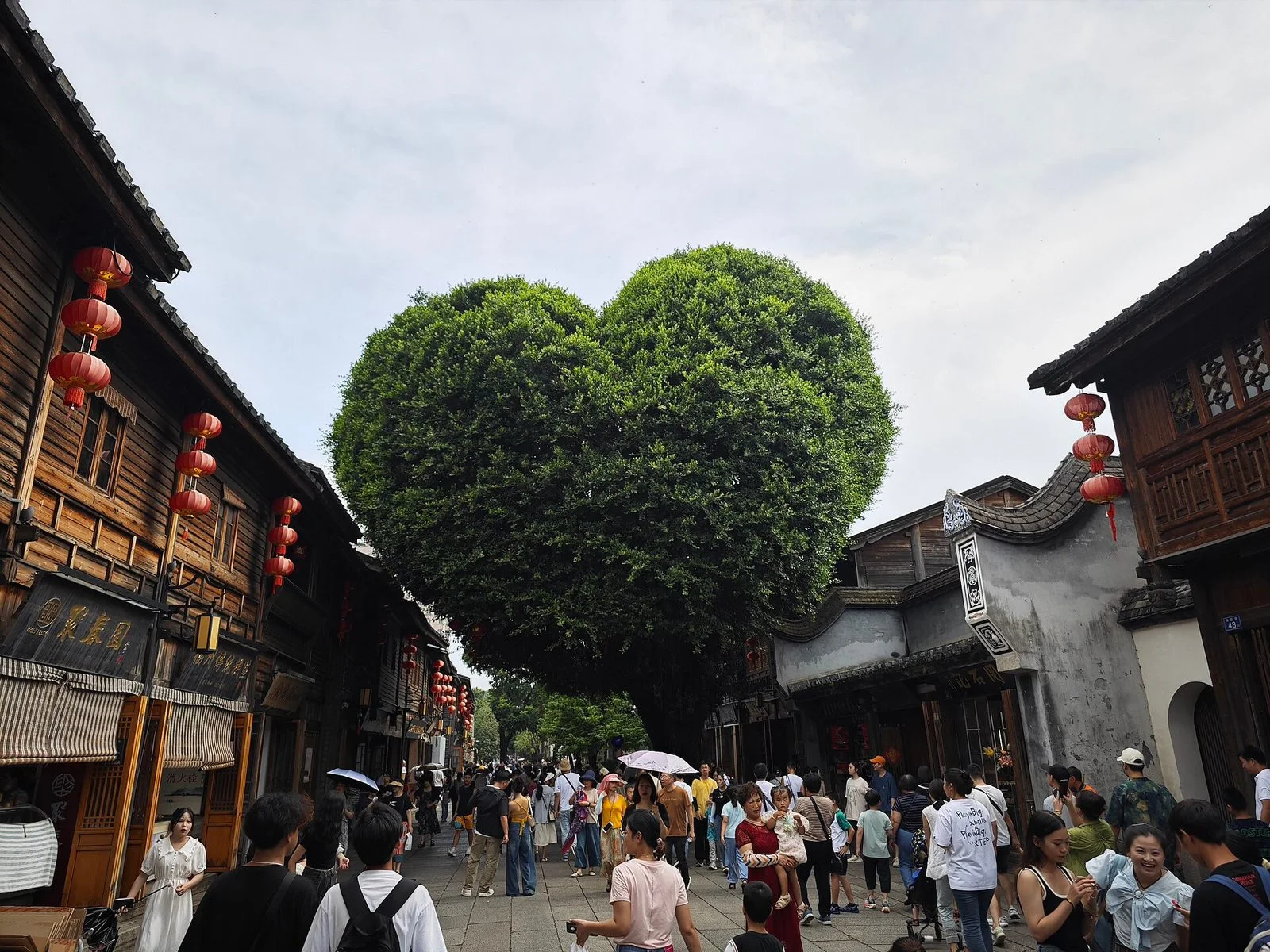
Allowing time to look closely and rest
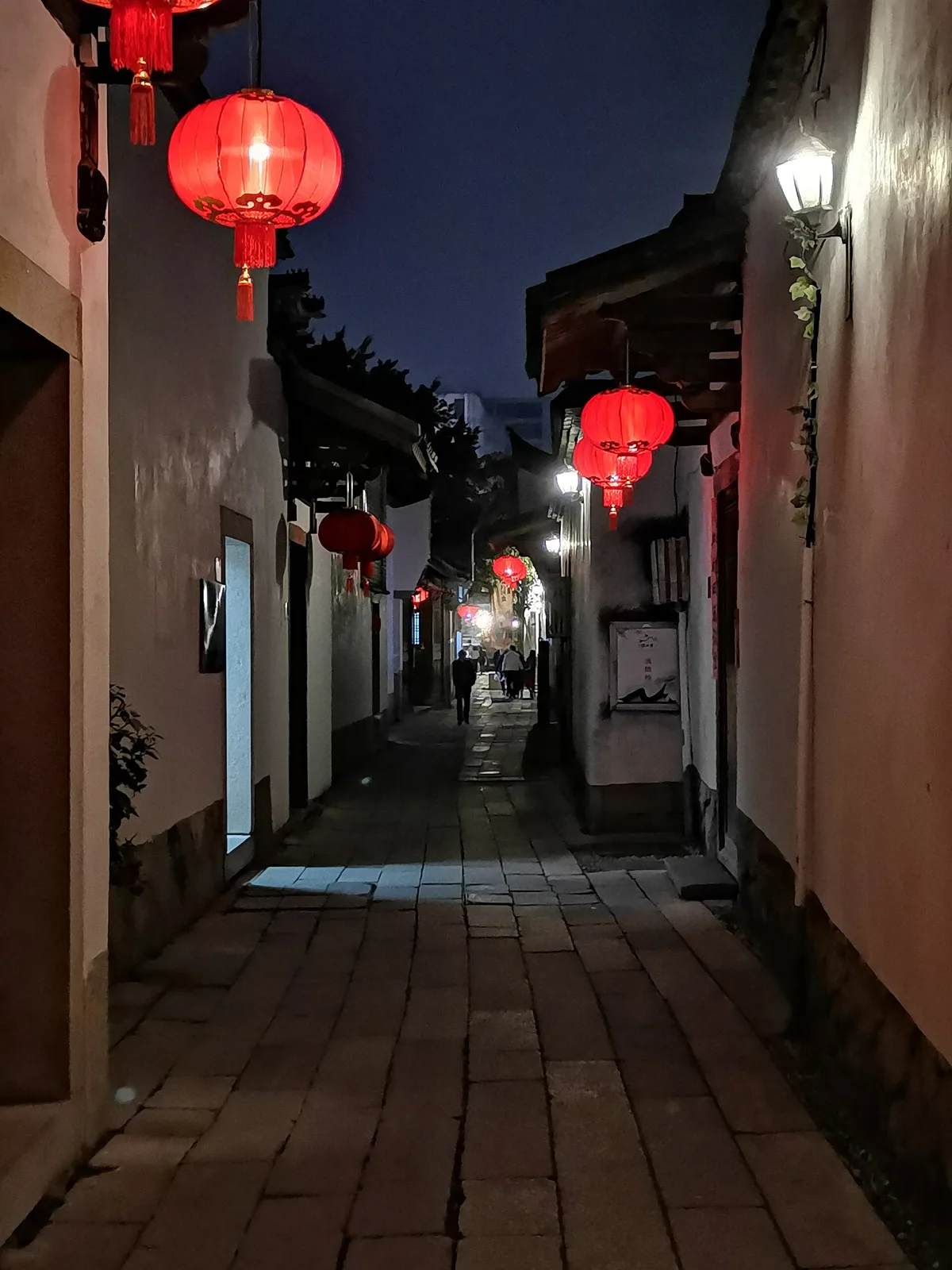
For a first visit combining the main street, several lanes and one or two courtyards, around 2–3 hours can be a starting point for your own plans. This is only a suggestion; reading exhibitions or joining a guided explanation will take longer. Daylight makes walls, timberwork and courtyard details easier to see, while evenings focus more on the illuminated main street and commercial activity. Choose a time according to your interests.
Access through the streets, opening of individual courtyards, and tickets for exhibitions or performances are separate matters. Before visiting, or at the visitor service point, check the particular places you want to see and that day's access. If buying a ticket with a passport, confirm which documents are accepted and how they are checked. Walking the lanes can be sweaty in Fuzhou's hot weather, and paving may be slippery after rain. Watch thresholds, steps and other pedestrians when entering buildings or stopping to rest.
Useful official references
Check the relevant official service before making arrangements. These links are references, not a guarantee of current services.