A Pagoda Built by Xuanzang to Hold Scriptures
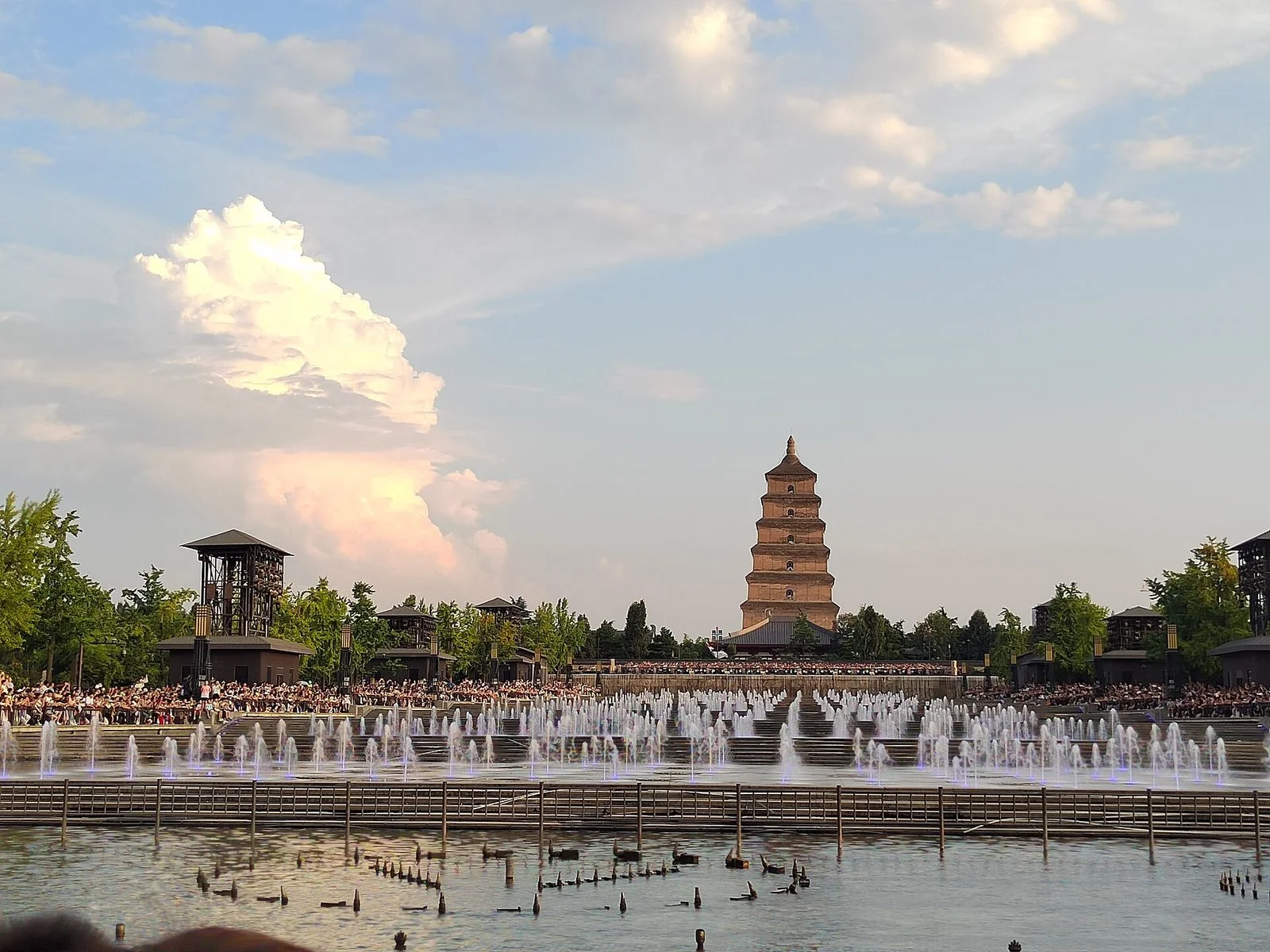
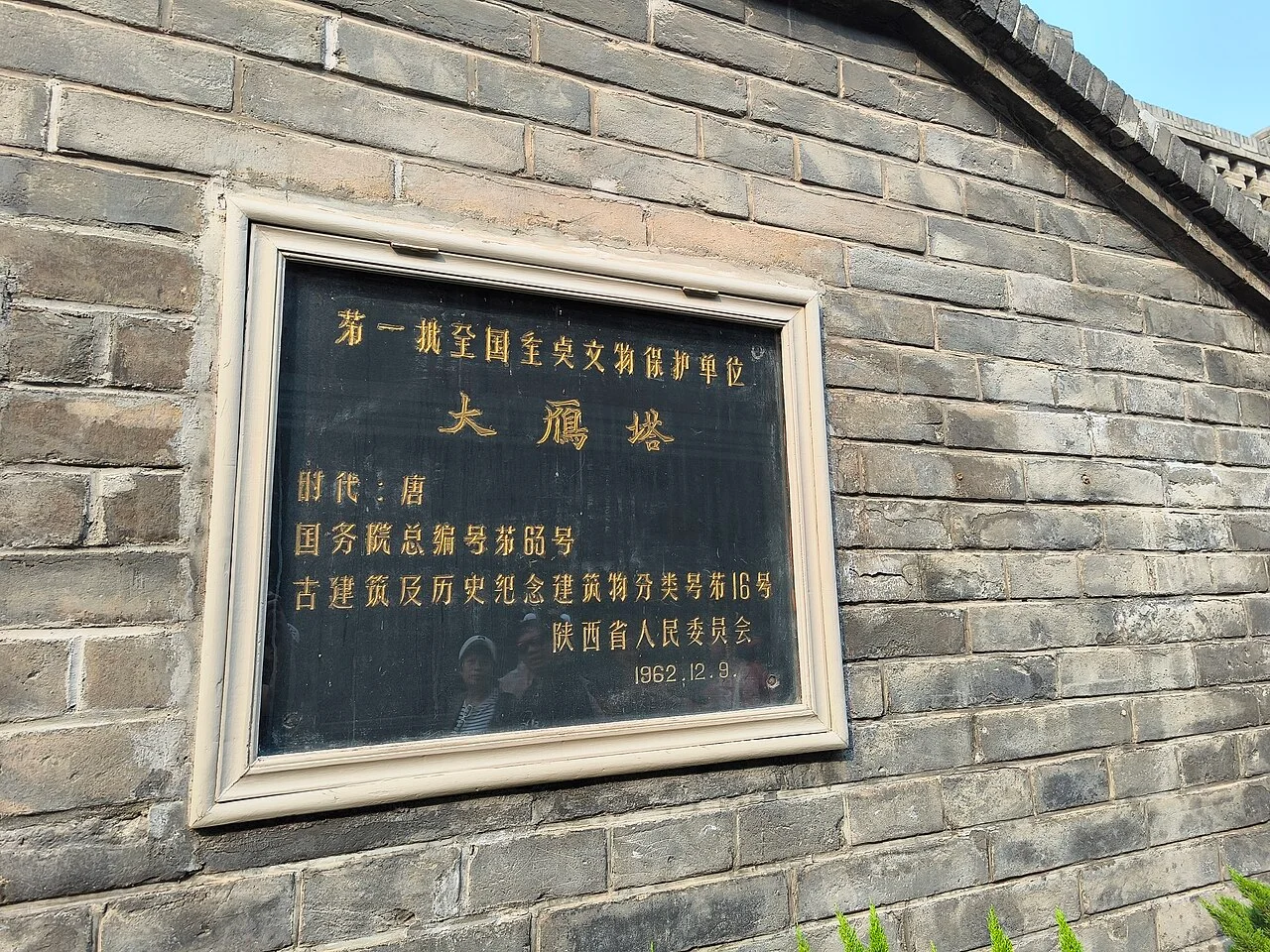
The Giant Wild Goose Pagoda stands in Da Ci'en Temple in the south of Xi'an. Xuanzang directed its construction in 652, the third year of the Yonghui era of the Tang, to preserve the scriptures and Buddhist images he had brought back from India. It began with five stories, was later raised to nine, and changed in height and story count several times before settling at today's seven. It stands 64.5 meters tall, with sides 25.5 meters long at the base. It is the earliest and largest surviving Tang brick pagoda of the square pavilion type, and in 2014 it was inscribed on the World Heritage List as a site of the Silk Roads: the Routes Network of Chang'an–Tianshan Corridor.
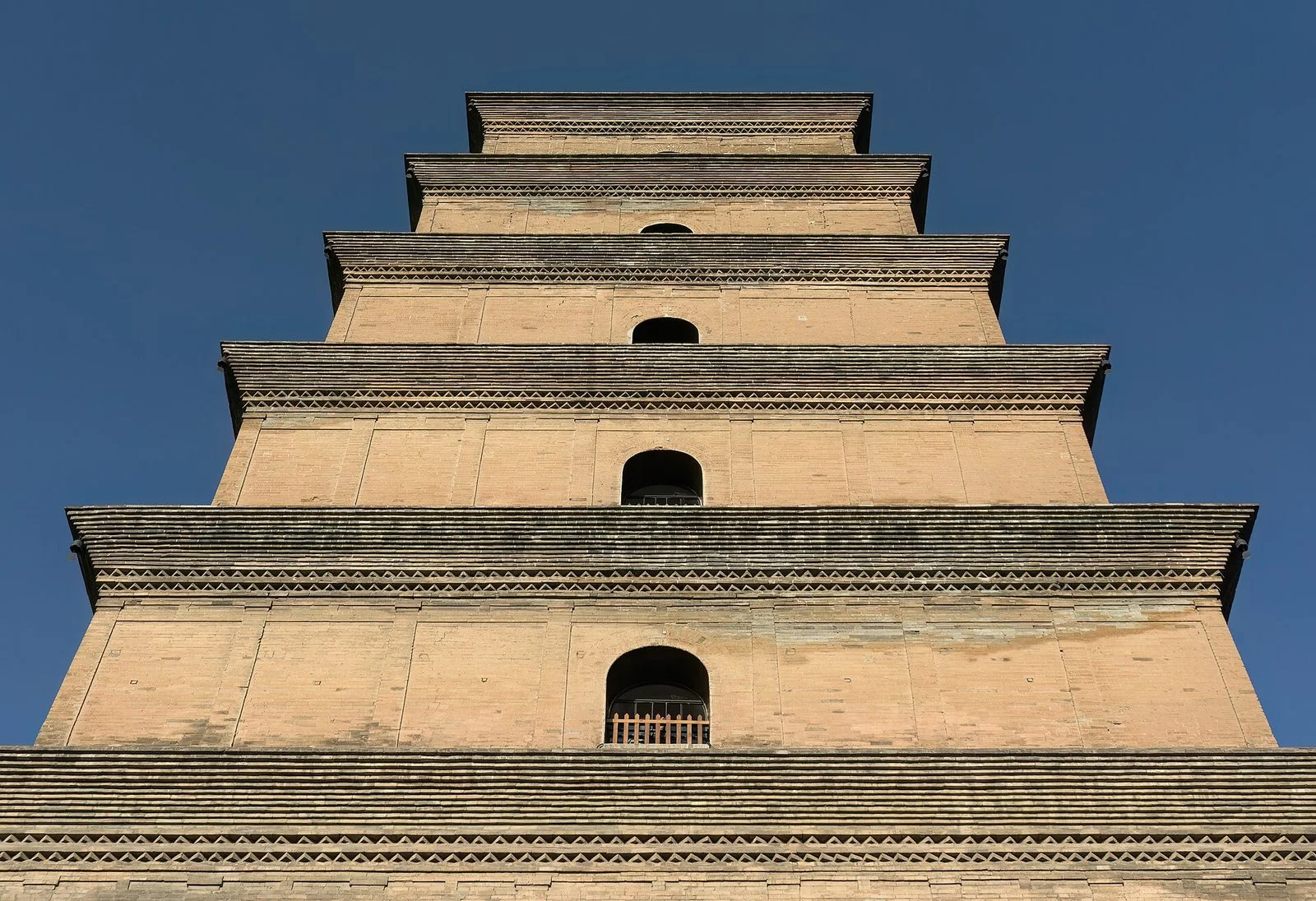
The pagoda tapers in proportion from the bottom up. Each story has an arched doorway on all four sides, with a corbeled brick eave above. Looking up from the base, the seven eaves step inward one after another, making a clean cone; the brick imitation of timber construction uses few timber members, yet it renders the bays, columns and eaves of a pavilion-style pagoda.
Da Ci'en Temple and Xuanzang's Translations
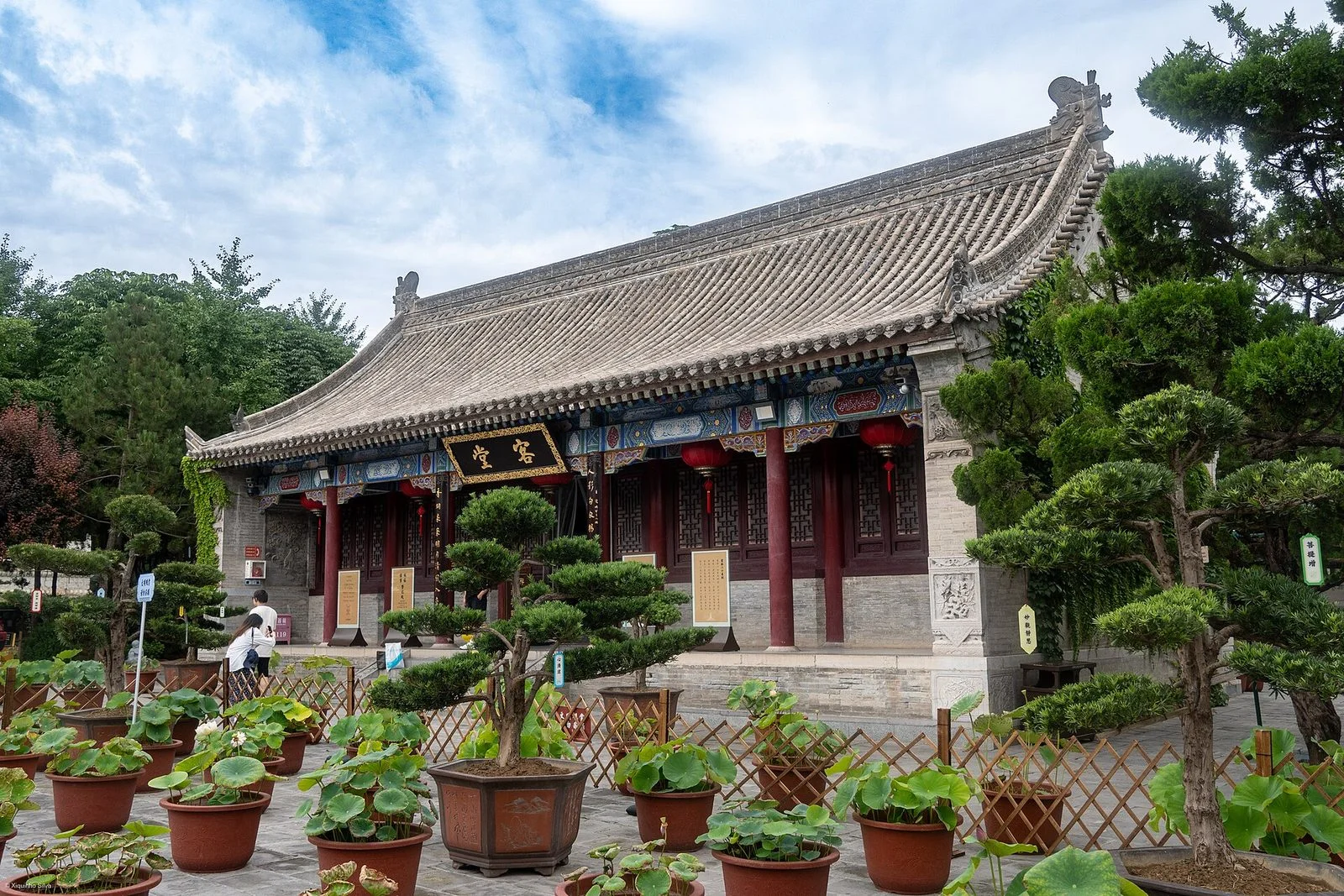
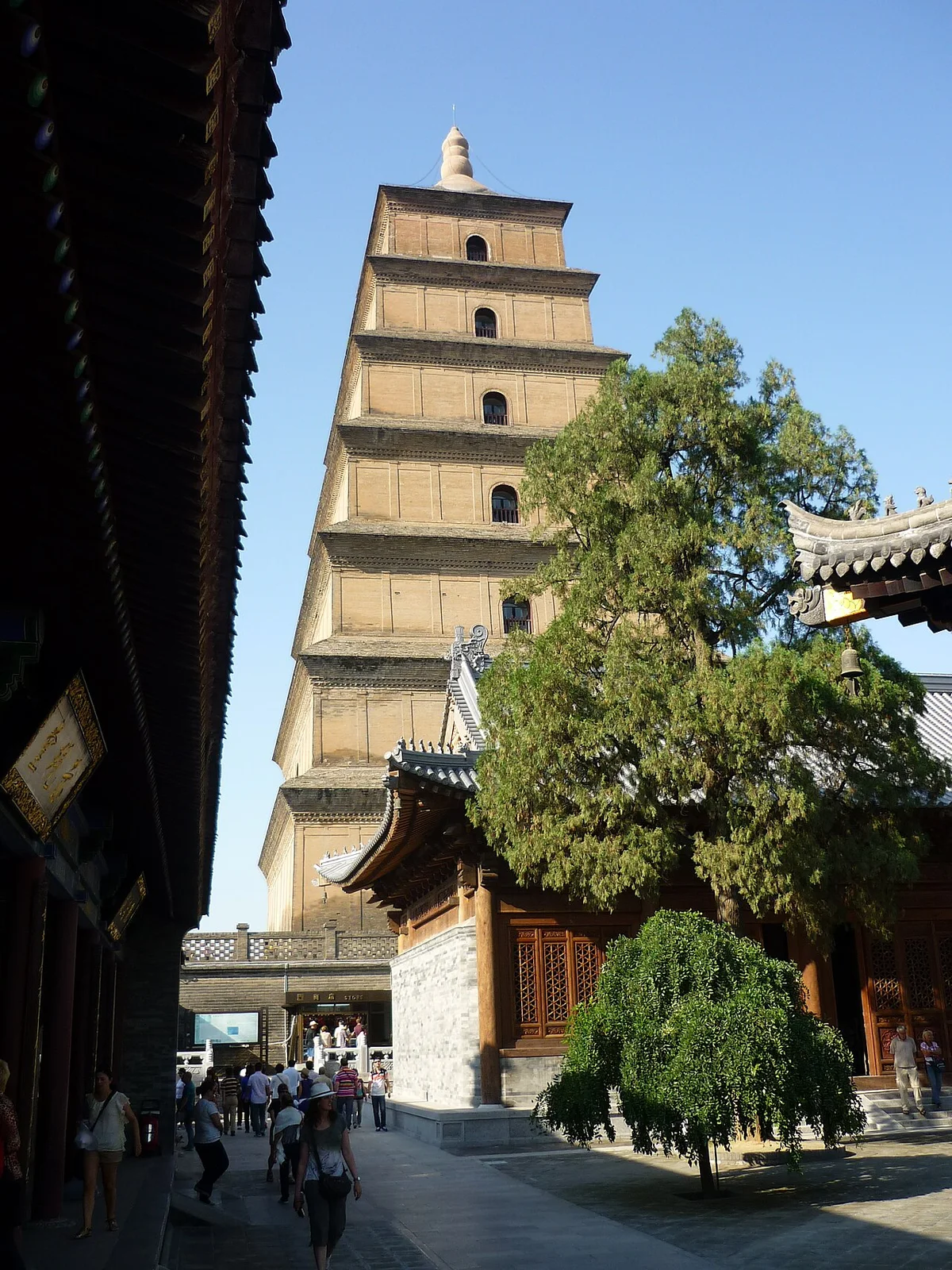
Da Ci'en Temple was founded by Emperor Gaozong of the Tang, Li Zhi, in memory of his mother, Empress Wende, as a royal temple; Xuanzang once led the translation of scriptures here. Along the temple's central axis are the Mahavira Hall, the Dharma Hall and the Xuanzang Sanzang Hall, among other buildings; the pagoda originally stood in the temple's western compound. Today you enter through Ming- and Qing-style halls and courtyards, and the old pagoda rises behind them, with incense, old trees and the tower in one view, a different impression from the isolated silhouette seen from the square.
Set into both sides of the south doorway at the base of the pagoda are two steles: the Preface to the Sacred Teaching of the Tripitaka of the Great Tang and its Record, the first written by Emperor Taizong (Li Shimin), the second by Emperor Gaozong (Li Zhi), and both brushed by Chu Suiliang. Together they are known as the 'Two Emperors, Three Perfections' steles. The lintels and door frames still carry Tang line-carved Buddhas, and inscriptions from many periods survive inside and out, including the 'names inscribed at the Wild Goose Pagoda' left by Ming- and Qing-dynasty provincial graduates, following the Tang practice of successful examination candidates. Do not just walk around the pagoda: the doorway at the base and the steles are worth stopping for.
Climbing the Pagoda and the View
The entrance to the climb is at one side of the pagoda base. Temple admission and the climb are separate tickets, and the climb ticket is bought separately. The stairs inside are narrow and grow steeper toward the top; climbing up and down all seven stories takes about half an hour to an hour. Each story has arched openings on four sides, with railings outside, and you can look out: the north square and the city to the north, the south square and Datang Everbright City to the south, and on a clear day the Zhongnan Mountains. The stairs and doorways are narrow, queues form in peak season, and skirts or large backpacks are awkward.
The value of the climb is mainly height and structure: inside, you can see the thickness of the brickwork and the relation between the arched openings and the floors; outside, the seven eaves and the taper read more clearly than from the square. If Buddhist history, calligraphy and old architecture are not particular interests, seeing the pagoda, the steles and the Xuanzang Sanzang Hall from the temple grounds is enough, and you need not go to the top. It is windy up there, so add a layer in winter and toward evening.
North and South Squares and the Musical Fountain
The musical fountain on the north square is a piece of modern city landscaping, not part of the old pagoda. It was built with the square, runs to a fixed schedule, and may be stopped for maintenance, weather or events; check the notices on site for times. When the fountain runs it is crowded, and anyone wanting a photograph of pagoda and water should claim a spot early. To avoid the crush, go to the raised sides of the square, or to the south square for the bronze statue of Xuanzang and a frontal view of the pagoda.
The south square connects to Datang Everbright City, which becomes a different scene once the lights come on. The north square is more open and better for the pagoda's full outline and its night view. The temple takes bookings and tickets through its WeChat account, Da Ci'en Temple, and the climb ticket is bought on site separately; prices and which stories are open are as posted at the temple that day (ticketing channel checked 2026-11-11). Allow two to three hours to see the temple, climb the pagoda and take photographs on the squares without rushing.
Useful official references
Check the relevant official service before making arrangements. These links are references, not a guarantee of current services.
- Xi'an Municipal Bureau of Culture and Tourism: 2026 list of A-level scenic areas in Xi'an (2026-02-25) ↗
- China.org.cn: World Cultural Heritage on the Shaanxi section of the Silk Road — the Giant Wild Goose Pagoda (part 1) (2018-03-22) ↗
- Xi'an Bendibao: how to book tickets for the Giant Wild Goose Pagoda (citing the Da Ci'en Temple WeChat account; accessed 2026-11-11) ↗