Why tomb and temple share one site
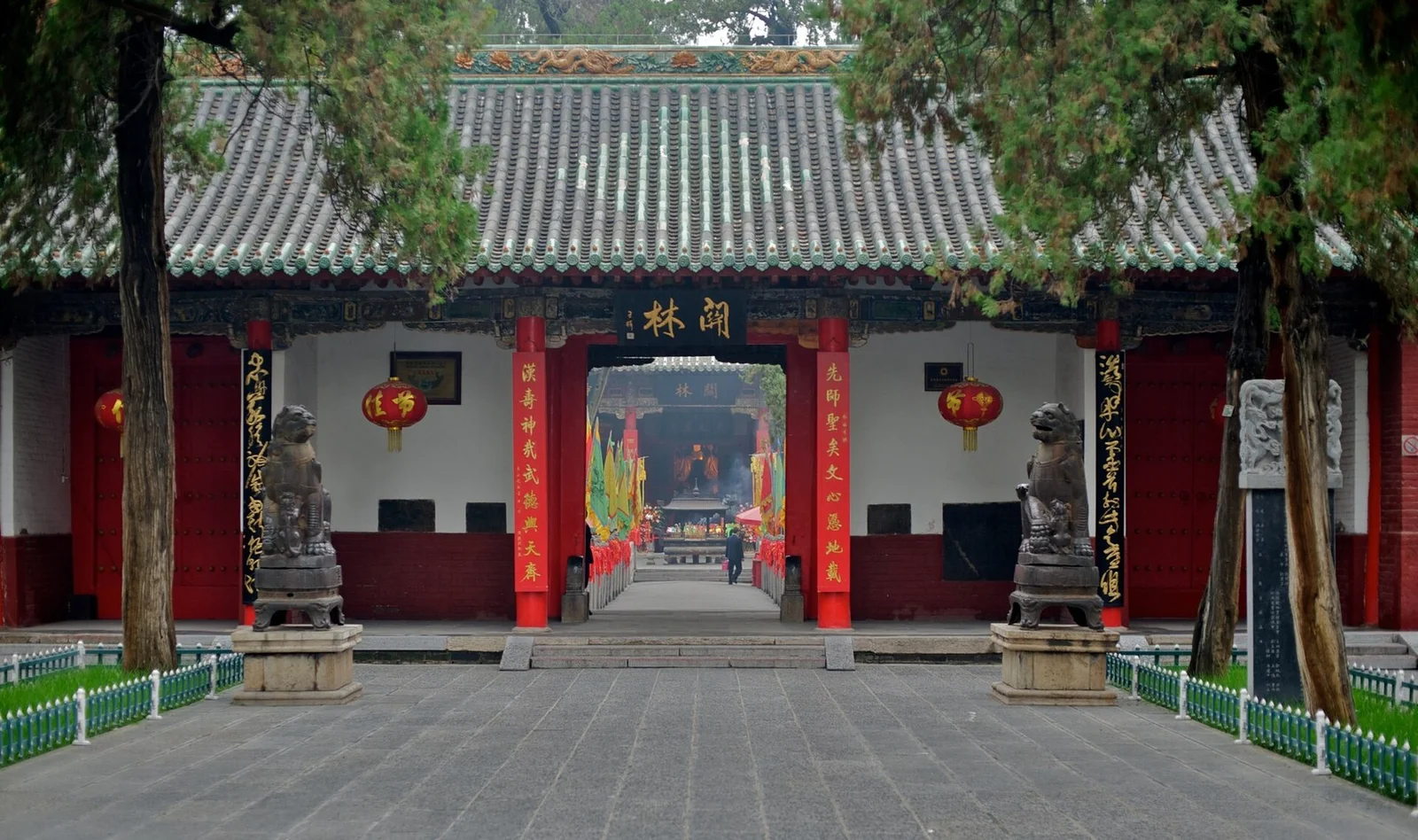
Guanlin lies south of Luoyang, with the Sui-Tang city to the north and Longmen not far to the south. The Luoyang Municipal Bureau of Cultural Relics records that it was founded in the Eastern Han, rebuilt in the Ming, and is now a national key cultural relic, a 4A scenic area and a protection site for the national intangible heritage of Guan Gong worship. It combines a tomb (lin) and a shrine (miao) in one place, an arrangement the bureau describes as unique among Guan Yu memorial sites in China.
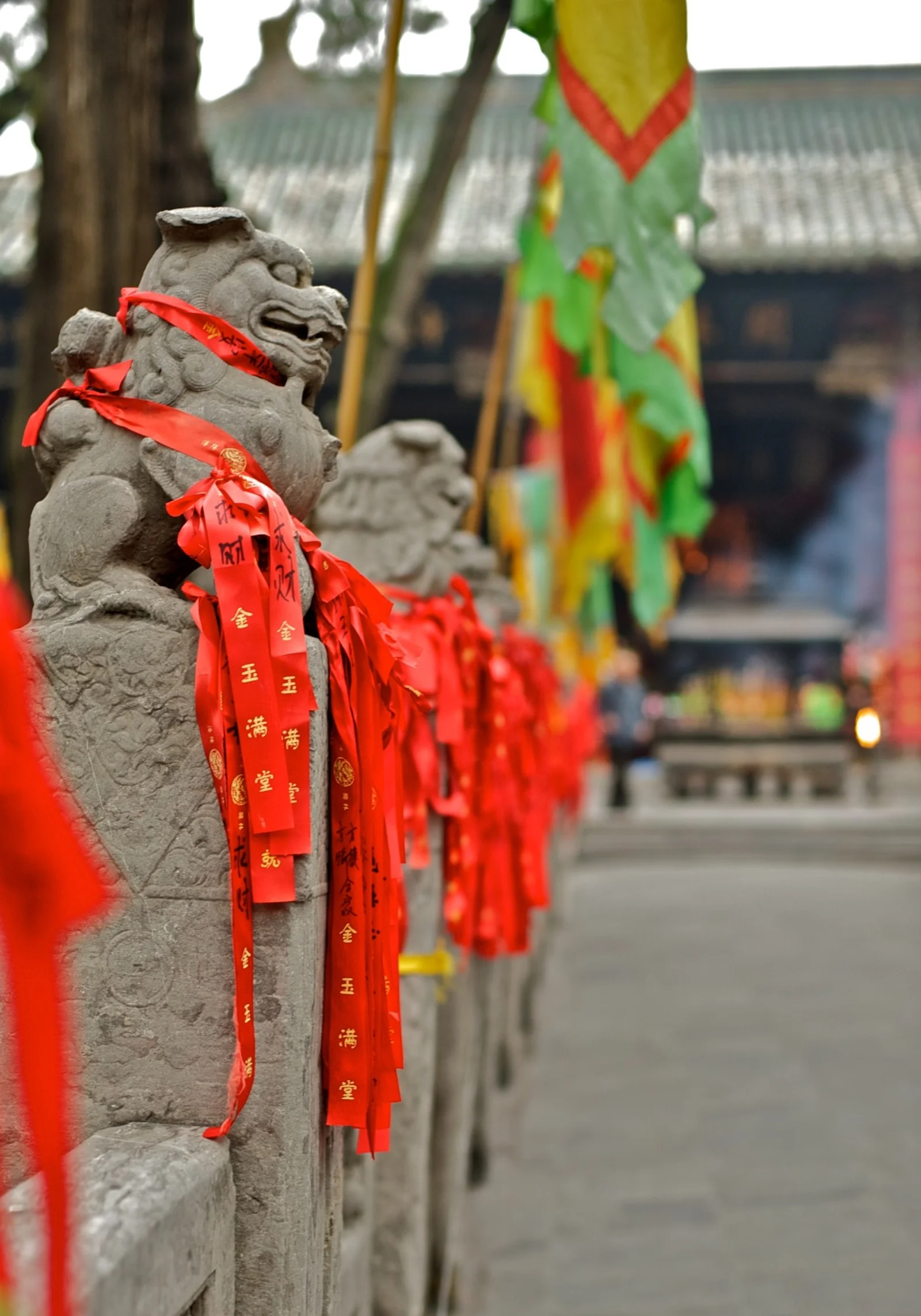
Local tradition holds that Guan Yu’s head is buried here, but that belongs to legend rather than confirmed archaeology. Whatever the actual burial, Guanlin has long served worship, pilgrimage and community events. Incense, red ribbons and temple fairs still use the buildings.
From the opera stage to the main hall
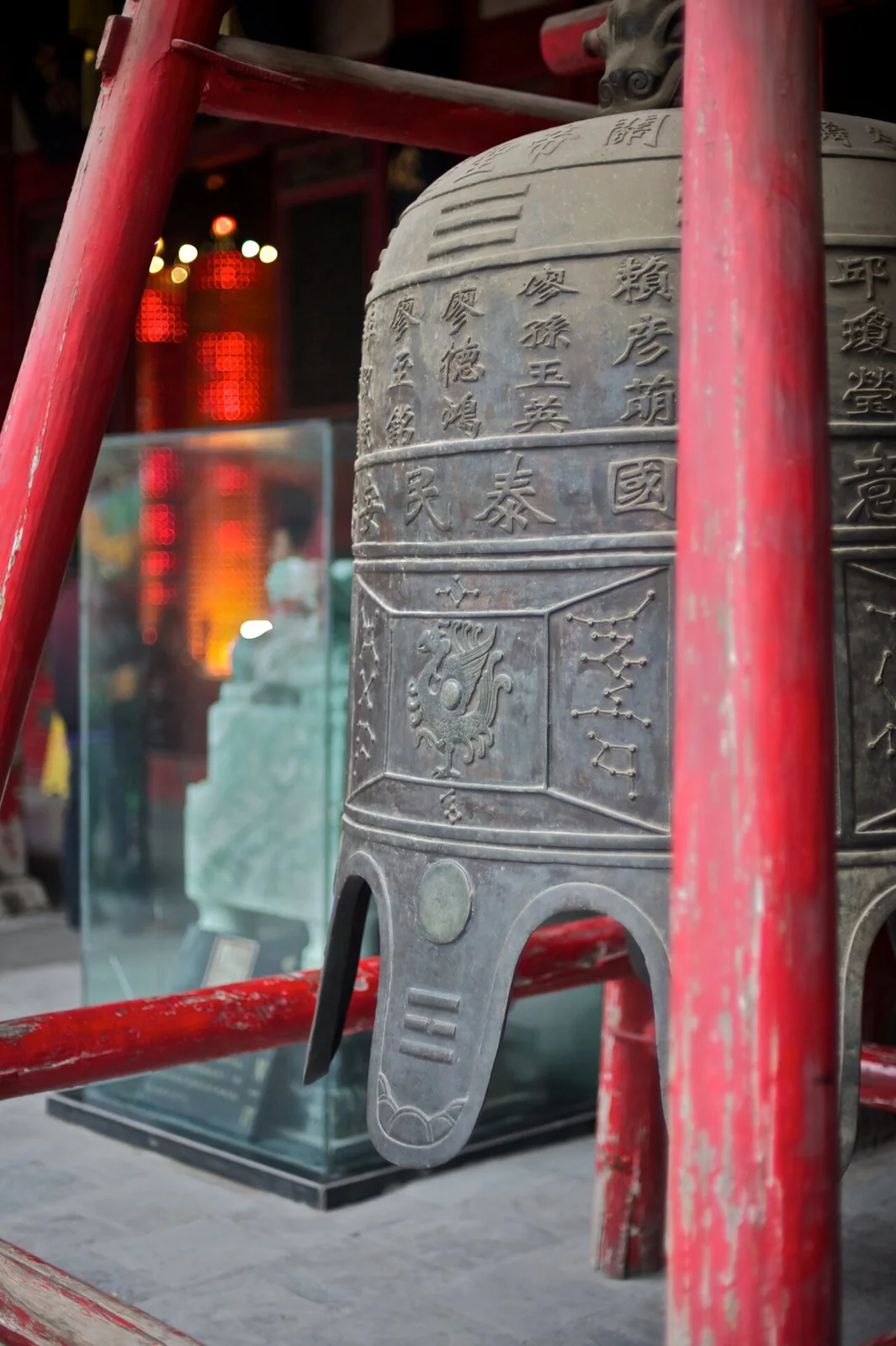
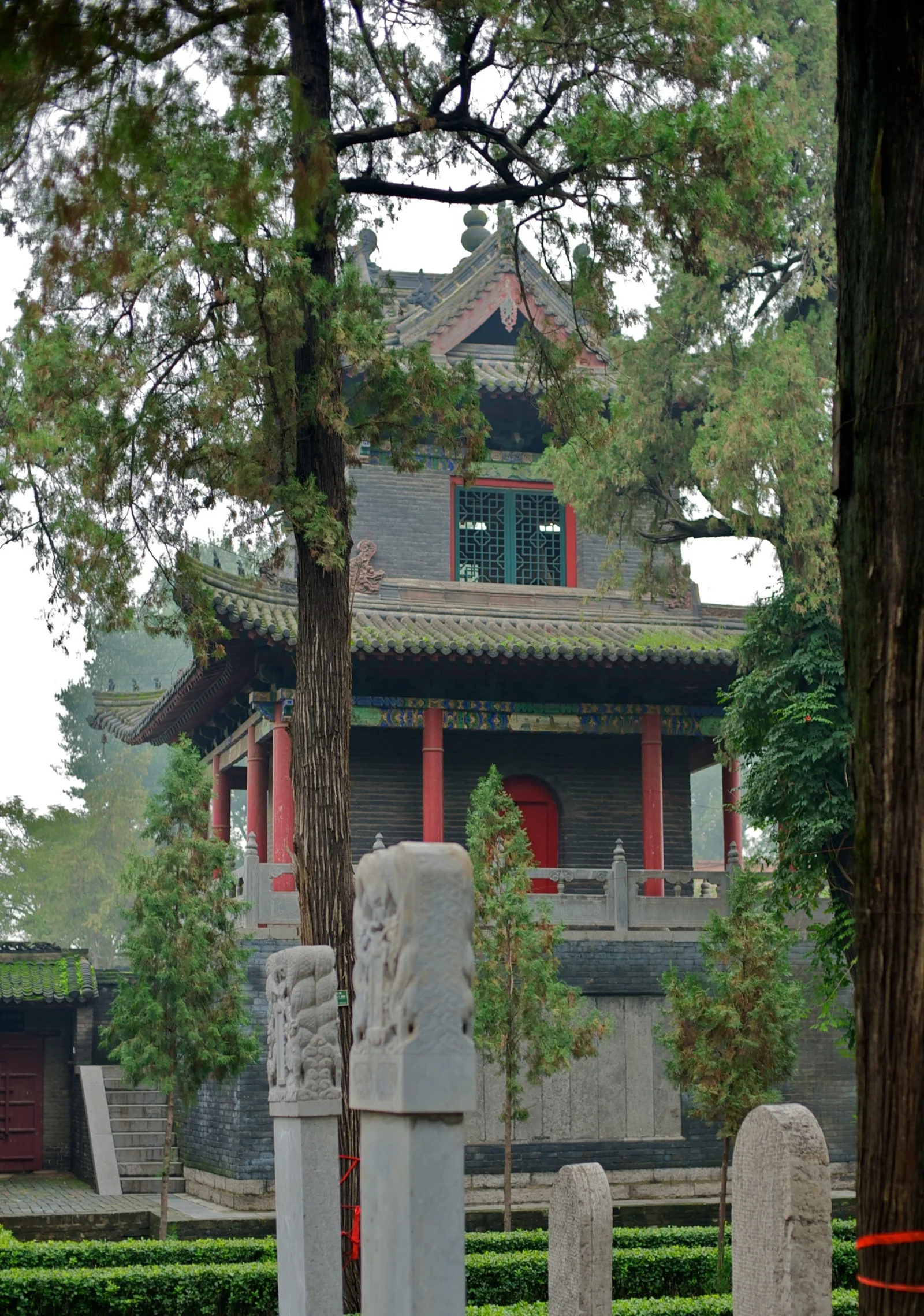
The axis begins at the opera stage and continues through the gate, the second gate, the stone-lion avenue, the bell and drum towers, the ceremonial columns, the incense burner, the platform, the offering hall and finally the main hall. Red prayer ribbons are often tied beside the stone lions, and incense burns in front of the halls; the visiting route is also the ritual route. On the avenue, look at the lions and inscriptions before entering the halls; the sequence gives more than a search for a single statue of Guan Yu.
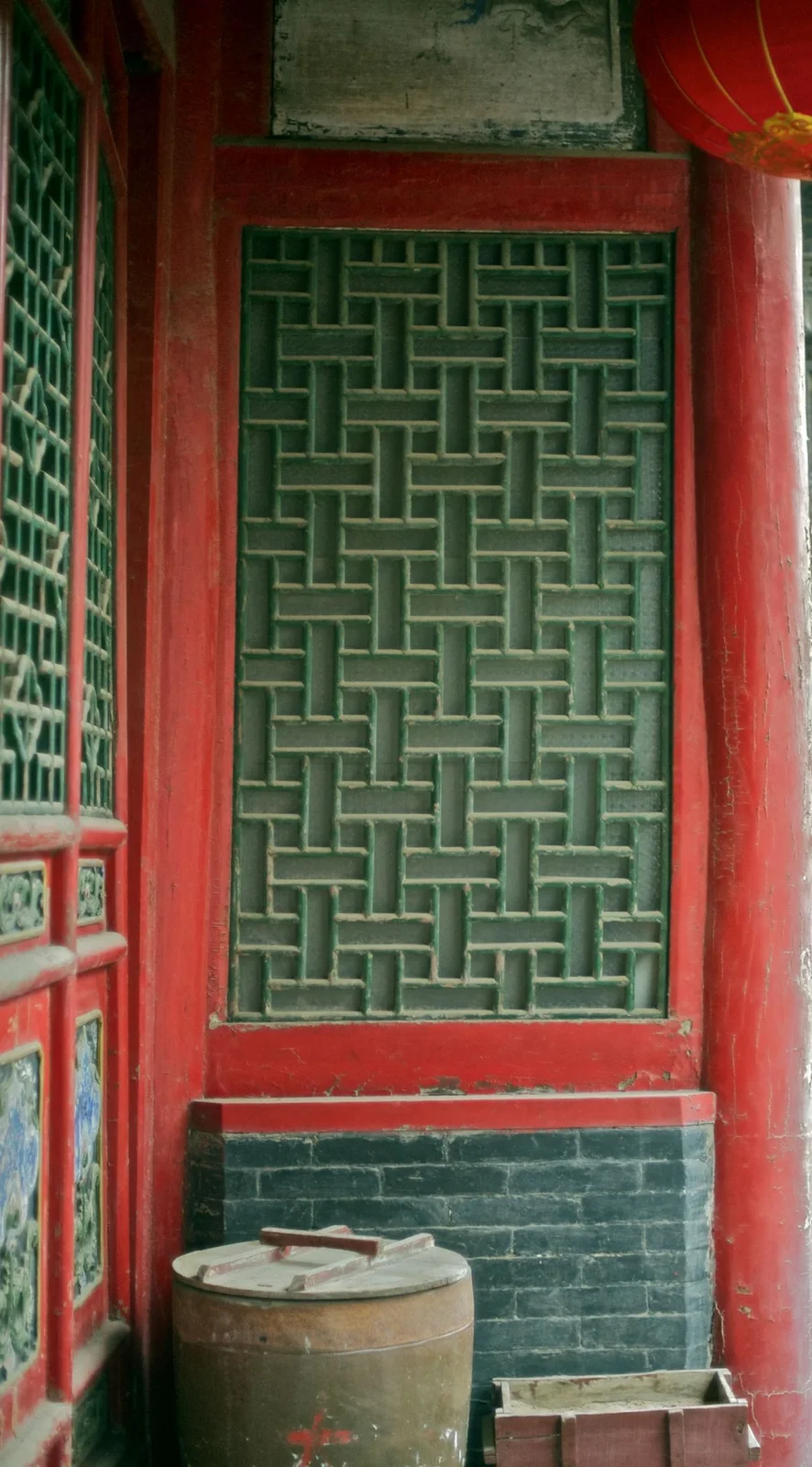
The buildings themselves deserve attention. The Ming-rebuilt timber frames, glazed components and courtyard proportions preserve a typical northern shrine arrangement; the plaques, couplets and statues in different halls show how the image of Guan Gong was reshaped over time. If a ritual or ceremony is under way, walk around the ceremonial area and do not block worshippers to take photographs.
Tickets, location and what suits whom
Guanlin requires a ticket. A ticketing page has listed 40 yuan full price and 20 yuan concession, with hours around 08:00–18:30; these details change with the season, so check the site notice beforehand. The group booking number is 0379-65951746 and the enquiry number is 0379-65962018-8007. It is close to Longmen and can be combined with it in one day, but do not rush both.
Guanlin suits travellers interested in the Three Kingdoms story, shrine architecture or Guan Gong worship. For the most immediately striking Luoyang landmark, Longmen is stronger; for a religious space that is still in use, Guanlin rewards more time. Wear comfortable shoes: much of the site is stone paving and steps.
Useful official references
Check the relevant official service before making arrangements. These links are references, not a guarantee of current services.