City introduction
Guilin lies in northeastern Guangxi. It is easy to imagine the central city's Elephant Trunk Hill, the karst peaks along the Li River and Yangshuo West Street as one compact landscape. In fact, Guilin is both a city and a municipality that includes places such as Yangshuo, Gongcheng and Lipu. The central districts are marked by isolated peaks interspersed with rivers, lakes and streets; farther out, longer stretches of river, clusters of peaks and county-level food traditions come into view.
Isolated peaks at Elephant Trunk Hill and the palace
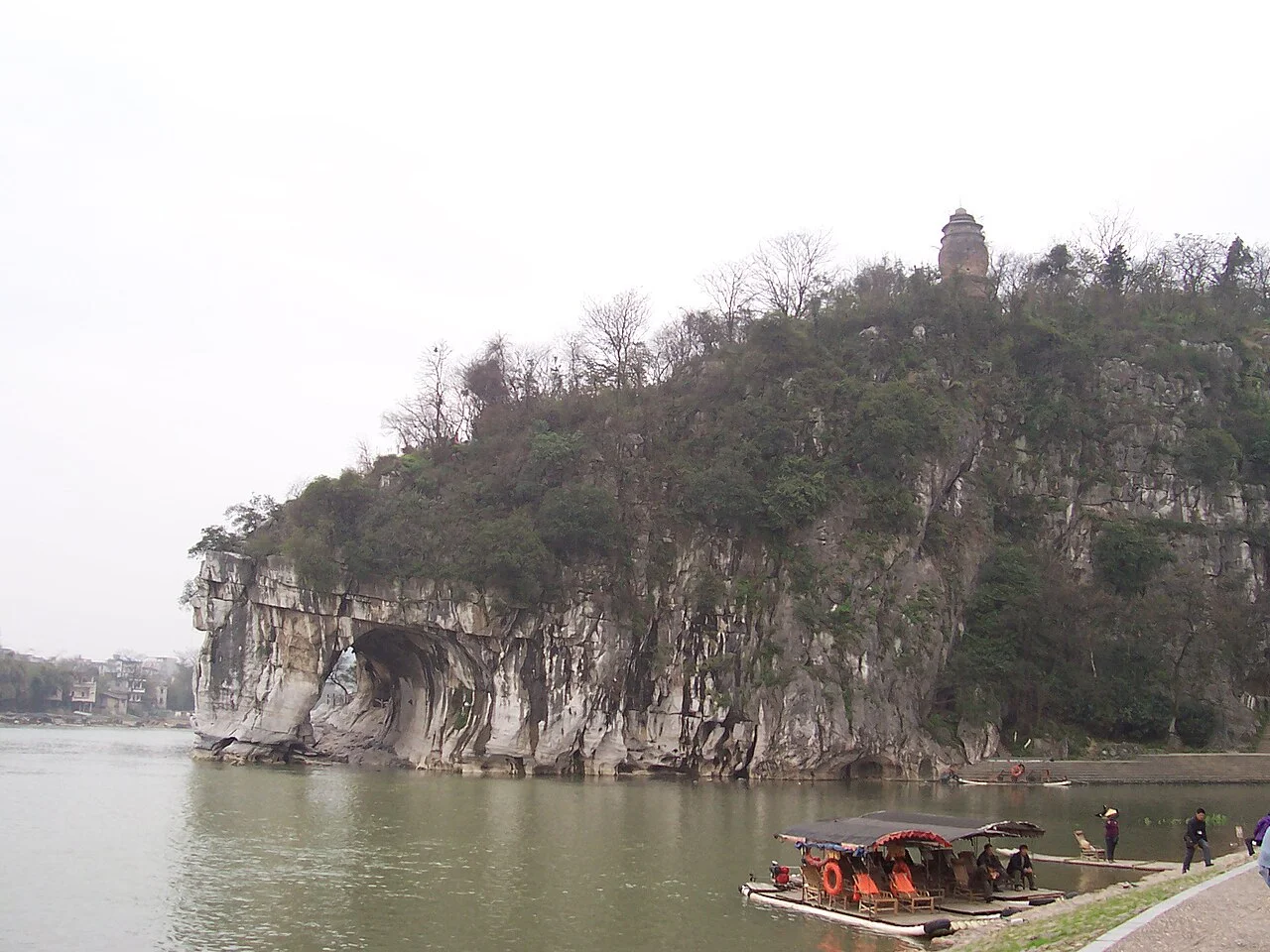
In central Guilin, the hills are not just a distant backdrop. Elephant Trunk Hill stands where the Li and Taohua rivers meet, with its base extending toward the water. The natural opening of Water Moon Cave and the adjoining rock form an outline said to resemble an elephant drinking. From the bank, the opening, river and hill can be seen together; changing water levels and light alter the reflection inside the cave. Inscriptions on the hill and cave walls also connect this landform with visitors from earlier periods.
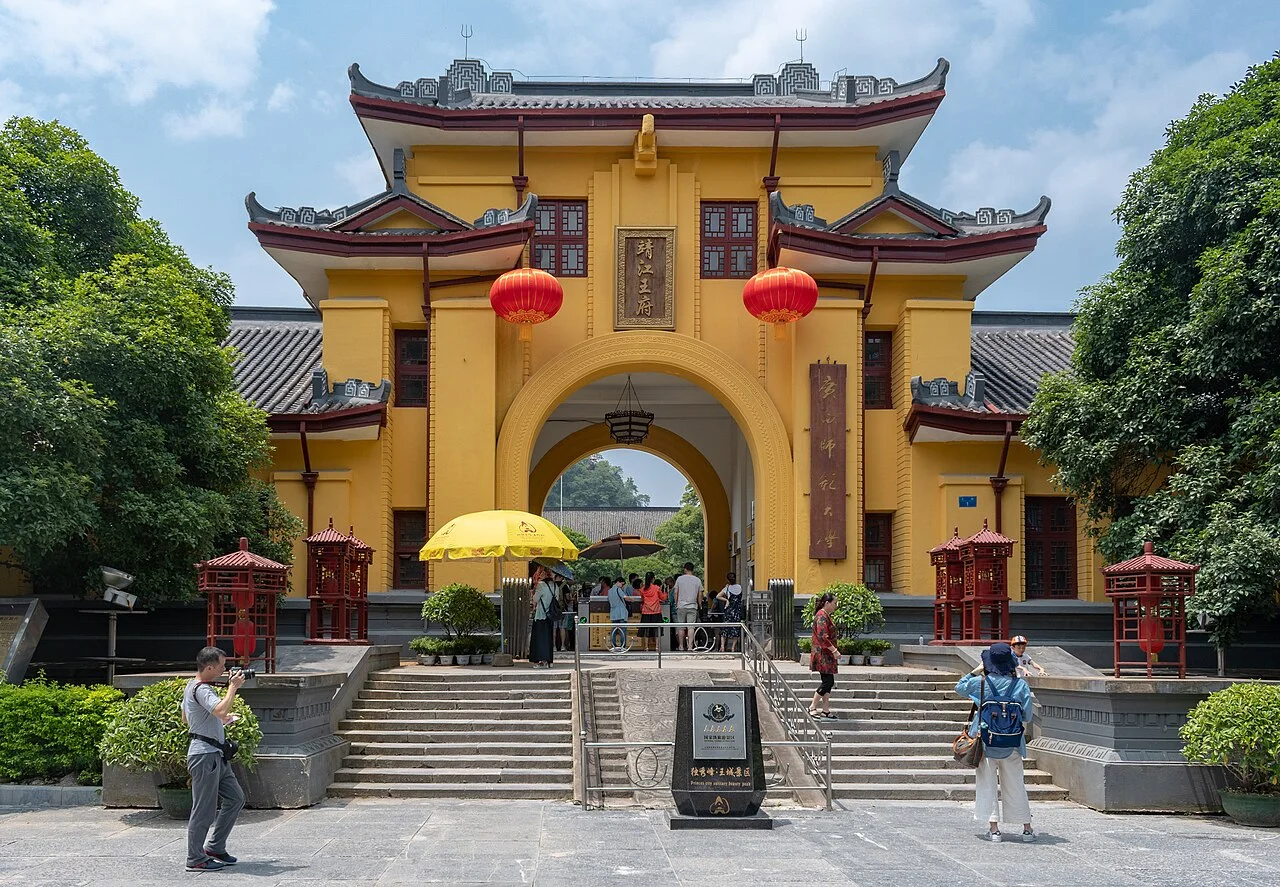
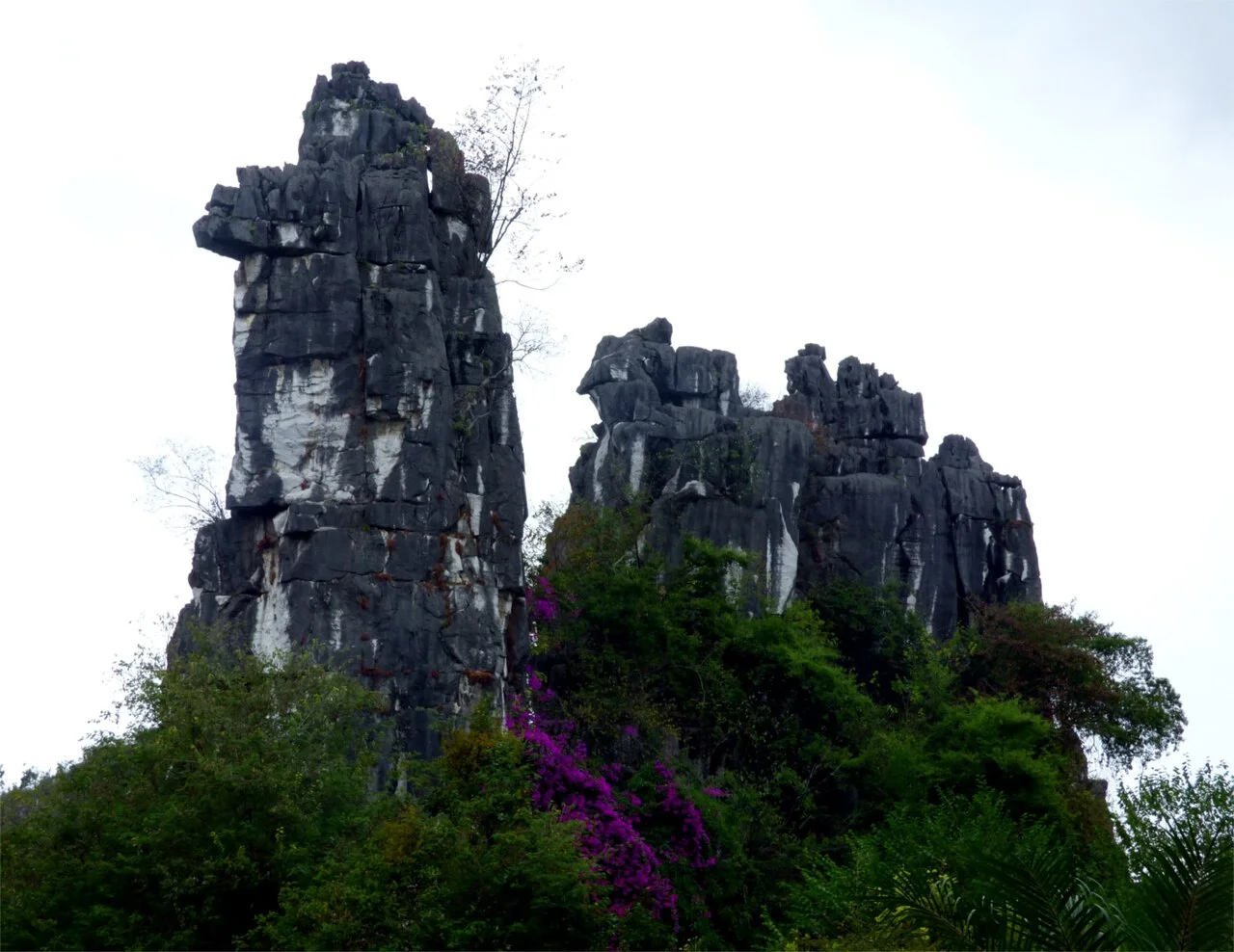
Solitary Beauty Peak rises within the grounds of Jingjiang Princes' Palace, among walls, courtyards and today's city streets. The palace was founded in 1372 and served 14 generations of Jingjiang princes; in the Qing dynasty it became the Guangxi provincial examination compound. The mountain, palace layout and history of the civil examinations offer a view of Guilin beyond its scenery. Ruins, later restored buildings and exhibition spaces belong to different periods, so not every building visitors see should be described as an original Ming structure.
Lakeshores and the twin pagodas
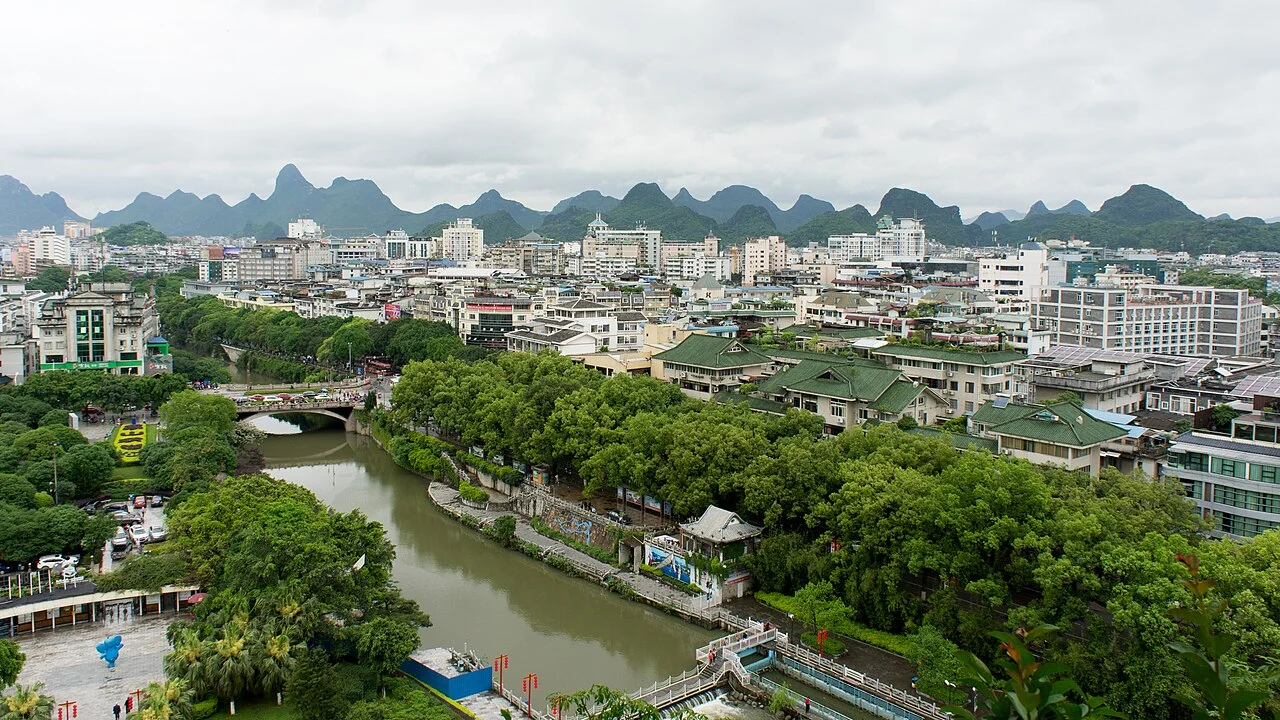
The Two Rivers and Four Lakes water system comprises the Li and Taohua rivers and Rong, Shan, Gui and Mulong lakes. Compared with the broader views along the rivers, the central lakeshores sit closer to everyday city life. Trees, bridges and building reflections meet the surrounding roads and shops; beyond the mountain scenery, the waterfront also shows how residents use these spaces for walks and leisure.
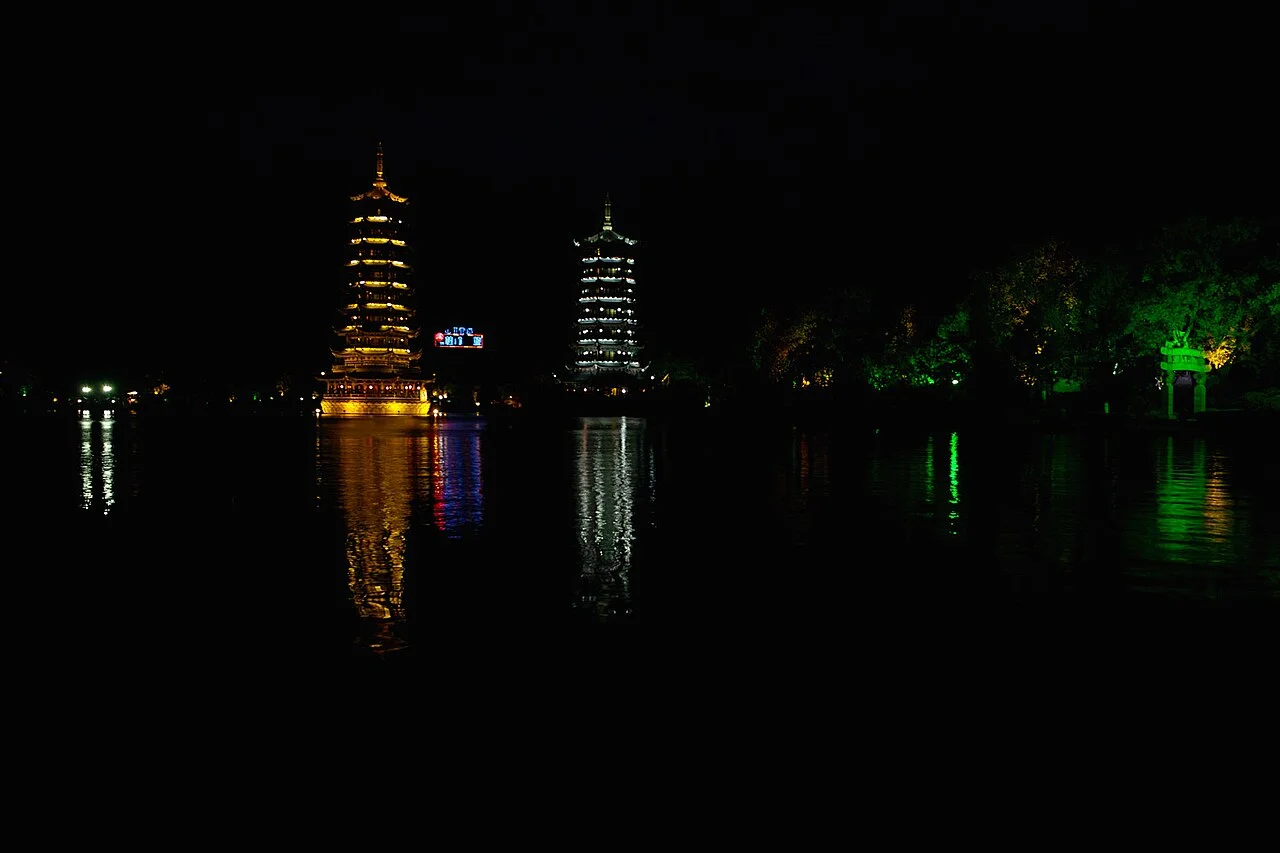
The Sun and Moon Pagodas on Shan Lake are recognizable landmarks on this waterfront. Their forms and reflections make a familiar Guilin view. The photograph on this page dates from 2009 and shows the scene at that time. The scenic area announced on May 9, 2026 that the pagodas would temporarily close for renovation. Interior access and nighttime displays should be checked against a later notice from the operator; an old photograph cannot confirm current arrangements.
Caves, the Li River and Yangshuo's distinct landscape
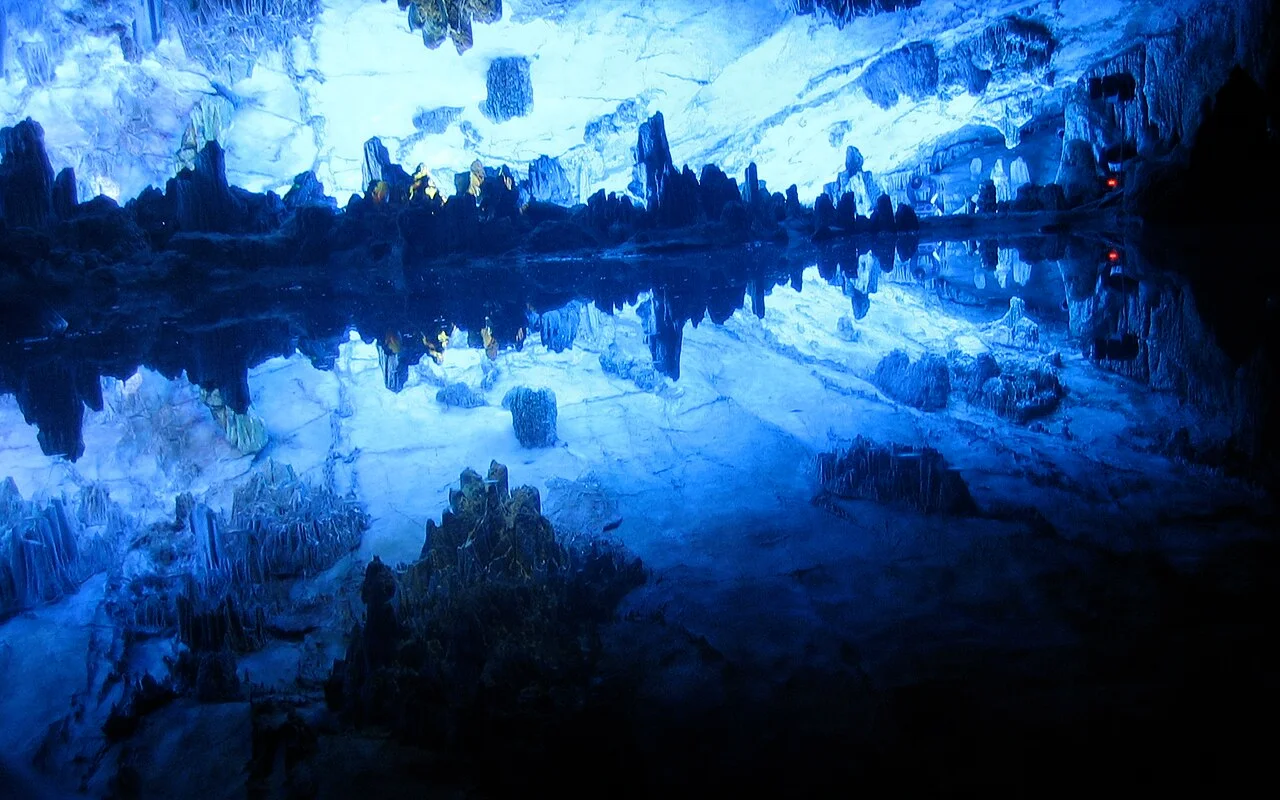
Guilin's limestone scenery includes both surface peaks and caves inside the hills. Reed Flute Cave, northwest of the central districts, takes visitors underground: stalactites hang from the ceiling, stalagmites rise from the floor, and columns and draperies form other outlines. The vivid red, blue and green in cave photographs comes from artificial lighting, not the natural color of the rock. Inscriptions on the cave walls, mostly written in ink rather than carved, record visits dating back to the Tang dynasty.
The karst peaks along the Li River belong to a wider geographic area. The scenic area's official introduction describes a core river journey of about 61 kilometres, connecting the ports of Mopanshan or Zhujiang outside the central city with wharves in Yangshuo County. It is not a short cruise on the city lakes. Yangshuo is part of Guilin municipality, but its shopfronts and rooftops sit against a different backdrop of peaks. Guilin Karst is one component of the UNESCO-listed South China Karst serial property, whose boundaries are defined; this does not place every mountain or attraction in Guilin within the World Heritage property.
Rice noodles and regional dishes
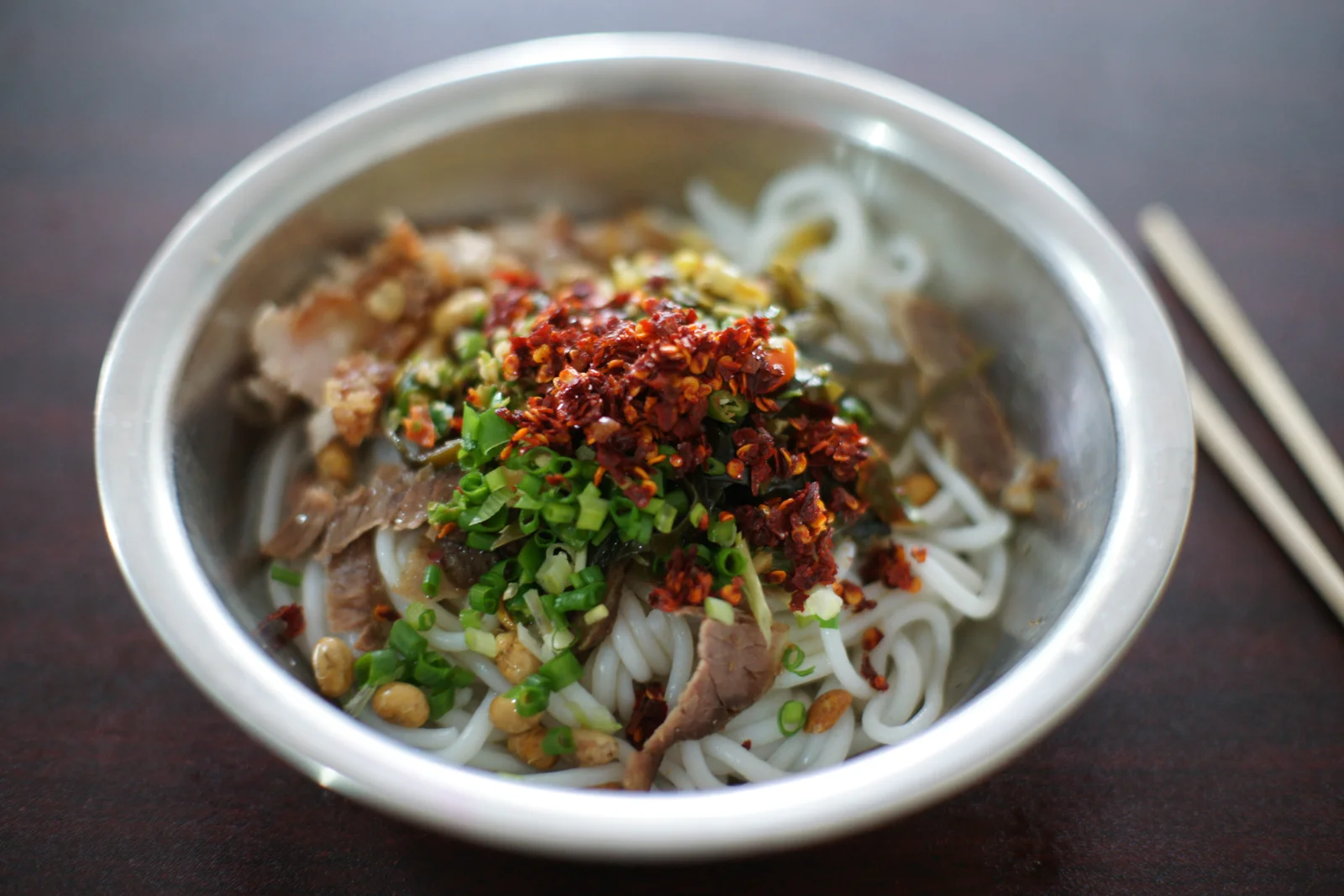
Guilin rice noodles are defined by more than the noodles themselves. Fresh rice noodles are briefly heated and drained, then mixed with braising sauce and toppings. Braised beef, beef tripe, soybeans or guoshao (crispy pork belly) add different textures; the crisp outside of guoshao contrasts with the resilient noodles. Each shop has its own sauce and combinations, and dry mixed noodles differ from soup versions. Guilin rice noodle-making techniques were added to China's national intangible cultural heritage list in 2021, covering stages from fresh noodles and braising sauce to toppings and assembly.
Food also varies across Guilin municipality. Gongcheng oil tea is made by pounding and simmering tea leaves with ginger and garlic; it is savory with a slight bitterness and is often served with puffed rice or peanuts. Yangshuo beer fish is commonly fried before being braised with beer. Lipu taro and pork belly are layered and steamed, while Quanzhou vinegar-blood duck uses a rice-vinegar mixture with duck blood and has a pronounced sour and spicy flavor. These dishes come from different counties and cooking traditions, showing why Guilin's food cannot be reduced to a single city dish.
East West Lane and Zhengyang Pedestrian Street
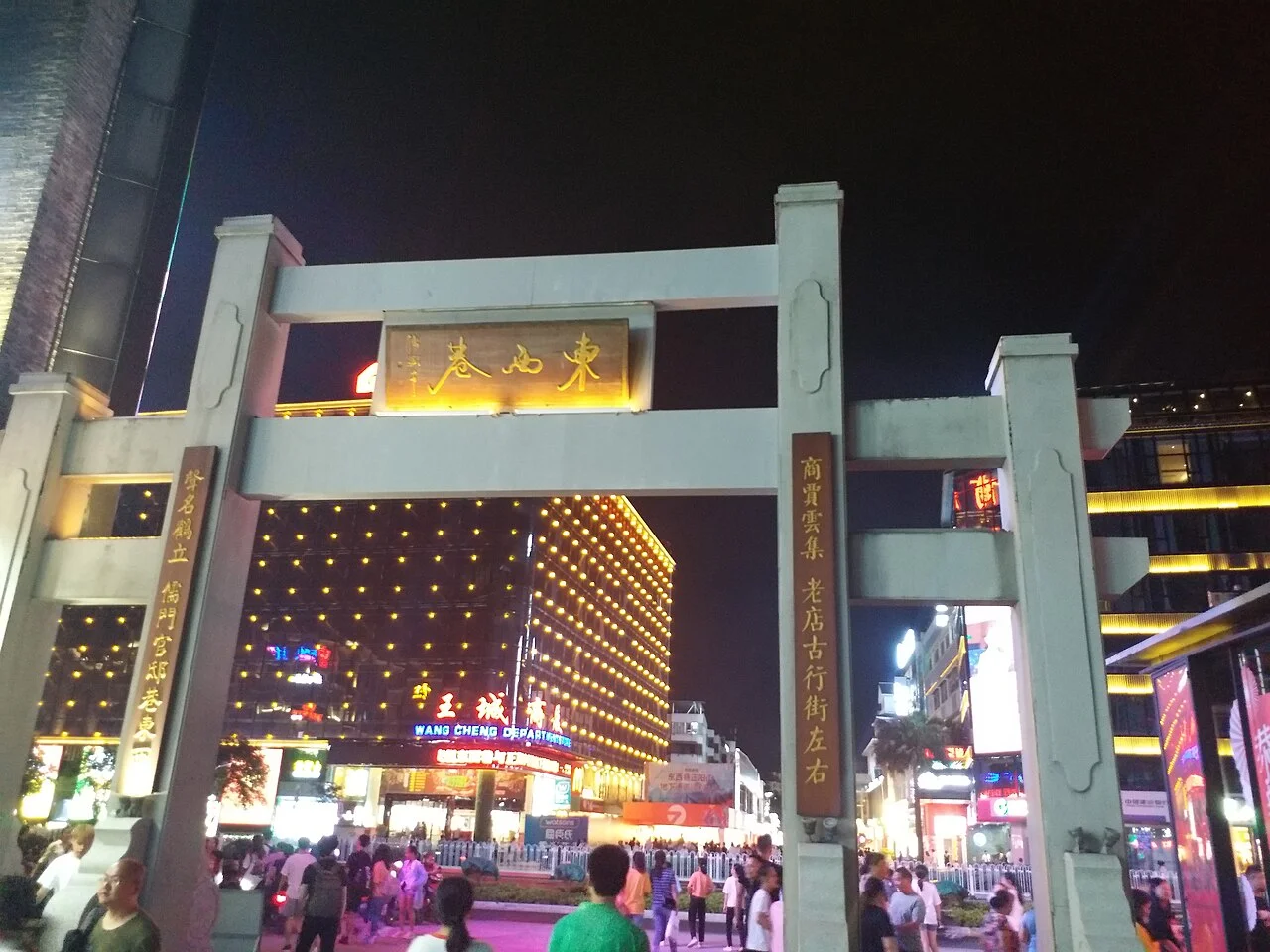
East West Lane and Zhengyang Pedestrian Street sit near the princely palace, but they are different kinds of places. East West Lane includes historic lanes such as Zhengyang East Lane, Jiangnan Lane and Lanjing Lane. Northern Guangxi residential forms and narrow passages sit alongside modern restaurants and creative shops. The lanes are useful for seeing how courtyards, facades and alleyways fit together, but restoration and commercial redevelopment mean that not every traditional-looking building is an untouched historic structure.
Zhengyang Pedestrian Street is more focused on concentrated central-city shopping and snacks. Both areas have shops and places to eat, but East West Lane has a stronger historic-lane setting, while Zhengyang is mainly a continuous commercial street. They are near the palace and lakes in central Guilin, whereas Yangshuo West Street is elsewhere in the municipality. Keeping these places distinct gives the city's scenery, history and contemporary commerce clearer geographic context.