Understanding qilou on Zhongshan Road
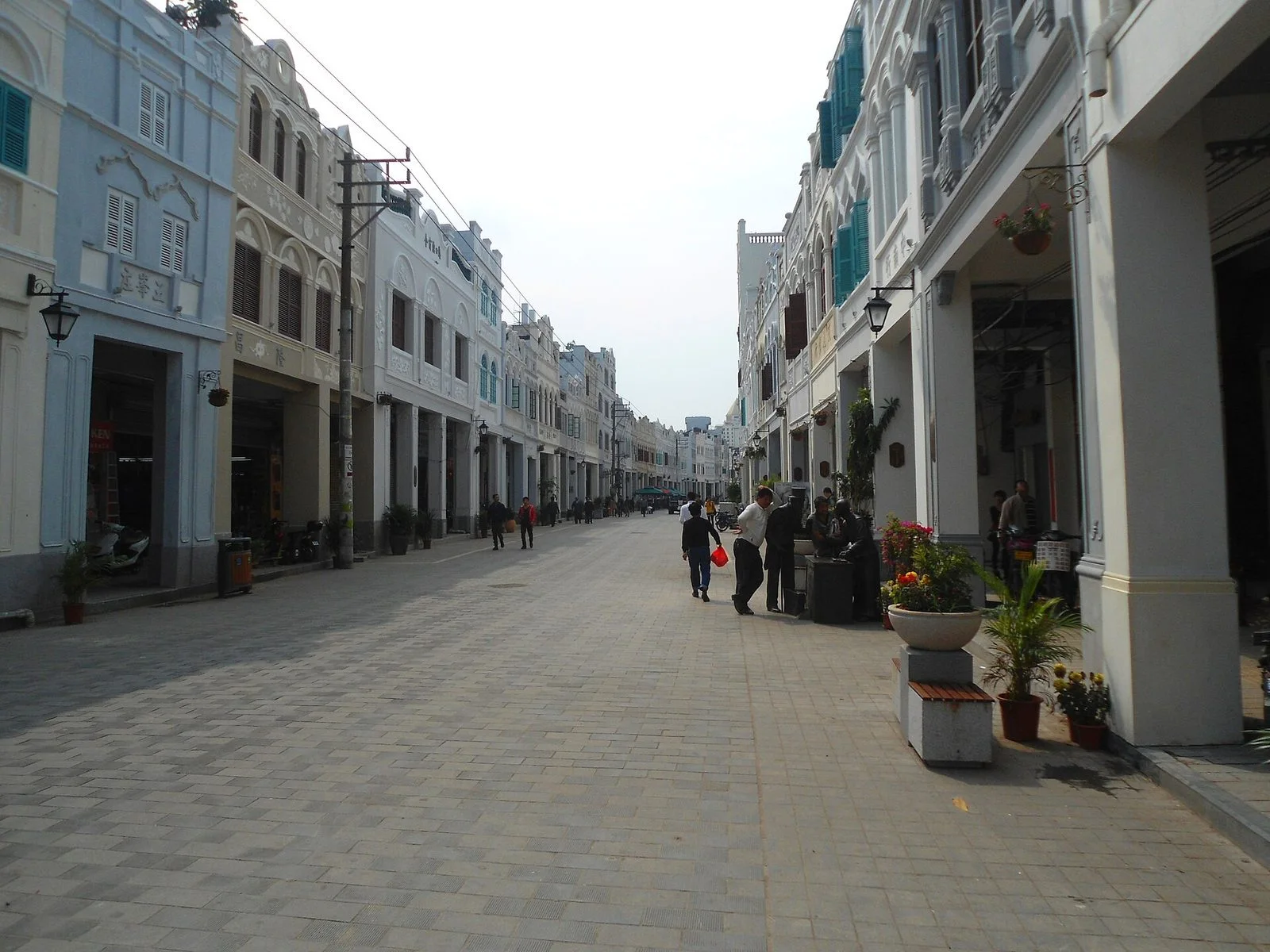
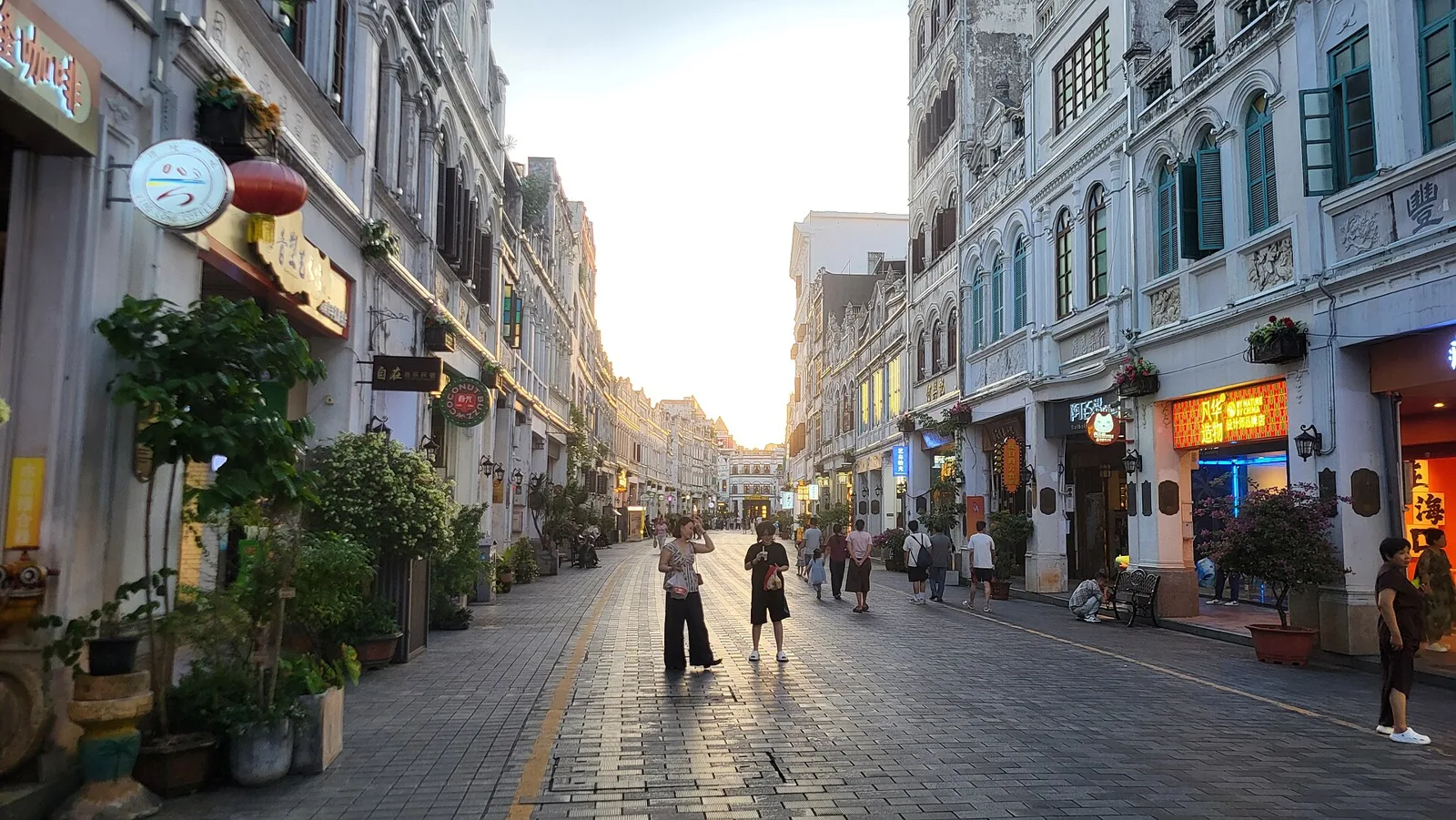
Haikou's Qilou Old Street is a historic district made up of several streets. Zhongshan Road is a central street for observing its arcaded buildings, with Bo'ai Road, Xinhua North Road and Deshengsha Road among the old streets nearby. The streets themselves are the attraction: buildings combining shops and homes line the road, with upper rooms projecting over a pedestrian walkway supported by columns. Walking beneath the arcades lets you compare shopfronts, doors, windows and building corners, and see the space that the name “qilou” describes.
Most of these arcaded buildings took shape between the 1920s and 1940s, and many are connected with overseas Chinese returning from Southeast Asia. Southeast Asian building practices meet traditional Chinese decoration here, creating the streetscape of Haikou's trading port. There is no need to assign every building to a Western architectural style. Comparing the different bays, arches and rooflines in one row reveals more detail than taking only a panoramic photograph at the street entrance.
Look up at lintels and pediments
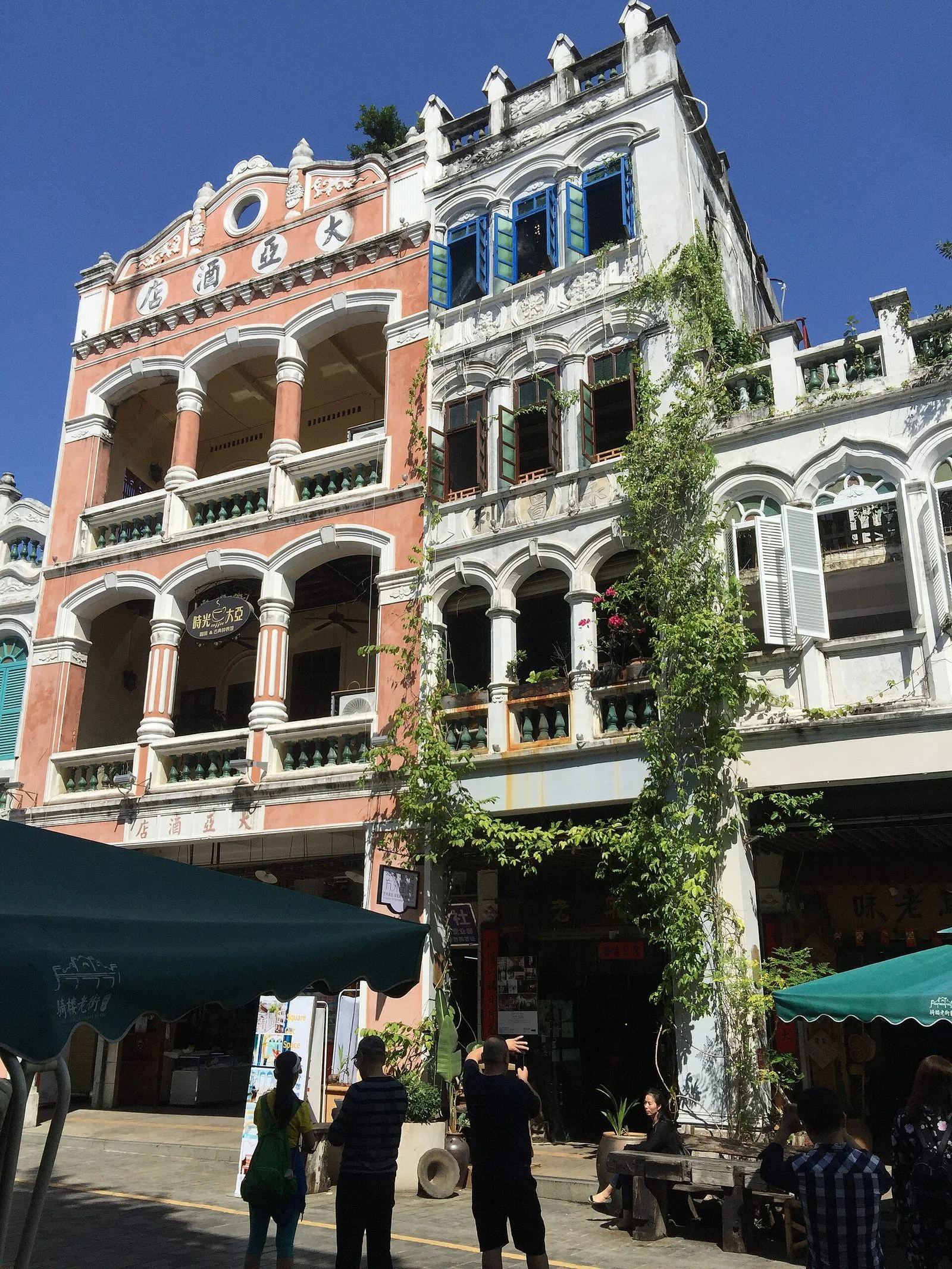
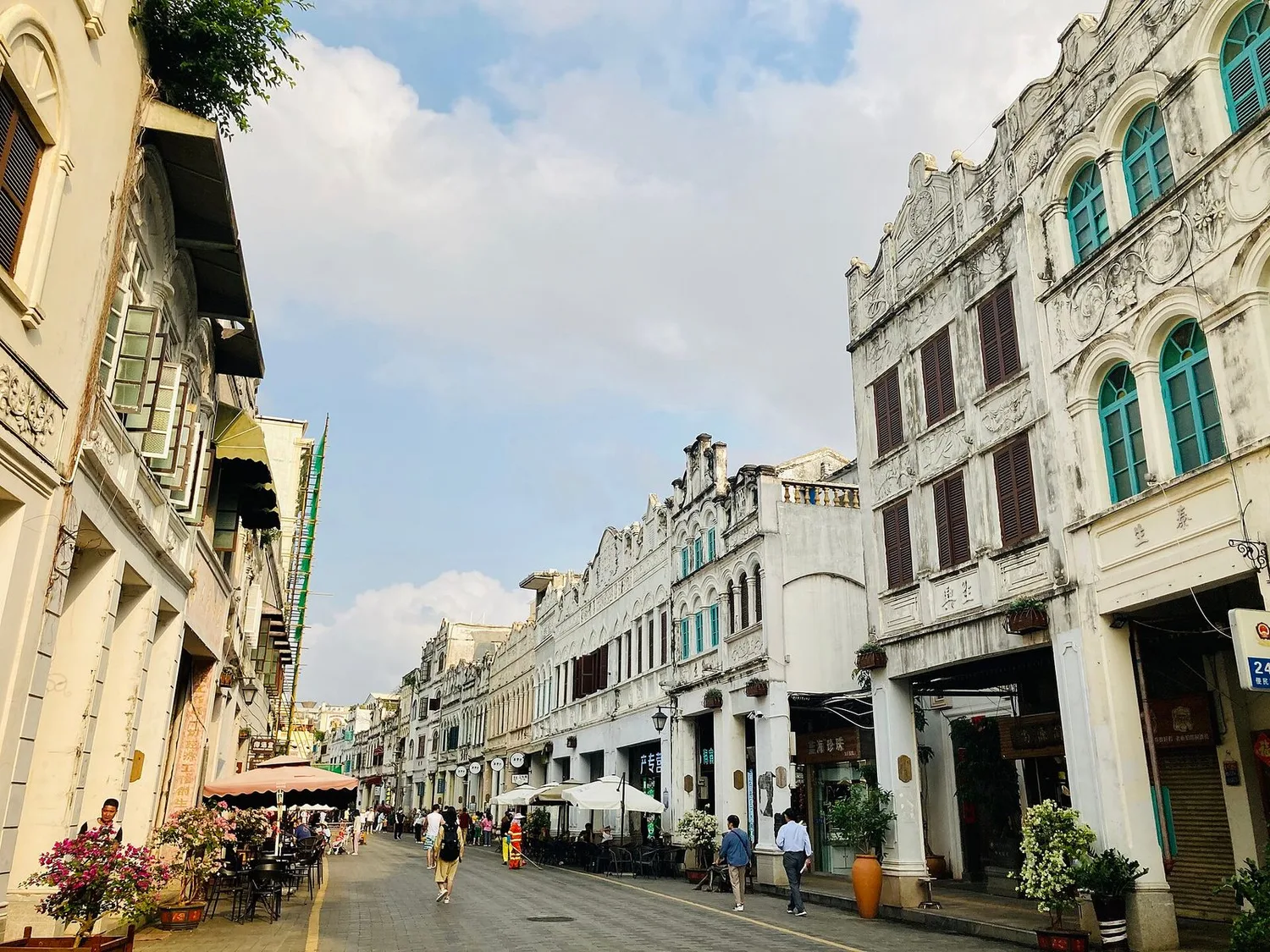
The street-facing facades have roughly three parts: columns and shops below, floors and windows in the middle, and pediments and parapets at the top. Window lintels vary from curved to triangular; patterns and reliefs decorate the walls, and rooftop ornaments stand at different heights. Looking at both the sheltered walkway and the varied upper facades helps explain how these buildings accommodate street-level business and homes.
Try shifting your attention from shop signs to the second floor and above, then look beneath the arcade at how columns relate to shop entrances. Restored facades can be viewed alongside parts that retain signs of age, but fresh or faded paint does not directly indicate a building's date. This is an urban neighborhood in continuing use and repair; shop opening arrangements, local barriers and access to interiors can change.
Tianhou Temple and neighborhood life
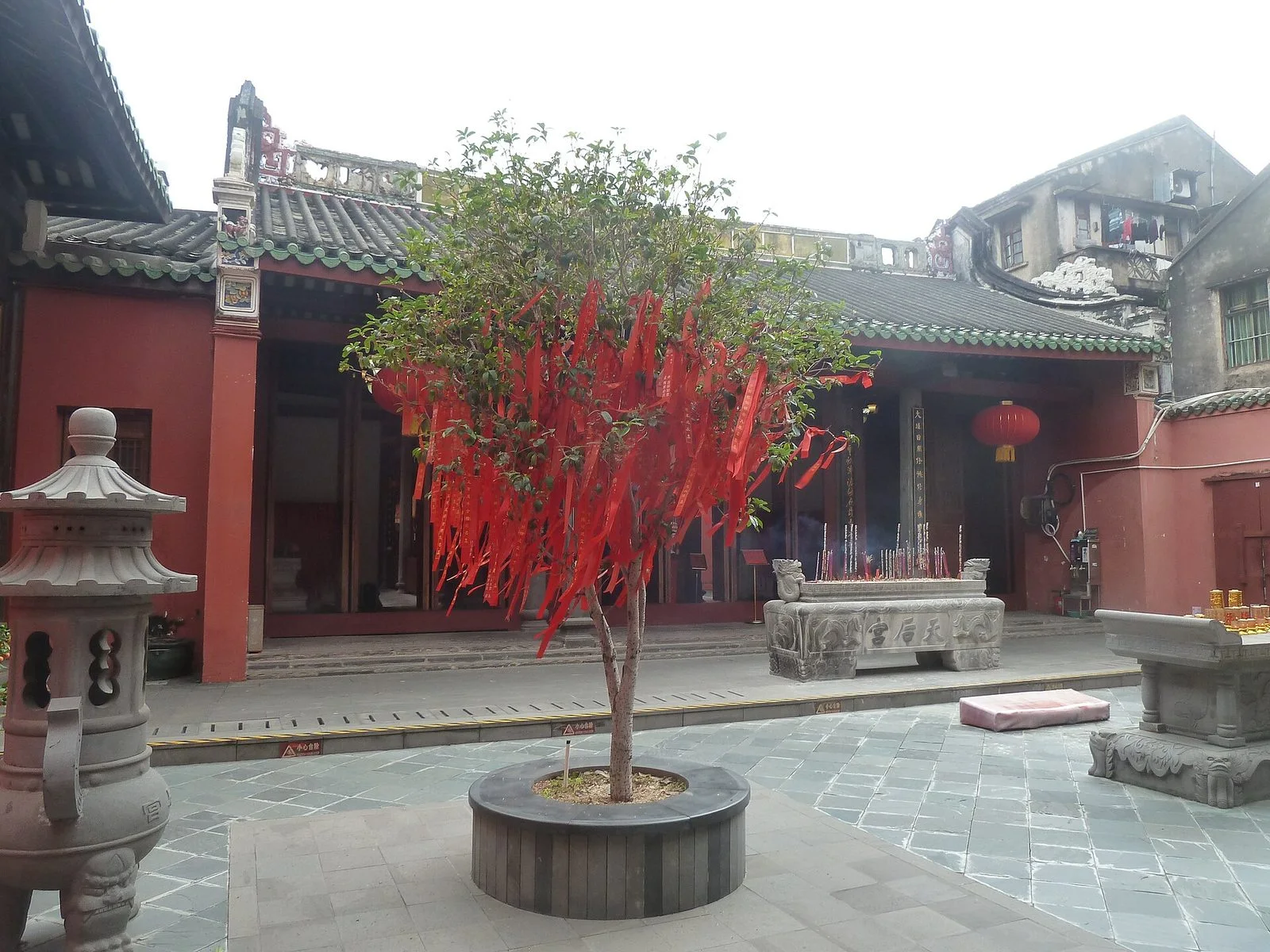
Tianhou Temple on Zhongshan Road offers another way to understand the old streets. Beyond the commercial and residential buildings, its roofs, courtyard and incense burner reveal the neighborhood's religious spaces. They also show that these streets hold more than trade and architecture. Follow instructions inside the temple, keep quiet, and ask permission before photographing worshippers.
Food and everyday goods sold on Zhongshan Road, Shuixiangkou and the surrounding old streets keep the buildings connected with daily life. The balance of tourist shops and everyday businesses varies between streets. For architecture, spend more time along one stretch of arcade; for neighborhood life, pay attention to shops in the adjoining lanes. Buying food or souvenirs is optional and need not be a condition of a visit.
Who this visit suits
The district suits visitors interested in urban architecture, overseas Chinese history and street photography. Allow around 1 to 2 hours if you mainly plan to walk and observe Zhongshan Road and nearby lanes. This is a planning estimate; meals, shopping or visits to cultural venues will take longer. Traffic arrangements vary between streets, so Zhongshan Road's pedestrian setting should not lead you to treat the entire district as a closed pedestrian zone.
The arcades offer some shelter from sun and rain, but junctions and roads are not covered throughout; watch for slippery surfaces in wet weather. Stay out of traffic areas while looking at facades or taking photographs, and do not block shop entrances for a shot. The photographs illustrate architecture and courtyards; they do not mean the shops, road arrangements or access shown remain exactly the same today.
Useful official references
Check the relevant official service before making arrangements. These links are references, not a guarantee of current services.