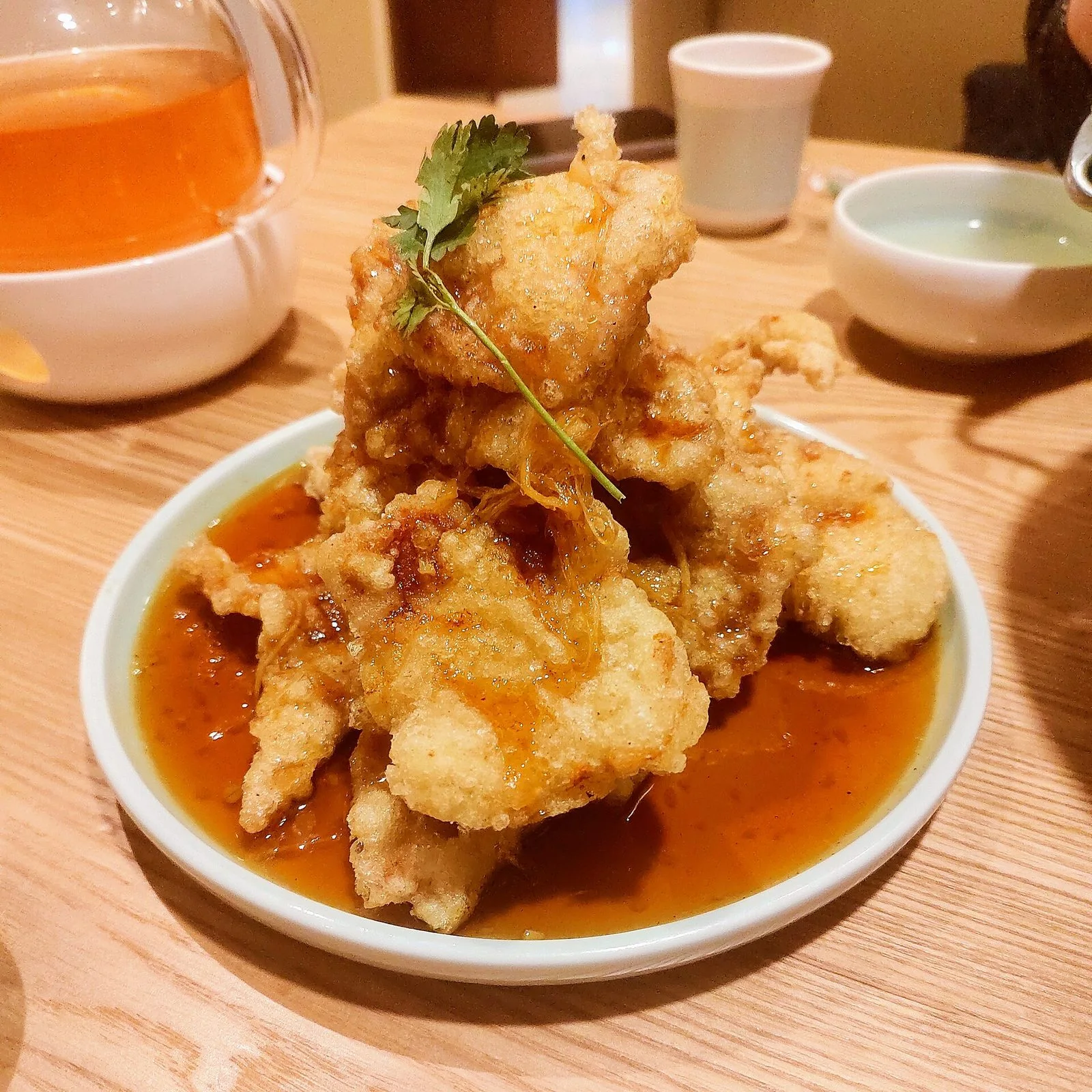
A sweet and sour dish closely linked with Harbin
Guobaorou is closely associated with Harbin and can be found across northeastern China. Didao Fengwu connects it with the chef Zheng Xingwen (郑兴文) and the food history of Harbin's Daotai government residence (道台府). Stories about its name changing from “锅爆肉” to “锅包肉” often appear in introductions. Treat these as circulating food stories rather than a way to judge whether a plate tastes good.
For visitors, its form is a more practical identifier. It usually consists of meat slices coated in a starch batter, deep-fried and quickly tossed in sweet and sour sauce. This differs from other sweet and sour dishes made with chunks or pieces of meat. “Sweet and sour pork” covers a broad range on translated menus; show the Chinese name “锅包肉” as well to confirm the specific dish.
Taste the crust, then the meat and sauce
Guobaorou's character comes from the combination of fried coating, meat slices and sauce. A common preparation uses pork tenderloin coated in starch batter, fried and then quickly tossed with sauce. Shredded scallion, ginger, carrot, cilantro and other additions vary by restaurant. Try a piece when it first arrives to distinguish the crisp coating from the meat inside.
Acidity, sweetness and crispness are connected. More sauce or a longer wait allows the coating to absorb moisture. To taste it freshly cooked, eat soon after it arrives rather than waiting until every dish has been photographed. The pictures show individual plates; neither the arrangement nor the garnishes are a fixed serving standard.
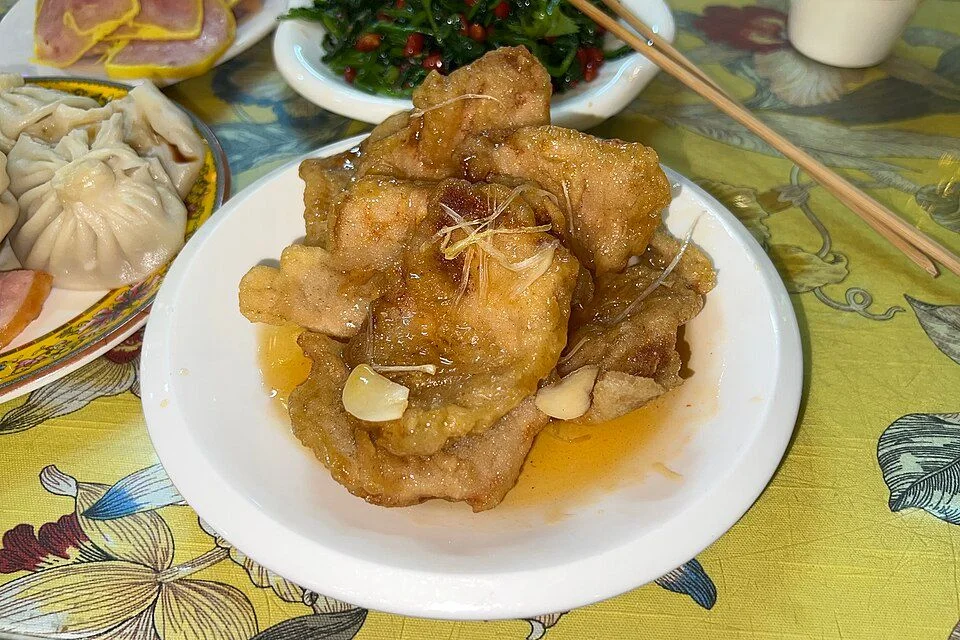
Sugar-and-vinegar sauce versus tomato-based sauce
Regions and restaurants adjust the sauce. Common sugar-and-vinegar versions and versions using ketchup may differ in color, thickness and their balance of sweetness and acidity. The photographs are specifically labeled as a dish in Changchun and a Liaoning-style version made at a Beijing restaurant. The latter's image information states that ketchup was used. These are not all products from one Harbin restaurant.
To find a flavor you prefer, ask whether it is “老式糖醋,还是番茄口味” — traditional sugar and vinegar, or tomato-flavored — and say whether you accept cilantro, garlic or other additions. City and style names offer clues, but the restaurant's description of its actual dish is what matters. A redder color does not prove any fixed sauce recipe or proportions.
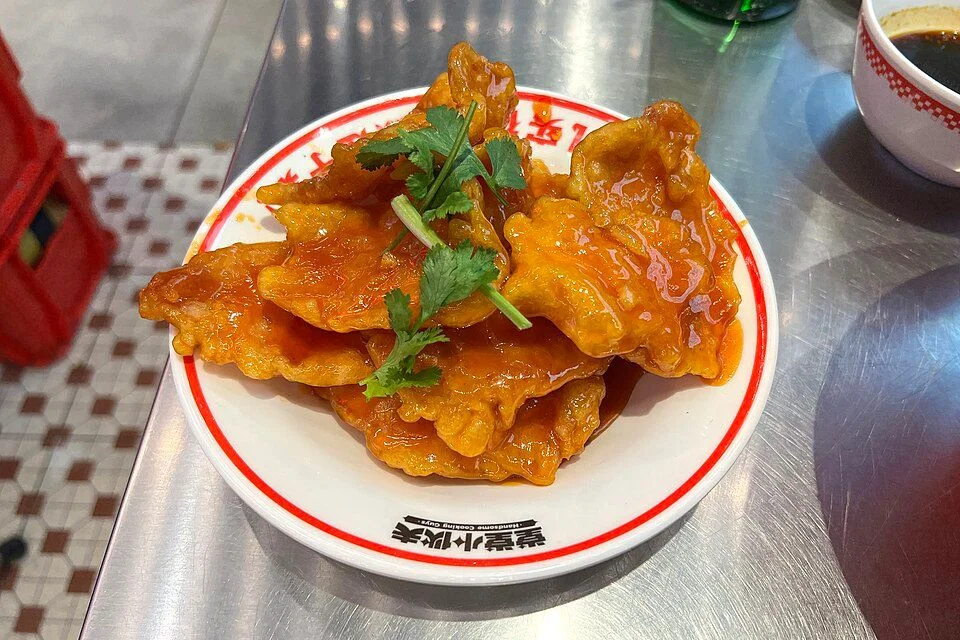
Ordering guobaorou to suit your meal
Guobaorou is usually a hot dish shared by several diners. If eating alone, ask whether a smaller portion is available and pair it with a staple or lighter vegetables, rather than judging portion size from photographs alone. In a shared meal, it can provide a sweet and sour fried dish alongside foods prepared in other ways. This is a pairing suggestion, not a fixed local dining rule.
Common versions use pork, but halal or adapted preparations may use other meats. The same Chinese dish name cannot establish the ingredients. For allergies or dietary restrictions, also check the starch, sauce and whether frying oil is shared. Delivery and takeaway change the texture compared with eating in the restaurant. For a first taste of the crisp coating, choose a freshly made plate you can eat promptly.
Useful official references
Check the relevant official service before making arrangements. These links are references, not a guarantee of current services.