From a wooden church in 1907 to the building completed in 1932
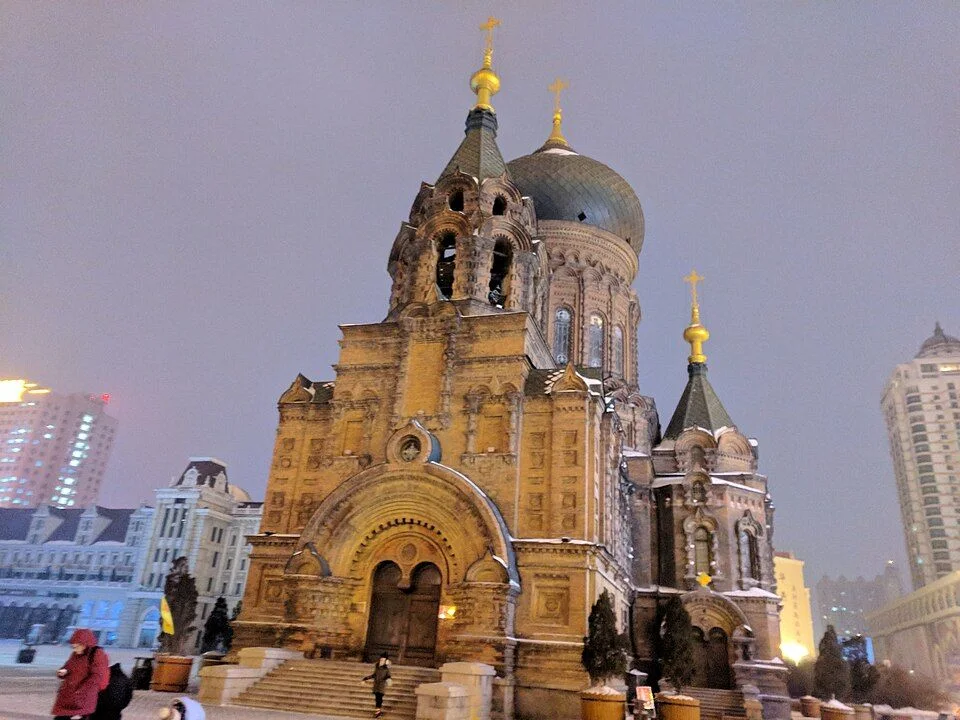
Saint Sophia Cathedral stands near Toulong Street (透笼街) in Harbin's Daoli District, close to Central Street. Its history began with a wooden military church in 1907; the main building seen today was rebuilt between 1923 and 1932. Distinguish the founding of the church from the completion of the present building: the red brick, domed structure is not the wooden church preserved unchanged from 1907.
The cathedral is connected with Harbin's modern Russian expatriate and Orthodox history, and has also been closed, used for storage and restored. It was designated a nationally protected cultural heritage site in 1996 and became an architectural art exhibition space after restoration in 1997. Knowing this history helps explain the relationship between the old building, its open square and the modern buildings around it.
From the dome to the entrance brickwork
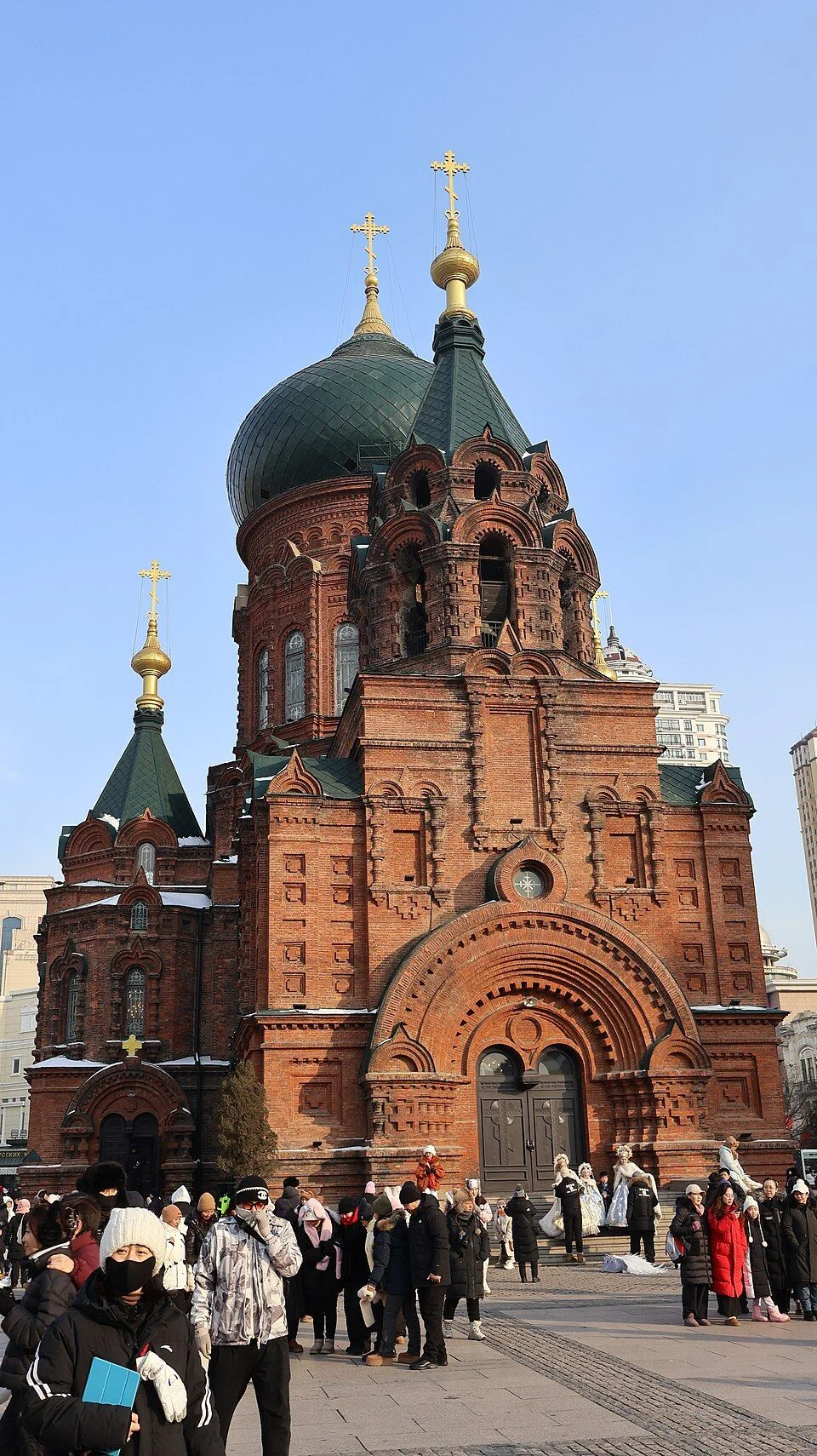
From a distance, the most recognizable features are the large green onion dome, its cross and the surrounding roofs at different heights. Red brick walls contrast with the green roofing, while the bell tower at the front adds another vertical element. Stand back to see the whole building, then move to the side within the accessible parts of the square to compare the main structure with its four wings. A single photograph in front of the main door rarely shows the entire building clearly.
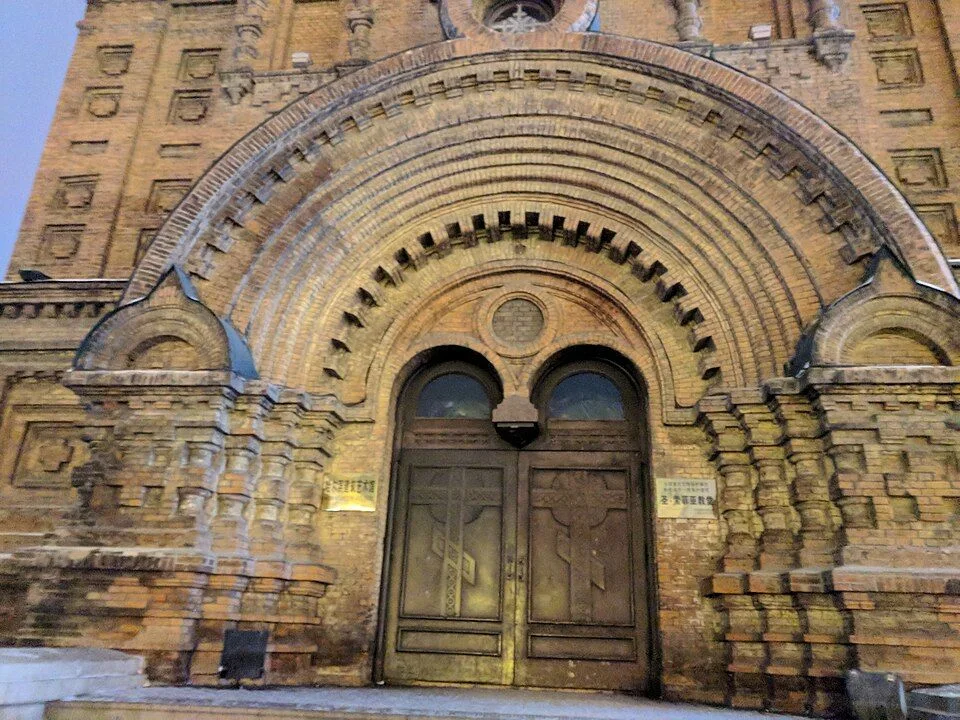
The entrance deserves a closer look. Receding layers of brick arches, columns at the sides and brick patterns reveal the wall's thickness and the depth of the doorway. The photographs pair a view of the whole cathedral with an entrance detail: one shows the building's form, the other its materials and craftsmanship. Keep entrances clear when taking pictures, and do not lean on or climb heritage features.
Choosing between the square and an interior visit
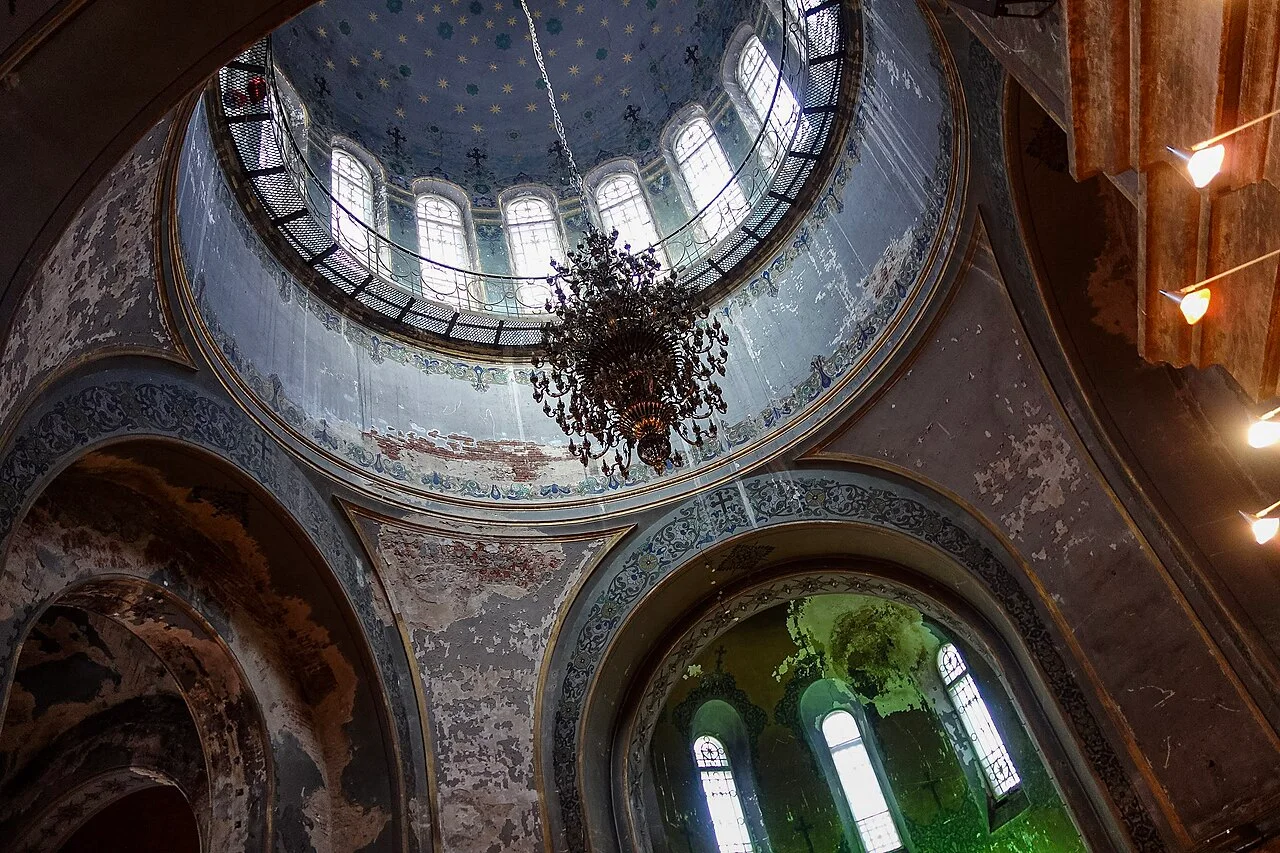
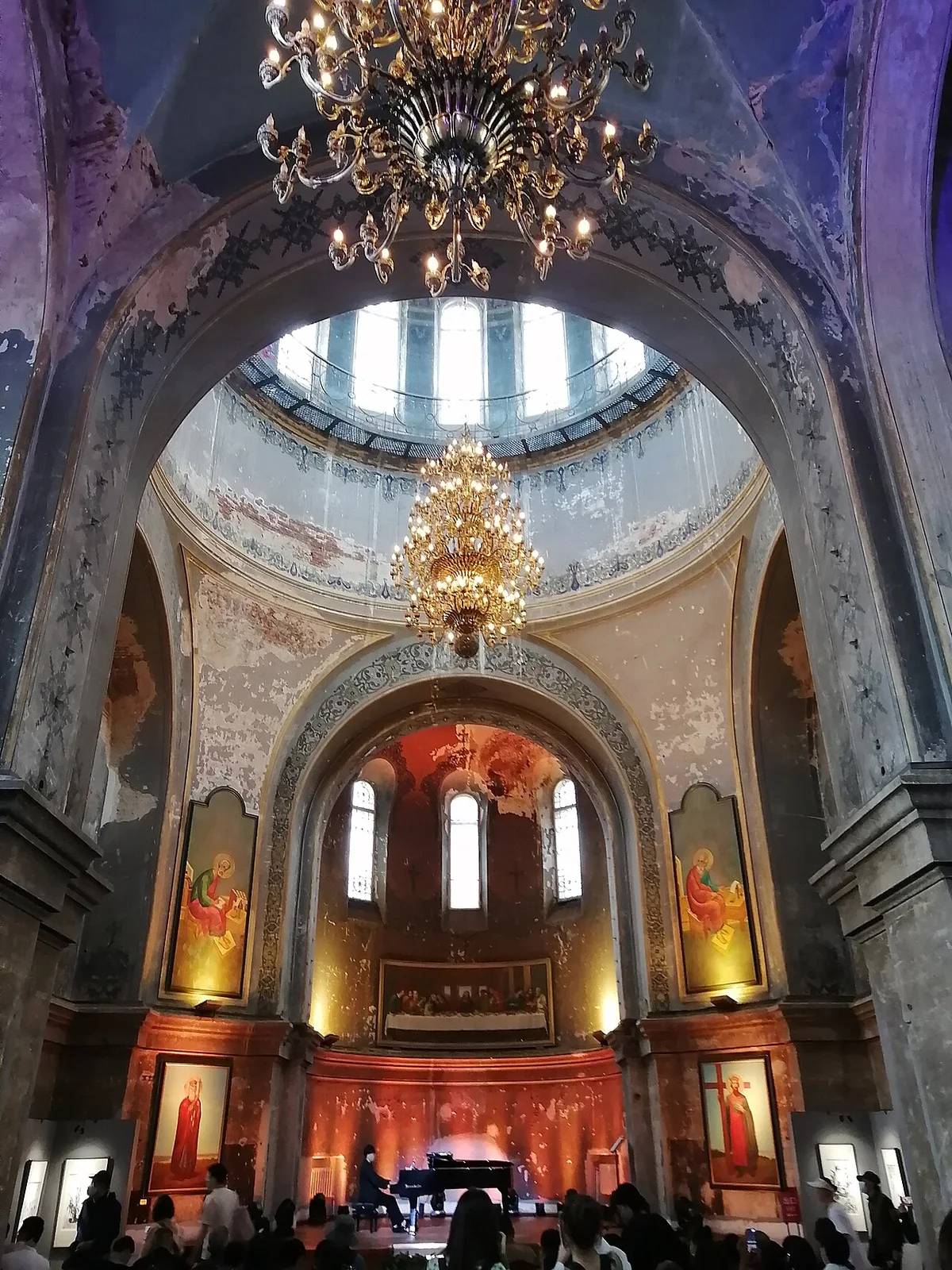
If your main interest is the exterior, the square offers views of the key features: the dome, bell tower and brick walls. If you are interested in the city's architectural history or the interior, check that day's indoor access and events. Its historical use as an architectural art museum does not mean the same exhibition runs every day, or that it still operates as a regular place of church worship.
Daylight helps reveal wall colors and details, while lighting after dark emphasizes the roofs and facade outlines. Each offers something different. In winter, allow for low temperatures and icy paving, and go indoors to warm up after taking photographs. Around 30–60 minutes is a suggested allowance for the exterior, with extra time for an interior visit, activities or queues; it is not a fixed visit duration. Before buying a ticket, check the date, what entry includes and how your identification will be verified. This guide does not reuse ticket prices or opening hours from old travel guides.
Useful official references
Check the relevant official service before making arrangements. These links are references, not a guarantee of current services.