Choose the objects you want to see first
Hubei Provincial Museum is on Donghu Road in Wuchang. You could allow half a day to learn about the history of Wuhan and Hubei. Two starting points need no prior knowledge of Chinese dynasties: the chime bells of Marquis Yi of Zeng show how ritual music was organised more than two thousand years ago, while the Sword of Goujian offers a closer look at the fine decoration of a practical weapon.
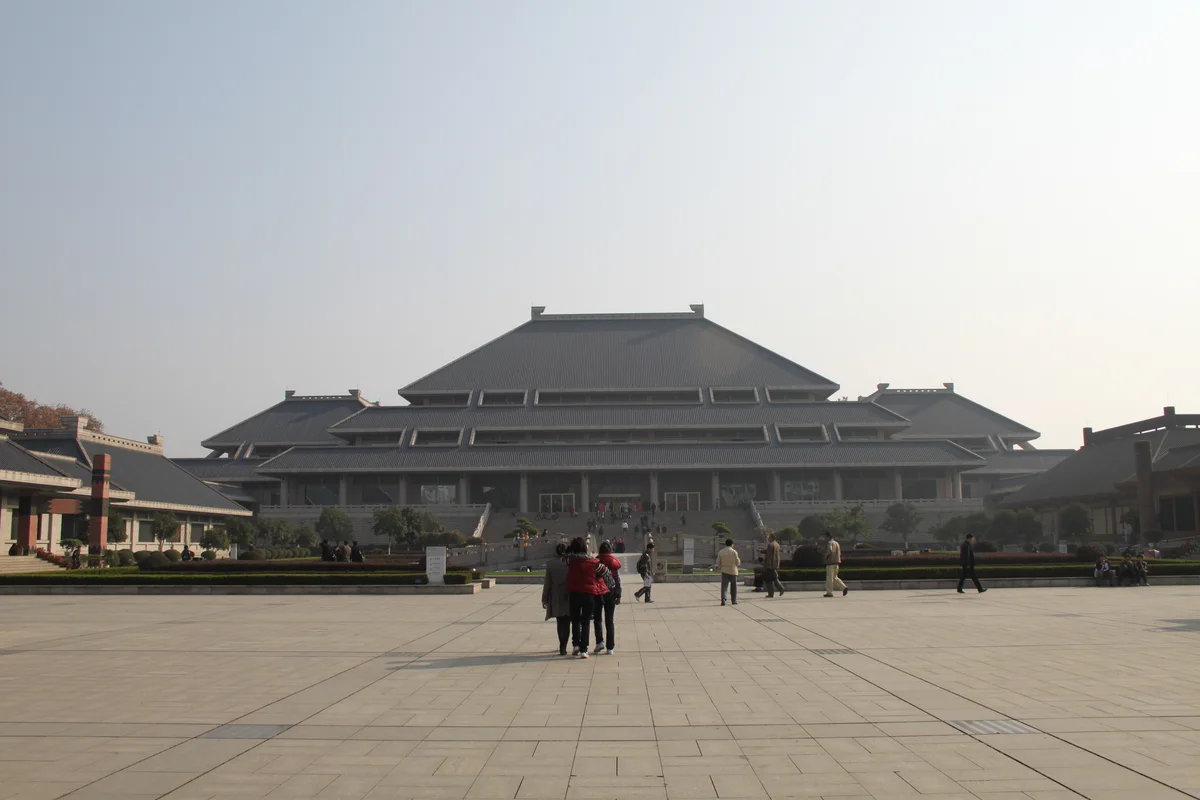
Once inside, check the day's gallery map to locate the exhibitions you most want to see, then choose your order. Rather than simply following the crowd to a famous object, look at neighbouring objects and explanations for context afterwards. The cover photograph shows the museum buildings in 2010, recording a historical appearance of the site. For actual entry and exit, follow the instructions for your reservation that day; do not use this old photograph to locate the entrance.
The museum's galleries combine chronological displays with themed exhibitions. Its collections include Shang and Zhou bronzes, lacquerware, and bamboo slips associated with the Chu, Qin, and Han periods, alongside the well-known chime bells and Sword of Goujian. After seeing the bells and sword, use the gallery map to choose another theme that interests you, and check which galleries are open that day rather than assuming every display is available.
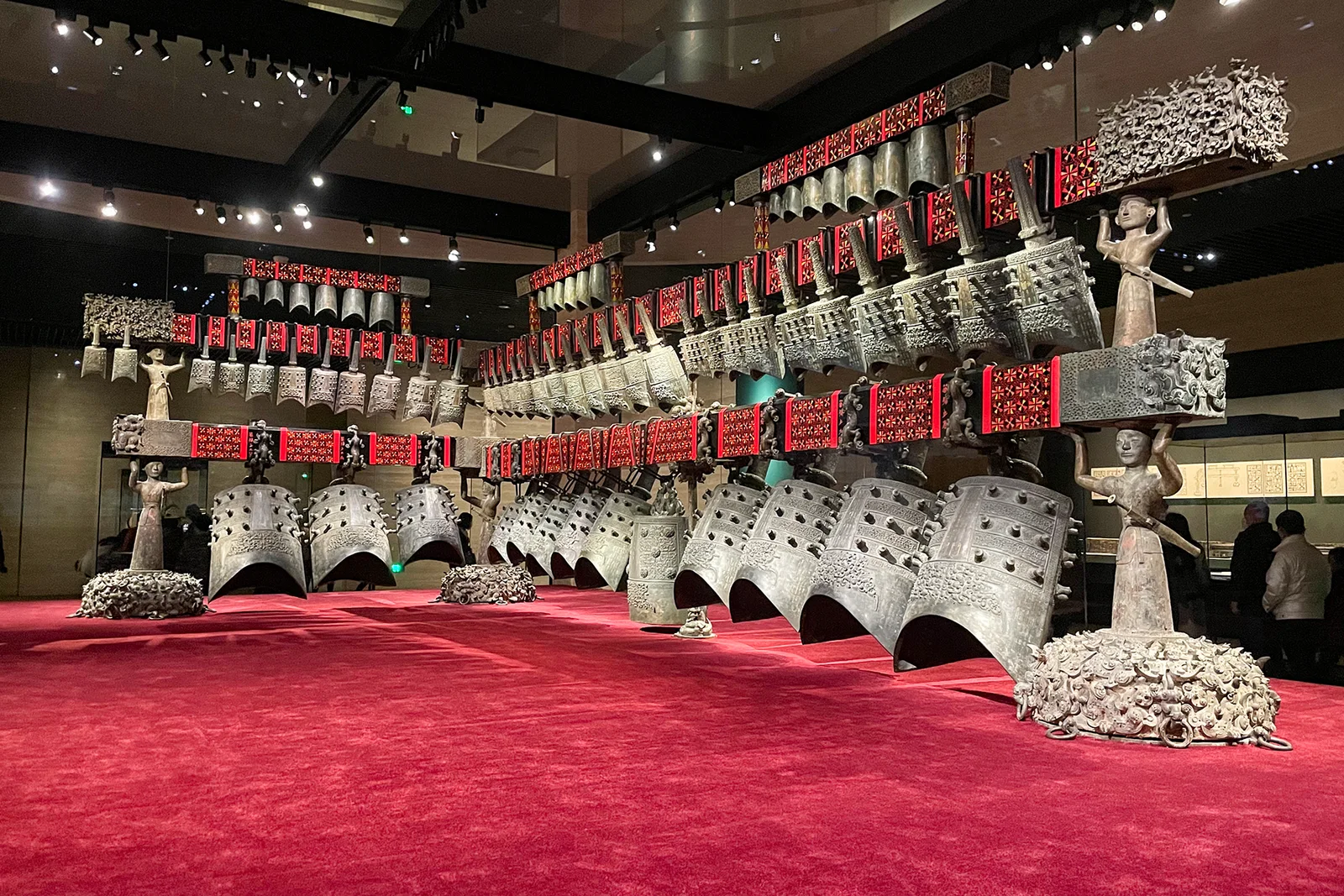
Marquis Yi of Zeng's chime bells: See the ensemble, then one bell
The tomb of Marquis Yi of Zeng was discovered in 1978 in what is now Suizhou, Hubei. Its objects relate to ritual, music and aristocratic life. The museum’s Marquis Yi of Zeng exhibition places the instruments alongside other finds to explain life and ritual practices of the time. Read about why these objects were buried together, then look at the large chime-bell ensemble in that context.
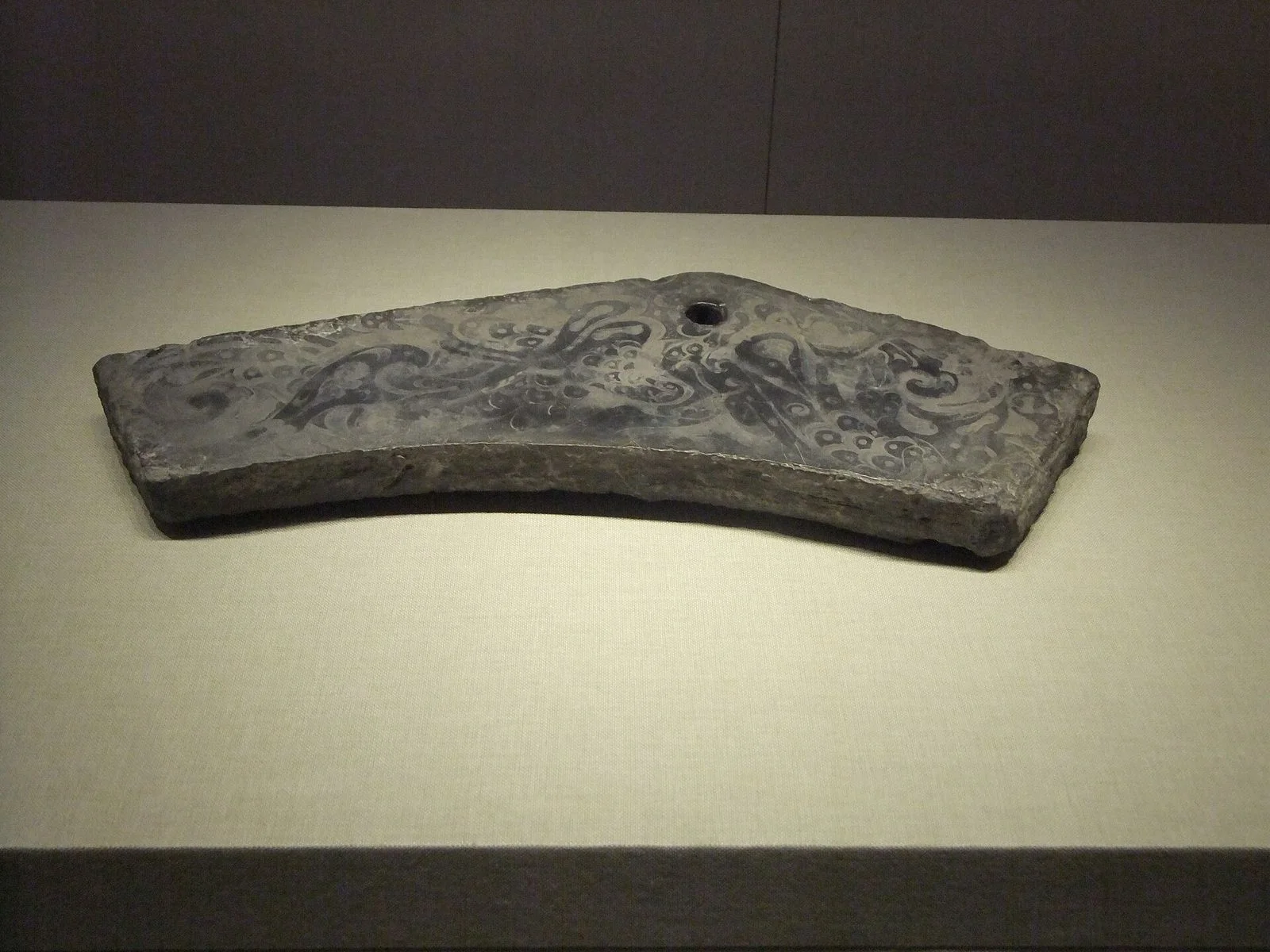
The set has 65 bells, hung by size on a three-tiered, L-shaped frame. Stand back to see the heights and arrangement, then examine the decoration, inscriptions and supports. The museum explains that striking a bell in different places produces two different pitches, a useful point to keep in mind when looking at its shape and the arrangement of the set. A performance is a separate activity; viewing the ancient bells does not mean the original instruments will be played.
The Sword of Goujian: Patterns, decoration and inscriptions
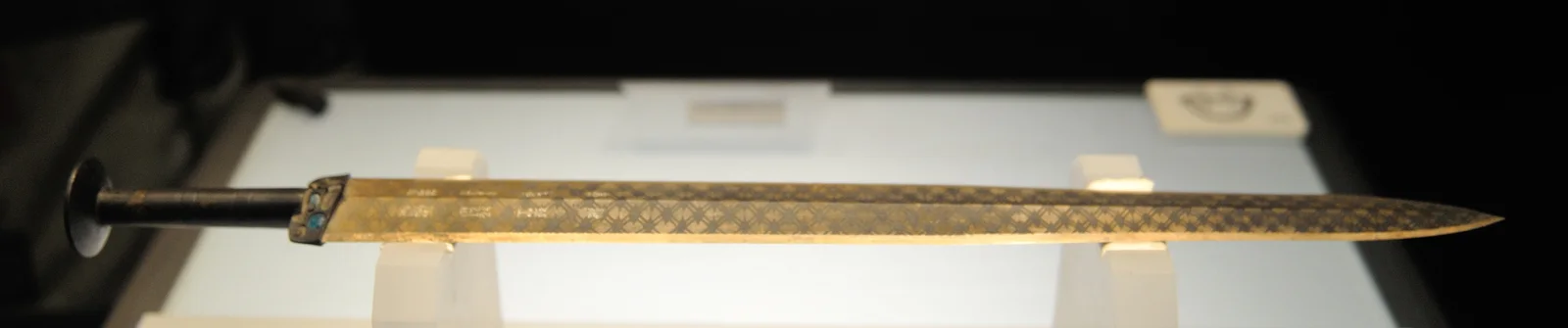
The Sword of Goujian was excavated in 1965 from Wangshan Tomb No. 1, a Chu tomb in Jiangling, Hubei. Compared with the chime bells' huge scale, this bronze sword offers a more concentrated set of details: dark diamond patterns on the blade, decoration at the guard, and an inscription close to it. The museum identifies the inscribed name Jiu Qian (鸠浅) as Goujian. The writing is therefore an important clue to the sword's identity, not simply surface decoration.
At the case, look at the sword’s complete outline, then the blade patterns and details near the hilt. When it is crowded, read the surrounding explanations first and look at the object when there is space. Watch for reflections on the glass and follow the photography rules. If time is short, focus on seeing the sword’s proportions and patterns rather than taking a rushed photograph.
Reservations, identification, and a half-day visit
According to the museum's Visitor Guide checked on November 7, 2026, general admission is free and requires a reservation in your name. Regular opening is Tuesday to Sunday, 09:00–17:00, with last entry at 16:00; the museum is closed on Mondays, with public-holiday arrangements announced separately. Passports are among the accepted identification documents. Bring the original document used to make the reservation. Start from the museum website's official booking instructions and arrive on your booked date and within your time slot. Do not pay unfamiliar accounts claiming to arrange general-admission tickets.
Consider allowing two to three hours for the main galleries, plus extra time for security, queues, breaks, and finding the exit. This is a visitor planning suggestion, not a visiting duration guaranteed by the museum. Performances, special exhibitions, and VR experiences may have separate ticketing and timing conditions; free general admission does not mean that every activity is free. If you have energy afterwards, walk a stretch of East Lake's Tingtao area. If your reservation is unsuccessful, switch that day to outdoor activities rather than repeatedly travelling back and forth around an unconfirmed slot.
Useful official references
Check the relevant official service before making arrangements. These links are references, not a guarantee of current services.
- Hubei Provincial Museum: Visitor Guide — reservations, identification, and opening arrangements ↗
- Hubei Provincial Museum: Marquis Yi of Zeng exhibition ↗
- Hubei Provincial Museum: Chime bells of Marquis Yi of Zeng ↗
- Hubei Provincial Museum: Sword of Goujian ↗
- Xinhua News: Hubei Provincial Museum collections and exhibitions ↗