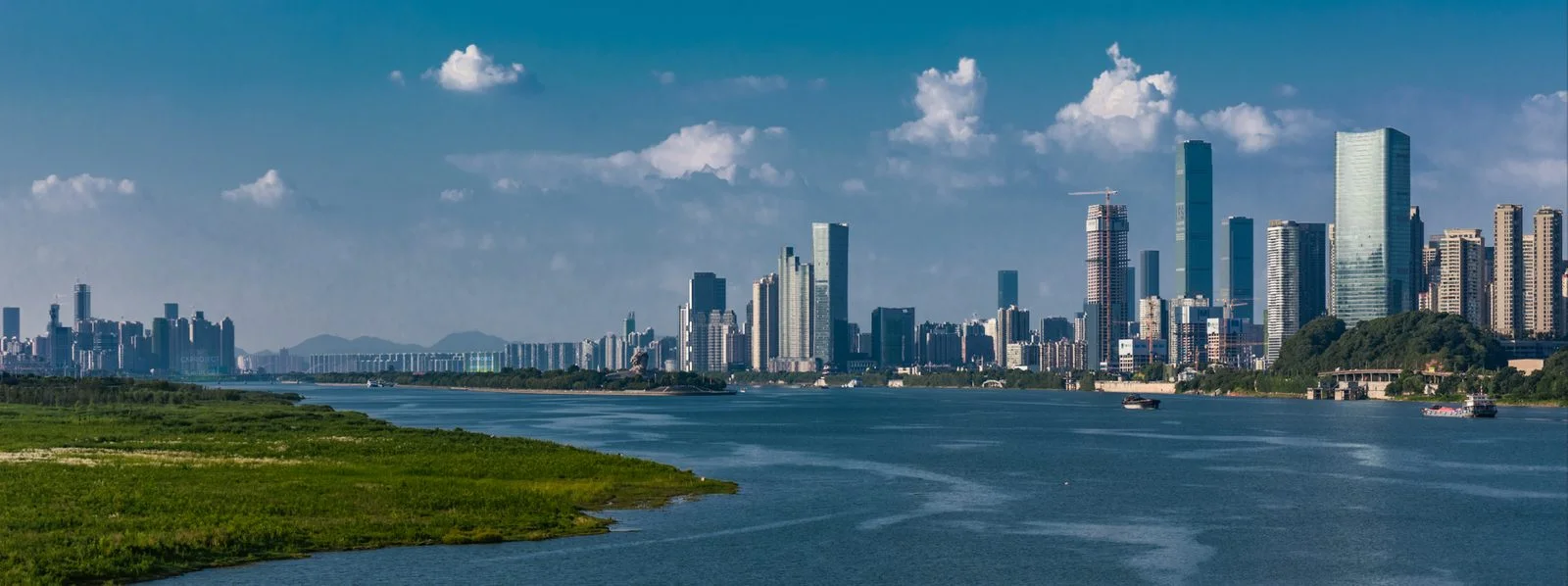
Mawangdui first, or the Hunan galleries?
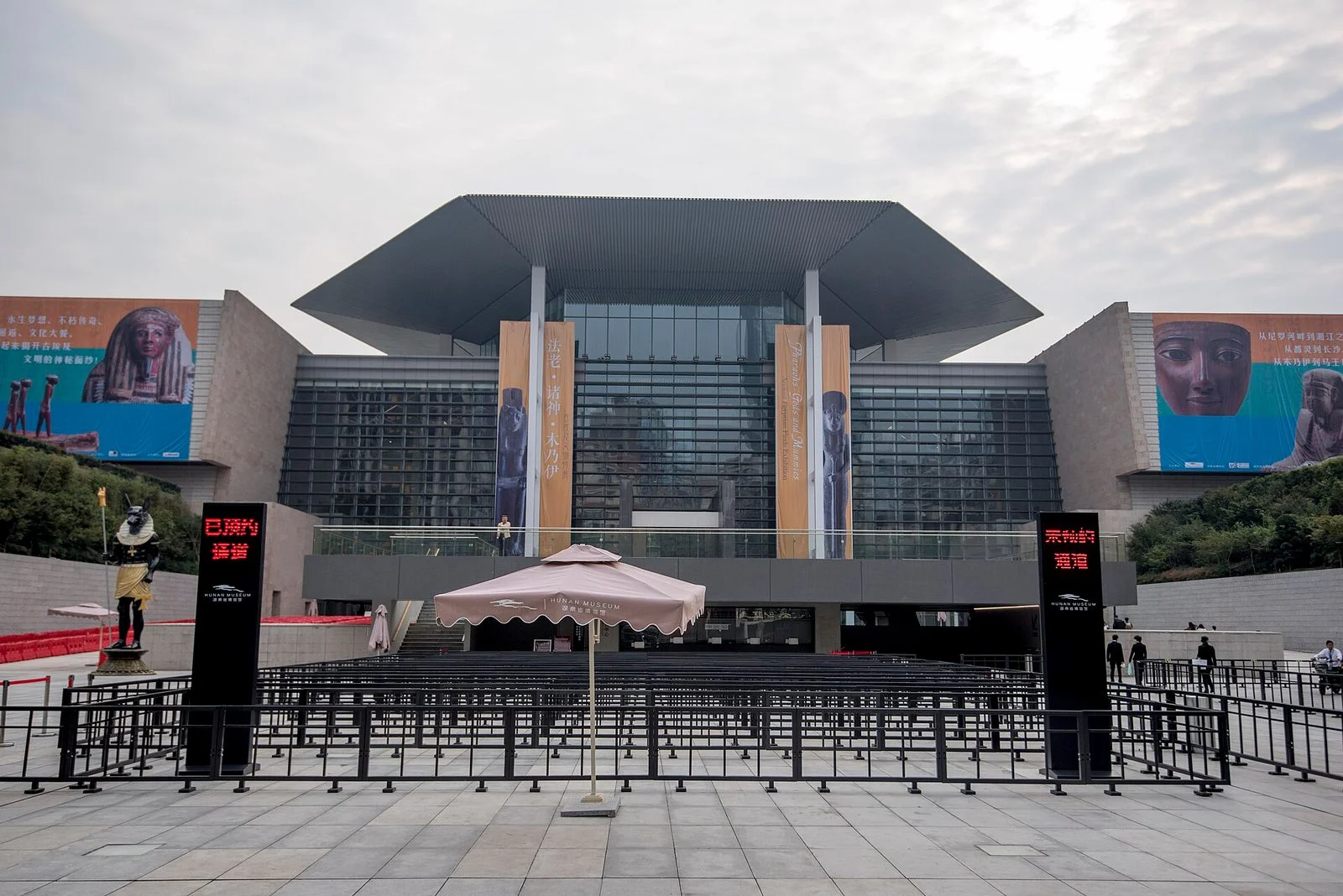
Hunan Museum is at 50 Dongfeng Road in Kaifu District. Its permanent displays include “Changsha Mawangdui Han Tombs” and “Hunan People: Sanxiang History and Culture”, both free. The Mawangdui galleries are on the third floor, where the 2017 opening of the new building included a 1:1 reconstruction of Xin Zhui's tomb chamber, with projections showing the coffins and the tomb structure.
With only half a day, see the Mawangdui galleries first and leave time for the body of Xin Zhui; if Hunan's local history interests you, add the “Hunan People” galleries on the second floor. If energy is limited, Mawangdui is the safer priority. The galleries are dense, so allow at least two hours, and more than three for a close look; enter as soon as the museum opens to avoid the busiest tour-group period.
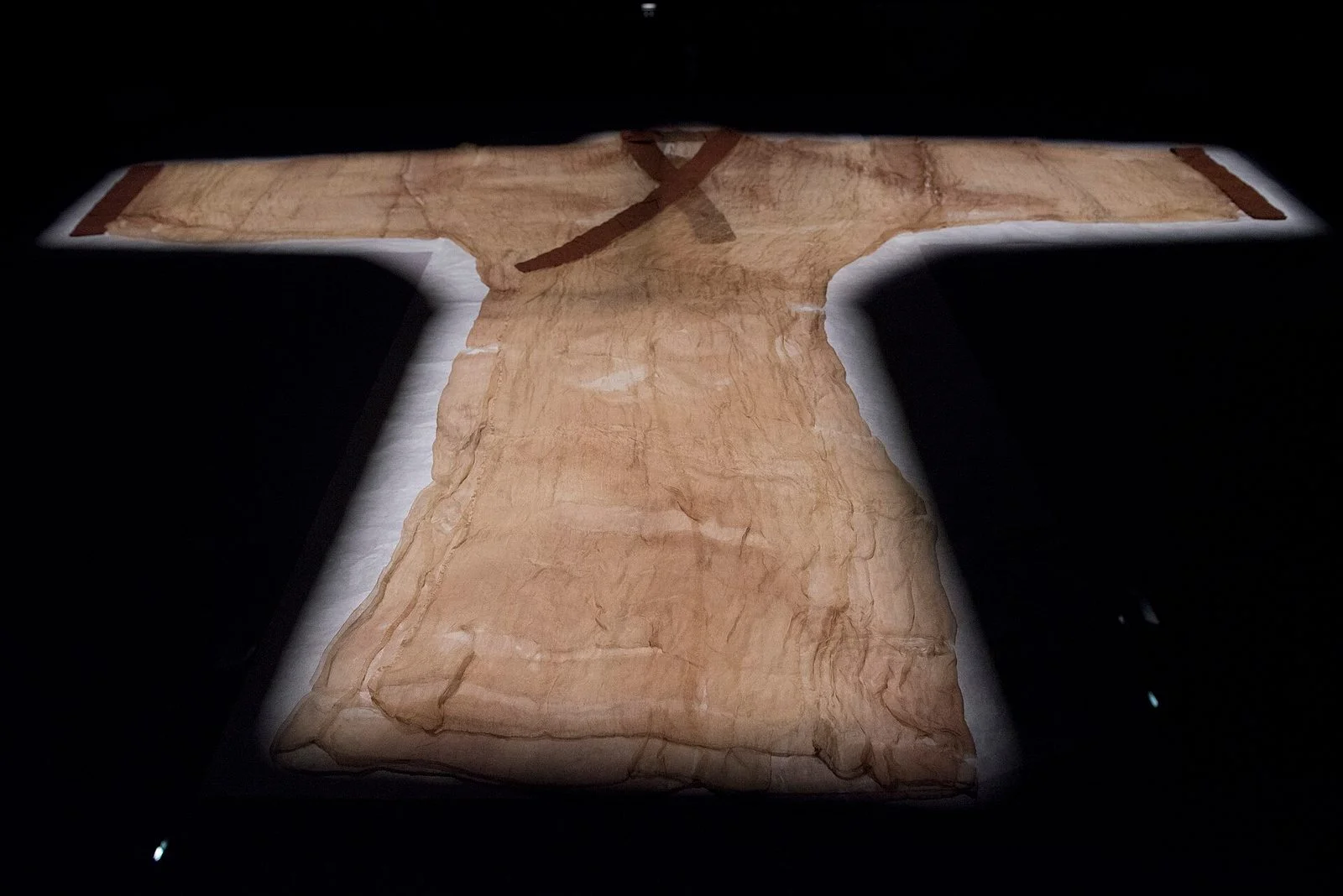
Two plain silk robes, not one
The straight-fronted plain silk robe from Mawangdui Tomb 1 is 132 cm long, 181.5 cm across the sleeves and weighs 49 grams, and has long been on display in the Mawangdui galleries. The other, a curved-front robe, is 160 cm long, 195 cm across the sleeves and weighs 48 grams; it was long kept in storage and went on public display for the first time in 2024. The two are often confused; “straight front” and “curved front” in the case labels are the key to telling them apart.
The plain silk robes have no lining or colour. The straight-front style was the more convenient everyday wear of the time, while the curved-front style was mostly for audiences and ceremonies. Behind glass, the colour and lightness of the cloth are less striking than the numbers; reading the dimensions, weight and excavation details on the label helps more than taking a photo of the garment. Other Mawangdui textiles in the same hall let you compare the different densities and patterns of Han weaving.
The T-shaped silk painting: heaven, earth and underworld
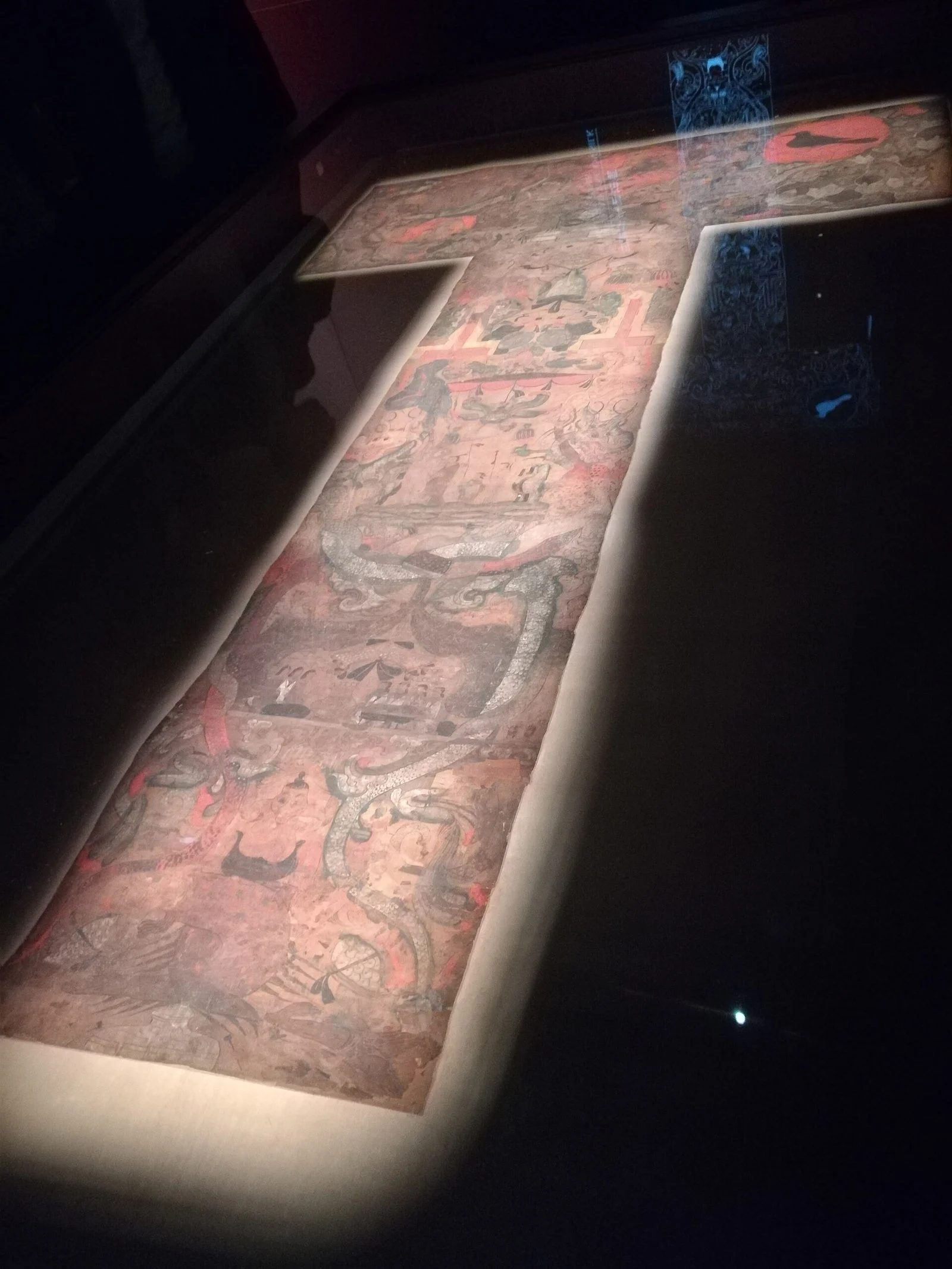
The T-shaped silk painting comes from Mawangdui Tomb 1, whose occupant was Xin Zhui, wife of Li Cang, chancellor of the Changsha kingdom. The picture is divided from top to bottom into heaven, the human world and the underworld: at the top centre is the snake-tailed Zhulong, with a crescent moon at the upper left, a toad and jade rabbit on the moon and a moon-holding goddess below it. It is counted among the museum's treasures and has long been on permanent display.
The painting is large and strongly coloured. Stand back first to see the three-part composition, then move closer to the jade rabbit and toad in the moon and the boundary between heaven and the human world. The case glass reflects light, and holding a phone against it blocks light and other visitors; looking at the whole with your eyes is clearer than a reflection-filled panorama.
Booking, passports and opening days
Opening hours are Tuesday to Sunday 9 a.m. to 5 p.m., with last entry at 4 p.m.; the museum closes on Mondays (shifted for public holidays, with holiday and extended hours as announced by the museum). Permanent displays are free. Individuals can book in real name up to five days ahead (not including the same day), with tickets for the newest day released at 8 p.m. each day; visitors from outside mainland China book and check in with a passport, Hong Kong, Macau or Taiwan permit, or another accepted document, and must bring the original used for the booking.
Inquiries: 0731-84415833 and 84475933, answered from 9 a.m. to 5 p.m. on open days. Plan the Mawangdui galleries and Xin Zhui's body in one stretch and allow three hours; if you add the “Hunan People” galleries on the second floor, half a day is safer.
Useful official references
Check the relevant official service before making arrangements. These links are references, not a guarantee of current services.
- Hunan Museum official site (opening hours and ticketing) (information checked 2026-11-12) ↗
- Xinhua: a national treasure from more than two thousand years ago, only 48 g? (26 August 2024) ↗
- Xinhua: 50 years after the Mawangdui excavation — moon motifs on the T-shaped silk painting (14 September 2024) ↗
- Hunan Provincial Government: the Changsha Mawangdui Han Tombs display ↗