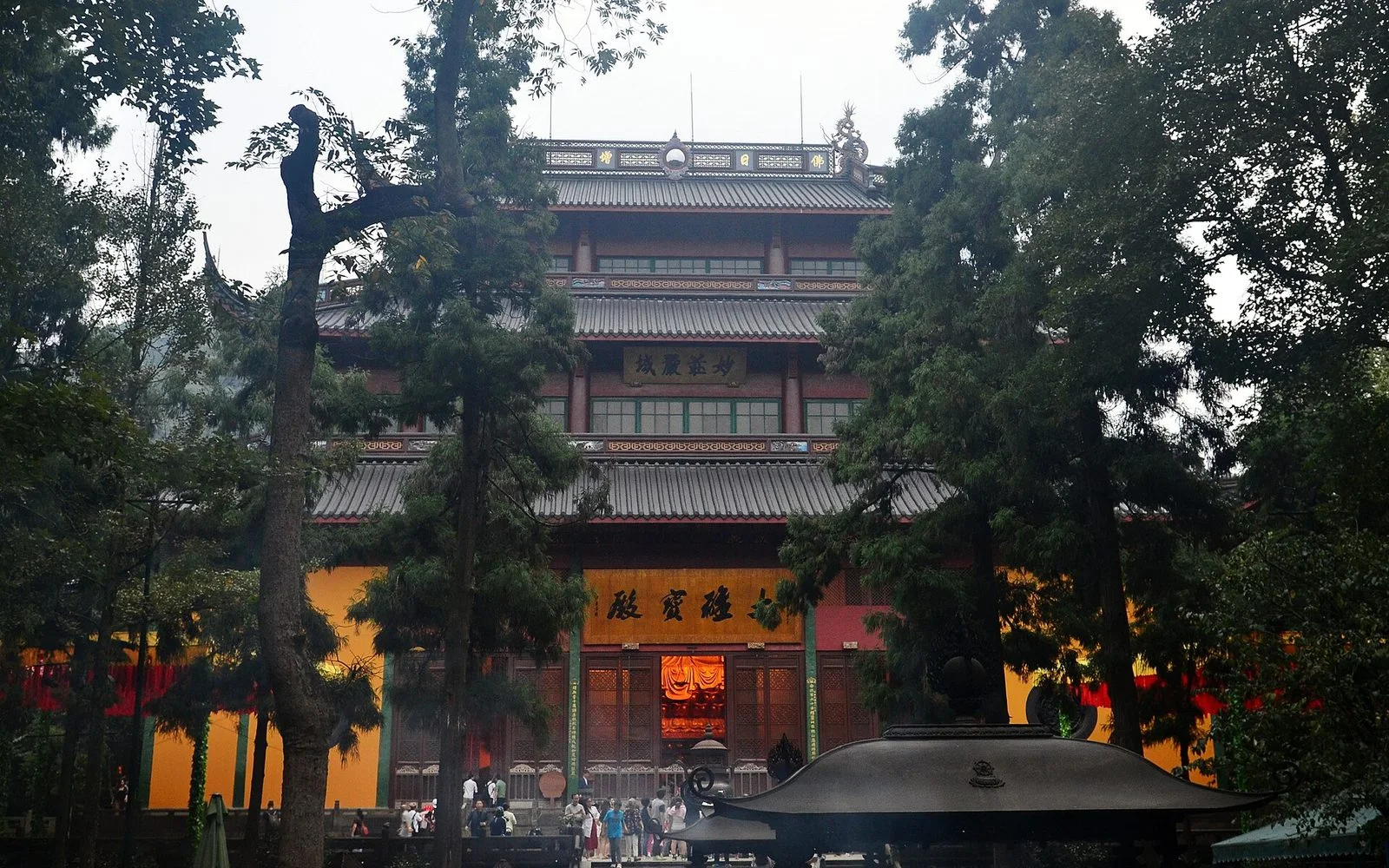
A temple between two hills
Lingyin Temple lies west of West Lake, backed by North Peak and facing Feilai Peak. The temple's official history dates its foundation by the monk Huili to the first year of the Xianhe era of the Eastern Jin dynasty, AD 326. The story of a peak flying here from India is an origin legend. What you can observe on site is the relationship between the valley, woodland and successive temple halls.
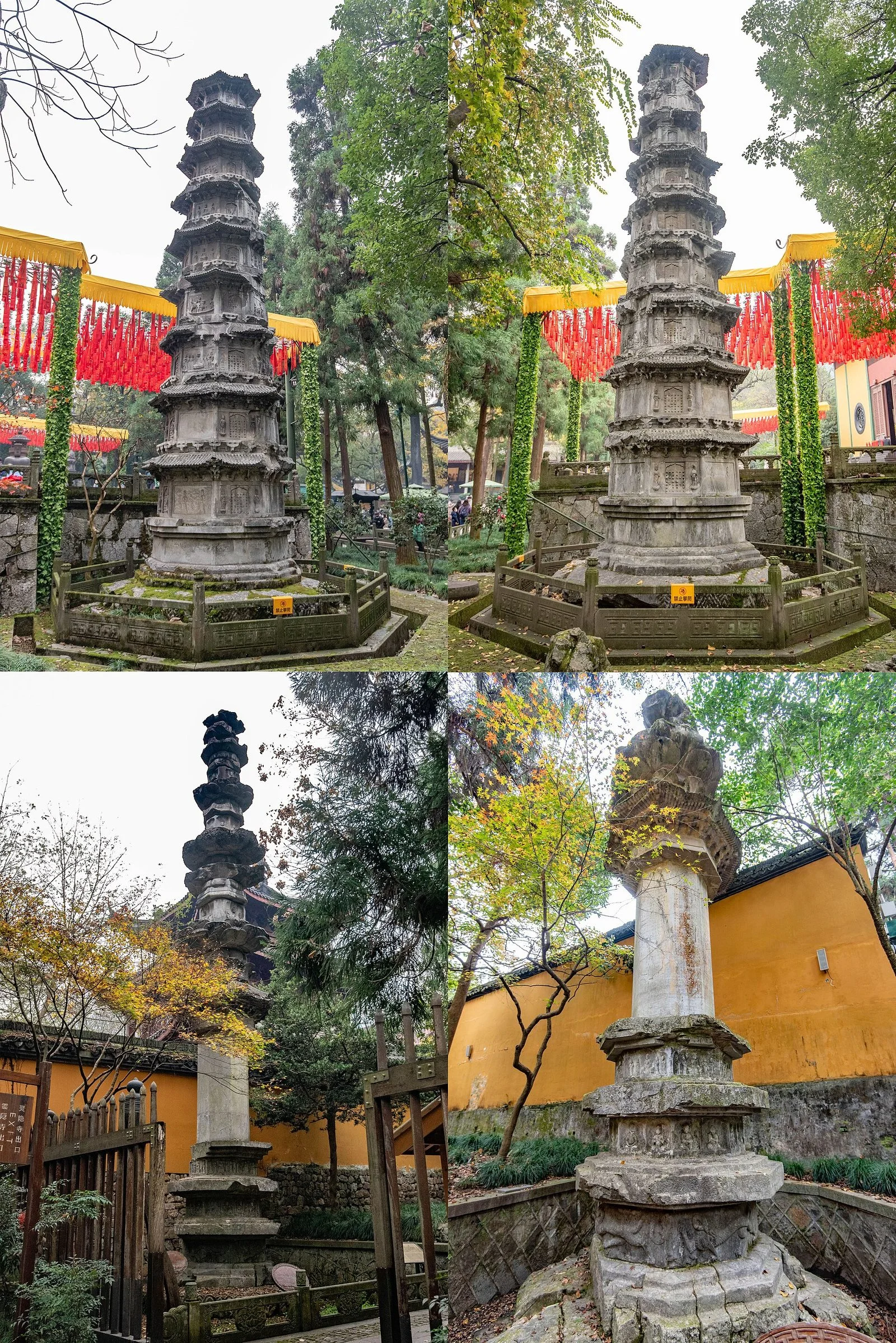
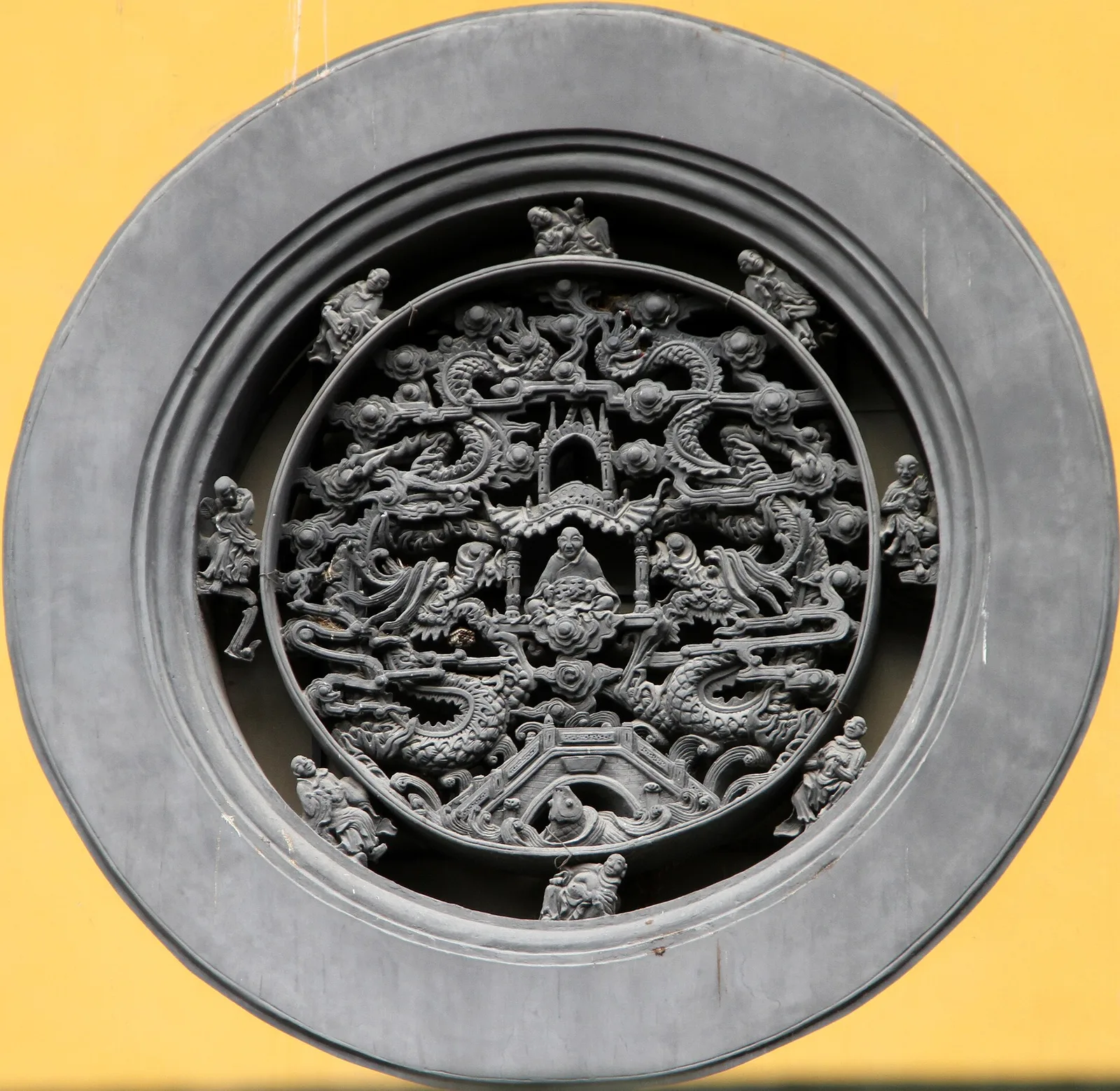
The temple has been rebuilt and repaired repeatedly; not all the buildings should be regarded as originals from the Eastern Jin period. The Kangxi Emperor bestowed the name “Yunlin Chan Temple” in 1689, so both “Lingyin” and “Yunlin” appear on site. Visitors interested in historic architecture can consider the halls' overall spaces separately from the smaller stone pagodas and sutra pillars. Step back to see roofs and stairways, then pause closer to examine the smaller structures and their carvings.
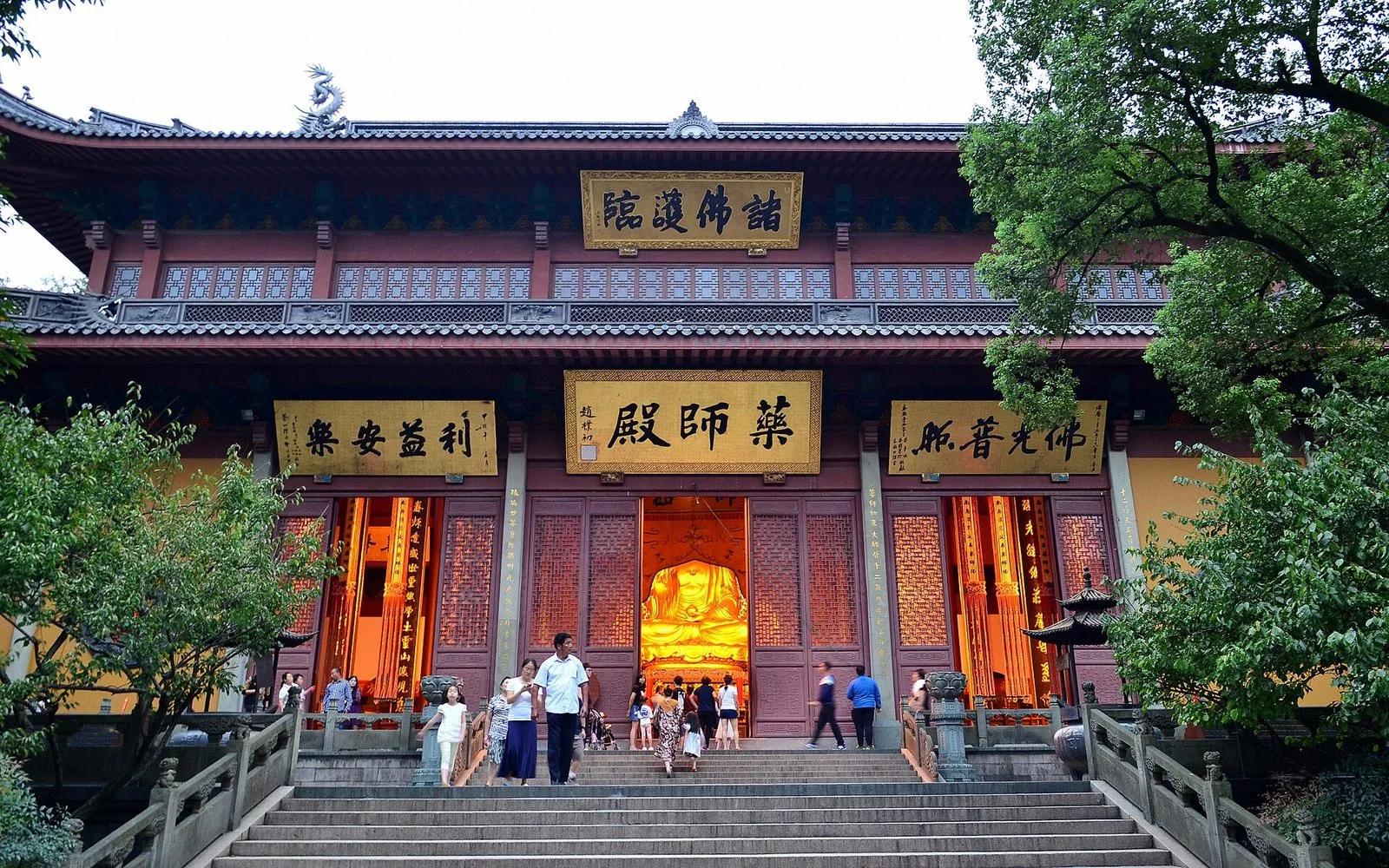
From the Hall of Heavenly Kings to the Medicine Buddha Hall
Along the temple's central axis stand the Hall of Heavenly Kings, Mahavira Hall, Medicine Buddha Hall, Zhizhi Hall and Huayan Hall, with other buildings, including the Five Hundred Arhats Hall and Jigong Hall, to either side. Moving gradually along the axis makes the layout easier to understand and lets you decide when to turn back according to your energy. The temple is on hilly terrain and involves steps; if prolonged stair climbing is difficult, focus on the halls toward the front.
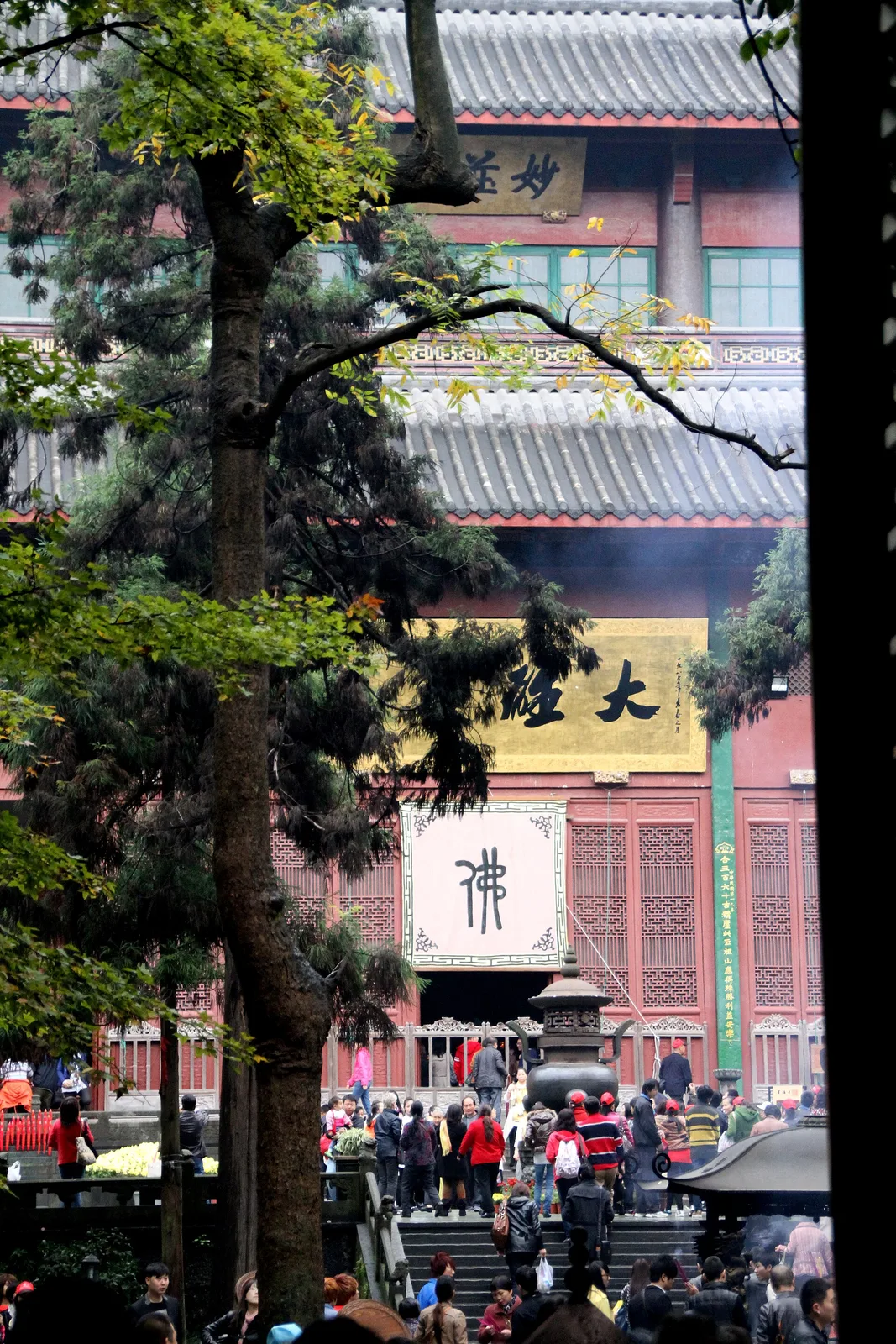
The statue of Shakyamuni in the Mahavira Hall is a principal feature. According to the temple, it was modeled on a Tang-dynasty Chan Buddhist statue and carved and assembled from 24 pieces of camphorwood, reaching a total height of 24.8 meters. First consider its proportions within the hall, then look at the carved robes and face. The Medicine Buddha Hall behind it houses the Medicine Buddha and the Sunlight and Moonlight Bodhisattvas. As you continue, notice the different devotional themes in each hall. Follow on-site rules for photography and worship, and do not obstruct worshippers.
A useful way to pace the visit is to treat the main halls and the smaller stone structures as two kinds of looking. The halls show the temple's sequence and scale; the pagodas and sutra pillars reward a closer pause for their carved forms. You can spend longer on the details that interest you and turn back when the steps become tiring.
Reservations after the change to free admission
As checked on November 11, 2026, admission to the Lingyin–Feilai Peak scenic area has been free since December 1, 2025. This includes Lingyin, Yongfu and Taoguang temples; the former Feilai Peak admission charge and Lingyin Temple incense admission fee have been removed. Free admission does not mean unrestricted walk-in entry at any time. The published system requires real-name reservations and timed visits. Search WeChat or Alipay for the “杭州灵隐飞来峰” mini program. Visitors from outside mainland China may reserve using passports or other accepted documents listed in the rules, and must bring the original document used for the reservation.
The published rules require booking at least 1 day ahead, with reservations available for the next 7 days. Slots are released at 8:00 a.m., 7 days before the visit. If spaces remain for the current time slot on the day, on-site registration with an original valid identity document is allowed until capacity is reached. Book ahead rather than relying on walk-in registration. Regular hours are 7:30 a.m.–5:30 p.m., with entry checks ending half an hour before closing; special Buddhist festival arrangements follow separate announcements. Allow roughly 1.5–2 hours for Lingyin Temple's main halls alone. Looking closely at Feilai Peak or visiting the other two temples requires additional walking time; these are planning estimates.
Useful official references
Check the relevant official service before making arrangements. These links are references, not a guarantee of current services.
- Lingyin Temple: introduction to Lingyin (checked November 11, 2026) ↗
- Hangzhou.com.cn: reservation and visiting rules for the Hangzhou Lingyin–Feilai Peak scenic area, November 19, 2025 (checked November 11, 2026) ↗
- Xinhua: Lingyin–Feilai Peak scenic area to offer free admission from December 1, November 19, 2025 ↗