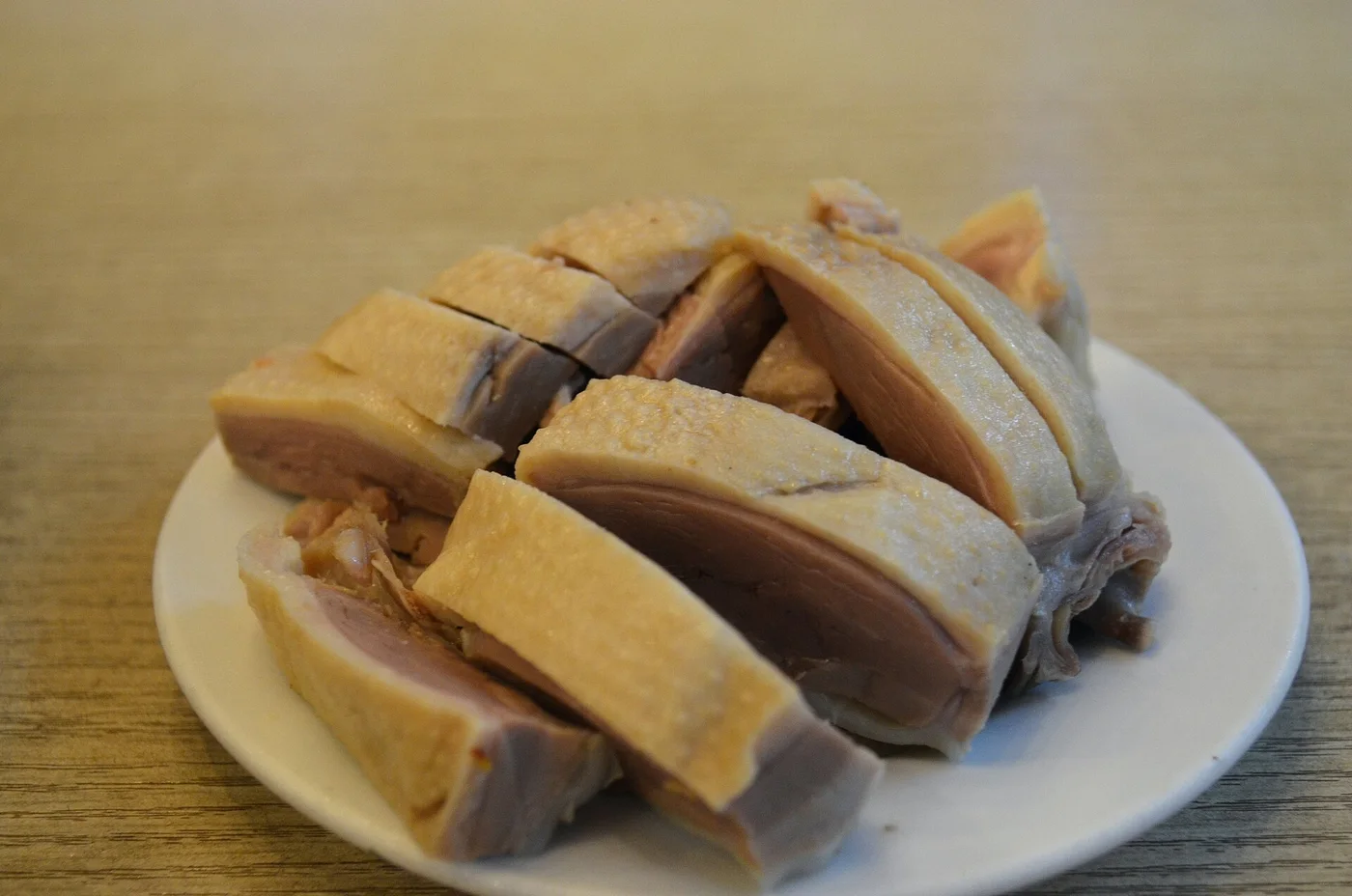
Savoury flavour beneath pale skin
Salted duck is a characteristic cooked duck dish in Nanjing. The finished duck retains its pale skin, and cutting reveals layers of skin, fat and meat. It is often served chopped into small bone-in pieces. Its appeal lies in the duck's own flavour and the savouriness of salt and brine: the skin is slightly chewy and the meat firm, with no thick surface sauce providing the main flavour. For a first taste, order a small portion to share and get to know the preparation before deciding whether to buy a whole duck.
A Nanjing duck shop may sell salted duck, roast duck and pressed salted duck as separate products. Salted duck is cured, soaked in brine and gently cooked. Roast duck differs in surface colour and preparation, while pressed salted duck has its own curing and drying process. Showing the characters “盐水鸭” at the counter makes your choice clearer than simply asking for “Nanjing duck”.
Curing, brining, drying and gentle cooking
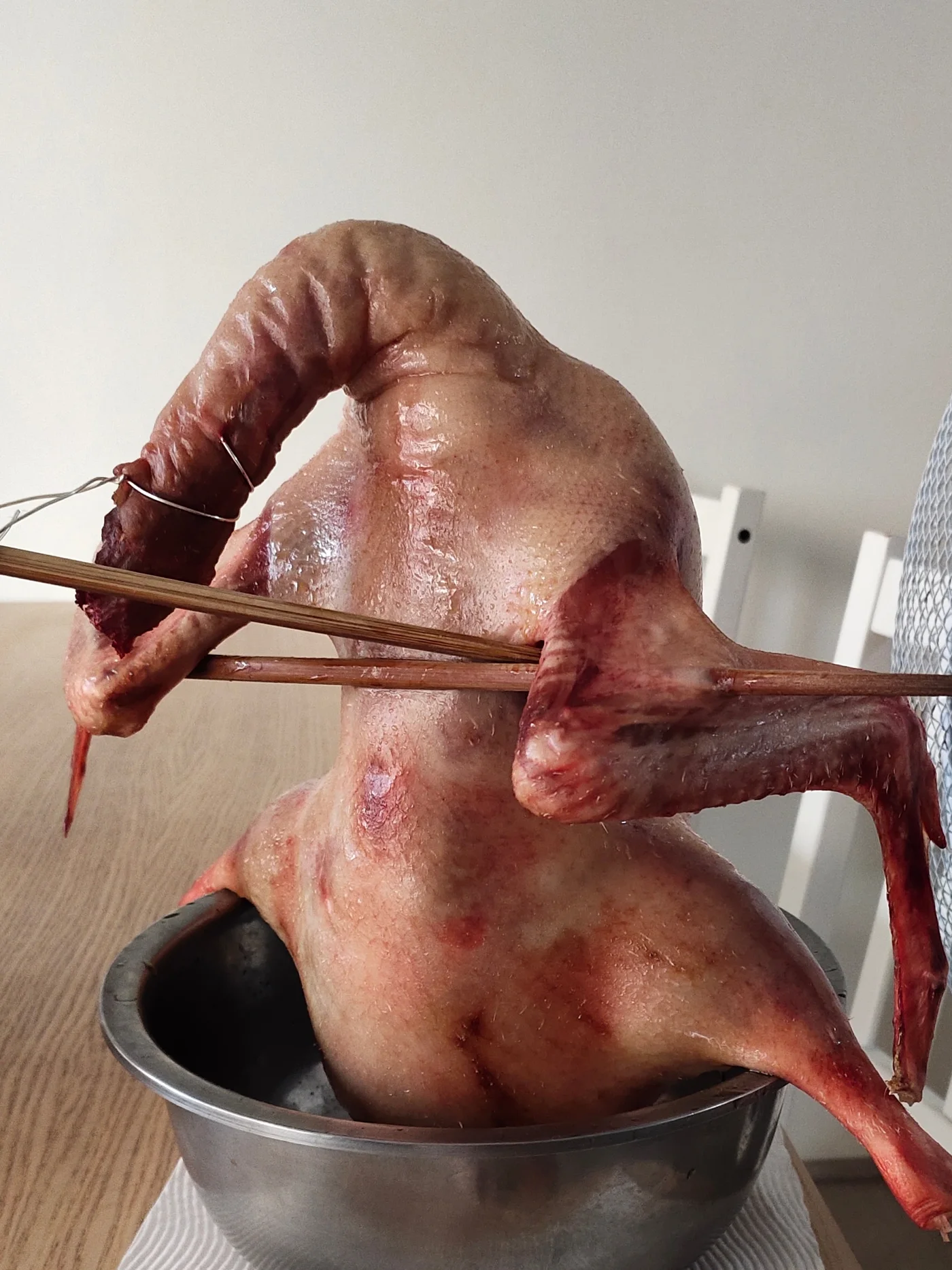
The traditional process is often summarised as rubbing with toasted salt, soaking in mature brine, drying thoroughly and cooking gently for long enough. Toasted salt cures the duck, brining lets the flavour penetrate the meat, and drying and subsequent gentle cooking both affect the final texture. Careful heat control cooks the duck through while retaining tenderness. Spices, brine and methods vary between shops; one shop's recipe is not a fixed standard for all salted duck.
The name “osmanthus duck” is linked to Nanjing's tradition of salted duck during the autumn osmanthus flowering season. It does not mean every serving contains osmanthus or tastes sweet. Salted duck is available throughout the year. If you want savoury duck, check the product name and ingredients, distinguishing seasonal names and trademarks from actual seasoning. An osmanthus illustration on the packaging does not establish the ingredients.
Ordering and eating
A whole duck from a prepared-food counter suits a group, while a small chopped portion is convenient for tasting. Before buying, ask whether the price is per portion, half-duck or weight, and say whether you want it chopped. Small bone-in pieces are easy to pick up, but watch for fine bones when eating and remove bones before serving children. Breast, leg and skin-on pieces differ in fat content and texture; if you prefer lean meat or leg, ask whether you can choose the cut.
In a restaurant, salted duck can be a shared cold dish alongside rice, vegetables or other hot dishes. It is already salty, so taste it before adding seasoning. If you also plan to try duck blood vermicelli soup that day, keeping the duck portion modest makes it easier to compare the two Nanjing dishes: one focuses on meat and skin, while the other brings duck blood, offal and vermicelli together in hot broth.
Eating now or taking it away as a gift
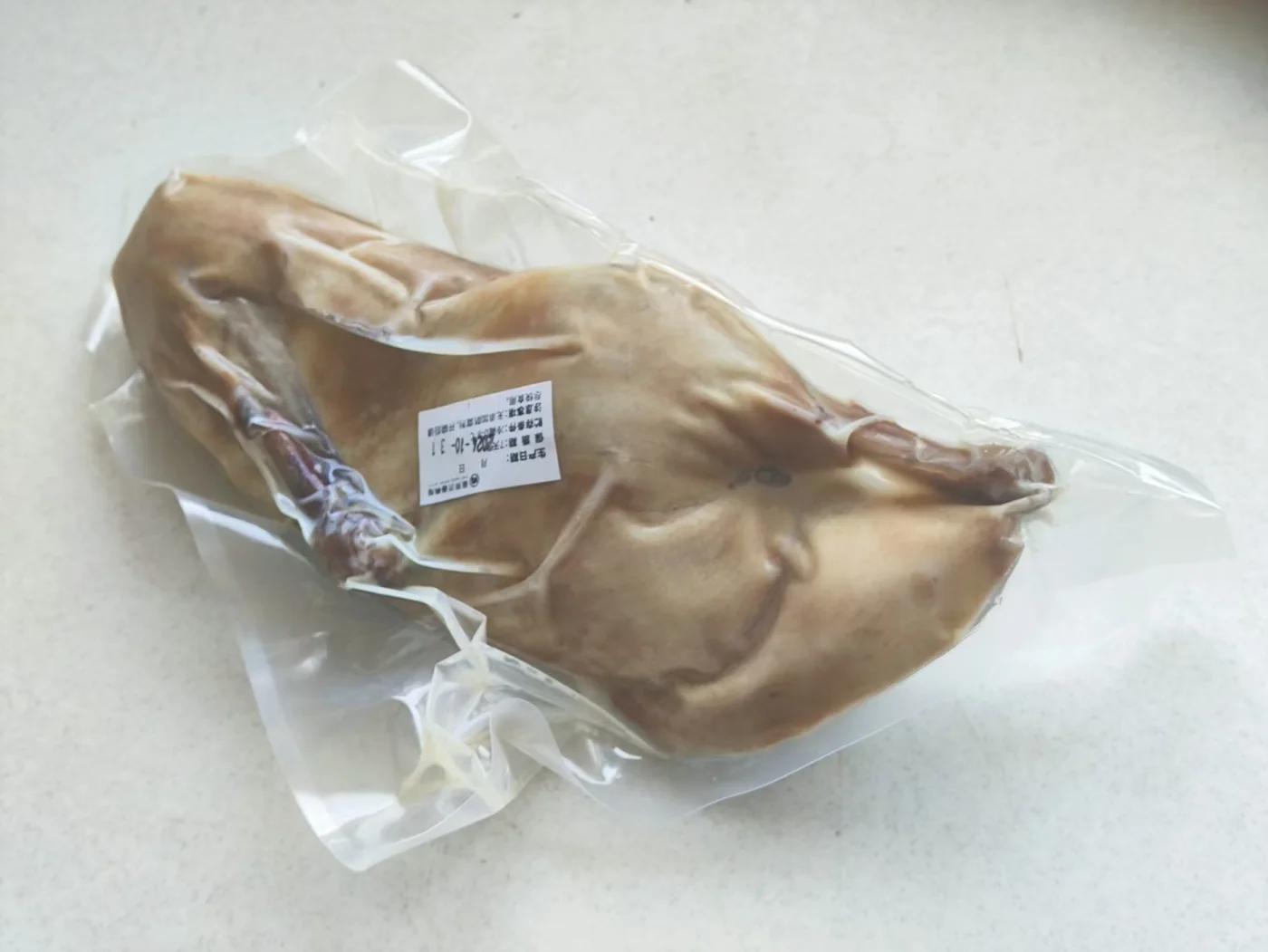
Freshly chopped cooked duck and factory-prepackaged products differ in how they should be eaten and transported. To take duck back to your accommodation or on a long journey, ask about storage temperature, the time within which it should be eaten, and whether its packaging suits your plans. Vacuum packing does not necessarily mean it can be kept at room temperature for a long time. Taking meat products across borders also involves destination entry rules, which should be checked separately before buying.
If you have dietary restrictions, ask about curing ingredients, brine and processing rather than judging by the finished colour alone. Spices, alcoholic seasonings and shared utensils may vary between shops. Anyone strictly avoiding an ingredient should obtain a clear answer. This article does not specify shops, uniform prices or opening times; refer to actual menus and product labels when choosing.
Useful official references
Check the relevant official service before making arrangements. These links are references, not a guarantee of current services.