City introduction
Nanjing, the capital of Jiangsu Province, lies on the lower Yangtze River. To get to know it, first distinguish its different landscapes: Zhongshan rises east of the main urban area, Xuanwu Lake sits beside it, the Qinhuai River runs through historic neighbourhoods in the south, and the Yangtze opens up wider views of both banks. The history of this former capital extends beyond museums. City walls, tombs, streets and a plate of salted duck each offer a different way to understand it.
Nanjing's Yangtze, Zhongshan and city walls
Nanjing has flat land along the river as well as low mountains and hills extending into the city. Zhongshan, also known as Zijinshan or Purple Mountain, stands east of the main urban area, its slopes and woodland forming a prominent green backdrop. The Qinhuai River basin and Xuanwu Lake bring water into different parts of the city. Mountains, lakes, city walls and tall buildings often share the same view, with historic remains woven into daily life. Nanjing served as a capital during the Six Dynasties, the Ming dynasty and under different governments in modern Chinese history. Remains of these periods are spread across different neighbourhoods; the tombs, walls and museums visited today offer different historical clues.
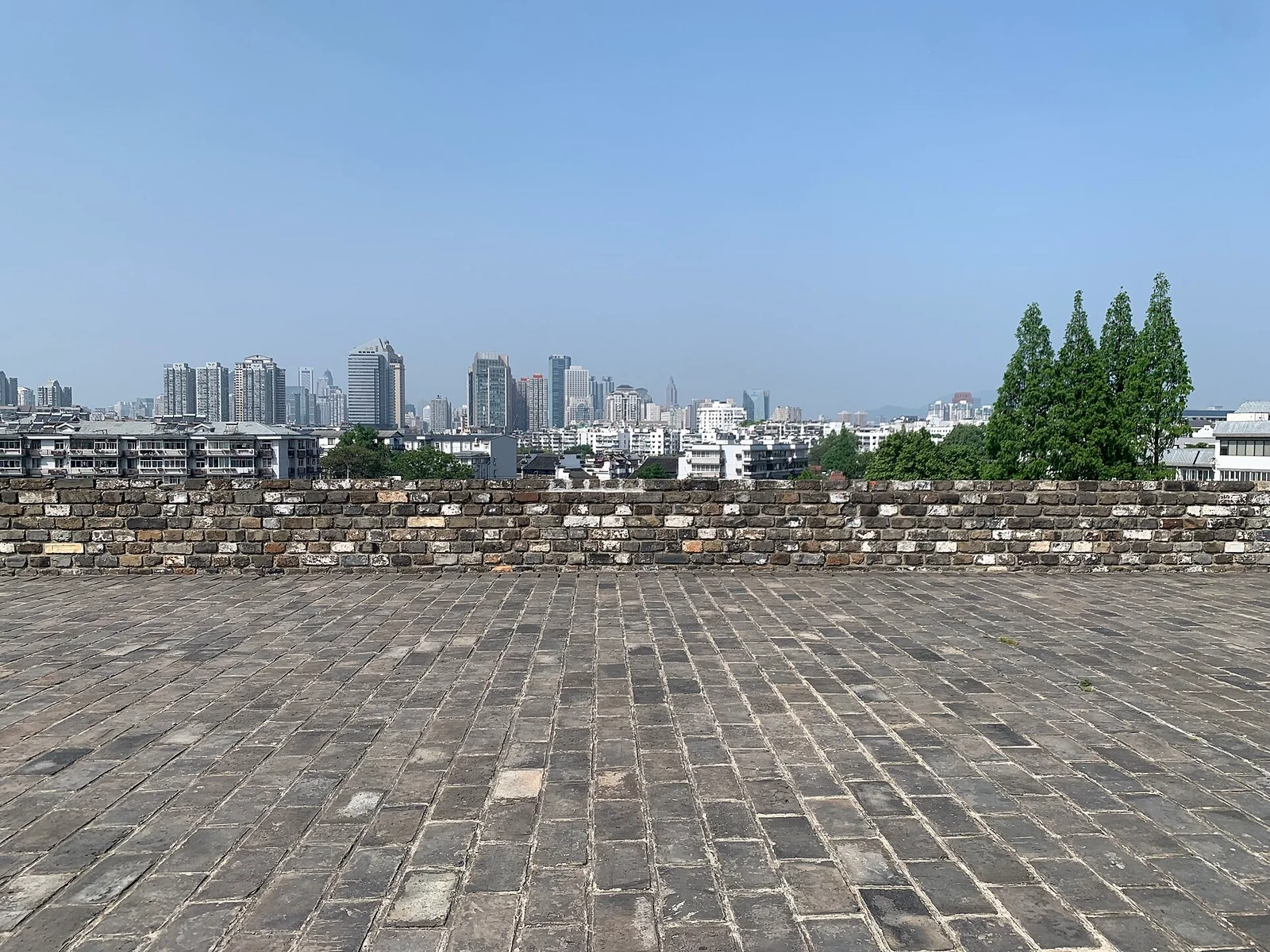
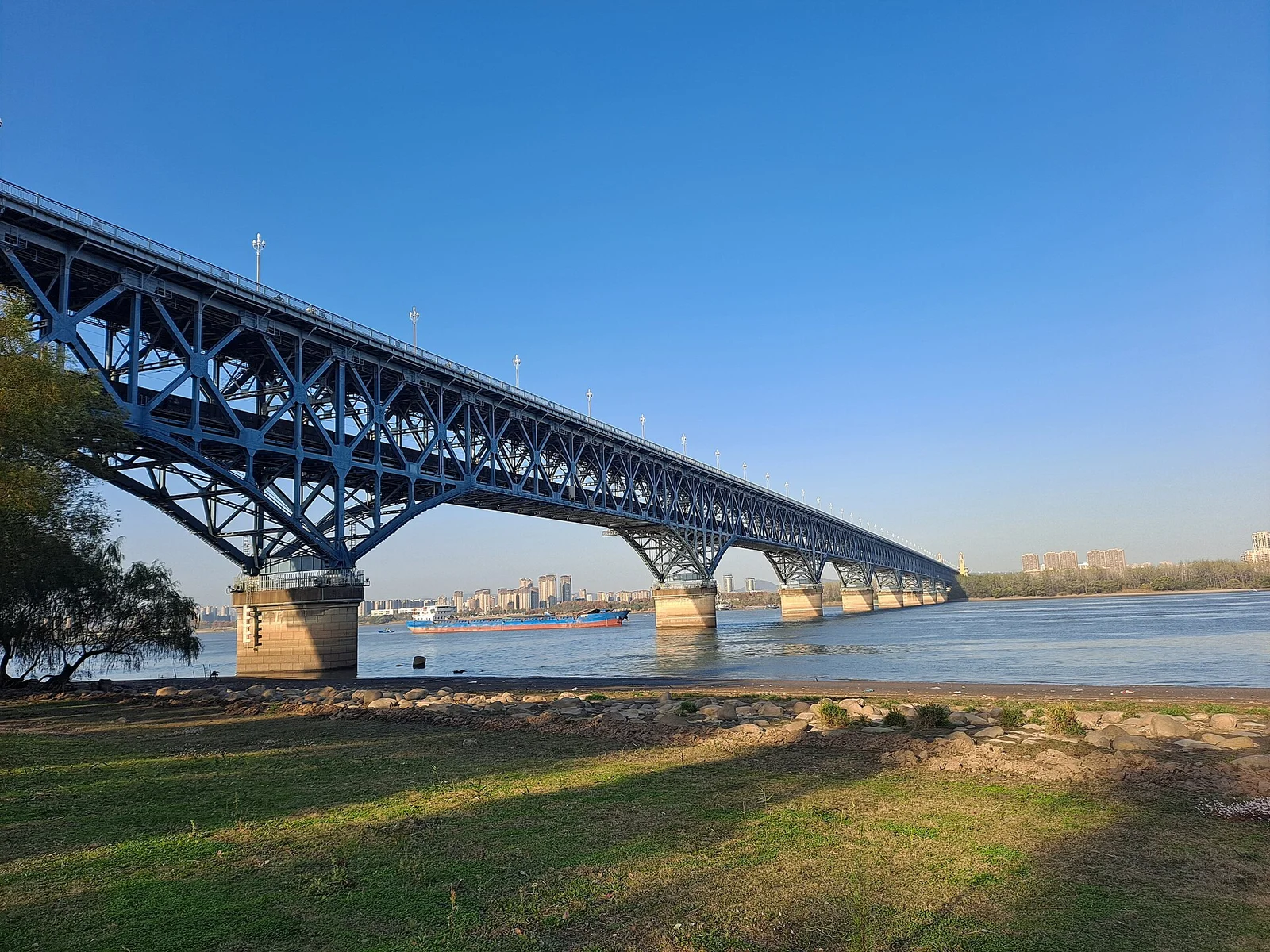
Surviving sections of the Ming city wall help explain the boundaries of the old city. Near Zhonghua Gate in the south, the wall stands beside low-rise neighbourhoods; around Xuanwu Lake, it appears alongside the lakeshore and modern buildings. The Nanjing Yangtze River Bridge shows another side of the city: the broad shipping channel, combined road and railway bridge, and neighbourhoods on the far bank make its role as a transport and industrial centre visible alongside its history as a capital. The photographs illustrate these spatial relationships; they are not a guide to current wall entrances or opening arrangements.
Two mausoleums on Zhongshan, two periods of history
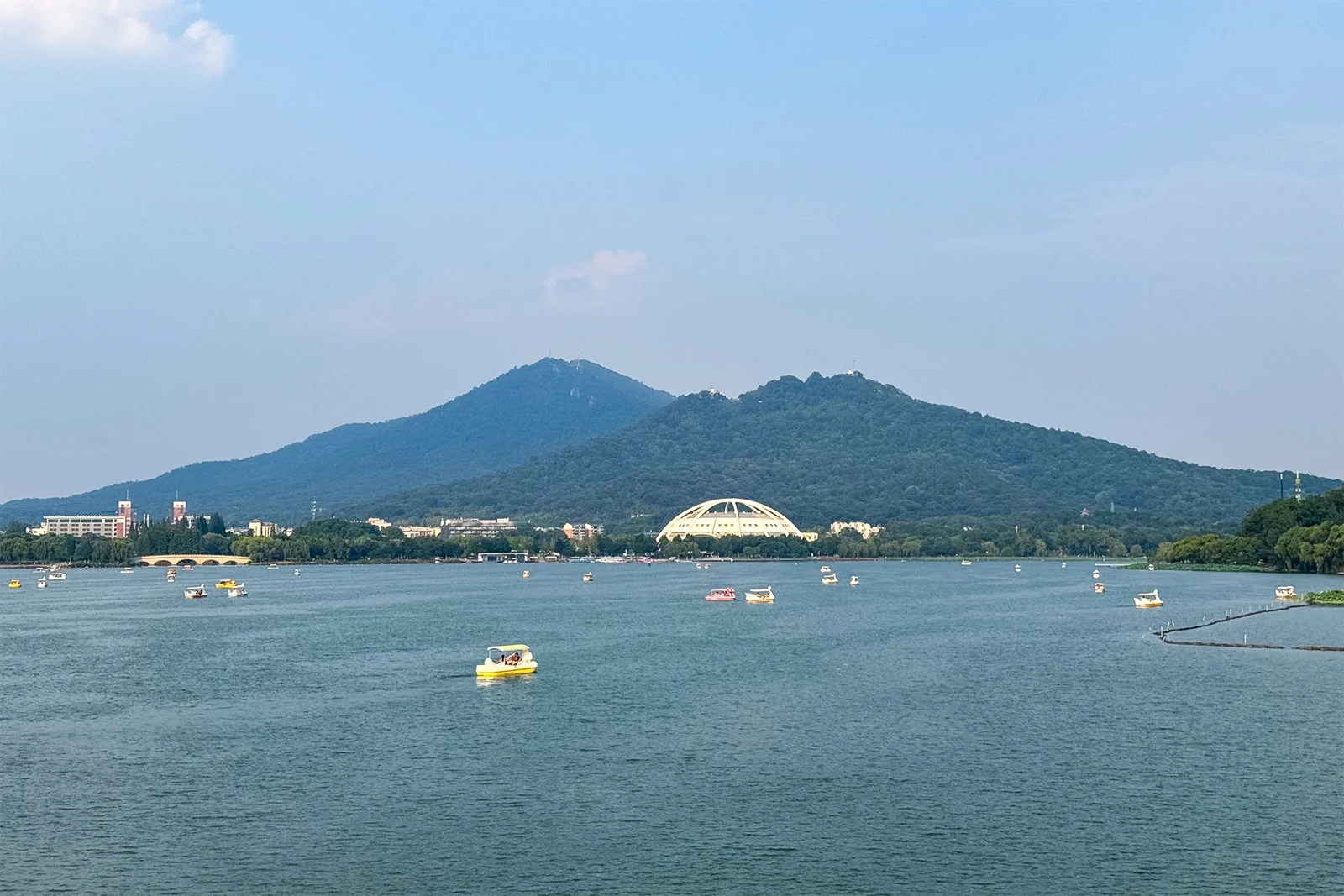
In Zhongshan's woodland, Sun Yat-sen Mausoleum and Ming Xiaoling Mausoleum represent modern Chinese history and the founding of the Ming dynasty respectively. Sun Yat-sen Mausoleum rises up the slope, with steps, terraces, a memorial hall and blue roofs forming a clear axis. The memorial architecture is one focus; another is the woodland revealed in layers when looking back downhill. Its solemn setting suits visitors interested in modern history, memorial architecture and mountain scenery.
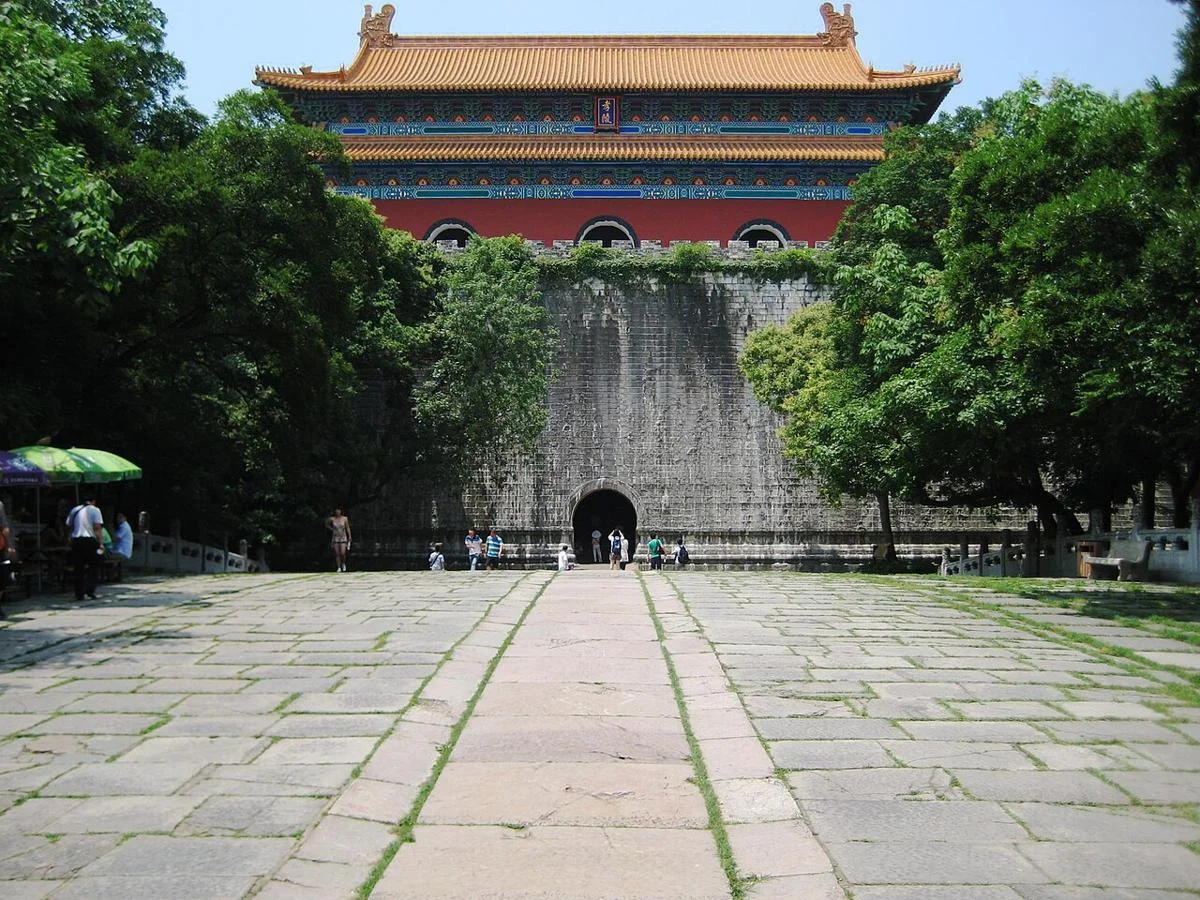
Ming Xiaoling is the tomb of the Ming dynasty's founding emperor, Zhu Yuanzhang, and Empress Ma. The stone animals on Stone Elephant Road, the Sacred Way approaching the tomb and the mausoleum complex invite visitors to examine carvings and architectural layouts. Its sights are spread along wooded paths and separate buildings, unlike the concentrated uphill axis of Sun Yat-sen Mausoleum. Although both are in the Zhongshan area, they are separate monuments. Understanding their periods, people and layouts helps reveal their differences.
Xuanwu Lake and Nanjing Museum: lakeshores and historical collections
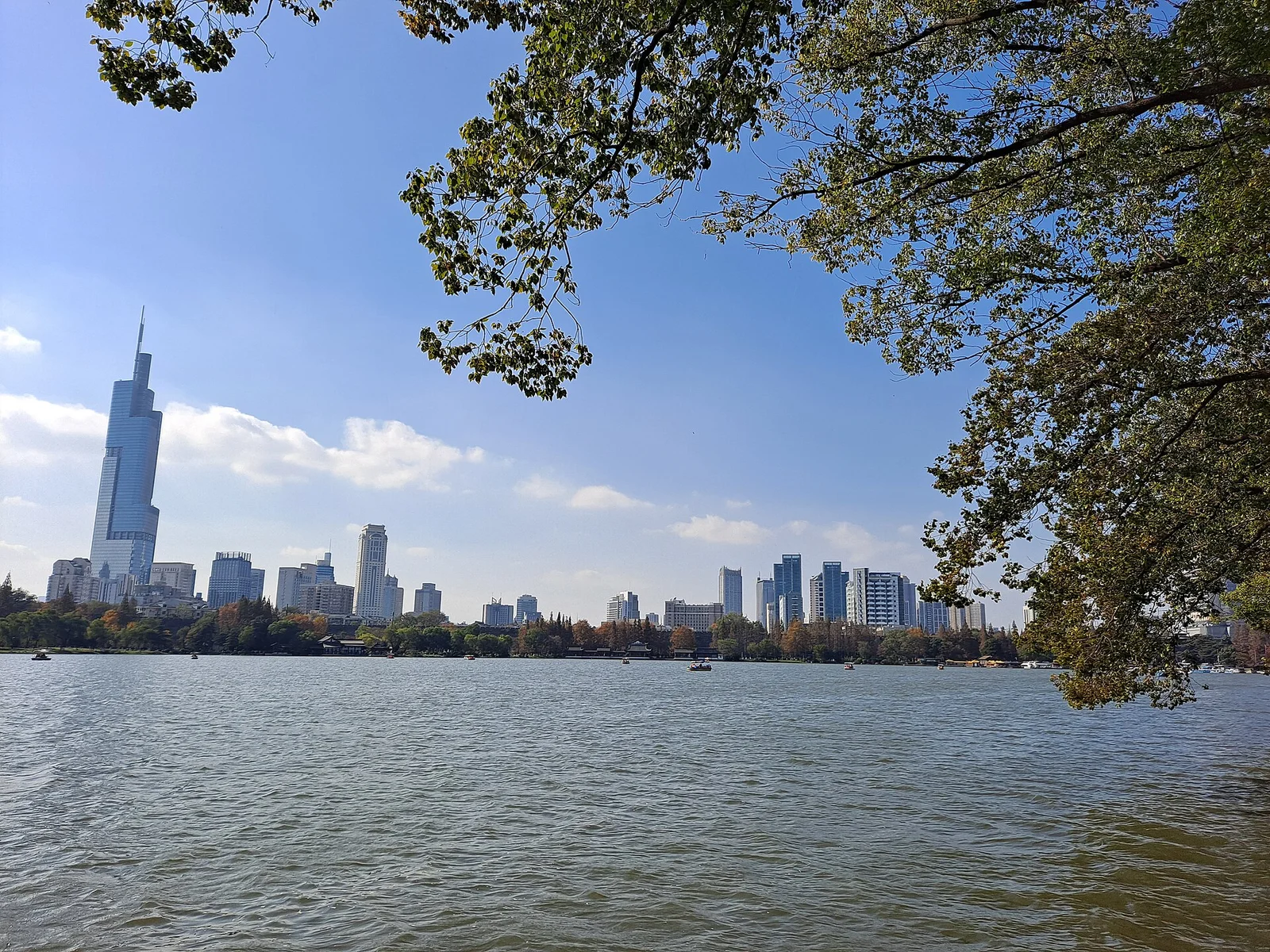
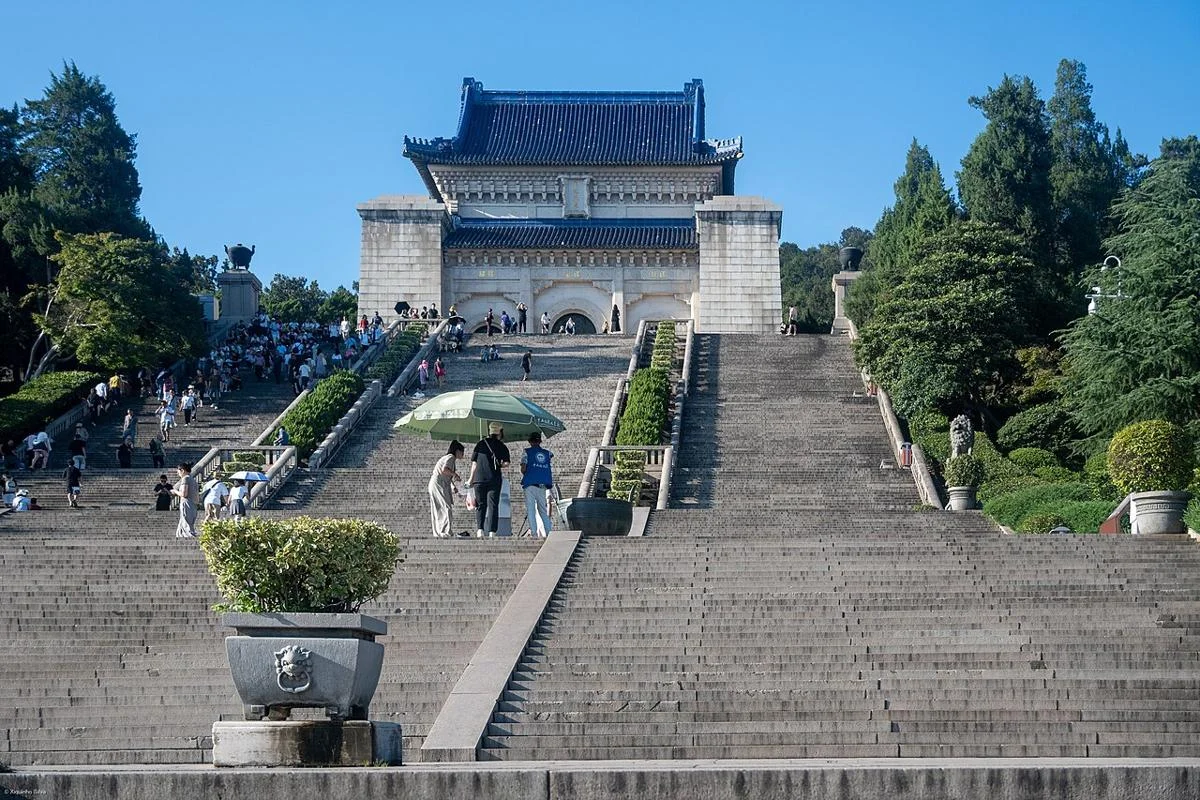
Xuanwu Lake provides a broad expanse of water beside the main urban area. From its shores, Zhongshan's outline appears in the distance, while dense groups of buildings can be seen in another direction. Islands, causeways and waterside trees divide the lake into varied foreground views. It suits visitors who want to see the city's everyday leisure spaces as well as its monuments. Views differ along the shore; the mountain scenery and skyline in photographs are seen from different directions.
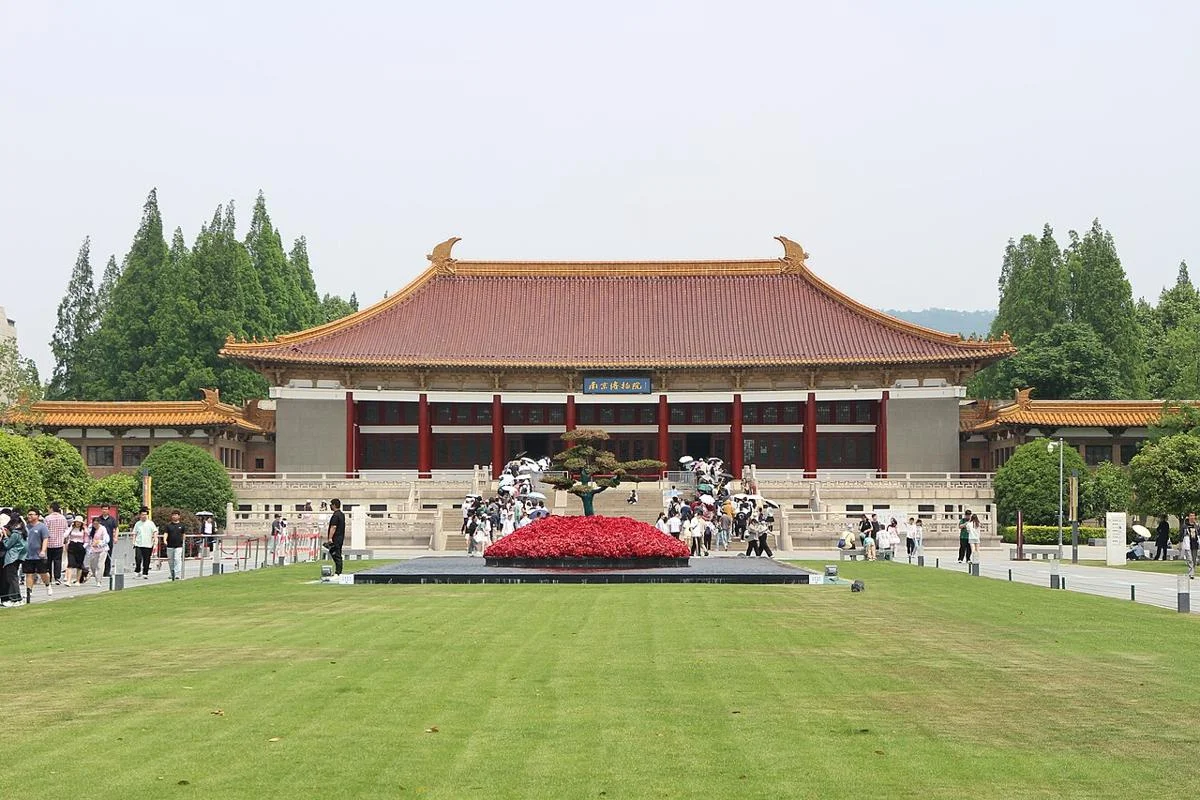
Nanjing Museum, around Zhongshan East Road in the east of the city, shifts the focus from mountains and lakes to Jiangsu's history and art. Its value lies in collections, archaeology and themed exhibitions, so seeing the main building's exterior alone offers only part of a visit. Visitors interested in objects, crafts or historical context can read the detail page to understand the different galleries before choosing a theme. Its Chinese name is 南京博物院; it is a different institution from the similarly named 南京市博物馆, Nanjing Municipal Museum.
Qinhuai neighbourhoods and a modern shopping centre
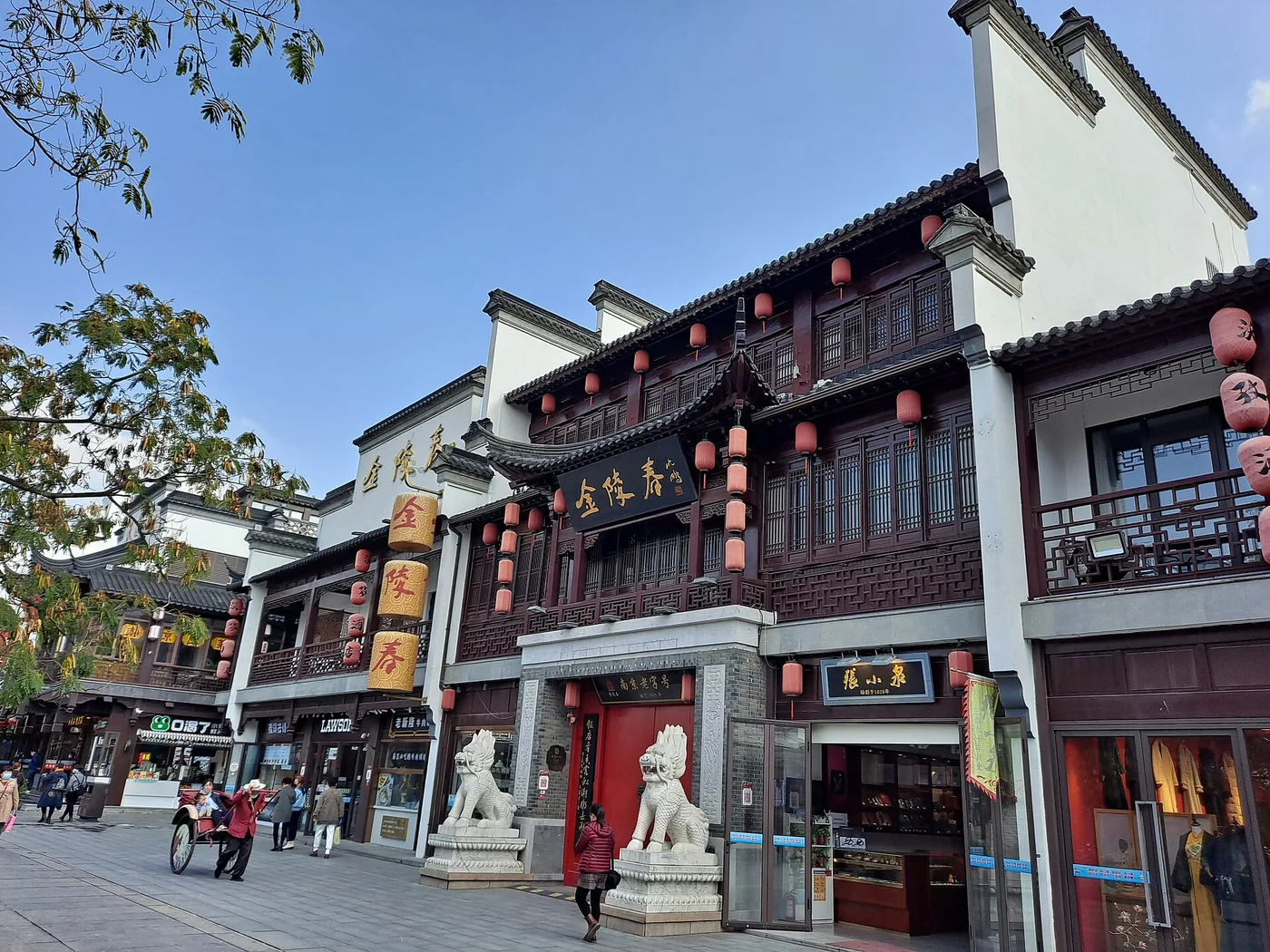
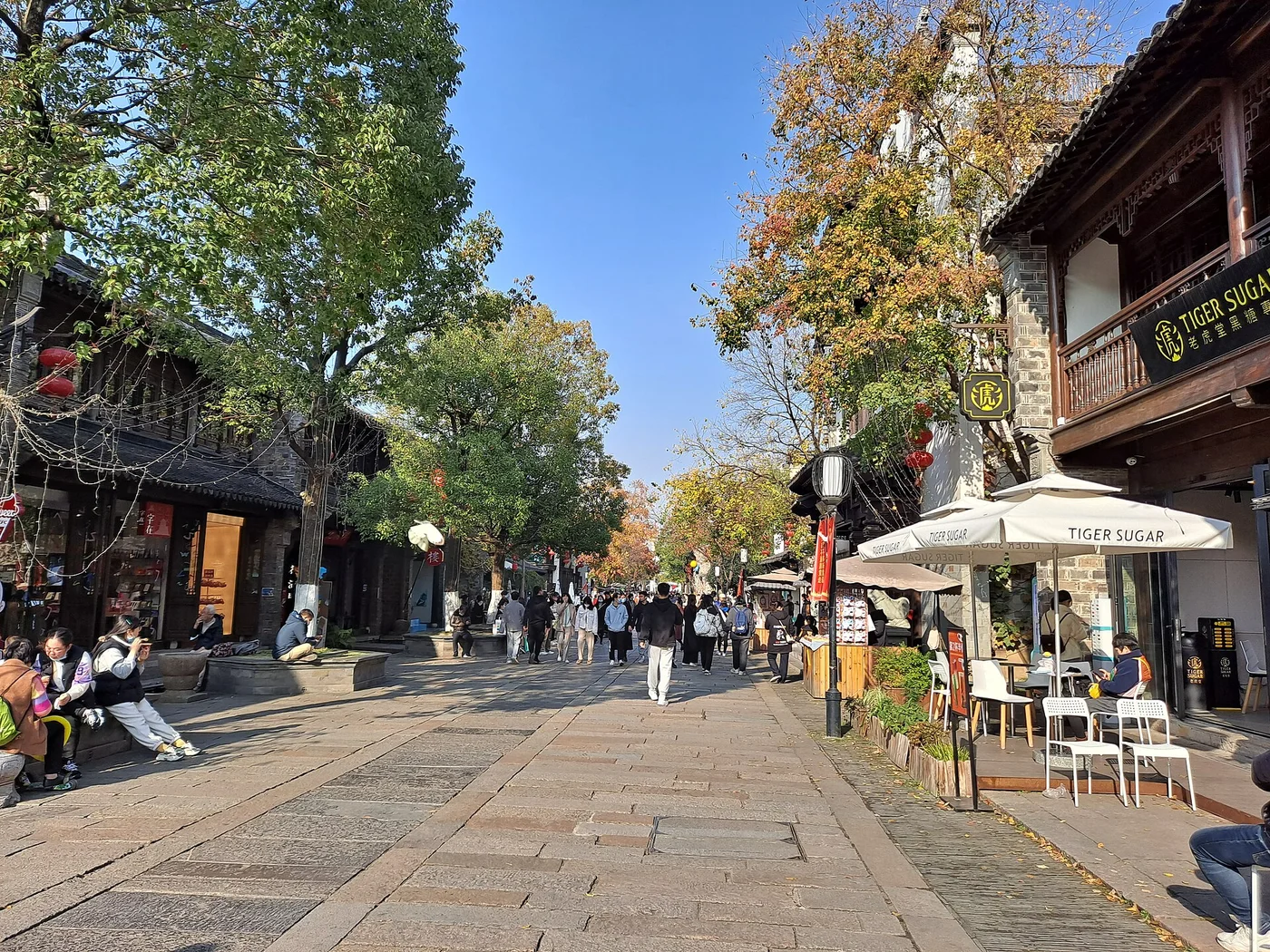
Fuzimiao and Laomendong in the south offer a street-level introduction to Nanjing. Fuzimiao's shopping streets connect with the Qinhuai riverfront, bringing together food, souvenirs and evening sightseeing. Laomendong, east of Zhonghua Gate, combines shops in lanes with traditional architectural forms, making it suitable for shopping and exploring on foot. Both are active tourism and shopping areas; today's storefronts should be distinguished from the original appearance of the historic neighbourhoods.
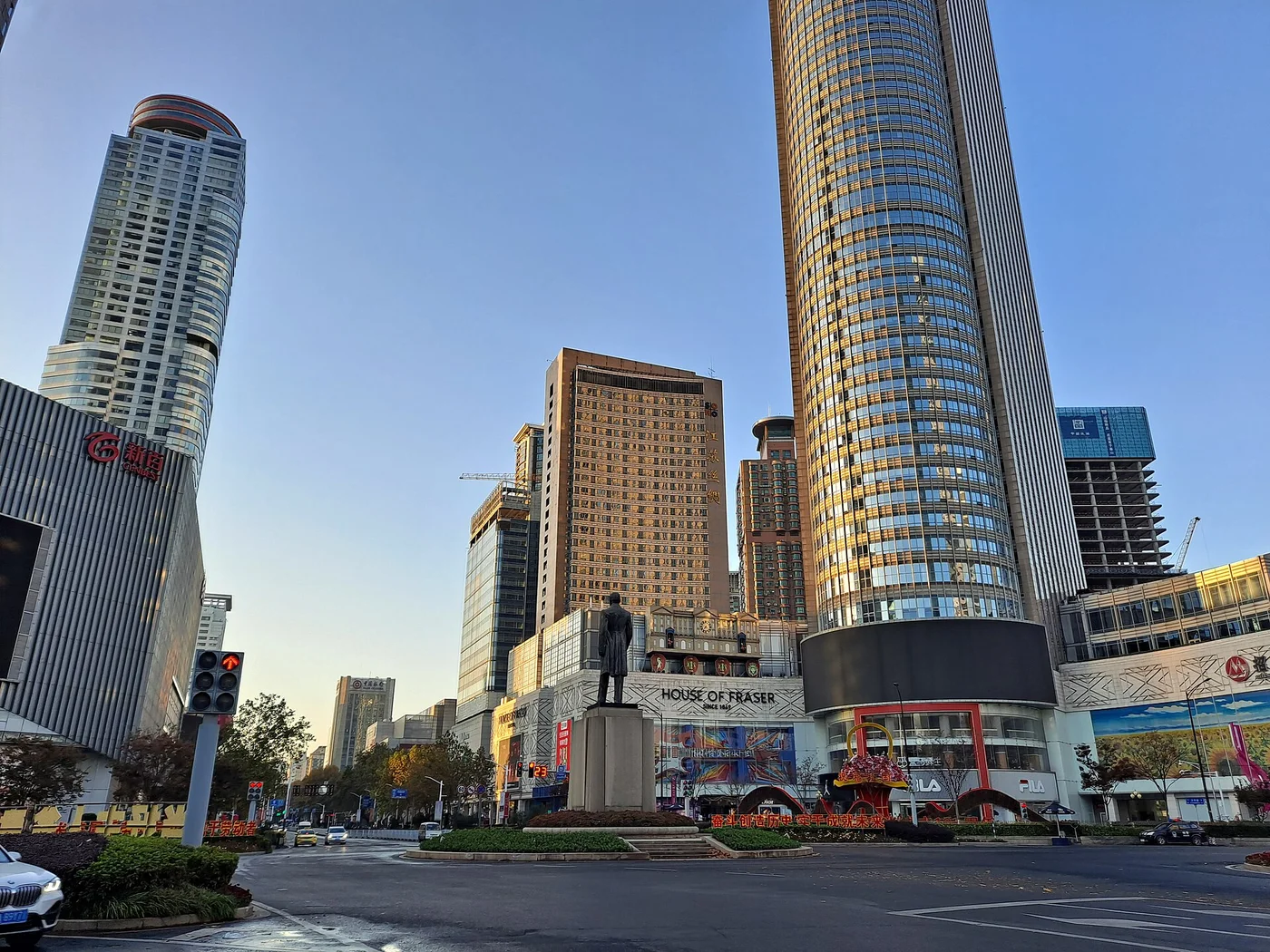
Xinjiekou is a modern commercial centre. Malls, department stores and restaurants cluster around city roads and underground shopping spaces, offering a different experience from browsing small street-side shops in the south. For clothing, department-store shopping or an indoor meal and rest, Xinjiekou makes comparison easier. For Qinhuai street scenes and snack shops, consider Fuzimiao and Laomendong. Individual shops and products change, so the setting and types of shopping are more useful for choosing than a fixed list of must-buy items.
Understanding Nanjing food through duck dishes and pan-fried dumplings
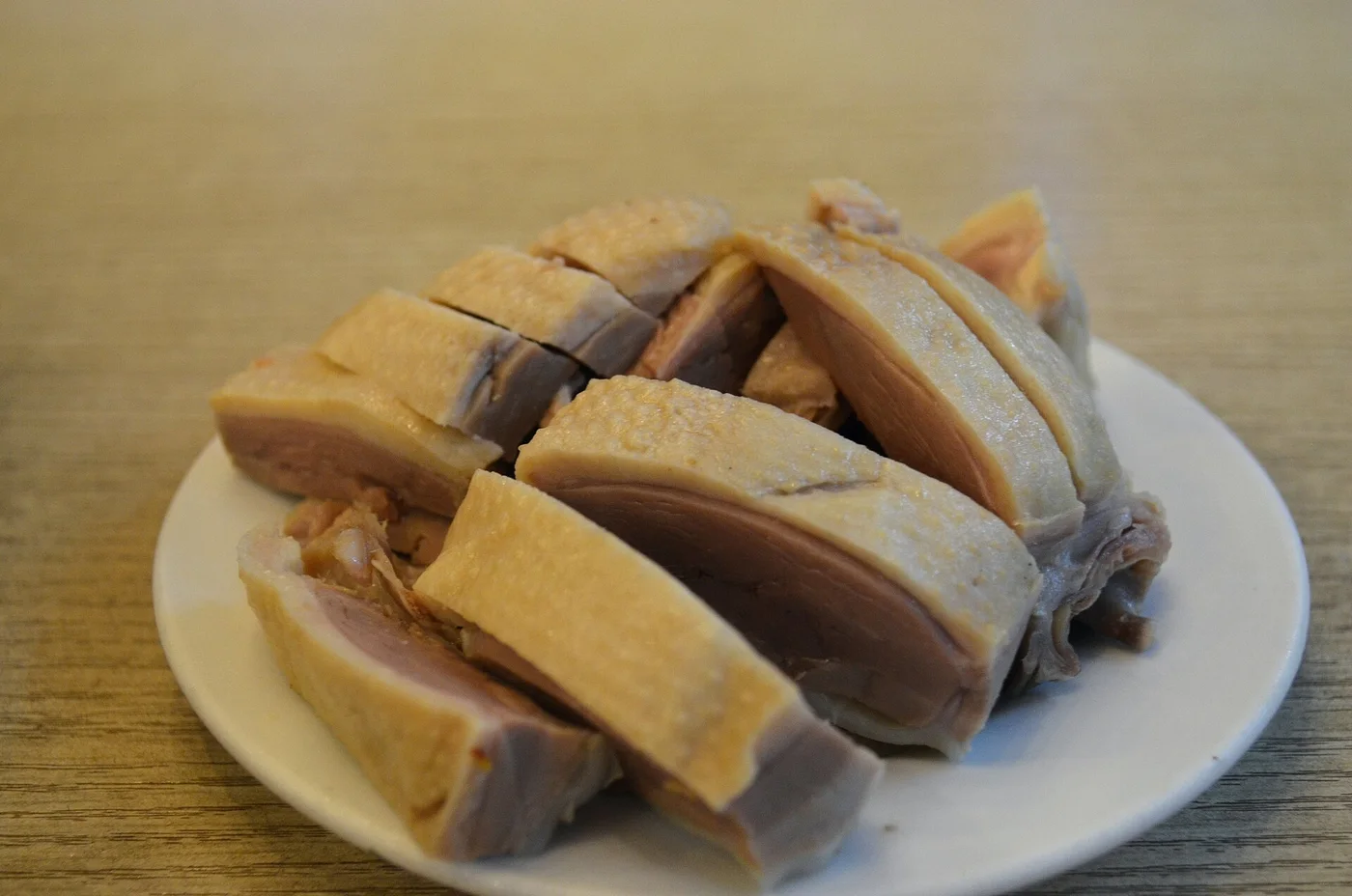
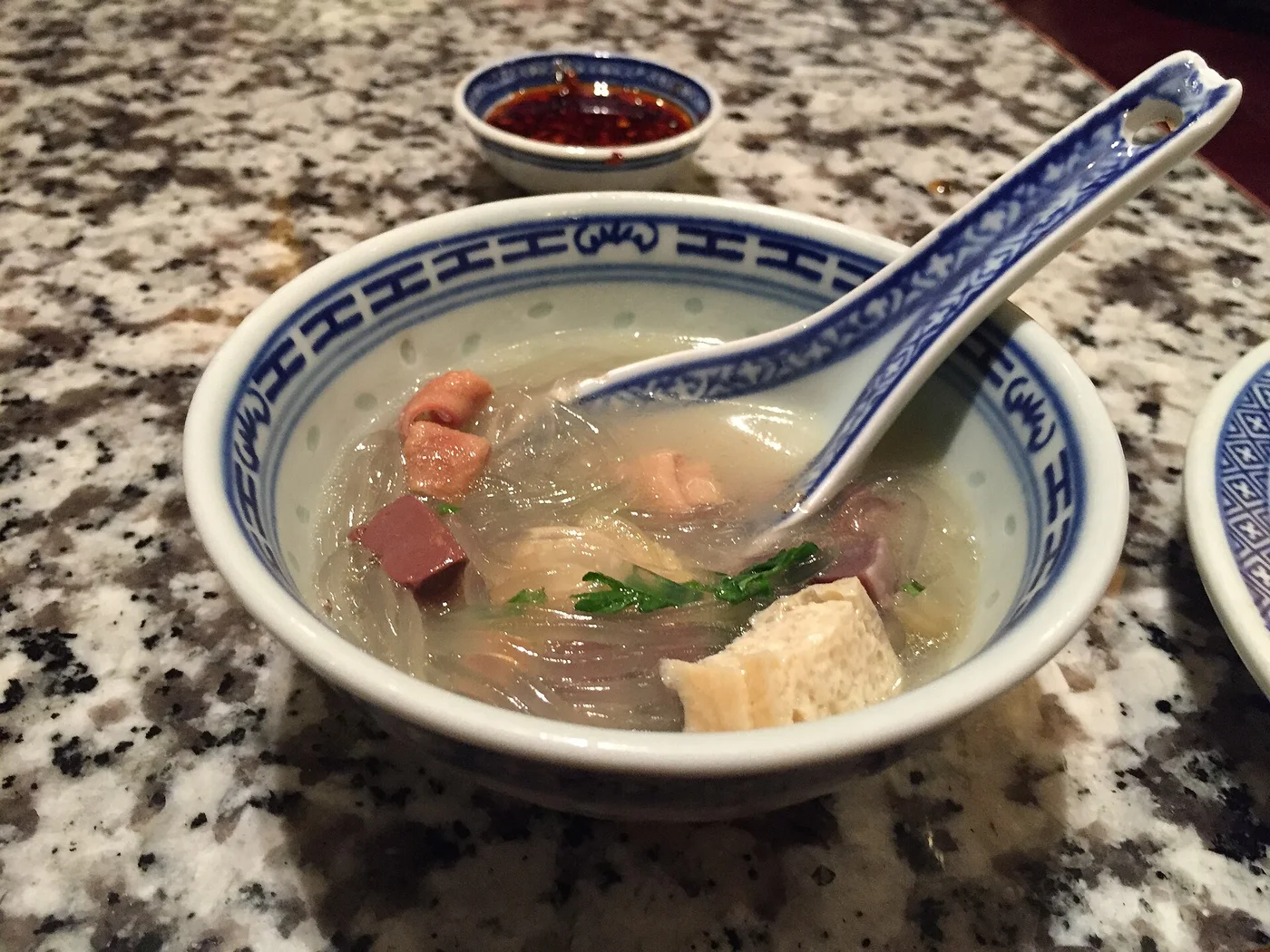
Salted duck and duck blood vermicelli soup represent different ways Nanjing uses duck. Salted duck emphasises the savoury flavour and texture produced by curing and gentle cooking; cut pieces reveal meat, skin and bone. Duck blood vermicelli soup brings vermicelli, duck blood and commonly used duck offal together in hot broth. Identify the ingredients before deciding whether to add chilli. One dish is well suited to sharing, while the other is a hot meal in a bowl; the general term “Nanjing duck” does not explain their differences.
Beef pan-fried dumplings shift the focus to dough and frying: the crisp base, softer upper wrapper and meat filling create textures different from soup dishes. Fillings, seasonings and accompaniments vary between shops, and the dish name alone does not identify every ingredient. If you have allergies or religious dietary requirements, check the meat, offal, broth and seasonings separately. A simple appearance does not establish whether a food meets your dietary restrictions.