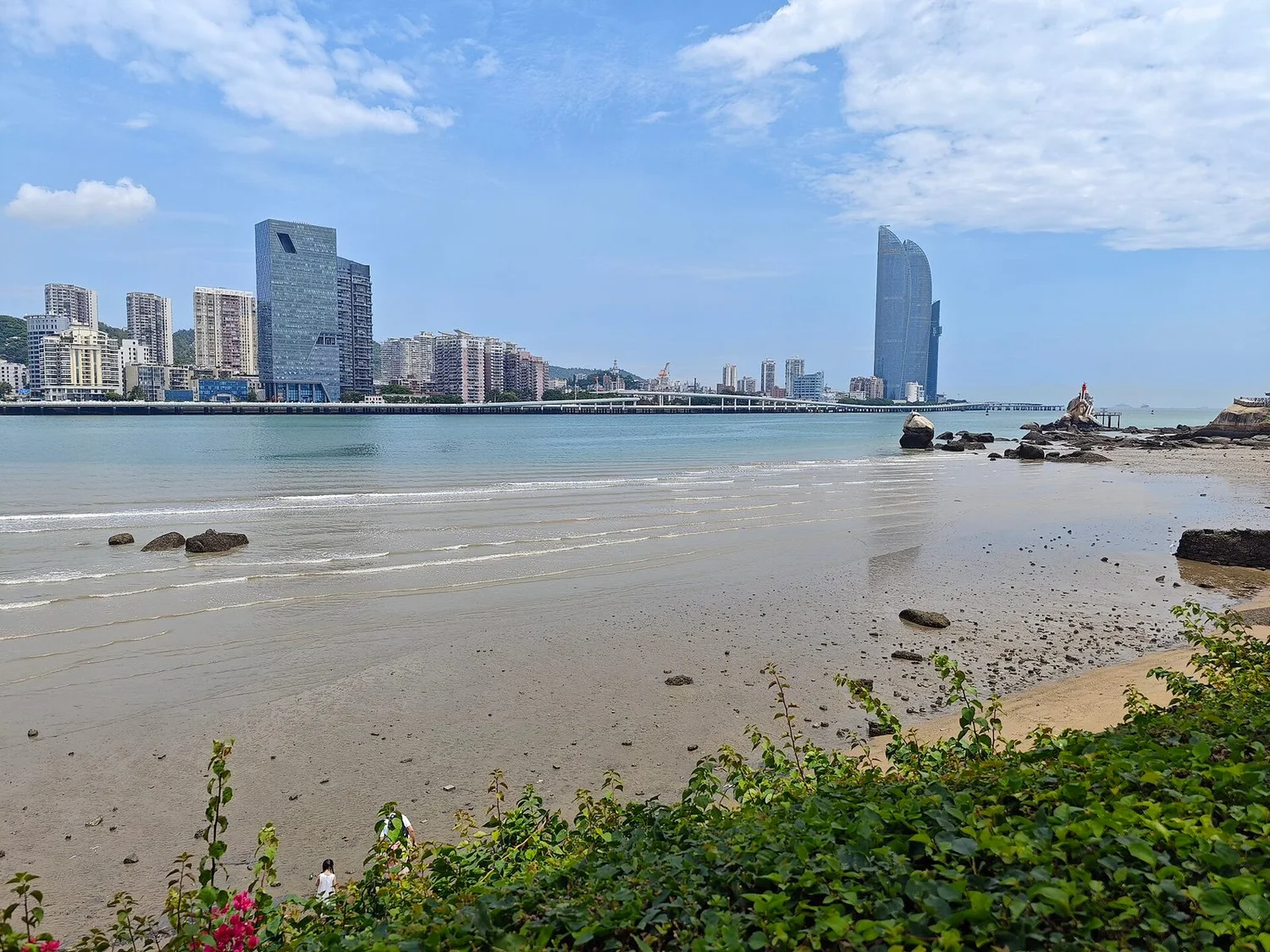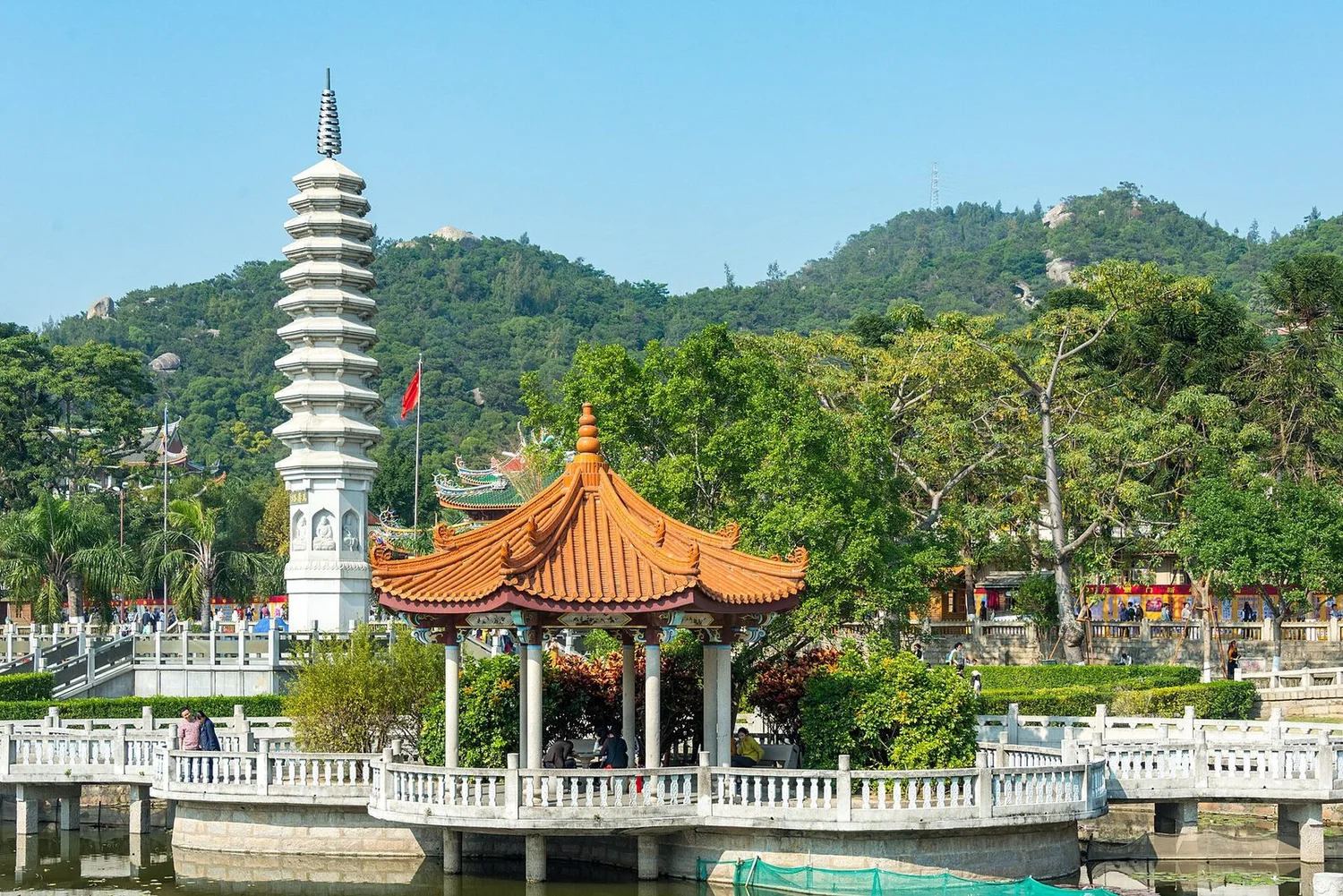
A temple below Wulao Peak
Nanputuo Temple stands below Wulao Peak in the southeast of Xiamen Island, next to Xiamen University. The open space in front, successive halls and hillside behind form its setting. Looking at how the buildings rise with the terrain, then at the roof and entrance of an individual hall, helps explain the whole temple better than a photograph at the gate alone. It remains an active Buddhist site, where visitors share courtyards and paths with worshippers.
The temple's website traces its history to the late Tang and Five Dynasties period, when it was known as Sizhou Monastery. It later underwent changes of name, destruction and rebuilding. The website records that Shi Lang funded its restoration in 1683 and added the Dabei Pavilion dedicated to Guanyin; the name Nanputuo has continued since then. These early origins do not mean that all the halls retain their earliest original buildings. The temple seen today also reflects successive rebuilding.
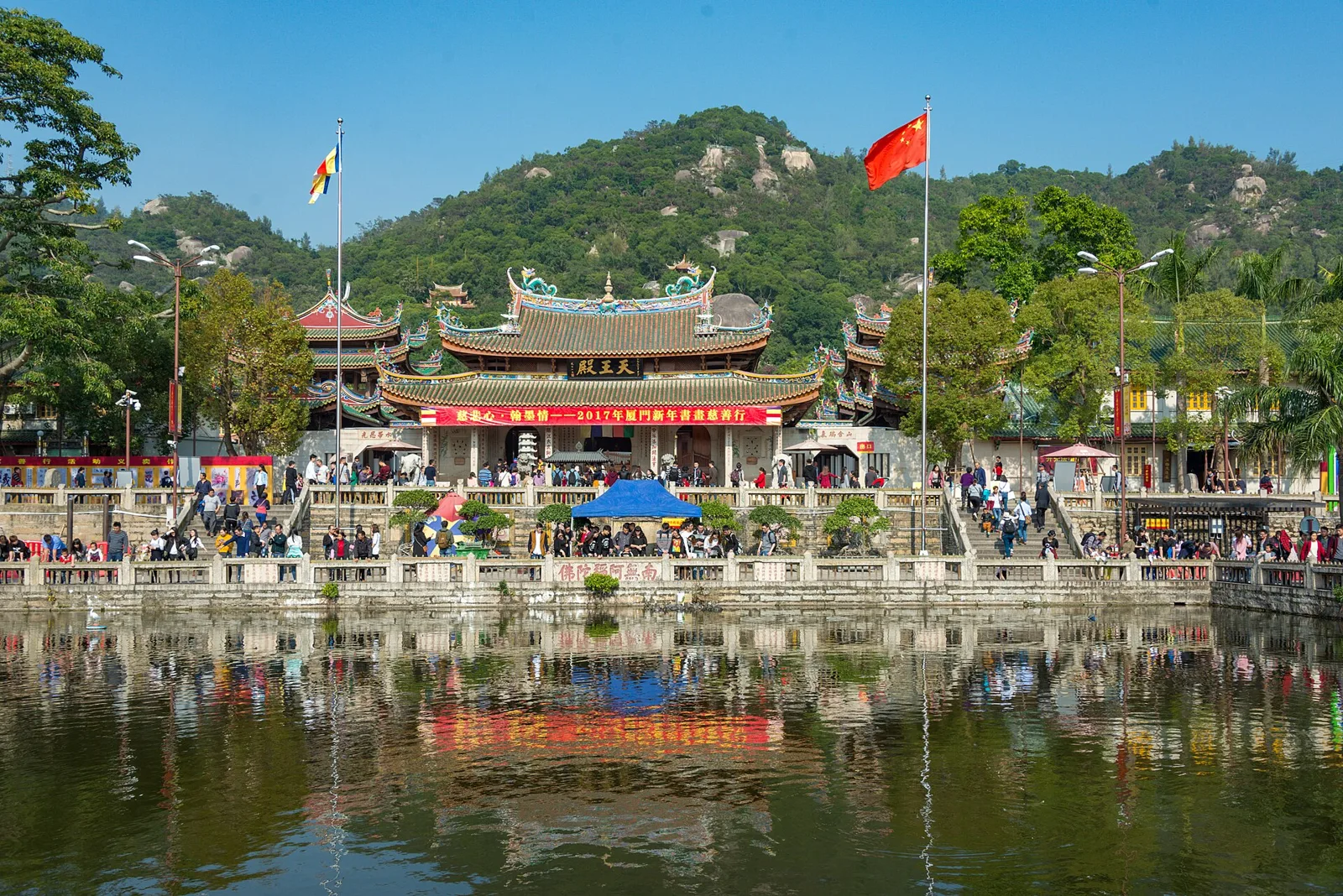
Architectural details in front of the halls
The fronts of halls such as Tianwang Hall offer a view of the relationship between eaves, inscribed plaques, steps and entrances. Close up, look at columns, timber construction and decoration under the eaves; farther back, see how halls, trees and steps fit together. The front and rear courtyards serve as passageways and spaces for religious activity as well as places to pause. Do not block the middle of the steps or hall entrances to take photographs.
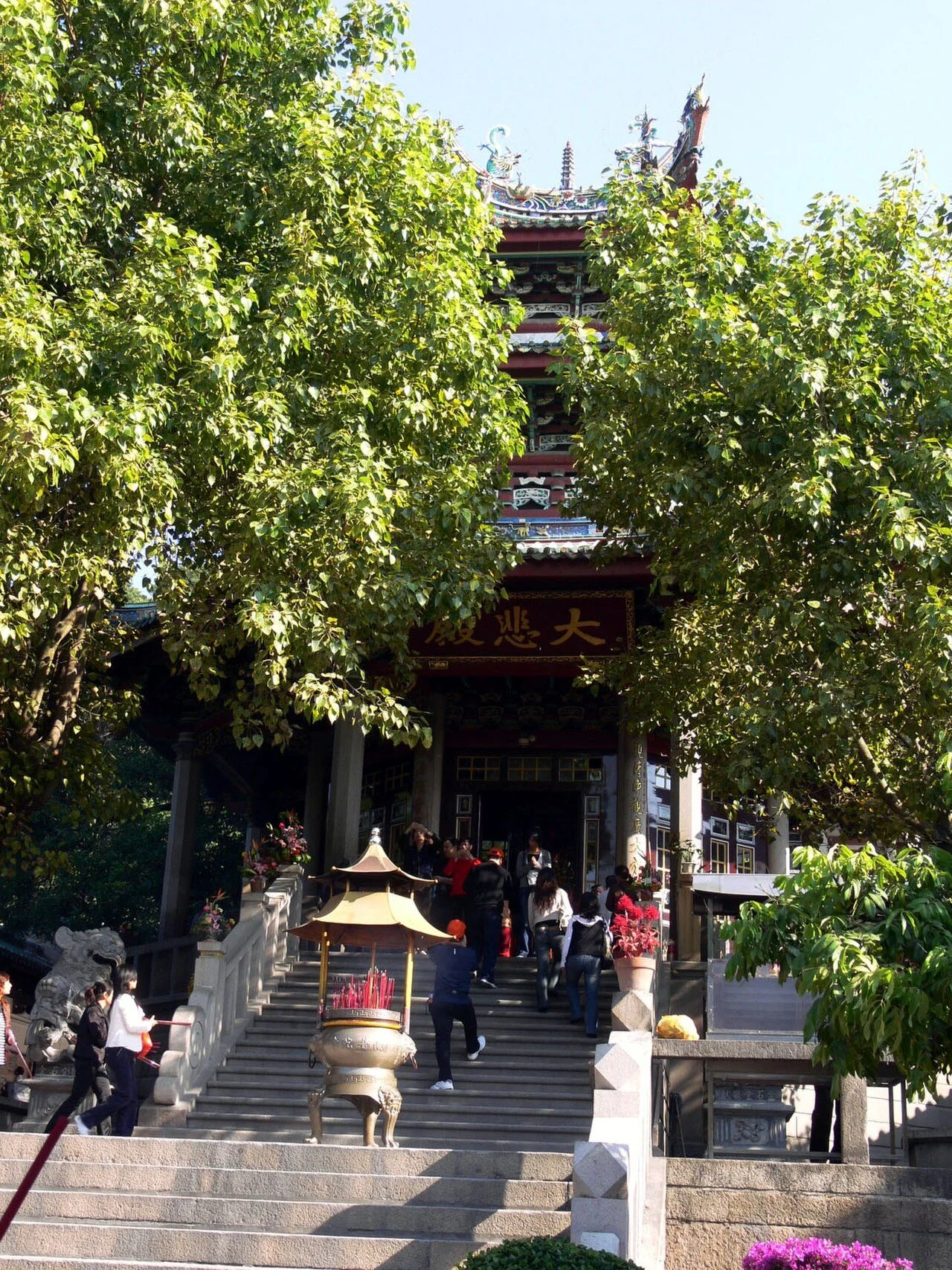
The Dabei Pavilion dedicated to Guanyin, mentioned on the official website, helps explain the temple's name and Guanyin worship. Visitors unfamiliar with Chinese Buddhism can start by reading the plaques and on-site explanations, distinguishing the names of halls from the figures worshipped within. Do not assume all halls serve the same purpose from their appearance. Follow signs and staff instructions on photography inside and access to individual passages.
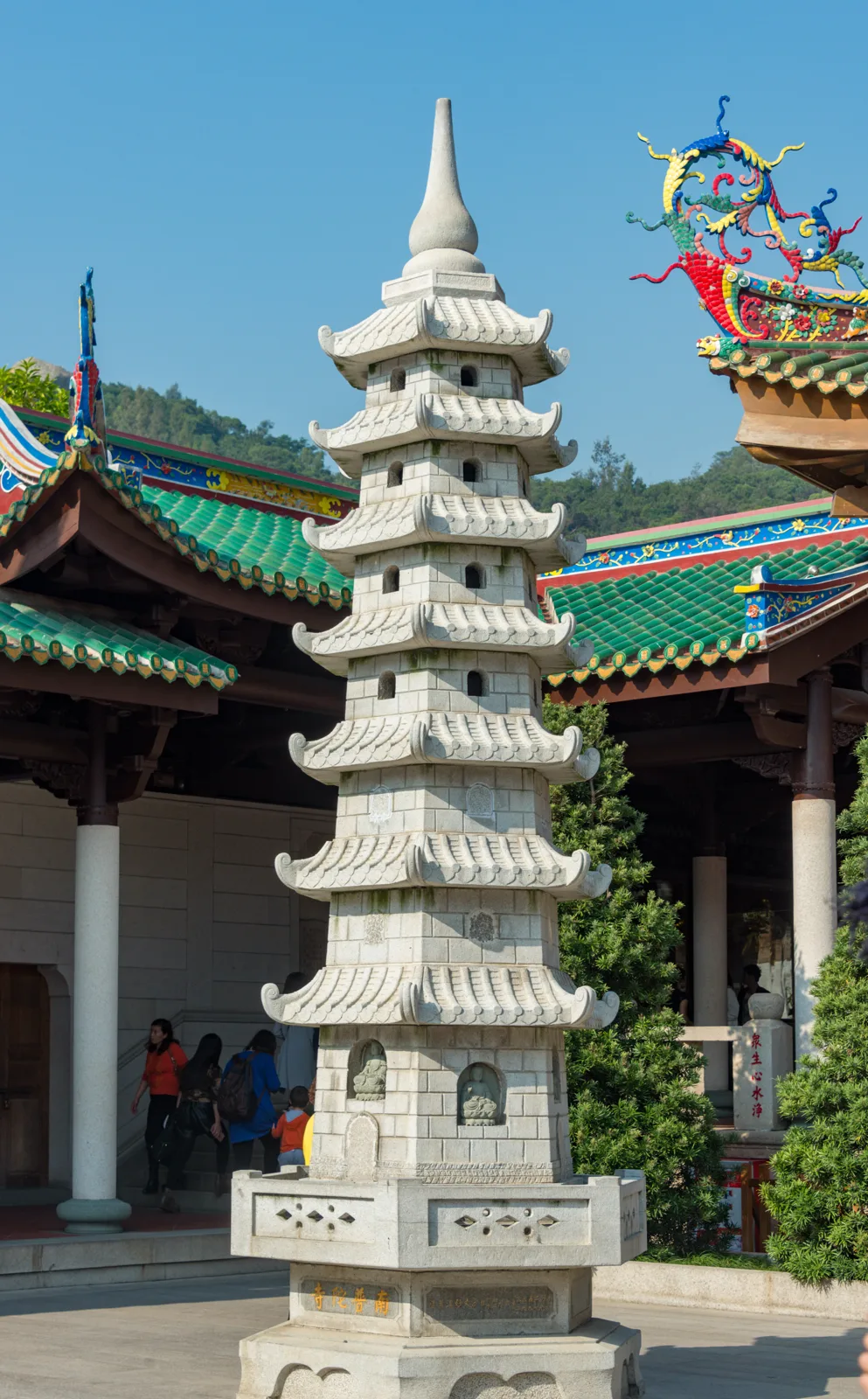
Courtyards, pond banks and the hillside
The pond banks, pagoda and pavilion-style buildings in front of the temple offer a different view from the hall facades. From farther away, roofs, trees and Wulao Peak can be seen together; nearby, look at the spaces formed by railings, bridges and water. Courtyard plants provide a concentrated green area beside the densely built city, although open sections remain exposed to sunshine on clear days.
The hillside behind requires different levels of effort from the front courtyards. An ordinary visit can focus on the halls and grounds. If you also want to climb the hill, check that day's access and your own fitness first; there is no need to force yourself up the steps for a summit view. Consider allowing about one to two hours for the main temple, with hill climbing extra. This is a planning suggestion including time to look at buildings and rest, not a visiting duration promised by the temple.
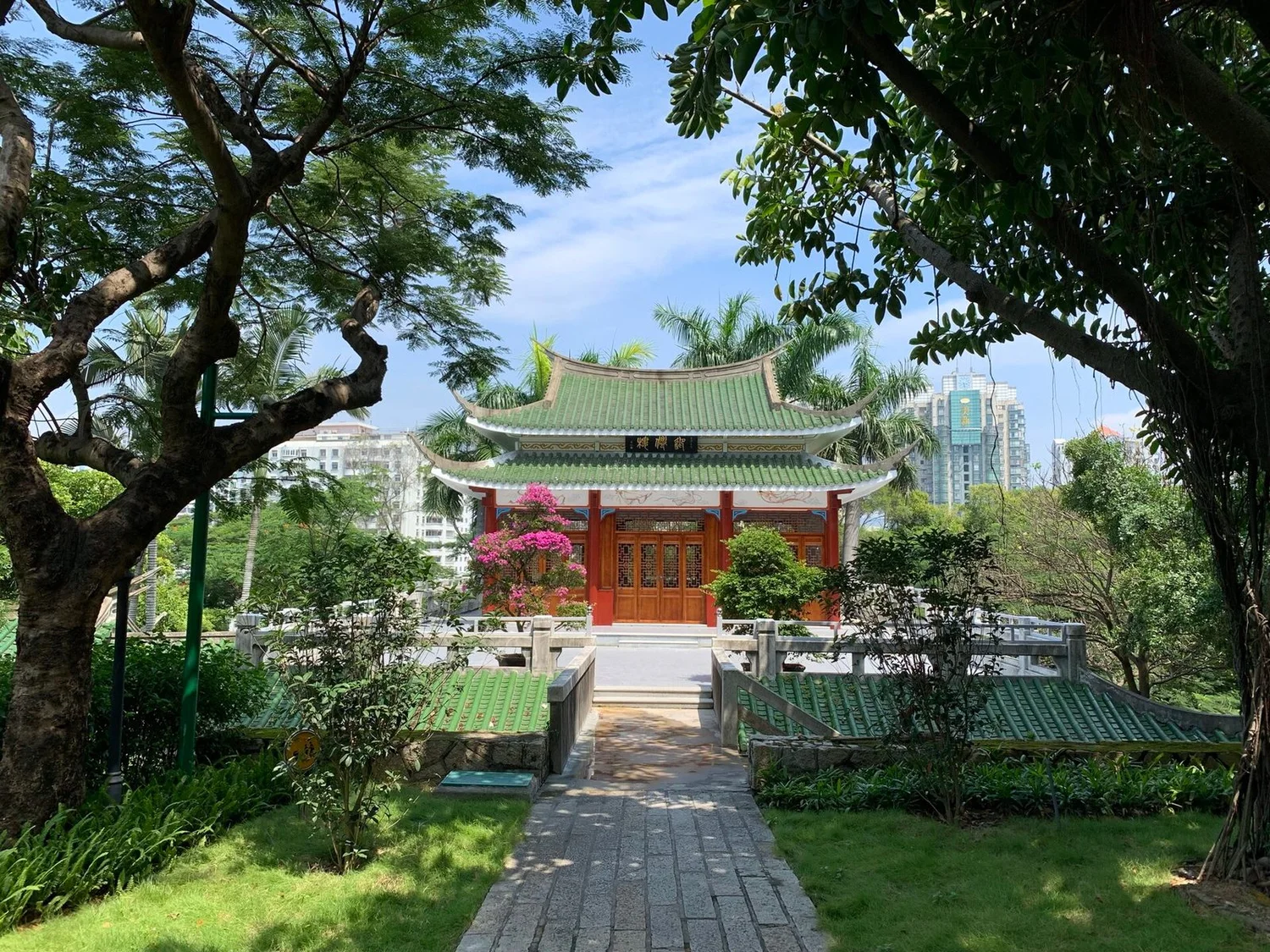
Respect the boundaries of a visit
Nanputuo Temple and neighbouring Xiamen University are managed separately. Visiting the temple does not grant access to the university campus. Before setting off, check the temple's official channels for that day's visiting arrangements. Dress neatly, keep your voice low, leave passage for worshippers and avoid photographing private religious activity.
Temple visits, vegetarian dining and religious activities may have different arrangements. If you want to eat on the grounds, join an activity or use another service, confirm its location and conditions separately. Access to the temple does not mean every facility is open to visitors at the same time. When steps are wet after rain, the weather is humid and hot, or companions have limited stamina, shorten the visit to the courtyards and front halls.
Useful official references
Check the relevant official service before making arrangements. These links are references, not a guarantee of current services.