Jewel garden: from summer palace to park
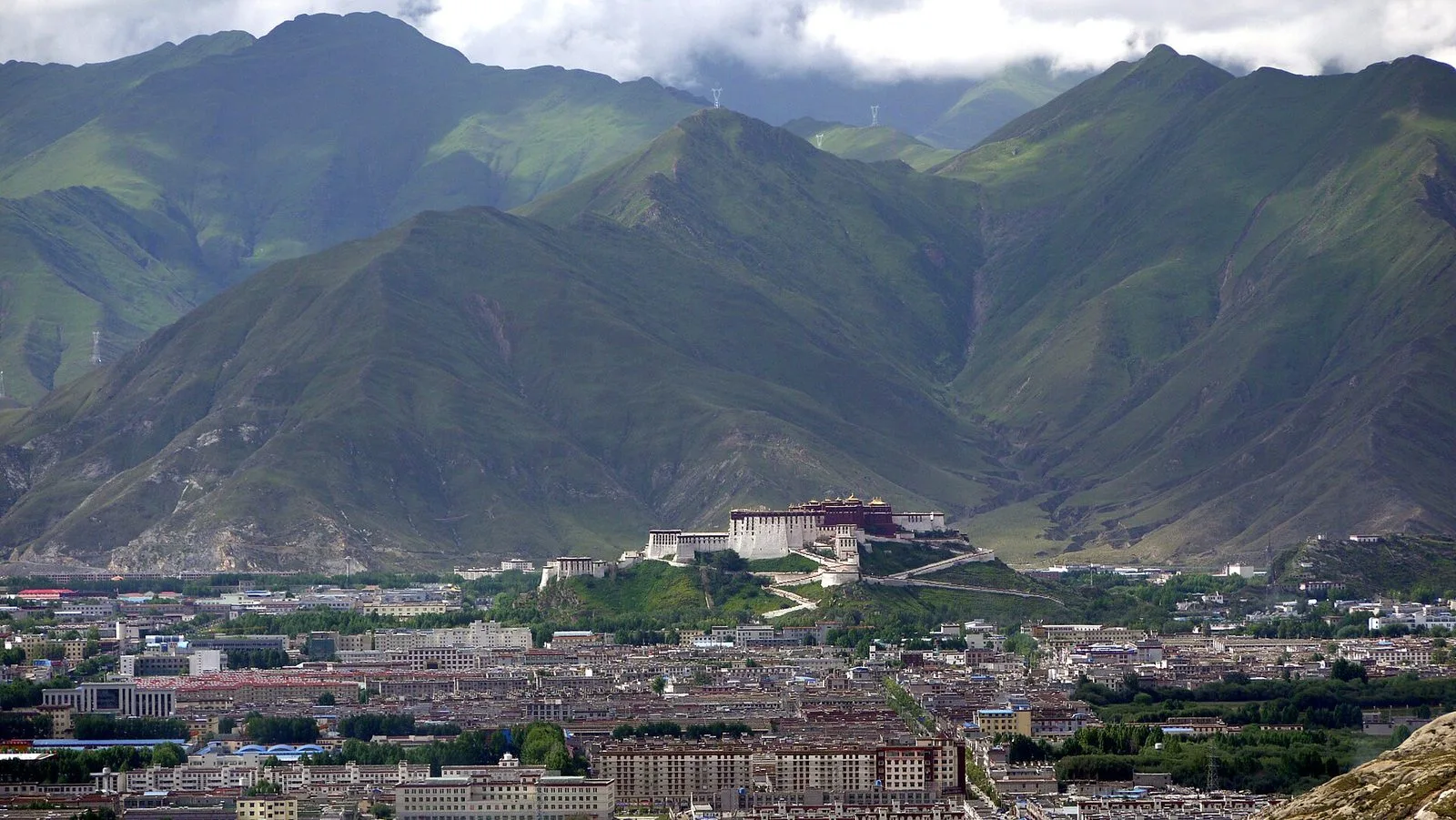
Norbulingka lies on Lhasa's western edge, about 2 kilometers west of the Potala Palace; its name means 'jewel garden' in Tibetan. First built in the mid-18th century, it was the summer palace of successive Dalai Lamas. In 2001 it was inscribed as an extension of the Potala Palace World Heritage site and, together with the Potala Palace and Jokhang Temple, forms one World Heritage property. The garden covers about 36 hectares and is the largest Tibetan-style garden in Tibet.
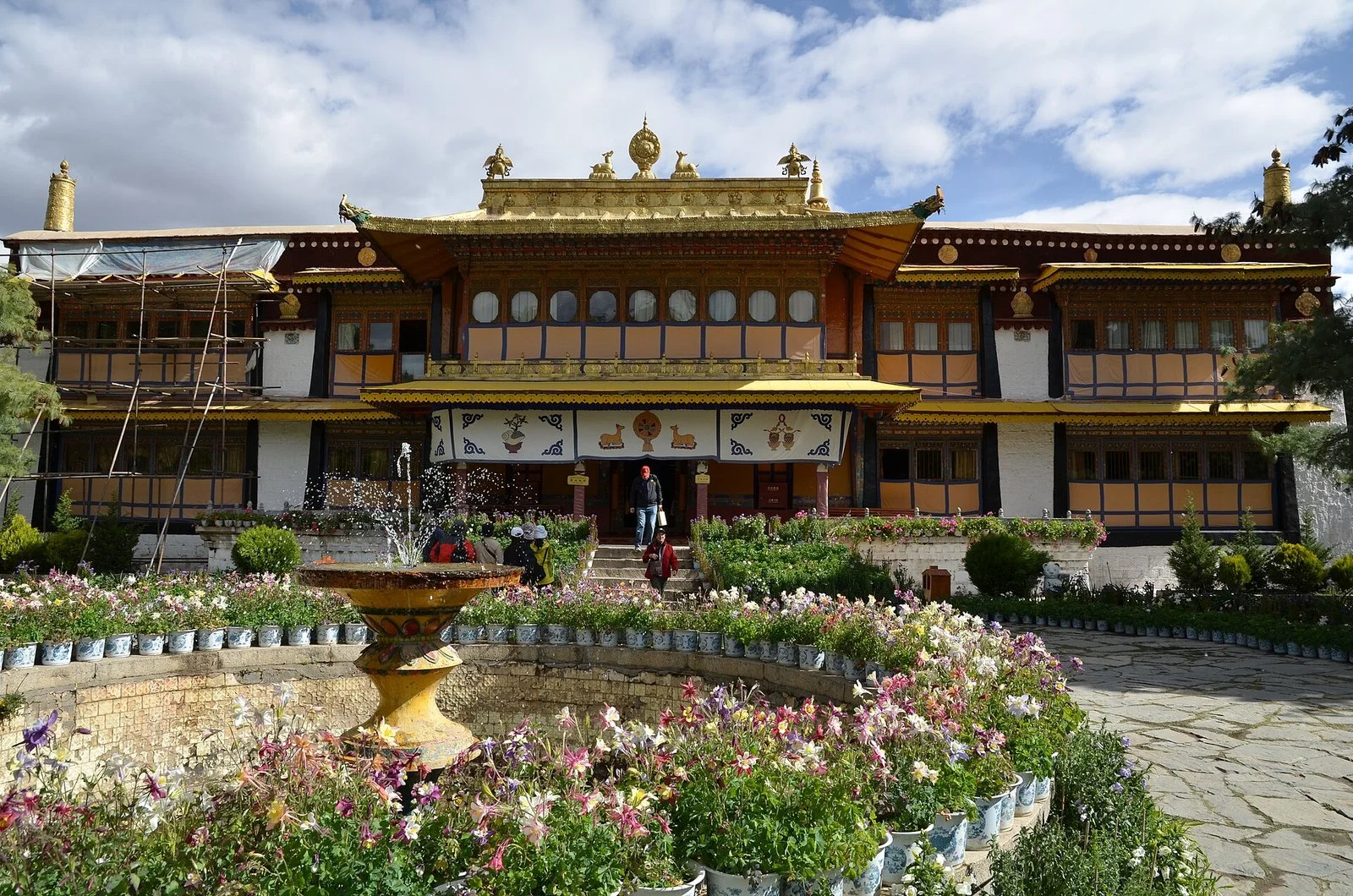
The garden contains four palace complexes; the three principal ones are Kelsang Phodrang, Chensel Phodrang and Takten Migyur Phodrang, along with assembly halls, pavilions, ponds, groves (lingka) and a temple. Chensel Phodrang was built in 1922 and belongs to the later group of buildings in the garden. In the past, the Dalai Lama moved here from the Potala Palace each summer to live and handle government affairs, so Norbulingka was not only a garden but also a seasonal religious and administrative site.
How palaces and garden overlap
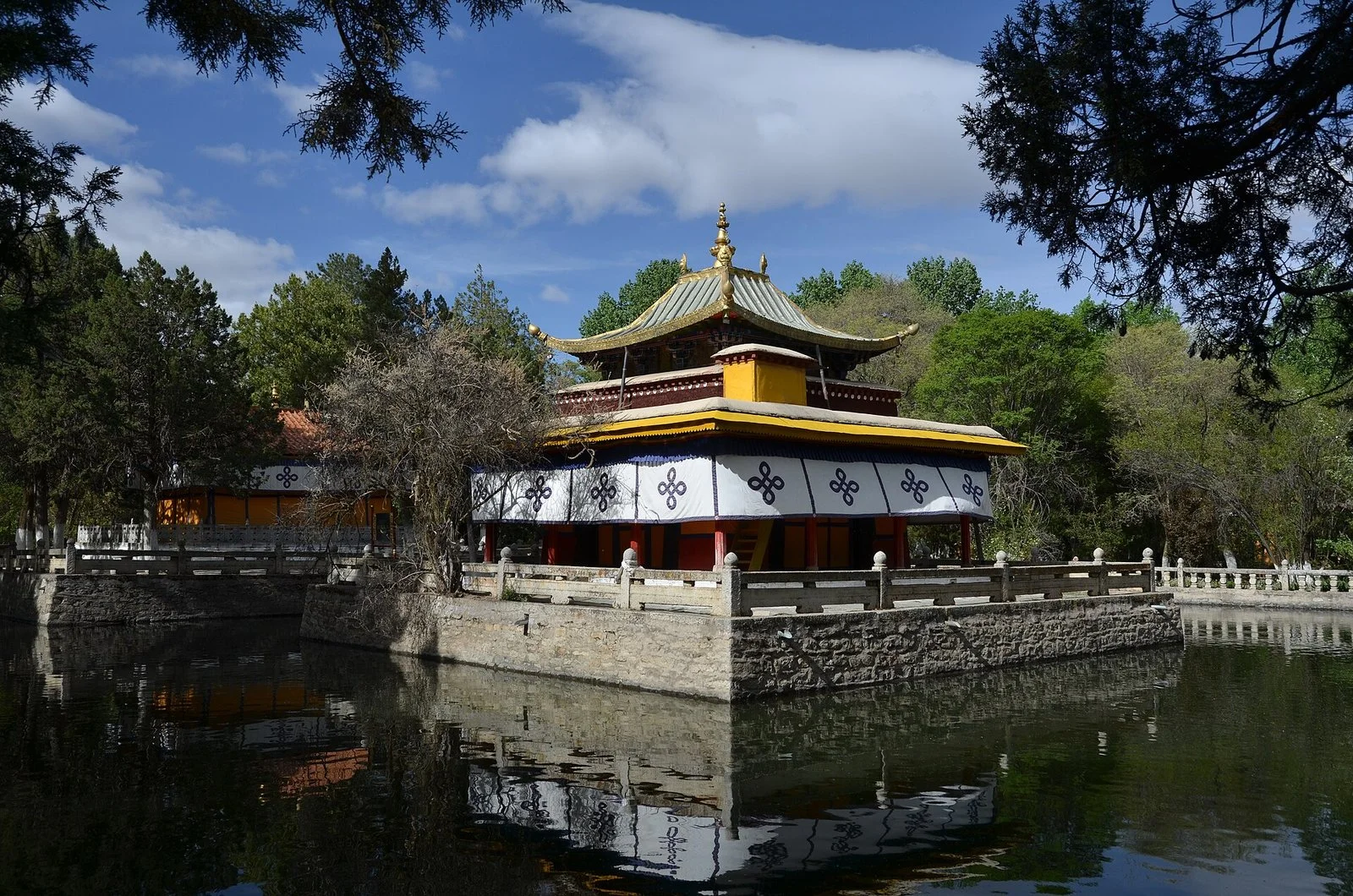
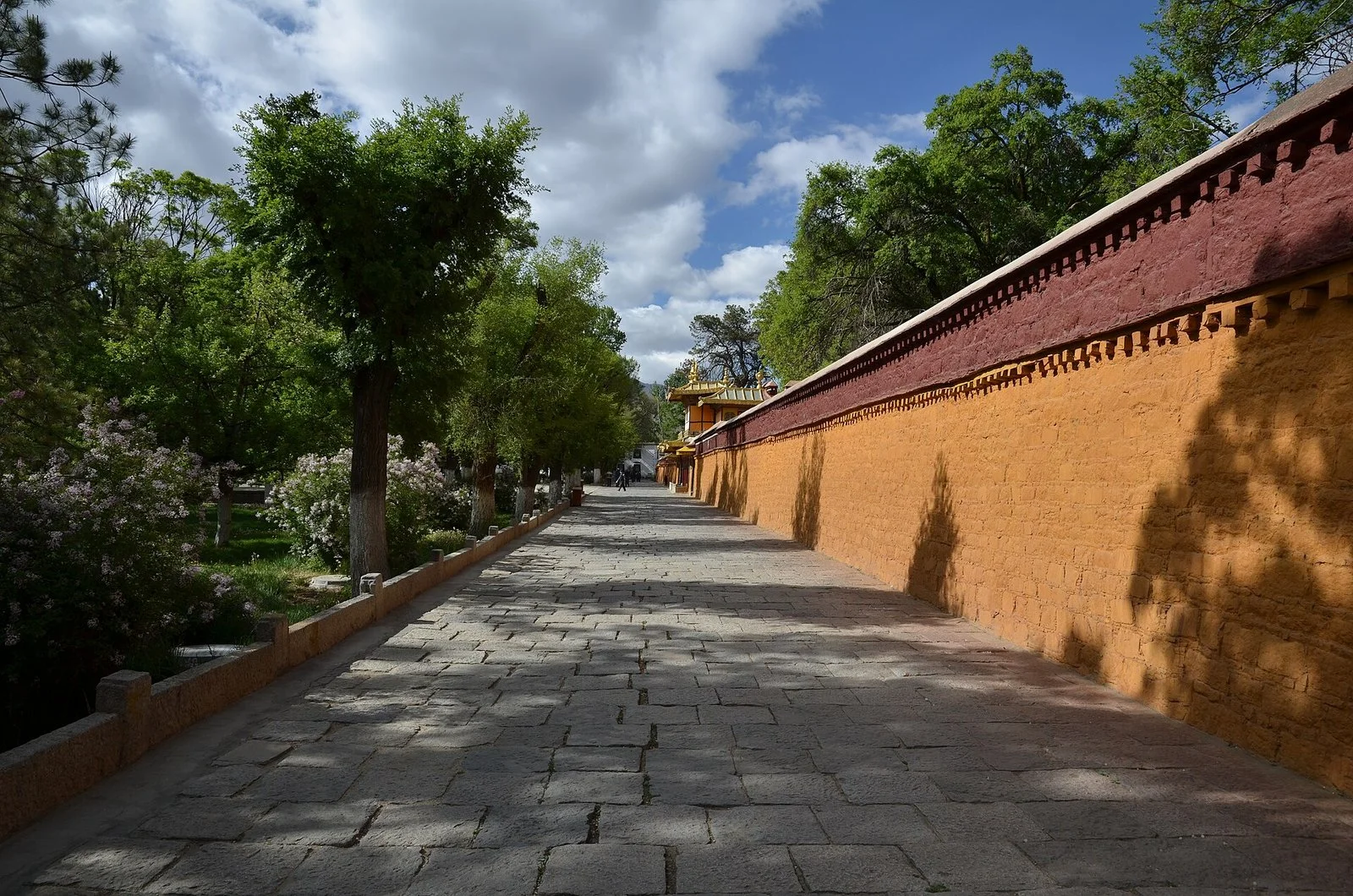
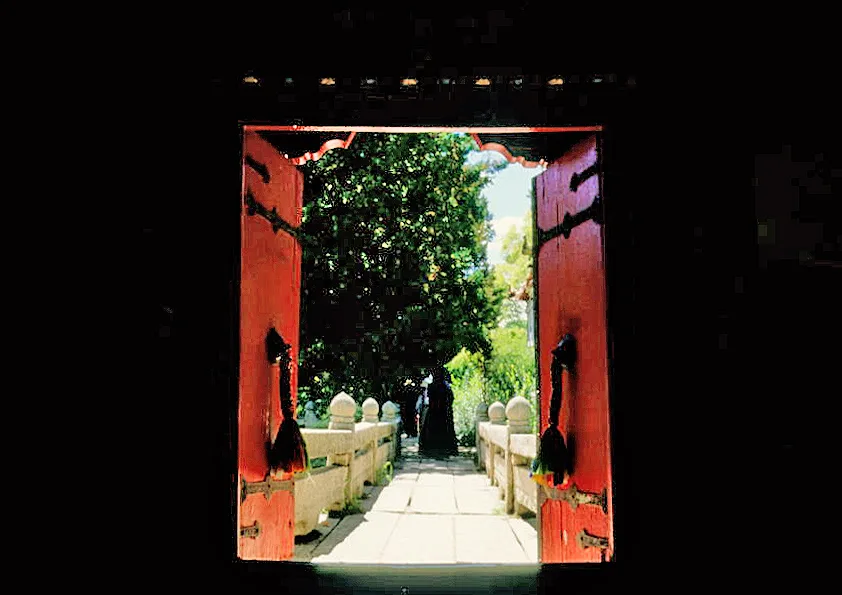
Norbulingka is not a single isolated palace. World Heritage documents describe it as a large garden: palaces, assembly halls, pavilions and monks' quarters are set within the garden layout, and trees, lawns and ponds separate the buildings while also joining them into one whole. Groves and palaces dominate, with shade and lawns taking up most of the space. Seen in plan, ponds, lawns and woodland divide the palace groups, and the courtyard walls do not form a single axis. At Norbulingka, look first at the open space between buildings; that explains better than any one hall why it is called a lingka.
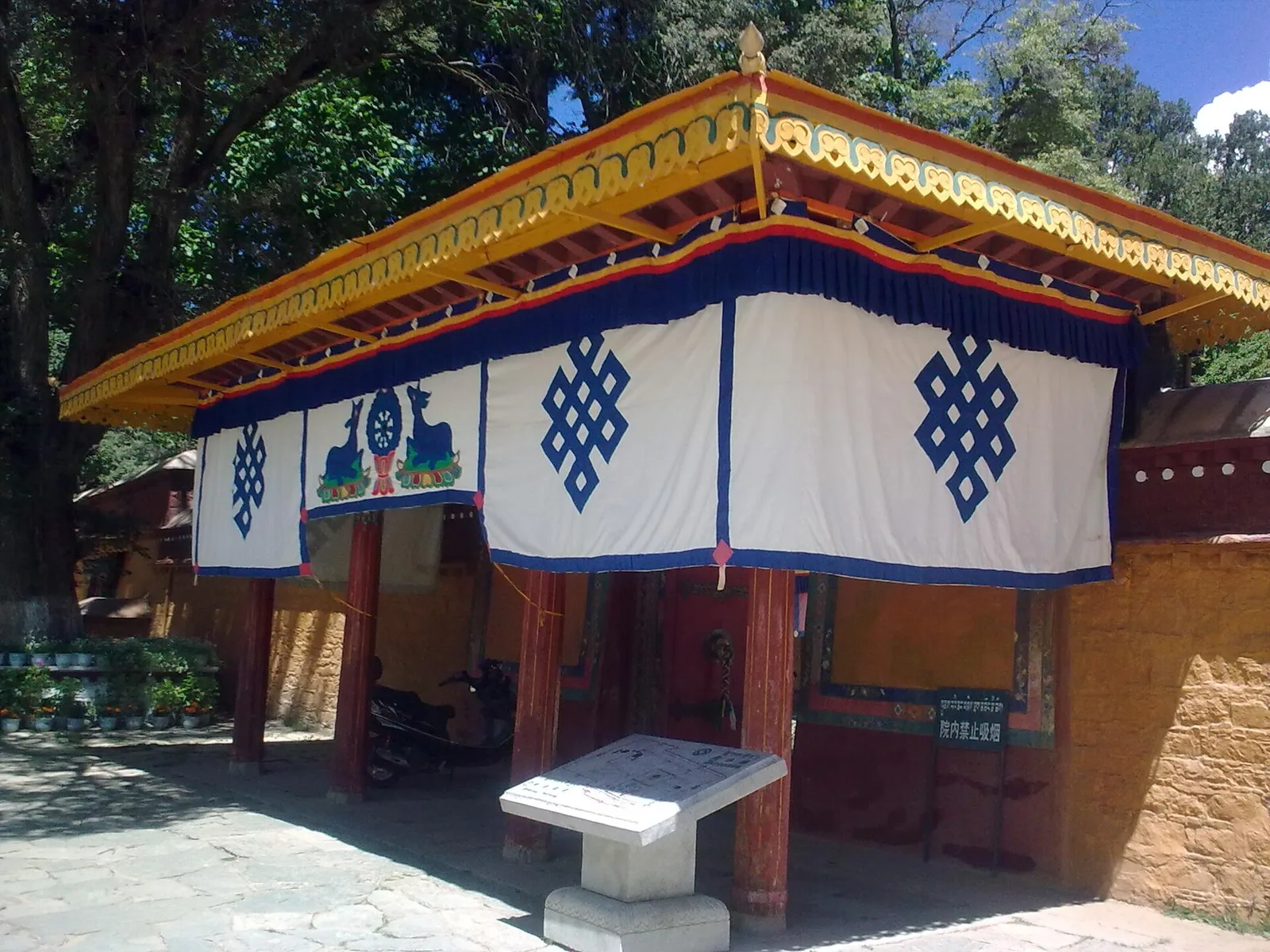
The four palace complexes were not built all at once but added gradually as the summer palace was used; Chensel Phodrang, built in 1922, is among the later ones. On the wall of the second-floor gallery in Chensel Phodrang is a panoramic mural of the Summer Palace in Beijing painted in a traditional Tibetan style, now nearly a hundred years old. The groups are scattered through the garden, with flower beds in front of the halls, and moving from one to another means crossing woodland and stone paths. The thick walls, gilded roofs and dark window frames of Tibetan palaces look heavy in the tree shadows, while ponds and flower beds lighten that weight. Most of the palaces are stone-and-timber structures with yellow or white outer walls and gilded roofs.
Shade, flower beds and how to pace a visit
The garden has more than 100 species of plants, including flowers and trees common in Lhasa, plants from both the northern and southern slopes of the Himalayas, and flowers introduced from inland China. From early May to mid-October each year, tens of thousands of potted flowers are placed around the garden, among them hydrangeas, cosmos, marigolds and snapdragons, with flower beds concentrated in front of the palaces and along the main paths, which is why Norbulingka is sometimes called a 'plateau botanical garden.'
Norbulingka suits slow walking, not ticking off sights. Shade, lawns and stone paths link the palace groups, and when you are tired you can sit in the grove; there is no route that must be followed in order, and you can stop at any patch of shade you like. Lhasa's sun is strong, and the shade makes walking much more comfortable. Allow 2 to 3 hours; in the afternoon, as the light slants, the red walls and gilded roofs take on deeper colors. Paths are mainly stone and dirt, so wear comfortable shoes. When checked on November 12, 2026, Norbulingka was open free of charge during the 'Winter Tibet' program from October 15, 2026 to March 15, 2027, 9:30 to 18:00 with last entry at 17:00; tickets are exchanged after an online reservation or on-site registration, and the scenic area's notices are authoritative.
Useful official references
Check the relevant official service before making arrangements. These links are references, not a guarantee of current services.
- UNESCO: Historic Ensemble of the Potala Palace, Lhasa ↗
- China News Service: Century-old mural in Tibet's Norbulingka shows a panoramic view of the Summer Palace ↗
- People's Daily: Norbulingka, the 'summer palace,' through the lens ↗
- Tibet News Network: Summary of free-admission announcements for scenic areas across the region during the ninth 'Winter Tibet' program in 2026 ↗