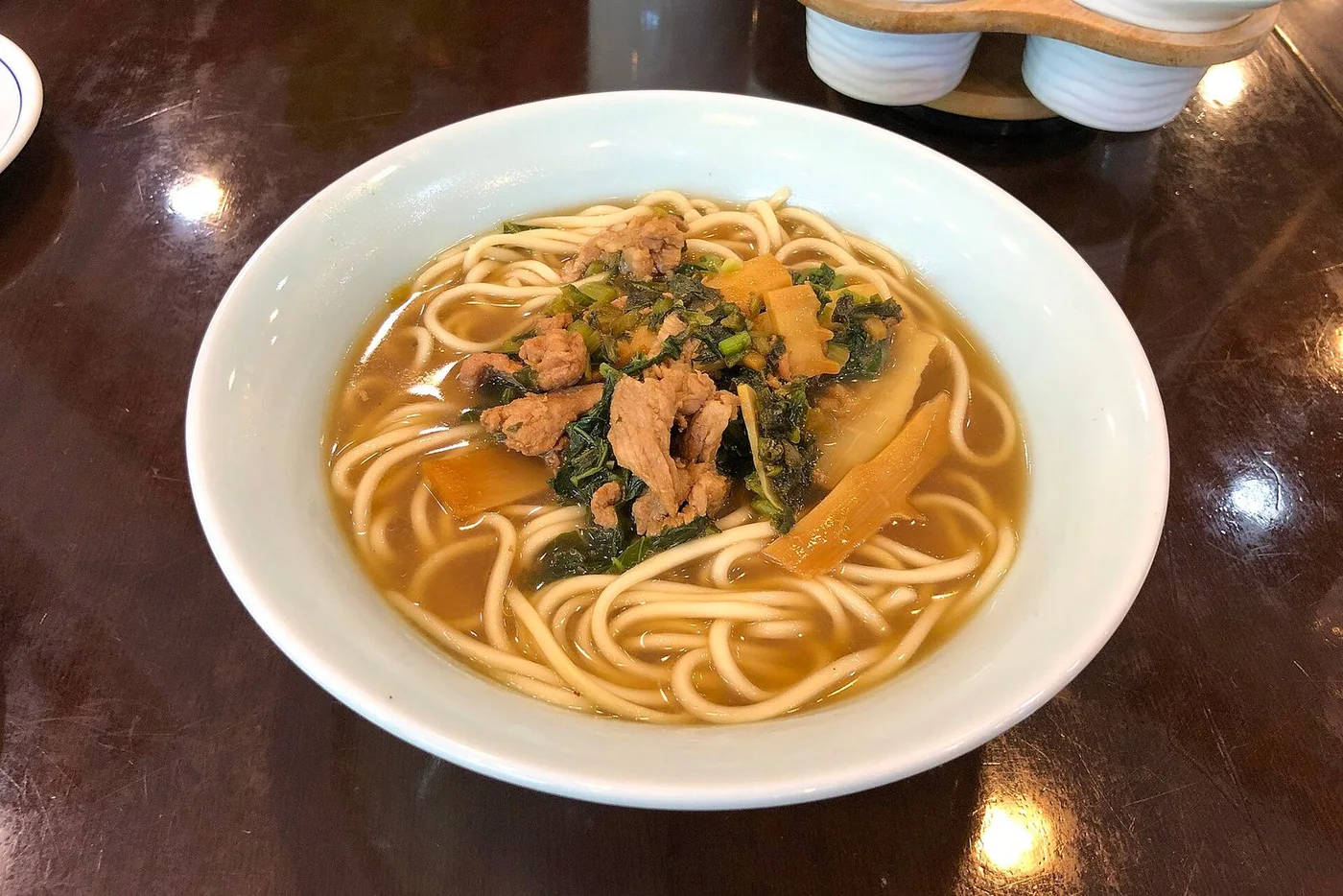
What to look for in the bowl
Pian er chuan is a common Hangzhou noodle soup, most easily recognized by its combination of preserved mustard greens, sliced bamboo shoots and lean pork slices. The preserved greens are chopped and scattered through the broth, while the bamboo shoots and pork are sliced so they can be eaten with the noodles. Chili is generally not its main flavor; savoriness comes from the toppings and broth together. It offers a direct introduction to everyday Hangzhou food, different from celebrated banquet dishes.
The name is often explained as referring to sliced ingredients briefly cooked in liquid, with Hangzhou pronunciation gradually leading to the written form “片儿川.” Origin stories link it to Kuiyuanguan and students taking imperial examinations, or to Su Shi. Local media themselves note that accounts differ. You do not need to accept any one legend to order it; the reliable identifying feature remains the combination of preserved greens, bamboo shoot slices, pork slices and noodle soup.
Preserved greens, seasonal bamboo shoots and freshly cooked toppings
To make it, the pork slices, bamboo shoots and preserved greens are stir-fried before broth or water is added, then combined with cooked noodles. Hangzhou.com.cn notes that the pork may first be seasoned with huangjiu rice wine, starch and sugar. Frying the toppings releases the greens' aroma into the broth, while the bamboo shoots retain a crisp texture and the pork adds tenderness. Each shop varies the details; broth color and oil content alone are not sufficient measures of quality.
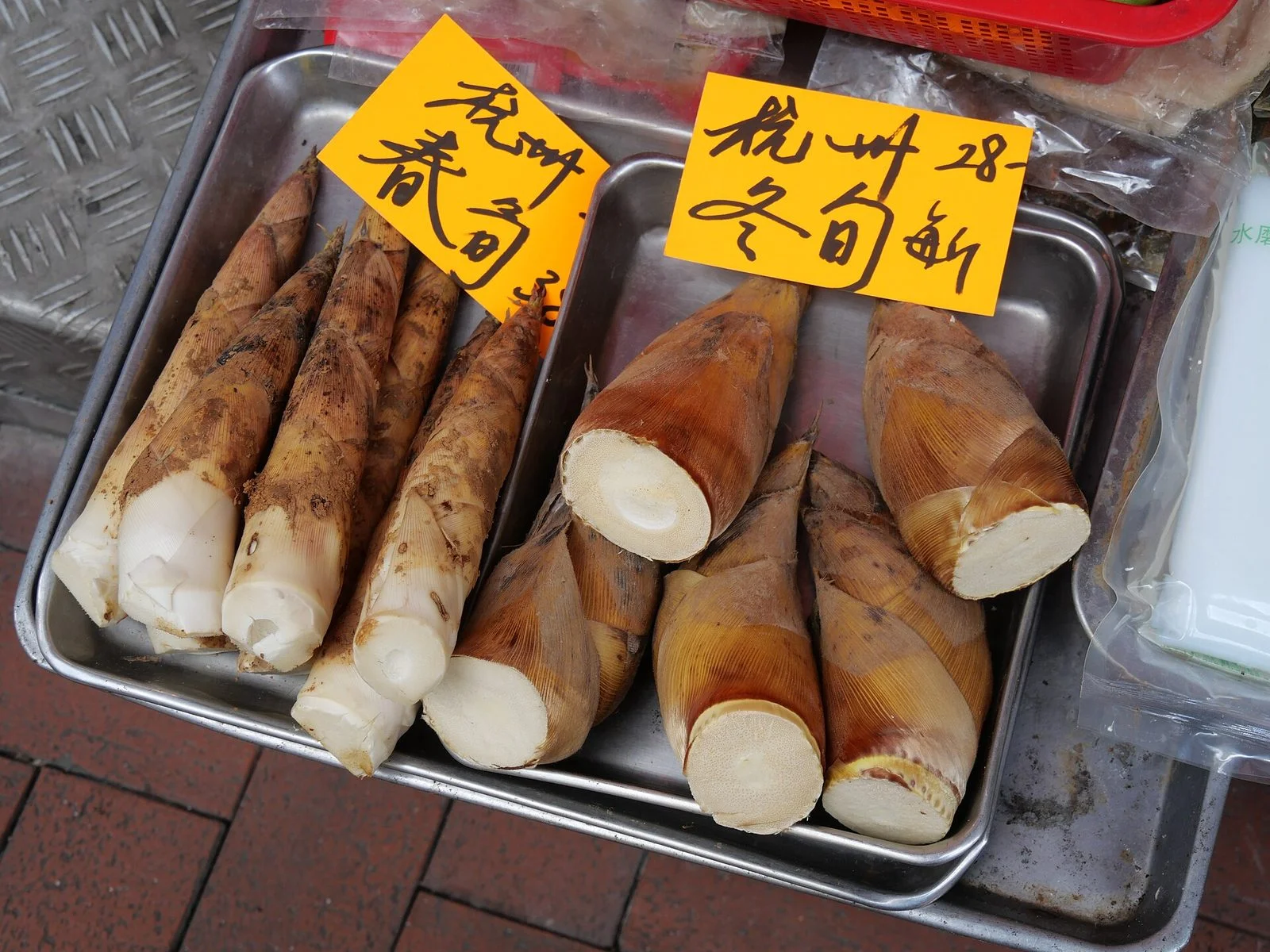
The same bamboo shoots are not used all year. Traditional accounts often mention winter bamboo shoots, but seasonal varieties are also used today, so the thickness and crispness or tenderness of the slices may change through the year. Preserved greens provide a salty, savory flavor, and the noodles should retain some bite after absorbing broth. Taste the broth before deciding whether to add seasonings. A large amount of chili or vinegar at the outset makes it harder to compare the original flavors of the greens and bamboo shoots.
Be specific when ordering
Kuiyuanguan is closely associated with pian er chuan, and local media have also covered Juying Noodle Shop. Many ordinary noodle shops in Hangzhou serve it too. Consider whether the toppings are cooked to order, whether the surroundings and wait suit you, and the day's portion size. A bowl can often serve as a simple meal; extra toppings change both the price and how filling it is. For the basic version, show staff “片儿川” and confirm whether pork is included. Do not mistake it for a vegan noodle soup with preserved greens.
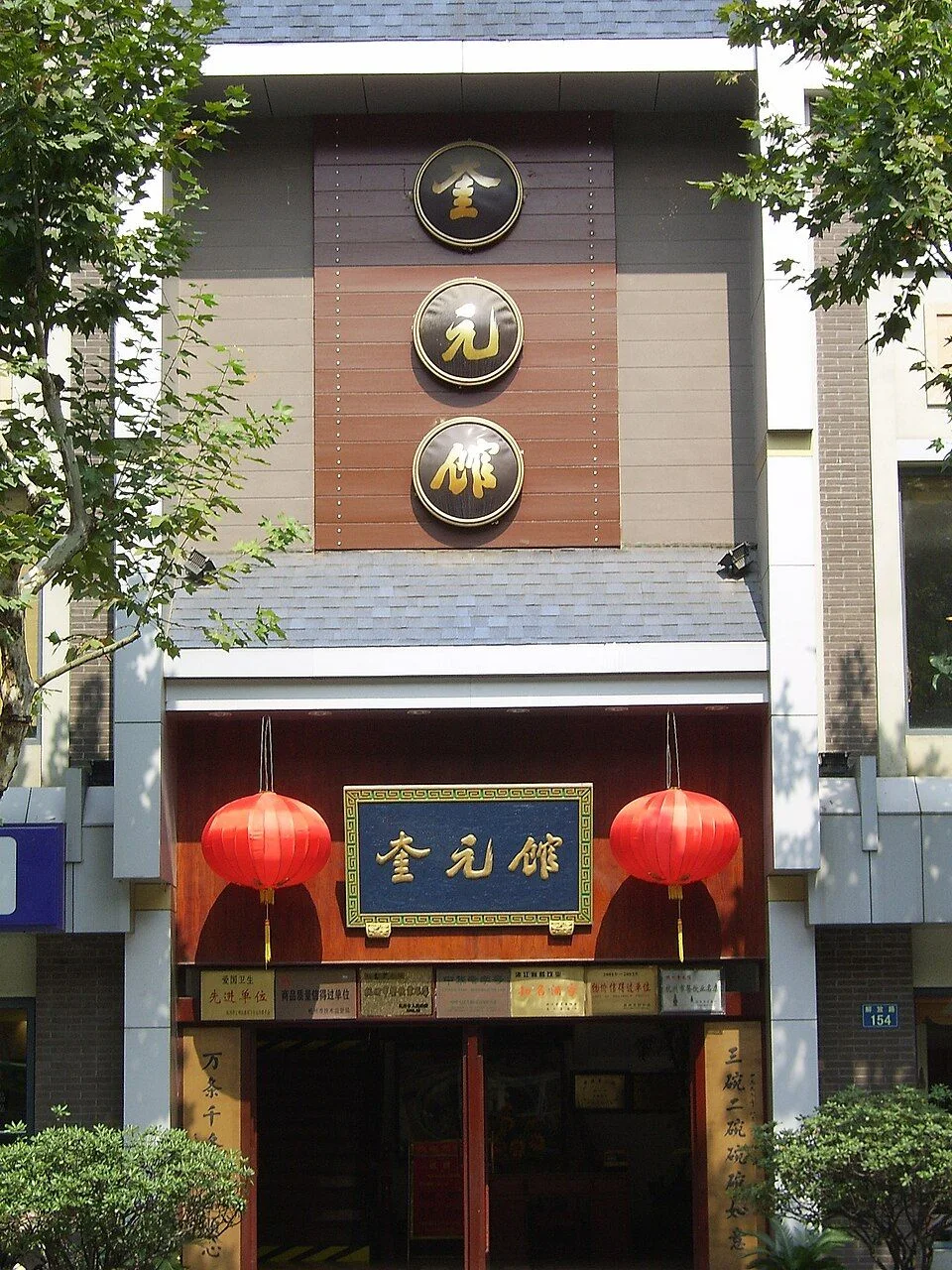
The noodles are mainly wheat-based, the soup usually contains pork, and lard or meat stock may also be used for the toppings. Explain wheat allergies, meat restrictions and alcohol restrictions before ordering. Seasonings such as soy sauce may contain soy and wheat. Asking to omit the pork slices does not make the whole bowl vegetarian. The photograph of Kuiyuanguan illustrates the dish's historical association, not the restaurant's current menu, prices or service conditions.
Useful official references
Check the relevant official service before making arrangements. These links are references, not a guarantee of current services.