One basin, a shared meal
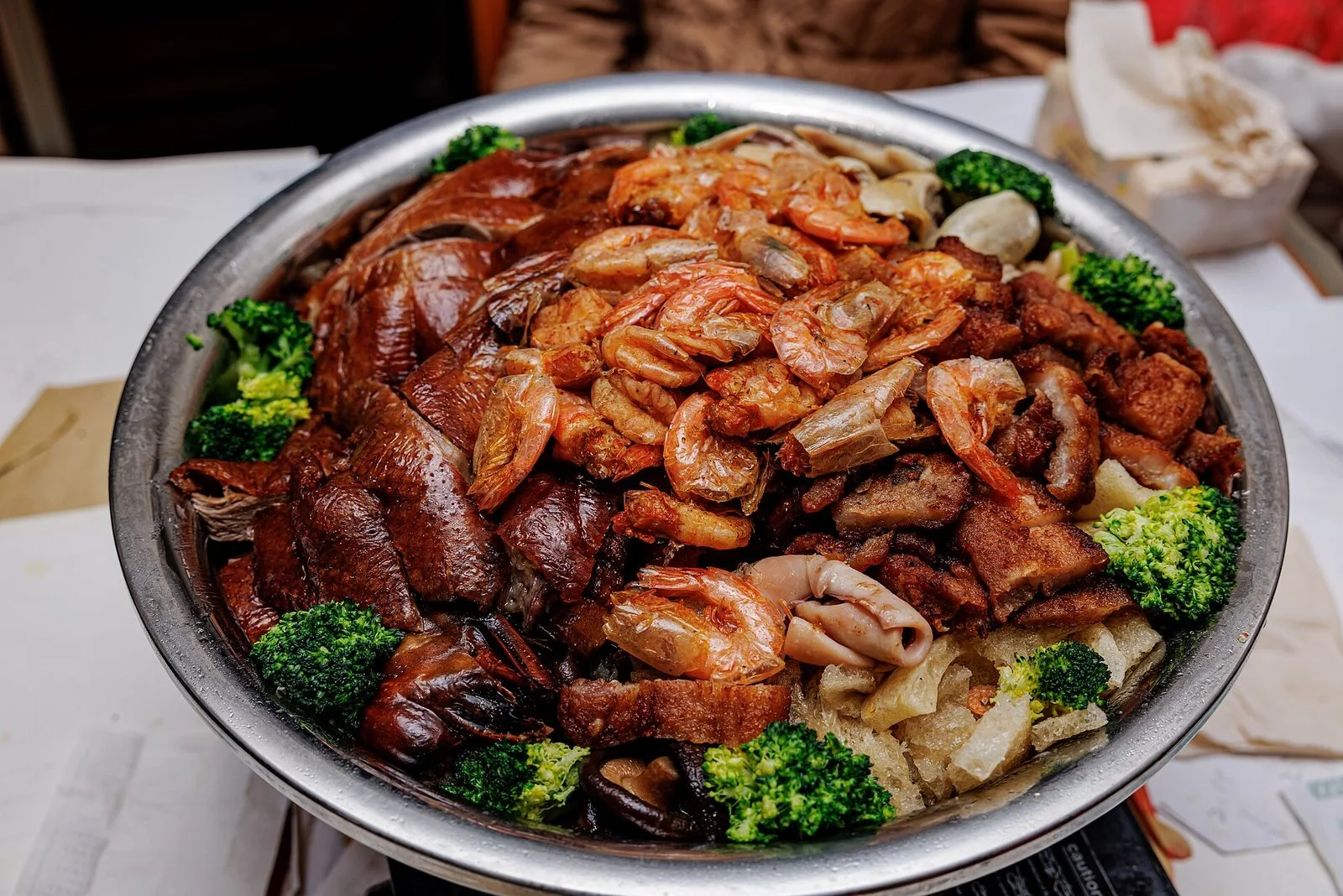
Poon choi brings many ingredients together in a large basin, usually for a table to share. It has culinary connections around Shenzhen Bay, Hong Kong's New Territories and elsewhere. It should not be defined by one restaurant's recipe or called unique to Shenzhen. For travellers, its most interesting feature is how meats, seafood, bean products and vegetables that could be served separately become a communal meal in a single container.
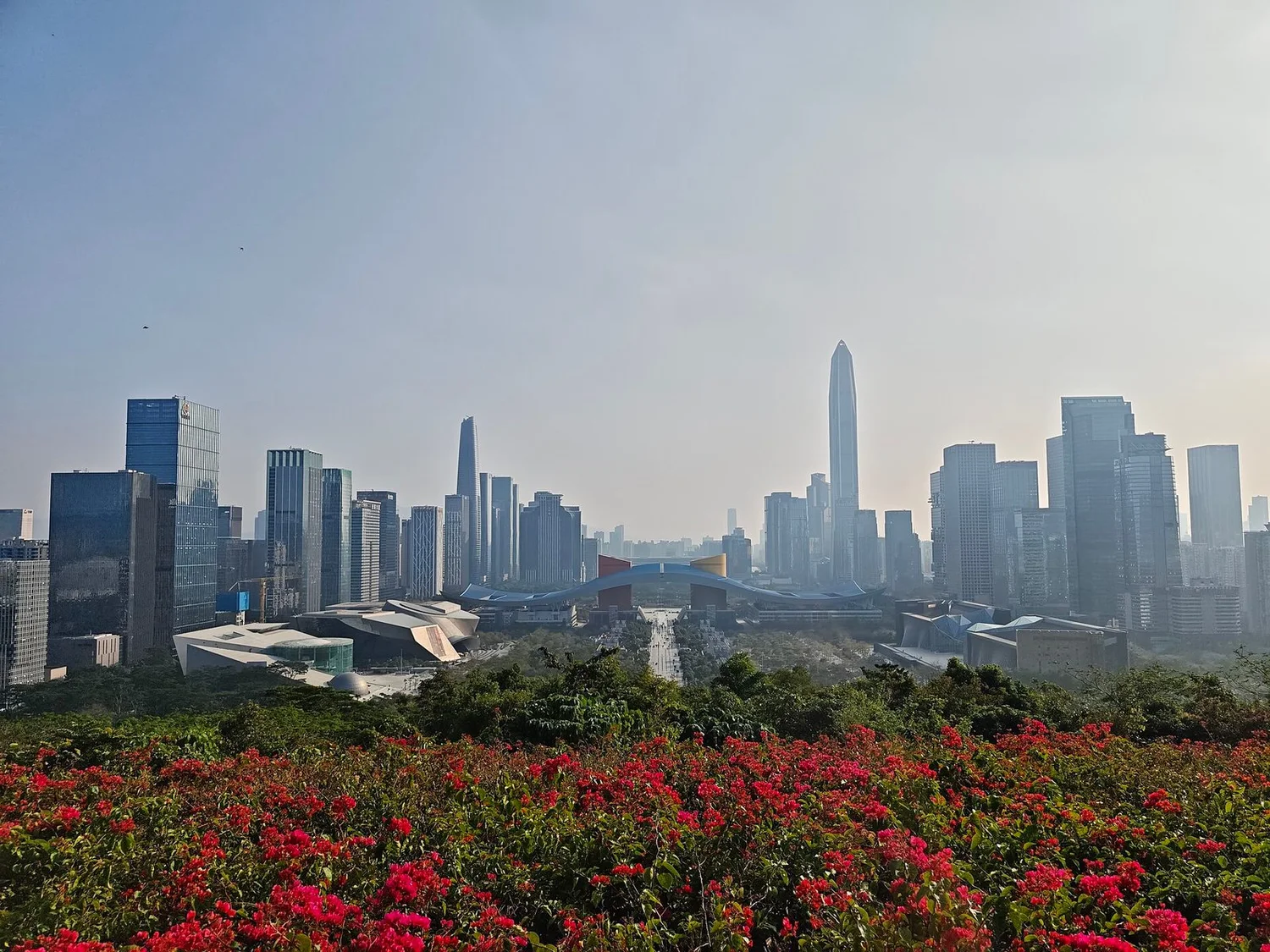
Xiasha's poon choi banquet in Futian has a specific local context. In a report on the 2024 Lantern Festival event, Xinhua journalists recorded Xiasha villagers, overseas Chinese, relatives from Hong Kong and Macao and other guests dining together, with qilin dances, lion dances and Xiasha dragon dances during the banquet. This shows the feast as both a meal and a festival gathering of community and kinship groups. A restaurant portion should be distinguished from a village banquet organised in this way on a particular date.
Different roles for each layer
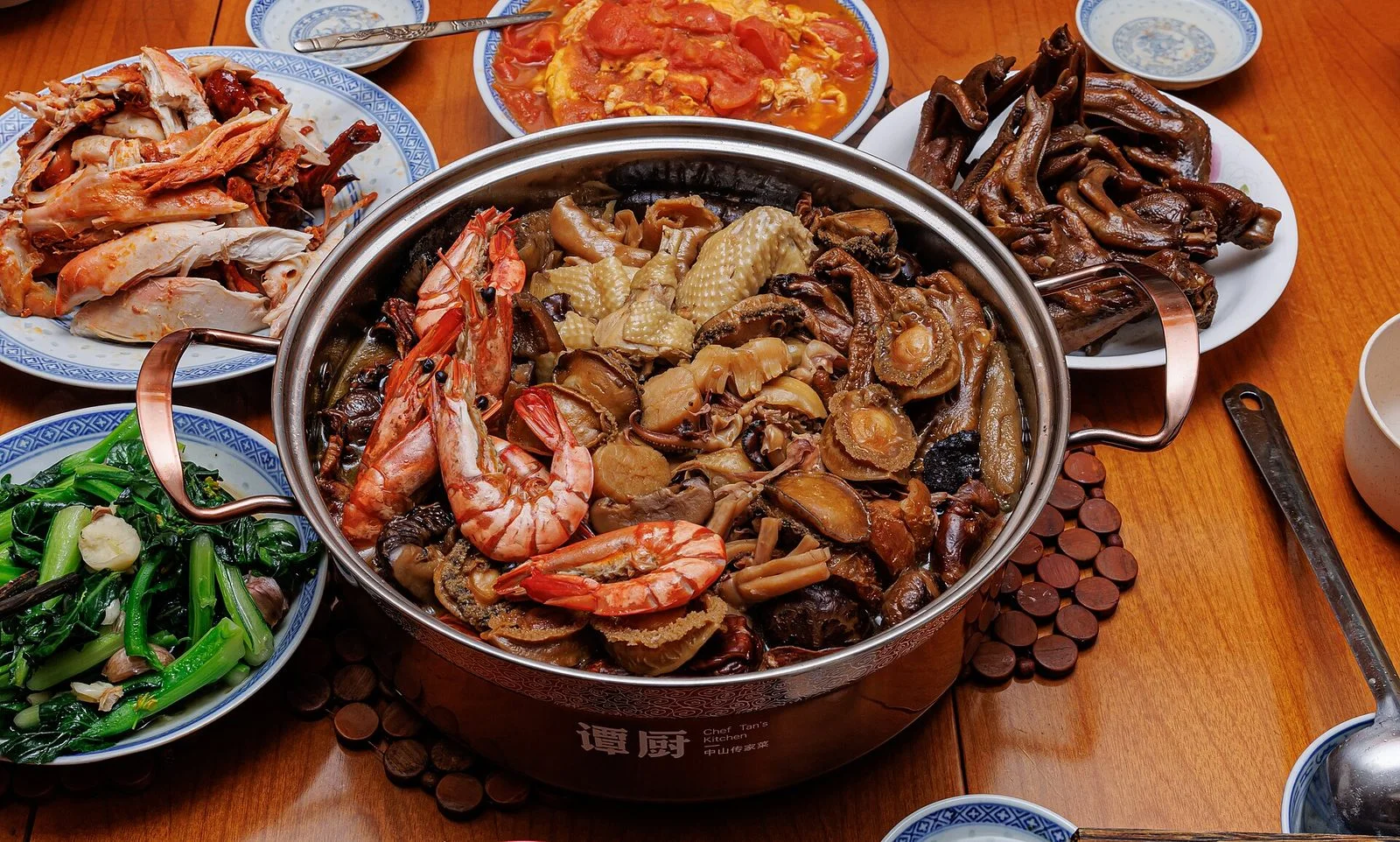
The poon choi described in Xinhua's report starts with radish at the bottom, followed by dried bean curd sticks, fried tofu, shiitake mushrooms, dried oysters and other ingredients, with seafood and meat above. Zhizhu refers to a form of dried bean curd, while haochi is a processed oyster product. Understanding these ingredients helps visitors unfamiliar with Cantonese food names more than simply judging the basin's size. Ingredients that absorb broth below develop different textures from the meat and seafood that retain their shape on top.
There is no fixed ingredient list covering every household and restaurant. The prawns, meat and vegetables in the photograph show one combination; another basin may substitute different meats, bean products or seafood. Check the actual menu when ordering, including the basin size, suggested number of diners and included ingredients. More expensive seafood does not necessarily suit everyone's tastes or dietary restrictions better.
Restaurant meals and festival banquets
To try poon choi while travelling, look for a restaurant that explicitly serves it, then ask about advance orders and minimum portions. It suits sharing, but not every restaurant offers the same version every day. For the Xiasha village banquet itself, check the organiser's current event arrangements. A previous Lantern Festival news report does not provide year-round walk-in access, and a kinship banquet should not be assumed open to all tourists.
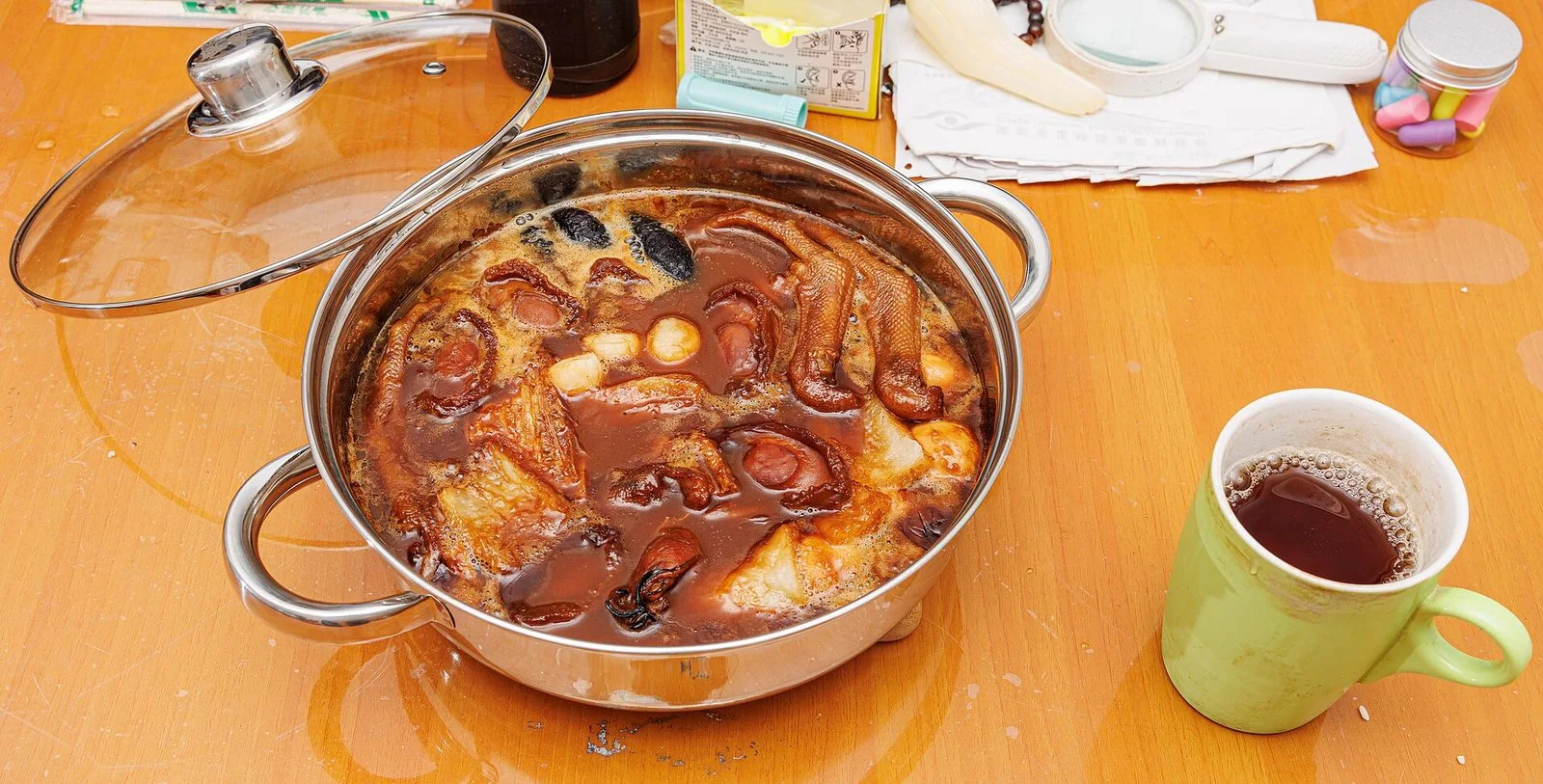
A single basin may contain prawns, shellfish, meat and bean products, with broth and sauces flowing between ingredients. Removing visible ingredients may not resolve allergies or strict dietary restrictions, so explain specific needs before ordering. For a shared meal, ask about serving utensils and individual bowls, then take portions according to appetite. This is more reliable than estimating how many people a basin will feed from photographs.
Useful official references
Check the relevant official service before making arrangements. These links are references, not a guarantee of current services.