City introduction
Shenzhen lies in southern Guangdong, next to Hong Kong. Alongside the technology industries and towers for which it is known, the city has historic districts such as Nantou Ancient Town and Dapeng Fortress, as well as the open waterfront of Shenzhen Bay. The differences between districts offer a useful introduction: Futian for the city centre and parks, Nanshan for Nantou and Shekou, and the east for coastal defences set between mountains and sea.
Futian: the city centre seen from a park
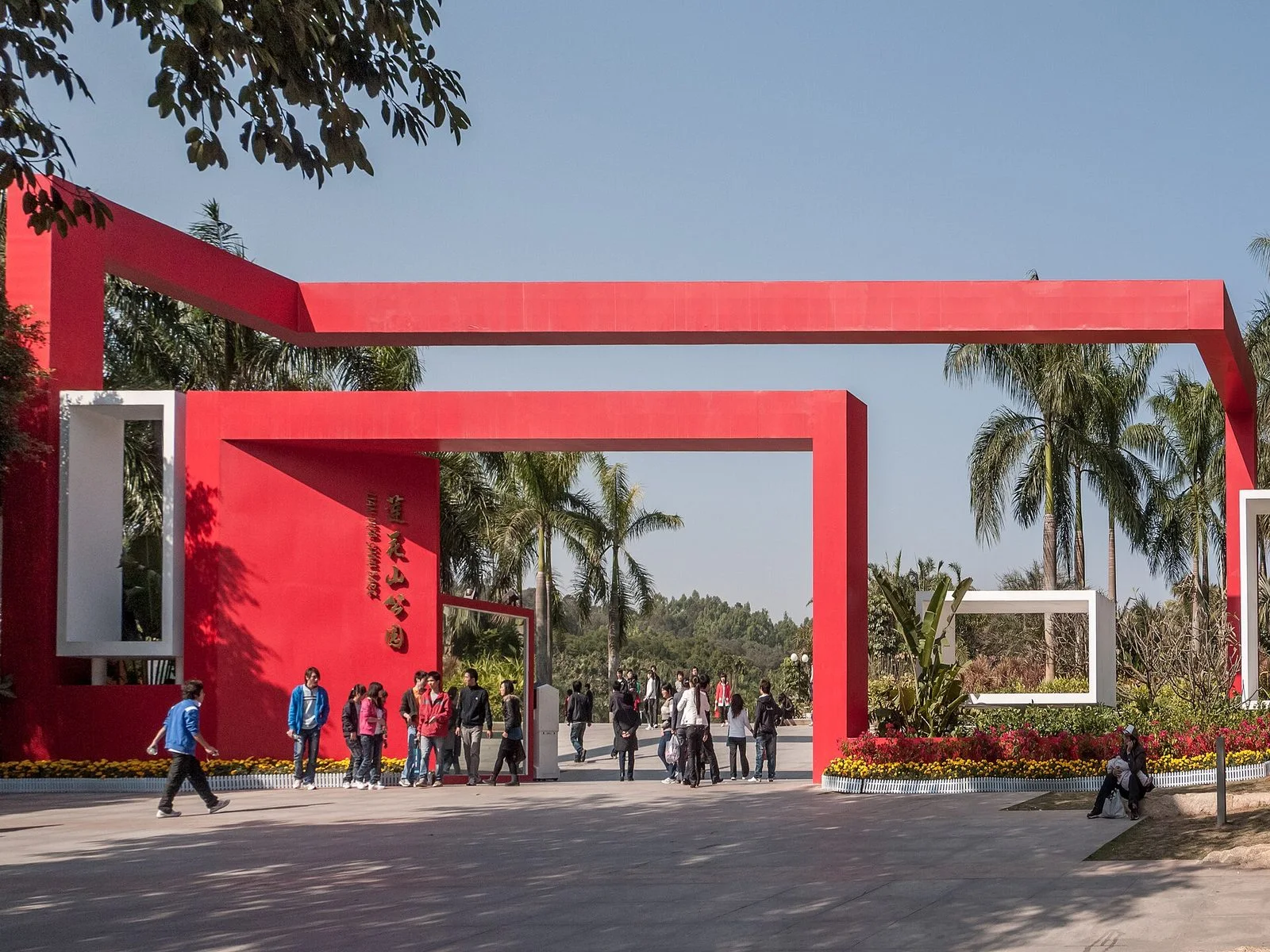
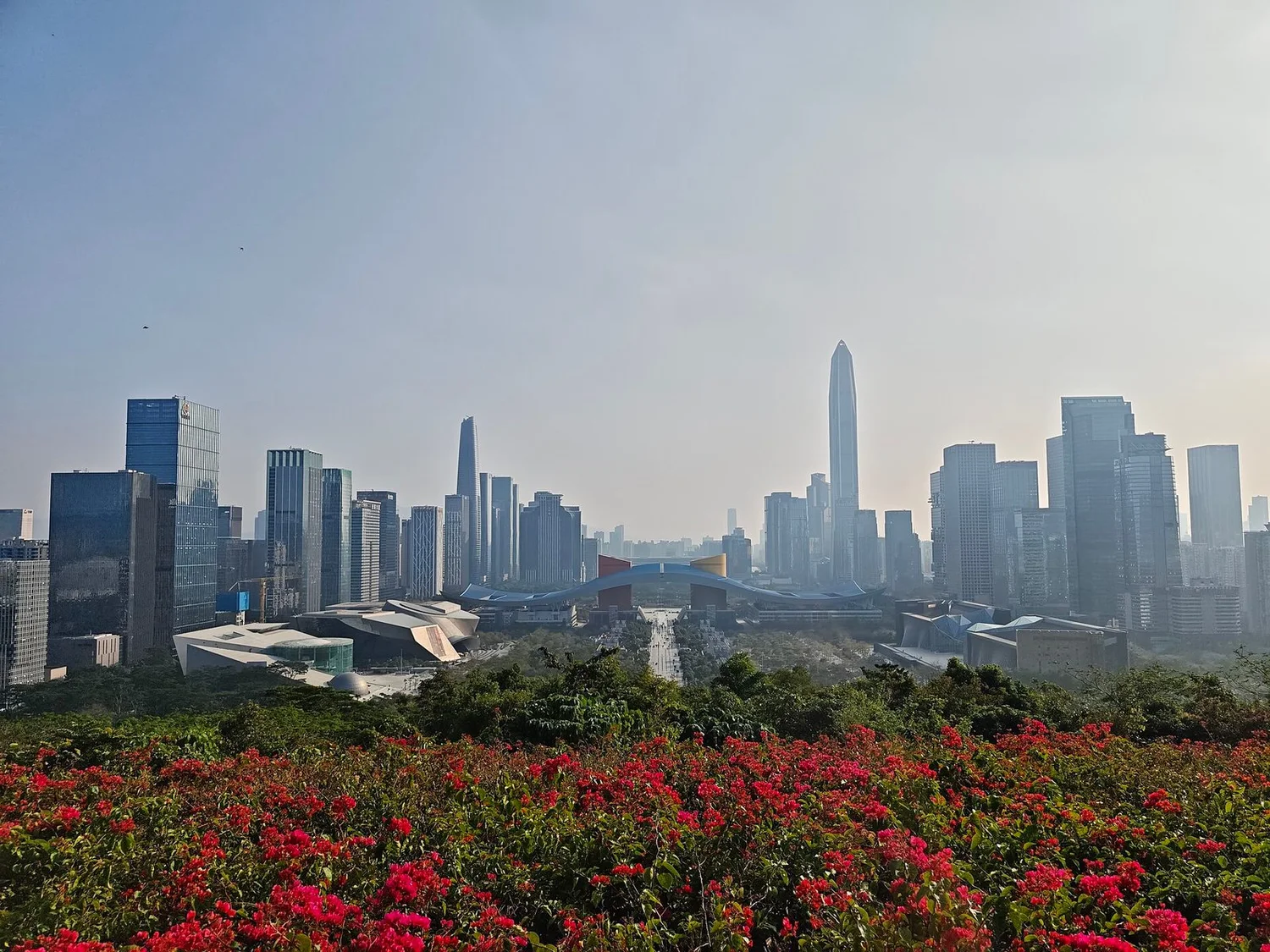
Shenzhen became a city in 1979 and a special economic zone was established here in 1980. It later developed into a centre for manufacturing and technology. Central Futian illustrates this modern development. Lianhuashan Park stands to its north; from higher ground, the broad roof of the Civic Center, its square and dense groups of towers come into view together, making the relationship between public buildings and the business district clear. The greenery in front of the towers is also worth noticing: parks are not confined to Shenzhen's outskirts, and hills and trees form part of the central city.
This area suits an interest in modern architecture and city panoramas. For a gentler walk and everyday recreation, focus instead on the park's lawns, shade and paths. Views from higher ground depend on visibility, and towers tell only part of Shenzhen's story. Away from the viewpoints, neighbourhoods, markets and the waterfront reveal different sides of life in the same city.
Nantou and Dapeng: two historic districts
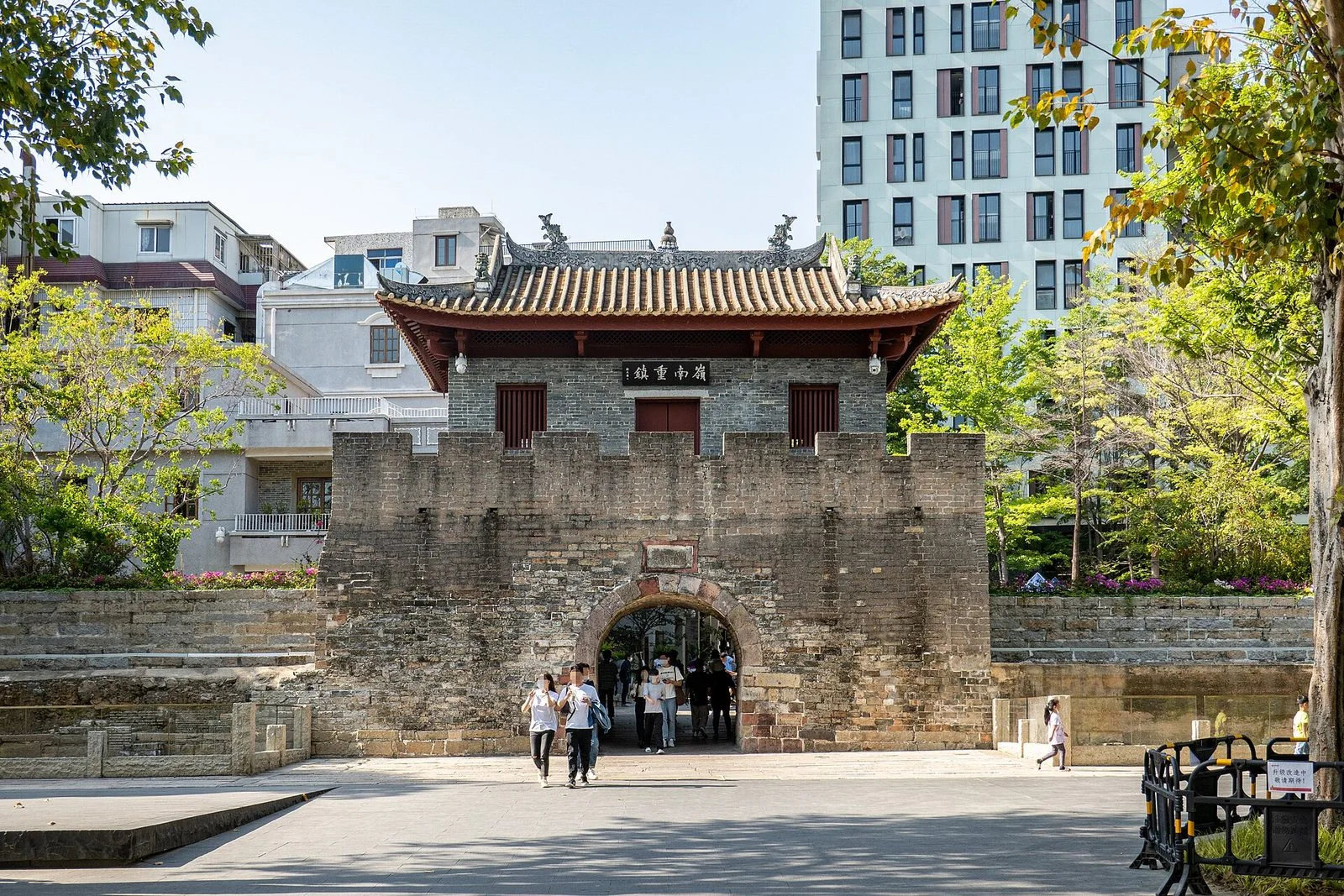
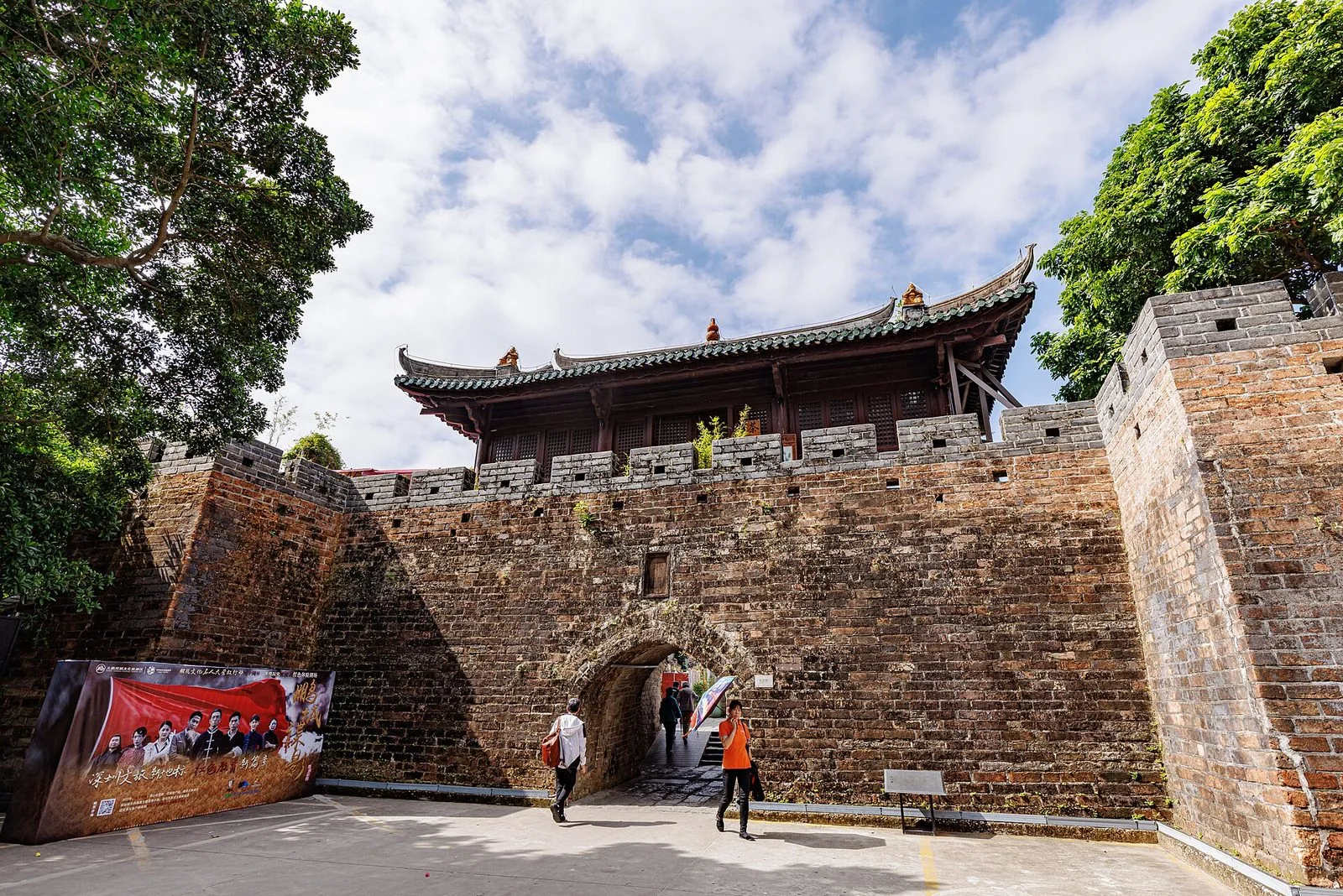
Nantou Ancient Town, in Nanshan, is surrounded by the present-day city. Its history as an administrative centre dates to AD 331, but the structures visible today come from different periods; the town's founding date is not the construction date of every building. A district renewal in 2020 brought shops, restaurants and cultural spaces, combining historic remains with contemporary uses. There is more to see than a city gate: the remains of walls, the lanes and the relationship between old and new uses reward a closer look.
Dapeng Fortress, in eastern Shenzhen, was founded in 1394. Its background is the coastal defence history of the Ming and Qing dynasties, and it is also associated with Shenzhen's nickname, Pengcheng. Gates, walls and lanes preserve the layout of a fortified settlement. Like Nantou, it helps explain Shenzhen's earlier history, but its setting and architecture are different. Nantou sits amid dense urban development, while Dapeng connects with the mountains and sea of the east. Visitors interested in historic buildings can use these differences to choose what to explore, rather than treating the two as interchangeable old streets.
Shenzhen Bay and Shekou: waterfront walks and leisure
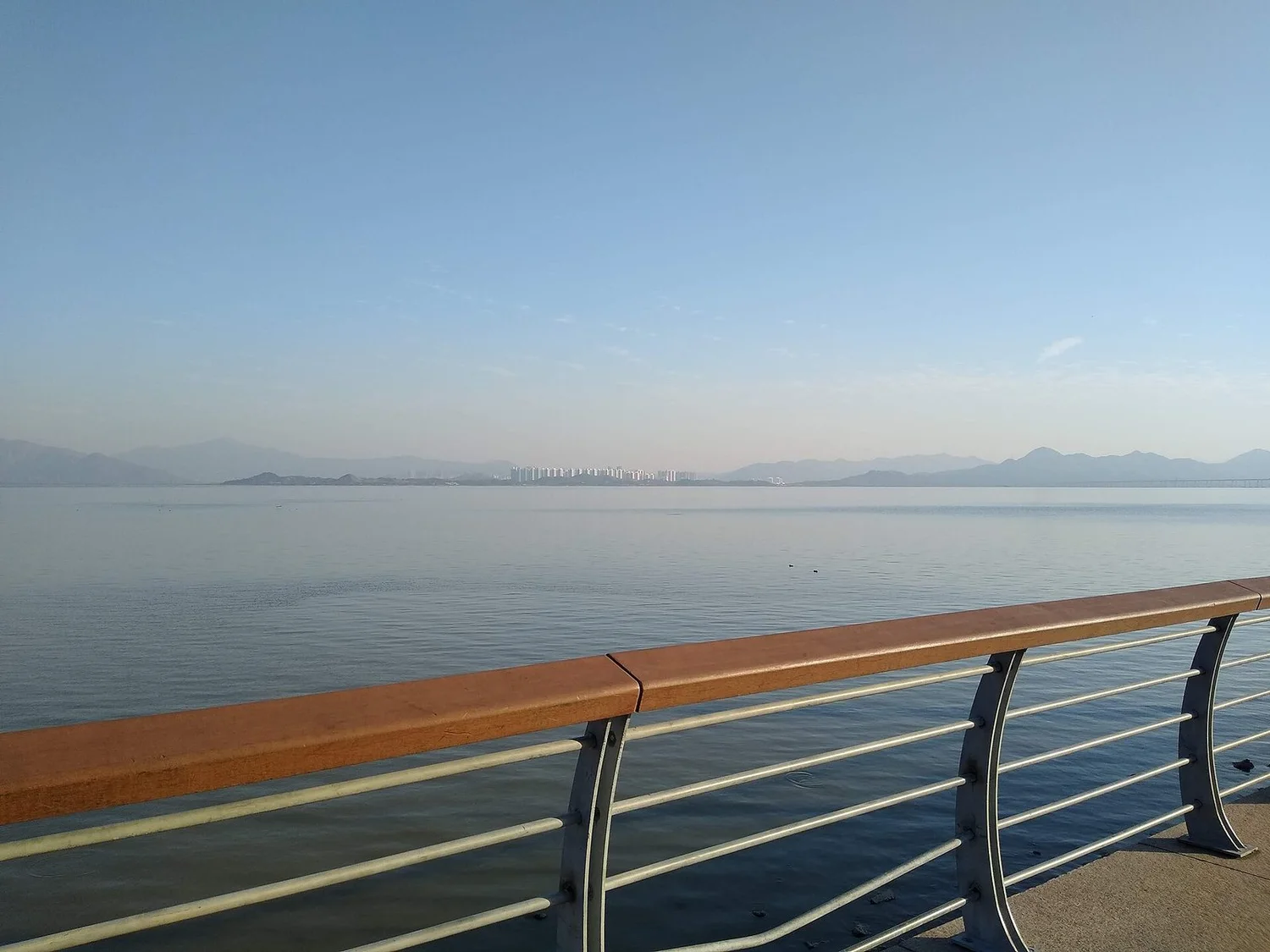
Along Shenzhen Bay, the view opens from towers to water and distant hills. A walk here centres on open views, a continuous shoreline and the proximity of city and bay, rather than entering an enclosed scenic attraction. The photograph shows a waterfront railing and the sea in one part of Shenzhen Bay Park. It illustrates the setting, but does not represent facilities along the entire shore or the weather on the day of a visit.
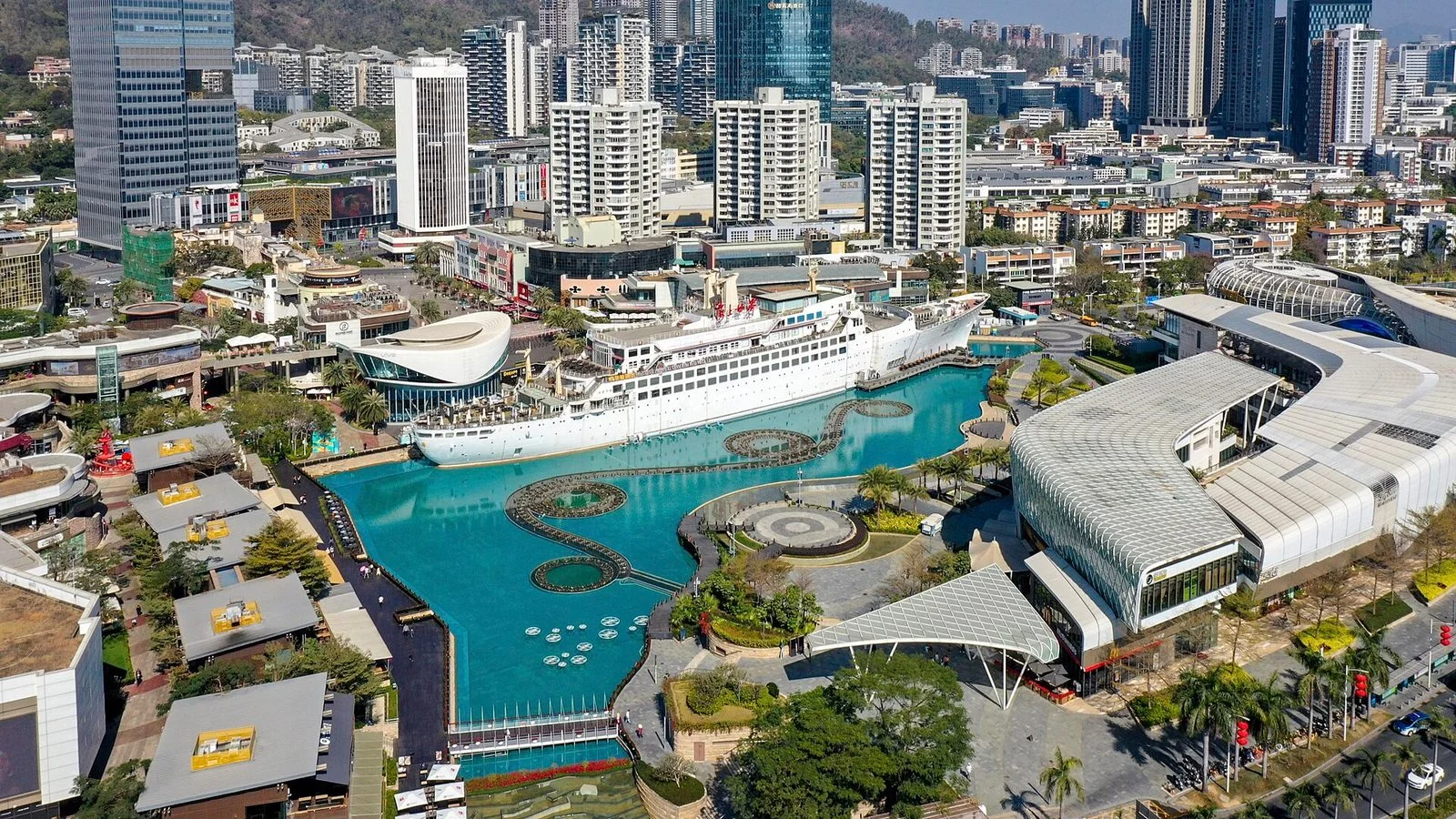
Shekou Sea World is more focused on dining and commercial leisure. The Minghua ship and surrounding square form a clear centre, with shops bringing together meals, browsing and evening activities. The name Sea World may suggest an aquarium to first-time visitors, but it is better understood as a commercial and leisure district in Shekou. A shoreline walk at Shenzhen Bay and a meal around Sea World's square offer different experiences; consider them separately depending on whether you want water views or somewhere to sit and eat.
From electronics markets to street shopping
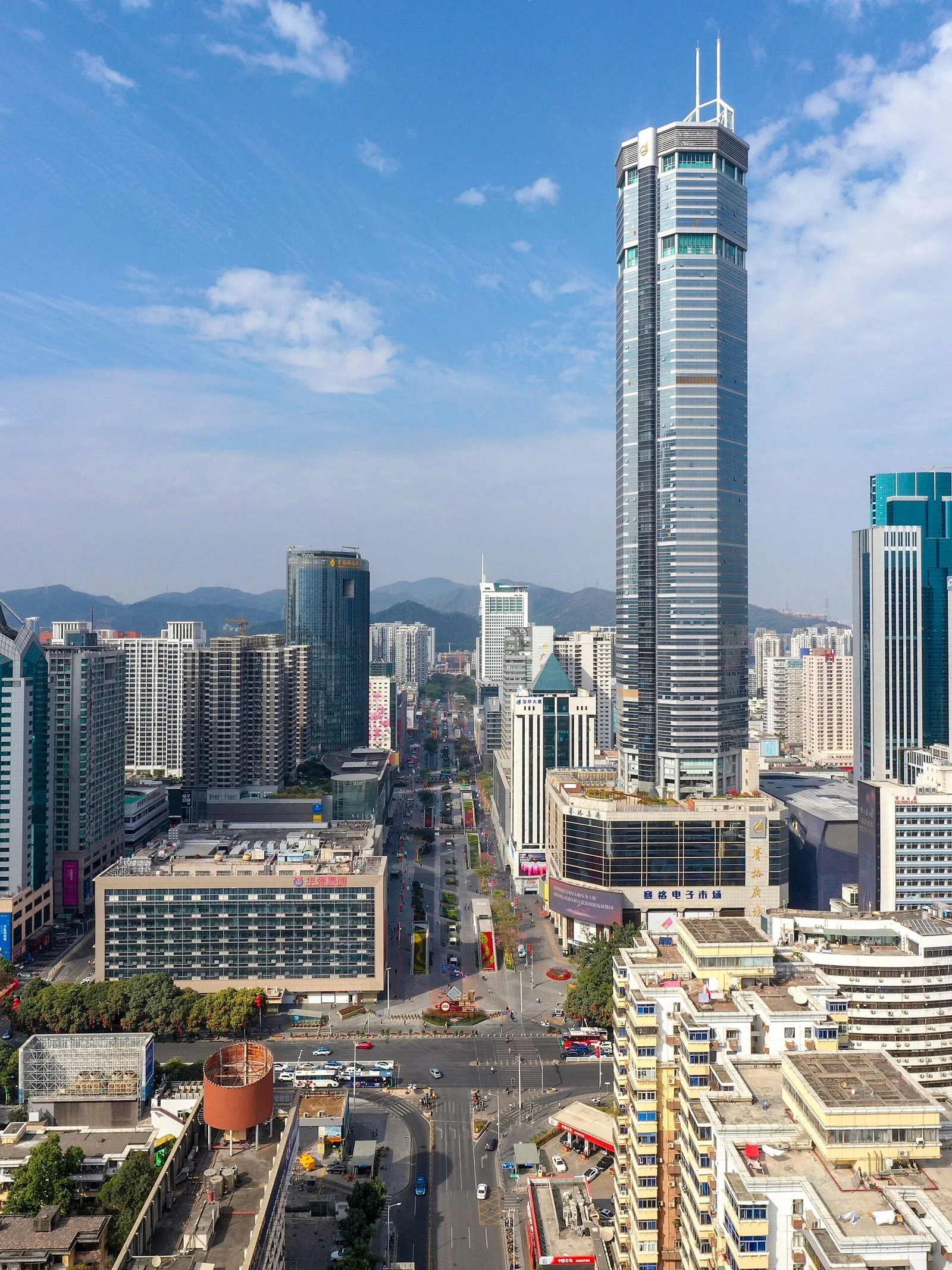
Huaqiangbei is most distinctive for its electronics trade. Components, accessories, equipment and specialist markets reveal links between Shenzhen's manufacturing industries and consumer electronics. Even without buying anything, visitors can learn about the district through its counter displays and specialised businesses. When making a purchase, model numbers, specifications, language versions and after-sales terms matter more than the sheer range of products. Goods from different markets and sellers do not follow one uniform standard.
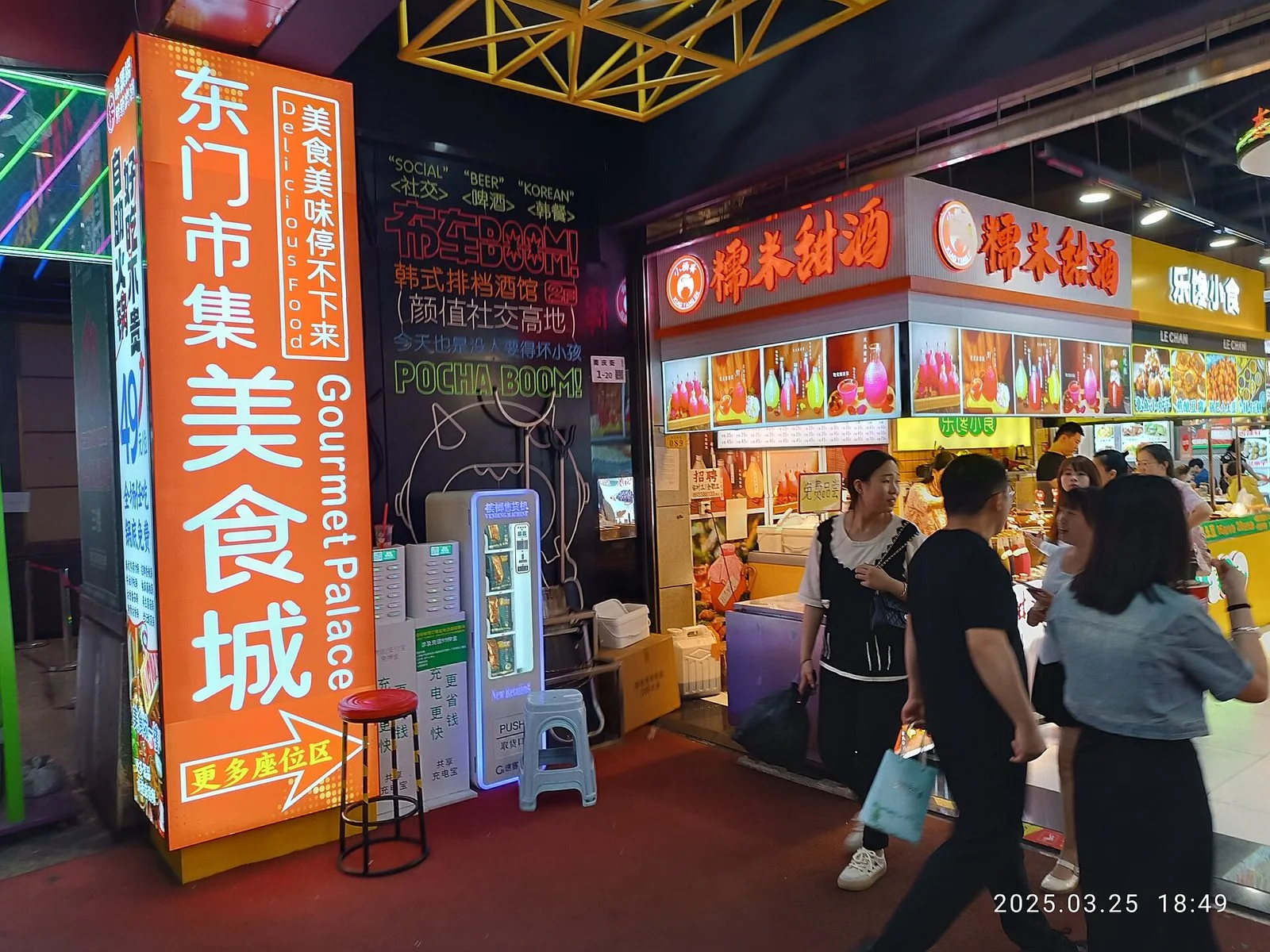
Dongmen is closer to everyday street shopping, with clothing, small goods, food and pedestrian shopping streets mixed together. Its street environment differs markedly from Huaqiangbei's specialist markets. Sea World, in turn, puts dining, squares and leisure first. The three commercial areas offer different reasons to visit: observing the electronics trade, browsing a popular shopping district or eating and resting in Shekou. Shopping here need not mean visiting the same kind of mall each time.
Local traditions alongside regional flavours
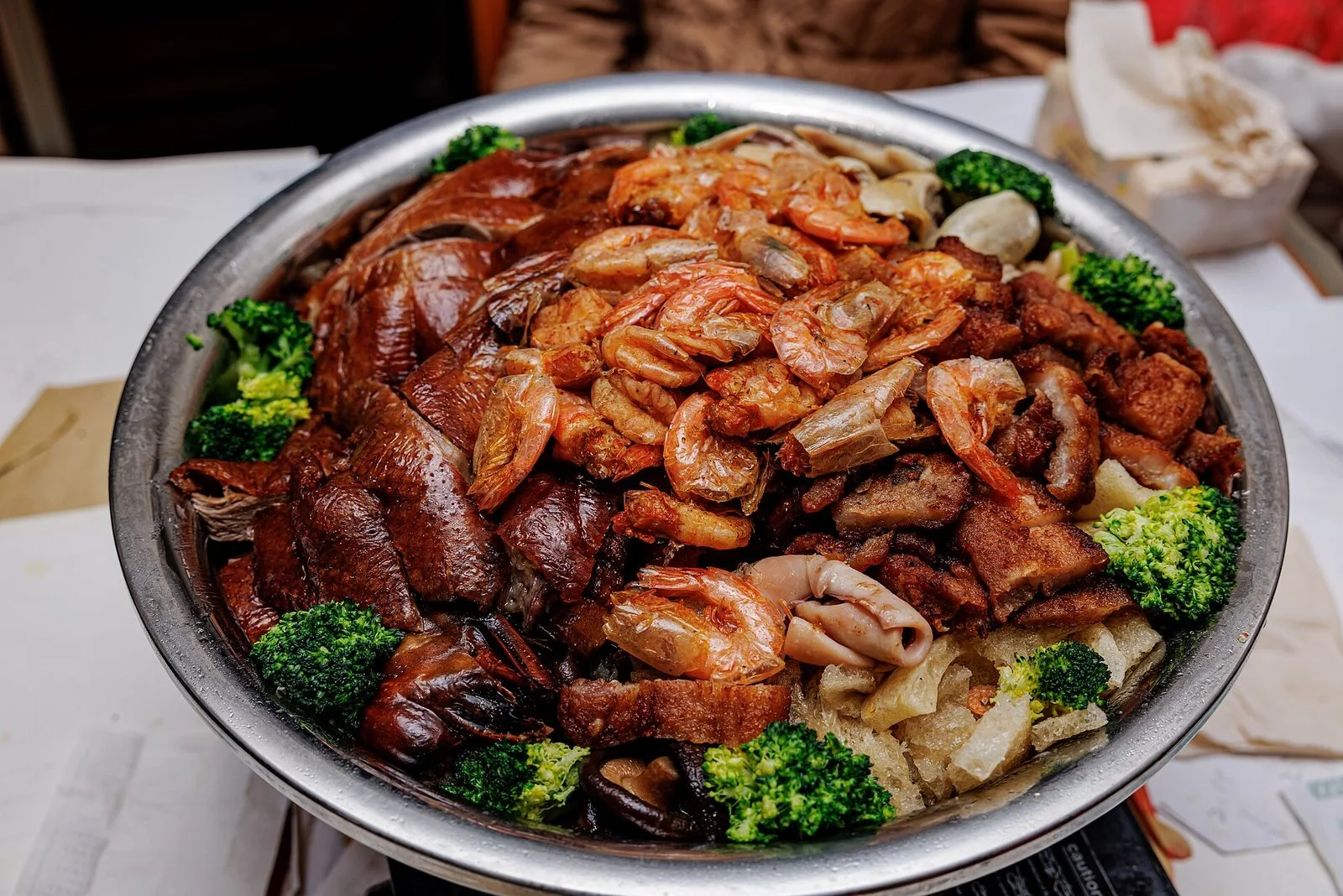
Shenzhen's food includes local traditions as well as flavours from Chaoshan and other regions. The poon choi banquet in Xiasha, Futian, connects village life, kinship and festivals: many ingredients are arranged in layers in a large basin for a table to share. Restaurant versions of poon choi and village banquets held on particular dates should be understood separately. Although the dish is not unique to Shenzhen, Xiasha's specific tradition helps explain one aspect of local community life.
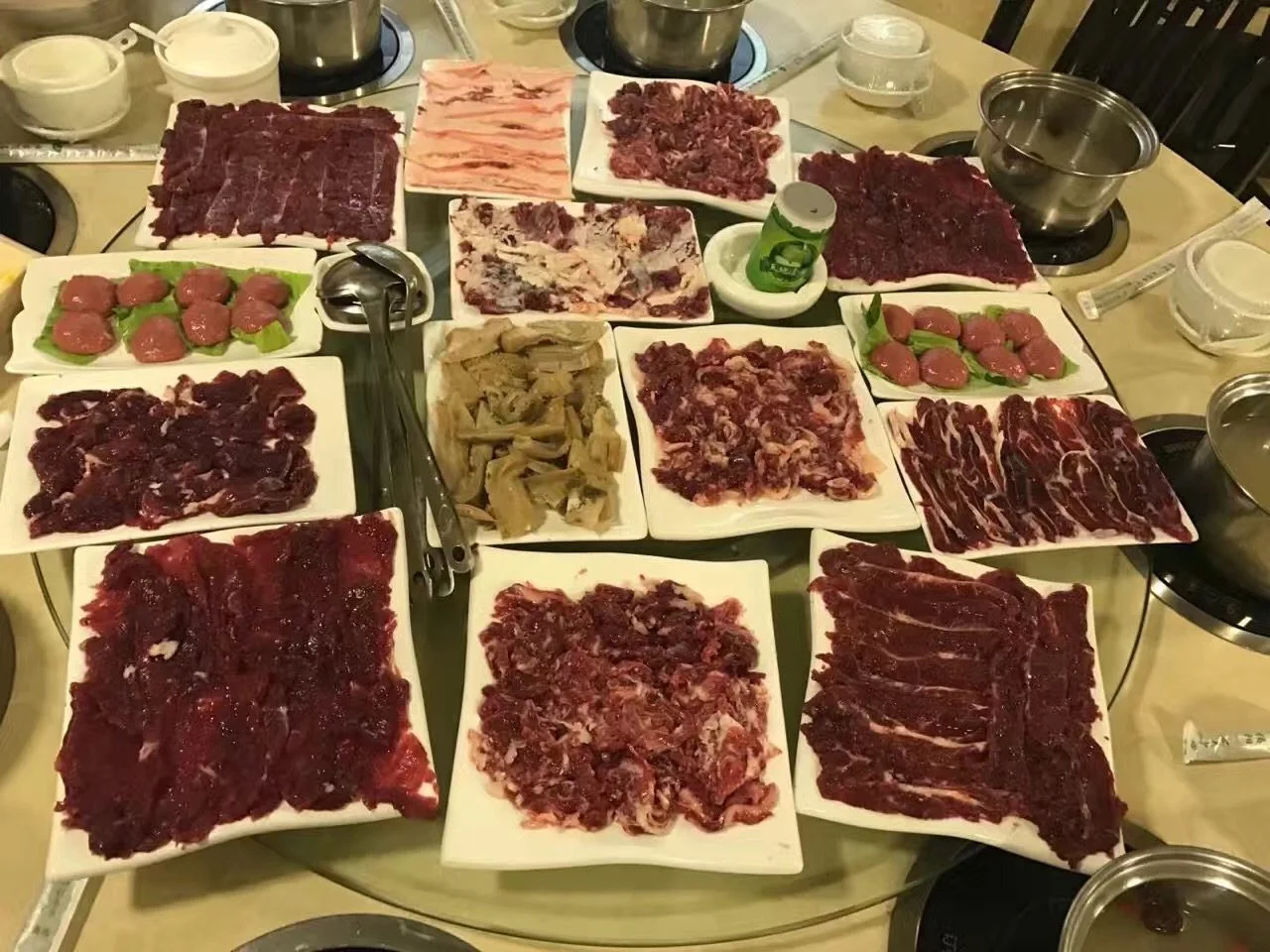
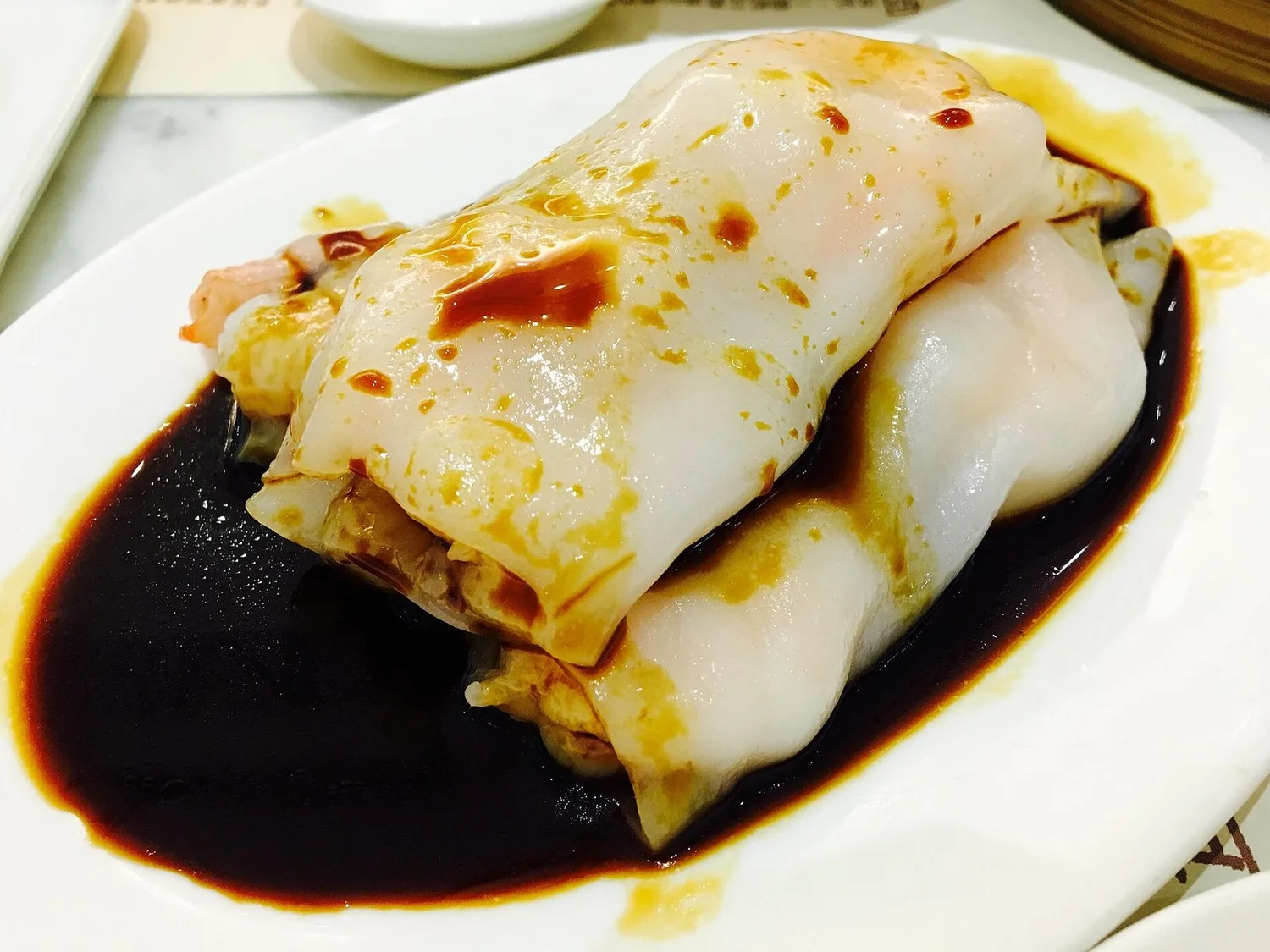
Two other choices are closer to everyday meals. Rice noodle rolls are made by steaming rice batter into a thin sheet and adding fillings and sauce; Shenzhen's breakfast shops also serve styles from places such as Puning. Chaoshan beef hotpot uses clear broth, sliced beef from different cuts and beef balls to let diners compare ingredients and textures. Calling all three simply Shenzhen cuisine would obscure their differences: poon choi is a shared feast, rice noodle rolls suit breakfast or a snack, and beef hotpot is a meal around a communal pot. Recipes and portions vary by business, so check individual ingredients if you have dietary restrictions.