Gá la, Manila clams, and the clams of Jiaozhou Bay
In the Qingdao dialect, clams are called gá la, usually written with the characters 嘎啦. The pronunciation is mentioned in both Qingdao promotional articles and local media, and it is one of the dialect words visitors find easiest to remember. The clam most commonly sold in Qingdao markets is Ruditapes philippinarum, the Manila clam, known locally as huage: it is small, with a thin shell marked by concentric rings and patterns in varying shades, blue-white in color and turning light brown when cooked.
Hongdao, in the northeast of Jiaozhou Bay, is a well-known clam-producing area in Qingdao. Its tidal flats are mostly muddy and rich in plankton, and the Hongdao clams raised there have thin shells and tender meat; “Jiaozhou Bay clams” have been registered for geographical indication protection as an agricultural product. Hongdao has held a clam festival since 2004; according to a 2024 report, that year’s was the nineteenth edition. An article from Qingdao Promotion says clams are at their fattest during the Dragon Boat Festival holiday, which is also why locals link clams with summer.
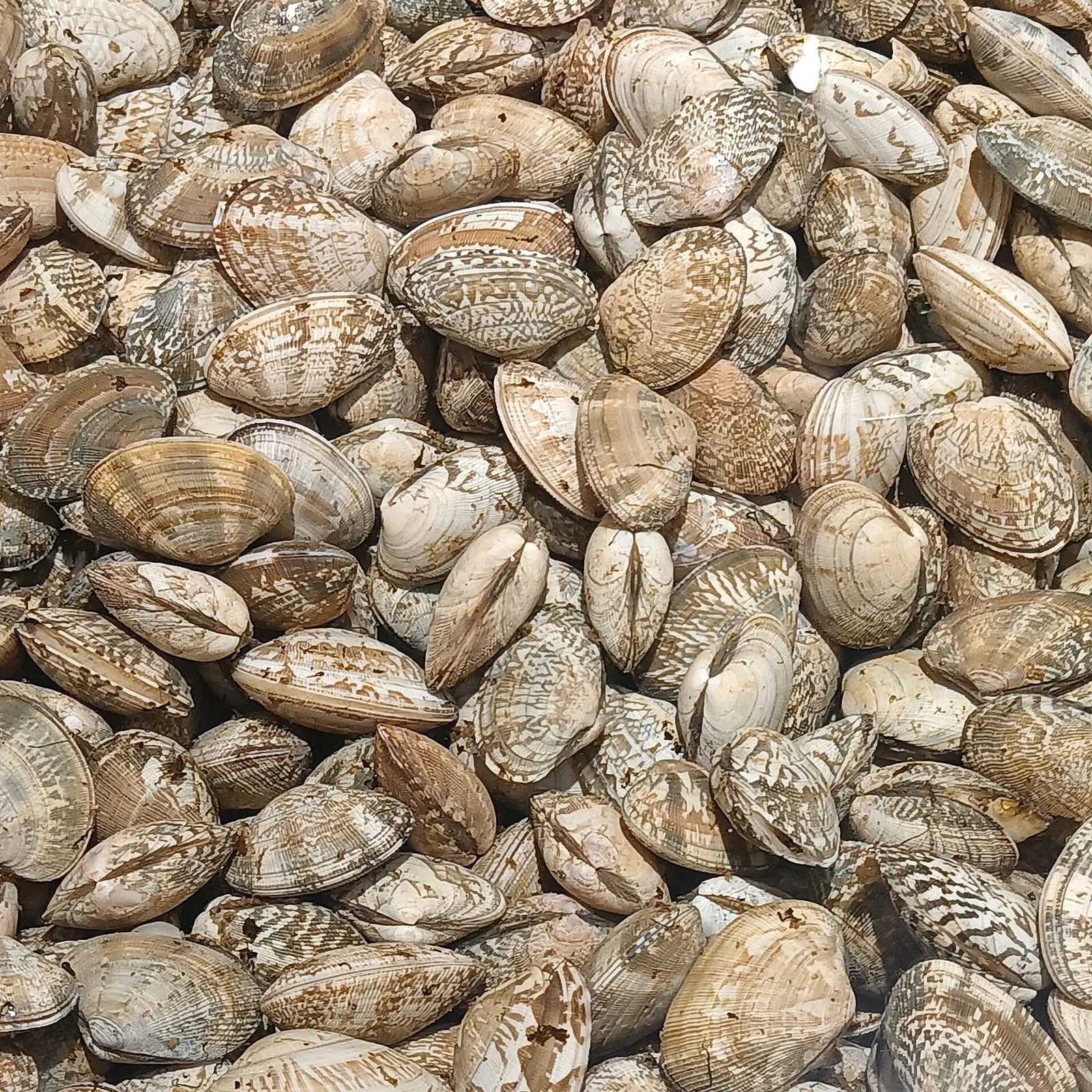
Purge the sand, then cook
Clams live in tidal flats and carry sand inside their shells. When you bring them home, first keep them in lightly salted water: a home-cooking guide from Qingdao News Network gives the ratio as about 5 kg (10 jin) of water to 200 g (4 liang) of salt, plus a few drops of cooking oil. The water should cover the clams, and they soak for about two hours so they spit out the sand and grit. Soaking too long makes the clams lose flesh, so do not leave them for more than a day. After soaking, rub and rinse them several times in clean water until the water is no longer cloudy.
Before cooking, some cooks blanch the clams first: bring water to a boil, tip the clams in, and lift them out as soon as a shell opens. The blanching water is left to settle, and the clear liquid on top is kept for later. Others skip blanching and put the clams straight into the wok, relying on the juices they release as they heat. The home-style version from Qingdao News Network is the former; the no-blanch method depends more on how thoroughly the clams were purged and needs a stronger flame.
Scallion, ginger, and dried chili over high heat
Heat the wok, add oil, and fry scallion pieces, shredded ginger, sliced garlic, and dried chilies over low heat until fragrant. Turn the heat to high, add the drained clams, and stir-fry. The home-style version from Qingdao News Network also splashes in a little baijiu and adds soy sauce, fish sauce, and a small amount of sugar and salt; the clams themselves carry the saltiness of seawater, so go easy on the salt. When the clams open, pour one or two spoonfuls of the reserved broth down the side of the wok, toss to combine, and take the dish off the heat. The shells are thin, so stir gently; broken shell can catch between your teeth.
An open shell means the clam is done; cook it further and the meat shrinks and turns tough. The juices are the key to this dish: as they heat, the clams release their own liquid, which mixes with the oil and aroma of scallion, ginger, and chili. The layer of broth left in the dish is good for dipping steamed buns or mixing into noodles. When Qingdao people cook clams in their own juice, they add no water at all and use the leftover broth to cook noodles; spicy stir-fried clams work the same way, so there is no need to add water to the wok.
How to order and how to eat
At Qingdao restaurants, beer houses, and seafood stalls, spicy stir-fried clams are usually sold by the plate or by the portion; you can also buy live clams at a market and cook them yourself where you are staying. When ordering, you can say “spicy stir-fried,” or ask for “original juice” (原汁) — just clams and their own liquid, with a lighter flavor. Heat levels vary from kitchen to kitchen; if you are worried about spice, ask how much chili goes in. If you only want a taste, one plate is enough for two or three people, leaving room for other seafood.
To eat, first suck the broth from the shell, then eat the meat. The meat is small, and any sand left in it will grit between your teeth; if the clams were not purged clean, it is better to eat fewer of them. Qingdao people often pair them with draft beer; “drink beer, eat clams” is a common local summer combination. Clams are molluscan shellfish, so anyone with a shellfish allergy should avoid them; a severe allergy can cause a systemic reaction, and difficulty breathing requires immediate medical care.
Useful official references
Check the relevant official service before making arrangements. These links are references, not a guarantee of current services.
- Qingdao Promotion: Little clams — how did they become Qingdao's summer “top draw”? (June 9, 2024; verified on 11 November 2026) ↗
- Qingdao News Network: The most complete Qingdao seafood guide I have seen — when it is fattest and how to eat it (March 17, 2017; verified on 11 November 2026) ↗
- Qingdao Government Portal (Qingdao Culture and Tourism Bureau): The fishing season is open! This is all you need to read for “seafood freedom” in Qingdao (September 3, 2024; verified on 11 November 2026) ↗
- Mayo Clinic: Shellfish allergy — symptoms and causes (verified on 11 November 2026) ↗